

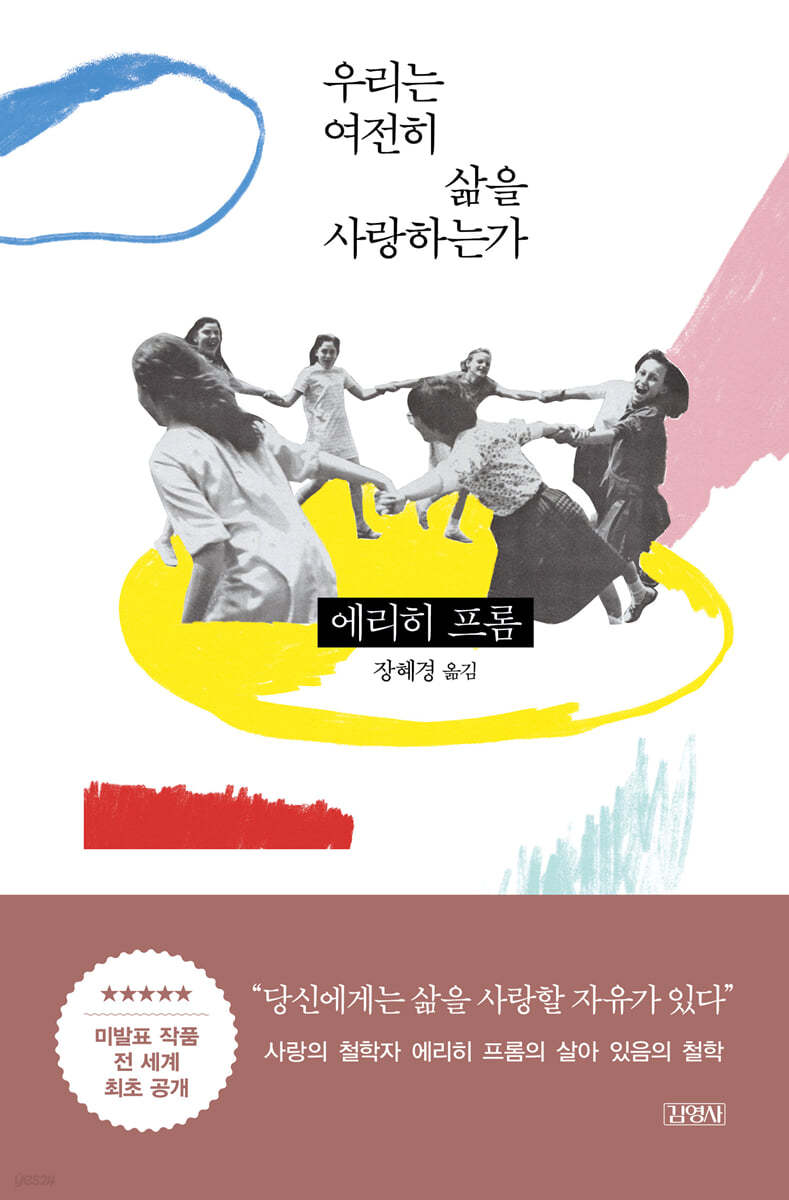
Do we still love life?
 |
Description
Book Introduction
Books to Read Before Reading The Art of Loving To restore the ability to love life Erich Fromm's profound thoughts and keen insights Erich Fromm, the true philosopher of love, now goes beyond the love of relationships that “The Art of Loving” talks about, and speaks of “love of life,” which is more fundamental and the core of all love. It analyzes the psychology of modern people who hate themselves and live empty lives, and provides insight into the freedom to love life. This is the first unpublished work to be released worldwide, and was compiled by Dr. Rainer Funk, a psychiatrist and assistant to Erich Fromm during his last eight years. Erich Fromm considers the loss of the ability to love life to be a central problem for modern people, and deeply reflects on it in relation to the economy, society, politics, and labor. From psychological and spiritual perspectives such as narcissism, egoism, deficiency, and alienation to socioeconomic conditions such as mass production, technological blindness, and economic excess, it explores the reasons why we perceive our lives as meaningless and suggests a path to recovery. It is a philosophy of living to recover the ability to love life. |
- You can preview some of the book's contents.
Preview
index
introduction
1.
Do we still love life?
2.
Humans are not a means but an end.
3.
Selfishness and narcissism
4.
creative life
5.
Attitude toward death
6.
About helplessness
7.
To achieve freedom with basic income
8.
The emptiness of human consumption
9.
active life
References
Original source
1.
Do we still love life?
2.
Humans are not a means but an end.
3.
Selfishness and narcissism
4.
creative life
5.
Attitude toward death
6.
About helplessness
7.
To achieve freedom with basic income
8.
The emptiness of human consumption
9.
active life
References
Original source
Detailed image
.jpg)
Into the book
Marketing, which dominates everything, has penetrated people's minds, and now people even think of their own personalities as products that must be sold well.
It no longer matters who you are or what personal characteristics you boast of.
People's interest is focused on what qualities and personality traits can be trained to make one a person who is always friendly, efficient, customer-oriented, and polite.
What matters now is not whether you can experience being alive and love life, but whether you can act as if you are alive.
It's not the presence that matters, it's the performance.
---From the "Preface"
Trying to avoid suffering by being indifferent to life only increases the suffering.
A truly depressed person can confirm that the feeling of sadness is a salvation from the pain of feeling nothing.
The most important thing in life is not happiness, but being alive.
Pain is not the worst thing in life.
The worst is indifference.
When you are in pain, you can try to eliminate the cause.
But when you have no emotions, you become numb.
Throughout human history, suffering has been the midwife of change.
Will indifference, for the first time in history, crush the human ability to change destiny?
---「1.
From "Do We Still Love Life"
If loving one's neighbor as a human being is a virtue, why shouldn't one also love oneself? The principle that proclaims love for one's neighbor but prohibits self-love separates me from all other human beings.
But the most profound experience a human being can have is to experience himself as a human being.
There is no human solidarity that does not include myself.
---「3.
From “Selfishness and Narcissism”
The experience of seeing a person in his full reality can sometimes feel sudden and startling.
You can suddenly look at someone you've seen a hundred times completely on the hundredth meeting, and feel like you've never really seen them before.
The new image of him is so different from the old one that his face, movements, eyes, and voice acquire a new reality that is more intense and specific.
That's how we learn the difference between seeing and being seen.
You can have the same experience looking at familiar landscapes, world-famous paintings, or other familiar objects.
---「4.
From “Creative Life”
First of all, it can be said that because people are not truly satisfied with their lives, they do not make much effort to maintain them.
The reason this sounds contradictory is because (on the surface) everyone is so obsessed with life.
But I'm sure that many, if not most, people in our culture unconsciously suffer from mild, chronic depression and find life not very enjoyable.
---「5.
From “Attitudes Towards Death”
The average adult in our society is actually quite helpless.
He has absolutely no power to control his own destiny.
The chance of his birth determines what abilities he can develop.
Whether a person gets a job or what career he can choose is determined by factors that have nothing to do with his will or effort.
Even the freedom to choose a partner is restricted by socioeconomic boundaries.
Moods, opinions, and tastes are also instilled, and any deviation from this is punished by further isolation.
---「6.
From “On Helplessness”
Yes, that's right.
The world must change.
But we must go beyond philosophy and the changes in the world.
The important thing is for humans to become different from each other! But that means discovering values that can effectively motivate their actions.
It's not just the changes in the world that matter.
It is absolutely not important that the world has various interpretations.
What is important is that it is a method that enables a profound change in values that have been previously recognized only ideologically to become a compulsory motivation for one's character and actions.
It no longer matters who you are or what personal characteristics you boast of.
People's interest is focused on what qualities and personality traits can be trained to make one a person who is always friendly, efficient, customer-oriented, and polite.
What matters now is not whether you can experience being alive and love life, but whether you can act as if you are alive.
It's not the presence that matters, it's the performance.
---From the "Preface"
Trying to avoid suffering by being indifferent to life only increases the suffering.
A truly depressed person can confirm that the feeling of sadness is a salvation from the pain of feeling nothing.
The most important thing in life is not happiness, but being alive.
Pain is not the worst thing in life.
The worst is indifference.
When you are in pain, you can try to eliminate the cause.
But when you have no emotions, you become numb.
Throughout human history, suffering has been the midwife of change.
Will indifference, for the first time in history, crush the human ability to change destiny?
---「1.
From "Do We Still Love Life"
If loving one's neighbor as a human being is a virtue, why shouldn't one also love oneself? The principle that proclaims love for one's neighbor but prohibits self-love separates me from all other human beings.
But the most profound experience a human being can have is to experience himself as a human being.
There is no human solidarity that does not include myself.
---「3.
From “Selfishness and Narcissism”
The experience of seeing a person in his full reality can sometimes feel sudden and startling.
You can suddenly look at someone you've seen a hundred times completely on the hundredth meeting, and feel like you've never really seen them before.
The new image of him is so different from the old one that his face, movements, eyes, and voice acquire a new reality that is more intense and specific.
That's how we learn the difference between seeing and being seen.
You can have the same experience looking at familiar landscapes, world-famous paintings, or other familiar objects.
---「4.
From “Creative Life”
First of all, it can be said that because people are not truly satisfied with their lives, they do not make much effort to maintain them.
The reason this sounds contradictory is because (on the surface) everyone is so obsessed with life.
But I'm sure that many, if not most, people in our culture unconsciously suffer from mild, chronic depression and find life not very enjoyable.
---「5.
From “Attitudes Towards Death”
The average adult in our society is actually quite helpless.
He has absolutely no power to control his own destiny.
The chance of his birth determines what abilities he can develop.
Whether a person gets a job or what career he can choose is determined by factors that have nothing to do with his will or effort.
Even the freedom to choose a partner is restricted by socioeconomic boundaries.
Moods, opinions, and tastes are also instilled, and any deviation from this is punished by further isolation.
---「6.
From “On Helplessness”
Yes, that's right.
The world must change.
But we must go beyond philosophy and the changes in the world.
The important thing is for humans to become different from each other! But that means discovering values that can effectively motivate their actions.
It's not just the changes in the world that matter.
It is absolutely not important that the world has various interpretations.
What is important is that it is a method that enables a profound change in values that have been previously recognized only ideologically to become a compulsory motivation for one's character and actions.
---「8.
From “The Emptiness of Consuming Humans”
From “The Emptiness of Consuming Humans”
Publisher's Review
Books to Read Before Reading The Art of Loving
A philosophy of living for those who hate themselves and live meaninglessly.
“We are not machines! Life is not a means to an end, but an end in itself.
“If we love life, the process of living—the process of changing, growing, developing, becoming more aware and awakening—is far more important than any mechanical execution or achievement.” (p. 40)
The Art of Loving, a bestseller and modern classic that has sold millions of copies worldwide and continues to be loved by readers even after 60 years since its publication.
He, a true philosopher of love, now goes beyond the love of relationships that “The Art of Loving” talks about, and speaks of “love for life,” which is more fundamental and the core of all love.
A new book, "Do We Still Love Life?" (original title: Lieben wir das Leben noch?), has been published, which analyzes the psychology of modern people who hate themselves and live empty lives and provides insight into the freedom to love life.
This is the first unpublished work to be released worldwide, and was compiled by Dr. Rainer Funk, a psychiatrist and assistant to Erich Fromm during his last eight years.
Erich Fromm, in his true colors as a social psychologist and psychoanalyst, addresses the loss of the ability to love life as a core problem of modern people, and deeply reflects on it in relation to the economy, society, politics, and labor.
From psychological and spiritual perspectives such as narcissism, egoism, deficiency, and alienation to socioeconomic conditions such as mass production, technological blindness, and economic excess, it explores the reasons why we perceive our lives as meaningless and suggests a path to recovery.
It is a philosophy of living to recover the ability to love life.
For those who suffer psychologically and feel helpless because they cannot keep up with the pace of society, it will help them find their own pace, and for those who live frantically according to the imposed pace, it will help them pause and ask, “Do we still love life?”
Why We Lost Love
Critical reflection on the material world and the emptiness of life
“We must no longer transform ourselves into objects; we must exist only as masters of objects.” (p. 43)
Modern capitalist society seems to offer people the opportunity to train themselves, communicate freely with others, and experience diverse cultural services.
However, modern people regard emotions as irrational, and are unable to cultivate an integrated personality by separating intellect and emotions. They fear being differentiated from others in the name of teamwork and a sense of belonging, and suffer from emptiness as they try to fill their desires with constant consumption.
Erich Fromm points out that as the production of things becomes the only thing that matters, we have turned ourselves into things and become mere means, and he critically examines the world and human existence.
· From selfish to altruistic
Fromm critically examines the arguments of philosophers such as Calvin, Kant, Weber, Freud, and Nietzsche and develops his own philosophy of narcissism.
In particular, he criticizes Freud's theory of narcissism, which argued that love for oneself and love for others are incompatible.
Self-love and loving others are perfectly compatible, since not only others but also oneself are 'objects' of emotions and attitudes.
In fact, selfishness and narcissism are completely opposite concepts to loving oneself.
People who are always anxious because they cannot love themselves try to compensate for their lack of love by trying to have or admiring themselves.
A person who truly loves himself, a person who loves life to the fullest, understands and respects his own wholeness and uniqueness, which leads to respect and understanding for the entire human being.
· From passive to active human beings
Humans have produced wonderful and wonderful things and amassed unprecedented wealth, but their hand-made creations are alien and threatening.
The world becomes alienated by works of art created by human hands, suggesting the direction and pace of life, and people become powerless and submissive.
Within modern man lies a deep sense of helplessness, a sense that he cannot change not only himself, but also other people, the world, and even the things he has created.
Modern people are more active and busy than others in order to survive in the material world, and they ignore the realization that they are powerless.
To escape from lethargy, we must regain free and spontaneous inner activity, not busyness.
· From a consuming human to an existing human
Fromm illuminates the issue of basic income, which is still debated today, from a psychological perspective beyond the socioeconomic one.
In an age of economic excess, a basic income has made it possible for people to be free from the threat of survival and to think about their own existence.
However, industrial society has turned humans into 'homo consumens', humans who consume.
Driven and manipulated by advertising, humans are insatiable, passive, and try to compensate for their emptiness with ever-increasing consumption.
Because human greed is endless, it is impossible to produce enough to satisfy greed.
For humans to achieve true freedom through basic income, the current maximum consumption system must be replaced with an optimal consumption system tailored to public needs.
To move from maximum consumption to optimal consumption, we must overcome materialism by reviving humanistic values such as life, productivity, and individualism.
Restoring creativity and activity
The Art of Loving for a New Life
“A person who loves changes himself without rest.
“You feel and observe more, become more productive, and become closer to yourself.” (p. 34)
The completion of Erich Fromm's philosophy of love is for modern people, who have become homo consummens, to become other human beings themselves.
At every moment, humans must answer just one question: “What does it mean to be human?”
To answer this question, all human beings must regain their creativity and activity.
Creativity is an attitude toward life that allows us to see and respond to any object, including ourselves, without distortion.
Creative people respond not only with their head, eyes and ears, but with their whole being, with their heart.
Only those who have minimized neurotic 'vices' such as anxiety and inferiority complex that lead to projection and distortion and have achieved inner maturity can live creatively.
Activity does not mean the forced busyness of modern people, but rather the inner vitality of stopping for a moment to feel and think for oneself.
Taking a moment to pause and feel for yourself does not mean isolation.
Fromm refutes Descartes's idea that humans are isolated, final units, and believes that feeling and thinking for oneself are always connected to the process of understanding and comprehending the world, and the process of being interested in the world.
A person with inner vitality “is constantly changing throughout the course of his life, is not the same person in all his actions, but on the contrary, all his actions simultaneously lead to a change in his personality” (p. 227).
The beginning is enlightenment.
This book helps us realize that we are content with only what consumption provides and with getting the work done today, and helps us recover our ability to love life through the training of true creativity and activity.
You have the freedom to love life.
A philosophy of living for those who hate themselves and live meaninglessly.
“We are not machines! Life is not a means to an end, but an end in itself.
“If we love life, the process of living—the process of changing, growing, developing, becoming more aware and awakening—is far more important than any mechanical execution or achievement.” (p. 40)
The Art of Loving, a bestseller and modern classic that has sold millions of copies worldwide and continues to be loved by readers even after 60 years since its publication.
He, a true philosopher of love, now goes beyond the love of relationships that “The Art of Loving” talks about, and speaks of “love for life,” which is more fundamental and the core of all love.
A new book, "Do We Still Love Life?" (original title: Lieben wir das Leben noch?), has been published, which analyzes the psychology of modern people who hate themselves and live empty lives and provides insight into the freedom to love life.
This is the first unpublished work to be released worldwide, and was compiled by Dr. Rainer Funk, a psychiatrist and assistant to Erich Fromm during his last eight years.
Erich Fromm, in his true colors as a social psychologist and psychoanalyst, addresses the loss of the ability to love life as a core problem of modern people, and deeply reflects on it in relation to the economy, society, politics, and labor.
From psychological and spiritual perspectives such as narcissism, egoism, deficiency, and alienation to socioeconomic conditions such as mass production, technological blindness, and economic excess, it explores the reasons why we perceive our lives as meaningless and suggests a path to recovery.
It is a philosophy of living to recover the ability to love life.
For those who suffer psychologically and feel helpless because they cannot keep up with the pace of society, it will help them find their own pace, and for those who live frantically according to the imposed pace, it will help them pause and ask, “Do we still love life?”
Why We Lost Love
Critical reflection on the material world and the emptiness of life
“We must no longer transform ourselves into objects; we must exist only as masters of objects.” (p. 43)
Modern capitalist society seems to offer people the opportunity to train themselves, communicate freely with others, and experience diverse cultural services.
However, modern people regard emotions as irrational, and are unable to cultivate an integrated personality by separating intellect and emotions. They fear being differentiated from others in the name of teamwork and a sense of belonging, and suffer from emptiness as they try to fill their desires with constant consumption.
Erich Fromm points out that as the production of things becomes the only thing that matters, we have turned ourselves into things and become mere means, and he critically examines the world and human existence.
· From selfish to altruistic
Fromm critically examines the arguments of philosophers such as Calvin, Kant, Weber, Freud, and Nietzsche and develops his own philosophy of narcissism.
In particular, he criticizes Freud's theory of narcissism, which argued that love for oneself and love for others are incompatible.
Self-love and loving others are perfectly compatible, since not only others but also oneself are 'objects' of emotions and attitudes.
In fact, selfishness and narcissism are completely opposite concepts to loving oneself.
People who are always anxious because they cannot love themselves try to compensate for their lack of love by trying to have or admiring themselves.
A person who truly loves himself, a person who loves life to the fullest, understands and respects his own wholeness and uniqueness, which leads to respect and understanding for the entire human being.
· From passive to active human beings
Humans have produced wonderful and wonderful things and amassed unprecedented wealth, but their hand-made creations are alien and threatening.
The world becomes alienated by works of art created by human hands, suggesting the direction and pace of life, and people become powerless and submissive.
Within modern man lies a deep sense of helplessness, a sense that he cannot change not only himself, but also other people, the world, and even the things he has created.
Modern people are more active and busy than others in order to survive in the material world, and they ignore the realization that they are powerless.
To escape from lethargy, we must regain free and spontaneous inner activity, not busyness.
· From a consuming human to an existing human
Fromm illuminates the issue of basic income, which is still debated today, from a psychological perspective beyond the socioeconomic one.
In an age of economic excess, a basic income has made it possible for people to be free from the threat of survival and to think about their own existence.
However, industrial society has turned humans into 'homo consumens', humans who consume.
Driven and manipulated by advertising, humans are insatiable, passive, and try to compensate for their emptiness with ever-increasing consumption.
Because human greed is endless, it is impossible to produce enough to satisfy greed.
For humans to achieve true freedom through basic income, the current maximum consumption system must be replaced with an optimal consumption system tailored to public needs.
To move from maximum consumption to optimal consumption, we must overcome materialism by reviving humanistic values such as life, productivity, and individualism.
Restoring creativity and activity
The Art of Loving for a New Life
“A person who loves changes himself without rest.
“You feel and observe more, become more productive, and become closer to yourself.” (p. 34)
The completion of Erich Fromm's philosophy of love is for modern people, who have become homo consummens, to become other human beings themselves.
At every moment, humans must answer just one question: “What does it mean to be human?”
To answer this question, all human beings must regain their creativity and activity.
Creativity is an attitude toward life that allows us to see and respond to any object, including ourselves, without distortion.
Creative people respond not only with their head, eyes and ears, but with their whole being, with their heart.
Only those who have minimized neurotic 'vices' such as anxiety and inferiority complex that lead to projection and distortion and have achieved inner maturity can live creatively.
Activity does not mean the forced busyness of modern people, but rather the inner vitality of stopping for a moment to feel and think for oneself.
Taking a moment to pause and feel for yourself does not mean isolation.
Fromm refutes Descartes's idea that humans are isolated, final units, and believes that feeling and thinking for oneself are always connected to the process of understanding and comprehending the world, and the process of being interested in the world.
A person with inner vitality “is constantly changing throughout the course of his life, is not the same person in all his actions, but on the contrary, all his actions simultaneously lead to a change in his personality” (p. 227).
The beginning is enlightenment.
This book helps us realize that we are content with only what consumption provides and with getting the work done today, and helps us recover our ability to love life through the training of true creativity and activity.
You have the freedom to love life.
GOODS SPECIFICS
- Publication date: February 11, 2022
- Format: Hardcover book binding method guide
- Page count, weight, size: 260 pages | 370g | 124*190*20mm
- ISBN13: 9788934949671
- ISBN10: 8934949678
You may also like
카테고리
korean


korean

![ELLE 엘르 스페셜 에디션 A형 : 12월 [2025]](http://librairie.coreenne.fr/cdn/shop/files/b8e27a3de6c9538896439686c6b0e8fb.jpg?v=1766436872&width=3840)


