

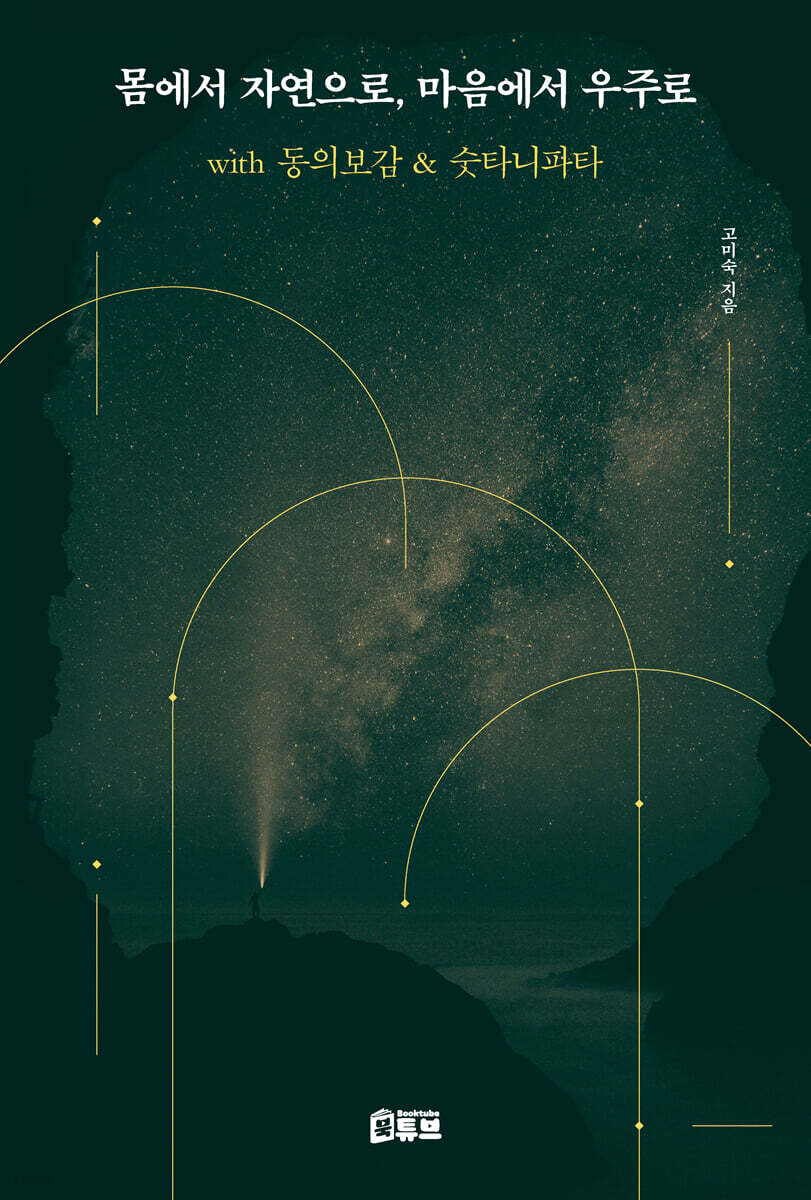
From body to nature, from mind to universe
 |
Description
Book Introduction
Stop the race of alienation Moving forward in the exploration of life and mind!! The path to health and liberation conveyed through the wisdom of Oriental medicine and Buddhism! Classical critic Go Mi-sook reflects on the problems of body and mind that modern people face through two classics: the Donguibogam, an important cultural heritage and a compilation of oriental medicine, and the Suttanipata, an early Buddhist scripture containing the voice of the young Buddha and well-known to us for the phrase, “Go alone like a rhinoceros horn.” The author points out that modern people living in Korean society today are living far from their life base, suffering from obsession with money, addiction to consumption, obsession with home and family, desire for recognition, and loneliness, and that their bodies and minds become painful as a result of that distance. In short, this book's problem is that we are living 'too far from myself', and that in order to stop this rush of alienation and overcome the pain, it is essential to explore our lives from now on. This book suggests that we begin the path of seeking such truth through the Donguibogam and the Suttanipāta. The Donguibogam, which represents the 'path to health' that has been passed down in the East for thousands of years, and the Buddhist thought that has pondered the problems of the human mind and suffering for over 2,600 years, are brought to the here and now to revive our vitality and spirituality, and to talk about living a life that flows without attachment, a life filled with wisdom and friendship. |
- You can preview some of the book's contents.
Preview
index
At the beginning of the book
Lecture 1: From Body to Nature, from Mind to Universe
1.
What don't we know?
2.
Donguibogam and Suttanipata: Explorations into Existence and the Universe
Second Lecture _ Pathos of Youth, Logos of Old Age
1.
Donguibogam, Logos of Old Age, Vol. 60
2.
The Pathos of Youth, Suttanipāta
Third Lecture _ The Spirit of Life and the Mind of the Devil (1): The Source of Life and Existence
1.
What does existence move towards?
2.
Jeonggishin and Tamjinchi
Lecture Four: The Source of Karma and Reincarnation
1.
Control your desires and preserve your emotions.
2.
Qi, the energy of movement and circulation
3.
God, the mental activity of drawing a map of life
Lecture 5: Tune Your Seven Emotions and Protect Your Senses
1.
The coordination and health of the seven emotions
2.
Protection and Purification of the Senses
Lecture Six _ The Community of Body-Typers vs. I am not 'me'!
1.
Are all the four elements empty?
2.
Body, a community of others
3.
I am not 'me'!
Lecture Seven: Theory of Yin and Yang and the Five Elements and the Law of Dependent Origination
1.
The principles of the Donguibogam and the theory of yin-yang and the five elements
2.
Acting, the Interaction of Mind and the Universe
Lecture Eight: The Sublimation of Sutra and Nirvana
1.
From Eumheohwadong to Susunghwagang
2.
Pull out the poisonous arrow of delusion
Lecture 9: Four Pillars of Destiny and Karma
1.
Four Pillars of Destiny, Drawing the Map of Destiny
2.
The Map of Karma and Uplifting
Lecture 10: The Path of Non-Passage and the Cessation of Stubbornness
1.
The Path of Escape from Suffering - The Path of Obstinacy
2.
The road with teachers and friends
Lecture 1: From Body to Nature, from Mind to Universe
1.
What don't we know?
2.
Donguibogam and Suttanipata: Explorations into Existence and the Universe
Second Lecture _ Pathos of Youth, Logos of Old Age
1.
Donguibogam, Logos of Old Age, Vol. 60
2.
The Pathos of Youth, Suttanipāta
Third Lecture _ The Spirit of Life and the Mind of the Devil (1): The Source of Life and Existence
1.
What does existence move towards?
2.
Jeonggishin and Tamjinchi
Lecture Four: The Source of Karma and Reincarnation
1.
Control your desires and preserve your emotions.
2.
Qi, the energy of movement and circulation
3.
God, the mental activity of drawing a map of life
Lecture 5: Tune Your Seven Emotions and Protect Your Senses
1.
The coordination and health of the seven emotions
2.
Protection and Purification of the Senses
Lecture Six _ The Community of Body-Typers vs. I am not 'me'!
1.
Are all the four elements empty?
2.
Body, a community of others
3.
I am not 'me'!
Lecture Seven: Theory of Yin and Yang and the Five Elements and the Law of Dependent Origination
1.
The principles of the Donguibogam and the theory of yin-yang and the five elements
2.
Acting, the Interaction of Mind and the Universe
Lecture Eight: The Sublimation of Sutra and Nirvana
1.
From Eumheohwadong to Susunghwagang
2.
Pull out the poisonous arrow of delusion
Lecture 9: Four Pillars of Destiny and Karma
1.
Four Pillars of Destiny, Drawing the Map of Destiny
2.
The Map of Karma and Uplifting
Lecture 10: The Path of Non-Passage and the Cessation of Stubbornness
1.
The Path of Escape from Suffering - The Path of Obstinacy
2.
The road with teachers and friends
Into the book
So what do you see when you live? You live by looking outside.
It's just me fitting myself into some externally set standard.
Of course, this is not easy either.
External standards and the scale of my life can't possibly align. So, because I live by barely keeping up, everything ends up looking alienated.
I work hard at something, but there's always a corner of my heart that keeps thinking, 'This isn't it...'
Going to school is alienating, studying is alienating, and work is alienating.
Even if you succeed, you are left out, and even if you don't succeed, you are left out.
Ultimately, life itself is filled with alienation.
'Alienation' means 'far away, unfamiliar, out of place'.
How can we overcome this alienation? It's simple.
You just have to find out about yourself.
We cannot live without knowing.
You have to learn something every day to survive.
You live with the power you have.
--- p.19
As we search for principles, logic, and historical changes in this way, the path from the body to nature, and from the mind to the universe, opens up.
Once that happens, the useless desire for recognition and the self-consciousness built on it fall away, and your body becomes much lighter.
That lightness itself is immunity.
We all know that when we're stressed, our immune system is weakened.
But most of the stress is related to the desire for recognition.
If you are not conscious of other people's gaze, your stress level will be greatly reduced.
Once you let go of the desire for recognition, you can begin to explore yourself.
Of course, you can also escape the desire for recognition through self-exploration.
That kind of interaction is called performance.
--- p.27
However, to practice these teachings on a daily basis, a community or network is essential.
Practice cannot be separated from daily life.
No matter how great your knowledge is or how deep your samadhi experience is, if you cannot realize that state in your daily life, it is just empty recitation.
The habits and karma our bodies have have tremendous power.
No matter how good a story you hear and how enlightened you feel, greed will immediately creep in.
And how powerful is the power of capitalism?
The lure of money, goods, and pleasures is truly beyond the power of a hurricane.
There is no way to overcome this alone.
So, the Buddha established a Sangha community.
You should never study alone.
‘Eating alone’ is dangerous, but ‘working alone’ is even more dangerous.
The structure of desire and the frame of character do not change, but rather worsen.
--- p.101
The same goes for the path of the mind.
Tamjinchido can also be said to be a kind of state of not getting enough energy.
Whether it's people, objects, money, or fame, our obsession with objects can be said to be a fantasy steeped in greed and anger.
When you become obsessed with something, you get caught up in that illusion and run wild, and when things don't go your way, you explode in anger.
Then again, we create an illusion about the whole world within the frame of resentment and self-reproach.
The thing that makes you suffer is not even noticing that the things that cause you pain are like dreams, mists, and dust - that is the pain.
In that sense, the mind can be said to be the base of greed and anger.
Only by breaking through the mind of greed and anger can we begin to see the way out.
That's why I tell you to keep doubting and exploring.
Then you can escape from the three poisons.
--- p.138
If you look closely, the reason we cannot escape from greed and hatred is because of the sweetness buried in these three poisons.
In this way, the Buddha's teachings are not just abstract revelations, but are based on very cool analysis.
They don't just vaguely say, 'Live a good life,' 'Serve Buddha,' or 'Believe in Nirvana.'
Through experimentation and observation, we are asked to see the reality of existence and the world as it is.
The choice? Of course, it's yours.
Buddha cannot wash away your suffering or rescue you from the swamp of affliction.
It just shows you the way.
--- p.141
So what we are living now is not living.
I'm barely surviving, either exhausted or anxious.
This is not respecting yourself.
Think, 'I have the right to be happier than this,' and there are sayings like, 'Be happy or not.'
These weren't just words of healing and comfort.
I became convinced of this when I saw the joy of the Buddha who realized the method of acting.
We too have the right and calling to come closer to that joy.
It's just me fitting myself into some externally set standard.
Of course, this is not easy either.
External standards and the scale of my life can't possibly align. So, because I live by barely keeping up, everything ends up looking alienated.
I work hard at something, but there's always a corner of my heart that keeps thinking, 'This isn't it...'
Going to school is alienating, studying is alienating, and work is alienating.
Even if you succeed, you are left out, and even if you don't succeed, you are left out.
Ultimately, life itself is filled with alienation.
'Alienation' means 'far away, unfamiliar, out of place'.
How can we overcome this alienation? It's simple.
You just have to find out about yourself.
We cannot live without knowing.
You have to learn something every day to survive.
You live with the power you have.
--- p.19
As we search for principles, logic, and historical changes in this way, the path from the body to nature, and from the mind to the universe, opens up.
Once that happens, the useless desire for recognition and the self-consciousness built on it fall away, and your body becomes much lighter.
That lightness itself is immunity.
We all know that when we're stressed, our immune system is weakened.
But most of the stress is related to the desire for recognition.
If you are not conscious of other people's gaze, your stress level will be greatly reduced.
Once you let go of the desire for recognition, you can begin to explore yourself.
Of course, you can also escape the desire for recognition through self-exploration.
That kind of interaction is called performance.
--- p.27
However, to practice these teachings on a daily basis, a community or network is essential.
Practice cannot be separated from daily life.
No matter how great your knowledge is or how deep your samadhi experience is, if you cannot realize that state in your daily life, it is just empty recitation.
The habits and karma our bodies have have tremendous power.
No matter how good a story you hear and how enlightened you feel, greed will immediately creep in.
And how powerful is the power of capitalism?
The lure of money, goods, and pleasures is truly beyond the power of a hurricane.
There is no way to overcome this alone.
So, the Buddha established a Sangha community.
You should never study alone.
‘Eating alone’ is dangerous, but ‘working alone’ is even more dangerous.
The structure of desire and the frame of character do not change, but rather worsen.
--- p.101
The same goes for the path of the mind.
Tamjinchido can also be said to be a kind of state of not getting enough energy.
Whether it's people, objects, money, or fame, our obsession with objects can be said to be a fantasy steeped in greed and anger.
When you become obsessed with something, you get caught up in that illusion and run wild, and when things don't go your way, you explode in anger.
Then again, we create an illusion about the whole world within the frame of resentment and self-reproach.
The thing that makes you suffer is not even noticing that the things that cause you pain are like dreams, mists, and dust - that is the pain.
In that sense, the mind can be said to be the base of greed and anger.
Only by breaking through the mind of greed and anger can we begin to see the way out.
That's why I tell you to keep doubting and exploring.
Then you can escape from the three poisons.
--- p.138
If you look closely, the reason we cannot escape from greed and hatred is because of the sweetness buried in these three poisons.
In this way, the Buddha's teachings are not just abstract revelations, but are based on very cool analysis.
They don't just vaguely say, 'Live a good life,' 'Serve Buddha,' or 'Believe in Nirvana.'
Through experimentation and observation, we are asked to see the reality of existence and the world as it is.
The choice? Of course, it's yours.
Buddha cannot wash away your suffering or rescue you from the swamp of affliction.
It just shows you the way.
--- p.141
So what we are living now is not living.
I'm barely surviving, either exhausted or anxious.
This is not respecting yourself.
Think, 'I have the right to be happier than this,' and there are sayings like, 'Be happy or not.'
These weren't just words of healing and comfort.
I became convinced of this when I saw the joy of the Buddha who realized the method of acting.
We too have the right and calling to come closer to that joy.
--- p.304~305
Publisher's Review
▶Author's Note
The prelude to this book was set in 2020, just as the coronavirus pandemic was hitting.
In a time when the entire world was reeling under the attack of an unfamiliar microorganism called COVID-19, I decided to give a lecture on two classics that I had vaguely harbored, along with the questions, "How should we live now?" and "Where should we go?"
『Donguibogam』 vs 『Suttanipata』.
I wanted to redraw the map of life and civilization by crossing two classics.
If the former is the path from the body to nature, the latter is the path from the mind to the universe.
If the former is the logos of an old man, steeped in the history and traditions of East Asian civilization, the latter is the pathos of a young man, fresh from the age-old tradition of Brahmanism, who has just emerged into the intellectual history of mankind.
I wanted to try an intellectual adventure where the logos of old age and the pathos of youth intersect.
Of course, the journey from the body to nature and the journey from the mind to the universe can never be separated.
As Venerable Jeonghwa said, “We are entirely material and entirely spirit.”
- From 'Introduction'
The prelude to this book was set in 2020, just as the coronavirus pandemic was hitting.
In a time when the entire world was reeling under the attack of an unfamiliar microorganism called COVID-19, I decided to give a lecture on two classics that I had vaguely harbored, along with the questions, "How should we live now?" and "Where should we go?"
『Donguibogam』 vs 『Suttanipata』.
I wanted to redraw the map of life and civilization by crossing two classics.
If the former is the path from the body to nature, the latter is the path from the mind to the universe.
If the former is the logos of an old man, steeped in the history and traditions of East Asian civilization, the latter is the pathos of a young man, fresh from the age-old tradition of Brahmanism, who has just emerged into the intellectual history of mankind.
I wanted to try an intellectual adventure where the logos of old age and the pathos of youth intersect.
Of course, the journey from the body to nature and the journey from the mind to the universe can never be separated.
As Venerable Jeonghwa said, “We are entirely material and entirely spirit.”
- From 'Introduction'
GOODS SPECIFICS
- Publication date: November 25, 2021
- Page count, weight, size: 424 pages | 498g | 138*204*30mm
- ISBN13: 9791192128009
- ISBN10: 1192128001
You may also like
카테고리
korean


korean

![ELLE 엘르 스페셜 에디션 A형 : 12월 [2025]](http://librairie.coreenne.fr/cdn/shop/files/b8e27a3de6c9538896439686c6b0e8fb.jpg?v=1766436872&width=3840)


