

First Man
 |
Description
Book Introduction
The First Man in Space: The Only Official Biography of Neil Armstrong
In 1969, Apollo 11 landed on the lunar surface.
Neil Armstrong, a taciturn and determined astronaut from Ohio, became a legend when he first set foot on that unknown land.
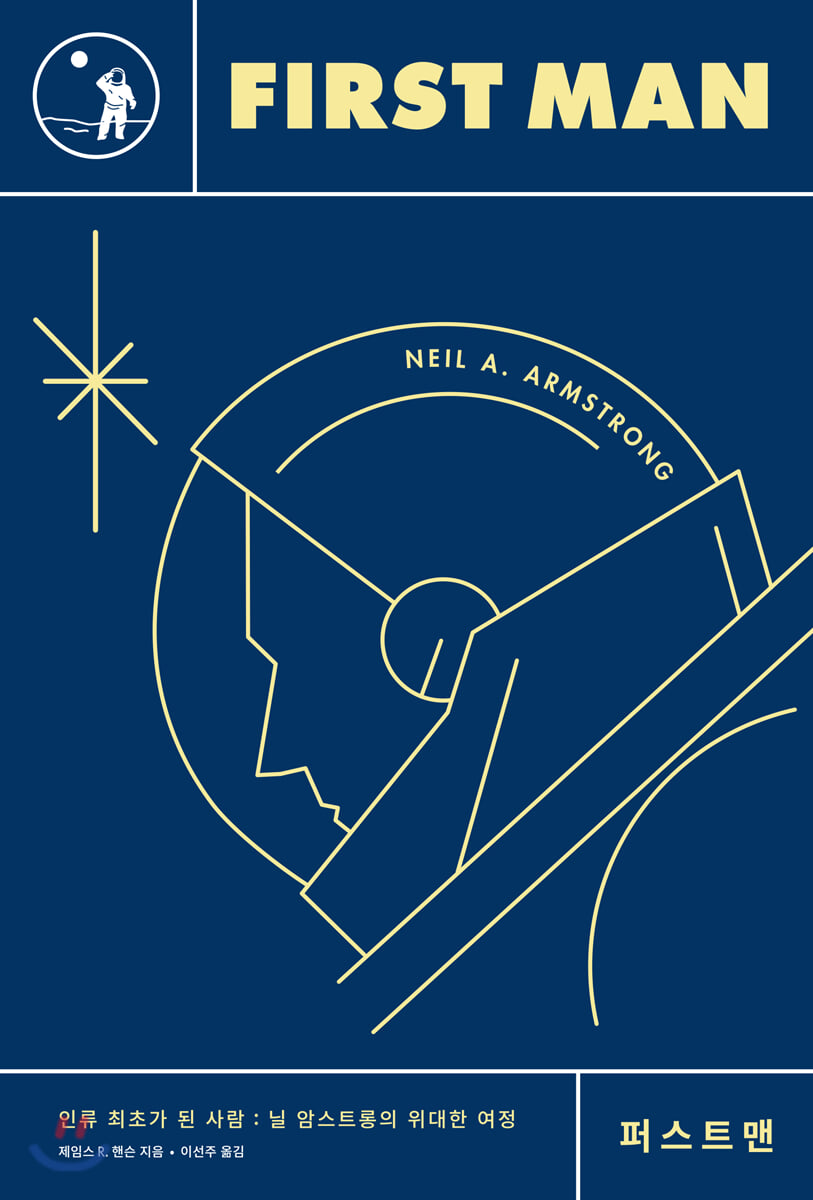
"First Man" is the only official biography of Neil Armstrong, published in Korea ahead of the 50th anniversary of the moon landing.
Neil Armstrong was extremely shy about the press after his moon landing and rarely gave interviews, so little is known about his personal life.
Although several famous authors, including James Michener, asked to write his biography, Armstrong declined them all.
James R., author of First Man
After three years of persuasion, Dr. Hanson became Armstrong's sole biographer in June 2002.
Through this book, readers can simultaneously explore the life of a hero, the history of late 20th-century America, and the history of space exploration.
In 1969, Apollo 11 landed on the lunar surface.
Neil Armstrong, a taciturn and determined astronaut from Ohio, became a legend when he first set foot on that unknown land.
"First Man" is the only official biography of Neil Armstrong, published in Korea ahead of the 50th anniversary of the moon landing.
Neil Armstrong was extremely shy about the press after his moon landing and rarely gave interviews, so little is known about his personal life.
Although several famous authors, including James Michener, asked to write his biography, Armstrong declined them all.
James R., author of First Man
After three years of persuasion, Dr. Hanson became Armstrong's sole biographer in June 2002.
Through this book, readers can simultaneously explore the life of a hero, the history of late 20th-century America, and the history of space exploration.
- You can preview some of the book's contents.
Preview
index
Prologue Ahead of the 50th Anniversary of the Moon Landing
Start.
firing
Part 1.
childhood
1.
The Genesis of the American
2.
Big dreams grown in a small town
3.
A sixteen-year-old boy's first solo flight
4.
Finding Professional Identity in Engineering
Part 2.
Navy pilot
5.
Become a Navy fighter pilot
6.
Participate in the Korean War
Part 3.
research pilot
7. Test pilot at the NACA Research Institute
8.
Climb to the edge of space
9.
Death of a two-year-old daughter
10.
Choosing to become an astronaut
11. Be selected as a NASA astronaut
Part 4.
astronaut
12.
Training, training, training for the moon
13.
Be appointed captain of a spaceship
14.
Commanding Gemini 8
15.
Living as an astronaut's wife
16.
Another mission, a goodwill trip
Part 5.
Apollo spacecraft captain
17.
Overcoming the spaceship fire
18.
Development of a spacecraft to go to the moon
19.
Apollo 11 pilots
20.
Who will be the first astronaut to walk on the moon?
21.
Why we should go to the moon
Part 6.
The first human to walk on the moon
22.
Launch to the moon
23.
Countdown to the moon landing
24.
One small step for man
25.
Can we return to Earth?
26.
What we gained and lost from our trip to the moon
Part 7.
space hero
27.
Take on a new challenge
28.
“I’ve always been an engineer.”
29.
dark side of the moon
30.
Return to the sky
Acknowledgements
Translator's Note
Start.
firing
Part 1.
childhood
1.
The Genesis of the American
2.
Big dreams grown in a small town
3.
A sixteen-year-old boy's first solo flight
4.
Finding Professional Identity in Engineering
Part 2.
Navy pilot
5.
Become a Navy fighter pilot
6.
Participate in the Korean War
Part 3.
research pilot
7. Test pilot at the NACA Research Institute
8.
Climb to the edge of space
9.
Death of a two-year-old daughter
10.
Choosing to become an astronaut
11. Be selected as a NASA astronaut
Part 4.
astronaut
12.
Training, training, training for the moon
13.
Be appointed captain of a spaceship
14.
Commanding Gemini 8
15.
Living as an astronaut's wife
16.
Another mission, a goodwill trip
Part 5.
Apollo spacecraft captain
17.
Overcoming the spaceship fire
18.
Development of a spacecraft to go to the moon
19.
Apollo 11 pilots
20.
Who will be the first astronaut to walk on the moon?
21.
Why we should go to the moon
Part 6.
The first human to walk on the moon
22.
Launch to the moon
23.
Countdown to the moon landing
24.
One small step for man
25.
Can we return to Earth?
26.
What we gained and lost from our trip to the moon
Part 7.
space hero
27.
Take on a new challenge
28.
“I’ve always been an engineer.”
29.
dark side of the moon
30.
Return to the sky
Acknowledgements
Translator's Note
Into the book
Armstrong found his professional identity in 'engineering' throughout his life.
Even during his time as a test pilot and astronaut, Armstrong considered himself first and foremost an aeronautical engineer.
“I am a naive engineer, and I will always be.” --- p.66
In fact, it was 'engineering' rather than science that made the moon landing possible, and the first person to set foot on the moon was an 'engineer.' --- p.67
June was convinced that Neil had created a whole new life, at least for himself, by becoming an astronaut.
“I think the death of my young daughter forced my brother to focus his energy on more productive pursuits.
From then on, I started working on the space program.” --- p.139
As always, Armstrong used the flight that brought him infamy as a learning opportunity. --- p.149
“There’s a saying that ‘no man is an island’, but well, Neil is kind of an island…….
He was more interested in what he was thinking and what was on his mind than what other people thought of him.” --- p.170
“If you divide people into thinkers and doers, test pilots are more likely to be doers, but Neil was more of a thinker,” Michael Collins remembered. --- p.178
Armstrong used the word "we" whenever he talked about flight or spaceflight. --- p.197
No one was more merciless in criticizing Armstrong's piloting skills than Armstrong himself.
“We can all do our best to the best of our ability.” --- p.208
“People always ask me what it’s like to be married to an astronaut,” Janet said in an interview with Life magazine from 1966 to 1969.
Rather, I think it would be more appropriate to ask, “What is it like to live as Neil Armstrong’s wife?” --- p.219
But Armstrong said, “I don’t blame people for anything.
These things happen all the time in the world we live in, and we should expect them to happen.
I just try my best to avoid that from happening to me.
“I never blamed anyone, I just thought that we need to have the proper equipment, knowledge, skills, and methods to survive an accident,” he said. --- p.236
He wasn't the kind of person to brag loudly, saying, 'Hey, I'm going to be the first person to walk on the moon!'
Neil didn't even think about that.
If you said, 'You're going to be the most famous person on Earth for the rest of your life,' you'd be the kind of person who would say, 'Well, then I don't want to be the first person to walk on the moon.' --- p.281
“Is there any other philosophical reason why we should go to the moon?” he asked.
“It’s human nature to want to face challenges,” Armstrong said hesitantly.
“It is the essence of the deep inner mind,” he answered.
--- p.308
“This is one small step for man, one giant leap for mankind.”
Even during his time as a test pilot and astronaut, Armstrong considered himself first and foremost an aeronautical engineer.
“I am a naive engineer, and I will always be.” --- p.66
In fact, it was 'engineering' rather than science that made the moon landing possible, and the first person to set foot on the moon was an 'engineer.' --- p.67
June was convinced that Neil had created a whole new life, at least for himself, by becoming an astronaut.
“I think the death of my young daughter forced my brother to focus his energy on more productive pursuits.
From then on, I started working on the space program.” --- p.139
As always, Armstrong used the flight that brought him infamy as a learning opportunity. --- p.149
“There’s a saying that ‘no man is an island’, but well, Neil is kind of an island…….
He was more interested in what he was thinking and what was on his mind than what other people thought of him.” --- p.170
“If you divide people into thinkers and doers, test pilots are more likely to be doers, but Neil was more of a thinker,” Michael Collins remembered. --- p.178
Armstrong used the word "we" whenever he talked about flight or spaceflight. --- p.197
No one was more merciless in criticizing Armstrong's piloting skills than Armstrong himself.
“We can all do our best to the best of our ability.” --- p.208
“People always ask me what it’s like to be married to an astronaut,” Janet said in an interview with Life magazine from 1966 to 1969.
Rather, I think it would be more appropriate to ask, “What is it like to live as Neil Armstrong’s wife?” --- p.219
But Armstrong said, “I don’t blame people for anything.
These things happen all the time in the world we live in, and we should expect them to happen.
I just try my best to avoid that from happening to me.
“I never blamed anyone, I just thought that we need to have the proper equipment, knowledge, skills, and methods to survive an accident,” he said. --- p.236
He wasn't the kind of person to brag loudly, saying, 'Hey, I'm going to be the first person to walk on the moon!'
Neil didn't even think about that.
If you said, 'You're going to be the most famous person on Earth for the rest of your life,' you'd be the kind of person who would say, 'Well, then I don't want to be the first person to walk on the moon.' --- p.281
“Is there any other philosophical reason why we should go to the moon?” he asked.
“It’s human nature to want to face challenges,” Armstrong said hesitantly.
“It is the essence of the deep inner mind,” he answered.
--- p.308
“This is one small step for man, one giant leap for mankind.”
--- p.401
Publisher's Review
From a boy who loved airplanes to first man
Neil Armstrong was born in August 1930 in a small town in Ohio, USA, the eldest of three children.
He learned to read and write at the age of three, and although he skipped a grade in elementary school and was younger than his classmates, he never missed out on first place.
Armstrong loved airplanes from a young age.
I started building model airplanes when I was eight or nine, and when I was fifteen, I saved up money through part-time jobs and received flight training.
In August 1946, on his sixteenth birthday, he received his student pilot's license and made his first solo flight a week or two later.
At that time, airplanes were making great strides, flying faster than the speed of sound and preparing to fly into space.
Armstrong went on to Purdue University and majored in aeronautical engineering, laying the academic foundation for his future as an astronaut.
Immediately after graduating from college in early 1955, he joined NACA (National Advisory Committee for Aeronautics) and became a research pilot.
It was a research job, piloting experimental aircraft that challenged the limits.
In 1957, when the Soviet Union launched the world's first artificial satellite, Sputnik 1, into Earth's orbit, the United States, feeling a sense of crisis, abolished NACA and reorganized it into NASA.
In 1961, the Soviet Union once again surprised the world when Yuri Gagarin became the first human to fly into space.
President Kennedy, needing a dramatic reversal, promised to “put a man on the moon before the end of the 1960s.”
In early September 1962, Neil Armstrong received a phone call from NASA's Manned Spacecraft Center.
It was a notification that I had been selected as an astronaut.
In March 1966, he launched into space as commander of Gemini 8, and on July 16, 1969, he left Earth aboard Apollo 11 to become the first human to land on the moon.
A person who was cold-hearted in times of crisis, but had a warm heart
His life until he landed on the moon was a series of life-threatening challenges.
When he fought in the Korean War, when he was a test pilot, when he was training to be an astronaut, many of his close colleagues died, and he himself often narrowly escaped death.
His two-year-old daughter died of a brain tumor, and he and his wife and two sons almost died in a house fire.
Even in such moments, he remained calm and collected.
He barely escaped when the plane he was training for a moon landing crashed and exploded, but as soon as he escaped death, he returned to the office and started organizing documents as if nothing had happened.
Such outstanding crisis management skills and composure played a big role in his later selection as First Man.
On the one hand, he was a man of good character.
Neil Armstrong served in the Navy while attending college and participated in the Korean War from August 1951 to March of the following year.
His role was to escort reconnaissance aircraft flying fighter jets to monitor the situation in North Korea, or to drop bombs on infrastructure and military installations such as railroads and bridges to destroy them.
One morning, while on a combat flight in his Panther fighter jet, Armstrong saw unarmed North Korean soldiers lined up outside their outdoor barracks doing morning exercises.
He could have killed them all with machine gun fire, but he didn't pull the trigger.
Because I couldn't kill people who couldn't protect themselves.
He never told anyone about this, and only confided in the author of this book in 2005.
A meticulously recreated story of a giant
Neil Armstrong was a man who rarely showed his emotions and seemed to live a reclusive life, as he avoided the press to the extreme.
Several famous authors, including James Michener, wanted to write his biography, but he turned them all down.
The author of this book, James R.
After three years of persuading Neil Armstrong, Dr. Hanson became the only biographer he would accept.
Thanks to this, he was able to not only interview Neil Armstrong for a long time, but also travel across the United States to meet and talk with Armstrong's family, friends, and colleagues, and to look into personal records, and to meticulously look back on Armstrong's life.
With the help of researchers from various institutions, historians, archivists, and science museum curators, we also studied the world of aerospace that Armstrong was involved in.
As a historian himself who has studied the history of aerospace technology, Dr. Hanson recreates Armstrong's time and the man himself in excruciating detail.
Above all, as you read about the entire spaceflight of Apollo 11, from its moon landing to its return to Earth, recreated in seconds, you will find yourself nodding along to Armstrong's words: "It is harder to fake a moon landing than to actually land on it."
The author also reconstructs little-known aspects of Neil Armstrong's personal life, including his childhood, his time as a Boy Scout, his college years, his marriage to his first wife Janet, his second wife Carol, whom he remarried in his 60s, and the death of his two-year-old daughter from a brain tumor.
The story of Buzz Aldrin, who went to the moon with me, is also interesting.
Aldrin was anxious to become the first man to walk on the moon, but Armstrong thought that "that wasn't important."
The author states that Armstrong exemplifies all the qualities and core values of a great personality: self-control, prudence, composure, discernment, a thirst for knowledge, a spirit of innovation, strength, decisiveness, confidence, self-reliance, honesty, humility, trustworthiness, respect for others, and sincerity.
As you read Armstrong's words and actions, which are meticulously recounted in the book, you will understand why the author gave such an assessment.
The film "First Man," released worldwide in October 2018 ahead of the 50th anniversary of the moon landing, was based on this book.
Neil Armstrong was born in August 1930 in a small town in Ohio, USA, the eldest of three children.
He learned to read and write at the age of three, and although he skipped a grade in elementary school and was younger than his classmates, he never missed out on first place.
Armstrong loved airplanes from a young age.
I started building model airplanes when I was eight or nine, and when I was fifteen, I saved up money through part-time jobs and received flight training.
In August 1946, on his sixteenth birthday, he received his student pilot's license and made his first solo flight a week or two later.
At that time, airplanes were making great strides, flying faster than the speed of sound and preparing to fly into space.
Armstrong went on to Purdue University and majored in aeronautical engineering, laying the academic foundation for his future as an astronaut.
Immediately after graduating from college in early 1955, he joined NACA (National Advisory Committee for Aeronautics) and became a research pilot.
It was a research job, piloting experimental aircraft that challenged the limits.
In 1957, when the Soviet Union launched the world's first artificial satellite, Sputnik 1, into Earth's orbit, the United States, feeling a sense of crisis, abolished NACA and reorganized it into NASA.
In 1961, the Soviet Union once again surprised the world when Yuri Gagarin became the first human to fly into space.
President Kennedy, needing a dramatic reversal, promised to “put a man on the moon before the end of the 1960s.”
In early September 1962, Neil Armstrong received a phone call from NASA's Manned Spacecraft Center.
It was a notification that I had been selected as an astronaut.
In March 1966, he launched into space as commander of Gemini 8, and on July 16, 1969, he left Earth aboard Apollo 11 to become the first human to land on the moon.
A person who was cold-hearted in times of crisis, but had a warm heart
His life until he landed on the moon was a series of life-threatening challenges.
When he fought in the Korean War, when he was a test pilot, when he was training to be an astronaut, many of his close colleagues died, and he himself often narrowly escaped death.
His two-year-old daughter died of a brain tumor, and he and his wife and two sons almost died in a house fire.
Even in such moments, he remained calm and collected.
He barely escaped when the plane he was training for a moon landing crashed and exploded, but as soon as he escaped death, he returned to the office and started organizing documents as if nothing had happened.
Such outstanding crisis management skills and composure played a big role in his later selection as First Man.
On the one hand, he was a man of good character.
Neil Armstrong served in the Navy while attending college and participated in the Korean War from August 1951 to March of the following year.
His role was to escort reconnaissance aircraft flying fighter jets to monitor the situation in North Korea, or to drop bombs on infrastructure and military installations such as railroads and bridges to destroy them.
One morning, while on a combat flight in his Panther fighter jet, Armstrong saw unarmed North Korean soldiers lined up outside their outdoor barracks doing morning exercises.
He could have killed them all with machine gun fire, but he didn't pull the trigger.
Because I couldn't kill people who couldn't protect themselves.
He never told anyone about this, and only confided in the author of this book in 2005.
A meticulously recreated story of a giant
Neil Armstrong was a man who rarely showed his emotions and seemed to live a reclusive life, as he avoided the press to the extreme.
Several famous authors, including James Michener, wanted to write his biography, but he turned them all down.
The author of this book, James R.
After three years of persuading Neil Armstrong, Dr. Hanson became the only biographer he would accept.
Thanks to this, he was able to not only interview Neil Armstrong for a long time, but also travel across the United States to meet and talk with Armstrong's family, friends, and colleagues, and to look into personal records, and to meticulously look back on Armstrong's life.
With the help of researchers from various institutions, historians, archivists, and science museum curators, we also studied the world of aerospace that Armstrong was involved in.
As a historian himself who has studied the history of aerospace technology, Dr. Hanson recreates Armstrong's time and the man himself in excruciating detail.
Above all, as you read about the entire spaceflight of Apollo 11, from its moon landing to its return to Earth, recreated in seconds, you will find yourself nodding along to Armstrong's words: "It is harder to fake a moon landing than to actually land on it."
The author also reconstructs little-known aspects of Neil Armstrong's personal life, including his childhood, his time as a Boy Scout, his college years, his marriage to his first wife Janet, his second wife Carol, whom he remarried in his 60s, and the death of his two-year-old daughter from a brain tumor.
The story of Buzz Aldrin, who went to the moon with me, is also interesting.
Aldrin was anxious to become the first man to walk on the moon, but Armstrong thought that "that wasn't important."
The author states that Armstrong exemplifies all the qualities and core values of a great personality: self-control, prudence, composure, discernment, a thirst for knowledge, a spirit of innovation, strength, decisiveness, confidence, self-reliance, honesty, humility, trustworthiness, respect for others, and sincerity.
As you read Armstrong's words and actions, which are meticulously recounted in the book, you will understand why the author gave such an assessment.
The film "First Man," released worldwide in October 2018 ahead of the 50th anniversary of the moon landing, was based on this book.
GOODS SPECIFICS
- Date of publication: October 15, 2018
- Page count, weight, size: 600 pages | 788g | 140*210*35mm
- ISBN13: 9791185716695
- ISBN10: 1185716696
You may also like
카테고리
korean


korean

![ELLE 엘르 스페셜 에디션 A형 : 12월 [2025]](http://librairie.coreenne.fr/cdn/shop/files/b8e27a3de6c9538896439686c6b0e8fb.jpg?v=1766436872&width=3840)


