

Capitalist in the Forest
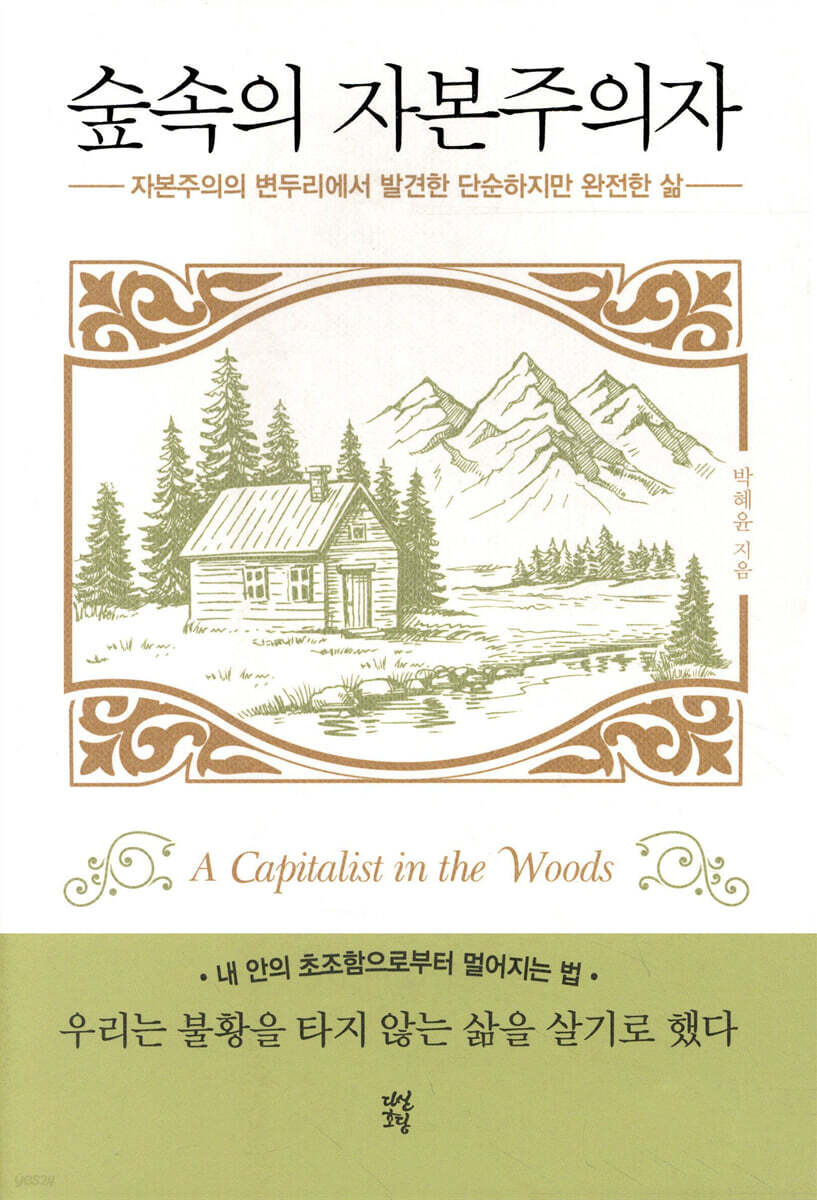 |
Description
Book Introduction
- A word from MD
-
Is a 21st-century Walden possible?Life in a big city requires earning a lot and spending a lot.
Because the cost of food, clothing and shelter is expensive.
I need income.
I have to spend a lot of time working.
Is another life impossible? The author couple packed up their Seoul life and suddenly left for rural America.
To experiment with 21st century Walden.
June 25, 2021. Humanities PD Son Min-gyu
When it becomes burdensome to live according to the pace of the world
I finally set out to find my Walden
A daily newspaper reporter who graduated from Seoul National University and holds a Ph.D. in educational psychology.
The author, who had lived as a so-called elite, found life, which was spent running forward without time to think, increasingly burdensome.
Whether you live as a journalist or a scholar, you have to give up your entire life.
Meanwhile, my husband, who was suffering from burnout, suddenly announced that he was quitting his job.
Now that things have turned out this way, I've made up my mind.
Right now was the opportunity to live a 'harmonious life', my own 'Walden'.
Their retirement became an experiment to see if they could survive by working only as much as they wanted.
He boldly took his children and left Seoul for the United States.
I started a new life in a small, old house built on a wide piece of land with a stream running through it.
I kept only what was necessary and made work and pleasure one.
Instead of spending quickly, I learned to enjoy things leisurely.
Then, even with just 1 million won, a family of four could live comfortably for a month.
We have found a way to be free from money without being completely independent from capitalism.
In this way, the author became a 'capitalist in the forest' who lived more freely and abundantly on the outskirts of capitalism.
"Capitalist in the Forest" is not a book for those who oppose capitalism or dream of becoming farmers.
This book provides a new perspective on life to those who live fiercely all day but are still lying in bed feeling anxious.
You can learn how to discover your own life by walking along the path of 『Capitalist in the Forest』.
I finally set out to find my Walden
A daily newspaper reporter who graduated from Seoul National University and holds a Ph.D. in educational psychology.
The author, who had lived as a so-called elite, found life, which was spent running forward without time to think, increasingly burdensome.
Whether you live as a journalist or a scholar, you have to give up your entire life.
Meanwhile, my husband, who was suffering from burnout, suddenly announced that he was quitting his job.
Now that things have turned out this way, I've made up my mind.
Right now was the opportunity to live a 'harmonious life', my own 'Walden'.
Their retirement became an experiment to see if they could survive by working only as much as they wanted.
He boldly took his children and left Seoul for the United States.
I started a new life in a small, old house built on a wide piece of land with a stream running through it.
I kept only what was necessary and made work and pleasure one.
Instead of spending quickly, I learned to enjoy things leisurely.
Then, even with just 1 million won, a family of four could live comfortably for a month.
We have found a way to be free from money without being completely independent from capitalism.
In this way, the author became a 'capitalist in the forest' who lived more freely and abundantly on the outskirts of capitalism.
"Capitalist in the Forest" is not a book for those who oppose capitalism or dream of becoming farmers.
This book provides a new perspective on life to those who live fiercely all day but are still lying in bed feeling anxious.
You can learn how to discover your own life by walking along the path of 『Capitalist in the Forest』.
- You can preview some of the book's contents.
Preview
index
Prologue: A Life of Taste
Chapter 1: A Life of Picking Blackberries in Season
Capitalism in the Rural Area
The laziest farmer in the world
Living expenses: 1 million won
The more you throw away, the richer it becomes
Above all, eat with joy
Chapter 2: Things I Throw Away to Avoid Living Without a Choice
When dreams get in the way of life
The habit of surrendering to desire
It's not my right
First, stop being grateful and understanding.
There is nothing to teach you
Minimalism in ironing
Chapter 3: How to Live Without Making Money
Scones vs. Fermented Bread
Tolerable poverty
The joys and sorrows of money
We all cause harm
Chapter 4: Finding My Story in the Forest
The gaze that protects me from the world's insults
We can only find ourselves together
Soro's simple and precious story
Life doesn't deceive us.
How to avoid being crushed by the weight of the classics
Piano in the yard
Chapter 5: Things Visible Only When Transparent
The only way to stop time
When humans get closer to God
The Taegeukgi unit lives next door to us.
It all starts with not deceiving myself.
Whose recognition would make me happy?
Some things come true if you take steps.
Loving the present as I watch the end of the epilogue
Chapter 1: A Life of Picking Blackberries in Season
Capitalism in the Rural Area
The laziest farmer in the world
Living expenses: 1 million won
The more you throw away, the richer it becomes
Above all, eat with joy
Chapter 2: Things I Throw Away to Avoid Living Without a Choice
When dreams get in the way of life
The habit of surrendering to desire
It's not my right
First, stop being grateful and understanding.
There is nothing to teach you
Minimalism in ironing
Chapter 3: How to Live Without Making Money
Scones vs. Fermented Bread
Tolerable poverty
The joys and sorrows of money
We all cause harm
Chapter 4: Finding My Story in the Forest
The gaze that protects me from the world's insults
We can only find ourselves together
Soro's simple and precious story
Life doesn't deceive us.
How to avoid being crushed by the weight of the classics
Piano in the yard
Chapter 5: Things Visible Only When Transparent
The only way to stop time
When humans get closer to God
The Taegeukgi unit lives next door to us.
It all starts with not deceiving myself.
Whose recognition would make me happy?
Some things come true if you take steps.
Loving the present as I watch the end of the epilogue
Detailed image

Into the book
It wasn't because of environmental pollution or money that we abandoned this method.
It was because of hatred.
The hatred I felt for these animals was a terrifying feeling I had never felt before in my life.
It was a despair so intense that it was incomparable to the rude people, noise between floors, mean bosses, and economic poverty that exhausted me in the city.
In fact, the crops dug up by these animals were worth very little in monetary terms.
Yet, I wanted to kill these animals right away.
The blood rushed to the top of my head, and my temples were pounding with rage.
So instead of hating deer and farming, we decided to live like deer.
I studied wild gathering.
Instead of cultivating anything to sell, they decided to make a living by growing wild vegetables and gathering them.
---pp.
25~26
Picking blackberries is a really stupid thing to do.
They get hurt a lot from being pricked by thorns, and the time spent on picking, washing, and freezing them is far less than minimum wage.
But the moment I pick blackberries is the moment when I can feel with all my senses how strongly connected I am to this Earth, how closely I am connected to all life on Earth.
I must gather food with my own hands.
And I have to experience firsthand how pitiful the amount of blackberries I worked so hard to harvest is.
---p.
28
At some point, your body will start to hurt.
The goal is to fully enjoy this time so that you won't have any regrets.
The purpose of living is not to prevent bad things from happening, but to enjoy every nook and cranny of life, even if bad things happen, and to live the life I would have lived if I could turn back time.
---p.
64
In modern capitalist society, which maximizes our desires and encourages almost limitless consumption, accurately and precisely knowing our own unique desires and needs actually reduces the fatigue of consumption.
If it's not something I really want, I won't have it, no matter how cheap it is.
No matter how much a value is praised by everyone, if I don't need it, I don't pursue it.
Among the overflowing knowledge, I am truly curious, so I only delve into what brings me joy.
---p.
86
Life is not arithmetic, so we cannot know the outcome of the time we spend today.
No one knows whether throwing away your weekends and immersing yourself in work will lead to a successful career, a lonely life, or both.
Only I know the choices I made in those moments.
So Thoreau said that all life is 'a miserable failure for personal reasons.'
---p.
109
When you grind wheat at home, it is not as uniform as commercially available flour.
There are differences depending on the drying and milling conditions of the wheat.
So, I used stable yeast so that I could adjust it according to the condition of the flour.
Instead, I reduced the amount of yeast to 0.5 grams for 700 grams of bread dough.
It was only possible after baking thousands of loaves and making continuous revisions.
When a fluffy texture similar to regular bread is created, the potential of wheat explodes.
The same amount of salt can taste completely different.
The subtle sweetness of wheat and salt also comes to life.
Here are some things to adjust for the best taste:
Flour temperature, water temperature, air temperature, how much the wheat absorbs water, how well the dough is kneaded, 24-40 hours of low-temperature maturation, oven temperature, how the bread is arranged in the oven according to heat flow, dough size, etc.
Even when everything is going well, there are times when things don't go well.
That's why it's fun.
---p.
121
The fundamental principle of life is to reveal our own shortcomings and imperfections to one another, to help one another, and to give ourselves to one another in order to repay that debt of gratitude.
But living in a society where money replaces all interactions, we often forget that fact.
We say, 'We don't want to cause trouble.'
It's easy to use the word 'nuisance' to others.
But our existence cannot be that perfect.
---p.
156
The reason we should try not to depend on others and try to be considerate of others is not because we are truly capable of complete independence or of helping others.
When people are alone, they lack the ability to solve their own problems, let alone those of others.
We are imperfect and so we naturally live relying on others.
Still, we must try.
To fail.
So that I can realize that no matter how hard I try, I cannot survive on my own and that I have to rely on others.
As we accept others with their imperfections and become more generous to ourselves, we gain the courage to lean on others.
---pp.
156~157
My eldest daughter, now a high school student, recently said she was curious about how people viewed her.
I replied that it was of little use to think about how people viewed me and to worry about their reactions.
When people look at others and judge them, they are always looking at themselves.
It is about finding your own self among the countless things that others have.
The more important question for us is always, 'How do I see others?'
My reactions to others most accurately reveal who I am.
---p.
166
Reading as I please is different from reading as I please.
Just as my body is my own, but it is also the accumulated trace of the entire history of mankind, so are my thoughts.
So exploring my thoughts is not that simple.
Because my thoughts are not isolated and my sole possession.
To let my thoughts run free, unburdened by the weight of experts or classics, is to consciously join the thinking already within me, shared by all of humanity.
---p.
202
Anything done with love and immersion can never be repeated the same way.
The moment I immersed myself in listening to my child's story today will never return, not even to my child or to myself.
Because it's not the same anymore.
So that moment is both the moment of our love and the moment of our death.
What humans fear in the face of death is fate.
But instead of turning away from death, we can practice death every time through love.
---p.
223
This book is not for naturalists or those opposed to capitalism.
It is not written for people who dream of becoming farmers.
Rather, it was written for those who live fiercely all day long but are overcome by anxiety when they lie down.
This book is for those who work for self-satisfaction, enjoy plausible hobbies, and relieve stress, but sometimes wonder if this is the right thing to do.
I hope that someone who lives each day with a sense of helplessness reads this.
To anyone who is struggling with a weary body and mind, I want to let them know that there is more freedom in life than they think.
And the beginning of that freedom could be today, the day you open this book.
It was because of hatred.
The hatred I felt for these animals was a terrifying feeling I had never felt before in my life.
It was a despair so intense that it was incomparable to the rude people, noise between floors, mean bosses, and economic poverty that exhausted me in the city.
In fact, the crops dug up by these animals were worth very little in monetary terms.
Yet, I wanted to kill these animals right away.
The blood rushed to the top of my head, and my temples were pounding with rage.
So instead of hating deer and farming, we decided to live like deer.
I studied wild gathering.
Instead of cultivating anything to sell, they decided to make a living by growing wild vegetables and gathering them.
---pp.
25~26
Picking blackberries is a really stupid thing to do.
They get hurt a lot from being pricked by thorns, and the time spent on picking, washing, and freezing them is far less than minimum wage.
But the moment I pick blackberries is the moment when I can feel with all my senses how strongly connected I am to this Earth, how closely I am connected to all life on Earth.
I must gather food with my own hands.
And I have to experience firsthand how pitiful the amount of blackberries I worked so hard to harvest is.
---p.
28
At some point, your body will start to hurt.
The goal is to fully enjoy this time so that you won't have any regrets.
The purpose of living is not to prevent bad things from happening, but to enjoy every nook and cranny of life, even if bad things happen, and to live the life I would have lived if I could turn back time.
---p.
64
In modern capitalist society, which maximizes our desires and encourages almost limitless consumption, accurately and precisely knowing our own unique desires and needs actually reduces the fatigue of consumption.
If it's not something I really want, I won't have it, no matter how cheap it is.
No matter how much a value is praised by everyone, if I don't need it, I don't pursue it.
Among the overflowing knowledge, I am truly curious, so I only delve into what brings me joy.
---p.
86
Life is not arithmetic, so we cannot know the outcome of the time we spend today.
No one knows whether throwing away your weekends and immersing yourself in work will lead to a successful career, a lonely life, or both.
Only I know the choices I made in those moments.
So Thoreau said that all life is 'a miserable failure for personal reasons.'
---p.
109
When you grind wheat at home, it is not as uniform as commercially available flour.
There are differences depending on the drying and milling conditions of the wheat.
So, I used stable yeast so that I could adjust it according to the condition of the flour.
Instead, I reduced the amount of yeast to 0.5 grams for 700 grams of bread dough.
It was only possible after baking thousands of loaves and making continuous revisions.
When a fluffy texture similar to regular bread is created, the potential of wheat explodes.
The same amount of salt can taste completely different.
The subtle sweetness of wheat and salt also comes to life.
Here are some things to adjust for the best taste:
Flour temperature, water temperature, air temperature, how much the wheat absorbs water, how well the dough is kneaded, 24-40 hours of low-temperature maturation, oven temperature, how the bread is arranged in the oven according to heat flow, dough size, etc.
Even when everything is going well, there are times when things don't go well.
That's why it's fun.
---p.
121
The fundamental principle of life is to reveal our own shortcomings and imperfections to one another, to help one another, and to give ourselves to one another in order to repay that debt of gratitude.
But living in a society where money replaces all interactions, we often forget that fact.
We say, 'We don't want to cause trouble.'
It's easy to use the word 'nuisance' to others.
But our existence cannot be that perfect.
---p.
156
The reason we should try not to depend on others and try to be considerate of others is not because we are truly capable of complete independence or of helping others.
When people are alone, they lack the ability to solve their own problems, let alone those of others.
We are imperfect and so we naturally live relying on others.
Still, we must try.
To fail.
So that I can realize that no matter how hard I try, I cannot survive on my own and that I have to rely on others.
As we accept others with their imperfections and become more generous to ourselves, we gain the courage to lean on others.
---pp.
156~157
My eldest daughter, now a high school student, recently said she was curious about how people viewed her.
I replied that it was of little use to think about how people viewed me and to worry about their reactions.
When people look at others and judge them, they are always looking at themselves.
It is about finding your own self among the countless things that others have.
The more important question for us is always, 'How do I see others?'
My reactions to others most accurately reveal who I am.
---p.
166
Reading as I please is different from reading as I please.
Just as my body is my own, but it is also the accumulated trace of the entire history of mankind, so are my thoughts.
So exploring my thoughts is not that simple.
Because my thoughts are not isolated and my sole possession.
To let my thoughts run free, unburdened by the weight of experts or classics, is to consciously join the thinking already within me, shared by all of humanity.
---p.
202
Anything done with love and immersion can never be repeated the same way.
The moment I immersed myself in listening to my child's story today will never return, not even to my child or to myself.
Because it's not the same anymore.
So that moment is both the moment of our love and the moment of our death.
What humans fear in the face of death is fate.
But instead of turning away from death, we can practice death every time through love.
---p.
223
This book is not for naturalists or those opposed to capitalism.
It is not written for people who dream of becoming farmers.
Rather, it was written for those who live fiercely all day long but are overcome by anxiety when they lie down.
This book is for those who work for self-satisfaction, enjoy plausible hobbies, and relieve stress, but sometimes wonder if this is the right thing to do.
I hope that someone who lives each day with a sense of helplessness reads this.
To anyone who is struggling with a weary body and mind, I want to let them know that there is more freedom in life than they think.
And the beginning of that freedom could be today, the day you open this book.
---From the author's note
Publisher's Review
Found while baking bread in a 110-year-old house
Insights into life that will thrill your weary heart
Arlington, a rural town in the American Northwest, is a place where even further out you can see houses scattered among lush forests.
A family lives in the most shabby and dilapidated single-story house among them.
The author, who lived in Seoul, left everything with his family and settled in rural America.
It's already been seven years since I started living on the outskirts of capitalism, earning little and spending little.
A lot has changed around them in the meantime.
Instead of traveling far in the summer, pick blackberries in a nearby forest and discover the natural flavors and the reason for human communal living. Instead of buying croissants from a fancy bakery, grind your own wheat and bake whole wheat bread, enjoying the time it takes for the dough to rise.
They were more active than anyone else in their quest to discover their own Walden, and finally, a life rich in fresh ideas, full of joy, and vividness unfolded before them.
The author, like Socrates, questions the assumptions that seem obvious in modern society and experiments with life, thereby tasting the essence of life like Thoreau.
His attitude of acting with joy and curiosity rather than fear makes us realize how much we have lived with anxiety and inertia, while also giving us a strange sense of pleasure of freedom.
As I turn each page of "The Capitalist in the Forest," the author's belief that "living itself is quite a good thing" becomes my own.
Insights into life that will thrill your weary heart
Arlington, a rural town in the American Northwest, is a place where even further out you can see houses scattered among lush forests.
A family lives in the most shabby and dilapidated single-story house among them.
The author, who lived in Seoul, left everything with his family and settled in rural America.
It's already been seven years since I started living on the outskirts of capitalism, earning little and spending little.
A lot has changed around them in the meantime.
Instead of traveling far in the summer, pick blackberries in a nearby forest and discover the natural flavors and the reason for human communal living. Instead of buying croissants from a fancy bakery, grind your own wheat and bake whole wheat bread, enjoying the time it takes for the dough to rise.
They were more active than anyone else in their quest to discover their own Walden, and finally, a life rich in fresh ideas, full of joy, and vividness unfolded before them.
The author, like Socrates, questions the assumptions that seem obvious in modern society and experiments with life, thereby tasting the essence of life like Thoreau.
His attitude of acting with joy and curiosity rather than fear makes us realize how much we have lived with anxiety and inertia, while also giving us a strange sense of pleasure of freedom.
As I turn each page of "The Capitalist in the Forest," the author's belief that "living itself is quite a good thing" becomes my own.
GOODS SPECIFICS
- Publication date: June 14, 2021
- Page count, weight, size: 272 pages | 414g | 140*205*20mm
- ISBN13: 9791130638294
- ISBN10: 1130638294
You may also like
카테고리
korean


korean

![GQ KOREA Mark (Monthly): December [2025]](http://librairie.coreenne.fr/cdn/shop/files/8ef265dbbfbf186523ed75ba7319009d.jpg?v=1765340328&width=3840)


