

Bologna: Discover the Humanities on the Red Road
 |
Description
Book Introduction
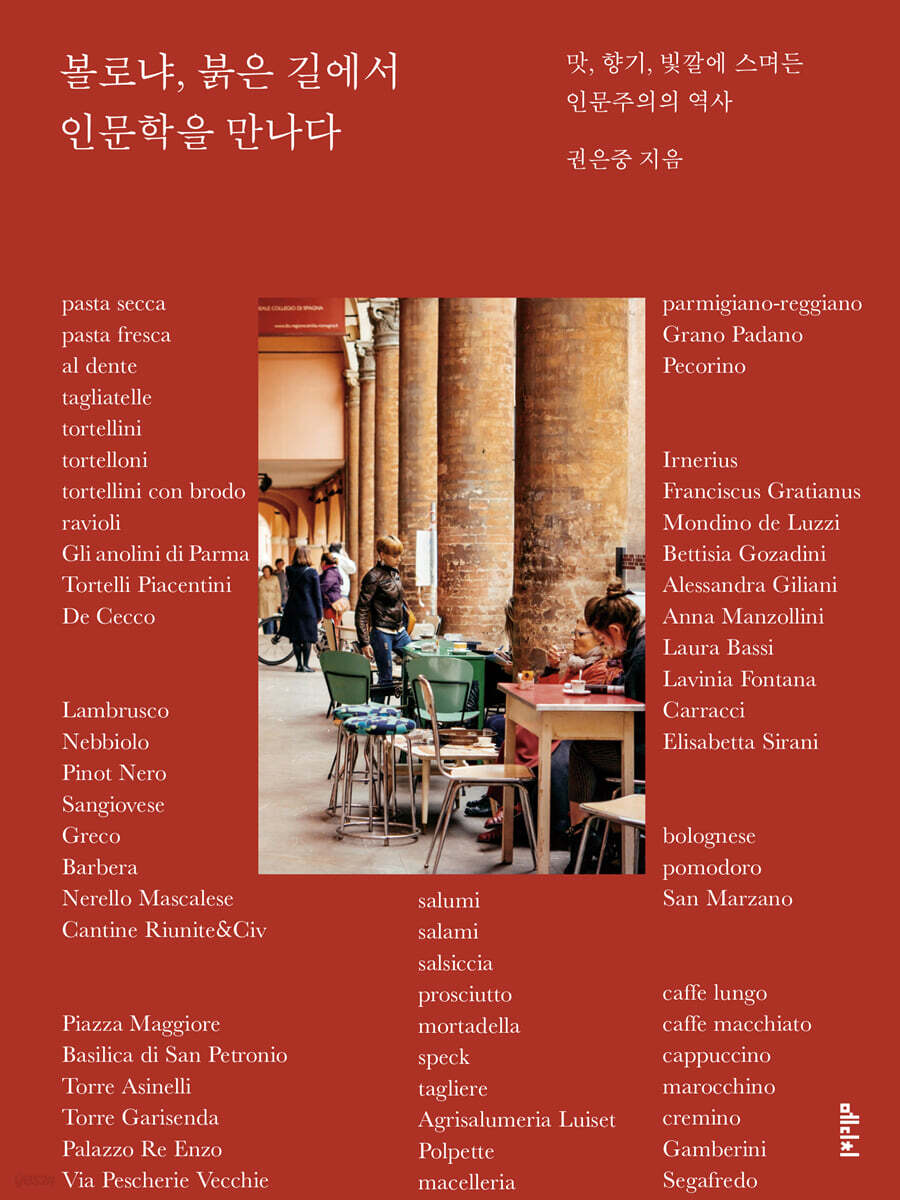
Bologna, the capital of Italian gastronomy, A culinary humanities journey to discover the origins of the flavors that permeate it. The capital of gastronomy, the city of fat, the red city, the city of wise men. The nicknames of Bologna, a city in northern Italy, are as colorful as the city's ancient history. The author, who went to Italy to study cooking, stayed in Bologna at the recommendation of a colleague and fell in love with the city's charm. At first, you will be deeply immersed in the rich flavors of the gastronomic capital, the friendliness of the people, the openness of the city, and the humanism you will encounter while exploring the origins of taste. The author began to wonder, 'Why does Bologna feel so different from other cities in Italy, the United States, or Europe?' This book contains the author's questions and the process of finding his own answers to them. Some may wonder why I went to Bologna instead of Rome, Milan, Florence, or Naples, but by the time you finish the last chapter of this book, that question will have disappeared. The author, who laments the absence of a book introducing a city as wonderful as Bologna, hopes that this book will spark interest among domestic travelers in Bologna, a university city, a city of gastronomy, and a city of art and music. |
- You can preview some of the book's contents.
Preview
index
prolog
Chapter 1 Taste
The taste of pasta
My first pasta wasn't Italian pasta / If you don't know pasta, you don't know Italy / Bologna, the mecca of fresh pasta / It's lucky to have gone to Bologna / The sauce is short and the pasta is long / Let your juniors taste Bologna / The food eaten more than pasta in Bologna / Bologna's soul food, baby dumpling soup / Pasta and tortellini came out of the storehouse
Taste of Pork
The identity of the savory aroma that stimulates the appetite / Bologna already has a Christmas atmosphere from November / You can't help but smile when you receive a lot of wine and ham / Tagliere, a food that reminds you of someone / Italy values pigs more than cows / Salt, wind, and time are all you need / Mortadella, the number one contributor to the rise to the city of fat
The taste of tomatoes
Who was the first to put tomatoes in food? / The unique appearance and taste of Naples tomatoes / Why Italy doesn't put much effort into sauce / The reason Naples ate tomatoes was because of poverty / Did Naples become the national pasta leader thanks to the United States? / "Please report Bolognese made with spaghetti" / Even tomato sauce is different when made in Bologna
Chapter 2 Fragrance
The scent of cheese
Italian Cheeses Given by the Pope to the King / Milk and Cheese: The Marrow of Italians / Why I Am Obsessed with Roman Cheese / The Essence of Italian Cheese Tasted in Bologna / The Secret to Italian Cheese's Flavor: 'Persistence'
The aroma of wine
Bolognapa's criticism of Bologna wine / Opening one's eyes to red wine in Barolo / Blaming my tongue instead of wine / The unexpected charm of Lambrusco, the wine of the wise / Lambrusco, the water of ancient Rome with carbonated bubbles / What is the best-selling wine in Italy? / Italian cuisine vs. French cuisine / Light but heavy bubbles, the secret of that contradiction / The secret of Italy's 600 grape varieties
The aroma of coffee
Why you'll be startled as you walk through Bologna's downtown / Turin, a city with no place for the cacao nigger / Books in libraries, coffee in cafes / Coffee runs in the blood of Italians / Why Bologna's coffee is the most delicious / Why did a dictator emerge from Romagna, next to Bologna? / Bologna, which chose yellow dumplings over red ideology
Chapter 3 Color
Red City
Bologna, red inside and out / Bologna's cathedral is bright red / Bologna's love of bricks is due to DNA / Two ways to see red Bologna from the sky / Bologna's longest cloister, listed in the Guinness Book of World Records / The most beautiful of all cloisters, the cloister of the Basilica of Santo Stefano / The cloister of the University of Bologna, uniquely crimson 251
City of the Wise
Why I Went to Bologna / All Laws Lead to Bologna / Students Thirsty for Law Gather to Found a University / How Did 'Medieval Moscow' Escape Repression? / Medicine, Another Beacon of the University of Bologna / Was It Luck or Skill That It Became the 'City of Wise Men'? / Treading on a Rainbow Made of Steel
City of Beauties
Why am I obsessed with Bologna? / The incredibly kind women of Bologna / “Please teach me Korean” / Bologna, the city of winks / Human anatomy upgraded by Bologna women / The Bologna woman who first painted a female nude / Why did Bologna become the Amazons?
Epilogue
Chapter 1 Taste
The taste of pasta
My first pasta wasn't Italian pasta / If you don't know pasta, you don't know Italy / Bologna, the mecca of fresh pasta / It's lucky to have gone to Bologna / The sauce is short and the pasta is long / Let your juniors taste Bologna / The food eaten more than pasta in Bologna / Bologna's soul food, baby dumpling soup / Pasta and tortellini came out of the storehouse
Taste of Pork
The identity of the savory aroma that stimulates the appetite / Bologna already has a Christmas atmosphere from November / You can't help but smile when you receive a lot of wine and ham / Tagliere, a food that reminds you of someone / Italy values pigs more than cows / Salt, wind, and time are all you need / Mortadella, the number one contributor to the rise to the city of fat
The taste of tomatoes
Who was the first to put tomatoes in food? / The unique appearance and taste of Naples tomatoes / Why Italy doesn't put much effort into sauce / The reason Naples ate tomatoes was because of poverty / Did Naples become the national pasta leader thanks to the United States? / "Please report Bolognese made with spaghetti" / Even tomato sauce is different when made in Bologna
Chapter 2 Fragrance
The scent of cheese
Italian Cheeses Given by the Pope to the King / Milk and Cheese: The Marrow of Italians / Why I Am Obsessed with Roman Cheese / The Essence of Italian Cheese Tasted in Bologna / The Secret to Italian Cheese's Flavor: 'Persistence'
The aroma of wine
Bolognapa's criticism of Bologna wine / Opening one's eyes to red wine in Barolo / Blaming my tongue instead of wine / The unexpected charm of Lambrusco, the wine of the wise / Lambrusco, the water of ancient Rome with carbonated bubbles / What is the best-selling wine in Italy? / Italian cuisine vs. French cuisine / Light but heavy bubbles, the secret of that contradiction / The secret of Italy's 600 grape varieties
The aroma of coffee
Why you'll be startled as you walk through Bologna's downtown / Turin, a city with no place for the cacao nigger / Books in libraries, coffee in cafes / Coffee runs in the blood of Italians / Why Bologna's coffee is the most delicious / Why did a dictator emerge from Romagna, next to Bologna? / Bologna, which chose yellow dumplings over red ideology
Chapter 3 Color
Red City
Bologna, red inside and out / Bologna's cathedral is bright red / Bologna's love of bricks is due to DNA / Two ways to see red Bologna from the sky / Bologna's longest cloister, listed in the Guinness Book of World Records / The most beautiful of all cloisters, the cloister of the Basilica of Santo Stefano / The cloister of the University of Bologna, uniquely crimson 251
City of the Wise
Why I Went to Bologna / All Laws Lead to Bologna / Students Thirsty for Law Gather to Found a University / How Did 'Medieval Moscow' Escape Repression? / Medicine, Another Beacon of the University of Bologna / Was It Luck or Skill That It Became the 'City of Wise Men'? / Treading on a Rainbow Made of Steel
City of Beauties
Why am I obsessed with Bologna? / The incredibly kind women of Bologna / “Please teach me Korean” / Bologna, the city of winks / Human anatomy upgraded by Bologna women / The Bologna woman who first painted a female nude / Why did Bologna become the Amazons?
Epilogue
Detailed image

Into the book
In many Emilia-Romagna cities, including Bologna, they still stubbornly make their noodles by hand.
And they are angry, saying that their sauce, Bolognese ragu, should not be eaten on machine-made spaghetti.
I find this stubborn 'sense of pride' of the Bolognese people amusing.
Bologna earned its title as the capital of gastronomy not just because of its delicious food.
Oddly enough, Bologna seems to have the food scene figured out from the start.
Prosciutto, cheese, pasta, it's all the same.
The same is true for wine, the pinnacle of Western cuisine and food culture.
Bologna has always been at the beginning and end of Italian cuisine.
So, I guess that's why Bologna has the nicknames 'City of Fats' and 'City of Wise Men' at the same time.
---From "The Taste of Pasta, Chapter 1"
The mainstays of this chopping board snack that you can find everywhere in Bologna are mortadella and prosciutto, the city's representative hams.
Among Italians, who wake up even from their sleep at the mention of 'food', Bologna earned the title of 'Capital of Gastronomy' thanks largely to these hams.
Prosciutto is a type of ham made by drying and thinly slicing the hind leg of a pig.
In Korea, Spanish ham is more widely known, but in fact, prosciutto has a longer history.
Italian prosciutto has been enjoyed by the public since ancient Rome, and is a food with such a long history that there are records of how to salt it as far back as the Common Era.
Mortadella is similar to the pink sausage, a popular Korean side dish, but it is made much thicker without the flour.
Salumi is actually a step above pizza and pasta, which are representative Italian foods.
It is a food that has maintained its original form since the ancient Roman era, in contrast to pasta and pizza, which were born naturally during exchanges with foreign countries after the Middle Ages.
Pasta appeared in Arabia, and pizza appeared after tomatoes were introduced from the New World during the Age of Exploration.
Therefore, salumi is a representative of the oldest Italian cuisine recognized in the world.
---From "Chapter 1: The Taste of Pork"
Among European cooperatives, the top eight by sales are Italian, and Emilia-Romagna is the region with the most developed cooperatives.
The cooperatives developed in Bologna have contributed greatly to lowering the cost of living and unemployment rate in the city.
The cities of Emilia-Romagna, including Bologna, have the lowest overall unemployment rate, as well as the lowest youth unemployment rate in Italy, which is close to 30 percent.
Additionally, women's employment rate is the highest.
The kindness of the people in Bologna that you can feel when you go there can also be found in these economic reasons.
Bologna seems to have had this kind of generous scenery for a long time.
The Russian writer Pavel Muratov praised Bologna in his book Images of Italy at the end of the 19th century:
“Bologna has something uncomplicated, light, and pleasing to the eye.
The hearts of the people here are full of joy and their bodies are healthy.
It is surrounded by fertile granary lands and vineyards producing famous wines.
“No city can match Bologna in its richness and variety.” When you visit Bologna, you will quickly realize that the sentiments of a Russian writer a century ago were not exaggerated.
---From "Chapter 1: The Taste of Tomatoes"
There are many surprising things about food in Bologna, one of which is that there is a whole store that sells only Parmigiano.
In other cities, cheese is usually sold with ingredients such as salume and pickled olives.
However, if you go to downtown Bologna, there are quite a few stores that only sell Parmigiano.
I think that since cooperatives have developed, it is probably a store directly operated by a cheese cooperative.
This cheese shop is popular not only with local Italians but also with foreign tourists.
Here, cheese is sold in pieces rather than whole chunks, so you can get a very filling meal for around 10 euros.
However, when buying cheese, you must ask for the number of years it has been aged.
Because the usage method differs depending on the degree of ripening.
For sprinkling on pasta, it is best to use soft one-year-old cheese, for dishes that add cheesy flavor such as salad, it is best to use two-year-old cheese, and for wine snacks, it is best to use three-year-old cheese.
They even sell ones that have been aged for more than 5 years.
The longer the cheese is aged, the more moisture it loses and the more amino acids it contains.
These ingredients are fermented by microorganisms to create a variety of flavors.
If you can't tell the difference, you'll be treated like a country bumpkin in Bologna.
---From "Chapter 2: The Scent of Fragrance Cheese"
The cheapest Lambrusco sold in Bologna supermarkets costs around 4 euros.
It is a Liunite product, but it has a simple appearance that makes it look like it was made carelessly.
At first, I didn't understand this appearance, which looked like a bottle of vinegar or liquor.
But when I learned that this Lambrusco was made by Italy's largest wine cooperative, I realized the extraordinary hidden within its ordinariness.
Lambrusco, with its refreshing taste as if it had just been brewed, is thickly condensed with the life story of the wise man of Bologna, which has continued from ancient Rome through the Middle Ages and Renaissance, and into modern times and the present.
Lambrusco's color is darker than that of any other wine.
It's almost purple.
And then a gentle, sweet foam rises.
This wine pairs perfectly with ciabatta topped with prosciutto and a slice of mortanella, or Bolognese pasta topped with a generous dollop of Parmigiano-Reggiano cheese.
Such delicious food and wonderful wine are best enjoyed with others rather than alone.
In Bologna, both food and wine are cheap, so you can see people sitting around drinking wine in outdoor cafes and restaurants throughout the city.
People who seem to be tourists or students are eating and drinking boisterously, smiling broadly, while enjoying the abundant and delicious Bolognese dried snacks.
I, too, longed to drink Lambrusco with my family and friends in the medieval-style Piazza Bologna, just like they did.
---From "Chapter 2: The Scent of Fragrant Wine"
What's interesting is that this cafe has over 100 coffee menu items.
I was so fascinated by it that I wrote down the menu and carefully looked at what other people were drinking.
Of course, most people drank espresso and lattes.
But one rainy day, an old couple came and ordered a coffee called 'Marocchino'.
Instead of milk, this coffee is made by melting dark chocolate into the coffee and then adding grated chocolate on top.
It was a different recipe from the typical chocolate latte that contains milk.
An elderly couple, who looked quite old, stood at the bar and drank this coffee together.
“We drink this coffee when it rains.
“Try it later,” they said in a friendly voice, recommending this unique coffee to me.
One rainy day, I also ordered a Marocchino as suggested by this old couple.
The barista ground the chocolate with such care that I felt embarrassed when I received my coffee.
They say that Koreans are also good at manual dexterity, but Italians' manual dexterity was beyond imagination.
It was an impressive coffee with the barista's sincerity and the richness of dark chocolate.
This cafe seems to be quite well known in Korea, as I occasionally meet Koreans there.
The most popular coffee among Koreans was Cremino.
This coffee not only tasted good, but also looked great.
Espresso is topped with milk and a light layer of cream made from skim milk is added. The cream is sweetened with sugar, making it smooth to drink.
---From "Chapter 2: The Scent of Fragrant Coffee"
Although Bologna was one of the wealthiest cities in Italy at the time, the sudden influx of thousands of international students eventually led to a serious housing shortage.
But the Bolognese did not expel the stranger from the city where death and violence were rampant.
Instead, I came up with a new idea to accept them.
Instead of expanding the castle and building new houses, they erected pillars facing India and built new buildings on top of them.
This way, the houses could be expanded and the roads did not have to be narrowed (some theories suggest that this idea was not proposed by the citizens of Bologna, but by students from abroad).
As new spaces were created by erecting columns over the pavement, very long corridors began to appear in the city center of Bologna.
In Bologna's old city center, the only buildings without cloisters are the shopping street in front of Bologna Station and the one north of Piazza Maggiore.
Except for very short stretches, the roads in Bologna's old city center are almost entirely endless corridors.
Bologna's cloisters make the brick buildings look even more ancient.
This is because the corridor blocks some of the light pouring into the building inside the sidewalk, making the building stand out more.
The outdoor tables inside the corridor also add a touch of Bologna street charm.
The cloisters of Bologna also enriched Bologna.
It was not until the 13th century that the University of Bologna gained city recognition and began providing lecture halls and salaries to its professors.
Until then, the University of Bologna did not have a separate building, so the corridors served as lecture halls.
In addition, the corridors were lined with outdoor tables from cafes and restaurants, where people could gather to enjoy Bologna's delicious food and fresh air.
---From "Chapter 3: The City of Red Colors"
The founding of the University of Bologna in 1088 was due to Irnerius, and behind him was Roman law.
As young people flocked to Bologna, a university town was formed, which resembled a boarding school where professors and students lived together and studied for civil service exams.
It was much later that this place was officially recognized as a university.
It is estimated that the current university buildings and the university district began to take shape around the 14th century, a full 300 years later.
The University of Bologna is called the "Alma Mater of All Universities" partly because of its uniqueness as a voluntary community of students and professors.
The way the community operates is interesting even from a modern perspective.
First, students would find a room, raise money to invite a prestigious scholar, and then pay tuition to attend his lectures.
They say that they started classes at dawn every day, ate together, discussed together, and then slept together, sharing joys and sorrows.
As a result, Bologna was flooded with foreigners and outsiders to the point where the city's functions were paralyzed.
Considering the economic situation in the Middle Ages, students were either children of influential families or religious figures from each country, as it was possible to come to study abroad and pay for professors' salaries.
They were too old to be students, and in some cases, they were not much older than the professors.
Therefore, the University of Bologna developed a unique university culture with strong autonomy.
Students called their group 'Universitas' (community), from which the word 'university' is derived.
---From "Chapter 3: The City of the Colored Sage"
The appearance of female doctors and professors in Bologna from the 13th century onwards must have been quite a shock to people from outside Italy.
Scholars and students from countries like the UK, France, and Germany, who had previously viewed women's roles as mere support to men, reportedly expressed great interest in Italian female PhDs who were as active as their male counterparts in university classrooms and academic conferences.
In Italy, only the universities of Bologna, Padua, and Salerno produced female doctors and professors.* Elena Cornaro Piscopia (1646-1684), the first woman to receive a doctorate in philosophy in the 17th century, graduated from the University of Padua, near Venice.
However, among these, Bologna was overwhelmingly superior in terms of the number and quality of female doctors.
An important figure not only in Bologna's intellectual history but also in the history of feminism is Betticia Gozzardini.
After graduating from the University of Bologna Law School in 1236, she initially taught at home.
At that time, women were prohibited from teaching at schools, so female instructors gave lectures at their homes or salons.
However, his lectures were so excellent that he was eventually offered a professorship at the University of Bologna.
And they are angry, saying that their sauce, Bolognese ragu, should not be eaten on machine-made spaghetti.
I find this stubborn 'sense of pride' of the Bolognese people amusing.
Bologna earned its title as the capital of gastronomy not just because of its delicious food.
Oddly enough, Bologna seems to have the food scene figured out from the start.
Prosciutto, cheese, pasta, it's all the same.
The same is true for wine, the pinnacle of Western cuisine and food culture.
Bologna has always been at the beginning and end of Italian cuisine.
So, I guess that's why Bologna has the nicknames 'City of Fats' and 'City of Wise Men' at the same time.
---From "The Taste of Pasta, Chapter 1"
The mainstays of this chopping board snack that you can find everywhere in Bologna are mortadella and prosciutto, the city's representative hams.
Among Italians, who wake up even from their sleep at the mention of 'food', Bologna earned the title of 'Capital of Gastronomy' thanks largely to these hams.
Prosciutto is a type of ham made by drying and thinly slicing the hind leg of a pig.
In Korea, Spanish ham is more widely known, but in fact, prosciutto has a longer history.
Italian prosciutto has been enjoyed by the public since ancient Rome, and is a food with such a long history that there are records of how to salt it as far back as the Common Era.
Mortadella is similar to the pink sausage, a popular Korean side dish, but it is made much thicker without the flour.
Salumi is actually a step above pizza and pasta, which are representative Italian foods.
It is a food that has maintained its original form since the ancient Roman era, in contrast to pasta and pizza, which were born naturally during exchanges with foreign countries after the Middle Ages.
Pasta appeared in Arabia, and pizza appeared after tomatoes were introduced from the New World during the Age of Exploration.
Therefore, salumi is a representative of the oldest Italian cuisine recognized in the world.
---From "Chapter 1: The Taste of Pork"
Among European cooperatives, the top eight by sales are Italian, and Emilia-Romagna is the region with the most developed cooperatives.
The cooperatives developed in Bologna have contributed greatly to lowering the cost of living and unemployment rate in the city.
The cities of Emilia-Romagna, including Bologna, have the lowest overall unemployment rate, as well as the lowest youth unemployment rate in Italy, which is close to 30 percent.
Additionally, women's employment rate is the highest.
The kindness of the people in Bologna that you can feel when you go there can also be found in these economic reasons.
Bologna seems to have had this kind of generous scenery for a long time.
The Russian writer Pavel Muratov praised Bologna in his book Images of Italy at the end of the 19th century:
“Bologna has something uncomplicated, light, and pleasing to the eye.
The hearts of the people here are full of joy and their bodies are healthy.
It is surrounded by fertile granary lands and vineyards producing famous wines.
“No city can match Bologna in its richness and variety.” When you visit Bologna, you will quickly realize that the sentiments of a Russian writer a century ago were not exaggerated.
---From "Chapter 1: The Taste of Tomatoes"
There are many surprising things about food in Bologna, one of which is that there is a whole store that sells only Parmigiano.
In other cities, cheese is usually sold with ingredients such as salume and pickled olives.
However, if you go to downtown Bologna, there are quite a few stores that only sell Parmigiano.
I think that since cooperatives have developed, it is probably a store directly operated by a cheese cooperative.
This cheese shop is popular not only with local Italians but also with foreign tourists.
Here, cheese is sold in pieces rather than whole chunks, so you can get a very filling meal for around 10 euros.
However, when buying cheese, you must ask for the number of years it has been aged.
Because the usage method differs depending on the degree of ripening.
For sprinkling on pasta, it is best to use soft one-year-old cheese, for dishes that add cheesy flavor such as salad, it is best to use two-year-old cheese, and for wine snacks, it is best to use three-year-old cheese.
They even sell ones that have been aged for more than 5 years.
The longer the cheese is aged, the more moisture it loses and the more amino acids it contains.
These ingredients are fermented by microorganisms to create a variety of flavors.
If you can't tell the difference, you'll be treated like a country bumpkin in Bologna.
---From "Chapter 2: The Scent of Fragrance Cheese"
The cheapest Lambrusco sold in Bologna supermarkets costs around 4 euros.
It is a Liunite product, but it has a simple appearance that makes it look like it was made carelessly.
At first, I didn't understand this appearance, which looked like a bottle of vinegar or liquor.
But when I learned that this Lambrusco was made by Italy's largest wine cooperative, I realized the extraordinary hidden within its ordinariness.
Lambrusco, with its refreshing taste as if it had just been brewed, is thickly condensed with the life story of the wise man of Bologna, which has continued from ancient Rome through the Middle Ages and Renaissance, and into modern times and the present.
Lambrusco's color is darker than that of any other wine.
It's almost purple.
And then a gentle, sweet foam rises.
This wine pairs perfectly with ciabatta topped with prosciutto and a slice of mortanella, or Bolognese pasta topped with a generous dollop of Parmigiano-Reggiano cheese.
Such delicious food and wonderful wine are best enjoyed with others rather than alone.
In Bologna, both food and wine are cheap, so you can see people sitting around drinking wine in outdoor cafes and restaurants throughout the city.
People who seem to be tourists or students are eating and drinking boisterously, smiling broadly, while enjoying the abundant and delicious Bolognese dried snacks.
I, too, longed to drink Lambrusco with my family and friends in the medieval-style Piazza Bologna, just like they did.
---From "Chapter 2: The Scent of Fragrant Wine"
What's interesting is that this cafe has over 100 coffee menu items.
I was so fascinated by it that I wrote down the menu and carefully looked at what other people were drinking.
Of course, most people drank espresso and lattes.
But one rainy day, an old couple came and ordered a coffee called 'Marocchino'.
Instead of milk, this coffee is made by melting dark chocolate into the coffee and then adding grated chocolate on top.
It was a different recipe from the typical chocolate latte that contains milk.
An elderly couple, who looked quite old, stood at the bar and drank this coffee together.
“We drink this coffee when it rains.
“Try it later,” they said in a friendly voice, recommending this unique coffee to me.
One rainy day, I also ordered a Marocchino as suggested by this old couple.
The barista ground the chocolate with such care that I felt embarrassed when I received my coffee.
They say that Koreans are also good at manual dexterity, but Italians' manual dexterity was beyond imagination.
It was an impressive coffee with the barista's sincerity and the richness of dark chocolate.
This cafe seems to be quite well known in Korea, as I occasionally meet Koreans there.
The most popular coffee among Koreans was Cremino.
This coffee not only tasted good, but also looked great.
Espresso is topped with milk and a light layer of cream made from skim milk is added. The cream is sweetened with sugar, making it smooth to drink.
---From "Chapter 2: The Scent of Fragrant Coffee"
Although Bologna was one of the wealthiest cities in Italy at the time, the sudden influx of thousands of international students eventually led to a serious housing shortage.
But the Bolognese did not expel the stranger from the city where death and violence were rampant.
Instead, I came up with a new idea to accept them.
Instead of expanding the castle and building new houses, they erected pillars facing India and built new buildings on top of them.
This way, the houses could be expanded and the roads did not have to be narrowed (some theories suggest that this idea was not proposed by the citizens of Bologna, but by students from abroad).
As new spaces were created by erecting columns over the pavement, very long corridors began to appear in the city center of Bologna.
In Bologna's old city center, the only buildings without cloisters are the shopping street in front of Bologna Station and the one north of Piazza Maggiore.
Except for very short stretches, the roads in Bologna's old city center are almost entirely endless corridors.
Bologna's cloisters make the brick buildings look even more ancient.
This is because the corridor blocks some of the light pouring into the building inside the sidewalk, making the building stand out more.
The outdoor tables inside the corridor also add a touch of Bologna street charm.
The cloisters of Bologna also enriched Bologna.
It was not until the 13th century that the University of Bologna gained city recognition and began providing lecture halls and salaries to its professors.
Until then, the University of Bologna did not have a separate building, so the corridors served as lecture halls.
In addition, the corridors were lined with outdoor tables from cafes and restaurants, where people could gather to enjoy Bologna's delicious food and fresh air.
---From "Chapter 3: The City of Red Colors"
The founding of the University of Bologna in 1088 was due to Irnerius, and behind him was Roman law.
As young people flocked to Bologna, a university town was formed, which resembled a boarding school where professors and students lived together and studied for civil service exams.
It was much later that this place was officially recognized as a university.
It is estimated that the current university buildings and the university district began to take shape around the 14th century, a full 300 years later.
The University of Bologna is called the "Alma Mater of All Universities" partly because of its uniqueness as a voluntary community of students and professors.
The way the community operates is interesting even from a modern perspective.
First, students would find a room, raise money to invite a prestigious scholar, and then pay tuition to attend his lectures.
They say that they started classes at dawn every day, ate together, discussed together, and then slept together, sharing joys and sorrows.
As a result, Bologna was flooded with foreigners and outsiders to the point where the city's functions were paralyzed.
Considering the economic situation in the Middle Ages, students were either children of influential families or religious figures from each country, as it was possible to come to study abroad and pay for professors' salaries.
They were too old to be students, and in some cases, they were not much older than the professors.
Therefore, the University of Bologna developed a unique university culture with strong autonomy.
Students called their group 'Universitas' (community), from which the word 'university' is derived.
---From "Chapter 3: The City of the Colored Sage"
The appearance of female doctors and professors in Bologna from the 13th century onwards must have been quite a shock to people from outside Italy.
Scholars and students from countries like the UK, France, and Germany, who had previously viewed women's roles as mere support to men, reportedly expressed great interest in Italian female PhDs who were as active as their male counterparts in university classrooms and academic conferences.
In Italy, only the universities of Bologna, Padua, and Salerno produced female doctors and professors.* Elena Cornaro Piscopia (1646-1684), the first woman to receive a doctorate in philosophy in the 17th century, graduated from the University of Padua, near Venice.
However, among these, Bologna was overwhelmingly superior in terms of the number and quality of female doctors.
An important figure not only in Bologna's intellectual history but also in the history of feminism is Betticia Gozzardini.
After graduating from the University of Bologna Law School in 1236, she initially taught at home.
At that time, women were prohibited from teaching at schools, so female instructors gave lectures at their homes or salons.
However, his lectures were so excellent that he was eventually offered a professorship at the University of Bologna.
---From "Chapter 3: The City of Colorful Beauties"
Publisher's Review
The Bizarre Italian Traveler Who Went to Bologna Instead of Rome
The secret to Bologna, the happy city he discovered, it all started with taste.
Most travelers visit Milan-Venice-Florence-Rome-Naples to experience the pinnacle of the Italian peninsula.
But, as the author of this book, who defines himself as an eccentric Italian traveler in the book's preface, chose Bologna instead of this classic Italian travel route.
The reason he went to Bologna was because he was recommended by his teachers and colleagues at the culinary school.
However, while staying in Bologna, the author discovers an unexpected charm.
At first, you will be captivated by the rich flavors of Bologna, the friendly people of this gastronomic capital, and the energy and freedom that Bologna embodies.
As the Korean proverb goes, “People come from the granary,” Bologna is the most open city even in open Italy.
The author began to wonder, 'Why does Bologna feel so different from other cities in Italy, the United States, or Europe?'
This book contains the author's questions and the process of finding his own answers to them.
The author confesses that while he was in Bologna, he could not understand why the people of Bologna were always smiling, but it was only after returning to Korea that he was able to understand the true nature of the happiness felt on the faces of the people of Bologna.
According to the author, the clue was food.
Perhaps it's the abundance of food, befitting a culinary capital? Behind this abundance lies the cooperative system, which allows for affordable access to ham, cheese, wine, and coffee.
The free city of Bologna dreamed of economic autonomy against the big capital of the powerful countries, and formed cooperatives such as Riunite, which produced the largest amount of wine in Italy.
Thanks to this, Bologna is also called the 'capital of cooperatives'.
Bologna's cheap and delicious food is largely due to the power of cooperatives that reach every corner of the city.
And that's not all.
The history of this city, where citizens joined hands and fought against the Pope and the Emperor to gain freedom, is truly special in human history.
The citizens drove out the king, established a self-governing city, and placed the word "liberty" on the city's flag.
Students also created their own university.
At the University of Bologna, modern law, modern medicine, and astronomy began.
If we delve into the origins of modern scholarship, much of it springs from the red brick buildings and corridors of Bologna.
It is a historical mystery that the small city of Bologna has achieved such extraordinary feats.
The author takes us on a humanistic journey through Bologna, examining the ham, cheese, wine, and coffee that earned it the nickname of the capital of gastronomy; the long corridors that cover the city that earned it the nickname of the red city; and the achievements of modern law and medicine that earned it the nickname of the city of wise men.
By following the author's perspective on the three themes of taste, scent, and color, we can read the history of humanism deeply ingrained in Bologna.
Bologna put people first, not kings or gods, and the people of Bologna trusted each other in their community and helped each other shine.
However, the author said that he was very surprised that there was not a single book in Korea that introduced a wonderful city like Bologna.
Of course, this is because there are so many beautiful and historic cities in Italy, such as Rome, Venice, and Florence, but from the perspective of the author, who is a Bolognese fan, this is a very disappointing part.
The author hopes that this book will spark interest among domestic travelers in Bologna, a city with a diverse charm as diverse as its many nicknames.
The secret to Bologna, the happy city he discovered, it all started with taste.
Most travelers visit Milan-Venice-Florence-Rome-Naples to experience the pinnacle of the Italian peninsula.
But, as the author of this book, who defines himself as an eccentric Italian traveler in the book's preface, chose Bologna instead of this classic Italian travel route.
The reason he went to Bologna was because he was recommended by his teachers and colleagues at the culinary school.
However, while staying in Bologna, the author discovers an unexpected charm.
At first, you will be captivated by the rich flavors of Bologna, the friendly people of this gastronomic capital, and the energy and freedom that Bologna embodies.
As the Korean proverb goes, “People come from the granary,” Bologna is the most open city even in open Italy.
The author began to wonder, 'Why does Bologna feel so different from other cities in Italy, the United States, or Europe?'
This book contains the author's questions and the process of finding his own answers to them.
The author confesses that while he was in Bologna, he could not understand why the people of Bologna were always smiling, but it was only after returning to Korea that he was able to understand the true nature of the happiness felt on the faces of the people of Bologna.
According to the author, the clue was food.
Perhaps it's the abundance of food, befitting a culinary capital? Behind this abundance lies the cooperative system, which allows for affordable access to ham, cheese, wine, and coffee.
The free city of Bologna dreamed of economic autonomy against the big capital of the powerful countries, and formed cooperatives such as Riunite, which produced the largest amount of wine in Italy.
Thanks to this, Bologna is also called the 'capital of cooperatives'.
Bologna's cheap and delicious food is largely due to the power of cooperatives that reach every corner of the city.
And that's not all.
The history of this city, where citizens joined hands and fought against the Pope and the Emperor to gain freedom, is truly special in human history.
The citizens drove out the king, established a self-governing city, and placed the word "liberty" on the city's flag.
Students also created their own university.
At the University of Bologna, modern law, modern medicine, and astronomy began.
If we delve into the origins of modern scholarship, much of it springs from the red brick buildings and corridors of Bologna.
It is a historical mystery that the small city of Bologna has achieved such extraordinary feats.
The author takes us on a humanistic journey through Bologna, examining the ham, cheese, wine, and coffee that earned it the nickname of the capital of gastronomy; the long corridors that cover the city that earned it the nickname of the red city; and the achievements of modern law and medicine that earned it the nickname of the city of wise men.
By following the author's perspective on the three themes of taste, scent, and color, we can read the history of humanism deeply ingrained in Bologna.
Bologna put people first, not kings or gods, and the people of Bologna trusted each other in their community and helped each other shine.
However, the author said that he was very surprised that there was not a single book in Korea that introduced a wonderful city like Bologna.
Of course, this is because there are so many beautiful and historic cities in Italy, such as Rome, Venice, and Florence, but from the perspective of the author, who is a Bolognese fan, this is a very disappointing part.
The author hopes that this book will spark interest among domestic travelers in Bologna, a city with a diverse charm as diverse as its many nicknames.
GOODS SPECIFICS
- Date of issue: May 30, 2021
- Page count, weight, size: 320 pages | 414g | 150*210*30mm
- ISBN13: 9791157062331
- ISBN10: 1157062334
You may also like
카테고리
korean


korean

![ELLE 엘르 스페셜 에디션 A형 : 12월 [2025]](http://librairie.coreenne.fr/cdn/shop/files/b8e27a3de6c9538896439686c6b0e8fb.jpg?v=1766436872&width=3840)


