

Stoic classes
 |
Description
Book Introduction
|
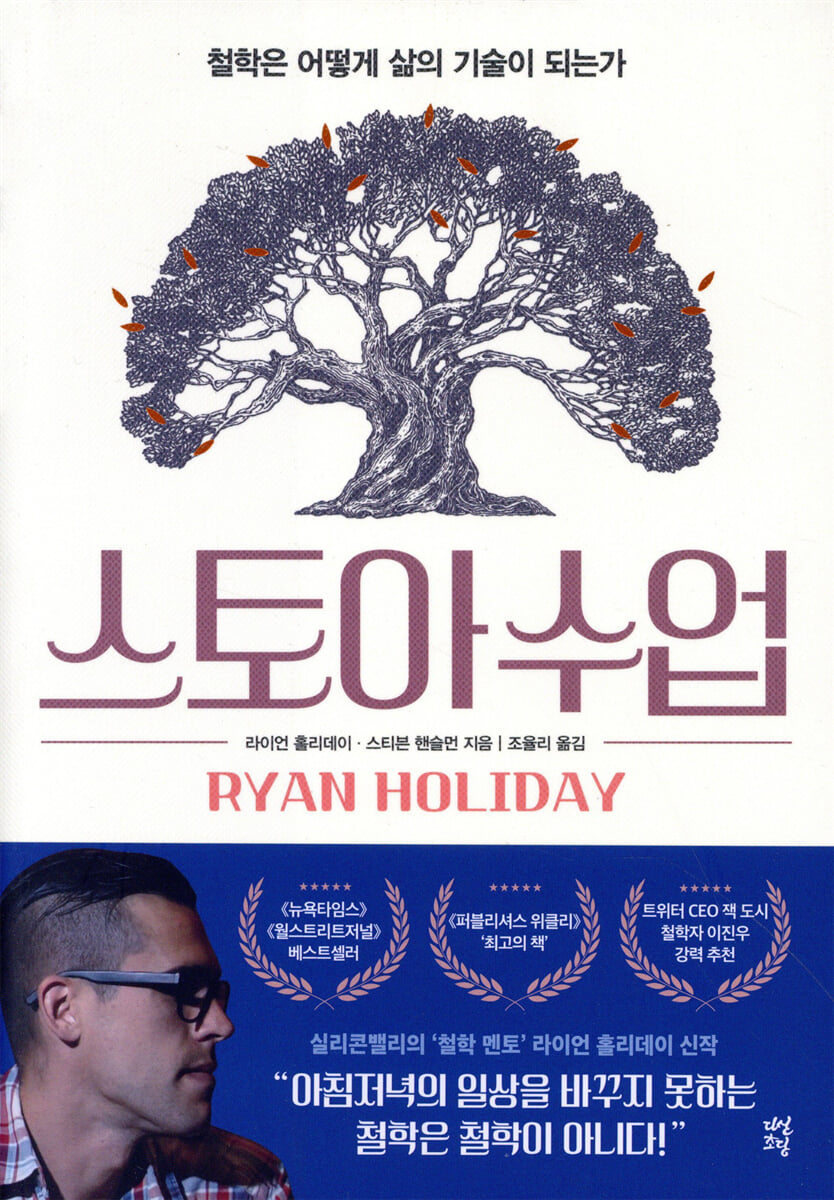
Everyday Philosophy from a Silicon Valley Philosophy Mentor A new book from Silicon Valley's "philosophy mentor" Ryan Holiday. “A philosophy that cannot change the daily routine of morning and evening is not philosophy!” A new work by Ryan Holiday, the author of numerous bestsellers that combine humanities and business, including "Ego is the Enemy," loved by 3 million readers worldwide. The author, who worked as a marketing strategist for American Apparel and an advisor for Google, and is today called the "philosophy mentor" of Silicon Valley, the mecca of IT companies, focuses on the Stoic philosophy that began 2,000 years ago and conveys the usefulness of 26 philosophies that can be applied to the daily lives of modern people. According to him, unlike the slogan-laden philosophies that were ridiculed even two thousand years ago, Stoicism is a life skill that can be applied directly to everyday life. In fact, many world leaders these days are enthusiastic about Stoic philosophy. Silicon Valley entrepreneurs like Twitter founder Jack Dorsey and Digg founder Kevin Rose, as well as Huffington Post founder Arianna Huffington, bestselling author Tim Ferriss, and Wall Street tycoon Thomas Kaplan, are known proponents of Stoic philosophy. Why are these people, who have achieved great success in their fields, so enthusiastic about philosophy from thousands of years ago? Ryan Holiday says the life and death of a Stoic philosopher holds the answer. By examining the lives of those who practiced philosophy amidst countless crises, we can learn how to find our own solid center, unwavering in the face of change. The Stoic Lessons cover the history of Stoic philosophy, from Zeno of Citium, the founder of Stoic philosophy, to Epictetus, who overcame his slave status to become the emperor's philosopher, to the female Stoic philosopher Porcia Cato, and to the philosopher emperor Marcus Aurelius. It illuminates the lives of 26 people, filled with joy and sorrow, and offers realistic and practical advice on overcoming misfortune to modern people, weary of the struggle for survival in an age of unpredictable chaos. |
- You can preview some of the book's contents.
Preview
index
Introduction: Stoic Lessons for Becoming a Philosopher of Your Own Life
Part 1: What Life Skills Do We Need?
Chapter 1 [Wisdom] Misfortune can never diminish our happiness - Zeno of Citium, founder of Stoic philosophy
Chapter 2 [Attitude to Life] Whatever you do well, however humble, is noble - Cleanthes, the advocate of diligence and sincerity
Chapter 3 [Critical Spirit] Listen to Your Inner Voice - Aristotle, the Controversial Challenger
Chapter 4 [Passion] Live Your Life to the Fullest - Chrysippus, the Warrior Who Protected the Stoa
Chapter 5 [Calling] There is a role that only I can play - Zeno of Tarsus, the silent administrator
Chapter 6 [Coolheadedness] How to Overcome Harsh Reality - Diogenes, the Diplomat Who Protected Greece
Part 2: Time to Ask Me Questions
Chapter 7 [Ethics] Why We Must Live Truthfully - Antipater, the Ethicist Who Concerned About the Problem of Sunshine
Chapter 8 [Life] What is a Balanced Life? _ Panaetius, the Connector Between Greece and Rome
Chapter 9 [Conviction] Is It Worth Risking Everything to Protect? _Rutilius, the Icon of Honesty
Chapter 10 [Virtue] What Can I Control? - Posidonius, the Genius Who Pursued Truth
Chapter 11 [Hatred] What to Do When You're Angry - Diotimus, the Troublemaker Blinded by Revenge
Chapter 12 [Greed] Can Desire Be Controlled? - Cicero, the Great Intellectual Wanderer
Chapter 13 [Principles] How to Live as Your True Self - Kato, the Uncompromising Iron Man
Chapter 14 [Courage] Are You Always Ready to Do the Right Thing? _ A Decisive Woman, Portia Cato
Part 3: What You Need for a Better Life
Chapter 15 [Equanimity] With what attitude should we live? _ Athenodorus, the Emperor's first teacher
Chapter 16 [Sincerity] There is no useless person among the diligent _ Arius, the second teacher who laid the cornerstone of Pax Romana
Chapter 17 [Self] If I can't be myself, I'd rather die - Agrippinus, the individualist who lived true to himself until the end
Chapter 18 [Optional] At the Crossroads of Life, Where Should We Go? _Seneca, the Great Intellect with Two Faces
Chapter 19 [Luck] Sometimes misfortune becomes good fortune - Cornutus, the wise man who welcomed the banishment
Chapter 20 [Death] If you can't avoid it, choose to die as well as possible - Plautus, the philosopher who almost became emperor
Chapter 21 [Mind] Nothing Can Harm the Soul - Thracea, a Dignified Principler
Part 4: So How Should We Live?
Chapter 22 [Justice] Your Actions Show You _ Helvidius, Rome's Defender Against Injustice
Chapter 23 [Practice] If you cannot avoid suffering, make a more worthwhile decision - Musonius, the philosopher who treated everyone equally
Chapter 24 [Freedom] Find what is yours that can never be taken away - Epictetus, philosopher born into slavery
Chapter 25 [Duty] Just do what you have to do - Junius Rusticus, the teacher who gave birth to the Iron Emperor
Chapter 26 [Reflection] Do what is right, and the rest is irrelevant - Marcus Aurelius, the great practitioner of Stoic philosophy
A life without action is worthless.
Sources and References
Part 1: What Life Skills Do We Need?
Chapter 1 [Wisdom] Misfortune can never diminish our happiness - Zeno of Citium, founder of Stoic philosophy
Chapter 2 [Attitude to Life] Whatever you do well, however humble, is noble - Cleanthes, the advocate of diligence and sincerity
Chapter 3 [Critical Spirit] Listen to Your Inner Voice - Aristotle, the Controversial Challenger
Chapter 4 [Passion] Live Your Life to the Fullest - Chrysippus, the Warrior Who Protected the Stoa
Chapter 5 [Calling] There is a role that only I can play - Zeno of Tarsus, the silent administrator
Chapter 6 [Coolheadedness] How to Overcome Harsh Reality - Diogenes, the Diplomat Who Protected Greece
Part 2: Time to Ask Me Questions
Chapter 7 [Ethics] Why We Must Live Truthfully - Antipater, the Ethicist Who Concerned About the Problem of Sunshine
Chapter 8 [Life] What is a Balanced Life? _ Panaetius, the Connector Between Greece and Rome
Chapter 9 [Conviction] Is It Worth Risking Everything to Protect? _Rutilius, the Icon of Honesty
Chapter 10 [Virtue] What Can I Control? - Posidonius, the Genius Who Pursued Truth
Chapter 11 [Hatred] What to Do When You're Angry - Diotimus, the Troublemaker Blinded by Revenge
Chapter 12 [Greed] Can Desire Be Controlled? - Cicero, the Great Intellectual Wanderer
Chapter 13 [Principles] How to Live as Your True Self - Kato, the Uncompromising Iron Man
Chapter 14 [Courage] Are You Always Ready to Do the Right Thing? _ A Decisive Woman, Portia Cato
Part 3: What You Need for a Better Life
Chapter 15 [Equanimity] With what attitude should we live? _ Athenodorus, the Emperor's first teacher
Chapter 16 [Sincerity] There is no useless person among the diligent _ Arius, the second teacher who laid the cornerstone of Pax Romana
Chapter 17 [Self] If I can't be myself, I'd rather die - Agrippinus, the individualist who lived true to himself until the end
Chapter 18 [Optional] At the Crossroads of Life, Where Should We Go? _Seneca, the Great Intellect with Two Faces
Chapter 19 [Luck] Sometimes misfortune becomes good fortune - Cornutus, the wise man who welcomed the banishment
Chapter 20 [Death] If you can't avoid it, choose to die as well as possible - Plautus, the philosopher who almost became emperor
Chapter 21 [Mind] Nothing Can Harm the Soul - Thracea, a Dignified Principler
Part 4: So How Should We Live?
Chapter 22 [Justice] Your Actions Show You _ Helvidius, Rome's Defender Against Injustice
Chapter 23 [Practice] If you cannot avoid suffering, make a more worthwhile decision - Musonius, the philosopher who treated everyone equally
Chapter 24 [Freedom] Find what is yours that can never be taken away - Epictetus, philosopher born into slavery
Chapter 25 [Duty] Just do what you have to do - Junius Rusticus, the teacher who gave birth to the Iron Emperor
Chapter 26 [Reflection] Do what is right, and the rest is irrelevant - Marcus Aurelius, the great practitioner of Stoic philosophy
A life without action is worthless.
Sources and References
Detailed image

Into the book
No one knows why Zeno's ship was wrecked.
Storm? Pirates? Talent? The reason doesn't matter.
He lost all his cargo when his ship ran aground.
At that time, there was no insurance, so there was no way to receive compensation for shipwrecked ships and cargo.
A huge amount of wealth was lost in an instant, and it was impossible to recover it.
But Zeno, despite experiencing an unfortunate event that would have made most people despair, says this:
“The ship was wrecked, but the voyage was successful.” Because the ship was wrecked, he was able to stay in Athens for a long time and eventually found the Stoic school.
---p.21
The act of quietly doing something you are good at is noble, even if that work is treated as socially lowly.
A person who gives up wealth or status to do something they truly love is even more admirable.
Cleanthes was just such a person.
One day, the king asked Cleanthes why he was still drawing water.
Cleantes answered with a smile.
“No, I only draw water. I also dig wells and water the garden.
“I do this because I love philosophy.”
---p.36
Courage is not just the courage to fight.
The power to be patient and silently reflect on one's inner self is also courage.
The Stoic philosophers believed that everyone possesses patience and courage, and that the most important thing is to use them to practice the right virtues for the situation.
Whatever it is, we need to do our duty.
---p.80
Antipater argued that ethical behavior is in itself a kind of craft of life that requires real effort and sweat.
Additionally, the human being who acts is likened to a shooter.
Archers draw their bows with the hope that through arduous training and practice they will be able to reach their full potential.
But regardless of that effort, uncontrollable factors like wind direction and the conditions of the day can affect the outcome, sometimes causing the arrow to drop before it even reaches the target.
The same goes for pursuing virtue in reality.
Diligently study and train your virtue until it becomes second nature, and when the moment comes to demonstrate it, take the best possible action.
But we cannot completely control the consequences that occur thereafter.
So, we cannot measure our true worth solely by whether the arrow hits the target.
---p.96
In Stoic philosophy, being the best does not mean winning a competition.
Also, being 'better than others' does not mean receiving the most honor.
Excellence and excellence are nothing other than virtue.
Excellence is not an external achievement, but rather a demonstration of excellence in areas over which you have control.
It would be nice to be lucky and achieve external accomplishments, but in reality, virtue comes from thoughts, actions, and choices, not from results.
---p.142
As corruption accelerated and the traditional norms established by his ancestors began to crumble, Cato believed he alone could stop the situation.
So they developed the 'filibuster', a political tool that has been widely used since then.
Only by using individual voices and strong will as weapons can one effectively confront the dominance of the majority.
Cato single-handedly prevented the collection of taxes from being delegated to corrupt parties, and he ensured that laws that were contrary to the ancient spirit of Rome were rendered ineffective.
---p.191
The greatest lesson Seneca learned from his teacher was to become a better person in the real world.
Attalus said that the purpose of philosophy is to become a better person by learning good teachings every day, even on the way home, trying to become a better person.
---p.240
When we distinguish between what is in our hands and what is not, we come to the conclusion that we should focus on what we can do.
Because of this belief, Epictetus was able to endure his life as a slave.
We cannot do anything about what has already happened, but our attitudes toward it, our feelings, our wishes and desires, and our thoughts are in our hands.
“You can put chains on my feet.
But even Jupiter cannot take away our freedom of choice.”
---p.323
Create your life with every action.
And be satisfied when those actions achieve the purpose you were trying to pursue.
No one can stop you from living that kind of life.
If you pursue justice, moderation, and wisdom, you can overcome any obstacle.
Storm? Pirates? Talent? The reason doesn't matter.
He lost all his cargo when his ship ran aground.
At that time, there was no insurance, so there was no way to receive compensation for shipwrecked ships and cargo.
A huge amount of wealth was lost in an instant, and it was impossible to recover it.
But Zeno, despite experiencing an unfortunate event that would have made most people despair, says this:
“The ship was wrecked, but the voyage was successful.” Because the ship was wrecked, he was able to stay in Athens for a long time and eventually found the Stoic school.
---p.21
The act of quietly doing something you are good at is noble, even if that work is treated as socially lowly.
A person who gives up wealth or status to do something they truly love is even more admirable.
Cleanthes was just such a person.
One day, the king asked Cleanthes why he was still drawing water.
Cleantes answered with a smile.
“No, I only draw water. I also dig wells and water the garden.
“I do this because I love philosophy.”
---p.36
Courage is not just the courage to fight.
The power to be patient and silently reflect on one's inner self is also courage.
The Stoic philosophers believed that everyone possesses patience and courage, and that the most important thing is to use them to practice the right virtues for the situation.
Whatever it is, we need to do our duty.
---p.80
Antipater argued that ethical behavior is in itself a kind of craft of life that requires real effort and sweat.
Additionally, the human being who acts is likened to a shooter.
Archers draw their bows with the hope that through arduous training and practice they will be able to reach their full potential.
But regardless of that effort, uncontrollable factors like wind direction and the conditions of the day can affect the outcome, sometimes causing the arrow to drop before it even reaches the target.
The same goes for pursuing virtue in reality.
Diligently study and train your virtue until it becomes second nature, and when the moment comes to demonstrate it, take the best possible action.
But we cannot completely control the consequences that occur thereafter.
So, we cannot measure our true worth solely by whether the arrow hits the target.
---p.96
In Stoic philosophy, being the best does not mean winning a competition.
Also, being 'better than others' does not mean receiving the most honor.
Excellence and excellence are nothing other than virtue.
Excellence is not an external achievement, but rather a demonstration of excellence in areas over which you have control.
It would be nice to be lucky and achieve external accomplishments, but in reality, virtue comes from thoughts, actions, and choices, not from results.
---p.142
As corruption accelerated and the traditional norms established by his ancestors began to crumble, Cato believed he alone could stop the situation.
So they developed the 'filibuster', a political tool that has been widely used since then.
Only by using individual voices and strong will as weapons can one effectively confront the dominance of the majority.
Cato single-handedly prevented the collection of taxes from being delegated to corrupt parties, and he ensured that laws that were contrary to the ancient spirit of Rome were rendered ineffective.
---p.191
The greatest lesson Seneca learned from his teacher was to become a better person in the real world.
Attalus said that the purpose of philosophy is to become a better person by learning good teachings every day, even on the way home, trying to become a better person.
---p.240
When we distinguish between what is in our hands and what is not, we come to the conclusion that we should focus on what we can do.
Because of this belief, Epictetus was able to endure his life as a slave.
We cannot do anything about what has already happened, but our attitudes toward it, our feelings, our wishes and desires, and our thoughts are in our hands.
“You can put chains on my feet.
But even Jupiter cannot take away our freedom of choice.”
---p.323
Create your life with every action.
And be satisfied when those actions achieve the purpose you were trying to pursue.
No one can stop you from living that kind of life.
If you pursue justice, moderation, and wisdom, you can overcome any obstacle.
---p.363
Publisher's Review
“Stoic philosophy is a philosophy that overcomes misfortune.”
Two thousand years ago, when philosophers from various schools of thought, starting in Greece, were discussing 'philosophy for philosophy's sake', Stoic philosophy began not as a battle of logic, but with the goal of changing actual life.
The Stoic philosophers studied philosophy while also working to make a living, like Cleanthes, and worked as diplomats for the good of their country, like Diogenes.
He also became the prime minister of the country and participated in real-world politics, advising on policies that could bring change to the lives of many people.
Of course, he did not neglect the task of establishing theories, and in particular, Cicero and Seneca left behind numerous writings, passing on the lessons of Stoic philosophy to later generations.
In fact, it can be said that Stoic philosophy was practical from its birth.
Zeno of Citium, the founder of Stoic philosophy, was originally a large merchant.
One day, Zeno's ship, laden with cargo, was wrecked, and he lost his entire fortune overnight.
In the worst situation where everyone is left with no choice but to despair, Zeno does not give in to misfortune, but turns the crisis into an opportunity and begins to explore 'true philosophy applicable to life' under the 'Stoa Poikile', meaning 'painted colonnade'.
And he created the 'philosophy of overcoming misfortune' by saying, "The ship was wrecked, but the voyage was successful."
In this way, the enlightenment gained from hardship becomes a powerful weapon for living life and a skill of resilience that rebuilds a broken daily life.
Stoic philosophers divide life into "controllable" and "uncontrollable" things, and say that the only thing you can control in life is yourself.
Hardship and disaster are beyond our control.
But there is no way to avoid unexpected misfortune.
So, instead of meaninglessly obsessing over the misfortune that has already occurred, we should simply practice equanimity (apatheia) and go about doing what we have to do now.
From the lives of 26 philosophers
The art of maintaining balance in life without being swayed by hardship
"The Stoic Lessons" covers the lives of 26 philosophers regardless of class, gender, or occupation, from Zeno of Citium, the founder of Stoic philosophy, to Cleanthes, who worked hard his entire life as a manual laborer, to the diplomat Diogenes, to the politicians and philosophers Cicero and Seneca, who were active in the Roman era, to the female philosopher Cato Porcia, to the philosopher Epictetus, who was born a slave, and to the philosopher emperor Marcus Aurelius.
Through this, various philosophers present various weapons of life that they have discovered to support their daily lives.
The life of Epictetus, a philosopher born into slavery, was a series of sufferings.
There was no compensation for his labor, and he was overworked by his master, to the point where he ended up limping in one leg.
However, he says, while we can't undo what happened, we can choose how we react to it, and that choice ultimately determines what kind of life we lead.
Epictetus' teachings also influenced Marcus Aurelius, who later became the philosopher emperor.
Although he left behind the reputation of being the Iron Emperor of Rome, Marcus had to endure many hardships.
He suffered from chronic illness and lost eight of his thirteen children.
During his reign, there were 15 years of plague and 19 years of constant war.
But he said, “Do the right thing.
“The rest is not important,” he said, striving to maintain a moderate life and the peace of the country.
There are not only philosophers who lived honorably like these.
In the early days of the Stoic school, Aristotle, who opposed Zeno's teachings, was criticized for bringing disrepute to the school, but his powerful message of 'living simply and detachedly' later influenced the core ideas of Stoic philosophy.
Also, from the life of Agrippinus, who stood firm in his convictions against Emperor Tiberius, we learn the lesson: 'If I cannot be myself, it is better to die.'
Faced with the death of Seneca, the teacher of tyrants and a great intellectual, we realize that we must strive to die well as much as we strive to live well.
Through the lives and deaths of philosophers who each experienced different hardships but overcame them with their own unique weapons, we can learn the art of maintaining balance in life without being swayed by hardship.
Coping with an uncertain future in an age of chaos
The Philosophical Bible of Silicon Valley Leaders
Author Ryan Holiday presents seven Stoic philosophy messages that will transform your morning and evening routine.
First, always do the right thing.
Second, love your present life.
Third, think about the worst case scenario.
Fourth, where there are obstacles, there is a way.
Fifth, let go of your ego.
Sixth, we are all connected.
Seventh, never forget that everyone must die.
The message of Stoic philosophy offers a wise way to navigate the 'VUCA era', where everything is difficult to predict.
Indeed, Silicon Valley's top leaders, those driving change through cutting-edge technology, are applying this philosophy to their lives.
Twitter CEO Jack Dorsey walks to work every morning and practices fasting and cold bathing, much like Zeno of Citium, who advocated for moderation and a simple life.
Kevin Rose, founder of Digg.com, also uses Stoic philosophy to cope with unpredictable changes and pain, and Tim Ferriss, bestselling author of Tools of Titans, said, “Stoic philosophy is the best weapon to protect my life when I face difficulties that are difficult to control.”
Even the wealthy and prestigious leaders of Silicon Valley, including their "philosophy mentor" and author of "Stoic Lessons," Ryan Holiday, are no different from us in that they live in a rapidly changing era and compete for survival every day.
All human beings are naked and defenseless before fate.
What separates those who survive misfortune from those who don't is whether they practice philosophy and develop the strong mental muscles that will not crumble under the inevitable blows.
Two thousand years ago, when philosophers from various schools of thought, starting in Greece, were discussing 'philosophy for philosophy's sake', Stoic philosophy began not as a battle of logic, but with the goal of changing actual life.
The Stoic philosophers studied philosophy while also working to make a living, like Cleanthes, and worked as diplomats for the good of their country, like Diogenes.
He also became the prime minister of the country and participated in real-world politics, advising on policies that could bring change to the lives of many people.
Of course, he did not neglect the task of establishing theories, and in particular, Cicero and Seneca left behind numerous writings, passing on the lessons of Stoic philosophy to later generations.
In fact, it can be said that Stoic philosophy was practical from its birth.
Zeno of Citium, the founder of Stoic philosophy, was originally a large merchant.
One day, Zeno's ship, laden with cargo, was wrecked, and he lost his entire fortune overnight.
In the worst situation where everyone is left with no choice but to despair, Zeno does not give in to misfortune, but turns the crisis into an opportunity and begins to explore 'true philosophy applicable to life' under the 'Stoa Poikile', meaning 'painted colonnade'.
And he created the 'philosophy of overcoming misfortune' by saying, "The ship was wrecked, but the voyage was successful."
In this way, the enlightenment gained from hardship becomes a powerful weapon for living life and a skill of resilience that rebuilds a broken daily life.
Stoic philosophers divide life into "controllable" and "uncontrollable" things, and say that the only thing you can control in life is yourself.
Hardship and disaster are beyond our control.
But there is no way to avoid unexpected misfortune.
So, instead of meaninglessly obsessing over the misfortune that has already occurred, we should simply practice equanimity (apatheia) and go about doing what we have to do now.
From the lives of 26 philosophers
The art of maintaining balance in life without being swayed by hardship
"The Stoic Lessons" covers the lives of 26 philosophers regardless of class, gender, or occupation, from Zeno of Citium, the founder of Stoic philosophy, to Cleanthes, who worked hard his entire life as a manual laborer, to the diplomat Diogenes, to the politicians and philosophers Cicero and Seneca, who were active in the Roman era, to the female philosopher Cato Porcia, to the philosopher Epictetus, who was born a slave, and to the philosopher emperor Marcus Aurelius.
Through this, various philosophers present various weapons of life that they have discovered to support their daily lives.
The life of Epictetus, a philosopher born into slavery, was a series of sufferings.
There was no compensation for his labor, and he was overworked by his master, to the point where he ended up limping in one leg.
However, he says, while we can't undo what happened, we can choose how we react to it, and that choice ultimately determines what kind of life we lead.
Epictetus' teachings also influenced Marcus Aurelius, who later became the philosopher emperor.
Although he left behind the reputation of being the Iron Emperor of Rome, Marcus had to endure many hardships.
He suffered from chronic illness and lost eight of his thirteen children.
During his reign, there were 15 years of plague and 19 years of constant war.
But he said, “Do the right thing.
“The rest is not important,” he said, striving to maintain a moderate life and the peace of the country.
There are not only philosophers who lived honorably like these.
In the early days of the Stoic school, Aristotle, who opposed Zeno's teachings, was criticized for bringing disrepute to the school, but his powerful message of 'living simply and detachedly' later influenced the core ideas of Stoic philosophy.
Also, from the life of Agrippinus, who stood firm in his convictions against Emperor Tiberius, we learn the lesson: 'If I cannot be myself, it is better to die.'
Faced with the death of Seneca, the teacher of tyrants and a great intellectual, we realize that we must strive to die well as much as we strive to live well.
Through the lives and deaths of philosophers who each experienced different hardships but overcame them with their own unique weapons, we can learn the art of maintaining balance in life without being swayed by hardship.
Coping with an uncertain future in an age of chaos
The Philosophical Bible of Silicon Valley Leaders
Author Ryan Holiday presents seven Stoic philosophy messages that will transform your morning and evening routine.
First, always do the right thing.
Second, love your present life.
Third, think about the worst case scenario.
Fourth, where there are obstacles, there is a way.
Fifth, let go of your ego.
Sixth, we are all connected.
Seventh, never forget that everyone must die.
The message of Stoic philosophy offers a wise way to navigate the 'VUCA era', where everything is difficult to predict.
Indeed, Silicon Valley's top leaders, those driving change through cutting-edge technology, are applying this philosophy to their lives.
Twitter CEO Jack Dorsey walks to work every morning and practices fasting and cold bathing, much like Zeno of Citium, who advocated for moderation and a simple life.
Kevin Rose, founder of Digg.com, also uses Stoic philosophy to cope with unpredictable changes and pain, and Tim Ferriss, bestselling author of Tools of Titans, said, “Stoic philosophy is the best weapon to protect my life when I face difficulties that are difficult to control.”
Even the wealthy and prestigious leaders of Silicon Valley, including their "philosophy mentor" and author of "Stoic Lessons," Ryan Holiday, are no different from us in that they live in a rapidly changing era and compete for survival every day.
All human beings are naked and defenseless before fate.
What separates those who survive misfortune from those who don't is whether they practice philosophy and develop the strong mental muscles that will not crumble under the inevitable blows.
GOODS SPECIFICS
- Publication date: March 24, 2021
- Page count, weight, size: 392 pages | 664g | 152*215*30mm
- ISBN13: 9791130636368
- ISBN10: 1130636364
You may also like
카테고리
korean


korean

![ELLE 엘르 스페셜 에디션 A형 : 12월 [2025]](http://librairie.coreenne.fr/cdn/shop/files/b8e27a3de6c9538896439686c6b0e8fb.jpg?v=1766436872&width=3840)


