

Art History for Alone
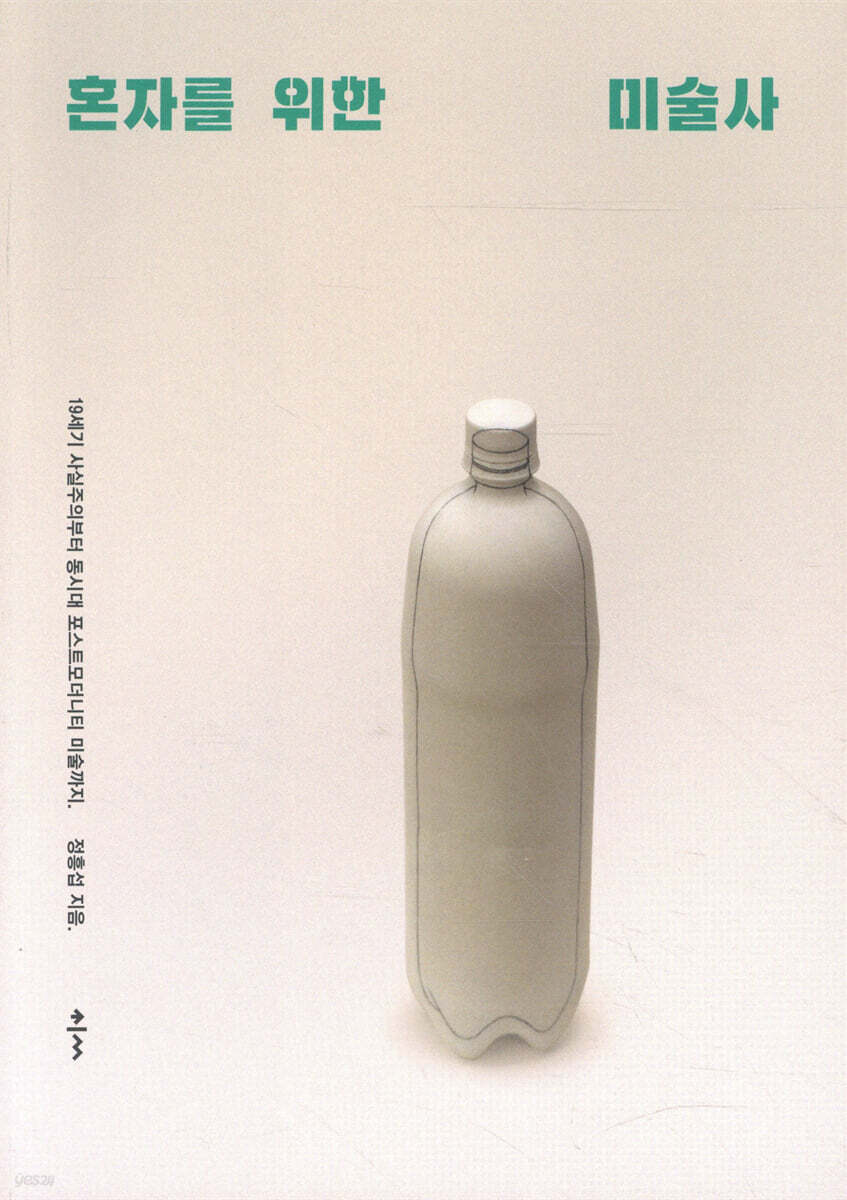 |
Description
Book Introduction
The struggles of artists who wanted to be ‘alone’
It became the history of modern and contemporary art as a single stream.
From 18th-century realism to contemporary postmodern art, the complex and difficult modern and contemporary art has been summarized into a single keyword.
This book clearly shows the flow of modern and contemporary art history over the past 150 years by finding the connections between artists who have pursued 'aloneness.'
It presents representative works in chronological order to make them easy for readers to understand, and explains the themes of the artists and art movements, as well as their significance in art history.
The story of art, including the social background in which each art movement emerged, the artists, and the works, is a story that unfolds naturally, as if reading a novel.
Through this book, readers will not only discover new meanings to works they are familiar with, but will also be able to clearly organize concepts about art that have been confused and jumbled up in their memories.
- You can preview some of the book's contents.
Preview
index
Author's Note
Chapter 1.
Our art textbook
Orsay Museum / Korean Art Textbook / British Modernization vs. European Modernization / Modern Art in Europe / Half-Page Answer Sheet
Chapter 2.
Paris, the birthplace of modern art
Romanticism, from Enlightenment to Romanticism: Jean Valjean and Javert / Neoclassicism, Enlightenment, and Romanticism / The Romantic Hero / The Two Faces of Romanticism / Realism, from Ideal to Reality / Breasts and Genitals / Realism and Socialism / A Horizontal Worldview
Auteurism, from the ground up into the artist's room: Individual intellect and auteurism / Manet's Olympia / J'accuse! / Realism and auteurism / The Paris Salon and the Exhibition of Rejects / The origins of Impressionism / The artist's room
Chapter 3.
Paris's local art: the tricolor flag of Montmartre
Impressionism's Retinalism, In the Artist's Room, Through the Artist's Eye: From Objectivity to Subjectivity / Retinalism
Fauvism's Sensationalism, From the Artist's Eye to the Artist's Body: The Face of Truth / Tactile, Another Subject / Erotic Art
Cognitivism in Cubism, from the Artist's Body to the Artist's Head: Art Named Paul Cézanne / The Apple in Thought / Collage / The New Master of Montmartre
Chapter 4.
Spread to Europe
Expressionism, the Heart of the Artist: Millet and Van Gogh / Kollwitz, the Heart of German Expressionism / Munch, the Heart of Nordic Expressionism
Abstractionism, with the artist's sensibility: The vanished subject / Inside, inside / Hot abstraction? Cold abstraction? / A tree, Mondrian / The language of the emotional world, Kandinsky
Surrealism, the artist's unconscious: The logic of illogicality, Magritte / The land of the unconscious, Dali / The art of the transcendental world, Chagall
Dadaism, the Perfection of the Subjective Man: The Law of Chance, Hans Arp / The Readymade and the Work of Art, Marcel Duchamp
Chapter 5.
Spread to the Anglo-American world
American Realism: Floating Reality, Edward Hopper / New York, immigrant, artist
Abstract Expressionism: Markus Rothkowitz / Melting Pot, Mark Rothko / Seagram Building vs. Rothko Chapel
Pop Art: Pop / Andy Warhol, a practitioner of Dada and Pop
Chapter 6.
Postmodernism
Postmodernism of the 1960s and 1970s: The Lost Generation / The Thumb on the Square / Hysteria / Steel, Concrete, and Art
Postmodernism of the 1980s and 1990s: Baby Boomers / Media Industry / Ready-made Cameras
Chapter 7.
Postmodernity in the 21st Century
The Evolution of Borrowing Technologies: Explicit Extension / Please Don't Hire Me / Earth-Moon-Earth / The Evolution of Critical Borrowing Technologies
Self-Comedy: Sickness / Someone's Car, Ahmet Owit / 8848-1.86, Shizen /
Jojo's Arrow Becomes a Toothpick: The Dilemma of Pluralism / Overlapping Messages / Oral Artworks / Columbus's Egg
Conclusion
Publisher's Review
The struggles of artists who wanted to be ‘alone’
It became the history of modern and contemporary art as a single stream.
From 18th-century realism to contemporary postmodern art, the complex and difficult modern and contemporary art has been summarized into a single keyword.
This book clearly shows the flow of modern and contemporary art history over the past 150 years by finding the connections between artists who have pursued 'aloneness.'
It presents representative works in chronological order to make them easy for readers to understand, and explains the themes of the artists and art movements, as well as their significance in art history.
The story of art, including the social background in which each art movement emerged, the artists, and the works, is a story that unfolds naturally, as if reading a novel.
Through this book, readers will not only discover new meanings to works they are familiar with, but will also be able to clearly organize concepts about art that have been confused and jumbled up in their memories.
Find the answer for the other half
We have encountered the works of many artists through textbooks, including Millet and Manet.
Textbooks describe their work as pastoral paintings expressing the beauty of peaceful countryside, and as the beauty of everyday life rediscovered by alchemists of light, and mainly discuss visual materials and expressive techniques.
But the author says this interpretation is only a half-answer.
The current education system in Korea began with the Anglo-American style during the Gabo Reforms and was perfected through the Japanese colonial period and the US military government era. The same goes for art, but the European societies where the works of art we have studied actually existed evaluate them differently.
In France, where artists have lived and worked, Millet's "The Angelus" is not a story of the abundance of a rural landscape, but of a peasant couple who, struggling with hunger and disease, buried their child in the ground.
Monet, well known as an Impressionist painter, is called a pioneering modern artist who began to talk about the beauty of the subjective world reflected in the eyes, rather than being called the 'alchemist of light'.
So, if our understanding of a work of art is limited to its external characteristics, we are only seeing half of it.
"Art History for Oneself" is a story about the other half of the story we must find in the works of artists mentioned in textbooks.
The half of the story we didn't know until now, the other half of the answer, contains the extremely private, 'alone' stories of artists.
The Key to Understanding Contemporary Art
Today, contemporary art still has a reputation for being complex and difficult to understand.
So, is modern art simply a mutation? Here, in "Art History for One," lies the key to understanding modern art.
This is because the value and direction of modern and contemporary art, discovered through the art history of this book by the author, Jeong Heung-seop, who is currently an active artist, while studying in France, clearly explains the direction that modern art is currently aiming for.
This book traces the value and origins of modern art back to the era of 18th-century realism.
And, from the artist's very private room (authorialism) to the eyes (retinalism), body (sensationalism), head (cognitivism), heart (expressionism), emotion (abstractionism) and the unconscious (surrealism), he pointed out the core direction of art that is increasingly directed towards the inner self of humans.
By following the direction of modern and contemporary art, we can finally understand what contemporary art is trying to express.
This is because, just as artists have done for the past 150 years, modern artists are still expressing the value of ‘individual existence.’
If we understand the essence and history of modern and contemporary art through this book, we will be able to discover and understand the beauty created by artists in the many works of art we encounter throughout our lives.
GOODS SPECIFICS
- Date of issue: June 1, 2018
- Page count, weight, size: 258 pages | 429g | 148*210*18mm
- ISBN13: 9791188907151
- ISBN10: 1188907158
You may also like
카테고리
korean


korean


