

frame
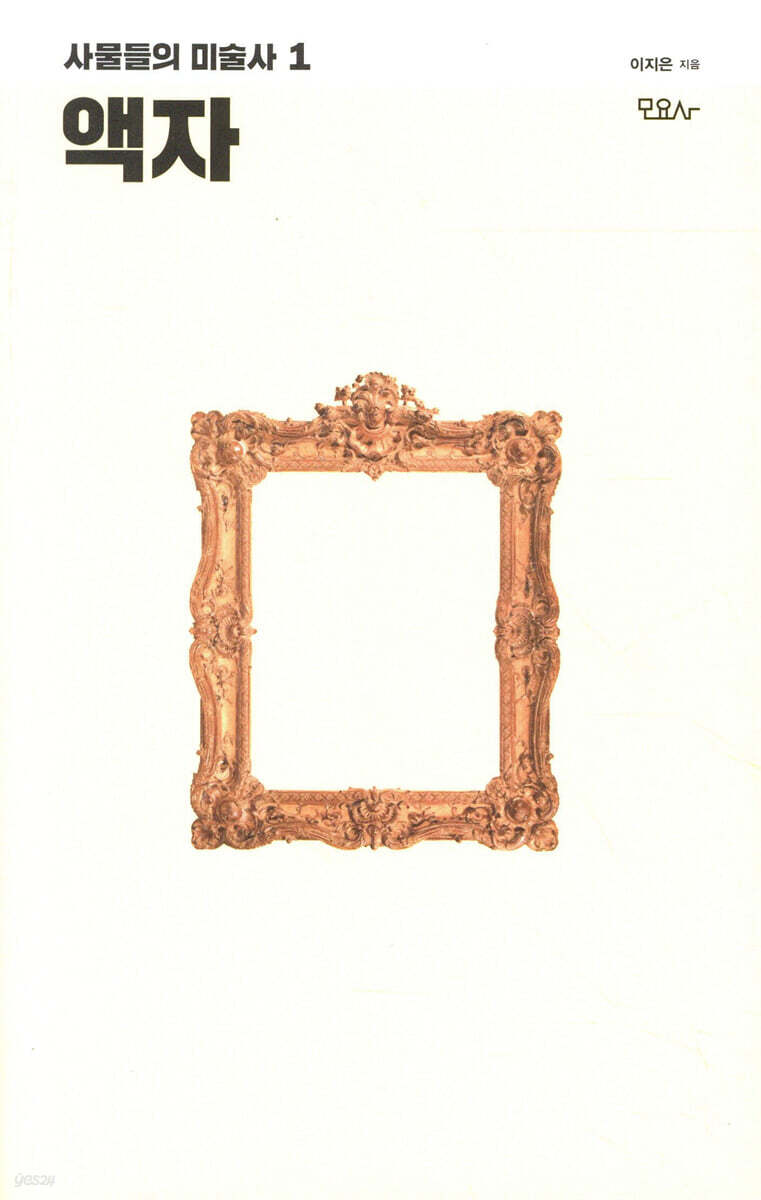 |
Description
Book Introduction
Starting the series 'Art History of Objects' “A friendly history of art that feels like a glimpse into our daily lives!” The 'Art History of Objects' series aims to uncover the unique history and unexpected stories contained in objects we encounter in our daily lives. These objects, so familiar that they often go unnoticed, tell us stories that are far more fascinating and diverse than we might have imagined. 'The Art History of Objects' will begin with the first volume, 'Frame', followed by 'Chair', 'Lighting', and 'Toilet'. While each volume covers the unique history of a particular object, the series as a whole is designed to encompass the world of decorative arts. The picture frame is an object that has not received the spotlight in art history, overshadowed by the painting that is its main character. There aren't many research books on frames, and if you search for pictures online, you'll find pictures with frames cut out that fill up your computer screen. Naturally, there are few paintings that appear in art history books with their original frames. But can you imagine museums and galleries without frames? In an age where even graffiti is considered art, what could distinguish a painting from a wall without a frame? The author's story about frames is even more fascinating than the paintings themselves. The history of the picture frame, as the author describes it, is no different from a grand drama created by the times, society, and people surrounding the painting. |
- You can preview some of the book's contents.
Preview
index
preface
01.
The Back Alley of Light and Glory | The Path to the World of God, the Ghent Altarpiece
02.
The World's Largest Picture Frame | 17th-Century Drama, The Life of Marie de' Medici
03.
The Smallest and Most Expensive Frame | The Two Faces of Louis XIV, Boite à Potre
04.
The frame wasn't born at the same time as the painting | A 19th-century frame born with the museum
05.
Van Gogh's Imaginary Frame | A Frame Made and Painted by Van Gogh
06.
A Step Toward Modernism: Degas | Camondo, a Name No One Remembers
Publisher's Review
Starting the series 'Art History of Objects'
“A friendly history of art that feels like a glimpse into our daily lives!”
The 'Art History of Objects' series aims to uncover the unique histories and unexpected stories contained in objects we encounter in our daily lives.
These objects, so familiar that they often go unnoticed, tell us stories that are far more fascinating and diverse than we might have imagined.
The author of this series, Lee Ji-eun, created a sensation in 2006 when she published “The Secret Private Life of a Nobleman.”
This is because the history of decorative arts, which is difficult for a domestic author to write about, was vividly told as if one had gone back in time.
Moreover, the book was filled with illustrations of everyday household items such as chairs, cabinets, and tables, as well as luxury items priced at billions of won at Sotheby's and Christie's, most of which were being introduced to Korea for the first time.
The author has spent an entire night searching for actual photographs of objects that might be unfamiliar to Korean readers, and has not hesitated to wait for months to access rare materials at the Bibliothèque nationale de France.
Readers interested in decorative arts were enthusiastic, and the book sold out in an instant.
At the time of writing this book, the author was studying at Christie's Auction School in France and IESA, a specialized appraiser training school, and gaining experience at Sotheby's, Christie's, and Tarzan auction houses.
Afterwards, the author delved into decorative arts more seriously, and received master's degrees in both museology and art history from the University of Paris 1 and the University of Paris 4, and completed his doctoral studies at the University of Paris 4.
And I started this series as a long-term project.
'The Art History of Objects' will begin with the first volume, 'Frame', followed by 'Chair', 'Lighting', and 'Toilet'.
While each volume covers the unique history of a particular object, the series as a whole is designed to encompass the world of decorative arts.
Beginning the project, author Lee Ji-eun reveals her ambitions as follows:
“I will vividly explain the process of my own research and research, rather than relying on the knowledge of widely known artisans.
Rather than explaining the morphological changes of objects, we will weave together economic history, social history, history, and art history as warp and weft, allowing the objects to directly convey the scenes of past life.
“It’s not a heavy and difficult art history, but rather a friendly art history that looks into our daily lives.”
● Revised editions of “The Secret Private Life of the Nobles” and “The Pleasant Private Life of the Bourgeoisie” are scheduled to be published by Moyo Publishing.
The history of art outside the frame is more interesting than the painting itself.
The picture frame is an object that has not received the spotlight in art history, overshadowed by the painting that is its main character.
There aren't many research books on frames, and if you search for pictures online, you'll find pictures with frames cut out that fill up your computer screen.
Naturally, there are few paintings that appear in art history books with their original frames.
But can you imagine museums and galleries without frames? In an age where even graffiti is proudly considered art, what distinguishes a painting from a wall without a frame?
But we don't know much about frames.
A painting leaves the artist's studio and enters the world only after it is framed.
After this, each painting begins to create its own unique history.
It passes through the hands of many owners and is carefully preserved in the palace, but it also experiences war, becomes a target for theft, and encounters natural disasters.
The frame is the first object to change whenever the environment surrounding the painting changes.
The painting does not change, but the frame changes constantly depending on who owns the painting and where it is hung.
Therefore, the frame can be said to be a silent witness that shows the history outside the painting and the contemporary perspective on the painting without any filter.
The process of exploring the frame is a process of tracing the history outside the painting and putting together the puzzle of a lost history.
The author spent a long time rummaging through seemingly unrelated material to piece together this puzzle.
The author's references include 'Tavernier's Travels', which is a travelogue but is too boring to read; Dürer's 'Travels in the Netherlands', which is little more than a cash register; insurance documents of the Camondo family, a famous collector from the early 20th century; engravings from the reign of Louis XIV; receipts from a 19th-century frame maker; and other materials that are different from typical art history books.
If I had any doubts about Van Gogh's work, I would take a train to Amsterdam and spend tedious hours in the Bibliothèque nationale de France to peruse Degas's notebooks, where he had sketched his own frames.
In particular, the chapter that traces each letter of Van Gogh, in which he records each frame that fits his paintings, and virtually recreates the frames he created or imagined is the highlight of this book.
In this way, the story of the picture frame told by the author is more interesting than the picture itself.
The history of the picture frame, as the author describes it, is no different from a grand drama created by the times, society, and people surrounding the painting.
Key contents of each chapter
01.
The Back Alley of Light and Glory/The Path to the World of God, "Ghent Altarpiece"
Painters of the Middle Ages and Renaissance were visual directors who brought to life before our eyes the world of God that had been transmitted through words and writing.
In an age when the greatest painter was the one with the most ingenious illustrative skills, the picture frame was a giant window that led the viewer into the world of the painting.
So they developed a very unusual picture frame that looks like a real window, but when you look inside, you see a wonderful world of God.
The cathedral altarpiece is just that! Through the turbulent history of the Ghent Altarpiece, a mirage whose original form is now lost, we explore its illusive role as a window into the Middle Ages and a path toward the god worshipped by medieval people.
02.
The world's largest picture frame/ 17th-century drama, The Life of Marie de' Medici
Rubens's 24-panel series, "The Life of Marie de' Medici," now housed in the Louvre, was once a billboard flaunting a power filled with lies.
Marie de' Medici created the largest and most magnificent picture frame of her time to display her paintings, in an attempt to make the lie seem true.
The century-old project of framing the entire gallery of the Luxembourg Palace is recreated in this book.
Rather than viewing this painting as a historical painting that has lost its former brilliance and remains as an old-fashioned one at the Louvre, let us step back into the 17th-century landscape when the series was first created and look at it with new eyes.
03.
The smallest and most expensive frame / The Two Faces of Louis XIV, Boite à Potre
A portrait of the Sun King measuring 7.2 centimeters in height and 4.3 centimeters in width, smaller than an adult's palm.
This portrait, which Louis XIV gave only to his close associates, is framed so amazingly that the king's face is not visible.
A total of 92 diamonds are the main characters.
This miniature portrait, which was the target of theft and looting due to the diamonds densely set in the frame, is said to have been originally produced in over 300 pieces, but only three remain today.
An ironic frame made for a king's portrait, but so ornate that it even obscures the king's face. Why and how was this unnecessarily ornate frame made?
04.
The frame wasn't born at the same time as the painting/A 19th-century frame born with the museum
When we encounter classical works that we had only seen in books in real life in a European museum, what catches our attention is not the paintings themselves, but the palace-style galleries and the antique gilded frames surrounding them.
Perhaps because of this, people often fall into the delusion that these frames were also made around the same time as the artwork.
In fact, most of the frames in the Louvre and the Musée d'Orsay are relics from the late 18th century, when modern museums first emerged.
Let's go back to the early days of the museum, where the model for museum frames that remains a classic even today, three centuries later, was born.
05.
Van Gogh's imaginary frame/ A frame made and painted by Van Gogh himself
The Impressionists were the first artists in history to design and use their own frames for their paintings.
They resisted the traditions of the academy and had a different concept of the frame.
The Impressionist frames that shocked the audience at the Impressionist Exhibition, the frames that Monet, Pissarro, Gauguin, and Van Gogh personally made to match their paintings, have all disappeared into the cracks of history.
And ironically, most of the Impressionist paintings today are presented in the ornate 19th-century frames they so desperately sought to resist.
Imagine the lost Impressionist frames through the only remaining original Van Gogh frame.
06.
A Step Towards Modernism, Degas / A Name No One Remembers, Camondo
Degas, known for being a strict perfectionist, maintained the same attitude towards his frames.
He designed a custom frame for each piece, even sketching it meticulously in a notebook, and he strongly recommended the frames he created to collectors who bought the paintings.
What frame did Degas finally secure after much bickering? Why did he insist on that particular frame? Why are all 26 Degas paintings owned by Isaac Camondo, the century-old collector, framed in the same frame? The tense battle between Isaac Camondo and Degas intersects with the landscape of early 20th-century modernism, creating a dramatic narrative.
GOODS SPECIFICS
- Date of issue: May 25, 2018
- Page count, weight, size: 302 pages | 371g | 120*190*20mm
- ISBN13: 9788997066377
- ISBN10: 8997066374
You may also like
카테고리
korean


korean


