

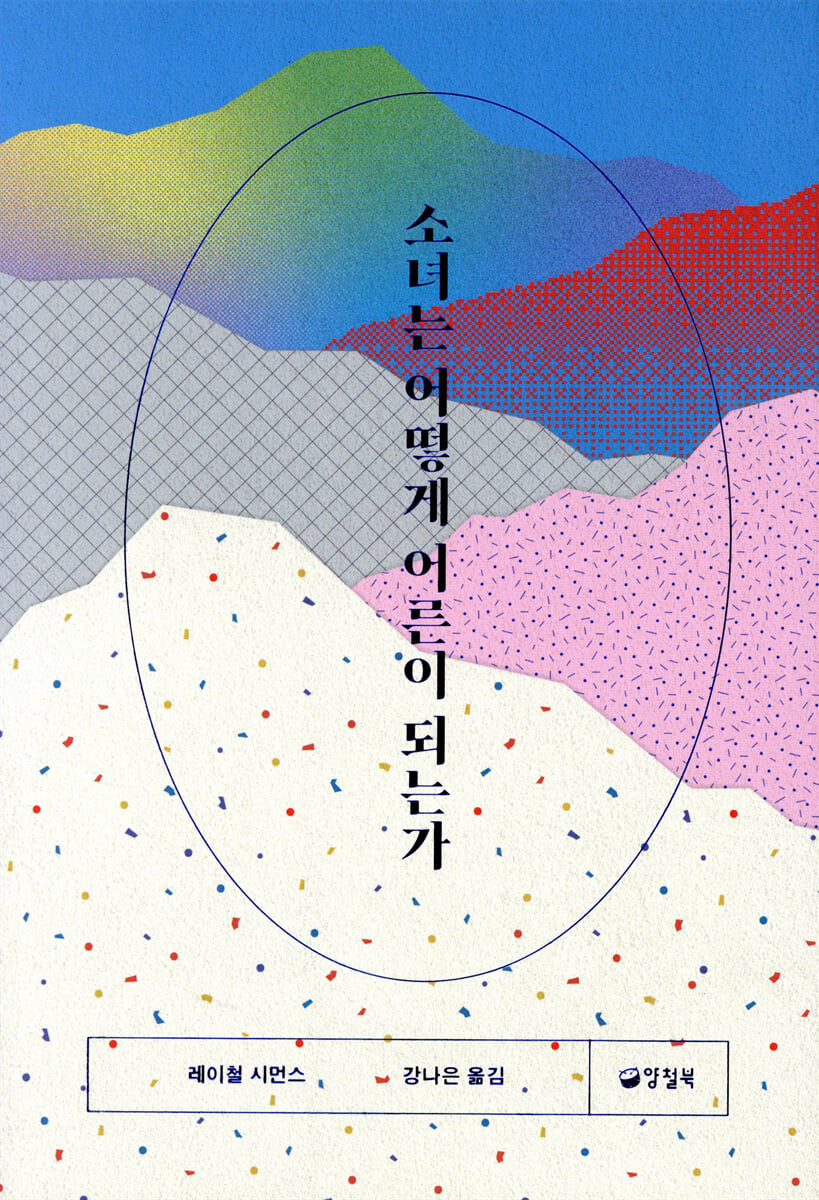
How a girl becomes an adult
 |
Description
Book Introduction
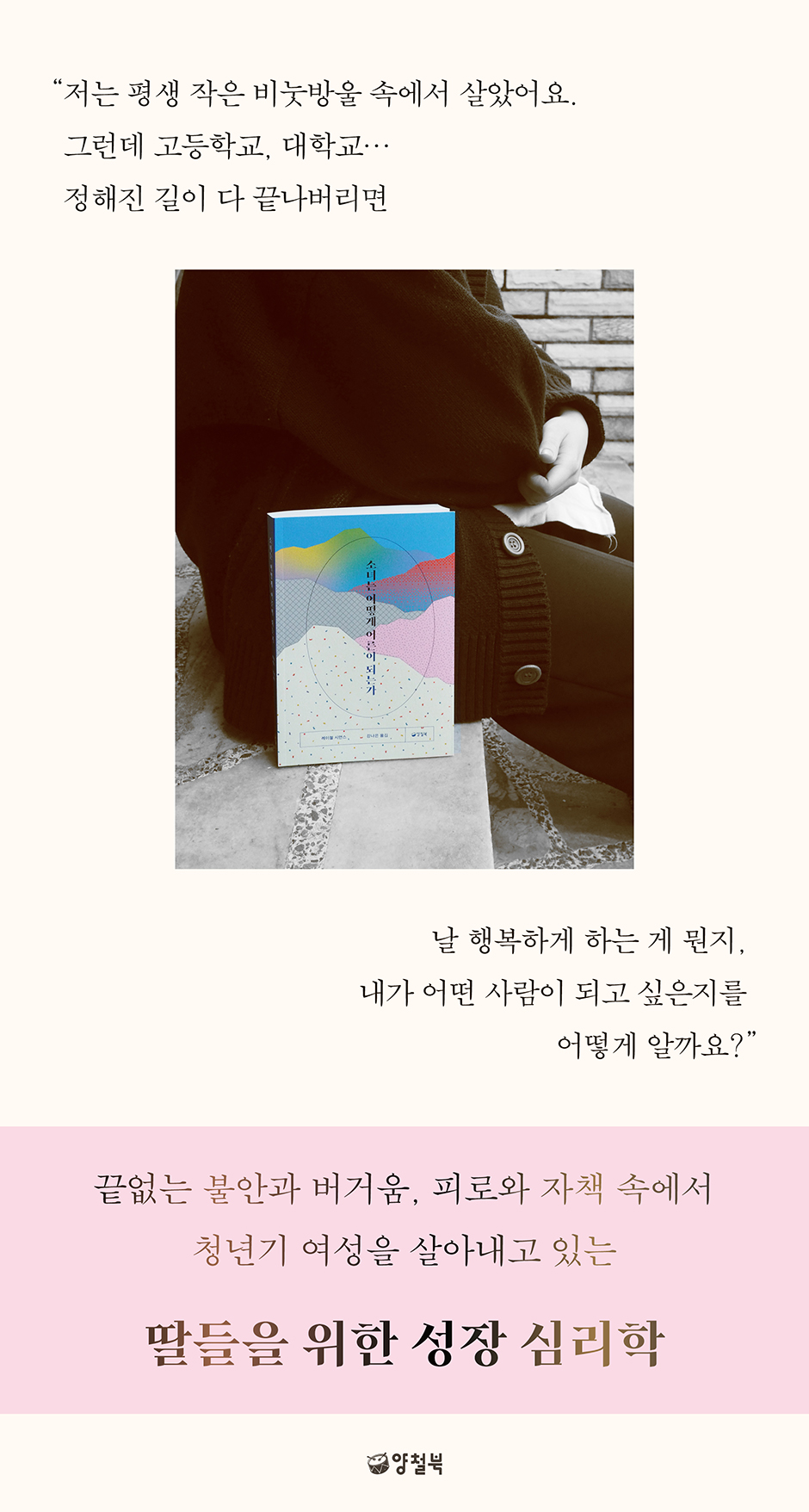
In today's world, where the goals of the new era conflict with the expectations of the old era,
In the midst of endless anxiety, burden, fatigue and self-reproach
Growth Psychology for Daughters Surviving Adolescence
They say that this is an era where women can do anything.
You are encouraged to make your voice heard.
Are girls and young women living happier and healthier than ever before, as we hope?
Rachel Simmons, who has taught, studied and listened to girls' stories for 20 years, says no.
Drawing on a variety of research and interviews with over 100 young women, parents, and educators, this book clearly illustrates the concerns young women face today.
Be confident, be courageous, be assertive, be a cool girl... Countless messages seem to open doors and boost women's confidence, but ironically, the reality is quite the opposite.
In a society where girls are raised to be told, "You can do anything," while still being taught to be girls, they now feel they "have to do something." With so many external standards and societal expectations placed on them, they constantly feel inadequate.
These implicit messages are particularly dangerous for women in their late teens and early twenties, when they are still developing their own identities and exploring their life paths.
Rachel Simmons says that the period from adolescence to independence should not just be one of endurance for women, but of helping them grow happily and authentically.
And this book, written with deep empathy and meticulous research, shows us how.
There is no need for a 'good girl' or a 'great girl'.
No matter what they look like now or what path they have taken in life, daughters are enough just as they are.
In the midst of endless anxiety, burden, fatigue and self-reproach
Growth Psychology for Daughters Surviving Adolescence
They say that this is an era where women can do anything.
You are encouraged to make your voice heard.
Are girls and young women living happier and healthier than ever before, as we hope?
Rachel Simmons, who has taught, studied and listened to girls' stories for 20 years, says no.
Drawing on a variety of research and interviews with over 100 young women, parents, and educators, this book clearly illustrates the concerns young women face today.
Be confident, be courageous, be assertive, be a cool girl... Countless messages seem to open doors and boost women's confidence, but ironically, the reality is quite the opposite.
In a society where girls are raised to be told, "You can do anything," while still being taught to be girls, they now feel they "have to do something." With so many external standards and societal expectations placed on them, they constantly feel inadequate.
These implicit messages are particularly dangerous for women in their late teens and early twenties, when they are still developing their own identities and exploring their life paths.
Rachel Simmons says that the period from adolescence to independence should not just be one of endurance for women, but of helping them grow happily and authentically.
And this book, written with deep empathy and meticulous research, shows us how.
There is no need for a 'good girl' or a 'great girl'.
No matter what they look like now or what path they have taken in life, daughters are enough just as they are.
- You can preview some of the book's contents.
Preview
index
Entering - You can't be like that
1.
College sending factory
The Messages and Influences Behind the College Sending Factory
Resisting the College-Sending Factory
2.
What is social media to young women?
How Social Media Seduces Girls
The Dark Side of Social Media: An Emotional Rollercoaster
social comparison
When Social Comparison Meets Social Media
Someone else's success is not my failure.
Log off and look inside yourself
Lies told on the internet to hide pain
3.
Can we talk about life?
How Girls Interpret Body Language
Worries about appearance interfere with daily life
Complaining about your body is social conversation.
Mirror on the Internet, mirror on the internet, who's the thinnest person on your timeline?
A story of finding your inner voice
4.
Overcoming Self-Doubt and Bridging the Gender Confidence Gap
What if I'm not smart? Letting go of fixed mindsets.
What if I can't achieve it? Set realistic goals.
What if I don't belong here? The mask phenomenon
What if this is all my fault? Looking at it from a balanced perspective
5.
Running on the treadmill of thought
Negative thoughts keep me moving forward
Endless thoughts
Obsessive worry exchange
Talk without obsessive worry
6.
Self-compassion instead of self-blame
Why do girls criticize themselves so much?
What Self-Compassion Gives Us
Three Steps to Self-Compassion
Confronting the voice of criticism in your mind
7.
The Stress Olympics: Perfection Without Even Trying
role overload
Perfect-looking girls, imperfect friendships
The New Laws of Stress Culture
Stress Olympics
A cool girl doesn't need any help.
It's okay if it's not okay
8.
Control+Alt+Delete, the advantage of changing lanes
Holding on isn't always a good thing
Taking recovery into your own hands
When experiencing difficulties with change
What Your Daughters Need to Hear from You
When the detour becomes my path
9.
We can't give our children what we don't have.
Your daughter is still looking at you
Show an example of making mistakes and getting frustrated.
No matter how old you are, throwing a tantrum is throwing a tantrum.
A conversation that helps stop tragic interpretations
Let your daughter know that it's not all her fault.
Parents, regulate yourselves
Teach them to be comfortable with uncertainty.
Be the parent of your actual daughter, not the daughter you wish you had.
You are enough as you are
10.
The Frustration of Senior Year: Life After College
Life after college is never a straight line.
There are few things that only have positive aspects.
The workplace is full of variables beyond our control.
The days of holding hands are over
Talented people also make copies and answer the phone.
Everyone struggles in their own way.
To the next step that your heart leads you to
As I leave - “Dear daughter, look into your heart.”
Interviewee Information
References
1.
College sending factory
The Messages and Influences Behind the College Sending Factory
Resisting the College-Sending Factory
2.
What is social media to young women?
How Social Media Seduces Girls
The Dark Side of Social Media: An Emotional Rollercoaster
social comparison
When Social Comparison Meets Social Media
Someone else's success is not my failure.
Log off and look inside yourself
Lies told on the internet to hide pain
3.
Can we talk about life?
How Girls Interpret Body Language
Worries about appearance interfere with daily life
Complaining about your body is social conversation.
Mirror on the Internet, mirror on the internet, who's the thinnest person on your timeline?
A story of finding your inner voice
4.
Overcoming Self-Doubt and Bridging the Gender Confidence Gap
What if I'm not smart? Letting go of fixed mindsets.
What if I can't achieve it? Set realistic goals.
What if I don't belong here? The mask phenomenon
What if this is all my fault? Looking at it from a balanced perspective
5.
Running on the treadmill of thought
Negative thoughts keep me moving forward
Endless thoughts
Obsessive worry exchange
Talk without obsessive worry
6.
Self-compassion instead of self-blame
Why do girls criticize themselves so much?
What Self-Compassion Gives Us
Three Steps to Self-Compassion
Confronting the voice of criticism in your mind
7.
The Stress Olympics: Perfection Without Even Trying
role overload
Perfect-looking girls, imperfect friendships
The New Laws of Stress Culture
Stress Olympics
A cool girl doesn't need any help.
It's okay if it's not okay
8.
Control+Alt+Delete, the advantage of changing lanes
Holding on isn't always a good thing
Taking recovery into your own hands
When experiencing difficulties with change
What Your Daughters Need to Hear from You
When the detour becomes my path
9.
We can't give our children what we don't have.
Your daughter is still looking at you
Show an example of making mistakes and getting frustrated.
No matter how old you are, throwing a tantrum is throwing a tantrum.
A conversation that helps stop tragic interpretations
Let your daughter know that it's not all her fault.
Parents, regulate yourselves
Teach them to be comfortable with uncertainty.
Be the parent of your actual daughter, not the daughter you wish you had.
You are enough as you are
10.
The Frustration of Senior Year: Life After College
Life after college is never a straight line.
There are few things that only have positive aspects.
The workplace is full of variables beyond our control.
The days of holding hands are over
Talented people also make copies and answer the phone.
Everyone struggles in their own way.
To the next step that your heart leads you to
As I leave - “Dear daughter, look into your heart.”
Interviewee Information
References
Detailed image
Into the book
There are two things this book wants to give you.
First, language.
Many of the challenges girls face are vividly experienced but remain unspoken.
If they don't have the language to express what they're going through, they feel alone.
In worse cases, you end up thinking it's your fault.
But when you know the identity and meaning of that experience, it changes.
Let's take 'obsessive worry' as an example.
When I explain what it is and why it happens, the relief shows on the faces of the girls listening to my story.
I realized that I was not crazy enough to get lost in endless thoughts.
There is a name for that behavior, and there are things you can do to address it.
Suddenly change becomes possible.
Second, this book offers strategies you can try right now.
I am an educator first and foremost.
I'm passionate about transforming research findings into educational programs that help people develop real-world skills and change the way they act and think.
I want you to open each chapter of this book as if you were attending my workshop.
--- p.28, from "Entering - You Can't Be That Way"
At the end of every workshop or class, I ask my students one question:
This question is especially directed at women who exercise on steppers at 5:30 in the morning and read books by the light of their cell phones in their dorms past midnight.
This question is directed at a high school student who has been attending Sunday college entrance exam preparation classes since his second year of middle school, and a college sophomore who is on his second bottle of a nutritious beverage.
To those women who struggle under the relentless pressure to do everything and be everything, I ask just one question:
"What makes you good enough to be you?" I ask this question every time I teach a group class, and I've never left that class without a lump in my throat.
--- p.252, from “Chapter 6: Self-Compassion Instead of Self-Blame”
While writing this book, I met many girls who were passionate and motivated about their work, but few of them talked about their future based on their own happiness.
Instead, everyone was constantly wrestling with the message of society demanding 'more'.
At some point in the future, I felt like I needed to do something 'a little more'.
I need to run a little more on the treadmill tomorrow, spend a little more time in the library next semester, and post something more interesting on social media on Saturday nights… … .
Let's help our daughters follow their own vision of a fulfilling life, rather than the harmful voices of our culture that demand "more."
Let's help people feel that they are enough as themselves, with their own sense of purpose and relationships with others.
First, language.
Many of the challenges girls face are vividly experienced but remain unspoken.
If they don't have the language to express what they're going through, they feel alone.
In worse cases, you end up thinking it's your fault.
But when you know the identity and meaning of that experience, it changes.
Let's take 'obsessive worry' as an example.
When I explain what it is and why it happens, the relief shows on the faces of the girls listening to my story.
I realized that I was not crazy enough to get lost in endless thoughts.
There is a name for that behavior, and there are things you can do to address it.
Suddenly change becomes possible.
Second, this book offers strategies you can try right now.
I am an educator first and foremost.
I'm passionate about transforming research findings into educational programs that help people develop real-world skills and change the way they act and think.
I want you to open each chapter of this book as if you were attending my workshop.
--- p.28, from "Entering - You Can't Be That Way"
At the end of every workshop or class, I ask my students one question:
This question is especially directed at women who exercise on steppers at 5:30 in the morning and read books by the light of their cell phones in their dorms past midnight.
This question is directed at a high school student who has been attending Sunday college entrance exam preparation classes since his second year of middle school, and a college sophomore who is on his second bottle of a nutritious beverage.
To those women who struggle under the relentless pressure to do everything and be everything, I ask just one question:
"What makes you good enough to be you?" I ask this question every time I teach a group class, and I've never left that class without a lump in my throat.
--- p.252, from “Chapter 6: Self-Compassion Instead of Self-Blame”
While writing this book, I met many girls who were passionate and motivated about their work, but few of them talked about their future based on their own happiness.
Instead, everyone was constantly wrestling with the message of society demanding 'more'.
At some point in the future, I felt like I needed to do something 'a little more'.
I need to run a little more on the treadmill tomorrow, spend a little more time in the library next semester, and post something more interesting on social media on Saturday nights… … .
Let's help our daughters follow their own vision of a fulfilling life, rather than the harmful voices of our culture that demand "more."
Let's help people feel that they are enough as themselves, with their own sense of purpose and relationships with others.
--- p.390, from “As I leave, ‘Dear daughter, look into your heart’”
Publisher's Review
In today's world, where the goals of a new era conflict with the expectations of old-fashioned femininity,
What path do young women face as they enter adulthood?
Today's girls seem to be having a better time than ever, and indeed, they're achieving a lot, breaking glass ceilings and taking selfies without the constraints their mothers and grandmothers faced.
Ironically, however, in the hearts of these girls and young women lies a cruel self-criticism and a devastating fear of failure.
Today, girls are outperforming boys in grades and college admissions, achieving more than ever before, but they are also living in more challenging times than ever before.
Although he may seem like an excellent student on the outside, he feels anxious, burdened, and lost inside.
Even though I put in a lot of effort, even saving up time for sleep, I always feel like I'm not good enough.
I feel like I'm not smart enough, not pretty enough, not thin enough, and not popular enough.
Faced with countless choices, it is easy to be led by the external voices demanded by parents or society rather than listening to the voice within.
What drives these women away from themselves? Are the hardships girls face simply a rite of passage they must endure to become girls?
“I feel like my life has been about putting all the world’s expectations on one person.
“I don’t know how I’m surviving either”?
“No matter what I do, I have to post it on Instagram. It’s a huge effort.” Alexis
“Not a day goes by without me thinking about how I look to others.” Bianca
“When I go to bed, I think back to everything I said that day, and more than half of the time I blame myself for saying it.” Harper
“I keep thinking about what to do.
Things to do later, things to do next month, what to do and why to do it, etc.
“My mind won’t rest.” Kayla
“You told me to be kind to myself, but if I did that, wouldn’t I just sit in my room in my pajamas all day watching Netflix?” Jenny
“High school, college… When the set path ends, how do I know what makes me happy, where I want to grow, and what kind of person I want to become?”
Just as in her previous work, 『Psychology of Girls』 (Yangcheolbuk), the reason for bullying among girls was found in the social demand to be good girls and to suppress natural expression of emotions such as jealousy and anger, in this book, the author points out that the idea that "nowadays, with women's rights changed, girls are happier in society than at any other time in the past" is wrong.
The message that "you can do anything!" combined with the sexist perceptions that still permeate society means that girls are expected to work harder in more ways than ever before, instead of being themselves.
When too many external standards and societal expectations are placed on them, it puts pressure on them, and when they fail to meet them, they start to think that there is something wrong with them.
However, the author points out that the fundamental and bigger problem is not them, but our 'culture'.
Over the past decade, as social media has grown exponentially, the frenzied college race has intensified, and the pressure to be thin has become ever more intense, the rules of success girls are expected to follow have become a kind of punishment.
These harmful messages from our culture clash with the most vulnerable parts of girls' psychology, preventing them from growing into their confident and authentic selves.
According to 20 years of research by Rachel Simmons, girls have significantly lower self-confidence than boys, despite their higher academic achievements.
Their happiness, resilience, and self-worth are all low.
Drawing on vivid real-life examples, the author argues that society forces girls to focus solely on external outcomes, leading them to avoid healthy risks, dwell on mistakes, and suffer from imposter syndrome (the belief that they are fake and will be exposed).
He also points out that while we spend so much time creating a perfect image of ourselves through social media, we are distancing ourselves from the real relationships that truly comfort, empower, and build confidence.
For most kids, graduating from high school means college, and after college, they have a goal like a job at a major corporation that everyone recognizes.
Although things have changed since the old days, most children are still pushed down this path.
In order not to fall behind on that path that is too narrow and prejudiced, the tasks and goals that must be done now are clearly defined.
On this established path, many girls struggle with the message that their own happiness isn't the measure of their own well-being, that they should be doing "just a little more, just a little more," and that even basic self-care—cleaning the room, taking a nap, going for a walk—is seen as a privilege that can only be enjoyed after earning a certain level of qualification.
I need to run a little more on the treadmill tomorrow, spend more time in the library next semester, and post something more interesting on social media on Saturday nights… .
When these children leave the bubble world created by their parents and society and encounter the 'real world', will they be able to navigate life as their own selves?
To help young women live happy and healthy lives
A story that parents, educators, and society must listen to together.
A look into the hearts and lives of young women through deep empathy, interviews, and meticulous research.
Written with deep empathy for young women, and based on meticulous research and investigation, Rachel Simmons' book clearly illustrates the issues they face today.
It comprehensively covers everything from the implicit messages embedded in the college sending factory to social media becoming just another chore, harmful social comparisons and talk of "life," obsessive worries that keep coming back, self-doubt and self-criticism, and the culture of coolness.
When the difficulties they face are expressed in clear and specific language, and when they realize that they are not unique to them but universal, that alone will make them feel more free.
Furthermore, it provides specific guidance on how to overcome these difficulties and challenges and how parents and educators can help them.
It's packed with balanced, concrete advice on how to choose self-empathy over self-criticism, let go of obsessive worry and the urge to constantly compare yourself to your peers, how to take healthy risks, how to use social media wisely without it harming your mental health, how to prioritize taking care of your body and mind, and how to ask for help when you need it.
We guide young women to cultivate healthy self-esteem and a spirit of adventure, free from the sway of society's harmful messages and demands, so they can move forward into the next stage of their lives at their own pace, guided by their own heart.
No matter where you are in life right now, “You are enough just as you are.”
What would happen if, today, our daughters could embrace and value themselves for who they are? What if they could remember that they are, no matter what, they are still important? Rachel Simmons says that is the beginning of true "success."
There is no need for a 'good girl' or a 'great girl'.
No matter what they look like now or what path they have taken in life, daughters are sufficient as they are.
Even if we don't know what step to take next, if we follow the voice within ourselves rather than the voice of the outside world, even if we fail and stumble, even if we don't follow the path everyone else is taking, our daughters will eventually get where they are meant to be.
The only weapon that can defeat the desire to live up to other people's expectations is yourself.
Once you find what's truly important to you, you'll feel comfortable rolling around in the mud with it.
Even when we have awkward experiences like meeting friends who don't fit in well or feeling like we're drowning in assignments, we can get through them and keep going.
For no one else but yourself.
What path do young women face as they enter adulthood?
Today's girls seem to be having a better time than ever, and indeed, they're achieving a lot, breaking glass ceilings and taking selfies without the constraints their mothers and grandmothers faced.
Ironically, however, in the hearts of these girls and young women lies a cruel self-criticism and a devastating fear of failure.
Today, girls are outperforming boys in grades and college admissions, achieving more than ever before, but they are also living in more challenging times than ever before.
Although he may seem like an excellent student on the outside, he feels anxious, burdened, and lost inside.
Even though I put in a lot of effort, even saving up time for sleep, I always feel like I'm not good enough.
I feel like I'm not smart enough, not pretty enough, not thin enough, and not popular enough.
Faced with countless choices, it is easy to be led by the external voices demanded by parents or society rather than listening to the voice within.
What drives these women away from themselves? Are the hardships girls face simply a rite of passage they must endure to become girls?
“I feel like my life has been about putting all the world’s expectations on one person.
“I don’t know how I’m surviving either”?
“No matter what I do, I have to post it on Instagram. It’s a huge effort.” Alexis
“Not a day goes by without me thinking about how I look to others.” Bianca
“When I go to bed, I think back to everything I said that day, and more than half of the time I blame myself for saying it.” Harper
“I keep thinking about what to do.
Things to do later, things to do next month, what to do and why to do it, etc.
“My mind won’t rest.” Kayla
“You told me to be kind to myself, but if I did that, wouldn’t I just sit in my room in my pajamas all day watching Netflix?” Jenny
“High school, college… When the set path ends, how do I know what makes me happy, where I want to grow, and what kind of person I want to become?”
Just as in her previous work, 『Psychology of Girls』 (Yangcheolbuk), the reason for bullying among girls was found in the social demand to be good girls and to suppress natural expression of emotions such as jealousy and anger, in this book, the author points out that the idea that "nowadays, with women's rights changed, girls are happier in society than at any other time in the past" is wrong.
The message that "you can do anything!" combined with the sexist perceptions that still permeate society means that girls are expected to work harder in more ways than ever before, instead of being themselves.
When too many external standards and societal expectations are placed on them, it puts pressure on them, and when they fail to meet them, they start to think that there is something wrong with them.
However, the author points out that the fundamental and bigger problem is not them, but our 'culture'.
Over the past decade, as social media has grown exponentially, the frenzied college race has intensified, and the pressure to be thin has become ever more intense, the rules of success girls are expected to follow have become a kind of punishment.
These harmful messages from our culture clash with the most vulnerable parts of girls' psychology, preventing them from growing into their confident and authentic selves.
According to 20 years of research by Rachel Simmons, girls have significantly lower self-confidence than boys, despite their higher academic achievements.
Their happiness, resilience, and self-worth are all low.
Drawing on vivid real-life examples, the author argues that society forces girls to focus solely on external outcomes, leading them to avoid healthy risks, dwell on mistakes, and suffer from imposter syndrome (the belief that they are fake and will be exposed).
He also points out that while we spend so much time creating a perfect image of ourselves through social media, we are distancing ourselves from the real relationships that truly comfort, empower, and build confidence.
For most kids, graduating from high school means college, and after college, they have a goal like a job at a major corporation that everyone recognizes.
Although things have changed since the old days, most children are still pushed down this path.
In order not to fall behind on that path that is too narrow and prejudiced, the tasks and goals that must be done now are clearly defined.
On this established path, many girls struggle with the message that their own happiness isn't the measure of their own well-being, that they should be doing "just a little more, just a little more," and that even basic self-care—cleaning the room, taking a nap, going for a walk—is seen as a privilege that can only be enjoyed after earning a certain level of qualification.
I need to run a little more on the treadmill tomorrow, spend more time in the library next semester, and post something more interesting on social media on Saturday nights… .
When these children leave the bubble world created by their parents and society and encounter the 'real world', will they be able to navigate life as their own selves?
To help young women live happy and healthy lives
A story that parents, educators, and society must listen to together.
A look into the hearts and lives of young women through deep empathy, interviews, and meticulous research.
Written with deep empathy for young women, and based on meticulous research and investigation, Rachel Simmons' book clearly illustrates the issues they face today.
It comprehensively covers everything from the implicit messages embedded in the college sending factory to social media becoming just another chore, harmful social comparisons and talk of "life," obsessive worries that keep coming back, self-doubt and self-criticism, and the culture of coolness.
When the difficulties they face are expressed in clear and specific language, and when they realize that they are not unique to them but universal, that alone will make them feel more free.
Furthermore, it provides specific guidance on how to overcome these difficulties and challenges and how parents and educators can help them.
It's packed with balanced, concrete advice on how to choose self-empathy over self-criticism, let go of obsessive worry and the urge to constantly compare yourself to your peers, how to take healthy risks, how to use social media wisely without it harming your mental health, how to prioritize taking care of your body and mind, and how to ask for help when you need it.
We guide young women to cultivate healthy self-esteem and a spirit of adventure, free from the sway of society's harmful messages and demands, so they can move forward into the next stage of their lives at their own pace, guided by their own heart.
No matter where you are in life right now, “You are enough just as you are.”
What would happen if, today, our daughters could embrace and value themselves for who they are? What if they could remember that they are, no matter what, they are still important? Rachel Simmons says that is the beginning of true "success."
There is no need for a 'good girl' or a 'great girl'.
No matter what they look like now or what path they have taken in life, daughters are sufficient as they are.
Even if we don't know what step to take next, if we follow the voice within ourselves rather than the voice of the outside world, even if we fail and stumble, even if we don't follow the path everyone else is taking, our daughters will eventually get where they are meant to be.
The only weapon that can defeat the desire to live up to other people's expectations is yourself.
Once you find what's truly important to you, you'll feel comfortable rolling around in the mud with it.
Even when we have awkward experiences like meeting friends who don't fit in well or feeling like we're drowning in assignments, we can get through them and keep going.
For no one else but yourself.
GOODS SPECIFICS
- Publication date: February 9, 2021
- Page count, weight, size: 412 pages | 466g | 145*210*30mm
- ISBN13: 9788963723457
- ISBN10: 8963723453
You may also like
카테고리
korean


korean

![GQ KOREA Mark (Monthly): December [2025]](http://librairie.coreenne.fr/cdn/shop/files/8ef265dbbfbf186523ed75ba7319009d.jpg?v=1765340328&width=3840)


