

Hug your memories
 |
Description
Book Introduction
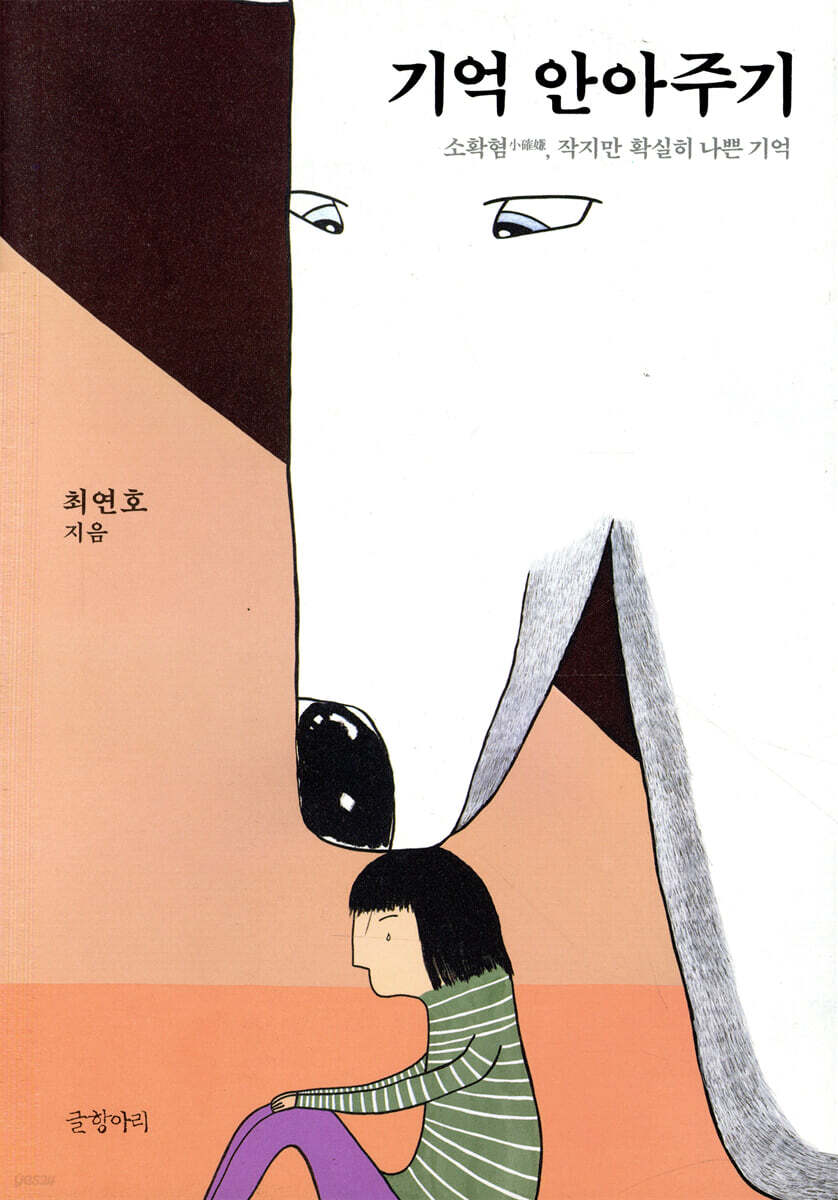
Small but definite fear of bad memories How can we escape from bad memories? There is no one without bad memories. But there is no one who does not have good memories The art of forgetting through 'having good experiences' and 'distorting them into good memories' Those who recommended this book after reading it first expressed their admiration, saying, “This book contains the best insights,” and “A medical textbook that is worthy of being a New York Times bestseller has been published in Korea.” The author is the Dean of Sungkyunkwan University School of Medicine and a pediatrician at Samsung Seoul Hospital. However, in his first book, "Holding Memories," principles of psychology, engineering, and economics, along with brain science research, appear as key insights into reading our bodies and minds. The author has achieved world-class research results by establishing a new treatment framework for Crohn's disease and ulcerative colitis in children and adolescents, and is also famous as a doctor who introduces humanistic treatment and provides treatment without medication. He spent the past three years researching and writing this book on 'bad memories', and it will also be the first step in his new medical textbook. Although he is a doctor who treats children, what he always encounters are 'bad memories' of children and their parents. He studied thousands of cases to understand how memories manifest as somatization disorders and to soothe memories, not the body. Bad memories are not very strong, as they can shatter into pieces if you really try to hit them. However, you need to have the initiative to face it, and at the same time, you need to continue to create good memories to cover it up. As we embrace our memories one by one like this, our brain begins to accept life, others, and ourselves more and more favorably. This life-changing memory unfolds throughout the book. |
- You can preview some of the book's contents.
Preview
index
preface
Prologue: Why Are We Afraid of Bad Memories?
The Beginning of Bad Memories | Why Bad Memories Are Reinforced: The Perpetrator's Perspective | Why Bad Memories Are Reinforced: The Victim's Perspective | Why the Goal of Treating Childhood Constipation Is to "Eradicate Bad Memories" Rather Than "Encourage Regular Bowel Movements"
Chapter 1 Memory
The brain of memory, the hippocampus
The fear brain, the amygdala
How are emotional memories created?
Settling into bad memories
Chapter 2 Evasion
Loss Aversion: The Unseen Reason Sampoong Department Store Collapsed
Rational Fear: Paranoia among Papua New Guinea's Natives
Meta-rationality: The Tsunami that struck the Fukushima and Onagawa nuclear power plants
Chapter 3 Intervention
Action Bias: With a runner on first base and no outs, should you pitch or bunt?
Omission Bias: Why Parents Refuse to Vaccinate Their Children
Control: How to feed a picky eater?
A Bungled Intervention: Why Wildfire Prevention Policy Caused the Yellowstone National Park Fire
Chapter 4: Small and Medium Business
Human behavior to avoid fear of small dangers
The Availability Heuristic: Did the Predicted Worst Earthquake Actually Happen?
Prejudice: A Critique of Francis Bacon
Aversion: Taste-Aversion Learning in Rats Eating Poisoned Cheese
Blame-shifting: Which parent is responsible if a child swallows a foreign object?
Fear of Evaluation: What will others think of me?
Fear of Rejection: The Pain of Bullying Is Equal to Physical Pain
Presentism: Why We Can't Accurately Predict the Future
Obsession, Compulsion, and Paranoia: According to the Buddha
Ignoring Probability and Zero-Risk Bias: Why the COVID-19 Crisis Led to a Toilet Paper Hoarding Frenzy
Learned helplessness: A dog that can't run away even if it can.
Crush and Panic: Why Air France Flight 447 Crashed with its Nose Pointed Up
Two Techniques of Self-Deception
Tough on the outside, soft on the inside: A sheep in wolf's clothing
Self-Handicapping Phenomenon: A Wolf in Sheep's Clothing
Procrastination: Why did Dostoevsky put off writing his novel?
Hello Kitty phenomenon
Chapter 5: Perspectives
Process and Result: Eichmann's "Ordinariness" and Fear That Hannah Arendt Missed
Lawrence of Arabia's Dilemma
The Perspective of Fear
The Fear I Create: The Birth of Small Suspicion
Family-created fear: The vicious cycle of petty suspicion
Society-Created Fear: Another Availability Heuristic
Chapter 6 Errors
Memory Distortion: People Who Became Celebrities After Sleeping Over
Distortion of bad memories
Anecdotal Memory: Why People Who Get Stomach Aches After Eating Octopus Avoid Red Broth
Flashpoint Memory: What Plane Did President Bush See on TV on 9/11?
Chapter 7: Forgetting
The River Lethe: The Teahouse of the Dead from the Drama "Goblin"
Two interpretations of forgetting: forgotten or forgotten
Forgetfulness: Mild Cognitive Impairment for Me?
The Art of Forgetting: Kant's Command to Forget the Servant Lampe
Chapter 8 Healing
Bad Memories Are Painful: The Brain's Physical Pain Areas Light Up When You Break Up with a Lover
When Fear Meets Faith: Babe Ruth's World Series Predictive Home Run
How to Build Faith: The 33 Armed Men Who Survived a Chilean Mine Trap After 69 Days
Meditation: Praise from Steve Jobs and Yuval Harari
Erasing Bad Memories and Instilling Good: The Addictive Future of Services
Awareness: What doesn't kill you makes you stronger
Epilogue: Why We Shouldn't Fear Bad Memories
The Eternal Sunshine of the Spotless Mind | The Absolutely Unspeakable Flaws Hidden Beneath the Surface | Four Ways to Escape Bad Memories | Good 'Bad Memories'
Acknowledgements
References
Prologue: Why Are We Afraid of Bad Memories?
The Beginning of Bad Memories | Why Bad Memories Are Reinforced: The Perpetrator's Perspective | Why Bad Memories Are Reinforced: The Victim's Perspective | Why the Goal of Treating Childhood Constipation Is to "Eradicate Bad Memories" Rather Than "Encourage Regular Bowel Movements"
Chapter 1 Memory
The brain of memory, the hippocampus
The fear brain, the amygdala
How are emotional memories created?
Settling into bad memories
Chapter 2 Evasion
Loss Aversion: The Unseen Reason Sampoong Department Store Collapsed
Rational Fear: Paranoia among Papua New Guinea's Natives
Meta-rationality: The Tsunami that struck the Fukushima and Onagawa nuclear power plants
Chapter 3 Intervention
Action Bias: With a runner on first base and no outs, should you pitch or bunt?
Omission Bias: Why Parents Refuse to Vaccinate Their Children
Control: How to feed a picky eater?
A Bungled Intervention: Why Wildfire Prevention Policy Caused the Yellowstone National Park Fire
Chapter 4: Small and Medium Business
Human behavior to avoid fear of small dangers
The Availability Heuristic: Did the Predicted Worst Earthquake Actually Happen?
Prejudice: A Critique of Francis Bacon
Aversion: Taste-Aversion Learning in Rats Eating Poisoned Cheese
Blame-shifting: Which parent is responsible if a child swallows a foreign object?
Fear of Evaluation: What will others think of me?
Fear of Rejection: The Pain of Bullying Is Equal to Physical Pain
Presentism: Why We Can't Accurately Predict the Future
Obsession, Compulsion, and Paranoia: According to the Buddha
Ignoring Probability and Zero-Risk Bias: Why the COVID-19 Crisis Led to a Toilet Paper Hoarding Frenzy
Learned helplessness: A dog that can't run away even if it can.
Crush and Panic: Why Air France Flight 447 Crashed with its Nose Pointed Up
Two Techniques of Self-Deception
Tough on the outside, soft on the inside: A sheep in wolf's clothing
Self-Handicapping Phenomenon: A Wolf in Sheep's Clothing
Procrastination: Why did Dostoevsky put off writing his novel?
Hello Kitty phenomenon
Chapter 5: Perspectives
Process and Result: Eichmann's "Ordinariness" and Fear That Hannah Arendt Missed
Lawrence of Arabia's Dilemma
The Perspective of Fear
The Fear I Create: The Birth of Small Suspicion
Family-created fear: The vicious cycle of petty suspicion
Society-Created Fear: Another Availability Heuristic
Chapter 6 Errors
Memory Distortion: People Who Became Celebrities After Sleeping Over
Distortion of bad memories
Anecdotal Memory: Why People Who Get Stomach Aches After Eating Octopus Avoid Red Broth
Flashpoint Memory: What Plane Did President Bush See on TV on 9/11?
Chapter 7: Forgetting
The River Lethe: The Teahouse of the Dead from the Drama "Goblin"
Two interpretations of forgetting: forgotten or forgotten
Forgetfulness: Mild Cognitive Impairment for Me?
The Art of Forgetting: Kant's Command to Forget the Servant Lampe
Chapter 8 Healing
Bad Memories Are Painful: The Brain's Physical Pain Areas Light Up When You Break Up with a Lover
When Fear Meets Faith: Babe Ruth's World Series Predictive Home Run
How to Build Faith: The 33 Armed Men Who Survived a Chilean Mine Trap After 69 Days
Meditation: Praise from Steve Jobs and Yuval Harari
Erasing Bad Memories and Instilling Good: The Addictive Future of Services
Awareness: What doesn't kill you makes you stronger
Epilogue: Why We Shouldn't Fear Bad Memories
The Eternal Sunshine of the Spotless Mind | The Absolutely Unspeakable Flaws Hidden Beneath the Surface | Four Ways to Escape Bad Memories | Good 'Bad Memories'
Acknowledgements
References
Into the book
The problem is that adults also have bad memories.
What the child and the family all showed me was fear.
During the process of overcoming that fear, the child developed somatization disorder, complaining of various symptoms.
It was the only way for the child to forget the bad memories, even if only for a moment.
As I listened to the children and families who were suffering, analyzed the causes, and suggested solutions, I began to have so many questions.
I wondered how I could resolve these situations, which were not described at all in medical textbooks.
--- p.5
The smell of the silicone tube blocking my mouth is more disgusting than any food.
Siwoo, who senses that he cannot escape from this situation, greatly activates his amygdala with the emotional memory of fear.
As each day passes, the repetition of the same situation takes root in Si-woo's consciousness.
The hippocampus receives information and transmits it to the visual cortex, olfactory cortex, and auditory cortex for long-term memory.
Repetition becomes a habit and eventually leads to 'conditioning'.
Conditioning occurs when brain neurons repeatedly transmit electrical signals.
When we encounter a fearful or dangerous situation, we remember it to avoid the danger in the future.
At first, the amygdala moves implicitly, but eventually the hippocampus leaves long-term memories as conscious memories.
The bad memories of the anus and mouth that Soo-mi and Si-woo feared the most were conditioned, and they automatically recalled their own fears in situations that others could not notice.
Our brain has a duty to protect our bodies, so when a dangerous situation arises, it orders our bodies not to do anything else.
So when fear becomes conditioned, it can keep us safe from danger, but it can also prevent us from having new experiences.
In the face of fear, we become helpless.
--- p.58
Trauma increases blood flow to the memory systems, including the hippocampus and amygdala, but in the long term, blood flow to the hippocampus decreases, and stress hormones eventually cause the hippocampus to shrink in size.
In addition, memory ability is of course impaired.
Additionally, research has shown that the number of nerve fibers in the corpus callosum, which connects the left and right brains of abused children, is reduced.
As a result, the child becomes unable to properly connect thoughts and feelings, loses his sense of self, and becomes excessively anxious and feels like something is missing.
--- p.62
Let's look at the following example.
Antibiotics twice a day, cough syrup three times a day, expectorant three times a day, steroids twice a day, anti-inflammatory medicine three times a day, digestive medicine three times a day.
This is a prescription for a child's cold that you may occasionally see around you.
I think it's too much.
Since the cold is originally a viral disease, there is no specific treatment.
A small amount of medication and fluid and nutritional intake to alleviate symptoms is sufficient.
But why do these prescriptions come about?
--- p.77
What's fascinating to us, those of us with a predisposition to negative emotions, is that while bad memories are experiences from the past, some of those memories actually have present emotions embedded in them.
Moreover, because we are afraid of the negative consequences of experiencing them again, we tend to imagine potential losses by combining past bad memories with present bad feelings, and then imagining future bad feelings that also include present bad feelings, which can further reinforce the negative feelings and lead to paranoid obsession.
--- p.160
Bad memories, strangely enough, are not forgotten.
Even though my forgetfulness has worsened, my sense of detail remains sharp.
Forgetfulness only wanders around the hippocampus and doesn't dare to reach the amygdala, so the bad memories rooted in the amygdala are harder to forget no matter how hard you try to forget them, and even if you want to consign them to oblivion, they pop up from time to time.
The small but certain suspicion that has been planted all over my conscious and unconscious world is like a tail shaking its body.
The large body that should not move easily is easily shaken by the tail, so the thought of cutting off the tail becomes desperate.
The brain and tail are physically the furthest apart, but they are so strongly connected that the tail acts like the head rather than being cut off.
Dementia patients who have fully utilized their prefrontal cortex and had many good experiences when they were young tend to develop into gentle and 'pretty dementia', while dementia patients who are obsessed with only bad memories and are always anxious tend to develop into 'ugly dementia', which makes them easily angry.
Even if forgetfulness worsens, mild cognitive impairment develops, and dementia develops, it is certain that the small intestine will survive.
What the child and the family all showed me was fear.
During the process of overcoming that fear, the child developed somatization disorder, complaining of various symptoms.
It was the only way for the child to forget the bad memories, even if only for a moment.
As I listened to the children and families who were suffering, analyzed the causes, and suggested solutions, I began to have so many questions.
I wondered how I could resolve these situations, which were not described at all in medical textbooks.
--- p.5
The smell of the silicone tube blocking my mouth is more disgusting than any food.
Siwoo, who senses that he cannot escape from this situation, greatly activates his amygdala with the emotional memory of fear.
As each day passes, the repetition of the same situation takes root in Si-woo's consciousness.
The hippocampus receives information and transmits it to the visual cortex, olfactory cortex, and auditory cortex for long-term memory.
Repetition becomes a habit and eventually leads to 'conditioning'.
Conditioning occurs when brain neurons repeatedly transmit electrical signals.
When we encounter a fearful or dangerous situation, we remember it to avoid the danger in the future.
At first, the amygdala moves implicitly, but eventually the hippocampus leaves long-term memories as conscious memories.
The bad memories of the anus and mouth that Soo-mi and Si-woo feared the most were conditioned, and they automatically recalled their own fears in situations that others could not notice.
Our brain has a duty to protect our bodies, so when a dangerous situation arises, it orders our bodies not to do anything else.
So when fear becomes conditioned, it can keep us safe from danger, but it can also prevent us from having new experiences.
In the face of fear, we become helpless.
--- p.58
Trauma increases blood flow to the memory systems, including the hippocampus and amygdala, but in the long term, blood flow to the hippocampus decreases, and stress hormones eventually cause the hippocampus to shrink in size.
In addition, memory ability is of course impaired.
Additionally, research has shown that the number of nerve fibers in the corpus callosum, which connects the left and right brains of abused children, is reduced.
As a result, the child becomes unable to properly connect thoughts and feelings, loses his sense of self, and becomes excessively anxious and feels like something is missing.
--- p.62
Let's look at the following example.
Antibiotics twice a day, cough syrup three times a day, expectorant three times a day, steroids twice a day, anti-inflammatory medicine three times a day, digestive medicine three times a day.
This is a prescription for a child's cold that you may occasionally see around you.
I think it's too much.
Since the cold is originally a viral disease, there is no specific treatment.
A small amount of medication and fluid and nutritional intake to alleviate symptoms is sufficient.
But why do these prescriptions come about?
--- p.77
What's fascinating to us, those of us with a predisposition to negative emotions, is that while bad memories are experiences from the past, some of those memories actually have present emotions embedded in them.
Moreover, because we are afraid of the negative consequences of experiencing them again, we tend to imagine potential losses by combining past bad memories with present bad feelings, and then imagining future bad feelings that also include present bad feelings, which can further reinforce the negative feelings and lead to paranoid obsession.
--- p.160
Bad memories, strangely enough, are not forgotten.
Even though my forgetfulness has worsened, my sense of detail remains sharp.
Forgetfulness only wanders around the hippocampus and doesn't dare to reach the amygdala, so the bad memories rooted in the amygdala are harder to forget no matter how hard you try to forget them, and even if you want to consign them to oblivion, they pop up from time to time.
The small but certain suspicion that has been planted all over my conscious and unconscious world is like a tail shaking its body.
The large body that should not move easily is easily shaken by the tail, so the thought of cutting off the tail becomes desperate.
The brain and tail are physically the furthest apart, but they are so strongly connected that the tail acts like the head rather than being cut off.
Dementia patients who have fully utilized their prefrontal cortex and had many good experiences when they were young tend to develop into gentle and 'pretty dementia', while dementia patients who are obsessed with only bad memories and are always anxious tend to develop into 'ugly dementia', which makes them easily angry.
Even if forgetfulness worsens, mild cognitive impairment develops, and dementia develops, it is certain that the small intestine will survive.
--- p.260
Publisher's Review
Happiness and unhappiness created by memories
"Holding Memories" deals with "small but definitely bad memories."
Children who experienced the unpleasant slippery texture of mushrooms as children will stay away from that food for the rest of their lives, and children who were teased for using the school bathroom will have that trauma ingrained in their memory and will not be able to use the bathroom at work or in public restrooms.
People who have been rejected a lot have a brain that holds them back from making the right judgments and decisions in certain situations because of the fear of rejection.
Bad memories are strangely hard to forget.
As we age, our memory weakens, but the bad memories are as vivid as if they happened yesterday.
The amygdala is responsible for memories of fear, and the memories engraved there are remembered more often than not, and the small, tail-like memories shake the body, making it difficult to make good decisions.
The brain and the tail are the furthest apart, but they are very strongly connected, with the tail (amygdala) often acting like the head (prefrontal cortex).
Meeting parents in the clinic who are involved in their children's memories, the author sees how memories manifest in children as physical symptoms and pain.
People visit hospitals because they are sick and in pain, but the author says that the body and daily life can be restored by covering up bad memories with good memories.
Childhood memories resurface repeatedly even in adulthood, imprinting the same daily routines as happiness for some and unhappiness for others, and eliciting conflicting reactions of fear and curiosity when faced with new challenges.
It is said that dementia patients who have fully utilized their prefrontal cortex and had many good experiences when they were young develop mild and 'pretty dementia', while dementia patients who are obsessed with bad memories and are plagued by anxiety develop 'ugly dementia', which makes them prone to anger.
The author, who studied 'bad memories', says that even if you suffer from forgetfulness and cognitive impairment that causes memory loss, bad memories will always survive.
We become sensitive to bad memories
Minjae, a thirteen-year-old boy who doesn't speak much, went to the hospital because he burped more than 100 times a day.
He complained of pain around his belly button when he trimmed his bowel movements, but the symptoms subsided somewhat after he had a bowel movement.
As soon as he entered the examination room, the person who explained the pain in detail was Upma, and his older sister also said that she was worried because Minjae only played games every day and ate a lot of ramen.
Although his father seemed worried, Minjae, the person involved, said nothing.
Whenever Minjae tried to talk, his mother and older sister interrupted.
Minjae, who was originally a picky eater, had no say in his family, and his mother kept feeding him foods he disliked, which led to learned helplessness and stomach aches and burping whenever he was stressed.
Seongpil, a first-year high school student, also suffered from frequent stomachaches and diarrhea and did not gain weight.
I had an upper gastrointestinal endoscopy and colonoscopy at a nearby hospital, and the results were normal, but the abdominal pain continued.
His mother was extremely worried. She said that Seongpil's stomachache started when he was in 5th grade, and that it got worse when he was nervous or stressed, especially in the morning.
The author looked into the situation and found that Seongpil had actually been teased by his friends for defecating at school in the past, and that fear became a bad memory, causing somatization disorder.
Children who are sensitive to bad memories are anxious and fearful that such pain will occur again.
When you encounter a similar environment, time of day, or smell to the situation in which you experienced pain, bad memories from the past come back as flashbacks.
Moreover, physical pain and social pain overlap.
Research by psychologists Nathan DeWall and Naomi Eisenberger found that the brains of people who experienced bullying and those who suffered physical pain responded in the same areas.
In other words, even if a person is bullied in the organization he or she belongs to, he or she feels physical pain due to that fear.
The author specializes in children's digestive and nutritional health, but says that the primary clientele of the pediatrics department are not pediatric patients.
Children's suffering usually begins with past experiences and memories, and it is actually family members and doctors who turn children who were not sick into patients.
The author's view is that the child may have developed somatization disorder in an attempt to escape from bad memories.
The author, who constantly encounters stories of sick children and their families, analyzed the causes and pondered how to resolve these situations, which are not found in medical textbooks.
Then, while treating thousands of children with functional symptoms, I was able to recognize a similar pattern.
The content of this book begins with an observation of that very pattern and expands into an in-depth analysis in many directions.
How Anxiety Eats Us
First, let's take a brief look at the structure of the brain.
The most fundamental brain regions involved in memory are the hippocampus, the amygdala, and the prefrontal cortex.
The amygdala controls fear, the hippocampus stores memories, and the prefrontal cortex gathers information from the brain to make sound decisions.
In other words, the amygdala is always anxious, the hippocampus is busy organizing the pouring records, and the prefrontal cortex, as the CEO that controls the brain, selects important things and makes comprehensive decisions.
For example, let's say you went to a company dinner hosted by your department head.
At this point, my hippocampus, amygdala, and prefrontal cortex get busy.
When I see my boss who harassed me during the day, I feel fear and anger, but when I see my crush sitting next to me, I feel happiness and anxiety.
These emotions are processed in the amygdala, past related memories are received from the hippocampus, and finally synthesized by the prefrontal cortex.
The new information created in this way is stored in short-term memory and then separated into several pieces in the hippocampus and transmitted to the cortex in charge.
Memories related to emotions are sent to the amygdala, new words are stored in the temporal lobe, those related to colors are sent to the occipital lobe, and tactile and movement memories are sent to the parietal lobe for storage.
In the process of gathering these scattered things and reproducing them as a single memory, distortion can occur.
Especially when I'm in an emergency, my limbic system triggers a quick response without the prefrontal cortex's permission.
The hippocampus plays an important role because we refer to past cases at this time, and we predict the future based on memories in the hippocampus.
Especially, stomachaches, nausea, motion sickness, and lethargy experienced during childhood greatly activate the amygdala as an emotional memory of fear, and when this situation is repeated, it becomes ingrained in consciousness.
Because our brains have a duty to protect the body, when faced with a dangerous situation, they tend to retreat and not try anything rather than being curious and engaging with the new.
Trauma can cause long-term reductions in blood flow to the hippocampus, which can cause the hippocampus to shrink in size.
Accordingly, it goes without saying that memory ability is impaired.
On the other hand, when the amygdala becomes more active in stressful situations, it monopolizes bad memories and unconsciously forms its own memories.
In this way, bad memories torment us and make life tiring and lethargic.
However, if a bad memory from childhood manifests as a physical symptom, you may have another bad experience at the hospital.
For example, when a child has cold symptoms, it is common for a pediatrician to prescribe a daily dose of antibiotics twice, cough medicine three times, expectorant three times, steroids twice, anti-inflammatory drugs three times, and digestive medicine three times.
But isn't this over-prescription? Colds are inherently viral, so a small dose of medication, fluids, and nutrition are sufficient.
But why is this prescription given? The mother is afraid her child might develop pneumonia, and her work schedule makes it difficult for her to visit the hospital frequently.
Doctors also tend to overprescribe when they encounter concerned reactions from parents.
Medical staff are a group accustomed to 'control' to avoid fear.
Rather than prescribing antiemetics for a child's vomiting right away, you need to read their mind and take their surroundings into consideration. This is beyond your ability, so you start controlling it.
Who will suffer the most in this case? It's the child.
What happens to a child who has grown up taking so many antibiotics when a really serious infection strikes and there are no medications available due to antibiotic resistance?
Good memories overcome bad ones.
How nice it would be if we could forget bad memories.
Post-traumatic stress disorder and serious trauma are problems, but most people's bad memories are small, trivial 'small hatreds'.
In fact, we learn from these small sufferings and become more mature.
Ethicists say:
“Memories exist for a reason.” If unpleasant memories could be selectively erased, wouldn’t it be difficult for humans to overcome their suffering and grow without self-reflection?
Even so, we need to learn the art of forgetting so that bad memories don't invade our daily lives.
The best way is to distort it with good experiences and good memories.
This is the method the author suggests.
Even if the thought of small things keeps coming to mind, let's just leave it alone for now.
Let's leave bad memories to the amygdala and hippocampus and use the prefrontal cortex.
It activates the pleasure center of the hypothalamus.
Travel with someone you like, eat delicious food, read your favorite book, and compliment your friends.
All these good experiences are left as fragments of memory in various parts of the brain.
And time leads us to forget bad memories.
Moreover, fragments of good memories are used as weapons to rationalize bad memories.
For example, if you have a fight with a close friend because you don't agree with each other and don't contact them for a long time, you might blame them at first, but then gradually start to think that maybe it was your fault.
Both of these are bad memories.
At this time, the situation in which the argument occurred comes to mind as an anecdote, but forgetting may occur here and there, and memories from other sources may enter the blank spaces.
The moment you recall your friend's strengths and rationalize that perhaps the fight stemmed from those strengths, the whole fight process becomes understandable.
Although it never happened in real life, memories from different sources are injected, and later on, it takes on its own context.
This distortion of good memories works in the human psychological immune system.
Self-rationalization, which distorts bad memories in a positive way, requires training.
That is, don't be afraid and face it head on. Humans have a tendency to easily rationalize doing something boldly rather than not doing something, so don't hesitate.
The ability to distort negative emotions into positive memories can be trained from an early age.
For example, a child who always gets carsick when sitting in the back seat of a car should be given the experience of sitting in a bus or train seat with a clear view out the window.
After a few good experiences of not getting motion sickness due to the synchronization of vision, hearing, and sense of balance, there will come a day when the child does not get motion sickness even in a passenger car.
At this time, parents only need to say a few words from the side.
“You’re a big brother now.
So, they don't even look out the window very well." Children who want to grow up quickly begin to overcome the small fear of motion sickness by instilling in themselves the memory of having grown up.
Rather than putting on anti-motion sickness patches and preparing hygiene bags, the way to do it is to confront painful memories.
Our memories are made up of three types.
There are good memories that I want to keep for the rest of my life, bad memories that I never want to recall, and good 'bad memories' that complete me.
This book guides readers into the fascinating world of the brain and emotions through various cases and studies to help them accumulate good and bad memories that complete them.
"Holding Memories" deals with "small but definitely bad memories."
Children who experienced the unpleasant slippery texture of mushrooms as children will stay away from that food for the rest of their lives, and children who were teased for using the school bathroom will have that trauma ingrained in their memory and will not be able to use the bathroom at work or in public restrooms.
People who have been rejected a lot have a brain that holds them back from making the right judgments and decisions in certain situations because of the fear of rejection.
Bad memories are strangely hard to forget.
As we age, our memory weakens, but the bad memories are as vivid as if they happened yesterday.
The amygdala is responsible for memories of fear, and the memories engraved there are remembered more often than not, and the small, tail-like memories shake the body, making it difficult to make good decisions.
The brain and the tail are the furthest apart, but they are very strongly connected, with the tail (amygdala) often acting like the head (prefrontal cortex).
Meeting parents in the clinic who are involved in their children's memories, the author sees how memories manifest in children as physical symptoms and pain.
People visit hospitals because they are sick and in pain, but the author says that the body and daily life can be restored by covering up bad memories with good memories.
Childhood memories resurface repeatedly even in adulthood, imprinting the same daily routines as happiness for some and unhappiness for others, and eliciting conflicting reactions of fear and curiosity when faced with new challenges.
It is said that dementia patients who have fully utilized their prefrontal cortex and had many good experiences when they were young develop mild and 'pretty dementia', while dementia patients who are obsessed with bad memories and are plagued by anxiety develop 'ugly dementia', which makes them prone to anger.
The author, who studied 'bad memories', says that even if you suffer from forgetfulness and cognitive impairment that causes memory loss, bad memories will always survive.
We become sensitive to bad memories
Minjae, a thirteen-year-old boy who doesn't speak much, went to the hospital because he burped more than 100 times a day.
He complained of pain around his belly button when he trimmed his bowel movements, but the symptoms subsided somewhat after he had a bowel movement.
As soon as he entered the examination room, the person who explained the pain in detail was Upma, and his older sister also said that she was worried because Minjae only played games every day and ate a lot of ramen.
Although his father seemed worried, Minjae, the person involved, said nothing.
Whenever Minjae tried to talk, his mother and older sister interrupted.
Minjae, who was originally a picky eater, had no say in his family, and his mother kept feeding him foods he disliked, which led to learned helplessness and stomach aches and burping whenever he was stressed.
Seongpil, a first-year high school student, also suffered from frequent stomachaches and diarrhea and did not gain weight.
I had an upper gastrointestinal endoscopy and colonoscopy at a nearby hospital, and the results were normal, but the abdominal pain continued.
His mother was extremely worried. She said that Seongpil's stomachache started when he was in 5th grade, and that it got worse when he was nervous or stressed, especially in the morning.
The author looked into the situation and found that Seongpil had actually been teased by his friends for defecating at school in the past, and that fear became a bad memory, causing somatization disorder.
Children who are sensitive to bad memories are anxious and fearful that such pain will occur again.
When you encounter a similar environment, time of day, or smell to the situation in which you experienced pain, bad memories from the past come back as flashbacks.
Moreover, physical pain and social pain overlap.
Research by psychologists Nathan DeWall and Naomi Eisenberger found that the brains of people who experienced bullying and those who suffered physical pain responded in the same areas.
In other words, even if a person is bullied in the organization he or she belongs to, he or she feels physical pain due to that fear.
The author specializes in children's digestive and nutritional health, but says that the primary clientele of the pediatrics department are not pediatric patients.
Children's suffering usually begins with past experiences and memories, and it is actually family members and doctors who turn children who were not sick into patients.
The author's view is that the child may have developed somatization disorder in an attempt to escape from bad memories.
The author, who constantly encounters stories of sick children and their families, analyzed the causes and pondered how to resolve these situations, which are not found in medical textbooks.
Then, while treating thousands of children with functional symptoms, I was able to recognize a similar pattern.
The content of this book begins with an observation of that very pattern and expands into an in-depth analysis in many directions.
How Anxiety Eats Us
First, let's take a brief look at the structure of the brain.
The most fundamental brain regions involved in memory are the hippocampus, the amygdala, and the prefrontal cortex.
The amygdala controls fear, the hippocampus stores memories, and the prefrontal cortex gathers information from the brain to make sound decisions.
In other words, the amygdala is always anxious, the hippocampus is busy organizing the pouring records, and the prefrontal cortex, as the CEO that controls the brain, selects important things and makes comprehensive decisions.
For example, let's say you went to a company dinner hosted by your department head.
At this point, my hippocampus, amygdala, and prefrontal cortex get busy.
When I see my boss who harassed me during the day, I feel fear and anger, but when I see my crush sitting next to me, I feel happiness and anxiety.
These emotions are processed in the amygdala, past related memories are received from the hippocampus, and finally synthesized by the prefrontal cortex.
The new information created in this way is stored in short-term memory and then separated into several pieces in the hippocampus and transmitted to the cortex in charge.
Memories related to emotions are sent to the amygdala, new words are stored in the temporal lobe, those related to colors are sent to the occipital lobe, and tactile and movement memories are sent to the parietal lobe for storage.
In the process of gathering these scattered things and reproducing them as a single memory, distortion can occur.
Especially when I'm in an emergency, my limbic system triggers a quick response without the prefrontal cortex's permission.
The hippocampus plays an important role because we refer to past cases at this time, and we predict the future based on memories in the hippocampus.
Especially, stomachaches, nausea, motion sickness, and lethargy experienced during childhood greatly activate the amygdala as an emotional memory of fear, and when this situation is repeated, it becomes ingrained in consciousness.
Because our brains have a duty to protect the body, when faced with a dangerous situation, they tend to retreat and not try anything rather than being curious and engaging with the new.
Trauma can cause long-term reductions in blood flow to the hippocampus, which can cause the hippocampus to shrink in size.
Accordingly, it goes without saying that memory ability is impaired.
On the other hand, when the amygdala becomes more active in stressful situations, it monopolizes bad memories and unconsciously forms its own memories.
In this way, bad memories torment us and make life tiring and lethargic.
However, if a bad memory from childhood manifests as a physical symptom, you may have another bad experience at the hospital.
For example, when a child has cold symptoms, it is common for a pediatrician to prescribe a daily dose of antibiotics twice, cough medicine three times, expectorant three times, steroids twice, anti-inflammatory drugs three times, and digestive medicine three times.
But isn't this over-prescription? Colds are inherently viral, so a small dose of medication, fluids, and nutrition are sufficient.
But why is this prescription given? The mother is afraid her child might develop pneumonia, and her work schedule makes it difficult for her to visit the hospital frequently.
Doctors also tend to overprescribe when they encounter concerned reactions from parents.
Medical staff are a group accustomed to 'control' to avoid fear.
Rather than prescribing antiemetics for a child's vomiting right away, you need to read their mind and take their surroundings into consideration. This is beyond your ability, so you start controlling it.
Who will suffer the most in this case? It's the child.
What happens to a child who has grown up taking so many antibiotics when a really serious infection strikes and there are no medications available due to antibiotic resistance?
Good memories overcome bad ones.
How nice it would be if we could forget bad memories.
Post-traumatic stress disorder and serious trauma are problems, but most people's bad memories are small, trivial 'small hatreds'.
In fact, we learn from these small sufferings and become more mature.
Ethicists say:
“Memories exist for a reason.” If unpleasant memories could be selectively erased, wouldn’t it be difficult for humans to overcome their suffering and grow without self-reflection?
Even so, we need to learn the art of forgetting so that bad memories don't invade our daily lives.
The best way is to distort it with good experiences and good memories.
This is the method the author suggests.
Even if the thought of small things keeps coming to mind, let's just leave it alone for now.
Let's leave bad memories to the amygdala and hippocampus and use the prefrontal cortex.
It activates the pleasure center of the hypothalamus.
Travel with someone you like, eat delicious food, read your favorite book, and compliment your friends.
All these good experiences are left as fragments of memory in various parts of the brain.
And time leads us to forget bad memories.
Moreover, fragments of good memories are used as weapons to rationalize bad memories.
For example, if you have a fight with a close friend because you don't agree with each other and don't contact them for a long time, you might blame them at first, but then gradually start to think that maybe it was your fault.
Both of these are bad memories.
At this time, the situation in which the argument occurred comes to mind as an anecdote, but forgetting may occur here and there, and memories from other sources may enter the blank spaces.
The moment you recall your friend's strengths and rationalize that perhaps the fight stemmed from those strengths, the whole fight process becomes understandable.
Although it never happened in real life, memories from different sources are injected, and later on, it takes on its own context.
This distortion of good memories works in the human psychological immune system.
Self-rationalization, which distorts bad memories in a positive way, requires training.
That is, don't be afraid and face it head on. Humans have a tendency to easily rationalize doing something boldly rather than not doing something, so don't hesitate.
The ability to distort negative emotions into positive memories can be trained from an early age.
For example, a child who always gets carsick when sitting in the back seat of a car should be given the experience of sitting in a bus or train seat with a clear view out the window.
After a few good experiences of not getting motion sickness due to the synchronization of vision, hearing, and sense of balance, there will come a day when the child does not get motion sickness even in a passenger car.
At this time, parents only need to say a few words from the side.
“You’re a big brother now.
So, they don't even look out the window very well." Children who want to grow up quickly begin to overcome the small fear of motion sickness by instilling in themselves the memory of having grown up.
Rather than putting on anti-motion sickness patches and preparing hygiene bags, the way to do it is to confront painful memories.
Our memories are made up of three types.
There are good memories that I want to keep for the rest of my life, bad memories that I never want to recall, and good 'bad memories' that complete me.
This book guides readers into the fascinating world of the brain and emotions through various cases and studies to help them accumulate good and bad memories that complete them.
GOODS SPECIFICS
- Date of publication: December 7, 2020
- Page count, weight, size: 368 pages | 516g | 140*200*30mm
- ISBN13: 9788967358372
- ISBN10: 8967358377
You may also like
카테고리
korean


korean

![GQ KOREA Mark (Monthly): December [2025]](http://librairie.coreenne.fr/cdn/shop/files/8ef265dbbfbf186523ed75ba7319009d.jpg?v=1765340328&width=3840)


