

Let's write a book
 |
Description
Book Introduction
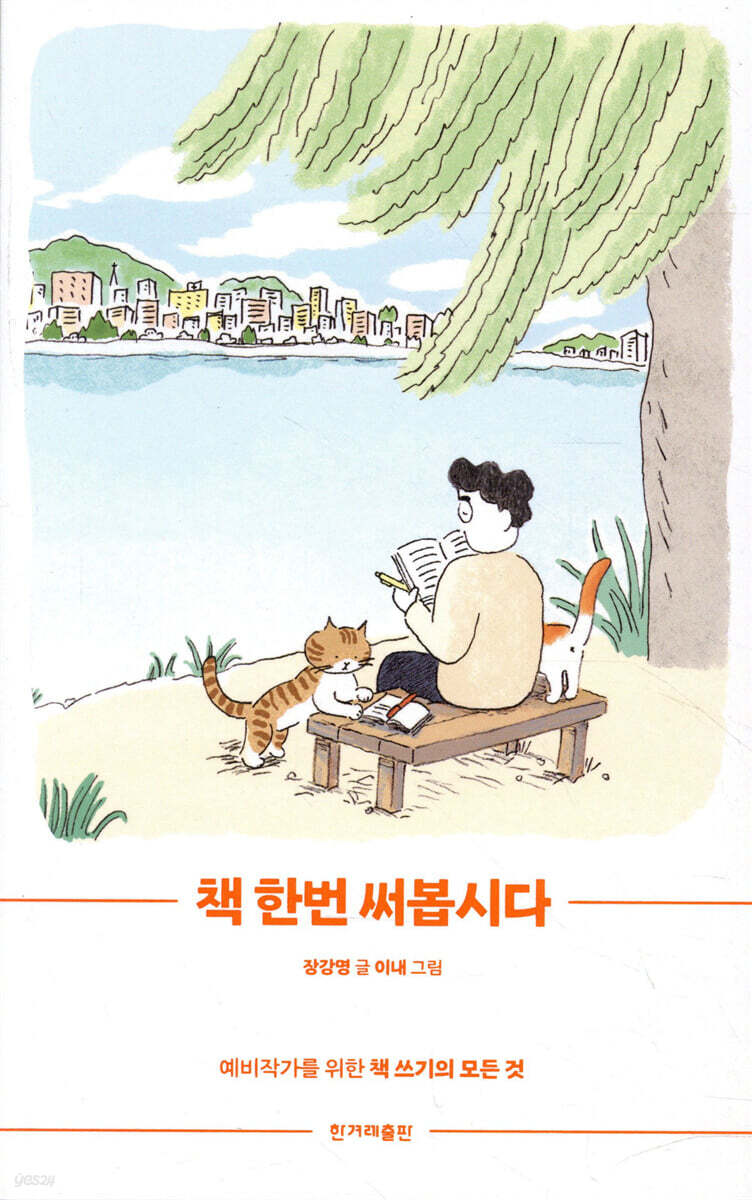
Becomes blood, becomes flesh, and ultimately becomes a book Talent or whatever, it doesn't matter Novelist Jang Kang-myeong's Guide to Writing Books We live in an age where even a short internet article, let alone a book, is a burden to read. Short posts on social media and YouTube videos have replaced text. Although the publishing market is shrinking, photo books containing pretty photos from Instagram are becoming bestsellers. Yes, that's right. It was in this era that novelist Jang Kang-myeong's essay on writing, "Let's Write a Book," was published. Novelist Jang Kang-myeong's "Let's Write a Book" lives up to its subtitle, "Everything About Writing a Book for Aspiring Writers," starting with the mindset of a writer and moving on to writing novels, essays, nonfiction, and columns. It contains all of Jang Kang-myeong's "30 practical book writing techniques" that become his blood, flesh, and ultimately, books, as he steadily devotes over 2,200 hours every year to writing books while working as a journalist, novelist, essayist, and nonfiction writer. Chapters 1 through 8 cover the process of becoming a writer and writing books, while chapters 9 through 21 cover how to write essays, novels, and nonfiction. Chapters 22-24 cover tips for proofreading and submission, and stories after the first book. The six appendices contain answers to questions that any aspiring writer would struggle with, such as writing columns, finding material, and what it means to be an author. |
- You can preview some of the book's contents.
Preview
index
1 Writing a Book is a Revolution! A Society Centered on Books
2 Write 600 pages of 200-character manuscript paper on one topic. Becoming a writer, writing a book.
3 That desire is not strange, it is instinct. Writing, talent is not required.
4 "What kind of book would someone like me have..."? It's hard to gauge one's writing potential.
5 To those who are angry and say, “I want to write a book like this too” Those who need to write should write.
6. Should you captivate your readers with the first sentence? Don't rely too much on writing guides.
What do writing, boxing, the saxophone, and swimming have in common? The Beginner Writer's Mindset
8. Use everything you see and hear. Where do you get your inspiration?
9 It doesn't look like melodrama. If you were a living, breathing human being, writing an essay ① What would you write?
10. Be prepared to be criticized, and let go of your desire to quote and your obsession with emotion. Essay Writing ② Why Can't I Be Honest?
11. Essay Writing on the Irony of Individuality Disappearing the More You Try to Stand Out ③ Understanding the Shape of My Heart
12. Essay Writing: The Twitching Moment When Concrete Thoughts Try to Transform into Abstract Thoughts ④ A Life-Loving Attitude and My Own Philosophy
13 Do I Have to Use My Real Name to Be Honest? Essay Writing ⑤ The Art of Hiding
14 Is Stephen King a Blatant Liar? ㆍNovel Writing ① Should I Create an Outline?
15. The strong only desire, the weak only fear? How to prevent literature from becoming propagandaㆍFiction writing②What is a three-dimensional character?
16 I want to eat ramen, but if I eat it, I might die. Novel Writing ③ How to create and relieve tension.
17 Simcheong's father should come when the feast is overㆍNovel Writing④Same story, different storytelling
18 To You Who Only Ask Questions That You've "Heard But Don't Know"ㆍNovel Writing⑤ Research for Novel Writing
19 The Life of Nonfiction: How to Cultivate a Critical AwarenessㆍWriting Nonfiction ① Nonfiction Planning and Critical Awareness
20 Nonfiction protagonists, those with a scene or questionㆍNonfiction writing②Protagonists and storytelling structure
21. From Flat Letters to 3D Cards… Six Secrets to Creating Vivid NonfictionㆍNonfiction Writing ③ Techniques for Connecting Problem Awareness and the Field
22 If you must be cursed, strive to be accurate in your criticism. Reflect and receive feedback.
23 Before saying “Please read my writing”ㆍSubmission tips and reading communities
24 Even if your first book doesn't sell, if you keep writing, you'll see a 'reverse effect'. The first book and what happens after that.
Appendix 1: Don't be too flashy, it's short. How to write a good column.
Appendix 2: Where to Find the Seeds of a Story and Novel Materials
Appendix 3: How do I write from nothing?
Appendix 4: Eric Blair's Isolation: My Writing Teacher
Appendix 5: New novelists in their 60s and 70s, as well as aspiring writers with passion and experience, will be coming.
Appendix 6: On the Beautiful and Cruel Waves: What is an Author?
2 Write 600 pages of 200-character manuscript paper on one topic. Becoming a writer, writing a book.
3 That desire is not strange, it is instinct. Writing, talent is not required.
4 "What kind of book would someone like me have..."? It's hard to gauge one's writing potential.
5 To those who are angry and say, “I want to write a book like this too” Those who need to write should write.
6. Should you captivate your readers with the first sentence? Don't rely too much on writing guides.
What do writing, boxing, the saxophone, and swimming have in common? The Beginner Writer's Mindset
8. Use everything you see and hear. Where do you get your inspiration?
9 It doesn't look like melodrama. If you were a living, breathing human being, writing an essay ① What would you write?
10. Be prepared to be criticized, and let go of your desire to quote and your obsession with emotion. Essay Writing ② Why Can't I Be Honest?
11. Essay Writing on the Irony of Individuality Disappearing the More You Try to Stand Out ③ Understanding the Shape of My Heart
12. Essay Writing: The Twitching Moment When Concrete Thoughts Try to Transform into Abstract Thoughts ④ A Life-Loving Attitude and My Own Philosophy
13 Do I Have to Use My Real Name to Be Honest? Essay Writing ⑤ The Art of Hiding
14 Is Stephen King a Blatant Liar? ㆍNovel Writing ① Should I Create an Outline?
15. The strong only desire, the weak only fear? How to prevent literature from becoming propagandaㆍFiction writing②What is a three-dimensional character?
16 I want to eat ramen, but if I eat it, I might die. Novel Writing ③ How to create and relieve tension.
17 Simcheong's father should come when the feast is overㆍNovel Writing④Same story, different storytelling
18 To You Who Only Ask Questions That You've "Heard But Don't Know"ㆍNovel Writing⑤ Research for Novel Writing
19 The Life of Nonfiction: How to Cultivate a Critical AwarenessㆍWriting Nonfiction ① Nonfiction Planning and Critical Awareness
20 Nonfiction protagonists, those with a scene or questionㆍNonfiction writing②Protagonists and storytelling structure
21. From Flat Letters to 3D Cards… Six Secrets to Creating Vivid NonfictionㆍNonfiction Writing ③ Techniques for Connecting Problem Awareness and the Field
22 If you must be cursed, strive to be accurate in your criticism. Reflect and receive feedback.
23 Before saying “Please read my writing”ㆍSubmission tips and reading communities
24 Even if your first book doesn't sell, if you keep writing, you'll see a 'reverse effect'. The first book and what happens after that.
Appendix 1: Don't be too flashy, it's short. How to write a good column.
Appendix 2: Where to Find the Seeds of a Story and Novel Materials
Appendix 3: How do I write from nothing?
Appendix 4: Eric Blair's Isolation: My Writing Teacher
Appendix 5: New novelists in their 60s and 70s, as well as aspiring writers with passion and experience, will be coming.
Appendix 6: On the Beautiful and Cruel Waves: What is an Author?
Detailed image
Into the book
The review of "Happy Bicycle Life" describes the process by which the author and editor came to write the book.
It seems that the editor is as much of a bike enthusiast as the author.
The editor is said to have said to the author while drinking, “Bicycles are a revolution. You must write a book that will lead this revolution, for humanity and the future.”
It's absurd to say that the bicycle, invented over 200 years ago, is a revolution and that the future belongs to bicycles.
But I got teary-eyed reading this passage.
To exaggerate a bit, reading this book review changed my mind about 'what is the future'.
The future doesn't come by itself.
The future is what we choose and create.
If we hope for and prepare for a 'bicycle-centered society,' that future will come.
It won't be easy, though.
--- p.11
What I'm trying to do in this book is to first encourage readers by saying, "Riding a bike is really fun, and you can do it too," and then get them to take their bike out of the garage and out to the park.
Then I'll try to pass on some trivial knowledge, like how the right brake is different from the left brake.
In fact, a neighborhood guy might be better at that role than a professional racer.
--- p.18
How well did the teachers and professors who told students, "You're not meant for writing, so focus on academics," truly assess their students' writing aptitude? In Korean schools, students are asked to write short essays and poems at best.
The curriculum of university creative writing departments also usually focuses on poetry and short stories.
Can you judge a student's writing ability by looking at their writing? That's like asking them to run a 100-meter dash, then looking at their results and saying, "You don't seem like an athlete."
However, a child who is not good at sprinting may be good at weightlifting or may be an archery prodigy who comes once in a century.
--- p.44
We don't ask people whose hobby is fishing, "Why go fishing? You can have fresh fish delivered straight from the source with just a few clicks."
You don't ask someone whose hobby is golf, "Why do you play golf? It's already too late to become a pro."
“Even if you are a professional golfer, if you are outside the top 100 in the world rankings, the general public won’t even know you.”
In fact, fishing or golf enthusiasts would confidently answer such questions.
“I do it because I like it.”
I do it to feel that taste, that joy.
The same goes for other hobbies.
We don't ask people who play baduk or friends who play the guitar from time to time why they do it.
It's just that I like baduk and guitar.
If a coworker tells you that they go to a dance academy, you cheer them on and say that they're cool, but you don't wonder when they'll debut as an idol.
But why is it that when it comes to writing a book, we ask ourselves, “What am I going to do with that?” and censor ourselves, saying, “Will I be able to become a best-selling author if I do that?”
Is it not enough to just say that I write because I like it?
Shouldn't the purpose of writing a book be myself?
Publishing a book is not like driving a car.
Publishing a trivial book doesn't hurt anyone.
The subtle atmosphere that 'only qualified people can publish books' is a fiction created by established writers who have already published books and those who admire writers but do not write.
Let's go to a bookstore right now and check it out with our own eyes.
There will be many books in the new releases section that don't really matter to anyone other than the author.
It's not just today.
It was like that yesterday, and it will be like that tomorrow.
It was the same in the last century.
--- p.47~48
But the author is not like that.
There are people who become writers by writing alone for an hour or two at night without any special training.
There are many.
I am one of them.
You can easily find such writers among the authors of current bestselling books.
When you see things like that, it seems like anyone can become a writer.
Violin, baduk, and broadcast dancing are things that not just anyone can do.
Only those who are prepared should do it.
--- p.49
How many fields in the world are left that are so equally daunting to all beginners?
--- p.81
There is no inspiration that comes down in its complete form.
All inspiration comes in imperfect forms.
It is the writer's job to complete it.
--- p.86
Inspiration can come from seeing strange things in strange places, but it can also come from seeing ordinary things in a strange way.
In many ways, the latter is more cost-effective.
Even if they are equally well written, the former may be suspected of being materialistic, while the latter is praised for being insightful.
--- p.90
The power of words is truly mysterious.
When the writer tries to capture the pain and confusion within himself in precise language, he is transformed.
The more he writes like that, the more he becomes the master of his own life.
An essayist shapes words and his or her own mind together.
Once you get a taste of it, you will write more and more honestly.
Essays are a genre that helps people grow.
--- p.112
Your answer is your individuality.
Developing one's personality ultimately means building one's perspective and view on life and the world—one's outlook on life, one's worldview.
--- p.119
Whether fiction or nonfiction, the object of literary reader's immersion is the protagonist.
You have to be curious about the protagonist's fate to be motivated to find out what happens next.
--- p.198
When conducting an interview, take pictures of the interview location or take notes on the atmosphere to record it.
If it's a book about historical figures or events, I recommend going out and visiting the site.
This advice applies even when describing events from hundreds of years ago.
Even if you can convey the atmosphere of the scene in just a few lines, the effect is amazing.
If possible, it is desirable to provide such a sense of presence in all chapters.
--- p.200
Sometimes I think that writers who are good at reflecting will also live wisely and well in life.
This is because, unlike the conception, research, or writing of an article, the process of revision seems to be related to personality.
To be good at resignation, you must control your emotions and be cool-headed.
You need to be patient and be able to look at yourself and your work objectively.
You need to figure out what your strengths and weaknesses are.
You must be open to the advice and criticism of others.
--- p.225~226
Regardless of whether I have any ideas in my head or not, regardless of my physical condition, I try to write consistently every day, like a professional.
I set my 'working hours' by combining the time I spend writing novels and the time I spend cleaning, and I measure that time with a stopwatch every day and record it in an Excel file.
The goal is to work more than 2,200 hours per year.
We achieved that goal last year and the year before, and it looks like we'll achieve it this year as well.
--- p.269
Only those who cannot make peace with the world end up clinging to writing.
--- p.282
As more people read and write long texts, society advances.
Because it means that the total amount of understanding and reflection increases by that much.
Conversely, a society where people are obsessed with one-line comments is shallow and miserable.
It seems that the editor is as much of a bike enthusiast as the author.
The editor is said to have said to the author while drinking, “Bicycles are a revolution. You must write a book that will lead this revolution, for humanity and the future.”
It's absurd to say that the bicycle, invented over 200 years ago, is a revolution and that the future belongs to bicycles.
But I got teary-eyed reading this passage.
To exaggerate a bit, reading this book review changed my mind about 'what is the future'.
The future doesn't come by itself.
The future is what we choose and create.
If we hope for and prepare for a 'bicycle-centered society,' that future will come.
It won't be easy, though.
--- p.11
What I'm trying to do in this book is to first encourage readers by saying, "Riding a bike is really fun, and you can do it too," and then get them to take their bike out of the garage and out to the park.
Then I'll try to pass on some trivial knowledge, like how the right brake is different from the left brake.
In fact, a neighborhood guy might be better at that role than a professional racer.
--- p.18
How well did the teachers and professors who told students, "You're not meant for writing, so focus on academics," truly assess their students' writing aptitude? In Korean schools, students are asked to write short essays and poems at best.
The curriculum of university creative writing departments also usually focuses on poetry and short stories.
Can you judge a student's writing ability by looking at their writing? That's like asking them to run a 100-meter dash, then looking at their results and saying, "You don't seem like an athlete."
However, a child who is not good at sprinting may be good at weightlifting or may be an archery prodigy who comes once in a century.
--- p.44
We don't ask people whose hobby is fishing, "Why go fishing? You can have fresh fish delivered straight from the source with just a few clicks."
You don't ask someone whose hobby is golf, "Why do you play golf? It's already too late to become a pro."
“Even if you are a professional golfer, if you are outside the top 100 in the world rankings, the general public won’t even know you.”
In fact, fishing or golf enthusiasts would confidently answer such questions.
“I do it because I like it.”
I do it to feel that taste, that joy.
The same goes for other hobbies.
We don't ask people who play baduk or friends who play the guitar from time to time why they do it.
It's just that I like baduk and guitar.
If a coworker tells you that they go to a dance academy, you cheer them on and say that they're cool, but you don't wonder when they'll debut as an idol.
But why is it that when it comes to writing a book, we ask ourselves, “What am I going to do with that?” and censor ourselves, saying, “Will I be able to become a best-selling author if I do that?”
Is it not enough to just say that I write because I like it?
Shouldn't the purpose of writing a book be myself?
Publishing a book is not like driving a car.
Publishing a trivial book doesn't hurt anyone.
The subtle atmosphere that 'only qualified people can publish books' is a fiction created by established writers who have already published books and those who admire writers but do not write.
Let's go to a bookstore right now and check it out with our own eyes.
There will be many books in the new releases section that don't really matter to anyone other than the author.
It's not just today.
It was like that yesterday, and it will be like that tomorrow.
It was the same in the last century.
--- p.47~48
But the author is not like that.
There are people who become writers by writing alone for an hour or two at night without any special training.
There are many.
I am one of them.
You can easily find such writers among the authors of current bestselling books.
When you see things like that, it seems like anyone can become a writer.
Violin, baduk, and broadcast dancing are things that not just anyone can do.
Only those who are prepared should do it.
--- p.49
How many fields in the world are left that are so equally daunting to all beginners?
--- p.81
There is no inspiration that comes down in its complete form.
All inspiration comes in imperfect forms.
It is the writer's job to complete it.
--- p.86
Inspiration can come from seeing strange things in strange places, but it can also come from seeing ordinary things in a strange way.
In many ways, the latter is more cost-effective.
Even if they are equally well written, the former may be suspected of being materialistic, while the latter is praised for being insightful.
--- p.90
The power of words is truly mysterious.
When the writer tries to capture the pain and confusion within himself in precise language, he is transformed.
The more he writes like that, the more he becomes the master of his own life.
An essayist shapes words and his or her own mind together.
Once you get a taste of it, you will write more and more honestly.
Essays are a genre that helps people grow.
--- p.112
Your answer is your individuality.
Developing one's personality ultimately means building one's perspective and view on life and the world—one's outlook on life, one's worldview.
--- p.119
Whether fiction or nonfiction, the object of literary reader's immersion is the protagonist.
You have to be curious about the protagonist's fate to be motivated to find out what happens next.
--- p.198
When conducting an interview, take pictures of the interview location or take notes on the atmosphere to record it.
If it's a book about historical figures or events, I recommend going out and visiting the site.
This advice applies even when describing events from hundreds of years ago.
Even if you can convey the atmosphere of the scene in just a few lines, the effect is amazing.
If possible, it is desirable to provide such a sense of presence in all chapters.
--- p.200
Sometimes I think that writers who are good at reflecting will also live wisely and well in life.
This is because, unlike the conception, research, or writing of an article, the process of revision seems to be related to personality.
To be good at resignation, you must control your emotions and be cool-headed.
You need to be patient and be able to look at yourself and your work objectively.
You need to figure out what your strengths and weaknesses are.
You must be open to the advice and criticism of others.
--- p.225~226
Regardless of whether I have any ideas in my head or not, regardless of my physical condition, I try to write consistently every day, like a professional.
I set my 'working hours' by combining the time I spend writing novels and the time I spend cleaning, and I measure that time with a stopwatch every day and record it in an Excel file.
The goal is to work more than 2,200 hours per year.
We achieved that goal last year and the year before, and it looks like we'll achieve it this year as well.
--- p.269
Only those who cannot make peace with the world end up clinging to writing.
--- p.282
As more people read and write long texts, society advances.
Because it means that the total amount of understanding and reflection increases by that much.
Conversely, a society where people are obsessed with one-line comments is shallow and miserable.
--- p.286
Publisher's Review
“Oh my, what kind of book is someone like me…?”
“What’s the point of writing a book?”
Becomes blood, becomes flesh, and ultimately becomes a book
A Guide to Writing a Book by Novelist Jang Kang-myeong, Regardless of Talent
We live in an age where even a short internet article, let alone a book, is a burden to read. Short posts on social media and YouTube videos have replaced text.
Although the publishing market is shrinking, photo books containing pretty photos from Instagram are becoming bestsellers.
Yes, that's right. It was in this era that novelist Jang Kang-myeong's essay on writing, "Let's Write a Book," was published.
Novelist Jang Kang-myeong's "Let's Write a Book" lives up to its subtitle, "Everything About Writing a Book for Aspiring Writers," starting with the mindset of a writer and moving on to writing novels, essays, nonfiction, and columns. It contains all of Jang Kang-myeong's "30 practical book writing techniques" that become his blood, flesh, and ultimately, books, as he steadily devotes over 2,200 hours every year to writing books while working as a journalist, novelist, essayist, and nonfiction writer.
Chapters 1 through 8 cover the process of becoming a writer and writing books, while chapters 9 through 21 cover how to write essays, novels, and nonfiction.
Chapters 22-24 cover tips for proofreading and submission, and stories after the first book. The six appendices contain answers to questions that any aspiring writer would struggle with, such as writing columns, finding material, and what it means to be an author.
So what does a book mean in this day and age? What does it mean to read and write books? Why did novelist Jang Kang-myeong feel compelled to write "Let's Write a Book"?
book-centered society,
There's nothing we can't do, right?
The book-centered society I imagine is one in which books are the core medium of communication.
We live in a society where many authors write books about the issues of the 'here and now,' people read them, and then write books to supplement or refute the opinions of those books.
In this society, opinions are shared not through portal news comment sections, national petition bulletin boards, Twitter, or Namu Wiki, but through books.
This society values the depth and quality of ideas rather than the speed at which they spread.
_From the text
For author Jang Kang-myeong, ‘books’ are synonymous with ‘future.’
And the author dreams of a 'future centered on books.'
However, since the future does not come by itself, and since the future is something we choose and create, I say that we should read books, write books, and create a 'future centered on books.'
That's not an easy task, so I declare, ask, and whisper to aspiring writers, "Let's write a book."
The author hopes that this book will be the starting point.
I hope that many people will experience the joy and excitement of writing books and realize that writing books is very beneficial to our society.
"Let's Write a Book" is a book filled with such feelings.
In Iceland, it is said that as many as 10 percent of the population has published at least one book.
The population of this country is about 320,000.
Icelanders prefer to get their information from books rather than TV, which is why the parliamentary special committee's report on the Icelandic economic crisis became an instant bestseller.
Even though this report is a brick book with over 2000 pages.
There's nothing we can't do, right?
_From the text
As the author says, there is nothing we can't do, right?
Let's give up on wanting to write a book.
What I'm trying to do in this book is to first encourage readers by saying, "Riding a bike is really fun, and you can do it too," and then get them to take their bike out of the garage and into the park.
Then I'll try to pass on some trivial knowledge, like how the right brake is different from the left brake.
In fact, a neighborhood guy might be better at that role than a professional racer.
_From the text
"Let's Write a Book" is not a book that sweetly tells you that anyone can become a writer.
It's not just some random book that just keeps on going on and on about irrelevant stuff.
To you who wonders, "Can I write a book?" and to you who asks, "What's the use of writing a book?", this book suggests that we write a book together.
He said he would stand next to me like a neighborhood older brother and tell me that he would teach me.
The author says:
I believe that writing books will change our society, lead us to a better future, and help us grow as individuals.
This book believes that living, breathing human beings, who believe that everyone has an interesting perspective on the world, an original idea, a unique attitude, and a different opinion, and that this is their individuality, can never be seen as melodramatic.
Ah, writing a book,
What a daunting field for all beginners.
Those who need to write, need to write.
No one, including yourself, knows whether you are a person blessed by heaven or not until you publish a few works.
But it will definitely be exhilarating to face and release your long-held desires.
It may be difficult at times, but there is meaning in that difficulty.
Let's give up on giving up on wanting to write a book.
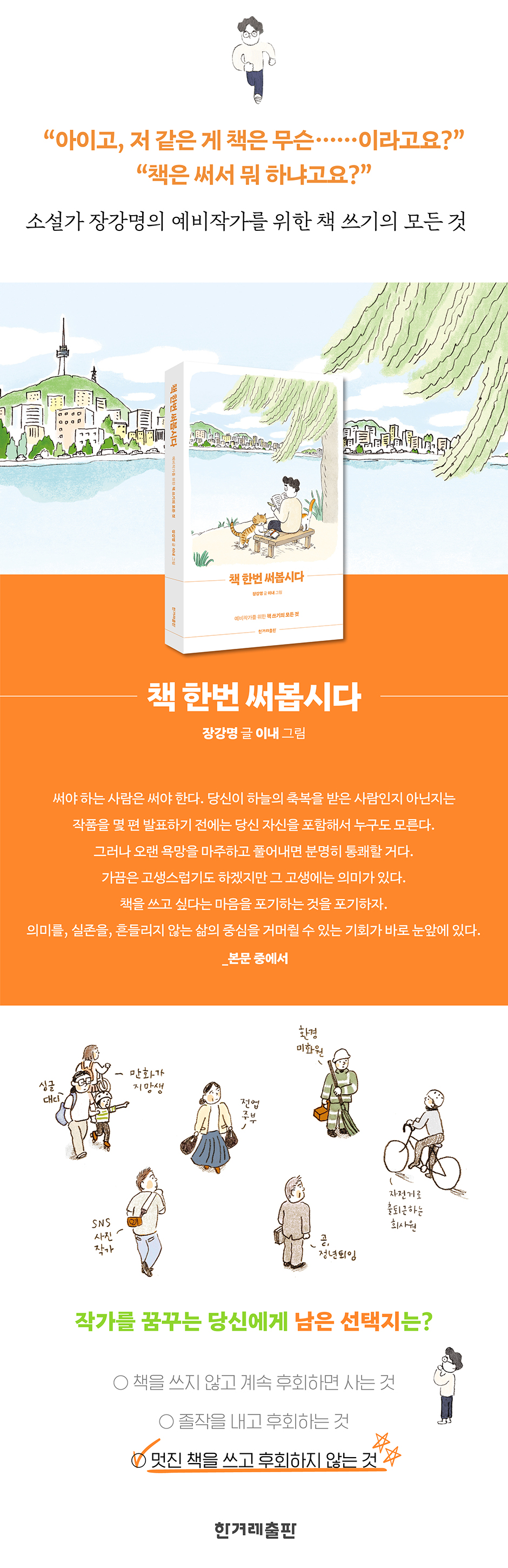
The opportunity to seize meaning, existence, and the unshakable center of life is right before our eyes.
_From the text
Of course, this book may not be as easy and friendly a guide to writing as you think.
But what is clear is that this book will make you think about 'what kind of story in the world can only be written by me?'
Whether you pick up a pencil or turn on your laptop, you'll be doing something to write a book.
What the author is talking about is neither 'how to become a best-selling author' nor 'how to write a good book.'
What the author is talking about is 'how to write your own story without giving up until the end.'
It is not something that can be written only if you have talent, but rather something that can be written by anyone regardless of whether they have talent or not.
Ah, writing a book! How many fields in the world are there that are so equally daunting to every beginner?
How wonderful it would be if you, I, and all of us could be among those blessed few.
Of course, no one knows whether or not they are blessed by heaven until they write a book.
So, let's start by giving up on giving up on wanting to write a book.
If you want to be a writer but feel like you don't have the courage, or if you want to write a book but keep it to yourself because you're concerned about what others think, pick up this book that will help you understand all the essentials of book writing.
And let us all receive honest support from novelist Jang Gang-myeong.
I sincerely support the courage and determination of aspiring writers.
No matter what anyone says, the work will respond honestly.
_From the text
Okay, now that you're ready, let's all write a book together!
“What’s the point of writing a book?”
Becomes blood, becomes flesh, and ultimately becomes a book
A Guide to Writing a Book by Novelist Jang Kang-myeong, Regardless of Talent
We live in an age where even a short internet article, let alone a book, is a burden to read. Short posts on social media and YouTube videos have replaced text.
Although the publishing market is shrinking, photo books containing pretty photos from Instagram are becoming bestsellers.
Yes, that's right. It was in this era that novelist Jang Kang-myeong's essay on writing, "Let's Write a Book," was published.
Novelist Jang Kang-myeong's "Let's Write a Book" lives up to its subtitle, "Everything About Writing a Book for Aspiring Writers," starting with the mindset of a writer and moving on to writing novels, essays, nonfiction, and columns. It contains all of Jang Kang-myeong's "30 practical book writing techniques" that become his blood, flesh, and ultimately, books, as he steadily devotes over 2,200 hours every year to writing books while working as a journalist, novelist, essayist, and nonfiction writer.
Chapters 1 through 8 cover the process of becoming a writer and writing books, while chapters 9 through 21 cover how to write essays, novels, and nonfiction.
Chapters 22-24 cover tips for proofreading and submission, and stories after the first book. The six appendices contain answers to questions that any aspiring writer would struggle with, such as writing columns, finding material, and what it means to be an author.
So what does a book mean in this day and age? What does it mean to read and write books? Why did novelist Jang Kang-myeong feel compelled to write "Let's Write a Book"?
book-centered society,
There's nothing we can't do, right?
The book-centered society I imagine is one in which books are the core medium of communication.
We live in a society where many authors write books about the issues of the 'here and now,' people read them, and then write books to supplement or refute the opinions of those books.
In this society, opinions are shared not through portal news comment sections, national petition bulletin boards, Twitter, or Namu Wiki, but through books.
This society values the depth and quality of ideas rather than the speed at which they spread.
_From the text
For author Jang Kang-myeong, ‘books’ are synonymous with ‘future.’
And the author dreams of a 'future centered on books.'
However, since the future does not come by itself, and since the future is something we choose and create, I say that we should read books, write books, and create a 'future centered on books.'
That's not an easy task, so I declare, ask, and whisper to aspiring writers, "Let's write a book."
The author hopes that this book will be the starting point.
I hope that many people will experience the joy and excitement of writing books and realize that writing books is very beneficial to our society.
"Let's Write a Book" is a book filled with such feelings.
In Iceland, it is said that as many as 10 percent of the population has published at least one book.
The population of this country is about 320,000.
Icelanders prefer to get their information from books rather than TV, which is why the parliamentary special committee's report on the Icelandic economic crisis became an instant bestseller.
Even though this report is a brick book with over 2000 pages.
There's nothing we can't do, right?
_From the text
As the author says, there is nothing we can't do, right?
Let's give up on wanting to write a book.
What I'm trying to do in this book is to first encourage readers by saying, "Riding a bike is really fun, and you can do it too," and then get them to take their bike out of the garage and into the park.
Then I'll try to pass on some trivial knowledge, like how the right brake is different from the left brake.
In fact, a neighborhood guy might be better at that role than a professional racer.
_From the text
"Let's Write a Book" is not a book that sweetly tells you that anyone can become a writer.
It's not just some random book that just keeps on going on and on about irrelevant stuff.
To you who wonders, "Can I write a book?" and to you who asks, "What's the use of writing a book?", this book suggests that we write a book together.
He said he would stand next to me like a neighborhood older brother and tell me that he would teach me.
The author says:
I believe that writing books will change our society, lead us to a better future, and help us grow as individuals.
This book believes that living, breathing human beings, who believe that everyone has an interesting perspective on the world, an original idea, a unique attitude, and a different opinion, and that this is their individuality, can never be seen as melodramatic.
Ah, writing a book,
What a daunting field for all beginners.
Those who need to write, need to write.
No one, including yourself, knows whether you are a person blessed by heaven or not until you publish a few works.
But it will definitely be exhilarating to face and release your long-held desires.
It may be difficult at times, but there is meaning in that difficulty.
Let's give up on giving up on wanting to write a book.
The opportunity to seize meaning, existence, and the unshakable center of life is right before our eyes.
_From the text
Of course, this book may not be as easy and friendly a guide to writing as you think.
But what is clear is that this book will make you think about 'what kind of story in the world can only be written by me?'
Whether you pick up a pencil or turn on your laptop, you'll be doing something to write a book.
What the author is talking about is neither 'how to become a best-selling author' nor 'how to write a good book.'
What the author is talking about is 'how to write your own story without giving up until the end.'
It is not something that can be written only if you have talent, but rather something that can be written by anyone regardless of whether they have talent or not.
Ah, writing a book! How many fields in the world are there that are so equally daunting to every beginner?
How wonderful it would be if you, I, and all of us could be among those blessed few.
Of course, no one knows whether or not they are blessed by heaven until they write a book.
So, let's start by giving up on giving up on wanting to write a book.
If you want to be a writer but feel like you don't have the courage, or if you want to write a book but keep it to yourself because you're concerned about what others think, pick up this book that will help you understand all the essentials of book writing.
And let us all receive honest support from novelist Jang Gang-myeong.
I sincerely support the courage and determination of aspiring writers.
No matter what anyone says, the work will respond honestly.
_From the text
Okay, now that you're ready, let's all write a book together!
GOODS SPECIFICS
- Publication date: November 23, 2020
- Page count, weight, size: 300 pages | 360g | 130*204*17mm
- ISBN13: 9791160404371
- ISBN10: 1160404372
You may also like
카테고리
korean


korean

![GQ KOREA Mark (Monthly): December [2025]](http://librairie.coreenne.fr/cdn/shop/files/8ef265dbbfbf186523ed75ba7319009d.jpg?v=1765340328&width=3840)


