

The story told by bones
 |
Description
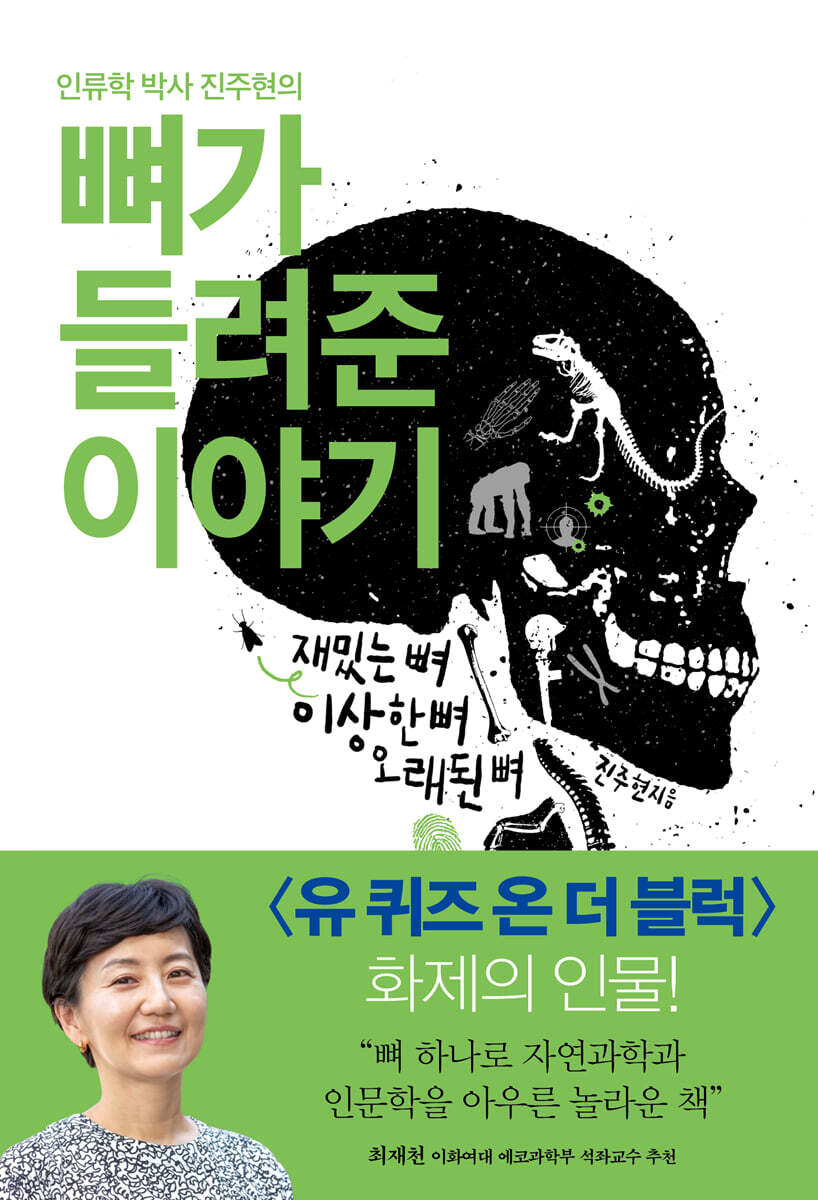
Book Introduction
A remarkable book that encompasses both natural science and humanities in one book. Choi Jae-cheon (Director of the National Institute of Ecology / Professor Emeritus, Department of Ecological Science, Ewha Womans University) Readers of this book have already entered the world of paleoanthropology and paleontology. - Lee Jeong-mo (Director of Seodaemun Museum of Natural History) The collarbone has become a symbol of beauty, with expressions like 'dazzling collarbone line' and 'collarbone beauty'. Did you know that the clavicle is the first bone to form in our bodies and the last to finish growing? It forms just five weeks after the sperm and egg fuse, and doesn't fully grow until we're in our thirties. The clavicle, also known as the collarbone, has a long history, having been found in fossils of very old fish, but as animals evolved into various forms, it is no longer found in horses and deer, which do not have much need for the clavicle. However, it is an essential bone for animals that use their arms a lot, such as humans, monkeys, and bears, and for animals that need to move both wings, such as birds. These collarbones provide clues to determining the age and identity of the deceased. First of all, because it is the last bone in our body to fuse, the age of a deceased person can be estimated based on the state of the clavicle's attachment. Also, unlike other bones that change shape depending on the body's movements, bone density and shape remain the same throughout our lives, so we can confirm our identity by comparing the bones with X-rays taken during life. The new book, "The Story of Bones," begins with the biological and structural characteristics of bones and then expands across the spectrum of knowledge to anthropology, evolutionary biology, and archaeology, providing a glimpse into the diverse world of bones never before heard of. This book explains in detail how various bones, such as the arm bones, collarbone, ribs, spine, and cheekbones, are formed and grow in our body, and what roles they play. Moreover, it invites us into the long history of life's birth and evolution through animal bones and human fossil bones. In other words, it is a unique book that tells us about bones that we have misunderstood or did not know well through 30 stories that penetrate through a single bone. Although there have been many books that have addressed various issues related to evolution through fossils of human ancestors and ancient objects, this is the first book to examine the origin of life and the footsteps of human evolution through bones. Dr. Jinju Hyun, the author of this book, is a forensic anthropologist who currently works at the Department of Defense POW/MIA Accounting Agency (DPAA) in Hawaii, where he excavates and analyzes the remains of American soldiers who went missing in war and returns them to their families. Forensic anthropology, which is somewhat unfamiliar to us, is a discipline that analyzes bones based on knowledge of archaeology, biology, and anatomy to determine the age, height, gender, time of death, and cause of death of a deceased person. Forensic anthropologists compare and analyze not only the bones of dead people but also those of animals and humans, and they also use X-rays of living people to observe the condition of their bones to find evidence of crime. The author, who read “Lucy, the First Human” in college and entered the world of “bones” in earnest by participating in an archaeological field school held in East Africa, the historical site where Louis and Mary Leakey excavated human evolution fossils, as the only Korean, has been participating in excavation sites around the world for the past 10 years to study human evolution and origins, as well as human and animal skeletons. The author, who began his career in paleoanthropology, analyzing bones from millions of years ago, and is now a forensic anthropologist who identifies bones from decades ago, takes us into the world of anthropology, evolutionary biology, and archaeology through vivid accounts from the field. Bones that support our bodies, bones that perfectly capture the traces of a person within our bodies, bones that remain intact long after death and reveal the secrets of human evolution. Bones are the key to understanding humans in the deepest way, and they are also like a mirror that reflects the origin of life. Now, let's dive into the various stories that bones tell us. |
- You can preview some of the book's contents.
Preview
index
Prologue: On the way to meet the bones
Chapter 1.
Stories from Living Bones: The Different Bones in Our Body
Bones are alive
Fingerprints in the body, clavicle
Rib, the spokesperson for children who cannot speak
Distinguishing races by cheekbones
The inside story of the beautiful S-curve, the spine
Why pregnant women don't fall forward
Are pelvic bones evidence of childbirth?
Teeth that grow once and are finished
There are no 'bones' in cartilage
Horns that are both bone and not bone
Chapter 2.
The Story of Bones: The History of Animals with Skeletons
Coexistence of hard and porous bones
Physics Meets Bone: The World of Biomechanics
Bones are a storehouse of calcium
Traces of breastfeeding discovered in Gaya tombs
If you don't take care of yourself after giving birth, your bones will become weak.
Tuberculosis brought from Africa by seals
Why photosynthesis is necessary every day
The Secret of Skin Color: Skin Cancer in Whites, Rickets in Blacks
Is DNA testing a panacea?
The birth of bones 500 million years ago
Why Polar Fish Don't Freeze
The world's most famous dinosaur bones
Chapter 3.
Old Bones Tell a Story: Bones, the Amazing Tissue You Learn More About
Kennewick Man, a tough guy from 9,000 years ago
Neanderthals didn't need sunglasses
The encounter between Homo sapiens and Neanderthals
Why Intelligent Design Is Not Science
Chapter 4.
The Story of Dead Bones: Bones Know the Truth
Lucy, who led me into paleoanthropology
Man found in backyard, woman found in woods
The Mecca of Scientific Investigation: The Body Farm
The world's largest collection of human bones
Epilogue: A Final Farewell
Acknowledgements
Chapter 1.
Stories from Living Bones: The Different Bones in Our Body
Bones are alive
Fingerprints in the body, clavicle
Rib, the spokesperson for children who cannot speak
Distinguishing races by cheekbones
The inside story of the beautiful S-curve, the spine
Why pregnant women don't fall forward
Are pelvic bones evidence of childbirth?
Teeth that grow once and are finished
There are no 'bones' in cartilage
Horns that are both bone and not bone
Chapter 2.
The Story of Bones: The History of Animals with Skeletons
Coexistence of hard and porous bones
Physics Meets Bone: The World of Biomechanics
Bones are a storehouse of calcium
Traces of breastfeeding discovered in Gaya tombs
If you don't take care of yourself after giving birth, your bones will become weak.
Tuberculosis brought from Africa by seals
Why photosynthesis is necessary every day
The Secret of Skin Color: Skin Cancer in Whites, Rickets in Blacks
Is DNA testing a panacea?
The birth of bones 500 million years ago
Why Polar Fish Don't Freeze
The world's most famous dinosaur bones
Chapter 3.
Old Bones Tell a Story: Bones, the Amazing Tissue You Learn More About
Kennewick Man, a tough guy from 9,000 years ago
Neanderthals didn't need sunglasses
The encounter between Homo sapiens and Neanderthals
Why Intelligent Design Is Not Science
Chapter 4.
The Story of Dead Bones: Bones Know the Truth
Lucy, who led me into paleoanthropology
Man found in backyard, woman found in woods
The Mecca of Scientific Investigation: The Body Farm
The world's largest collection of human bones
Epilogue: A Final Farewell
Acknowledgements
Publisher's Review
From colorful knowledge about bones to the history of human evolution
The more you learn, the more fascinating and new the world of bones becomes.
A bone that, once formed, seems like it will never change and will remain hard.
A bone that is scary at first glance because it reminds you of death.
However, bones are living tissues in our bodies where old cells are continuously lost and replaced by new cells.
If you think about it, we always breathe, eat, and move with our bones.
Since bones contain the history of a person in our body, just by looking at the bones of a deceased person, we can trace what the person mainly ate, whether he or she was active, and what diseases he or she suffered from during life.
In particular, unlike flesh, which decays over time, bones are buried in the ground and remain as fossils.
So, we can learn about how skeletal animals evolved through vertebrate bones from 500 million years ago and the bones of human ancestors from 3 million years ago.
Also, bones are like the last words of someone who died unjustly.
Even if a parent beats their child to death and then lies about the accident, the time and cause of death can be determined by analyzing the child's bones.
In this way, bones are a valuable resource that can provide insight into everything from the biological processes occurring within our bodies to the history of humans and the evolution of mankind.
This book is divided into four chapters.
Chapter 1 covers the process of bone formation in our body and the various bones in our body, such as the humerus, collarbone, ribs, cheekbones, pelvic bones, and spine.
Chapter 2 unfolds the world of bone biology by discussing the material and genes within bone.
We can see how bone components work in our bodies through diseases such as osteoporosis, tuberculosis, rickets, and skin cancer.
There is also an endless amount of new knowledge and information that can be gained through analysis of bone cells, including isotopes and nuclear DNA.
Chapter 3 traces the history of skeletal animals through key moments that advanced evolutionary research, from the earliest vertebrates dating back 500 million years to the most recent discoveries of human evolutionary fossils.
Chapter 4 delves deeper into the fascinating world of forensic anthropology through the process of identifying dead people through bones and the stories of scholars who have dedicated their lives to the study of bones.
The 30 stories woven around the theme of bones are full of scientific and anthropological knowledge and vivid episodes that will be enjoyable for any reader interested in the providence of the world.
There, you can separately learn about the lives and achievements of scholars who left their mark on the history of anthropology and science with great discoveries, such as Louis and Mary Leakey, Charles Darwin, Willard Libby, and Don Johanson.
Chapter 1.
Stories from Living Bones: The Different Bones in Our Body
Chapter 1 covers bone formation and remodeling, and the characteristics of the various bones in our body.
Bones, like other tissues, are densely packed with cells, and osteoclasts, which eat up old bone, and osteoblasts, which create new bone, work together to constantly remodel bones (p. 21). We can understand the process of bone formation through the fact that the humerus, which forms in the womb, is made up of many small bones that fuse together to form a complete bone only when we are twenty years old (p. 26). The clavicle, which is the first and last bone to form in our body, plays an important role in identification (p. 33), and rib fractures found in children can be crucial evidence in determining child abuse (p. 42). In addition, the cheekbone is used to distinguish between races (p. 48), the vertebrae can be used to track diseases suffered by ancient people (p. 58), and the lumbar vertebrae of women, which evolved to help pregnant women maintain their center of gravity (p. 64), making the process of retracing the footsteps of mankind through bones very fascinating.
It goes beyond simply comparing the biological characteristics of teeth, cartilage, and horns, which are easily confused as bones, to explain how they are similar and different from bones, and it also explains them using evolutionary theory to help understand how specific animal traits are passed down to future generations.
Among teeth, wisdom teeth, which do not grow at all or grow crookedly in some people, are teeth that have degenerated as the jawbone has gradually shrunk due to the agricultural lifestyle of humans (page 87), and the story that the beautiful and large deer antlers were inherited through a proper balance of sexual selection and natural selection working together is representative (page 107).
Because children's bones recover so quickly, even if they are hit by their parents and their bones break, they quickly heal back together, making it difficult for doctors to find traces of fractures with just an X-ray.
However, bone specialists are accustomed to looking at bones without the surrounding soft tissue, so they can detect tiny marks left on the bones.
On behalf of children who are not good at expressing themselves, 'Please save me.
The bone that can tell you, ‘Mom, Dad, hit me,’ is the rib. (Page 42)
As time passes and only the bones remain, it is difficult to know whether the person suffered from a herniated disc during his or her lifetime because all the cartilage has disappeared.
However, looking at the shape of the bones, which are not smooth and the shape of the vertebrae is deformed and pressed flat, we can infer that this person must have suffered from back pain during his lifetime. (Page 58)
For bone specialists like me, requests for bone analysis often come in from local police stations.
… Among them, the bones that are most often confused with human bones are those of pigs or bears.
The same goes for teeth.
People, pigs, and bears.
What do these seemingly dissimilar creatures have in common? They're all omnivores.
Just as we can tell how an animal moves by looking at its foot bones, we can also infer its diet by looking at its teeth alone. (p. 81)
Chapter 2.
The Story of Bone Matter: The More You Know, the More Amazing It Is: Bone
Isotope analysis of small samples taken from the bones of women and children from the Gaya Yean-ri Gogunbun Tomb revealed that the babies at the time were breastfed until they were three or four years old.
A newborn baby has a very similar composition to its mother's bones, so the food the mother ate during pregnancy is passed down as is. This was a surprising result that could be discovered by utilizing the principle that when a baby starts drinking breast milk, the isotope ratio will be higher than that of the mother, and when the baby stops drinking the mother's milk and starts eating something else, the ratio will change again. (Page 146) The fact that rickets in black people living in urban areas in the United States and skin cancer in white people are modern diseases that occurred when people moved from their ancestral homes to places that did not match their skin color allows us to look into the amount of ultraviolet rays absorbed, bone health, and the inheritance of skin color. (Page 180)
Chapter 2 discusses the substances and components that make up bones and how they affect our bodies.
From osteoporosis to skin cancer in Caucasians, the connection between bone and various diseases that have plagued humanity provides a deeper understanding of the amazing nature of bone tissue.
Spongy bone plays a role in absorbing the shock that occurs when walking or running in daily life.
It has a similar function to the cushioning in the sole of a sneaker.
The femur and fibula both have perforated spongy bone at both ends and a skeleton made of hard, compact bone.
The shock generated when walking or running is first absorbed by the sponge-like bones, and the rest is supported by the iron-hard skeleton. (Page 114)
The original skin color of Koreans is neither too white nor too black, but just in the middle.
In comparison, the Congolese people in Africa, who have lived near the equator for generations, have darker skin than those who have lived on the Korean Peninsula for generations.
…Let’s take a close look at the word ‘generation after generation’ here.
Why do these skin color differences occur? (Page 175)
Chapter 3.
Stories from Old Bones: The Evolution of Skeletal Animals
Of all the animals living on Earth, vertebrates account for less than 5 percent.
People, as well as the animals we commonly see around us, are all vertebrates, so we mistakenly believe that they rule the world, but that is not true.
Vertebrates, which have far fewer species than invertebrates, were able to remain as fossils because they had 'bones' that did not decay over time.
Chapter 3 covers the history of the birth and evolution of these skeletal animals.
The 520 million-year-old 'jawless fish bone' fossil discovered in Yunnan Province is an important fossil that shows that vertebrates appeared on Earth. (p. 202) Although vertebrates such as humans, birds, bats, horses, and lizards all look different, they have the same basic genes that create five toes on each foot, and the basic structure of the limb bones is also the same. (p. 206) It also deals with the discovery of important bones that changed the direction of human evolution research, such as the famous dinosaur bone 'Sue' that was the first to be auctioned in the world, the Kennewick Man bone (p. 236), which was at the center of a debate over whether it was an ancestor of Native Americans due to its strange appearance, and the bones of Neanderthals, our cousins.
The story of Dr. Svante Pääbo, who was the first in the world to successfully analyze the genes of a Neanderthal (page 263), is also interesting.
Why are most insects smaller than the palm of your hand? Why aren't there any insects the size of a dog? It might seem like absurd questions, but the answer lies in our bones.
Insects cannot grow large because they do not have bones to support their bodies. (p. 199)
Which fossilized bone resembles a human more: a small monkey from 50 million years ago or a lizard from the same period? The answer is a small monkey.
The simplest explanation for this is the theory that humans are evolutionarily closer to small monkeys than to lizards.
Taxonomy, the foundation of biology, weaves together the relationships among the countless animals that currently live or once lived on Earth. (p. 210)
Nowadays, it takes less than a day to travel to the other side of the world, so analyzing information about a person's past life from the food they ate is somewhat complicated. However, the bones of ancient people who were unable to travel long distances contain much more accurate information about what they ate and drank.
Kennewick Man was also found inland in Washington State, and interestingly, isotopes found in his bones indicate that he consumed marine animals such as seals and salmon. (p. 242)
Chapter 4.
The Story of Dead Bones: Bones Know the Truth
Chapter 4 vividly unfolds the author's field experience and calling as a scholar, who dreamed of becoming a paleoanthropologist while searching for fossils from millions of years ago at archaeological excavation sites in Honduras, South Africa, and East Africa since his college days, and is now analyzing the identities of war dead by touching bones from decades ago.
The story of 'Lucy' (page 286), which brought the author into the world of bones, and the episode of the East African Field School are so exciting that even non-anthropologists will get their hearts racing.
In addition, the latest human evolutionary tree (page 290) is included to show the flow of human evolution at a glance, showing that various human ancestors appeared over time, just like branches spread out from a tree, and that this led to the appearance of modern humans.
The story of the 'Body Farm' established by the University of Tennessee's Department of Anthropology to study the time of death of a corpse and 'Forensic Entomology', which became the model for the CSI series, suggests the importance of basic studies as if watching a movie. (p. 312) The American Bone Collection, which houses the world's largest collection of human bones (p. 322), allows us to take a close look at the scholars who have dedicated their lives to the study of bones and the contribution that bones make to the world.
If you stand a chimpanzee upright, you will see that its thighbone and shinbone are connected in a straight line.
But people are different.
The thigh bone, which runs from the hip, is not in a straight line, but rather slants inward toward the body to meet the tibia.
Let's take a good look at how a child walks when he or she starts taking his or her first steps around the age of one.
He can't walk straight like an adult, and he walks waddling like a penguin.
…the reason children walk with a waddling gait is because their thighbones are not angled like those of adults, but rather run straight down to meet the shinbone, like those of chimpanzees. (p. 293)
Surprisingly, a research facility with a very ordinary name, the Center for Forensic Anthropology, has become one of the University of Tennessee's most iconic symbols.
Why? Because of the small, athletic-sized outdoor research facility located right there.
This facility, commonly called a 'body farm', seems to have the Korean name 'corpse farm'.
What is this place, so terrifying just to hear about? (Page 312)
While artifacts can provide a glimpse into the culture and perception of a people, human bones can provide a wealth of information, from their diet to nutritional status, height, and life expectancy.
Moreover, by collecting the bones of all Koreans, from our ancestors to modern Koreans, we can learn how the biological characteristics of those who have lived on the Korean Peninsula have changed over the generations.
…I hope that one day, a proper collection of human bones, like those in the US, Europe, and China, will be created in our country, allowing anyone who desires to study the characteristics of the Korean people. (p. 334)
Recommendation
It's amazing that a single bone can so wonderfully weave together natural science and humanities.
From the sacrum, sacrum, clavicle, furrow, and cartilage—every fascinating bone in our bodies to human evolution and even CSI dramas—the author's unwavering knowledge is such a feast of knowledge that once you pick up the book, you'll find it hard to put it down.
Rather than simply summarizing or compiling the research findings of other scholars, this book is much more compelling because it is supported by a solid framework of field experience and research results.
I am proud that we now have a scholar who can write a book like this.
I recommend it without hesitation to those specializing in anthropology, evolutionary biology, anatomy, and forensic science, as well as to readers interested in the world's providence.
Choi Jae-cheon (Director of the National Institute of Ecology / Professor Emeritus, Department of Ecological Science, Ewha Womans University)
Bone, flesh, and blood.
There are not many creatures on Earth that have all three of these.
Among them, the bones are what clearly show the history of life and evolution of life.
And the disciplines that study these bones are paleoanthropology and paleontology.
The author of this book says that he entered the world of paleoanthropology after reading "Lucy: The First Human."
It wasn't until I was in my forties, after breaking my finger bones, ribs, and orbital bones, that I became interested in bones, and dinosaur bones like Tyrannosaurus and Stegosaurus first caught my eye.
I'm angry.
If I had read this book when I was younger, my life would have gone at a different pace.
Readers of this book have already entered the world of paleoanthropology and paleontology.
i envy you.
- Lee Jeong-mo (Director of Seodaemun Museum of Natural History)
The more you learn, the more fascinating and new the world of bones becomes.
A bone that, once formed, seems like it will never change and will remain hard.
A bone that is scary at first glance because it reminds you of death.
However, bones are living tissues in our bodies where old cells are continuously lost and replaced by new cells.
If you think about it, we always breathe, eat, and move with our bones.
Since bones contain the history of a person in our body, just by looking at the bones of a deceased person, we can trace what the person mainly ate, whether he or she was active, and what diseases he or she suffered from during life.
In particular, unlike flesh, which decays over time, bones are buried in the ground and remain as fossils.
So, we can learn about how skeletal animals evolved through vertebrate bones from 500 million years ago and the bones of human ancestors from 3 million years ago.
Also, bones are like the last words of someone who died unjustly.
Even if a parent beats their child to death and then lies about the accident, the time and cause of death can be determined by analyzing the child's bones.
In this way, bones are a valuable resource that can provide insight into everything from the biological processes occurring within our bodies to the history of humans and the evolution of mankind.
This book is divided into four chapters.
Chapter 1 covers the process of bone formation in our body and the various bones in our body, such as the humerus, collarbone, ribs, cheekbones, pelvic bones, and spine.
Chapter 2 unfolds the world of bone biology by discussing the material and genes within bone.
We can see how bone components work in our bodies through diseases such as osteoporosis, tuberculosis, rickets, and skin cancer.
There is also an endless amount of new knowledge and information that can be gained through analysis of bone cells, including isotopes and nuclear DNA.
Chapter 3 traces the history of skeletal animals through key moments that advanced evolutionary research, from the earliest vertebrates dating back 500 million years to the most recent discoveries of human evolutionary fossils.
Chapter 4 delves deeper into the fascinating world of forensic anthropology through the process of identifying dead people through bones and the stories of scholars who have dedicated their lives to the study of bones.
The 30 stories woven around the theme of bones are full of scientific and anthropological knowledge and vivid episodes that will be enjoyable for any reader interested in the providence of the world.
There, you can separately learn about the lives and achievements of scholars who left their mark on the history of anthropology and science with great discoveries, such as Louis and Mary Leakey, Charles Darwin, Willard Libby, and Don Johanson.
Chapter 1.
Stories from Living Bones: The Different Bones in Our Body
Chapter 1 covers bone formation and remodeling, and the characteristics of the various bones in our body.
Bones, like other tissues, are densely packed with cells, and osteoclasts, which eat up old bone, and osteoblasts, which create new bone, work together to constantly remodel bones (p. 21). We can understand the process of bone formation through the fact that the humerus, which forms in the womb, is made up of many small bones that fuse together to form a complete bone only when we are twenty years old (p. 26). The clavicle, which is the first and last bone to form in our body, plays an important role in identification (p. 33), and rib fractures found in children can be crucial evidence in determining child abuse (p. 42). In addition, the cheekbone is used to distinguish between races (p. 48), the vertebrae can be used to track diseases suffered by ancient people (p. 58), and the lumbar vertebrae of women, which evolved to help pregnant women maintain their center of gravity (p. 64), making the process of retracing the footsteps of mankind through bones very fascinating.
It goes beyond simply comparing the biological characteristics of teeth, cartilage, and horns, which are easily confused as bones, to explain how they are similar and different from bones, and it also explains them using evolutionary theory to help understand how specific animal traits are passed down to future generations.
Among teeth, wisdom teeth, which do not grow at all or grow crookedly in some people, are teeth that have degenerated as the jawbone has gradually shrunk due to the agricultural lifestyle of humans (page 87), and the story that the beautiful and large deer antlers were inherited through a proper balance of sexual selection and natural selection working together is representative (page 107).
Because children's bones recover so quickly, even if they are hit by their parents and their bones break, they quickly heal back together, making it difficult for doctors to find traces of fractures with just an X-ray.
However, bone specialists are accustomed to looking at bones without the surrounding soft tissue, so they can detect tiny marks left on the bones.
On behalf of children who are not good at expressing themselves, 'Please save me.
The bone that can tell you, ‘Mom, Dad, hit me,’ is the rib. (Page 42)
As time passes and only the bones remain, it is difficult to know whether the person suffered from a herniated disc during his or her lifetime because all the cartilage has disappeared.
However, looking at the shape of the bones, which are not smooth and the shape of the vertebrae is deformed and pressed flat, we can infer that this person must have suffered from back pain during his lifetime. (Page 58)
For bone specialists like me, requests for bone analysis often come in from local police stations.
… Among them, the bones that are most often confused with human bones are those of pigs or bears.
The same goes for teeth.
People, pigs, and bears.
What do these seemingly dissimilar creatures have in common? They're all omnivores.
Just as we can tell how an animal moves by looking at its foot bones, we can also infer its diet by looking at its teeth alone. (p. 81)
Chapter 2.
The Story of Bone Matter: The More You Know, the More Amazing It Is: Bone
Isotope analysis of small samples taken from the bones of women and children from the Gaya Yean-ri Gogunbun Tomb revealed that the babies at the time were breastfed until they were three or four years old.
A newborn baby has a very similar composition to its mother's bones, so the food the mother ate during pregnancy is passed down as is. This was a surprising result that could be discovered by utilizing the principle that when a baby starts drinking breast milk, the isotope ratio will be higher than that of the mother, and when the baby stops drinking the mother's milk and starts eating something else, the ratio will change again. (Page 146) The fact that rickets in black people living in urban areas in the United States and skin cancer in white people are modern diseases that occurred when people moved from their ancestral homes to places that did not match their skin color allows us to look into the amount of ultraviolet rays absorbed, bone health, and the inheritance of skin color. (Page 180)
Chapter 2 discusses the substances and components that make up bones and how they affect our bodies.
From osteoporosis to skin cancer in Caucasians, the connection between bone and various diseases that have plagued humanity provides a deeper understanding of the amazing nature of bone tissue.
Spongy bone plays a role in absorbing the shock that occurs when walking or running in daily life.
It has a similar function to the cushioning in the sole of a sneaker.
The femur and fibula both have perforated spongy bone at both ends and a skeleton made of hard, compact bone.
The shock generated when walking or running is first absorbed by the sponge-like bones, and the rest is supported by the iron-hard skeleton. (Page 114)
The original skin color of Koreans is neither too white nor too black, but just in the middle.
In comparison, the Congolese people in Africa, who have lived near the equator for generations, have darker skin than those who have lived on the Korean Peninsula for generations.
…Let’s take a close look at the word ‘generation after generation’ here.
Why do these skin color differences occur? (Page 175)
Chapter 3.
Stories from Old Bones: The Evolution of Skeletal Animals
Of all the animals living on Earth, vertebrates account for less than 5 percent.
People, as well as the animals we commonly see around us, are all vertebrates, so we mistakenly believe that they rule the world, but that is not true.
Vertebrates, which have far fewer species than invertebrates, were able to remain as fossils because they had 'bones' that did not decay over time.
Chapter 3 covers the history of the birth and evolution of these skeletal animals.
The 520 million-year-old 'jawless fish bone' fossil discovered in Yunnan Province is an important fossil that shows that vertebrates appeared on Earth. (p. 202) Although vertebrates such as humans, birds, bats, horses, and lizards all look different, they have the same basic genes that create five toes on each foot, and the basic structure of the limb bones is also the same. (p. 206) It also deals with the discovery of important bones that changed the direction of human evolution research, such as the famous dinosaur bone 'Sue' that was the first to be auctioned in the world, the Kennewick Man bone (p. 236), which was at the center of a debate over whether it was an ancestor of Native Americans due to its strange appearance, and the bones of Neanderthals, our cousins.
The story of Dr. Svante Pääbo, who was the first in the world to successfully analyze the genes of a Neanderthal (page 263), is also interesting.
Why are most insects smaller than the palm of your hand? Why aren't there any insects the size of a dog? It might seem like absurd questions, but the answer lies in our bones.
Insects cannot grow large because they do not have bones to support their bodies. (p. 199)
Which fossilized bone resembles a human more: a small monkey from 50 million years ago or a lizard from the same period? The answer is a small monkey.
The simplest explanation for this is the theory that humans are evolutionarily closer to small monkeys than to lizards.
Taxonomy, the foundation of biology, weaves together the relationships among the countless animals that currently live or once lived on Earth. (p. 210)
Nowadays, it takes less than a day to travel to the other side of the world, so analyzing information about a person's past life from the food they ate is somewhat complicated. However, the bones of ancient people who were unable to travel long distances contain much more accurate information about what they ate and drank.
Kennewick Man was also found inland in Washington State, and interestingly, isotopes found in his bones indicate that he consumed marine animals such as seals and salmon. (p. 242)
Chapter 4.
The Story of Dead Bones: Bones Know the Truth
Chapter 4 vividly unfolds the author's field experience and calling as a scholar, who dreamed of becoming a paleoanthropologist while searching for fossils from millions of years ago at archaeological excavation sites in Honduras, South Africa, and East Africa since his college days, and is now analyzing the identities of war dead by touching bones from decades ago.
The story of 'Lucy' (page 286), which brought the author into the world of bones, and the episode of the East African Field School are so exciting that even non-anthropologists will get their hearts racing.
In addition, the latest human evolutionary tree (page 290) is included to show the flow of human evolution at a glance, showing that various human ancestors appeared over time, just like branches spread out from a tree, and that this led to the appearance of modern humans.
The story of the 'Body Farm' established by the University of Tennessee's Department of Anthropology to study the time of death of a corpse and 'Forensic Entomology', which became the model for the CSI series, suggests the importance of basic studies as if watching a movie. (p. 312) The American Bone Collection, which houses the world's largest collection of human bones (p. 322), allows us to take a close look at the scholars who have dedicated their lives to the study of bones and the contribution that bones make to the world.
If you stand a chimpanzee upright, you will see that its thighbone and shinbone are connected in a straight line.
But people are different.
The thigh bone, which runs from the hip, is not in a straight line, but rather slants inward toward the body to meet the tibia.
Let's take a good look at how a child walks when he or she starts taking his or her first steps around the age of one.
He can't walk straight like an adult, and he walks waddling like a penguin.
…the reason children walk with a waddling gait is because their thighbones are not angled like those of adults, but rather run straight down to meet the shinbone, like those of chimpanzees. (p. 293)
Surprisingly, a research facility with a very ordinary name, the Center for Forensic Anthropology, has become one of the University of Tennessee's most iconic symbols.
Why? Because of the small, athletic-sized outdoor research facility located right there.
This facility, commonly called a 'body farm', seems to have the Korean name 'corpse farm'.
What is this place, so terrifying just to hear about? (Page 312)
While artifacts can provide a glimpse into the culture and perception of a people, human bones can provide a wealth of information, from their diet to nutritional status, height, and life expectancy.
Moreover, by collecting the bones of all Koreans, from our ancestors to modern Koreans, we can learn how the biological characteristics of those who have lived on the Korean Peninsula have changed over the generations.
…I hope that one day, a proper collection of human bones, like those in the US, Europe, and China, will be created in our country, allowing anyone who desires to study the characteristics of the Korean people. (p. 334)
Recommendation
It's amazing that a single bone can so wonderfully weave together natural science and humanities.
From the sacrum, sacrum, clavicle, furrow, and cartilage—every fascinating bone in our bodies to human evolution and even CSI dramas—the author's unwavering knowledge is such a feast of knowledge that once you pick up the book, you'll find it hard to put it down.
Rather than simply summarizing or compiling the research findings of other scholars, this book is much more compelling because it is supported by a solid framework of field experience and research results.
I am proud that we now have a scholar who can write a book like this.
I recommend it without hesitation to those specializing in anthropology, evolutionary biology, anatomy, and forensic science, as well as to readers interested in the world's providence.
Choi Jae-cheon (Director of the National Institute of Ecology / Professor Emeritus, Department of Ecological Science, Ewha Womans University)
Bone, flesh, and blood.
There are not many creatures on Earth that have all three of these.
Among them, the bones are what clearly show the history of life and evolution of life.
And the disciplines that study these bones are paleoanthropology and paleontology.
The author of this book says that he entered the world of paleoanthropology after reading "Lucy: The First Human."
It wasn't until I was in my forties, after breaking my finger bones, ribs, and orbital bones, that I became interested in bones, and dinosaur bones like Tyrannosaurus and Stegosaurus first caught my eye.
I'm angry.
If I had read this book when I was younger, my life would have gone at a different pace.
Readers of this book have already entered the world of paleoanthropology and paleontology.
i envy you.
- Lee Jeong-mo (Director of Seodaemun Museum of Natural History)
GOODS SPECIFICS
- Date of publication: October 21, 2015
- Page count, weight, size: 344 pages | 596g | 150*220*20mm
- ISBN13: 9791156756217
- ISBN10: 1156756219
You may also like
카테고리
korean


korean

![ELLE 엘르 스페셜 에디션 A형 : 12월 [2025]](http://librairie.coreenne.fr/cdn/shop/files/b8e27a3de6c9538896439686c6b0e8fb.jpg?v=1766436872&width=3840)


