

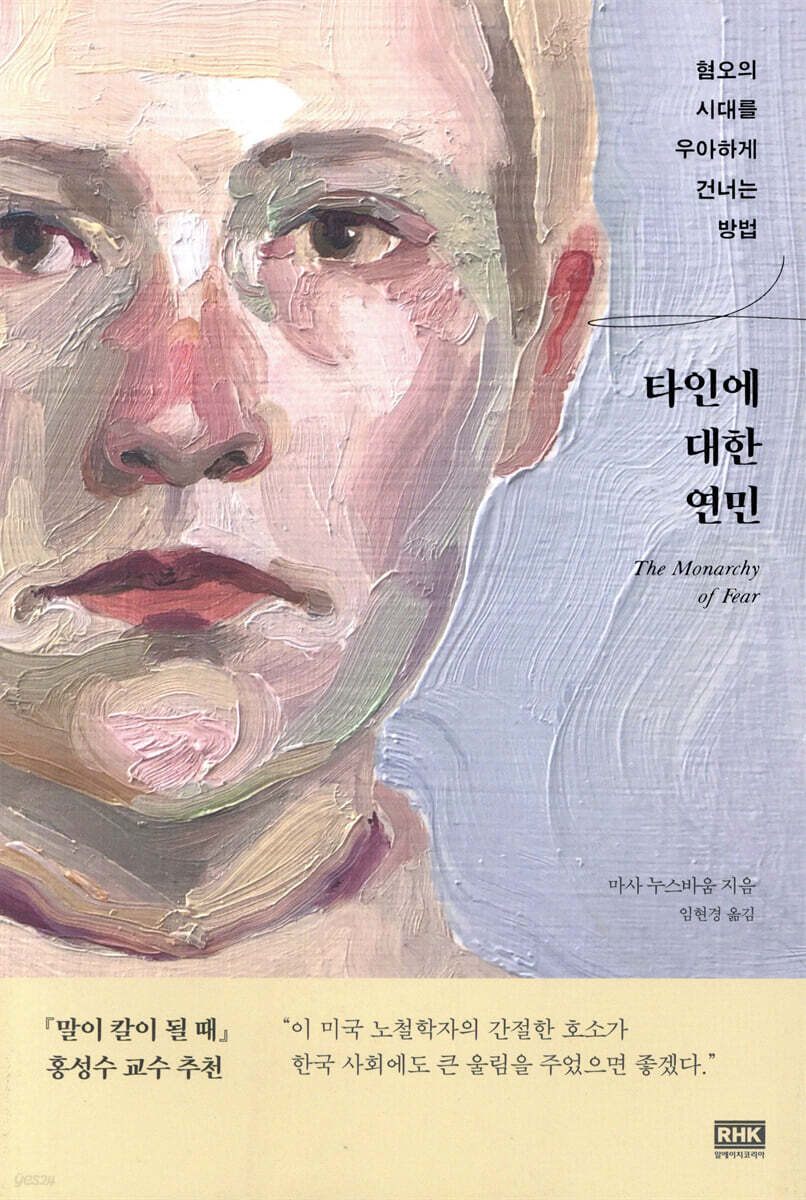
Compassion for others
 |
Description
Book Introduction
A world-renowned scholar's wise perspective on humanity's fear of others.
In modern society, the era of rapid growth is over.
Faced with the demise of the American Dream, the despair of the working class, and the recent global pandemic, is democracy retreating or advancing?
Citizens who have lost hope for the future are easily consumed by fear in the face of uncertainty.
These fears are often mixed with hatred, anger, and blame toward others (whether the privileged or the minority).
Instead of rational thinking and constructive collaboration, we choose easy targeting strategies, which creates sharp boundaries between ourselves and others.
At the root of various social divisions such as gender, religion, occupation, age, disability, and sexual orientation are intimate human emotions.
Political emotions such as class conflict, misogyny, and the confrontation between progressives and conservatives have always been cleverly manipulated by those in power behind the scenes.
Author Martha Nussbaum, a world-renowned scholar and political philosopher, wrote this book, The Monarchy of Fear, based on the profound sense of helplessness she felt on the night President Trump was elected in November 2016.
In modern society, the era of rapid growth is over.
Faced with the demise of the American Dream, the despair of the working class, and the recent global pandemic, is democracy retreating or advancing?
Citizens who have lost hope for the future are easily consumed by fear in the face of uncertainty.
These fears are often mixed with hatred, anger, and blame toward others (whether the privileged or the minority).
Instead of rational thinking and constructive collaboration, we choose easy targeting strategies, which creates sharp boundaries between ourselves and others.
At the root of various social divisions such as gender, religion, occupation, age, disability, and sexual orientation are intimate human emotions.
Political emotions such as class conflict, misogyny, and the confrontation between progressives and conservatives have always been cleverly manipulated by those in power behind the scenes.
Author Martha Nussbaum, a world-renowned scholar and political philosopher, wrote this book, The Monarchy of Fear, based on the profound sense of helplessness she felt on the night President Trump was elected in November 2016.
- You can preview some of the book's contents.
Preview
index
Recommendation_A starting point to change the world
Introduction_That Night, November 2016
Chapter 1: For Understanding, Not Misunderstanding
-America Waking Up from the American Dream
-A Conversation with a Fear Advocate
-Can philosophy save society?
-We must fully understand
Chapter 2: The First Fear I Faced in My Life
-Humans are born helpless.
-Fear leads to politics
-Get out of childish narcissism
-Muslims are no different from us.
-Pain is not someone else's fault
Chapter 3: The Monster Born of Fear, Anger
-In a country that is always angry
Anger that grows from the root of injustice
-Some Errors of Anger
-Towards resistance without retaliation
Chapter 4: The Politics of Hatred and Exclusion
-There is no such thing as an insignificant group.
-Primal hatred leads to death
- Projective hate and partisanship
-What we truly hate
-Why, now, hate?
Chapter 5: An Empire Built on Jealousy
-Time cannot be criticized
-Emotions born from uncertainty
-The Revolutionaries' Choice
-The Roman Empire will not be reborn
Chapter 6: Sexism and Misogyny
-A mixture of toxic emotions
-Sexism and misogyny
-Those who try to imprison women
-Beyond all the emotions created by fear
Chapter 7 Nevertheless, We Move Forward
-Emotions also require imagination.
-What is a beneficial hope?
-There is hope behind fear.
-Artistic steps that embrace humanity
-Philosophers always say
-Struggle with dignity
-Mostly, it was love
Introduction_That Night, November 2016
Chapter 1: For Understanding, Not Misunderstanding
-America Waking Up from the American Dream
-A Conversation with a Fear Advocate
-Can philosophy save society?
-We must fully understand
Chapter 2: The First Fear I Faced in My Life
-Humans are born helpless.
-Fear leads to politics
-Get out of childish narcissism
-Muslims are no different from us.
-Pain is not someone else's fault
Chapter 3: The Monster Born of Fear, Anger
-In a country that is always angry
Anger that grows from the root of injustice
-Some Errors of Anger
-Towards resistance without retaliation
Chapter 4: The Politics of Hatred and Exclusion
-There is no such thing as an insignificant group.
-Primal hatred leads to death
- Projective hate and partisanship
-What we truly hate
-Why, now, hate?
Chapter 5: An Empire Built on Jealousy
-Time cannot be criticized
-Emotions born from uncertainty
-The Revolutionaries' Choice
-The Roman Empire will not be reborn
Chapter 6: Sexism and Misogyny
-A mixture of toxic emotions
-Sexism and misogyny
-Those who try to imprison women
-Beyond all the emotions created by fear
Chapter 7 Nevertheless, We Move Forward
-Emotions also require imagination.
-What is a beneficial hope?
-There is hope behind fear.
-Artistic steps that embrace humanity
-Philosophers always say
-Struggle with dignity
-Mostly, it was love
Detailed image
Into the book
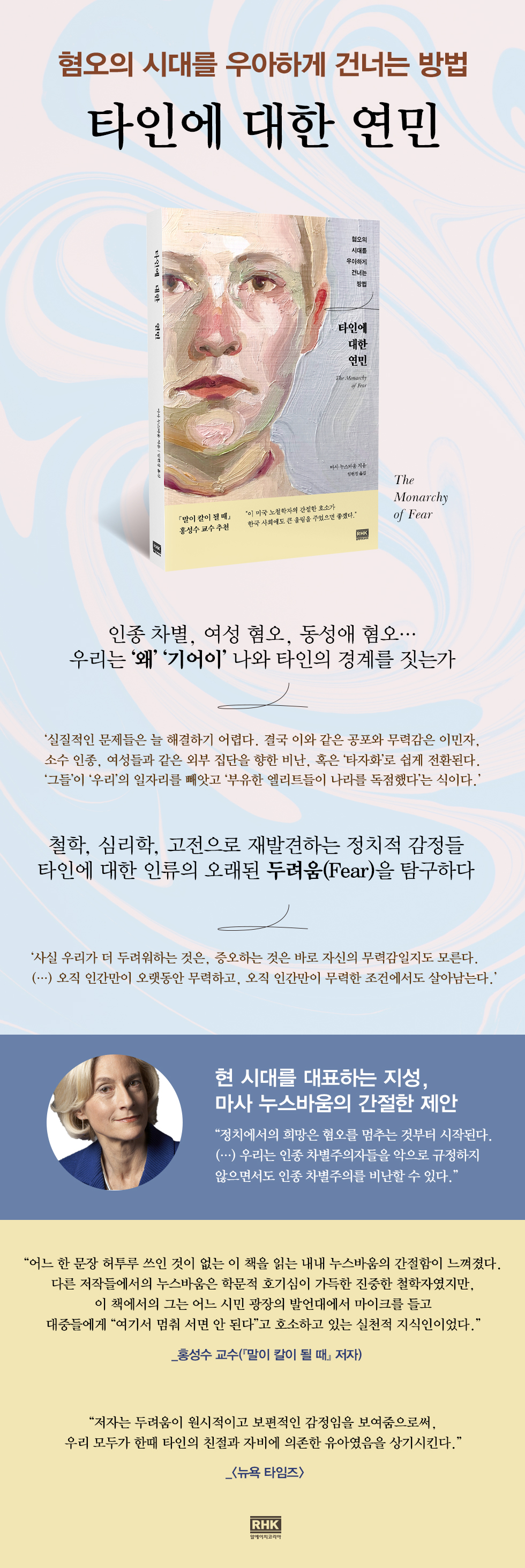
Practical problems are always difficult to solve, and solving them requires difficult, lengthy research and collaboration toward an uncertain future.
Ultimately, this fear and helplessness easily translates into blame, or "othering," directed at outside groups such as immigrants, racial minorities, and women.
It's like 'they' are stealing 'our' jobs and the wealthy elite are monopolizing the country.
--- pp.27~28
Just because a child hits a friend, you don't hit the child, saying the child deserves to be hit too.
Choose a strategy that clearly lets your child know what he or she did wrong.
And we want to change our behavior with positive suggestions for the future.
Such loving parents experience only unrequited anger when it comes to their children's problems.
Because I love children.
This will be the starting point for constructive proposals for democracy.
But I fear that in a democratic society we do not always love our fellow citizens.
--- p.109
A crucial point in this progressive movement is to distinguish, as King did, between the act and the actor.
We should embrace the humanity of others and only oppose the wrongdoings they may have committed.
This way, even if you don't agree with what your fellow citizens say or do, you can still consider them your friends.
But through fear, blame, and revenge, we cannot find any good in others.
--- p.129
The musical ends on an optimistic note about American politics.
We are plagued by jealous competition and destructive external attacks.
But I know where the true line lies.
It lies precisely in the love of one's country, in the dedicated service of many who willingly gave up their lives for democracy, in the determination that brotherhood, healthy work, and the inclusion of minorities and immigrants outshine hatred.
It's such simple advice for young Americans today.
--- p.198
Sexism is a problem.
But the sexist beliefs can be refuted with evidence.
That was actually the case.
The real problem is men's determination to maintain the old order, even if it means resorting to ridicule, hate speech, restrictions on employment and elections, and a refusal to respect women as equals.
Misogyny is not a smart strategy because it is entirely negative, as the saying goes, “Keep the damn women out.”
This is similar to children screaming and hitting the floor with their feet.
Refusing to change doesn't solve the problems misogynists want to solve.
(…) Misogyny is only a momentary comfort and accomplishes nothing.
--- pp.242~243
Beliefs do not have to be unrealistic or idealistic, nor should they be.
Goals may not be achieved quickly or in our lifetime, but we must believe that if we work hard, we can expect meaningful progress.
The goal should not be unrealistic, like perfect justice, which humanity can never maintain.
Such hopes can easily lead to despair and cynicism.
True life is what we must believe in.
We must cultivate a hope strengthened by faith that embraces all that flawed human beings can do, or may actually do.
--- p.264
Without love for others, the cynical despair of the Stoics would seem more plausible than a life of hope.
Therefore, a basic level of love is necessary before we can even hope.
Hope is sustained by love, and love is sustained by the generosity of the soul that expects the best from others rather than the worst.
As King notes, separating the action from the person doing it helps this love.
You can condemn evil actions.
But people are always capable of growth and change beyond their actions.
--- p.266
Hope in politics begins with stopping hate.
Of course, it's easier said than done.
Many of my students and fellow professors also detest Trump and his supporters.
They fail to imagine the full humanity of others and do not separate their actions from the humanity behind those actions.
As Mandela and King showed, we can condemn racism without demonizing racists.
As long as we define each other as evil, we cannot have faith in a bright future, nor can we have the love that makes cooperation and humanity possible.
In the end, we are unable to have the hope that Kant spoke of.
Ultimately, this fear and helplessness easily translates into blame, or "othering," directed at outside groups such as immigrants, racial minorities, and women.
It's like 'they' are stealing 'our' jobs and the wealthy elite are monopolizing the country.
--- pp.27~28
Just because a child hits a friend, you don't hit the child, saying the child deserves to be hit too.
Choose a strategy that clearly lets your child know what he or she did wrong.
And we want to change our behavior with positive suggestions for the future.
Such loving parents experience only unrequited anger when it comes to their children's problems.
Because I love children.
This will be the starting point for constructive proposals for democracy.
But I fear that in a democratic society we do not always love our fellow citizens.
--- p.109
A crucial point in this progressive movement is to distinguish, as King did, between the act and the actor.
We should embrace the humanity of others and only oppose the wrongdoings they may have committed.
This way, even if you don't agree with what your fellow citizens say or do, you can still consider them your friends.
But through fear, blame, and revenge, we cannot find any good in others.
--- p.129
The musical ends on an optimistic note about American politics.
We are plagued by jealous competition and destructive external attacks.
But I know where the true line lies.
It lies precisely in the love of one's country, in the dedicated service of many who willingly gave up their lives for democracy, in the determination that brotherhood, healthy work, and the inclusion of minorities and immigrants outshine hatred.
It's such simple advice for young Americans today.
--- p.198
Sexism is a problem.
But the sexist beliefs can be refuted with evidence.
That was actually the case.
The real problem is men's determination to maintain the old order, even if it means resorting to ridicule, hate speech, restrictions on employment and elections, and a refusal to respect women as equals.
Misogyny is not a smart strategy because it is entirely negative, as the saying goes, “Keep the damn women out.”
This is similar to children screaming and hitting the floor with their feet.
Refusing to change doesn't solve the problems misogynists want to solve.
(…) Misogyny is only a momentary comfort and accomplishes nothing.
--- pp.242~243
Beliefs do not have to be unrealistic or idealistic, nor should they be.
Goals may not be achieved quickly or in our lifetime, but we must believe that if we work hard, we can expect meaningful progress.
The goal should not be unrealistic, like perfect justice, which humanity can never maintain.
Such hopes can easily lead to despair and cynicism.
True life is what we must believe in.
We must cultivate a hope strengthened by faith that embraces all that flawed human beings can do, or may actually do.
--- p.264
Without love for others, the cynical despair of the Stoics would seem more plausible than a life of hope.
Therefore, a basic level of love is necessary before we can even hope.
Hope is sustained by love, and love is sustained by the generosity of the soul that expects the best from others rather than the worst.
As King notes, separating the action from the person doing it helps this love.
You can condemn evil actions.
But people are always capable of growth and change beyond their actions.
--- p.266
Hope in politics begins with stopping hate.
Of course, it's easier said than done.
Many of my students and fellow professors also detest Trump and his supporters.
They fail to imagine the full humanity of others and do not separate their actions from the humanity behind those actions.
As Mandela and King showed, we can condemn racism without demonizing racists.
As long as we define each other as evil, we cannot have faith in a bright future, nor can we have the love that makes cooperation and humanity possible.
In the end, we are unable to have the hope that Kant spoke of.
--- p.269
Publisher's Review
"Politics is inevitably emotional." Rediscovering political emotions through philosophy, psychology, and the classics.
Martha Nussbaum, a leading intellectual of our time, has long been examining human society through the lens of the term “political emotion.”
This book, an extension of his previous masterpieces, 『Political Emotions』, 『Disgust and Shame』, and 『From Disgust to Humanity』, borrows the thoughts of ancient Greek and Roman philosophers and the language of modern psychologists to persistently delve into fear, a fundamental human emotion.
It depicts the inner map of how an individual, who becomes infinitely anxious in the face of the unknown, expresses this anxiety through exclusion and hatred toward others, further causing social division.
Furthermore, by expanding the existing scholarly perspective, the author reveals himself as a practical intellectual who encourages readers to take actual action.
The author soberly examines how fear can spread into toxic emotions like envy and anger, and how populist politics, fueled by public fear, are corroding modern democracy.
The book lists instances of racism, misogyny, homophobia, and Islamophobia in the United States.
This is an American story, but it gives a strong sense of deja vu.
How different is the face of the Republic of Korea we live in today?
Can we truly say we are free from the "Trumpism" that has built up fear, anger, and hatred?
Professor Hong Seong-su, who wrote the recommendation for this book, said, “Korea entered a period of full-blown low growth after the economic crisis in 1997, and from this time on, individuals’ socioeconomic status began to become more vulnerable.
There are countless instances where individuals' social anxiety and fears lead to hatred, disgust, and anger, as Nussbaum describes.
(…) I hope that this earnest appeal from this American philosopher will resonate deeply in Korean society as well,” he responded.
“My suffering is never someone else’s fault” For the ‘us’ who will one day unite
To move beyond this dark age of hatred, the author seeks a glimmer of hope in the humanities and arts.
The author knows better than anyone that it is more difficult and tedious to fully understand someone than to fiercely criticize them. However, in the face of a political crisis threatening the world, he confronts reality and, in order to create better implications, calls for fundamental human dignity and respect above all else.
To find sources of hope for the future, the author invites readers to encounter diverse works of art, rational debate, religious groups that practice love, solidarity groups that act nonviolently, and theories on "justice" compiled by numerous scholars in real life.
It is said repeatedly that changing the world begins with a very small change in the emotions within a human being.
The author, a cool-headed scholar and humanist who advocates for compassion for others and solidarity based on humanity, is full of both cold and warm perspectives.
Nevertheless, I do not stop believing that the world is moving forward, one step at a time.
Ultimately, the word that appeared most frequently in this book was 'we'.
Martha Nussbaum, a leading intellectual of our time, has long been examining human society through the lens of the term “political emotion.”
This book, an extension of his previous masterpieces, 『Political Emotions』, 『Disgust and Shame』, and 『From Disgust to Humanity』, borrows the thoughts of ancient Greek and Roman philosophers and the language of modern psychologists to persistently delve into fear, a fundamental human emotion.
It depicts the inner map of how an individual, who becomes infinitely anxious in the face of the unknown, expresses this anxiety through exclusion and hatred toward others, further causing social division.
Furthermore, by expanding the existing scholarly perspective, the author reveals himself as a practical intellectual who encourages readers to take actual action.
The author soberly examines how fear can spread into toxic emotions like envy and anger, and how populist politics, fueled by public fear, are corroding modern democracy.
The book lists instances of racism, misogyny, homophobia, and Islamophobia in the United States.
This is an American story, but it gives a strong sense of deja vu.
How different is the face of the Republic of Korea we live in today?
Can we truly say we are free from the "Trumpism" that has built up fear, anger, and hatred?
Professor Hong Seong-su, who wrote the recommendation for this book, said, “Korea entered a period of full-blown low growth after the economic crisis in 1997, and from this time on, individuals’ socioeconomic status began to become more vulnerable.
There are countless instances where individuals' social anxiety and fears lead to hatred, disgust, and anger, as Nussbaum describes.
(…) I hope that this earnest appeal from this American philosopher will resonate deeply in Korean society as well,” he responded.
“My suffering is never someone else’s fault” For the ‘us’ who will one day unite
To move beyond this dark age of hatred, the author seeks a glimmer of hope in the humanities and arts.
The author knows better than anyone that it is more difficult and tedious to fully understand someone than to fiercely criticize them. However, in the face of a political crisis threatening the world, he confronts reality and, in order to create better implications, calls for fundamental human dignity and respect above all else.
To find sources of hope for the future, the author invites readers to encounter diverse works of art, rational debate, religious groups that practice love, solidarity groups that act nonviolently, and theories on "justice" compiled by numerous scholars in real life.
It is said repeatedly that changing the world begins with a very small change in the emotions within a human being.
The author, a cool-headed scholar and humanist who advocates for compassion for others and solidarity based on humanity, is full of both cold and warm perspectives.
Nevertheless, I do not stop believing that the world is moving forward, one step at a time.
Ultimately, the word that appeared most frequently in this book was 'we'.
GOODS SPECIFICS
- Date of issue: September 15, 2020
- Page count, weight, size: 296 pages | 420g | 145*215*19mm
- ISBN13: 9788925589817
- ISBN10: 8925589818
You may also like
카테고리
korean


korean

![ELLE 엘르 스페셜 에디션 A형 : 12월 [2025]](http://librairie.coreenne.fr/cdn/shop/files/b8e27a3de6c9538896439686c6b0e8fb.jpg?v=1766436872&width=3840)


