

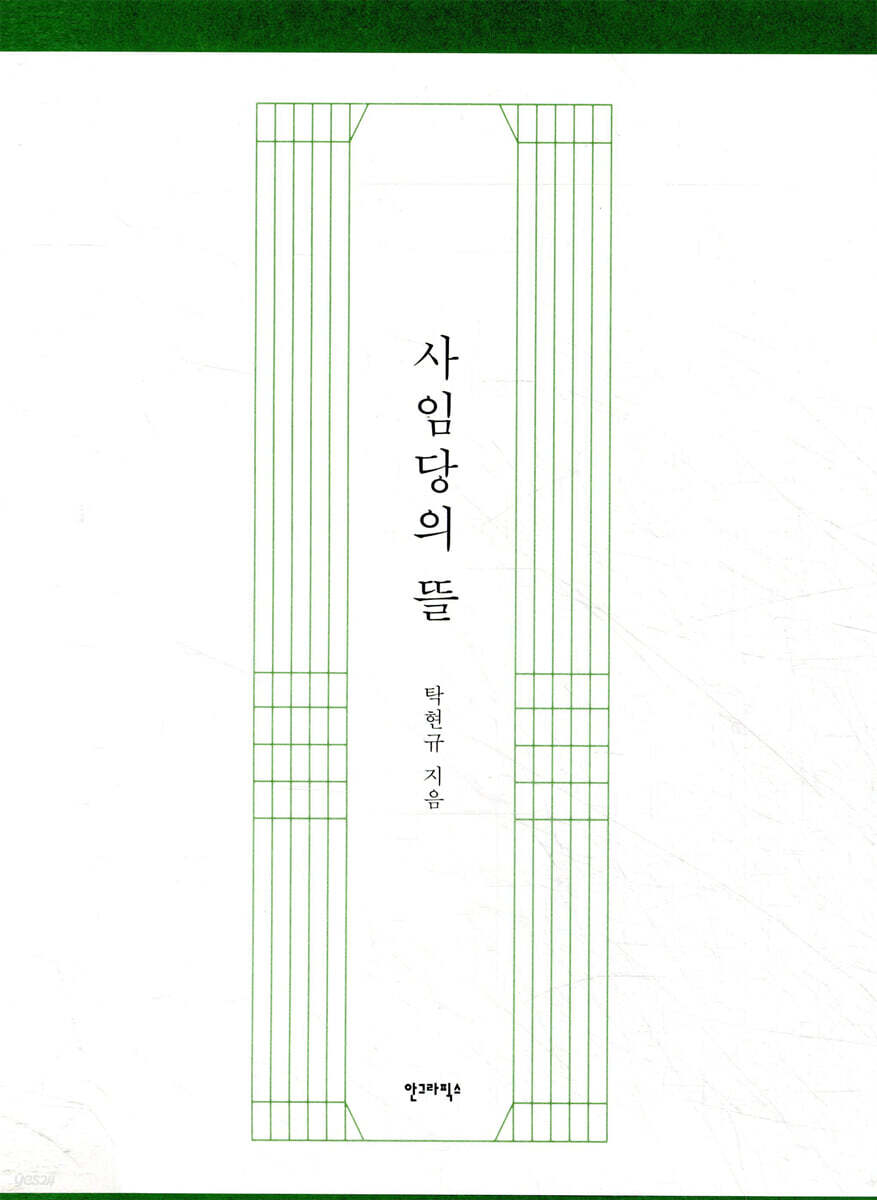
Saimdang's Garden
 |
Description
Book Introduction
The lives hidden in Saimdang's garden
Gansong Art Museum researcher Tak Hyun-gyu explores with all five senses.
Saimdang, the first female painter in Korea, left behind a masterpiece that cannot be left out, Chochungdo, which, as the name suggests, is a painting that depicts the grass and insects that live in the garden.
Therefore, the main setting for Saimdang's paintings was the garden, the nature closest to people.
Instead of telling the story of Saimdang's life, which was known as the mother of Yulgok Yi I and a virtuous wife, "Saimdang's Garden" tells the story of the messages of life conveyed in the paintings in Saimdang's album as a painter and artist.
The author of this book, Tak Hyeon-gyu, was a researcher at the Gansong Art Museum, Korea's first private art museum, and wrote books such as "Geumsodam" and "Gohwajeongdam," which introduce old paintings.
What, according to the author, who has long admired old paintings, is the true appeal of the Chochungdo? He explains that the reason Saimdang is so widely remembered and the Chochungdo attracts attention even today is "because of the interest and love for living things."
Living among insects in a land covered with cement and asphalt where not a single blade of grass can grow has become an experience that we pay for, but since nothing stimulates the human senses more than living things, the meaning of the insect painting remains relevant even as time passes.
『Saimdang's Garden』 is largely divided into two parts.
Part 1, Saimdang's Painting Album and Maechang's Painting Album, introduces twenty-six paintings by Saimdang and four paintings by Maechang.
The painting of Saimdang's insects included in the book is one of the works attributed to Saimdang and is held by the Gansong Art Museum, the National Museum of Korea, and the Ojukheon Municipal Museum of Art.
This painting of insects and grasshoppers is an important work that has been passed down along with the paintings of Saimdang and the writings and poems of many writers.
In addition, the painting of flowers and birds by Maechang, Saimdang's eldest daughter, who was not well known until then, was included. Maechang, who was called 'Little Saimdang', painted plum blossoms and bamboo with ink, unlike Saimdang.
The origin of the Four Gentlemen is found in the painting of flowers and birds by Maechang.
In Part 2, “Talking Together,” you ask and answer questions you’ve been curious about but couldn’t ask Saimdang through a virtual conversation.
Through conversations with Maechang, Yulgok, and Saimdang, we introduce not only 'Saimdang as a mother' but also 'Saimdang as a female artist' who wrote and painted.
Gansong Art Museum researcher Tak Hyun-gyu explores with all five senses.
Saimdang, the first female painter in Korea, left behind a masterpiece that cannot be left out, Chochungdo, which, as the name suggests, is a painting that depicts the grass and insects that live in the garden.
Therefore, the main setting for Saimdang's paintings was the garden, the nature closest to people.
Instead of telling the story of Saimdang's life, which was known as the mother of Yulgok Yi I and a virtuous wife, "Saimdang's Garden" tells the story of the messages of life conveyed in the paintings in Saimdang's album as a painter and artist.
The author of this book, Tak Hyeon-gyu, was a researcher at the Gansong Art Museum, Korea's first private art museum, and wrote books such as "Geumsodam" and "Gohwajeongdam," which introduce old paintings.
What, according to the author, who has long admired old paintings, is the true appeal of the Chochungdo? He explains that the reason Saimdang is so widely remembered and the Chochungdo attracts attention even today is "because of the interest and love for living things."
Living among insects in a land covered with cement and asphalt where not a single blade of grass can grow has become an experience that we pay for, but since nothing stimulates the human senses more than living things, the meaning of the insect painting remains relevant even as time passes.
『Saimdang's Garden』 is largely divided into two parts.
Part 1, Saimdang's Painting Album and Maechang's Painting Album, introduces twenty-six paintings by Saimdang and four paintings by Maechang.
The painting of Saimdang's insects included in the book is one of the works attributed to Saimdang and is held by the Gansong Art Museum, the National Museum of Korea, and the Ojukheon Municipal Museum of Art.
This painting of insects and grasshoppers is an important work that has been passed down along with the paintings of Saimdang and the writings and poems of many writers.
In addition, the painting of flowers and birds by Maechang, Saimdang's eldest daughter, who was not well known until then, was included. Maechang, who was called 'Little Saimdang', painted plum blossoms and bamboo with ink, unlike Saimdang.
The origin of the Four Gentlemen is found in the painting of flowers and birds by Maechang.
In Part 2, “Talking Together,” you ask and answer questions you’ve been curious about but couldn’t ask Saimdang through a virtual conversation.
Through conversations with Maechang, Yulgok, and Saimdang, we introduce not only 'Saimdang as a mother' but also 'Saimdang as a female artist' who wrote and painted.
- You can preview some of the book's contents.
Preview
index
Entering the garden
Saimdang's painting album
Mukpodo
Sogari
Saimdangcho Chunghwacheop Gansong Art Museum
Dalgaebi and Chugyu
Dandelions and groundcover
Mandrami and bellflower
Cucumber and Antler
Eggplant and groundberries
Watermelon and anthill
coneflower and dandelion
Poppies and butterflies
Shin Saimdang's Pilchochungdo (Chungdo), National Museum of Korea
Watermelon and field mouse
Eggplant and goblin
Cucumber and Frog
Poppies and Lizards
cones and frogs
Mandrakes and dung beetles
dandelion and locust
Chugyu and the Frog
Shin Saimdang's Insect-Portrait Bottle, Ojukheon City Museum
Cucumbers and Grasshoppers
Watermelon blossoms and dung beetles
Watermelon and radish
Eggplant and warts
Mandrake and the frog
Poppies and beetles
Impatiens and dragonflies
Cone and bee
Maechang's painting album
monthly sales
Shinjuk twins
Moonlight Presbyopia
A heated argument
Talking together
Conversation with Maechang
Conversation with Yulgok
Conversation with Saimdang
Coming out of the garden
Glossary of Terms
Source of the illustration
References
Saimdang's painting album
Mukpodo
Sogari
Saimdangcho Chunghwacheop Gansong Art Museum
Dalgaebi and Chugyu
Dandelions and groundcover
Mandrami and bellflower
Cucumber and Antler
Eggplant and groundberries
Watermelon and anthill
coneflower and dandelion
Poppies and butterflies
Shin Saimdang's Pilchochungdo (Chungdo), National Museum of Korea
Watermelon and field mouse
Eggplant and goblin
Cucumber and Frog
Poppies and Lizards
cones and frogs
Mandrakes and dung beetles
dandelion and locust
Chugyu and the Frog
Shin Saimdang's Insect-Portrait Bottle, Ojukheon City Museum
Cucumbers and Grasshoppers
Watermelon blossoms and dung beetles
Watermelon and radish
Eggplant and warts
Mandrake and the frog
Poppies and beetles
Impatiens and dragonflies
Cone and bee
Maechang's painting album
monthly sales
Shinjuk twins
Moonlight Presbyopia
A heated argument
Talking together
Conversation with Maechang
Conversation with Yulgok
Conversation with Saimdang
Coming out of the garden
Glossary of Terms
Source of the illustration
References
Detailed image
.jpg)
Into the book
The eyes want to see and the ears want to hear
Among the things that the mouth wants to eat and the nose wants to smell,
What can't be found in a garden?
Page 1, William Lawson
The garden is a small landscape that comes into the yard.
While men who had the freedom to travel painted landscapes, women painted gardens.
In this way, Saimdang would have naturally captured the garden on her canvas.
And because Saimdang left behind a painting of her garden, we can experience a garden from the Joseon Dynasty.
Saimdang's garden is open to everyone.
Let's enter the garden in Saimdang's painting, touch the grass, and smell the flowers.
And let's imagine ourselves stepping on the soil, watching the wings of bees and butterflies fluttering.
Page 12, from “Entering the Garden”
In the painting of the grapes, the density of the grape berries must be varied.
It can't be all dark, and it can't be all light.
If they are all dark, the mushroom becomes heavy, and if they are all light, it becomes light.
Above all, if the jokes are the same, it becomes monotonous and boring.
Even a faint grain of rice needs to have slightly different jokes to create a sense of three-dimensionality.
The trunk and branches are also different jokes.
The way to draw the stems and branches of a grapevine is to make the old stems lighter and the new branches darker.
Page 20, from “Saimdang’s Painting Album”
Grass and insect paintings are paintings using grass and insects as subjects.
Additionally, the herbal medicine book can be considered a kind of herbal medicine guide.
The textbook that studies herbs and fruits used as medicine is Chochungdo.
But the chrysanthemums bloom in the summer and the dandelions bloom in the spring.
So, this painting can be said to have been staged because it contains dandelions and chrysanthemums blooming at different times.
Dandelions are also placed together with dandelions because their roots and leaves are eaten as medicine.
Therefore, we can guess that he studied medicinal herbs while drawing the herbal medicine.
Page 38, from “Saimdang’s Painting Album”
A ladybug as pretty as a flower has come to the cucumber patch.
Ladybugs were considered good luck insects because they eat pests.
The ladybug also symbolizes love between a man and a woman.
Small ladybugs are fun to look for because they are not easily seen.
The yech symbolizes a woman weaving cloth.
It is synonymous with diligent and honest insects.
So creatures like cucumbers, butterflies, ladybugs, and cicadas all symbolize a comfortable home.
Page 46, from “Saimdang’s Painting Album”
The ancients saw the right path for humans to follow even in the small creatures that lived in the garden.
A microbe is no longer a microbe, but a precious life that makes us look back on our lives.
He who loves the infinitesimal, loves all living things.
That is why drawing and appreciating insects may have been an education in cherishing life.
A heart that loves small things leads to a heart that cherishes life.
This may be the most important reason why Saimdang painted the insects and plants.
Page 47, from “Saimdang’s Painting Album”
Maechang painted geese, reeds, and the moon in one ink color.
Because the canvas was small, I omitted the water and drew only one large goose.
Judging by the horizontal stripes on its chest, it looks like a black goose.
I put my webbed feet on the ground and look up at the moon.
Does that goose miss the northern land it left behind? The full moon is half-obscured by the night fog.
The fog was dyed blue, and the area around the moon was dyed black, distinguishing the fog from the night sky.
Page 149, from “Maechang’s Painting Album”
I played where my mother played when she was little.
So, I inherited not only my mother's blood but also her environment.
As beautiful as the wide, clear air of the East Sea was the study of my maternal grandfather, Shin Myeong-hwa, whom I never saw because he passed away before I was born.
My mother taught me to write by opening my grandfather's books in that study.
So, my mother read the books my grandfather read, and I read the books my mother read.
Three generations studied from the same book, so this must be a beautiful tradition of a family that reads.
Page 162-3, from “Conversation with Yulgok”
I started out by painting plums and bamboo, and then naturally expanded my subject matter to other flowering trees.
The funny thing is, at some point I drew a picture of a bird sitting on a branch.
This is how the ink painting of birds and flowers that I drew was born.
Although paintings of birds and flowers already existed in China, they were drawn with dark colors and detailed lines like those of insects and grass.
So, you could say that my ink and wash painting of flowers and birds is different from Chinese painting of flowers and birds.
If my mother is the originator of insect paintings, then how about calling me the pioneer of ink painting of flowers and birds?
Among the things that the mouth wants to eat and the nose wants to smell,
What can't be found in a garden?
Page 1, William Lawson
The garden is a small landscape that comes into the yard.
While men who had the freedom to travel painted landscapes, women painted gardens.
In this way, Saimdang would have naturally captured the garden on her canvas.
And because Saimdang left behind a painting of her garden, we can experience a garden from the Joseon Dynasty.
Saimdang's garden is open to everyone.
Let's enter the garden in Saimdang's painting, touch the grass, and smell the flowers.
And let's imagine ourselves stepping on the soil, watching the wings of bees and butterflies fluttering.
Page 12, from “Entering the Garden”
In the painting of the grapes, the density of the grape berries must be varied.
It can't be all dark, and it can't be all light.
If they are all dark, the mushroom becomes heavy, and if they are all light, it becomes light.
Above all, if the jokes are the same, it becomes monotonous and boring.
Even a faint grain of rice needs to have slightly different jokes to create a sense of three-dimensionality.
The trunk and branches are also different jokes.
The way to draw the stems and branches of a grapevine is to make the old stems lighter and the new branches darker.
Page 20, from “Saimdang’s Painting Album”
Grass and insect paintings are paintings using grass and insects as subjects.
Additionally, the herbal medicine book can be considered a kind of herbal medicine guide.
The textbook that studies herbs and fruits used as medicine is Chochungdo.
But the chrysanthemums bloom in the summer and the dandelions bloom in the spring.
So, this painting can be said to have been staged because it contains dandelions and chrysanthemums blooming at different times.
Dandelions are also placed together with dandelions because their roots and leaves are eaten as medicine.
Therefore, we can guess that he studied medicinal herbs while drawing the herbal medicine.
Page 38, from “Saimdang’s Painting Album”
A ladybug as pretty as a flower has come to the cucumber patch.
Ladybugs were considered good luck insects because they eat pests.
The ladybug also symbolizes love between a man and a woman.
Small ladybugs are fun to look for because they are not easily seen.
The yech symbolizes a woman weaving cloth.
It is synonymous with diligent and honest insects.
So creatures like cucumbers, butterflies, ladybugs, and cicadas all symbolize a comfortable home.
Page 46, from “Saimdang’s Painting Album”
The ancients saw the right path for humans to follow even in the small creatures that lived in the garden.
A microbe is no longer a microbe, but a precious life that makes us look back on our lives.
He who loves the infinitesimal, loves all living things.
That is why drawing and appreciating insects may have been an education in cherishing life.
A heart that loves small things leads to a heart that cherishes life.
This may be the most important reason why Saimdang painted the insects and plants.
Page 47, from “Saimdang’s Painting Album”
Maechang painted geese, reeds, and the moon in one ink color.
Because the canvas was small, I omitted the water and drew only one large goose.
Judging by the horizontal stripes on its chest, it looks like a black goose.
I put my webbed feet on the ground and look up at the moon.
Does that goose miss the northern land it left behind? The full moon is half-obscured by the night fog.
The fog was dyed blue, and the area around the moon was dyed black, distinguishing the fog from the night sky.
Page 149, from “Maechang’s Painting Album”
I played where my mother played when she was little.
So, I inherited not only my mother's blood but also her environment.
As beautiful as the wide, clear air of the East Sea was the study of my maternal grandfather, Shin Myeong-hwa, whom I never saw because he passed away before I was born.
My mother taught me to write by opening my grandfather's books in that study.
So, my mother read the books my grandfather read, and I read the books my mother read.
Three generations studied from the same book, so this must be a beautiful tradition of a family that reads.
Page 162-3, from “Conversation with Yulgok”
I started out by painting plums and bamboo, and then naturally expanded my subject matter to other flowering trees.
The funny thing is, at some point I drew a picture of a bird sitting on a branch.
This is how the ink painting of birds and flowers that I drew was born.
Although paintings of birds and flowers already existed in China, they were drawn with dark colors and detailed lines like those of insects and grass.
So, you could say that my ink and wash painting of flowers and birds is different from Chinese painting of flowers and birds.
If my mother is the originator of insect paintings, then how about calling me the pioneer of ink painting of flowers and birds?
---Page 174-5, from "Conversation with Maechang"
Publisher's Review
The lives hidden in Saimdang's garden
Gansong Art Museum researcher Tak Hyun-gyu explores with all five senses.
Saimdang, the first female painter in Korea, left behind a masterpiece that cannot be left out, Chochungdo, which, as the name suggests, is a painting that depicts the grass and insects that live in the garden.
Therefore, the main setting for Saimdang's paintings was the garden, the nature closest to people.
Instead of telling the story of Saimdang's life, which was known as the mother of Yulgok Yi I and a virtuous wife, "Saimdang's Garden" tells the story of the messages of life conveyed in the paintings in Saimdang's album as a painter and artist.
The author of this book, Tak Hyeon-gyu, was a researcher at the Gansong Art Museum, Korea's first private art museum, and wrote books such as "Geumsodam" and "Gohwajeongdam," which introduce old paintings.
What, according to the author, who has long admired old paintings, is the true appeal of the Chochungdo? He explains that the reason Saimdang is so widely remembered and the Chochungdo attracts attention even today is "because of the interest and love for living things."
Living among insects in a land covered with cement and asphalt where not a single blade of grass can grow has become an experience that we pay for, but since nothing stimulates the human senses more than living things, the meaning of the insect painting remains relevant even as time passes.
『Saimdang's Garden』 is largely divided into two parts.
Part 1, Saimdang's Painting Album and Maechang's Painting Album, introduces twenty-six paintings by Saimdang and four paintings by Maechang.
The painting of Saimdang's insects included in the book is one of the works attributed to Saimdang and is held by the Gansong Art Museum, the National Museum of Korea, and the Ojukheon Municipal Museum of Art.
This painting of insects and grasshoppers is an important work that has been passed down along with the paintings of Saimdang and the writings and poems of many writers.
In addition, the painting of flowers and birds by Maechang, Saimdang's eldest daughter, who was not well known until then, was included. Maechang, who was called 'Little Saimdang', painted plum blossoms and bamboo with ink, unlike Saimdang.
The origin of the Four Gentlemen is found in the painting of flowers and birds by Maechang.
In Part 2, “Talking Together,” you ask and answer questions you’ve been curious about but couldn’t ask Saimdang through a virtual conversation.
Through conversations with Maechang, Yulgok, and Saimdang, we introduce not only 'Saimdang as a mother' but also 'Saimdang as a female artist' who wrote and painted.
Why did so many people copy Saimdang's insect paintings?
Red coneflowers, blue chrysanthemums, and white daylilies bloom in season without anyone telling them to.
When flowers bloom, butterflies and bees are busy flying to them, and as the season progresses, the fruits also ripen.
Looking at Saimdang's paintings, I realize how much vitality the flowers blooming quietly in the front yard and the grass growing silently possess.
Perhaps it is because so many people have discovered vitality in Saimdang's paintings since long ago that so many copies have been handed down.
Saimdang's painting of insects and plants, famous for the anecdote that King Sukjong of the Joseon Dynasty ordered a copy of it, is said to have over 300 copies in Korea and abroad.
Because it has been loved by many people for a long time, there are many imitations.
The lives that came to life in Saimdang and Maechang's painting albums
What is hidden in Saimdang's garden?
『Saimdang's Garden』 contains the garden that Saimdang cultivated and painted in the book.
Author Tak Hyeon-gyu talks about all the lives depicted in Saimdang's painting album.
The author does not overlook even a single bug that is easy to glance at and pass by.
Rather, the small ladybugs in the picture are not easily noticed, which tells us that it is fun to look for them.
He also points out that ladybugs are “insects that bring good luck because they eat pests, and they also symbolize the love between a man and a woman,” adding the meaning of Saimdang’s drawing of small insects.
This book also reads the 'heart' hidden in Saimdang's paintings.
The wish for the health of those close to her, the earnest wish for her child to pass the exam, and the mother's wish for a healthy birth of a new life are all contained in Saimdang's paintings.
Saimdang's heart is not much different from the hearts of us living today.
"Saimdang's Garden" allows us to savor the beauty of Saimdang's paintings as if we were looking closely at the flowers blooming in a flower garden.
And it is also quite fun to watch the locusts, grasshoppers, lizards, frogs, and other creatures crawling diligently through the picture as if there is no life in the world that does not have its own purpose.
Just as it became difficult to touch and step on the soil, it also became difficult to know and call the names of grasses, flowers, fruits, and insects.
Looking at the insect drawings in this book, carefully observing the appearances and names of the small, insignificant creatures and softly calling out their names will be a valuable educational experience.
Gansong Art Museum researcher Tak Hyun-gyu explores with all five senses.
Saimdang, the first female painter in Korea, left behind a masterpiece that cannot be left out, Chochungdo, which, as the name suggests, is a painting that depicts the grass and insects that live in the garden.
Therefore, the main setting for Saimdang's paintings was the garden, the nature closest to people.
Instead of telling the story of Saimdang's life, which was known as the mother of Yulgok Yi I and a virtuous wife, "Saimdang's Garden" tells the story of the messages of life conveyed in the paintings in Saimdang's album as a painter and artist.
The author of this book, Tak Hyeon-gyu, was a researcher at the Gansong Art Museum, Korea's first private art museum, and wrote books such as "Geumsodam" and "Gohwajeongdam," which introduce old paintings.
What, according to the author, who has long admired old paintings, is the true appeal of the Chochungdo? He explains that the reason Saimdang is so widely remembered and the Chochungdo attracts attention even today is "because of the interest and love for living things."
Living among insects in a land covered with cement and asphalt where not a single blade of grass can grow has become an experience that we pay for, but since nothing stimulates the human senses more than living things, the meaning of the insect painting remains relevant even as time passes.
『Saimdang's Garden』 is largely divided into two parts.
Part 1, Saimdang's Painting Album and Maechang's Painting Album, introduces twenty-six paintings by Saimdang and four paintings by Maechang.
The painting of Saimdang's insects included in the book is one of the works attributed to Saimdang and is held by the Gansong Art Museum, the National Museum of Korea, and the Ojukheon Municipal Museum of Art.
This painting of insects and grasshoppers is an important work that has been passed down along with the paintings of Saimdang and the writings and poems of many writers.
In addition, the painting of flowers and birds by Maechang, Saimdang's eldest daughter, who was not well known until then, was included. Maechang, who was called 'Little Saimdang', painted plum blossoms and bamboo with ink, unlike Saimdang.
The origin of the Four Gentlemen is found in the painting of flowers and birds by Maechang.
In Part 2, “Talking Together,” you ask and answer questions you’ve been curious about but couldn’t ask Saimdang through a virtual conversation.
Through conversations with Maechang, Yulgok, and Saimdang, we introduce not only 'Saimdang as a mother' but also 'Saimdang as a female artist' who wrote and painted.
Why did so many people copy Saimdang's insect paintings?
Red coneflowers, blue chrysanthemums, and white daylilies bloom in season without anyone telling them to.
When flowers bloom, butterflies and bees are busy flying to them, and as the season progresses, the fruits also ripen.
Looking at Saimdang's paintings, I realize how much vitality the flowers blooming quietly in the front yard and the grass growing silently possess.
Perhaps it is because so many people have discovered vitality in Saimdang's paintings since long ago that so many copies have been handed down.
Saimdang's painting of insects and plants, famous for the anecdote that King Sukjong of the Joseon Dynasty ordered a copy of it, is said to have over 300 copies in Korea and abroad.
Because it has been loved by many people for a long time, there are many imitations.
The lives that came to life in Saimdang and Maechang's painting albums
What is hidden in Saimdang's garden?
『Saimdang's Garden』 contains the garden that Saimdang cultivated and painted in the book.
Author Tak Hyeon-gyu talks about all the lives depicted in Saimdang's painting album.
The author does not overlook even a single bug that is easy to glance at and pass by.
Rather, the small ladybugs in the picture are not easily noticed, which tells us that it is fun to look for them.
He also points out that ladybugs are “insects that bring good luck because they eat pests, and they also symbolize the love between a man and a woman,” adding the meaning of Saimdang’s drawing of small insects.
This book also reads the 'heart' hidden in Saimdang's paintings.
The wish for the health of those close to her, the earnest wish for her child to pass the exam, and the mother's wish for a healthy birth of a new life are all contained in Saimdang's paintings.
Saimdang's heart is not much different from the hearts of us living today.
"Saimdang's Garden" allows us to savor the beauty of Saimdang's paintings as if we were looking closely at the flowers blooming in a flower garden.
And it is also quite fun to watch the locusts, grasshoppers, lizards, frogs, and other creatures crawling diligently through the picture as if there is no life in the world that does not have its own purpose.
Just as it became difficult to touch and step on the soil, it also became difficult to know and call the names of grasses, flowers, fruits, and insects.
Looking at the insect drawings in this book, carefully observing the appearances and names of the small, insignificant creatures and softly calling out their names will be a valuable educational experience.
GOODS SPECIFICS
- Date of issue: March 8, 2017
- Page count, weight, size: 203 pages | 410g | 165*210*20mm
- ISBN13: 9788970598888
- ISBN10: 897059888X
You may also like
카테고리
korean


korean

![GQ KOREA Mark (Monthly): December [2025]](http://librairie.coreenne.fr/cdn/shop/files/8ef265dbbfbf186523ed75ba7319009d.jpg?v=1765340328&width=3840)


