

Parasites, our old companions
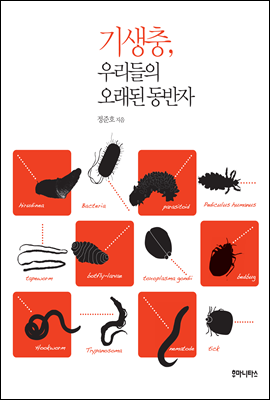 |
Description
Book Introduction
From the emergence of humans to the present,
The story of parasites that have lived with humans
Every living thing on Earth has at least one type of parasite.
And these parasites have parasites that parasitize other parasites.
In that sense, parasites are not unique and rare creatures, but rather the 'most common creatures' that account for more than half of all living species on Earth.
Because the Earth and its living beings are full of parasites.
We often think of these universal creatures as 'dirty and disgusting things that should be eliminated', but a scientist who is 'obsessed' with parasites has published 'Parasites, Our Old Companions' to show more people the true face of parasites.
In this book, the author uses the keyword "parasite" to tell the story of how living things live by parasitizing or coexisting with each other, and how they have evolved in the process of competing for survival.
Based on this story, the topic expands to include the history of parasites coexisting with humans on the front lines of the disease development war.
Here, readers can learn about what parasites are, the long-standing competitive relationship between parasites and their hosts and the resulting evolutionary process, the impact of parasites on human history, and the problems with current measures to combat parasitic diseases.
The author says that the race between parasites and humans is not over.
Not only are parasites that humans believed to have been eradicated returning in a stronger form, but also parasites that once inhabited certain regions are now appearing all over the world due to the development of transportation.
Therefore, this book challenges the conventional view that parasitic diseases can be eradicated with a few pills without considering the fundamental problems that cause them.
It also emphasizes the need for a more fundamental and multifaceted approach to parasites, such as taking into account environmental issues during the development process and caring for people who are dying without treatment or research due to poverty or political instability.
Furthermore, as a parasitologist, the author does not miss the fact that parasites have new potential applications, and adds that more attention is needed to parasites and parasitology.
The story of parasites that have lived with humans
Every living thing on Earth has at least one type of parasite.
And these parasites have parasites that parasitize other parasites.
In that sense, parasites are not unique and rare creatures, but rather the 'most common creatures' that account for more than half of all living species on Earth.
Because the Earth and its living beings are full of parasites.
We often think of these universal creatures as 'dirty and disgusting things that should be eliminated', but a scientist who is 'obsessed' with parasites has published 'Parasites, Our Old Companions' to show more people the true face of parasites.
In this book, the author uses the keyword "parasite" to tell the story of how living things live by parasitizing or coexisting with each other, and how they have evolved in the process of competing for survival.
Based on this story, the topic expands to include the history of parasites coexisting with humans on the front lines of the disease development war.
Here, readers can learn about what parasites are, the long-standing competitive relationship between parasites and their hosts and the resulting evolutionary process, the impact of parasites on human history, and the problems with current measures to combat parasitic diseases.
The author says that the race between parasites and humans is not over.
Not only are parasites that humans believed to have been eradicated returning in a stronger form, but also parasites that once inhabited certain regions are now appearing all over the world due to the development of transportation.
Therefore, this book challenges the conventional view that parasitic diseases can be eradicated with a few pills without considering the fundamental problems that cause them.
It also emphasizes the need for a more fundamental and multifaceted approach to parasites, such as taking into account environmental issues during the development process and caring for people who are dying without treatment or research due to poverty or political instability.
Furthermore, as a parasitologist, the author does not miss the fact that parasites have new potential applications, and adds that more attention is needed to parasites and parasitology.
- You can preview some of the book's contents.
Preview
index
introduction
Chapter 1 What are parasites?
Defining parasites
Symbiosis and parasitism are very different.
In the beginning there were parasites
The most universal being
Understanding Ecosystems Through Parasites
Master of Life
Parasites manipulate their hosts
Parasites that control humans?
Master of Host Manipulation
The host, the genetic carrier of the parasite
Looking out from within the host
Chapter 2: Jumping with the Red Queen
Adam's rib, parasite
The Splendor of the Peacock and Parasite
Avoidance behaviors: scratching, rubbing, and brushing
Parasites and bird beaks
Eat well to avoid parasites
Hide your poop from parasites
Animal vaccinations
Animals also take anti-parasite medication
Is oversleeping due to parasites?
Malicious behavior: spreading parasites
Resistance or patience, that is the question.
social parasites
Chapter 3: Parasites Enter History
Parasite, becoming a myth
The Birth of an Empire and Parasite
A World History of Malaria
Marketable crops and the prevalence of malaria
Malaria Eradication and Regional Development
Empire and Riverside Blindness
The New Guinea Tapeworm and the Destruction of Culture
The Fighting Spirit of Yellow Fever and Parasitologists
A History of Chance and Self-Experimentation
The Rockefeller Foundation and the Deworming Project
The Twilight of Parasitology: Neglected Tropical Diseases
Chagas disease, 100 years later
Political instability breeds parasites.
The Political Economy of Parasites and Bananas
A brief triumph for humanity: the eradication of smallpox
Viewing society through parasites
Chapter 4: Creatures of Possibility, Parasites
Coevolution of Humans and Parasites
Human Challenge
Limitations of medicine
Kill mosquitoes with mold
Eco-Friendly Pesticides: Parasitic Wasps and Parasitic Nematodes
Syphilis treatment, malaria
Treating Autoimmune Diseases with Parasites
Maggot and Leech Therapy
A History of Human Migration Through Parasites
The Future of Mass Extinction Through Parasites
The Romance of Parasite
Disappearing parasites and lost possibilities
Parasite in Korea
Epilogue
Chronology
Glossary of Terms
References
Chapter 1 What are parasites?
Defining parasites
Symbiosis and parasitism are very different.
In the beginning there were parasites
The most universal being
Understanding Ecosystems Through Parasites
Master of Life
Parasites manipulate their hosts
Parasites that control humans?
Master of Host Manipulation
The host, the genetic carrier of the parasite
Looking out from within the host
Chapter 2: Jumping with the Red Queen
Adam's rib, parasite
The Splendor of the Peacock and Parasite
Avoidance behaviors: scratching, rubbing, and brushing
Parasites and bird beaks
Eat well to avoid parasites
Hide your poop from parasites
Animal vaccinations
Animals also take anti-parasite medication
Is oversleeping due to parasites?
Malicious behavior: spreading parasites
Resistance or patience, that is the question.
social parasites
Chapter 3: Parasites Enter History
Parasite, becoming a myth
The Birth of an Empire and Parasite
A World History of Malaria
Marketable crops and the prevalence of malaria
Malaria Eradication and Regional Development
Empire and Riverside Blindness
The New Guinea Tapeworm and the Destruction of Culture
The Fighting Spirit of Yellow Fever and Parasitologists
A History of Chance and Self-Experimentation
The Rockefeller Foundation and the Deworming Project
The Twilight of Parasitology: Neglected Tropical Diseases
Chagas disease, 100 years later
Political instability breeds parasites.
The Political Economy of Parasites and Bananas
A brief triumph for humanity: the eradication of smallpox
Viewing society through parasites
Chapter 4: Creatures of Possibility, Parasites
Coevolution of Humans and Parasites
Human Challenge
Limitations of medicine
Kill mosquitoes with mold
Eco-Friendly Pesticides: Parasitic Wasps and Parasitic Nematodes
Syphilis treatment, malaria
Treating Autoimmune Diseases with Parasites
Maggot and Leech Therapy
A History of Human Migration Through Parasites
The Future of Mass Extinction Through Parasites
The Romance of Parasite
Disappearing parasites and lost possibilities
Parasite in Korea
Epilogue
Chronology
Glossary of Terms
References
Publisher's Review
A hitchhiker traveling through the host,
Master of Life, Parasite
A tense power struggle between parasites and their hosts, and between parasites and humans.
To connect living things with each other within the ecosystem,
Tightrope walking on the border between parasitism and symbiosis,
From the emergence of humans and the formation of society to the present
At the forefront of survival, evolution, disease, war, conquest, development, etc.
The story of parasites that have lived with humans
This book, through the keyword of parasite, tells the story of how living things coexist through parasitism or symbiosis, and how they have evolved in the process of competing for survival. The book gradually expands the subject to include the history of parasites coexisting with humans on the front lines of disease, development, and war.
Broadly speaking, chapters 1 and 2 are about parasites and their hosts, while chapters 3 and 4 are about parasites and humans (society).
Chapter 1 provides a fascinating look at what parasites are, how they survive and reproduce, and how they walk the dangerous tightrope of parasitism and symbiosis with other organisms (hosts).
Chapter 2 discusses how hosts have fought against parasites and how this competition has influenced the evolution of both parasites and their hosts.
Of course, it clearly shows the 'push and pull' between parasites and their hosts using examples of real organisms.
Chapters 1 and 2 are like reading the parasite version of Fabre's Insect Book.
Chapter 3 traces the footsteps of parasites throughout human history, and as you read about the extensive impact parasites have had on humans, you will be surprised.
It contains stories of parasites in mythology, the birth of empires and parasites, Third World development and neglected tropical diseases, and the struggle to overcome parasitic diseases and small achievements (such as the eradication of smallpox).
The final four chapters discuss how parasite vectors and parasitic diseases are becoming globalized and worsening due to advancements in transportation, global warming, and misdevelopment.
It also points out the flawed results of the view that parasite problems can be easily solved by administering widespread drugs.
This suggests the need for a more fundamental and multifaceted approach, including managing disease vectors, preventing people from being exposed to risk areas, addressing poverty and social inequality, and considering environmental issues in the development process.
Furthermore, it cautiously suggests the possibility of using parasites medically and environmentally, rather than simply administering drugs.
Parasites are the most common organisms on Earth.
Every living thing on Earth has at least one type of parasite.
And these parasites have parasites that parasitize other parasites.
Parasites are not unique and rare creatures, but rather the 'most common creatures', accounting for more than half of all species on Earth.
The Earth and its living creatures are full of parasites.
Human roundworms produce about 200,000 eggs per day.
The weight of roundworm eggs mixed in the feces of Chinese people amounts to approximately 10,000 tons annually.
The tapeworm that parasitizes rats produces 250,000 eggs a day, and over 100 million eggs a year.
If all of these eggs survive and become adults, they will become tapeworms weighing over 20 tons.
How many parasite eggs is the Earth's surface covered with?
Additionally, approximately 75 percent of the relationships between organisms within an ecosystem's food web are directly or indirectly related to parasites.
That means that three out of four ways one living thing communicates with another is through parasites.
The story of a parasite's extraordinary survival strategy
The most fascinating aspect of parasites is the ingenuity and diversity of their methods for survival and reproduction, which often serves as a motif for science fiction films and novels.
A representative example is host manipulation.
Parasites manipulate intermediate hosts to be eaten by the next host, and then they themselves can be transferred to the right host at the right time.
Crickets, which hate water, commit suicide by drowning themselves in water when infected with the disease.
This is because the adult crickets must come out of the cricket's body and return to the water to mate.
The larvae of a parasitic wasp called the gochibeol develop inside the larvae of the Tirinthina moth, feeding on the larvae.
When they are fully grown, they emerge from their bodies and form a cocoon. At this time, the host larva does not eat anything, but instead spits out a thread over the cocoon to make it more secure, and when other threats approach, it shakes its head violently to ward off various predators.
When the parasitic wasp hatches, the larva, having exhausted all its energy, dies.
Parasite, a motif of mythology
When we trace the footsteps of parasites throughout human history, we are struck by the extent to which parasites have had such a wide-ranging impact.
If you look at the side of the ambulance, there is a symbol of a snake coiled around a staff.
This is a symbol representing various medical associations, including the American Medical Association and the Korean Association of Emergency Medical Technicians.
The staff featured in this symbol is the staff of Asclepius, the god of medicine in Greek mythology.
Here, the snake refers to the Medina worm.
This is a depiction of a Medina worm, formerly known as a 'fire snake', being pulled out by wrapping it around a stick, using a snake and a stick.
Medina worms, which are transmitted by drinking water contaminated with larvae, have an incubation period of about a year before emerging through the legs to lay eggs.
The process of the adult worms breaking through the skin and laying eggs causes extreme pain, as if the skin is burning.
In Greece, there was even a record that the cause of Medina worm disease was the bite of a 'flaming sea serpent'.
There is also a story about this Medina worm in the Old Testament.
The LORD sent fiery serpents among the people, and they bit the people; and many Israelites died. The people came to Moses and said, “We have sinned, because we have spoken against the LORD and against you. Pray to the LORD to take the serpents away from us.” So Moses prayed for the people. Then the LORD said to Moses, “Make a fiery serpent and set it on a pole, and everyone who is bitten, when they look at it, shall live.” So Moses made a bronze serpent and put it on a pole. And it came to pass, that if a serpent had bitten anyone, when he looked at the bronze serpent, he lived.
Numbers 21:6-9
Neglected parasites, marginalized people
Currently, one-fifth of the world's population is infected with parasites, but most of these people live in areas without access to basic healthcare.
Diseases that have escaped our attention are called neglected tropical diseases, and more than 1.3 billion people around the world suffer from these diseases.
Yet, many people living outside the risk zone for tropical diseases believe these diseases have long since disappeared or are considered relatively rare.
Despite the fact that these "neglected diseases" still claim millions of lives each year, they receive little attention, and no treatments or research are developed for them, due to the economic and political marginalization of the areas suffering from them.
In other words, diseases have become symbols of poverty and marginalization.
The well-known story of how, despite the invention of an effective drug called epornithine, which treats sleeping sickness (transmitted by tsetse flies), a deadly disease endemic in Africa, it was not mass-produced because it lacked marketability, until it began to be mass-produced in developed countries when it was used as an ingredient in hair removal products (Samuel Bowles et al., Understanding Capitalism, p. 302) clearly illustrates the political and economic factors behind the competition between parasites and humans.
The never-ending race against parasites
As the Red Queen's Run (a theory that organisms in a competitive relationship of eating and being eaten always evolve together, so their relative evolutionary positions are the same regardless of how much they have evolved) tells us, the race between parasites and humans is not over yet.
Because parasites that humans believed they had eradicated or conquered are returning in a stronger form.
Additionally, due to the development of transportation, the Asian tiger mosquito, which used to live in East Asia, spread to the United States and Europe, and as the number of travelers to Africa increased, sleeping sickness, which used to affect only the indigenous people, began to affect Asians and Europeans.
The Galapagos penguin population has plummeted due to avian malaria introduced from abroad, and global warming has expanded the range of mosquitoes, the parasite's vector.
Therefore, this book challenges the conventional view that parasitic diseases can be eradicated with a few pills without considering the fundamental problems that cause them.
This perspective either blinds us to more fundamental problems (such as poverty or political instability) or puts strong evolutionary pressure on parasites.
As I've said before, I argue for a more fundamental and multifaceted approach, one that includes managing disease vectors, preventing people from being exposed to risky areas, addressing poverty and social inequality, and considering environmental issues in the development process.
Additionally, as a parasitologist, I also pay attention to the potential of parasites themselves.
Paleositology, which studies the migration and life history of ancient humans through parasites, cases such as treating neurosyphilis with mild malaria, exterminating pests with fungi, and treating incurable Crohn's disease with pig whipworm eggs, show a new side of parasites.
Finally, this book highlights the need for interest in parasites and parasitology by reminding us that, even in this era of what is called the "twilight of parasitology," there are still countless people suffering from parasitic diseases and that parasites have new potential applications.
Author Interview
Editor: After two years! Finally! The book is out!
Jeong Jun-ho: Now that I've finished the work, I start to wonder if publishing a book is really the right thing to do.
(laugh)
Actually, the first reason I thought about publishing was simple.
Wherever I go, I'm the only one who likes Parasite and talks about it, but I wish there were more people to talk to...
It's been two years since I published a book, but I'm actually glad I didn't publish it two years ago.
If I had gone with the initial manuscript that contained an interesting story about parasites (the title was “LOVE WITH PARASITE”), it would have been a book similar to “Notes on Observing Our Bodies,” and if I had gone with the revised manuscript I sent when I first went to Africa (which stopped at the story about parasites), it would not have been much different from “Parasite Empire” (of course, both books are my favorites).
"Parasite, Our Old Companions" differs from existing books in that it does not look at parasites in isolation or talk about a few specific parasites, but rather wants to talk more about humans and society, and what parasites are.
Editor: What is the appeal of the existence of parasites?
Jeong Jun-ho: It's fun and exciting.
There's thriller, romance, and a mixture of joy, sorrow, and pleasure.
When studying, common sense often breaks down.
As in the hygiene hypothesis, parasites sometimes play a beneficial role… … .
There are parasites that are so out of the ordinary, and the more I study them, the more they continue to destroy my common sense and show me twists and turns.
'How could this be, what is this? Who are you!' (laughter).
The things I imagined in my head, I found out somewhere that they actually existed.
For example, 'Bone is hard, so it can't parasitize.' But there were such parasites! If you watch medical dramas like "House," you'll see many unusual cases, many of which are taken from parasitology.
If you read a case study and watch a medical drama one day, you may come across a story about that parasite.
Whatever you imagine, it's beyond your imagination.
Also, parasites are very open to interpretation.
So it is also used a lot as a metaphor in mythology.
It's also interesting that although the material is small, there's a lot of room for thought and imagination with it.
Editor: When did you first encounter Parasite?
Jeong Jun-ho: We first met in a zoology class in college.
And then… … When I was a freshman or sophomore in college, when I had nothing to do, I would just browse books from here to there in the library bookshelf, and that’s when I took out a very old book on Parasite because it had the most pictures among the books on the shelf.
The photo was so provocative that I became interested.
When I was a senior, I had a seminar with an organization like the British Health Service during class time, which was really interesting.
Editor: What's your major? What kind of place is the London School of Hygiene and Tropical Medicine?
Jeong Jun-ho: He majored in biochemistry and molecular biology at the University of Bath in southeast England.
At first, I thought I would be studying biology and chemistry because it was called biochemistry, but I ended up learning a little bit about biology and a lot about chemistry, so after a semester, I told the professor that I wanted to study biology.
However, I had already taken too many required courses in one semester, so it was difficult to transfer to the biology department, and I had to compromise on molecular biology (there were three departments in the natural sciences department: biochemistry, biology, and molecular biology).
After graduating from school, I applied to the London School of Hygiene and Tropical Medicine, thinking that my grades wouldn't be good, and I was accepted without a second thought.
This school was founded in 1899 by Patrick Manson, the father of tropical medicine, and Robert Desowitz, who I consider a role model, is also an alumnus of this school.
It is one of the most renowned schools in the field of tropical medicine.
First of all, there aren't many places.
When I was in the parasitology department, there were 20 or 21 people in total, 4 of whom were doctors, and there were also many people who came to take short-term classes while working at public health centers and other places. The average age was 30 to 50.
Excluding those who come for a short period of time, there are only a few hundred full-time students, but there are over a thousand researchers and professors.
Is it the concept of education in a research institute rather than research at school?
Editor: Why did you want to leave the lab and go into the field?
Jeong Jun-ho: It would be correct to say, 'Because I hate the lab.'
I came to the Department of Parasitology because I wanted to see parasites, but it was my first time studying something like that, and I was locked in the lab and could only see the genes that make up the parasites, not the parasites themselves.
From 8 in the morning to 8 in the evening, all I did was squeeze out solutions with a dropper and wait for the results returned by the machine.
At some point, that thought occurred to me.
This is something that can be done even by a non-human, and wouldn't it be better if a machine did it?
When I was working on my thesis project, I was back in my third year of college, studying molecular biology, a subject I hated.
I liked parasites, but I started to lose interest in doing parasitology.
Editor: Studying in the UK, meeting people through Igloos in Korea, and experiencing neglected tropical diseases firsthand in Africa… It must have been an interesting experience.
Jeong Jun-ho: That process was fun.
When we talk about Britain, it is a country where the scent of empire still remains strong.
They have their own pride, and they also have nostalgia for the past… … .
At our school, during the first two months of introductory parasitology classes, we have practical training where we attach a spray can and spray pesticide on a wall.
The training is designed to enable immediate use by health workers in the field, such as how to dilute insecticide solution in water and how to soak and install mosquito nets.
The original purpose of this school was to train medical professionals, and that remains true.
But after finishing my studies, I went to Swaziland, which was a former British colony, and everything from the police uniforms to the social organization and health-related laws were exactly the same as in Britain.
Even in that poor country, hair caps must be worn in the kitchen, and violators are fined.
The kitchen and bathroom were really clean.
In British schools, they teach people to be reminded of hygiene over and over again, but when we actually went there, we found out that they were smarter than us and remembered everything after hearing it once.
It's just that we can't afford to do that; the problem isn't enlightenment, it's the practical barriers that are the problem.
What I believed to be true at school turned out to be different when I went out into the field.
I often thought that I shouldn't do things that are said to be in bad taste.
Looking back now, there were many nuances like that in the first draft.
So I figured my job wasn't to enlighten them, but to help remove the practical barriers.
Editor: Is there anything memorable about your time in Africa?
Jeong Jun-ho: Before going to Africa, I thought I'd just be looking at microscopes every day, but in reality, I worked at a public health center, so I took care of patients all day long, except for an hour for lunch.
The friend next to the author in the book is Senzo, a 13-year-old woman with terminal AIDS who contracted the infection while breastfeeding.
Tuberculosis comes and goes, and there are painkillers, antifungals, AIDS medications, digestive aids… … There are a handful of medications that I have to take.
Eat it three times a day.
There were times when my liver function was so high that I had to stop taking the medication, and at those times my condition would get much worse.
Since taking a lot of medicine will definitely cause stomach problems, I told Senjo, “When taking medicine, make sure to eat before taking it,” but Senjo said, “How can I eat before taking medicine when there is no food?”
I was shocked at that time.
The advice to take medicine after meals was such an obvious medical protocol that I just said that, but the reality was completely different.
People here were so poor before AIDS that they couldn't afford to eat.
Editor: What topics would you like to study in the future?
Jeong Jun-ho: I'd like to explore fields where parasites, humans (society), and history intersect, such as medical anthropology, history, or social medicine.
On the other hand, I want to work in the field.
Having been to Africa once, I want to go again.
Things like spreading entomopathogenic fungi or hunting frogs and collecting flukes while wandering through the jungles of Africa or the Amazon.
(Laughs) Ultimately, I want to do both health activities and research.
Editor: A final word
Jeong Jun-ho: Although it's not enough, I hope that through this book, I can help break down prejudices about parasites.
And ultimately, I hope there will be a parasite boom.
My slogan has always been this:
“Show interest and love to the neglected parasites!” (Laughs)
Master of Life, Parasite
A tense power struggle between parasites and their hosts, and between parasites and humans.
To connect living things with each other within the ecosystem,
Tightrope walking on the border between parasitism and symbiosis,
From the emergence of humans and the formation of society to the present
At the forefront of survival, evolution, disease, war, conquest, development, etc.
The story of parasites that have lived with humans
This book, through the keyword of parasite, tells the story of how living things coexist through parasitism or symbiosis, and how they have evolved in the process of competing for survival. The book gradually expands the subject to include the history of parasites coexisting with humans on the front lines of disease, development, and war.
Broadly speaking, chapters 1 and 2 are about parasites and their hosts, while chapters 3 and 4 are about parasites and humans (society).
Chapter 1 provides a fascinating look at what parasites are, how they survive and reproduce, and how they walk the dangerous tightrope of parasitism and symbiosis with other organisms (hosts).
Chapter 2 discusses how hosts have fought against parasites and how this competition has influenced the evolution of both parasites and their hosts.
Of course, it clearly shows the 'push and pull' between parasites and their hosts using examples of real organisms.
Chapters 1 and 2 are like reading the parasite version of Fabre's Insect Book.
Chapter 3 traces the footsteps of parasites throughout human history, and as you read about the extensive impact parasites have had on humans, you will be surprised.
It contains stories of parasites in mythology, the birth of empires and parasites, Third World development and neglected tropical diseases, and the struggle to overcome parasitic diseases and small achievements (such as the eradication of smallpox).
The final four chapters discuss how parasite vectors and parasitic diseases are becoming globalized and worsening due to advancements in transportation, global warming, and misdevelopment.
It also points out the flawed results of the view that parasite problems can be easily solved by administering widespread drugs.
This suggests the need for a more fundamental and multifaceted approach, including managing disease vectors, preventing people from being exposed to risk areas, addressing poverty and social inequality, and considering environmental issues in the development process.
Furthermore, it cautiously suggests the possibility of using parasites medically and environmentally, rather than simply administering drugs.
Parasites are the most common organisms on Earth.
Every living thing on Earth has at least one type of parasite.
And these parasites have parasites that parasitize other parasites.
Parasites are not unique and rare creatures, but rather the 'most common creatures', accounting for more than half of all species on Earth.
The Earth and its living creatures are full of parasites.
Human roundworms produce about 200,000 eggs per day.
The weight of roundworm eggs mixed in the feces of Chinese people amounts to approximately 10,000 tons annually.
The tapeworm that parasitizes rats produces 250,000 eggs a day, and over 100 million eggs a year.
If all of these eggs survive and become adults, they will become tapeworms weighing over 20 tons.
How many parasite eggs is the Earth's surface covered with?
Additionally, approximately 75 percent of the relationships between organisms within an ecosystem's food web are directly or indirectly related to parasites.
That means that three out of four ways one living thing communicates with another is through parasites.
The story of a parasite's extraordinary survival strategy
The most fascinating aspect of parasites is the ingenuity and diversity of their methods for survival and reproduction, which often serves as a motif for science fiction films and novels.
A representative example is host manipulation.
Parasites manipulate intermediate hosts to be eaten by the next host, and then they themselves can be transferred to the right host at the right time.
Crickets, which hate water, commit suicide by drowning themselves in water when infected with the disease.
This is because the adult crickets must come out of the cricket's body and return to the water to mate.
The larvae of a parasitic wasp called the gochibeol develop inside the larvae of the Tirinthina moth, feeding on the larvae.
When they are fully grown, they emerge from their bodies and form a cocoon. At this time, the host larva does not eat anything, but instead spits out a thread over the cocoon to make it more secure, and when other threats approach, it shakes its head violently to ward off various predators.
When the parasitic wasp hatches, the larva, having exhausted all its energy, dies.
Parasite, a motif of mythology
When we trace the footsteps of parasites throughout human history, we are struck by the extent to which parasites have had such a wide-ranging impact.
If you look at the side of the ambulance, there is a symbol of a snake coiled around a staff.
This is a symbol representing various medical associations, including the American Medical Association and the Korean Association of Emergency Medical Technicians.
The staff featured in this symbol is the staff of Asclepius, the god of medicine in Greek mythology.
Here, the snake refers to the Medina worm.
This is a depiction of a Medina worm, formerly known as a 'fire snake', being pulled out by wrapping it around a stick, using a snake and a stick.
Medina worms, which are transmitted by drinking water contaminated with larvae, have an incubation period of about a year before emerging through the legs to lay eggs.
The process of the adult worms breaking through the skin and laying eggs causes extreme pain, as if the skin is burning.
In Greece, there was even a record that the cause of Medina worm disease was the bite of a 'flaming sea serpent'.
There is also a story about this Medina worm in the Old Testament.
The LORD sent fiery serpents among the people, and they bit the people; and many Israelites died. The people came to Moses and said, “We have sinned, because we have spoken against the LORD and against you. Pray to the LORD to take the serpents away from us.” So Moses prayed for the people. Then the LORD said to Moses, “Make a fiery serpent and set it on a pole, and everyone who is bitten, when they look at it, shall live.” So Moses made a bronze serpent and put it on a pole. And it came to pass, that if a serpent had bitten anyone, when he looked at the bronze serpent, he lived.
Numbers 21:6-9
Neglected parasites, marginalized people
Currently, one-fifth of the world's population is infected with parasites, but most of these people live in areas without access to basic healthcare.
Diseases that have escaped our attention are called neglected tropical diseases, and more than 1.3 billion people around the world suffer from these diseases.
Yet, many people living outside the risk zone for tropical diseases believe these diseases have long since disappeared or are considered relatively rare.
Despite the fact that these "neglected diseases" still claim millions of lives each year, they receive little attention, and no treatments or research are developed for them, due to the economic and political marginalization of the areas suffering from them.
In other words, diseases have become symbols of poverty and marginalization.
The well-known story of how, despite the invention of an effective drug called epornithine, which treats sleeping sickness (transmitted by tsetse flies), a deadly disease endemic in Africa, it was not mass-produced because it lacked marketability, until it began to be mass-produced in developed countries when it was used as an ingredient in hair removal products (Samuel Bowles et al., Understanding Capitalism, p. 302) clearly illustrates the political and economic factors behind the competition between parasites and humans.
The never-ending race against parasites
As the Red Queen's Run (a theory that organisms in a competitive relationship of eating and being eaten always evolve together, so their relative evolutionary positions are the same regardless of how much they have evolved) tells us, the race between parasites and humans is not over yet.
Because parasites that humans believed they had eradicated or conquered are returning in a stronger form.
Additionally, due to the development of transportation, the Asian tiger mosquito, which used to live in East Asia, spread to the United States and Europe, and as the number of travelers to Africa increased, sleeping sickness, which used to affect only the indigenous people, began to affect Asians and Europeans.
The Galapagos penguin population has plummeted due to avian malaria introduced from abroad, and global warming has expanded the range of mosquitoes, the parasite's vector.
Therefore, this book challenges the conventional view that parasitic diseases can be eradicated with a few pills without considering the fundamental problems that cause them.
This perspective either blinds us to more fundamental problems (such as poverty or political instability) or puts strong evolutionary pressure on parasites.
As I've said before, I argue for a more fundamental and multifaceted approach, one that includes managing disease vectors, preventing people from being exposed to risky areas, addressing poverty and social inequality, and considering environmental issues in the development process.
Additionally, as a parasitologist, I also pay attention to the potential of parasites themselves.
Paleositology, which studies the migration and life history of ancient humans through parasites, cases such as treating neurosyphilis with mild malaria, exterminating pests with fungi, and treating incurable Crohn's disease with pig whipworm eggs, show a new side of parasites.
Finally, this book highlights the need for interest in parasites and parasitology by reminding us that, even in this era of what is called the "twilight of parasitology," there are still countless people suffering from parasitic diseases and that parasites have new potential applications.
Author Interview
Editor: After two years! Finally! The book is out!
Jeong Jun-ho: Now that I've finished the work, I start to wonder if publishing a book is really the right thing to do.
(laugh)
Actually, the first reason I thought about publishing was simple.
Wherever I go, I'm the only one who likes Parasite and talks about it, but I wish there were more people to talk to...
It's been two years since I published a book, but I'm actually glad I didn't publish it two years ago.
If I had gone with the initial manuscript that contained an interesting story about parasites (the title was “LOVE WITH PARASITE”), it would have been a book similar to “Notes on Observing Our Bodies,” and if I had gone with the revised manuscript I sent when I first went to Africa (which stopped at the story about parasites), it would not have been much different from “Parasite Empire” (of course, both books are my favorites).
"Parasite, Our Old Companions" differs from existing books in that it does not look at parasites in isolation or talk about a few specific parasites, but rather wants to talk more about humans and society, and what parasites are.
Editor: What is the appeal of the existence of parasites?
Jeong Jun-ho: It's fun and exciting.
There's thriller, romance, and a mixture of joy, sorrow, and pleasure.
When studying, common sense often breaks down.
As in the hygiene hypothesis, parasites sometimes play a beneficial role… … .
There are parasites that are so out of the ordinary, and the more I study them, the more they continue to destroy my common sense and show me twists and turns.
'How could this be, what is this? Who are you!' (laughter).
The things I imagined in my head, I found out somewhere that they actually existed.
For example, 'Bone is hard, so it can't parasitize.' But there were such parasites! If you watch medical dramas like "House," you'll see many unusual cases, many of which are taken from parasitology.
If you read a case study and watch a medical drama one day, you may come across a story about that parasite.
Whatever you imagine, it's beyond your imagination.
Also, parasites are very open to interpretation.
So it is also used a lot as a metaphor in mythology.
It's also interesting that although the material is small, there's a lot of room for thought and imagination with it.
Editor: When did you first encounter Parasite?
Jeong Jun-ho: We first met in a zoology class in college.
And then… … When I was a freshman or sophomore in college, when I had nothing to do, I would just browse books from here to there in the library bookshelf, and that’s when I took out a very old book on Parasite because it had the most pictures among the books on the shelf.
The photo was so provocative that I became interested.
When I was a senior, I had a seminar with an organization like the British Health Service during class time, which was really interesting.
Editor: What's your major? What kind of place is the London School of Hygiene and Tropical Medicine?
Jeong Jun-ho: He majored in biochemistry and molecular biology at the University of Bath in southeast England.
At first, I thought I would be studying biology and chemistry because it was called biochemistry, but I ended up learning a little bit about biology and a lot about chemistry, so after a semester, I told the professor that I wanted to study biology.
However, I had already taken too many required courses in one semester, so it was difficult to transfer to the biology department, and I had to compromise on molecular biology (there were three departments in the natural sciences department: biochemistry, biology, and molecular biology).
After graduating from school, I applied to the London School of Hygiene and Tropical Medicine, thinking that my grades wouldn't be good, and I was accepted without a second thought.
This school was founded in 1899 by Patrick Manson, the father of tropical medicine, and Robert Desowitz, who I consider a role model, is also an alumnus of this school.
It is one of the most renowned schools in the field of tropical medicine.
First of all, there aren't many places.
When I was in the parasitology department, there were 20 or 21 people in total, 4 of whom were doctors, and there were also many people who came to take short-term classes while working at public health centers and other places. The average age was 30 to 50.
Excluding those who come for a short period of time, there are only a few hundred full-time students, but there are over a thousand researchers and professors.
Is it the concept of education in a research institute rather than research at school?
Editor: Why did you want to leave the lab and go into the field?
Jeong Jun-ho: It would be correct to say, 'Because I hate the lab.'
I came to the Department of Parasitology because I wanted to see parasites, but it was my first time studying something like that, and I was locked in the lab and could only see the genes that make up the parasites, not the parasites themselves.
From 8 in the morning to 8 in the evening, all I did was squeeze out solutions with a dropper and wait for the results returned by the machine.
At some point, that thought occurred to me.
This is something that can be done even by a non-human, and wouldn't it be better if a machine did it?
When I was working on my thesis project, I was back in my third year of college, studying molecular biology, a subject I hated.
I liked parasites, but I started to lose interest in doing parasitology.
Editor: Studying in the UK, meeting people through Igloos in Korea, and experiencing neglected tropical diseases firsthand in Africa… It must have been an interesting experience.
Jeong Jun-ho: That process was fun.
When we talk about Britain, it is a country where the scent of empire still remains strong.
They have their own pride, and they also have nostalgia for the past… … .
At our school, during the first two months of introductory parasitology classes, we have practical training where we attach a spray can and spray pesticide on a wall.
The training is designed to enable immediate use by health workers in the field, such as how to dilute insecticide solution in water and how to soak and install mosquito nets.
The original purpose of this school was to train medical professionals, and that remains true.
But after finishing my studies, I went to Swaziland, which was a former British colony, and everything from the police uniforms to the social organization and health-related laws were exactly the same as in Britain.
Even in that poor country, hair caps must be worn in the kitchen, and violators are fined.
The kitchen and bathroom were really clean.
In British schools, they teach people to be reminded of hygiene over and over again, but when we actually went there, we found out that they were smarter than us and remembered everything after hearing it once.
It's just that we can't afford to do that; the problem isn't enlightenment, it's the practical barriers that are the problem.
What I believed to be true at school turned out to be different when I went out into the field.
I often thought that I shouldn't do things that are said to be in bad taste.
Looking back now, there were many nuances like that in the first draft.
So I figured my job wasn't to enlighten them, but to help remove the practical barriers.
Editor: Is there anything memorable about your time in Africa?
Jeong Jun-ho: Before going to Africa, I thought I'd just be looking at microscopes every day, but in reality, I worked at a public health center, so I took care of patients all day long, except for an hour for lunch.
The friend next to the author in the book is Senzo, a 13-year-old woman with terminal AIDS who contracted the infection while breastfeeding.
Tuberculosis comes and goes, and there are painkillers, antifungals, AIDS medications, digestive aids… … There are a handful of medications that I have to take.
Eat it three times a day.
There were times when my liver function was so high that I had to stop taking the medication, and at those times my condition would get much worse.
Since taking a lot of medicine will definitely cause stomach problems, I told Senjo, “When taking medicine, make sure to eat before taking it,” but Senjo said, “How can I eat before taking medicine when there is no food?”
I was shocked at that time.
The advice to take medicine after meals was such an obvious medical protocol that I just said that, but the reality was completely different.
People here were so poor before AIDS that they couldn't afford to eat.
Editor: What topics would you like to study in the future?
Jeong Jun-ho: I'd like to explore fields where parasites, humans (society), and history intersect, such as medical anthropology, history, or social medicine.
On the other hand, I want to work in the field.
Having been to Africa once, I want to go again.
Things like spreading entomopathogenic fungi or hunting frogs and collecting flukes while wandering through the jungles of Africa or the Amazon.
(Laughs) Ultimately, I want to do both health activities and research.
Editor: A final word
Jeong Jun-ho: Although it's not enough, I hope that through this book, I can help break down prejudices about parasites.
And ultimately, I hope there will be a parasite boom.
My slogan has always been this:
“Show interest and love to the neglected parasites!” (Laughs)
GOODS SPECIFICS
- Date of issue: May 9, 2011
- Page count, weight, size: 318 pages | 434g | 156*200*30mm
- ISBN13: 9788964371367
- ISBN10: 8964371364
You may also like
카테고리
korean


korean

![GQ KOREA Mark (Monthly): December [2025]](http://librairie.coreenne.fr/cdn/shop/files/8ef265dbbfbf186523ed75ba7319009d.jpg?v=1765340328&width=3840)


