

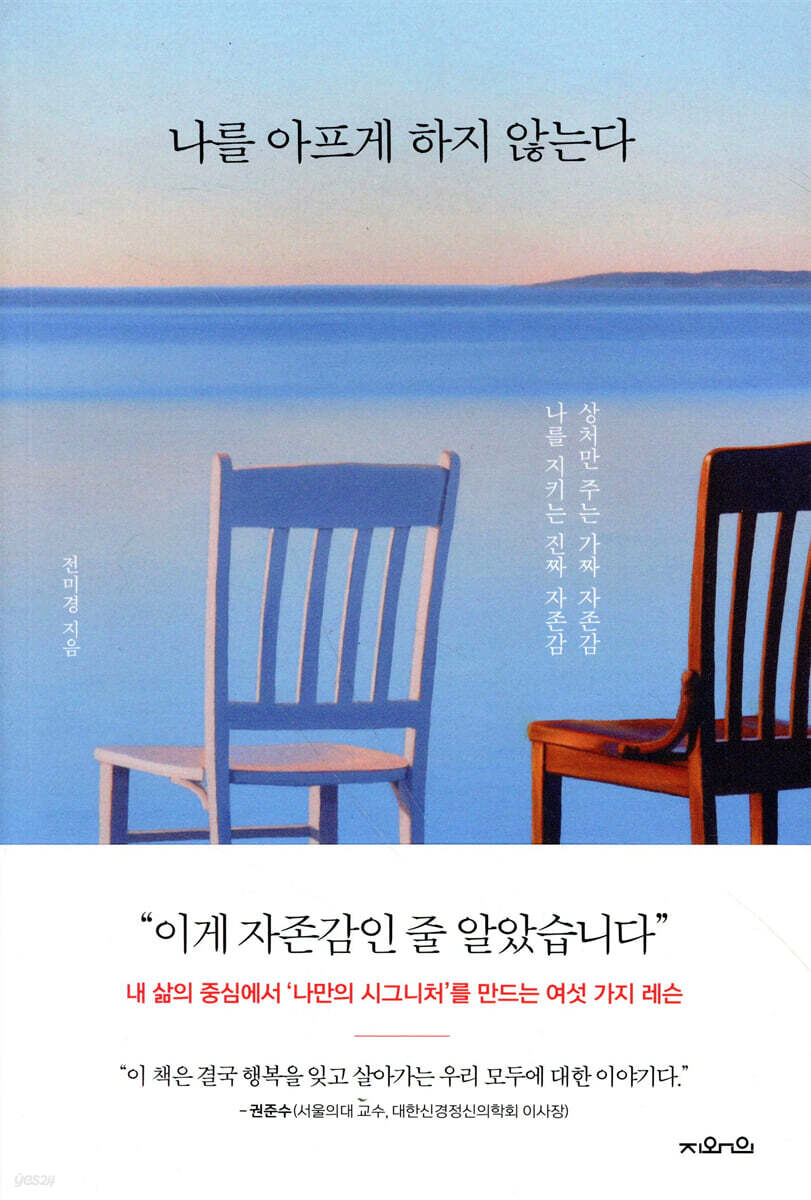
Don't hurt me
 |
Description
Book Introduction
- A word from MD
-
I mistook it for self-esteemThere has been a surge in self-esteem books and advice on the subject, to the point where it could be called a self-esteem craze.
Yet, many people still struggle with low self-esteem.
This book teaches you true self-esteem based on the latest theory and abundant clinical experience.
If you faithfully follow these six lessons, you will be filled with self-esteem.
December 10, 2019. Humanities PD Son Min-gyu
What people search for most these days
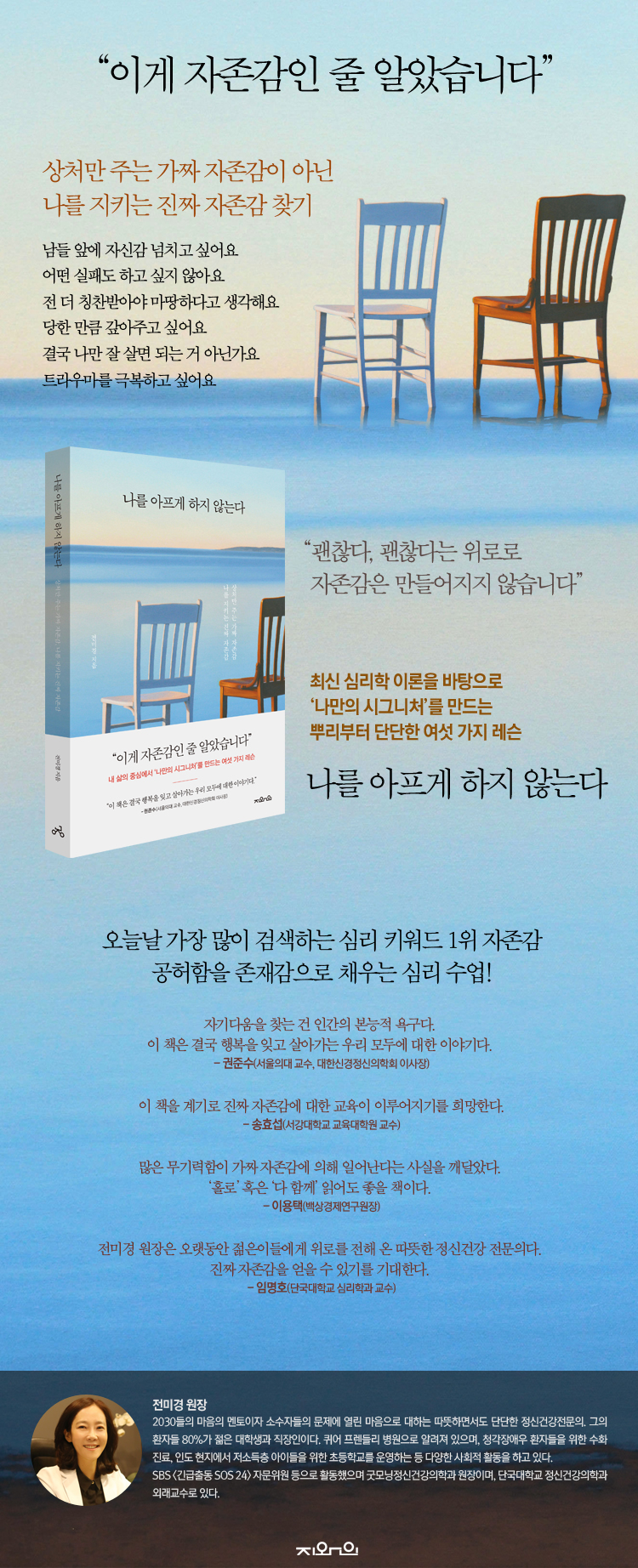
The #1 psychological term: self-esteem
In an age where self-esteem is so important,
Not fake self-esteem that only hurts,
How can I have true self-esteem that protects me in any situation?
Create your own signature that fills the void with presence!
No matter how much praise you receive and how much confidence you try to build, some insecurities don't go away.
Even though I distanced myself from people who disliked me and tried to process my feelings before going to bed, I felt like I was back where I was.
The psychological term that people talk about most these days is 'self-esteem'.
Why has self-esteem become so important in this day and age?
Self-esteem is such a difficult thing to have.
"Don't Hurt Me" is a book based on cutting-edge psychological theory and extensive clinical experience that explains why, despite the abundance of advice available today to boost self-esteem, my self-esteem remains stagnant, like a tumbleweed.
"We must beware of the countless traps that prevent us from distinguishing between fake and real self-esteem." "We must break free from the emotional torment and distance methods that keep us tied to others, and cultivate genuine self-esteem that maintains self-centeredness in any situation." Now, let's begin the lesson of true self-esteem by creating a "signature of oneself" that protects and motivates me.
A book that will help you break free from the thoughts of “My life is already decided anyway,” “There’s nothing I can do,” and “What can I do with something I was born with?” and help you move forward one step at a time on your own, without looking back at the painful past, from where you stand now.
Six lessons begin to empower me to feel more free and, more importantly, to build positive relationships with others.
The #1 psychological term: self-esteem
In an age where self-esteem is so important,
Not fake self-esteem that only hurts,
How can I have true self-esteem that protects me in any situation?
Create your own signature that fills the void with presence!
No matter how much praise you receive and how much confidence you try to build, some insecurities don't go away.
Even though I distanced myself from people who disliked me and tried to process my feelings before going to bed, I felt like I was back where I was.
The psychological term that people talk about most these days is 'self-esteem'.
Why has self-esteem become so important in this day and age?
Self-esteem is such a difficult thing to have.
"Don't Hurt Me" is a book based on cutting-edge psychological theory and extensive clinical experience that explains why, despite the abundance of advice available today to boost self-esteem, my self-esteem remains stagnant, like a tumbleweed.
"We must beware of the countless traps that prevent us from distinguishing between fake and real self-esteem." "We must break free from the emotional torment and distance methods that keep us tied to others, and cultivate genuine self-esteem that maintains self-centeredness in any situation." Now, let's begin the lesson of true self-esteem by creating a "signature of oneself" that protects and motivates me.
A book that will help you break free from the thoughts of “My life is already decided anyway,” “There’s nothing I can do,” and “What can I do with something I was born with?” and help you move forward one step at a time on your own, without looking back at the painful past, from where you stand now.
Six lessons begin to empower me to feel more free and, more importantly, to build positive relationships with others.
- You can preview some of the book's contents.
Preview
index
Recommendation
Prologue _ If you don't know what happiness is
Lesson 1.
I thought this was self-esteem
I'm empty, I'd rather be sick
The Real Reasons Why You Have Low Self-Esteem
How am I born this way?
Six Self-Esteem Traps
Lesson 2.
Fake self-esteem that shakes me, real self-esteem that protects me
Want to be confident in front of others: Pride vs. Self-Worth
I Don't Want to Fail Anything: Negative Experience vs. Positive Experience
I think I deserve more praise: Recognition vs. Joy
I Want to Pay Back: Aggression vs. Autonomy
In the end, isn't it all about living well for myself? : Relationship of Dependence vs. Relationship of Separation
Wanting to Overcome Trauma: Past-Oriented vs. Present-Oriented
Lesson 3.
Create your own signature
True self-esteem begins with adulthood.
If you are looking for the real you
What is your signature?
I can change at any time
Start with the mindset of, "I'm here, I can do it."
Lesson 4.
The Four Elements of True Self-Esteem
I think, therefore I am: intelligence
The ability to fold and shrink negative emotions: positive emotions
My ethics that are not swayed by others: morality
You can open your eyes even on tough days: Self-control
Lesson 5.
What will the country fill its people with?
Master the 5 Steps to Boost Your Self-Esteem
Filling the "I like it for no reason" feeling with positive content
"There's someone like this next to me" Filling content with mentors
"That's fake" Filling content with rational information
Developing Intuition: “I feel something”
Developing the ability to “Just Do It”
Lesson 6.
With adult self-esteem
Two things that keep me going, the past and others
Can I write my own history?
Don't be afraid of people without reason
Two Mirrors of Objectivity and Respect, Self-Esteem
References
Prologue _ If you don't know what happiness is
Lesson 1.
I thought this was self-esteem
I'm empty, I'd rather be sick
The Real Reasons Why You Have Low Self-Esteem
How am I born this way?
Six Self-Esteem Traps
Lesson 2.
Fake self-esteem that shakes me, real self-esteem that protects me
Want to be confident in front of others: Pride vs. Self-Worth
I Don't Want to Fail Anything: Negative Experience vs. Positive Experience
I think I deserve more praise: Recognition vs. Joy
I Want to Pay Back: Aggression vs. Autonomy
In the end, isn't it all about living well for myself? : Relationship of Dependence vs. Relationship of Separation
Wanting to Overcome Trauma: Past-Oriented vs. Present-Oriented
Lesson 3.
Create your own signature
True self-esteem begins with adulthood.
If you are looking for the real you
What is your signature?
I can change at any time
Start with the mindset of, "I'm here, I can do it."
Lesson 4.
The Four Elements of True Self-Esteem
I think, therefore I am: intelligence
The ability to fold and shrink negative emotions: positive emotions
My ethics that are not swayed by others: morality
You can open your eyes even on tough days: Self-control
Lesson 5.
What will the country fill its people with?
Master the 5 Steps to Boost Your Self-Esteem
Filling the "I like it for no reason" feeling with positive content
"There's someone like this next to me" Filling content with mentors
"That's fake" Filling content with rational information
Developing Intuition: “I feel something”
Developing the ability to “Just Do It”
Lesson 6.
With adult self-esteem
Two things that keep me going, the past and others
Can I write my own history?
Don't be afraid of people without reason
Two Mirrors of Objectivity and Respect, Self-Esteem
References
Detailed image
Into the book
The small psychiatric clinic I run is located in a provincial city.
This city was even listed in the Guinness Book of World Records for having five universities in one district.
That's probably why most of my patients are college students and young office workers.
The stories these friends tell are full of the emptiness, frustration, and hurt they experience.
But to me, I also see the effort they put into themselves.
These are people who come to us because they cannot solve their problems on their own, but paradoxically, they are trying very hard to solve their problems on their own.
---From the "Prologue"
Self-harm is an act of relieving feelings of emptiness and helplessness.
Even if it's painful, I choose to do it the only way I can do it.
It's an extreme way to actively lower your self-esteem.
Addiction and binge eating are similar to self-harm.
Many patients report that they spend hours mindlessly browsing social media or eating mindlessly.
To say 'I don't have any thoughts' means to try not to be conscious of one's actions.
---From "I'm empty, I'd rather be sick"
As self-esteem continues to be undermined, the desire to improve it grows, but in the process, false self-esteem creeps in.
Sometimes, the things we do to boost our self-esteem actually keep us in a state of low self-esteem or cling to a false sense of self-esteem.
Much of what I counsel patients about ultimately comes down to making this distinction.
---From "Six Traps of Self-Esteem"
To be honest, recognition and praise are actually factors that have nothing to do with self-esteem.
It's puzzling that one of the most important human needs is the need for recognition, so it's not related to self-esteem.
The reason is simple.
The standard of self-esteem lies within oneself.
The standard for recognition and praise lies outside of oneself.
Because when we become addicted to recognition and praise, it's easy to develop fake self-esteem.
---From "I think I deserve more praise"
I describe having self-esteem as having a "signature" for your life.
If you have no self-esteem despite having a smooth life, it means your life is boring, and that means you don't have a signature for your life.
Forming this signature is what true self-esteem is all about.
---From "I want to overcome trauma"
Many psychology books advise us to “find our true selves.”
But what exactly is "true self"? Is the self I have now not my true self? Isn't the self I display outwardly my true self? If you feel your self-esteem is low because you haven't found your true self, you'll think you need to change your current self to find your true self.
I often see the side effect of denying 'who I am today'.
I feel the need to convey the concept of 'true self' in a way that fits modern society.
---From "If You're Looking for Your True Self"
So how can we effectively manage multiple identities?
People who are good at managing multiple identities have a standard called 'self' that is the central axis that runs those multiple identities.
I call this my 'signature'.
---From "What is your signature"
Self-esteem is said to be a skill that is needed on bad days more than good days.
Self-regulation is the ability we need when facing adversity.
Anyone who experiences hardships will feel depressed, anxious, and helpless, but what helps us overcome them is nothing other than our belief in self-control.
I think self-esteem is about being able to keep your eyes open and awake in the dark.
It is the ability to know how to light one's own lamp.
---From "I Can Open My Eyes Even on Hard Days"
People with low self-esteem tend to have multiple plans when starting something new, such as Plan A, Plan B, and Plan C.
One patient I met said that when he decides something, he basically makes 10 plans.
So he said he wasted all day planning scenarios for trivial things.
He said that he felt secure only when he calculated all the variables and performed the task, and when the task was carried out within the plans he had in mind.
---From “Developing Intuition: “I Feel Something””
If there were a goddess of self-esteem, I think she would be holding two mirrors.
One is a clear and transparent mirror of objective reality that reflects me.
Another is a clear and transparent mirror of respect that reflects others.
What I must reflect on myself is the 'mirror of objectivity'.
Our efforts to avoid seeing ourselves through distorted filters are what protect our lives.
What I must reflect to others is a 'mirror of respect'.
Whether someone attacks me or praises me, they may have wounds as complex as mine.
This city was even listed in the Guinness Book of World Records for having five universities in one district.
That's probably why most of my patients are college students and young office workers.
The stories these friends tell are full of the emptiness, frustration, and hurt they experience.
But to me, I also see the effort they put into themselves.
These are people who come to us because they cannot solve their problems on their own, but paradoxically, they are trying very hard to solve their problems on their own.
---From the "Prologue"
Self-harm is an act of relieving feelings of emptiness and helplessness.
Even if it's painful, I choose to do it the only way I can do it.
It's an extreme way to actively lower your self-esteem.
Addiction and binge eating are similar to self-harm.
Many patients report that they spend hours mindlessly browsing social media or eating mindlessly.
To say 'I don't have any thoughts' means to try not to be conscious of one's actions.
---From "I'm empty, I'd rather be sick"
As self-esteem continues to be undermined, the desire to improve it grows, but in the process, false self-esteem creeps in.
Sometimes, the things we do to boost our self-esteem actually keep us in a state of low self-esteem or cling to a false sense of self-esteem.
Much of what I counsel patients about ultimately comes down to making this distinction.
---From "Six Traps of Self-Esteem"
To be honest, recognition and praise are actually factors that have nothing to do with self-esteem.
It's puzzling that one of the most important human needs is the need for recognition, so it's not related to self-esteem.
The reason is simple.
The standard of self-esteem lies within oneself.
The standard for recognition and praise lies outside of oneself.
Because when we become addicted to recognition and praise, it's easy to develop fake self-esteem.
---From "I think I deserve more praise"
I describe having self-esteem as having a "signature" for your life.
If you have no self-esteem despite having a smooth life, it means your life is boring, and that means you don't have a signature for your life.
Forming this signature is what true self-esteem is all about.
---From "I want to overcome trauma"
Many psychology books advise us to “find our true selves.”
But what exactly is "true self"? Is the self I have now not my true self? Isn't the self I display outwardly my true self? If you feel your self-esteem is low because you haven't found your true self, you'll think you need to change your current self to find your true self.
I often see the side effect of denying 'who I am today'.
I feel the need to convey the concept of 'true self' in a way that fits modern society.
---From "If You're Looking for Your True Self"
So how can we effectively manage multiple identities?
People who are good at managing multiple identities have a standard called 'self' that is the central axis that runs those multiple identities.
I call this my 'signature'.
---From "What is your signature"
Self-esteem is said to be a skill that is needed on bad days more than good days.
Self-regulation is the ability we need when facing adversity.
Anyone who experiences hardships will feel depressed, anxious, and helpless, but what helps us overcome them is nothing other than our belief in self-control.
I think self-esteem is about being able to keep your eyes open and awake in the dark.
It is the ability to know how to light one's own lamp.
---From "I Can Open My Eyes Even on Hard Days"
People with low self-esteem tend to have multiple plans when starting something new, such as Plan A, Plan B, and Plan C.
One patient I met said that when he decides something, he basically makes 10 plans.
So he said he wasted all day planning scenarios for trivial things.
He said that he felt secure only when he calculated all the variables and performed the task, and when the task was carried out within the plans he had in mind.
---From “Developing Intuition: “I Feel Something””
If there were a goddess of self-esteem, I think she would be holding two mirrors.
One is a clear and transparent mirror of objective reality that reflects me.
Another is a clear and transparent mirror of respect that reflects others.
What I must reflect on myself is the 'mirror of objectivity'.
Our efforts to avoid seeing ourselves through distorted filters are what protect our lives.
What I must reflect to others is a 'mirror of respect'.
Whether someone attacks me or praises me, they may have wounds as complex as mine.
---From "Objectivity and Respect, Two Mirrors of Self-Esteem"
Publisher's Review
How did we come to live in the age of 'self-esteem'?
Looking at the top 10 keywords most searched by the 2030 generation, as announced by a portal site, self-esteem is the only psychological term included.
It is an era where self-esteem is clearly present alongside everyday keywords such as traveling to Europe and eating alone.
Self-esteem issues are no longer something special, but rather a universal problem that everyone experiences.
The recent surge in self-harm is also related to this.
When self-esteem becomes extremely low due to anger toward the world, helplessness toward oneself, etc., it leads to self-destruction.
Most of the essays published on the market also deal with ‘psychological issues.’
In fact, “I read every psychology book that comes out.
It is easy to find people everywhere who say, “This is why my interpersonal relationships are problematic, and this is why my behavior is problematic.”
How did we come to live in an age of self-esteem?
But was self-esteem originally this difficult to create?
What Happens When You Get Caught Up in Fake Self-Esteem
But what exactly is self-esteem? What kind of ability does it have? How can we cultivate it? These questions remain unanswered.
Even things we try to do to boost our self-esteem can have negative side effects.
Even behaviors that are not particularly problematic can become unnecessarily oversensitive or withdrawn when they are thought to be 'caused by low self-esteem.'
Or, if you feel that you have low self-esteem due to lack of over-confidence, you may end up becoming aggressive.
They fail to have a positive sense of belonging to others and society, they develop their own faulty thought filters, and they become more obsessed with painful wounds from the past without being able to escape them.
All of this is a side effect of treating self-esteem only as a matter of 'emotions' and 'wounds'.
No matter how much I say, “I’m okay.
This is why reciting “I am a person worthy of being loved” does not restore self-esteem.
Understanding Real Self-Esteem Based on Latest Psychological Theory
Self-esteem is not about 'feeling good', but rather the psychological ability to overcome and resolve difficult situations when they arise.
In other words, it is the realm of reason rather than emotion, it is not about comparing oneself to others but about increasing one's autonomy, and it is not about interpreting one's negative content but about filling it with new, positive content.
Director Jeon Mi-kyung, who has long struggled with self-esteem due to her introverted personality and has primarily dealt with the emotional issues of the younger generation, teaches us, through six lessons, how to cultivate true self-esteem that will not be shaken by any wounds.
First, what exactly is self-esteem?
Second, what is the difference between fake self-esteem and real self-esteem?
Third, what are the ‘multi-identity’ and ‘my own signature’ that boost self-esteem in modern people?
Fourth, what are the four elements of true self-esteem?
Fifth, how should we fill ourselves with our own content that will boost our self-esteem?
Sixth, how can we become autonomous adults by properly dealing with these two issues: ‘others and me’ and ‘past and present’?
This is a solid psychology class that is well-grounded in psychological theories, including the latest psychological test, the TCI test.
A psychology class that fills emptiness with presence
“It’s better to be sick than empty.” Many people feel helpless and empty for no particular reason.
This is because there is a lack of experience in creating one's own values, autonomously developing passion for life based on those values, and positively influencing others.
This is why self-esteem can drop even without any special injuries.
Therefore, increasing self-esteem means moving beyond the passive stage of protecting yourself from the hurt inflicted by others to the stage of empowering yourself to create active, positive experiences.
What about the advice or education that is said to boost self-esteem today?
While the negative aspects are dealt with in detail, the story of the individual's will and courage, which are truly necessary, is only mentioned in a few words.
Or, it focuses solely on restoring damaged self-esteem.
I've only focused on raising my self-esteem, which has been lowered by people who constantly compare me to others and say, "You're lacking in this."
We must not remain at that stage.
Let's approach the issue of self-esteem from a new perspective: how do we change the way we think to fill the void with presence, and what abilities do we need to develop to find our true selves?
Looking at the top 10 keywords most searched by the 2030 generation, as announced by a portal site, self-esteem is the only psychological term included.
It is an era where self-esteem is clearly present alongside everyday keywords such as traveling to Europe and eating alone.
Self-esteem issues are no longer something special, but rather a universal problem that everyone experiences.
The recent surge in self-harm is also related to this.
When self-esteem becomes extremely low due to anger toward the world, helplessness toward oneself, etc., it leads to self-destruction.
Most of the essays published on the market also deal with ‘psychological issues.’
In fact, “I read every psychology book that comes out.
It is easy to find people everywhere who say, “This is why my interpersonal relationships are problematic, and this is why my behavior is problematic.”
How did we come to live in an age of self-esteem?
But was self-esteem originally this difficult to create?
What Happens When You Get Caught Up in Fake Self-Esteem
But what exactly is self-esteem? What kind of ability does it have? How can we cultivate it? These questions remain unanswered.
Even things we try to do to boost our self-esteem can have negative side effects.
Even behaviors that are not particularly problematic can become unnecessarily oversensitive or withdrawn when they are thought to be 'caused by low self-esteem.'
Or, if you feel that you have low self-esteem due to lack of over-confidence, you may end up becoming aggressive.
They fail to have a positive sense of belonging to others and society, they develop their own faulty thought filters, and they become more obsessed with painful wounds from the past without being able to escape them.
All of this is a side effect of treating self-esteem only as a matter of 'emotions' and 'wounds'.
No matter how much I say, “I’m okay.
This is why reciting “I am a person worthy of being loved” does not restore self-esteem.
Understanding Real Self-Esteem Based on Latest Psychological Theory
Self-esteem is not about 'feeling good', but rather the psychological ability to overcome and resolve difficult situations when they arise.
In other words, it is the realm of reason rather than emotion, it is not about comparing oneself to others but about increasing one's autonomy, and it is not about interpreting one's negative content but about filling it with new, positive content.
Director Jeon Mi-kyung, who has long struggled with self-esteem due to her introverted personality and has primarily dealt with the emotional issues of the younger generation, teaches us, through six lessons, how to cultivate true self-esteem that will not be shaken by any wounds.
First, what exactly is self-esteem?
Second, what is the difference between fake self-esteem and real self-esteem?
Third, what are the ‘multi-identity’ and ‘my own signature’ that boost self-esteem in modern people?
Fourth, what are the four elements of true self-esteem?
Fifth, how should we fill ourselves with our own content that will boost our self-esteem?
Sixth, how can we become autonomous adults by properly dealing with these two issues: ‘others and me’ and ‘past and present’?
This is a solid psychology class that is well-grounded in psychological theories, including the latest psychological test, the TCI test.
A psychology class that fills emptiness with presence
“It’s better to be sick than empty.” Many people feel helpless and empty for no particular reason.
This is because there is a lack of experience in creating one's own values, autonomously developing passion for life based on those values, and positively influencing others.
This is why self-esteem can drop even without any special injuries.
Therefore, increasing self-esteem means moving beyond the passive stage of protecting yourself from the hurt inflicted by others to the stage of empowering yourself to create active, positive experiences.
What about the advice or education that is said to boost self-esteem today?
While the negative aspects are dealt with in detail, the story of the individual's will and courage, which are truly necessary, is only mentioned in a few words.
Or, it focuses solely on restoring damaged self-esteem.
I've only focused on raising my self-esteem, which has been lowered by people who constantly compare me to others and say, "You're lacking in this."
We must not remain at that stage.
Let's approach the issue of self-esteem from a new perspective: how do we change the way we think to fill the void with presence, and what abilities do we need to develop to find our true selves?
GOODS SPECIFICS
- Date of issue: December 5, 2019
- Page count, weight, size: 268 pages | 450g | 147*218*20mm
- ISBN13: 9791196533472
- ISBN10: 1196533474
You may also like
카테고리
korean


korean

![GQ KOREA Mark (Monthly): December [2025]](http://librairie.coreenne.fr/cdn/shop/files/8ef265dbbfbf186523ed75ba7319009d.jpg?v=1765340328&width=3840)


