

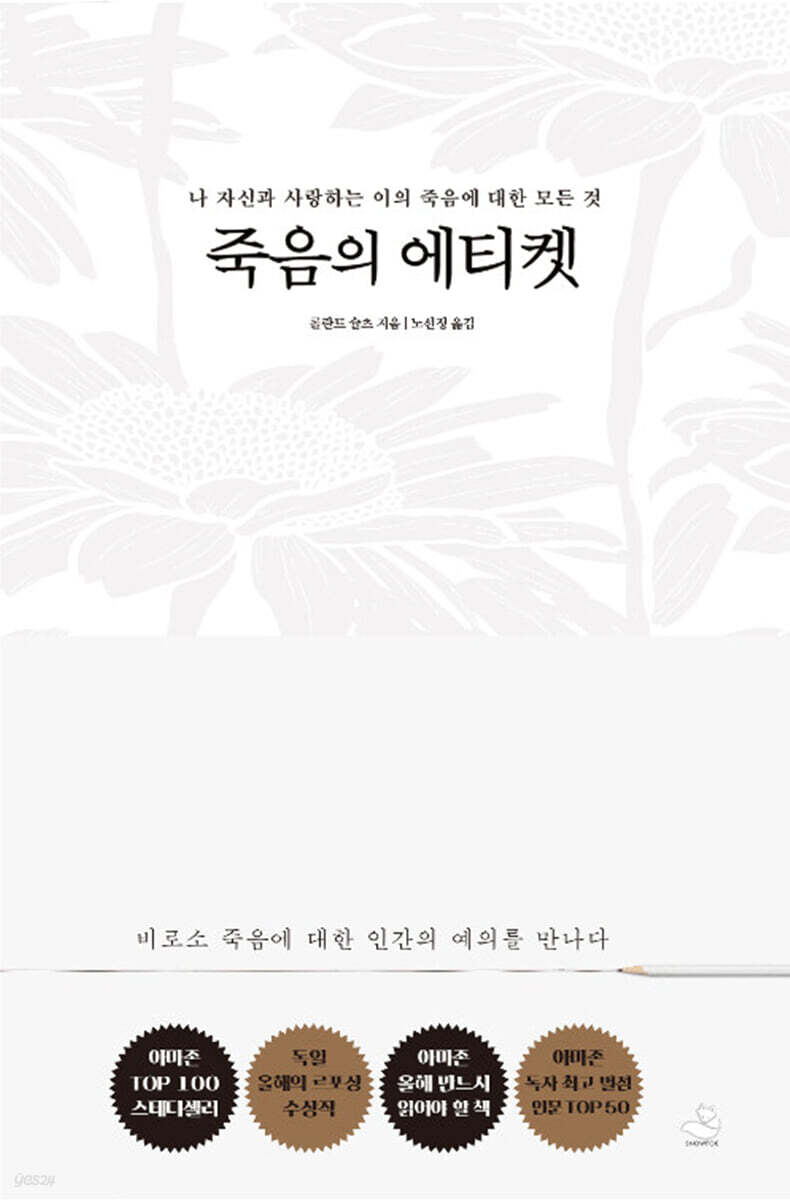
Death Etiquette
 |
Description
Book Introduction
"Death Etiquette" is a unique book designed to allow anyone to indirectly experience the entire process of death.
A death that was never my own, but rather that of a family member, a friend, or someone else. So I don't know about planning or preparing for anything. Most people don't know about death. But death is paired with birth. It is an irreversible law of nature. This book presents the unfolding of each death in four different ways as true stories. A 5-year-old child dying of cancer, a 29-year-old man climbing a building railing to take the shot of his life, an 80-year-old grandmother in a nursing home, and you, surrounded by your family, dying at home. The author has covered the stages of these four people's deaths in great detail. This allows us to recognize how death unfolds in each individual's own unique way, as unique as their own lives. The writing style of the book that the media focused on is that it makes the reader the protagonist of death through the narrative style of 'me and you'. It is designed to be understood not as something we see from the side, but as something we actually experience right in front of us. This writing style is so unique that it sometimes draws the reader into hot tears welling up from the ground, sometimes into the sky for a moment, and sometimes into breathtaking sublimity. This leads the reader to realize the following facts: The full realization that death is something that will actually happen to me. The idea that just as life flows only in my own way, I must also take the initiative in preparing for death. A brilliant will to live today and my life without regrets, from the knowledge that there is an end, that my life is not completely infinite. Plans and goals that have been put on hold, clear reasons to live as a better person. I will love the loved ones I leave behind more passionately today. Each paragraph of the book makes life more splendid from the certainty of death. It also allows them to understand and accept the emotions and small but clear sorrows that those left behind will experience, as something completely natural and normal, not a task or mission to overcome, and thus brings them endless peace. |
- You can preview some of the book's contents.
Preview
index
PART 1 We're all dying, inevitably.
We've all been avoiding the fact that we're all going to die.
It's painful and painful, but it's better for people to leave.
You will hear three types of speech
Anyway, you will die sooner than you wish.
Death will come like this
You won't eat because you'll die
PART 2 Death has finally come
Death, like dying itself, is an uncertain realm.
Your bedside will be quiet
Now it's time to examine your body.
But I can't be sure you're dead yet
A death certificate will be created.
Nothing belongs to you anymore
The body is being transported.
You melt into the paper
All it takes is one code to acknowledge your death
Honoring life in the midst of death is not easy.
And there's your coffin surrounded by lights
In the fire, the outline of your body crumbles away.
PART 3 What should the survivors do?
An emptiness grips those who mourn your death.
The rest of the people are wandering around trying to meet you even a little bit.
A year has passed without you
The priest prays.
From dust to dust we return.
PART 4 There's a backstory for everyone
My Death and Your Death
We've all been avoiding the fact that we're all going to die.
It's painful and painful, but it's better for people to leave.
You will hear three types of speech
Anyway, you will die sooner than you wish.
Death will come like this
You won't eat because you'll die
PART 2 Death has finally come
Death, like dying itself, is an uncertain realm.
Your bedside will be quiet
Now it's time to examine your body.
But I can't be sure you're dead yet
A death certificate will be created.
Nothing belongs to you anymore
The body is being transported.
You melt into the paper
All it takes is one code to acknowledge your death
Honoring life in the midst of death is not easy.
And there's your coffin surrounded by lights
In the fire, the outline of your body crumbles away.
PART 3 What should the survivors do?
An emptiness grips those who mourn your death.
The rest of the people are wandering around trying to meet you even a little bit.
A year has passed without you
The priest prays.
From dust to dust we return.
PART 4 There's a backstory for everyone
My Death and Your Death
Detailed image
.jpg)
Into the book
Everyone pays attention to your breathing.
You take shallow breaths.
Breathing is actually a wonderful thing.
Breathing is something that can be controlled consciously, yet unconsciously.
While you are alive, no one cares, but to someone facing death, nothing is more important than this.
Breathing now takes on a new pattern.
At first it is deep, then it becomes shallow, then it stops, and after holding your breath for a while, you start breathing again with a deep sigh.
They say that hibernating animals breathe like this.
And also dying humans.
You groan and moan while breathing.
It doesn't happen all the time or constantly, but it does happen occasionally.
--- From the text
The fingernails and toenails on your fingers and toes have turned blue, and maybe even your knees, bones, and lips.
It is evidence that blood is not circulating quickly in the body.
Weakness causes the lips to part and the cheeks to become hollow.
Both eyes sink deep into the eye sockets.
The nose is pointed above the open mouth.
The reflex for swallowing food was weakened, causing saliva to pool deep in the mouth.
When you breathe, the air makes a gurgling sound.
It means that the time of death is very near.
--- From the text
About 100 people die every minute.
Nearly 6,500 people die every hour.
150,000 people die every day.
Each has their own story, but they are just dead people.
Everyone dies alone, their death a unique event! This is the paradox of death.
Death is a completely normal process, and there is no phenomenon more universal in the world.
Just as at birth, at the moment of death we go with people chosen by chance.
--- From the text
Here are some things you should know:
If someone is trying to change the body's clothes, now is not the time.
Because the doctor who examined the body hasn't come yet.
It's also a good idea to open the windows.
You should also turn off the heater.
If it's summer, it's a good idea to turn on the fan.
Because the corpse cannot withstand heat well.
--- From the text
If possible, gather some documents.
ID, passport, and medical certificates.
It will help you fill out the death certificate form later, and it will also free up your mind for other things.
The hands of the corpse should not be intertwined.
It is a good idea to place one hand on top of the other.
Other than those things, this time is free time.
You may touch the corpse, caress it, and kiss it.
It doesn't have to be that way though.
--- From the text
So, funeral directors recommend that you have some kind of brief farewell before the body leaves.
There will be another chance, but by then the body will be very different, and you may never see the body again.
That's why that first goodbye is so precious.
--- From the text
Now you shouldn't blindly sign anything.
You can always get a quote first.
Don't hesitate to ask several funeral homes.
If you have placed an order with an unpleasant funeral director, you should not be reluctant to cancel it and have the body returned.
Never be fooled by empty promises.
Claims like that, such as that it should only be done in nursing homes or hospitals that have exclusive contracts with them.
That will never happen.
Choosing a funeral director is always a choice.
--- From the text
Most funeral directors have a lot of documentation.
Here's a checklist of things you need to know for a funeral.
A has all the information and occasionally hands out forms for the bereaved family to review and provide explanations.
He performs the funeral rites of the body in this way.
Some parts go quickly.
We collect the name, date of birth, a few bits of information about the deceased's life, and identification information.
Some things take a long time.
It is clear who will lead the funeral, who has the decision-making authority, and if the relatives agree, who will take on that task.
Person with the right to care for the corpse.
However, when there is conflict or disagreement within the family, the relationship is often unclear.
If you have not made your will clear in advance, the legal authority to decide on the disposition of your body is your spouse, children, and parents, in that order.
--- From the text
Now your body has arrived.
The storage area in the basement, right next to the coffin storage room.
The bodies of the deceased are moved using equipment.
The body is pushed up a slope made of solid teardrop plates.
It is a coffin storage compartment that can hold eight coffins.
It is equipped with a ceiling cooling system with an automatic defrosting function.
--- From the text
All bodies are examined by the morticians.
He comes to your coffin.
External visual inspection.
Check that there are no bumps, scratches, or marks attached to the head as required.
The small form contains a personal note and a notice that a memorial service will be held.
He opens the coffin lid.
Check your face, hands, and limbs.
The mouth is closed, the eyes are closed, and there is no dirt on it.
Confirm that the deceased is in proper condition.
The markings on the teeth are also inspected.
Then we inspect the clothes.
Because plastic fibers are not allowed.
--- From the text
This static.
This empty feeling.
They attack those left behind and coil around them.
The spaces where you breathed, spoke, and laughed are empty.
There is no owner at the desk.
Your voice is not heard.
Your bed is empty.
Can loss be so vivid? Can change be so clearly perceived? The first days and weeks after your death are filled with pain.
Some people scream and vent their emotions.
Some people express their feelings by repeating the same story over and over again,
I lament those feelings.
Some people suppress it and swallow it.
They keep it to themselves, mull it over, and try to find meaning in their feelings.
All of this is natural.
Because everyone has their own way of dealing with grief.
You take shallow breaths.
Breathing is actually a wonderful thing.
Breathing is something that can be controlled consciously, yet unconsciously.
While you are alive, no one cares, but to someone facing death, nothing is more important than this.
Breathing now takes on a new pattern.
At first it is deep, then it becomes shallow, then it stops, and after holding your breath for a while, you start breathing again with a deep sigh.
They say that hibernating animals breathe like this.
And also dying humans.
You groan and moan while breathing.
It doesn't happen all the time or constantly, but it does happen occasionally.
--- From the text
The fingernails and toenails on your fingers and toes have turned blue, and maybe even your knees, bones, and lips.
It is evidence that blood is not circulating quickly in the body.
Weakness causes the lips to part and the cheeks to become hollow.
Both eyes sink deep into the eye sockets.
The nose is pointed above the open mouth.
The reflex for swallowing food was weakened, causing saliva to pool deep in the mouth.
When you breathe, the air makes a gurgling sound.
It means that the time of death is very near.
--- From the text
About 100 people die every minute.
Nearly 6,500 people die every hour.
150,000 people die every day.
Each has their own story, but they are just dead people.
Everyone dies alone, their death a unique event! This is the paradox of death.
Death is a completely normal process, and there is no phenomenon more universal in the world.
Just as at birth, at the moment of death we go with people chosen by chance.
--- From the text
Here are some things you should know:
If someone is trying to change the body's clothes, now is not the time.
Because the doctor who examined the body hasn't come yet.
It's also a good idea to open the windows.
You should also turn off the heater.
If it's summer, it's a good idea to turn on the fan.
Because the corpse cannot withstand heat well.
--- From the text
If possible, gather some documents.
ID, passport, and medical certificates.
It will help you fill out the death certificate form later, and it will also free up your mind for other things.
The hands of the corpse should not be intertwined.
It is a good idea to place one hand on top of the other.
Other than those things, this time is free time.
You may touch the corpse, caress it, and kiss it.
It doesn't have to be that way though.
--- From the text
So, funeral directors recommend that you have some kind of brief farewell before the body leaves.
There will be another chance, but by then the body will be very different, and you may never see the body again.
That's why that first goodbye is so precious.
--- From the text
Now you shouldn't blindly sign anything.
You can always get a quote first.
Don't hesitate to ask several funeral homes.
If you have placed an order with an unpleasant funeral director, you should not be reluctant to cancel it and have the body returned.
Never be fooled by empty promises.
Claims like that, such as that it should only be done in nursing homes or hospitals that have exclusive contracts with them.
That will never happen.
Choosing a funeral director is always a choice.
--- From the text
Most funeral directors have a lot of documentation.
Here's a checklist of things you need to know for a funeral.
A has all the information and occasionally hands out forms for the bereaved family to review and provide explanations.
He performs the funeral rites of the body in this way.
Some parts go quickly.
We collect the name, date of birth, a few bits of information about the deceased's life, and identification information.
Some things take a long time.
It is clear who will lead the funeral, who has the decision-making authority, and if the relatives agree, who will take on that task.
Person with the right to care for the corpse.
However, when there is conflict or disagreement within the family, the relationship is often unclear.
If you have not made your will clear in advance, the legal authority to decide on the disposition of your body is your spouse, children, and parents, in that order.
--- From the text
Now your body has arrived.
The storage area in the basement, right next to the coffin storage room.
The bodies of the deceased are moved using equipment.
The body is pushed up a slope made of solid teardrop plates.
It is a coffin storage compartment that can hold eight coffins.
It is equipped with a ceiling cooling system with an automatic defrosting function.
--- From the text
All bodies are examined by the morticians.
He comes to your coffin.
External visual inspection.
Check that there are no bumps, scratches, or marks attached to the head as required.
The small form contains a personal note and a notice that a memorial service will be held.
He opens the coffin lid.
Check your face, hands, and limbs.
The mouth is closed, the eyes are closed, and there is no dirt on it.
Confirm that the deceased is in proper condition.
The markings on the teeth are also inspected.
Then we inspect the clothes.
Because plastic fibers are not allowed.
--- From the text
This static.
This empty feeling.
They attack those left behind and coil around them.
The spaces where you breathed, spoke, and laughed are empty.
There is no owner at the desk.
Your voice is not heard.
Your bed is empty.
Can loss be so vivid? Can change be so clearly perceived? The first days and weeks after your death are filled with pain.
Some people scream and vent their emotions.
Some people express their feelings by repeating the same story over and over again,
I lament those feelings.
Some people suppress it and swallow it.
They keep it to themselves, mull it over, and try to find meaning in their feelings.
All of this is natural.
Because everyone has their own way of dealing with grief.
--- From the text
Publisher's Review
This book begins with a journey through the real process of death, a journey no one has ever experienced before.
You may not know exactly when you will die, but someday, just a few days before your death, your heart will stop pumping and stop sending blood to your fingertips.
Breathing slows, sensations fade, and the body begins the process of saying goodbye to life.
Dying is as special as your life, as personal and unique as your own.
In fact, death was too far away.
It's always someone else's death, it's never yours.
For this reason, you, like everyone else, have avoided seeing death, which is so certain.
Questions will just start to pop up in your head.
What should I do, why me, and exactly when and how death will come?
Many people who are dying later regret it.
You could have started preparing for death a long time ago.
You probably didn't want to admit it.
“Death? Yes, I know.
I will die someday too.
But is it really necessary to know and prepare for such a depressing and sad event in advance? The problems facing me right now are so complex that I'm already on the verge of death."
But you don't know.
This is precisely why there is a positive paradox of death.
Isn't that paradoxical? Death is everywhere.
In the newspaper every morning, on the TV news every evening, and on the internet all day long.
Human history goes back 8,000 generations, and the number of people who have died on Earth so far is estimated to be around 200 billion.
Now it's your turn.
Yet modern culture has pushed death out of consciousness.
That's why so many people have come to think of death so inappropriately.
But anyway, preparing for death is really important.
What do you want doctors to do?
Or what do you wish you never did?
Mechanical ventilation?
Force feeding?
It is a very difficult task to have to decide such a matter.
Because it involves thinking about your own death in every detail.
What helps at this time is to ask questions about your own life.
What is valuable to you in life?
Are you satisfied?
Do you want to live as long as possible?
Or is quality of life more important than length of life?
How have you dealt with illness or pain so far?
How have you dealt with the deaths of those you've lost so far?
What helped you then?
Can I get help from others?
Are you afraid of being a burden to others?
Why?
These questions reveal the values you have lived by.
Write down your answers to those questions.
Death is old.
From the beginning, death is the fate that befalls all living things.
To prepare for and trust in death is to acknowledge that death is an inevitable fate for humans.
As if my life was only my own way
Death, too, must be entirely my own.
It doesn't matter which side you're on.
The important thing is that you have to think deeply about death once.
You are free to take any precautions.
Because this is your death.
Do you want to put on makeup?
Or do you want a store?
Where would you like to bury your ashes or body?
Do you have any special wishes?
If you could give us the answers to these questions in advance, you would be doing a great service to those you leave behind.
And then your life is finally complete.
So if you want to be sure, you have to do both.
Talk to people around you and write it down.
If you want to be more certain, choose the funeral home yourself.
As soon as possible.
Yes, that's right.
Come visit! While you're still alive, make sure your funeral directors know exactly what to do with your remains.
That is the first step to living as a person with a clear reason: 'My life is finite, so I must live it more brilliantly.'
You can think about death, meditate on it, philosophize about it, and read books about it.
With this, death will soon take all fear away from you.
I will make sure you live without regrets.
You could travel alone.
You were able to manage your money and take your medication.
You could go to the market, cook, wash, clean, and make phone calls.
But that's no longer possible.
You were able to climb the stairs.
I was able to shower, comb my hair and get dressed.
I was able to walk, eat, and get out of bed or a chair.
I was able to go to the bathroom and hold my urine.
Death forces you to let go of every role you've played in your life.
You were a mother and a father.
You were vitality and beauty.
You have been poor and rich, you have been a teacher and a student.
She was a capable woman and a creator.
But death strips man naked.
Until I fully reveal who I am.
Because death calls everything into question.
Life as it was before, no more pain, no more riding a bike, no more working, no more traveling.
You've already gone too far from those things.
All those kisses, all those tears
Things I didn't know the meaning of before
How many dreams have gone unfulfilled, some we never even tried to achieve?
I regret not having the courage to live my own life instead of the life others expected of me.
Or maybe you just regret not working so hard.
I should walk barefoot on the ground more often,
I should have maintained my friendships with my friends a little longer.
I should have lived a little more leisurely,
I should climb the mountain more often.
I should swim across the river more often.
I should have watched the setting sun more often… … .
I could have learned the language of the country where I sailed, sang, or met my first love.
Worry a little less,
But I wish I had lived with more mistakes,
I should travel more often.
I should have hugged more people,
I should have shown my inner feelings a little more,
I will always take their side,
I wish I had been happier in life... ...and that's what I said.
Let's ask ourselves some questions to reflect on our own lives.
What is really important in my life?
When in your life have you felt the most energetic?
What are you proud of?
What didn't you do?
What hopes and wishes do you have for the people you leave behind?
What advice would you like to give?
Questions like, "What do you want people to remember about you for a long time?"
Actually, realizing that you have to die now isn't a very good thing.
What's worse is realizing that you have to die even though you haven't lived yet.
Then, the suppressed conflicts, broken relationships, missed opportunities, broken promises, and wasted years are often more painful.
It is the pain of questioning why there is death, why me of all people, what awaits me after death, and whether there really is such a thing as death.
that's right.
Who else but yourself can decide the end of your life?
It is very difficult to judge.
Is there such a thing as a free death? If you must finish something, do it now.
Saying things like, 'I forgive you, I'm sorry, I love you, thank you, take care.'
Death is never beautiful.
Death is difficult and painful.
But death is a part of life.
It is not easy for either the dying or the living to admit that.
Being human includes suffering and pain.
You will die alone.
As if I had been breathing alone, as if I had been dreaming alone.
Death will come like this.
The body becomes desolate.
All my strength drained away.
A flat butt will wear a diaper.
My weakened body keeps making me sleepy.
More and more often, longer and longer.
Everything is so hard.
Most people breathe through their mouths, so the mucous membranes in their mouths become so dry that it is difficult to even swallow saliva.
My throat feels dry like shards of glass and my tongue sticks to my throat.
Now that the candle has been blown out and there is no longer any drag.
You may experience severe anxiety during the last few days.
Maybe you'll tear the bed sheets or take off all your clothes.
Some people jump up and try to leave, while others just tear off everything that covers them.
Among them, common gestures include grasping or reaching out into the air.
Some terminally ill patients, especially those who have not yet accepted that they are dying, express themselves indirectly through symbols.
For example, a woman suddenly asks for walking boots.
Some men are worried that they will miss the train.
Others pack their bags and ask for a coat, or, on their deathbeds, muster up all their strength to order a world travel book.
Sometimes people seem to come back to life for a moment just before they die.
Everyone was surprised.
A young woman who has been dying for several days now sings as if nothing had happened.
A child who has been unconscious for a long time regains consciousness and tells his parents that he will soon die.
Some grandfathers wake up from comas to ask about their grandchildren and tell jokes.
But soon, as suddenly as I woke up, I found it difficult to raise my eyelashes again.
The woman who was singing stops singing and the child falls into a coma.
Grandpa will soon faint.
As suddenly as I woke up.
This is the fundamental problem with the topic of death.
They cannot speak, judge, or think about this process of death themselves, and it is always just a guess made by outsiders who observe them.
Your face is shocking.
This is even more shocking in modern society, where death is not a natural part of life, but rather a consequence of living life incorrectly.
This is the modern society's view that youth and aging are not natural physical processes but rather result from mental attitudes.
Now we must abandon the idea that death is something bad that we must fear, be sad about, or ignore.
Again, because death is as certain as birth, and therefore the only certain thing that leads us, you, and me, to a clearer reason to make this life more splendid, more luminous, and more happy.
※ Amazon TOP 100 Steady Seller
※ Translations to be published in 15 countries
※ Winner of the German Reportage of the Year Award
※ Amazon's must-read books of the year
※ Highly recommended by leading German media outlets Der Spiegel, FAZ, and DPA
※ Winner of the German Journalism Award
※ Amazon Readers' Choice Best Nonfiction Book!
※ Amazon Readers' Top 50 Humanities Books
You may not know exactly when you will die, but someday, just a few days before your death, your heart will stop pumping and stop sending blood to your fingertips.
Breathing slows, sensations fade, and the body begins the process of saying goodbye to life.
Dying is as special as your life, as personal and unique as your own.
In fact, death was too far away.
It's always someone else's death, it's never yours.
For this reason, you, like everyone else, have avoided seeing death, which is so certain.
Questions will just start to pop up in your head.
What should I do, why me, and exactly when and how death will come?
Many people who are dying later regret it.
You could have started preparing for death a long time ago.
You probably didn't want to admit it.
“Death? Yes, I know.
I will die someday too.
But is it really necessary to know and prepare for such a depressing and sad event in advance? The problems facing me right now are so complex that I'm already on the verge of death."
But you don't know.
This is precisely why there is a positive paradox of death.
Isn't that paradoxical? Death is everywhere.
In the newspaper every morning, on the TV news every evening, and on the internet all day long.
Human history goes back 8,000 generations, and the number of people who have died on Earth so far is estimated to be around 200 billion.
Now it's your turn.
Yet modern culture has pushed death out of consciousness.
That's why so many people have come to think of death so inappropriately.
But anyway, preparing for death is really important.
What do you want doctors to do?
Or what do you wish you never did?
Mechanical ventilation?
Force feeding?
It is a very difficult task to have to decide such a matter.
Because it involves thinking about your own death in every detail.
What helps at this time is to ask questions about your own life.
What is valuable to you in life?
Are you satisfied?
Do you want to live as long as possible?
Or is quality of life more important than length of life?
How have you dealt with illness or pain so far?
How have you dealt with the deaths of those you've lost so far?
What helped you then?
Can I get help from others?
Are you afraid of being a burden to others?
Why?
These questions reveal the values you have lived by.
Write down your answers to those questions.
Death is old.
From the beginning, death is the fate that befalls all living things.
To prepare for and trust in death is to acknowledge that death is an inevitable fate for humans.
As if my life was only my own way
Death, too, must be entirely my own.
It doesn't matter which side you're on.
The important thing is that you have to think deeply about death once.
You are free to take any precautions.
Because this is your death.
Do you want to put on makeup?
Or do you want a store?
Where would you like to bury your ashes or body?
Do you have any special wishes?
If you could give us the answers to these questions in advance, you would be doing a great service to those you leave behind.
And then your life is finally complete.
So if you want to be sure, you have to do both.
Talk to people around you and write it down.
If you want to be more certain, choose the funeral home yourself.
As soon as possible.
Yes, that's right.
Come visit! While you're still alive, make sure your funeral directors know exactly what to do with your remains.
That is the first step to living as a person with a clear reason: 'My life is finite, so I must live it more brilliantly.'
You can think about death, meditate on it, philosophize about it, and read books about it.
With this, death will soon take all fear away from you.
I will make sure you live without regrets.
You could travel alone.
You were able to manage your money and take your medication.
You could go to the market, cook, wash, clean, and make phone calls.
But that's no longer possible.
You were able to climb the stairs.
I was able to shower, comb my hair and get dressed.
I was able to walk, eat, and get out of bed or a chair.
I was able to go to the bathroom and hold my urine.
Death forces you to let go of every role you've played in your life.
You were a mother and a father.
You were vitality and beauty.
You have been poor and rich, you have been a teacher and a student.
She was a capable woman and a creator.
But death strips man naked.
Until I fully reveal who I am.
Because death calls everything into question.
Life as it was before, no more pain, no more riding a bike, no more working, no more traveling.
You've already gone too far from those things.
All those kisses, all those tears
Things I didn't know the meaning of before
How many dreams have gone unfulfilled, some we never even tried to achieve?
I regret not having the courage to live my own life instead of the life others expected of me.
Or maybe you just regret not working so hard.
I should walk barefoot on the ground more often,
I should have maintained my friendships with my friends a little longer.
I should have lived a little more leisurely,
I should climb the mountain more often.
I should swim across the river more often.
I should have watched the setting sun more often… … .
I could have learned the language of the country where I sailed, sang, or met my first love.
Worry a little less,
But I wish I had lived with more mistakes,
I should travel more often.
I should have hugged more people,
I should have shown my inner feelings a little more,
I will always take their side,
I wish I had been happier in life... ...and that's what I said.
Let's ask ourselves some questions to reflect on our own lives.
What is really important in my life?
When in your life have you felt the most energetic?
What are you proud of?
What didn't you do?
What hopes and wishes do you have for the people you leave behind?
What advice would you like to give?
Questions like, "What do you want people to remember about you for a long time?"
Actually, realizing that you have to die now isn't a very good thing.
What's worse is realizing that you have to die even though you haven't lived yet.
Then, the suppressed conflicts, broken relationships, missed opportunities, broken promises, and wasted years are often more painful.
It is the pain of questioning why there is death, why me of all people, what awaits me after death, and whether there really is such a thing as death.
that's right.
Who else but yourself can decide the end of your life?
It is very difficult to judge.
Is there such a thing as a free death? If you must finish something, do it now.
Saying things like, 'I forgive you, I'm sorry, I love you, thank you, take care.'
Death is never beautiful.
Death is difficult and painful.
But death is a part of life.
It is not easy for either the dying or the living to admit that.
Being human includes suffering and pain.
You will die alone.
As if I had been breathing alone, as if I had been dreaming alone.
Death will come like this.
The body becomes desolate.
All my strength drained away.
A flat butt will wear a diaper.
My weakened body keeps making me sleepy.
More and more often, longer and longer.
Everything is so hard.
Most people breathe through their mouths, so the mucous membranes in their mouths become so dry that it is difficult to even swallow saliva.
My throat feels dry like shards of glass and my tongue sticks to my throat.
Now that the candle has been blown out and there is no longer any drag.
You may experience severe anxiety during the last few days.
Maybe you'll tear the bed sheets or take off all your clothes.
Some people jump up and try to leave, while others just tear off everything that covers them.
Among them, common gestures include grasping or reaching out into the air.
Some terminally ill patients, especially those who have not yet accepted that they are dying, express themselves indirectly through symbols.
For example, a woman suddenly asks for walking boots.
Some men are worried that they will miss the train.
Others pack their bags and ask for a coat, or, on their deathbeds, muster up all their strength to order a world travel book.
Sometimes people seem to come back to life for a moment just before they die.
Everyone was surprised.
A young woman who has been dying for several days now sings as if nothing had happened.
A child who has been unconscious for a long time regains consciousness and tells his parents that he will soon die.
Some grandfathers wake up from comas to ask about their grandchildren and tell jokes.
But soon, as suddenly as I woke up, I found it difficult to raise my eyelashes again.
The woman who was singing stops singing and the child falls into a coma.
Grandpa will soon faint.
As suddenly as I woke up.
This is the fundamental problem with the topic of death.
They cannot speak, judge, or think about this process of death themselves, and it is always just a guess made by outsiders who observe them.
Your face is shocking.
This is even more shocking in modern society, where death is not a natural part of life, but rather a consequence of living life incorrectly.
This is the modern society's view that youth and aging are not natural physical processes but rather result from mental attitudes.
Now we must abandon the idea that death is something bad that we must fear, be sad about, or ignore.
Again, because death is as certain as birth, and therefore the only certain thing that leads us, you, and me, to a clearer reason to make this life more splendid, more luminous, and more happy.
※ Amazon TOP 100 Steady Seller
※ Translations to be published in 15 countries
※ Winner of the German Reportage of the Year Award
※ Amazon's must-read books of the year
※ Highly recommended by leading German media outlets Der Spiegel, FAZ, and DPA
※ Winner of the German Journalism Award
※ Amazon Readers' Choice Best Nonfiction Book!
※ Amazon Readers' Top 50 Humanities Books
GOODS SPECIFICS
- Date of issue: September 16, 2019
- Page count, weight, size: 255 pages | 424g | 137*210*22mm
- ISBN13: 9791188331741
- ISBN10: 1188331744
You may also like
카테고리
korean


korean

![GQ KOREA Mark (Monthly): December [2025]](http://librairie.coreenne.fr/cdn/shop/files/8ef265dbbfbf186523ed75ba7319009d.jpg?v=1765340328&width=3840)


