

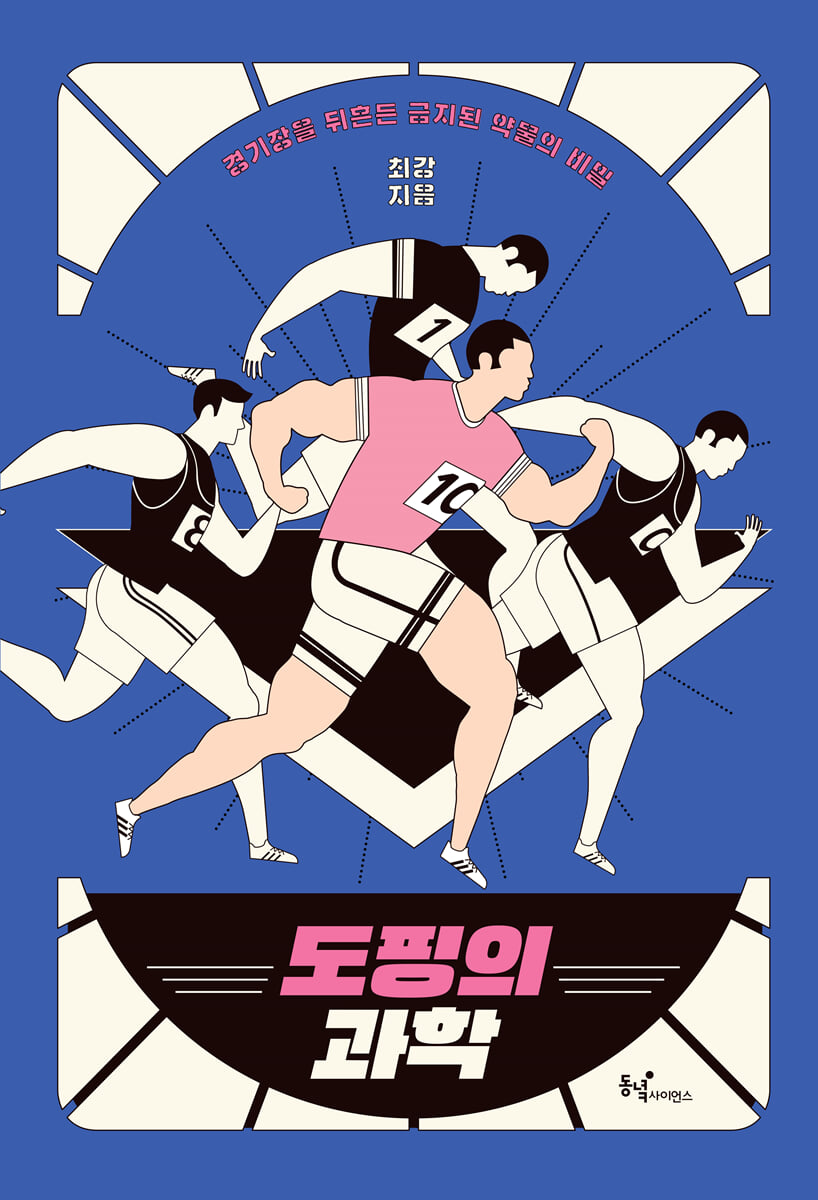
The Science of Doping
 |
Description
Book Introduction
- A word from MD
- Doping, if discovered, can lead to the loss of records, medals, trust and reputation.
But why do athletes risk everything they've built to take drugs? This fascinating story delves into sports history, from the rise of doping to the secrets we never knew.
Furthermore, there are many topics worth paying attention to, such as discussions about transgender athletes.
- Natural Science MD Kim Joo-ri
Why do athletes suffer from the forbidden temptation of doping?
Can you really become strong if you are 'weak'?
Doping is clearly prohibited under sports regulations.
Doping, which is considered an 'illegal method' that goes against sportsmanship, can also harm the body and mind of those who take the drug.
Additionally, if doping is discovered, the athlete loses credibility, reputation, and all of his or her records.
But why do athletes risk getting caught using drugs? Do drugs really enhance performance? How do performance-enhancing drugs affect the body, and what exactly do they do to athletes?
In fact, we don't know much about doping.
Written by a sports-loving psychiatrist, this book delves into the secrets of doping, something we vaguely thought of as a "bad thing" or "illegal."
We take a look at the history of doping to see when athletes began using drugs to enhance their performance, and scientifically explain how drugs work on athletes' bodies to produce their effects.
The fascinating doping scandals involving shining sports stars are a bonus.
Anyone who laughs and cries during fleeting moments of a sports match will find themselves drawn into this book, delving into the science of doping, the blood, sweat, and tears of athletes.
Can you really become strong if you are 'weak'?
Doping is clearly prohibited under sports regulations.
Doping, which is considered an 'illegal method' that goes against sportsmanship, can also harm the body and mind of those who take the drug.
Additionally, if doping is discovered, the athlete loses credibility, reputation, and all of his or her records.
But why do athletes risk getting caught using drugs? Do drugs really enhance performance? How do performance-enhancing drugs affect the body, and what exactly do they do to athletes?
In fact, we don't know much about doping.
Written by a sports-loving psychiatrist, this book delves into the secrets of doping, something we vaguely thought of as a "bad thing" or "illegal."
We take a look at the history of doping to see when athletes began using drugs to enhance their performance, and scientifically explain how drugs work on athletes' bodies to produce their effects.
The fascinating doping scandals involving shining sports stars are a bonus.
Anyone who laughs and cries during fleeting moments of a sports match will find themselves drawn into this book, delving into the science of doping, the blood, sweat, and tears of athletes.
- You can preview some of the book's contents.
Preview
index
Prologue: The Drugs That Changed Sports History
Part 1: Clear Mind
Do Drugs Enhance Performance? - Cocaine and Stimulants
The Link Between ADHD and Doping: Amphetamines and Neurodoping
Gold Medals Traded for Cold Medicine - Ephedrine and Clenbuterol
If used well, it's a firework, if used poorly, it's a misfire - propranolol and beta-blockers
Part 2: Strong Muscles
Steroids: A Cold War Product That Changed Sports History
The Secrets of Building Bulky Muscle - Anabolic and Masculinizing Steroids
Runaway Player, Chasing Inspector - Designer Steroids
Can Skills Grow Like Height? - Growth Hormone
Part 3: The Power to Endure
The Allure of Oxygen-Sparse High Altitudes - Altitude Training
The Secret of Victory Soiled in Blood - Blood Doping
Running Between a New World and a Heart Attack - EPO
Part 4 Useful Tools
Are Swimsuits Clothing or Tools? - Swimsuits and Technological Doping
Injustice Created by Science and Technology - Bicycle and Machine Doping
Blade Runner's Rise and Fall - Assistive Devices for Disabled Athletes
Is surgery doping? - Tommy John surgery
Part 5: Complex Gender
Is that player male or female? - A player of ambiguous gender
Transgender Athlete Enters the Arena - Athletes Who Changed Their Gender
Epilogue: And the sport goes on
main
Drug Index
Part 1: Clear Mind
Do Drugs Enhance Performance? - Cocaine and Stimulants
The Link Between ADHD and Doping: Amphetamines and Neurodoping
Gold Medals Traded for Cold Medicine - Ephedrine and Clenbuterol
If used well, it's a firework, if used poorly, it's a misfire - propranolol and beta-blockers
Part 2: Strong Muscles
Steroids: A Cold War Product That Changed Sports History
The Secrets of Building Bulky Muscle - Anabolic and Masculinizing Steroids
Runaway Player, Chasing Inspector - Designer Steroids
Can Skills Grow Like Height? - Growth Hormone
Part 3: The Power to Endure
The Allure of Oxygen-Sparse High Altitudes - Altitude Training
The Secret of Victory Soiled in Blood - Blood Doping
Running Between a New World and a Heart Attack - EPO
Part 4 Useful Tools
Are Swimsuits Clothing or Tools? - Swimsuits and Technological Doping
Injustice Created by Science and Technology - Bicycle and Machine Doping
Blade Runner's Rise and Fall - Assistive Devices for Disabled Athletes
Is surgery doping? - Tommy John surgery
Part 5: Complex Gender
Is that player male or female? - A player of ambiguous gender
Transgender Athlete Enters the Arena - Athletes Who Changed Their Gender
Epilogue: And the sport goes on
main
Drug Index
Into the book
Historian Edward Carr defined history as “a conversation between the past and the present.”
The same goes for doping.
In just over a century, its nature has shifted from being a target of encouragement to push the human body beyond its limits, to a propaganda tool to demonstrate the superiority of political systems in international competitions, and then to an object of expulsion that harms the health of individual athletes and undermines the fairness of sports.
Examining how athletes took drugs, how sports organizations conducted drug testing, and how the doping and anti-doping movement evolved as science and technology advanced goes beyond simply retracing the history of doping.
By looking back at the past, we can predict and prepare for how the sports world will evolve in the future.
Furthermore, because discussions about doping reflect the medicine, science, culture, and ethics of each era, it is possible to read the changes in society as a whole.
--- p.9~10, from “Prologue”
The positive anecdotes and early research findings associated with cocaine were far from the truth.
In particular, there was little evidence that cocaine stimulated metabolism sufficiently to affect exercise performance physiologically.
But why do players continue to share "I tried it and it was good" messages? It could be due to the elevated mood and clearer thinking induced by cocaine.
When you practice, it becomes easier to acquire skills, and when you play, you become full of confidence, so you mistakenly feel like your performance has improved even though it has not.
--- p.21, from “Do Drugs Improve Athletic Performance?”
American Rick Demont is one of the athletes who became famous for ephedrine doping.
At the age of 16, he competed in the 1972 Munich Olympics in Germany and won the men's 400-meter freestyle with a time of 4 minutes 0.26 seconds.
However, she was stripped of her gold medal three days later after a urine test revealed ephedrine.
Demon was very wronged.
He had suffered from asthma since childhood and took three asthma medications called Marax early in the morning on the day of the 400m race to relieve his wheezing symptoms, and he told the team doctor about this.
However, the team doctor's failure to properly convey this fact to the doping control officer was the root of the problem.
--- p.54, from “A Gold Medal Traded for Cold Medicine”
The AAS secretly administered to athletes by the East German government was effective in building muscle and increasing strength, but there was one big problem.
As the name suggests, it has both anabolic and masculinizing effects.
The female players' voices became as deep as men's, and their entire bodies became covered in hair and acne.
East German medical and sports officials recognized the side effects of masculinization, but because the benefits of doping were so great, they ignored or ignored them.
When people pointed out the deep voices of East German female athletes at the 1976 Montreal Olympics, the coach simply retorted:
“We came to swim, not to sing.”
--- p.100, from “The Cold War’s Products That Changed Sports History”
Ben Johnson started taking steroids in 1981.
His coach at the time, Charlie Francis, had long been one of those who had been critical of East Germany's approach to player support and management.
He secretly introduced drugs, along with the latest training methods, massage, and physical therapy, to elevate the skills of the players he coached.
In 1981, he encouraged Johnson, now an adult, to use steroids.
Even though the benefit gained from drugs was only 1% of the performance, I knew that at the elite level, such a small difference in skill could determine the outcome.
Already aware of the prevalence of steroids in the athletics world and how they could improve performance, Johnson began taking the drug a few days later without much thought.
--- p.108, from “The Back Alleys of Building Bulky Muscles”
The sudden change in his physique and his skills that defied common sense led to widespread suspicion that Bonds had taken a series of drugs such as AAS.
But there was no way to confirm.
At the time, American professional baseball was far removed from the international atmosphere where anti-doping movements were growing stronger.
Although AAS was added to the list of banned substances in 1991, it was not tested effectively until 2004.
And even if a doping test had been conducted, Bonds might not have been caught and would have been exonerated, which would have made him even more confident.
This is because the drug he was taking was a new type of AAS that had never existed before.
--- p.125, from “The Runaway Player, the Pursuing Inspector”
EPO, which increases red blood cell production in the bone marrow, has attracted much attention from exercise physiology researchers since its introduction.
Professor Björn Ekblom of Sweden, who first discovered the effects of blood transfusions on improving endurance, was one of them.
He injected EPO into 15 men and looked at their maximal oxygen uptake.
After a few weeks, their VO2max increased by about 10 percent.
In a 1990 interview, he described the changes in athletic ability seen in participants:
“It’s like starting 10 meters ahead in a 100-meter race.”
--- p.192~193, from “Running Between the New World and a Heart Attack”
The appearance of athletes wearing black shark-like swimsuits was a symbolic scene that showed that the latest science and technology were penetrating even swimming, which has relatively simple rules compared to other sports.
However, some have raised concerns about the negative impact high-tech swimsuits could have on the ethics, integrity, and purity of sports.
In April 2000, Professor Brent Russell of the United States expressed his concerns in a document sent to the Court of Arbitration for Sport.
“In the past, only the player’s skill determined the game, but now both skill and equipment can make all the difference.
(…) the gold medal may not go to the best athlete who has practiced the most, but to the athlete wearing the swimsuit that enhances performance the most.”
--- p.215~216, from "Is a swimsuit a costume or a tool?"
“If Mike Tyson wanted to wear a skirt in the women’s hammer throw competition, would that be OK?” asked an attendee at a bioethics conference held at the University of Wisconsin in 2014.
It was a playful question meant to spark a lively exchange of ideas, but it also addressed common questions about gender transition, especially for athletes who have changed their gender from male to female.
Should Tiffany Abreu, Joanna Harper and Christine Worley, who were once men, be allowed to compete in women's competitions without any restrictions because they had hormone replacement therapy and sex reassignment surgery?
--- p.308, from “Transgender Athletes Appear on the Stadium”
Sports is essentially a world of winner-takes-all, as the title of the ABBA song suggests.
Have you ever heard of Laszlo Cech? He won silver medals in three swimming events at the 2008 Beijing Olympics.
The difference in their records with the top-ranked athletes in their respective events was only 0.6%, 1.7%, and 1.0%, respectively.
But people know Michael Phelps but don't remember him.
Even though Laszlo was the second fastest swimmer in the world at the time.
Top-level athletes, whose skills are just a hair's breadth apart, cannot help but be tempted by doping.
Even if you can make a small difference in your performance with the help of drugs or tools, the results you get back can be very different.
The same goes for doping.
In just over a century, its nature has shifted from being a target of encouragement to push the human body beyond its limits, to a propaganda tool to demonstrate the superiority of political systems in international competitions, and then to an object of expulsion that harms the health of individual athletes and undermines the fairness of sports.
Examining how athletes took drugs, how sports organizations conducted drug testing, and how the doping and anti-doping movement evolved as science and technology advanced goes beyond simply retracing the history of doping.
By looking back at the past, we can predict and prepare for how the sports world will evolve in the future.
Furthermore, because discussions about doping reflect the medicine, science, culture, and ethics of each era, it is possible to read the changes in society as a whole.
--- p.9~10, from “Prologue”
The positive anecdotes and early research findings associated with cocaine were far from the truth.
In particular, there was little evidence that cocaine stimulated metabolism sufficiently to affect exercise performance physiologically.
But why do players continue to share "I tried it and it was good" messages? It could be due to the elevated mood and clearer thinking induced by cocaine.
When you practice, it becomes easier to acquire skills, and when you play, you become full of confidence, so you mistakenly feel like your performance has improved even though it has not.
--- p.21, from “Do Drugs Improve Athletic Performance?”
American Rick Demont is one of the athletes who became famous for ephedrine doping.
At the age of 16, he competed in the 1972 Munich Olympics in Germany and won the men's 400-meter freestyle with a time of 4 minutes 0.26 seconds.
However, she was stripped of her gold medal three days later after a urine test revealed ephedrine.
Demon was very wronged.
He had suffered from asthma since childhood and took three asthma medications called Marax early in the morning on the day of the 400m race to relieve his wheezing symptoms, and he told the team doctor about this.
However, the team doctor's failure to properly convey this fact to the doping control officer was the root of the problem.
--- p.54, from “A Gold Medal Traded for Cold Medicine”
The AAS secretly administered to athletes by the East German government was effective in building muscle and increasing strength, but there was one big problem.
As the name suggests, it has both anabolic and masculinizing effects.
The female players' voices became as deep as men's, and their entire bodies became covered in hair and acne.
East German medical and sports officials recognized the side effects of masculinization, but because the benefits of doping were so great, they ignored or ignored them.
When people pointed out the deep voices of East German female athletes at the 1976 Montreal Olympics, the coach simply retorted:
“We came to swim, not to sing.”
--- p.100, from “The Cold War’s Products That Changed Sports History”
Ben Johnson started taking steroids in 1981.
His coach at the time, Charlie Francis, had long been one of those who had been critical of East Germany's approach to player support and management.
He secretly introduced drugs, along with the latest training methods, massage, and physical therapy, to elevate the skills of the players he coached.
In 1981, he encouraged Johnson, now an adult, to use steroids.
Even though the benefit gained from drugs was only 1% of the performance, I knew that at the elite level, such a small difference in skill could determine the outcome.
Already aware of the prevalence of steroids in the athletics world and how they could improve performance, Johnson began taking the drug a few days later without much thought.
--- p.108, from “The Back Alleys of Building Bulky Muscles”
The sudden change in his physique and his skills that defied common sense led to widespread suspicion that Bonds had taken a series of drugs such as AAS.
But there was no way to confirm.
At the time, American professional baseball was far removed from the international atmosphere where anti-doping movements were growing stronger.
Although AAS was added to the list of banned substances in 1991, it was not tested effectively until 2004.
And even if a doping test had been conducted, Bonds might not have been caught and would have been exonerated, which would have made him even more confident.
This is because the drug he was taking was a new type of AAS that had never existed before.
--- p.125, from “The Runaway Player, the Pursuing Inspector”
EPO, which increases red blood cell production in the bone marrow, has attracted much attention from exercise physiology researchers since its introduction.
Professor Björn Ekblom of Sweden, who first discovered the effects of blood transfusions on improving endurance, was one of them.
He injected EPO into 15 men and looked at their maximal oxygen uptake.
After a few weeks, their VO2max increased by about 10 percent.
In a 1990 interview, he described the changes in athletic ability seen in participants:
“It’s like starting 10 meters ahead in a 100-meter race.”
--- p.192~193, from “Running Between the New World and a Heart Attack”
The appearance of athletes wearing black shark-like swimsuits was a symbolic scene that showed that the latest science and technology were penetrating even swimming, which has relatively simple rules compared to other sports.
However, some have raised concerns about the negative impact high-tech swimsuits could have on the ethics, integrity, and purity of sports.
In April 2000, Professor Brent Russell of the United States expressed his concerns in a document sent to the Court of Arbitration for Sport.
“In the past, only the player’s skill determined the game, but now both skill and equipment can make all the difference.
(…) the gold medal may not go to the best athlete who has practiced the most, but to the athlete wearing the swimsuit that enhances performance the most.”
--- p.215~216, from "Is a swimsuit a costume or a tool?"
“If Mike Tyson wanted to wear a skirt in the women’s hammer throw competition, would that be OK?” asked an attendee at a bioethics conference held at the University of Wisconsin in 2014.
It was a playful question meant to spark a lively exchange of ideas, but it also addressed common questions about gender transition, especially for athletes who have changed their gender from male to female.
Should Tiffany Abreu, Joanna Harper and Christine Worley, who were once men, be allowed to compete in women's competitions without any restrictions because they had hormone replacement therapy and sex reassignment surgery?
--- p.308, from “Transgender Athletes Appear on the Stadium”
Sports is essentially a world of winner-takes-all, as the title of the ABBA song suggests.
Have you ever heard of Laszlo Cech? He won silver medals in three swimming events at the 2008 Beijing Olympics.
The difference in their records with the top-ranked athletes in their respective events was only 0.6%, 1.7%, and 1.0%, respectively.
But people know Michael Phelps but don't remember him.
Even though Laszlo was the second fastest swimmer in the world at the time.
Top-level athletes, whose skills are just a hair's breadth apart, cannot help but be tempted by doping.
Even if you can make a small difference in your performance with the help of drugs or tools, the results you get back can be very different.
--- p.313, from “And the Sports Go On”
Publisher's Review
The world was shocked when Ben Johnson, who had set a world record in the men's 100-meter dash at the 1988 Seoul Olympics, was stripped of his gold medal after testing positive for a banned substance.
Not only Ben Johnson, but six of the eight men who ran with him were not free from doping suspicions, and the men's 100-meter dash at the 1988 Olympics is also called the 'dirtiest race in history'.
The incident in which Marine Boy Park Tae-hwan tested positive for testosterone in a doping test in 2015 also left a huge shock on us.
Park Tae-hwan explained that he was unaware that the injection recommended by his doctor contained a banned substance, but was suspended for 18 months in accordance with the principle.
Afterwards, when the Korea Sports Council changed the rule that "athletes who doped cannot be national representatives for three years" and allowed him to compete in the 2016 Rio de Janeiro Olympics, controversy arose over unfairness.
Chinese gold medalist swimmer Sun Yang has been banned for more than four years for allegedly obstructing a doping test, preventing him from competing in the 2021 Tokyo Olympics.
Sun Yang, who has long been suspected of doping, refused to undergo testing, breaking a vial containing a blood sample and destroying the report.
Doping is clearly prohibited under sports regulations.
Doping, which is considered an 'illegal method' that goes against sportsmanship, can also harm the body and mind of those who take the drug.
Additionally, if doping is discovered, the athlete loses credibility, reputation, and all of his or her records.
But why do athletes risk getting caught using drugs? Do drugs really enhance performance? How do performance-enhancing drugs affect the body, and what exactly do they do to athletes? The truth is, we don't know much about doping.
Written by a sports-loving psychiatrist, this book delves into the secrets of doping, something we vaguely thought of as a "bad thing" or "illegal."
We take a look at the history of doping to see when athletes began using drugs to enhance their performance, and scientifically explain how drugs work on athletes' bodies to produce their effects.
The fascinating doping scandals involving shining sports stars are a bonus.
Anyone who laughs and cries during fleeting moments of a sports match will find themselves drawn into this book, delving into the science of doping, the blood, sweat, and tears of athletes.
If used well, it is medicine, but if used wrongly, it is doping!
The unfortunate story of a gold medal being canceled because of a single cold medicine?
The tearful sports history we didn't know about
When did the concept of "doping" first appear in sports history? Surprisingly, just over a century ago, using drugs to enhance performance wasn't considered a problem at all.
However, as sports gradually evolved from pure amateurism (an attitude that regards sports as an activity to enjoy rather than a means of making a living) to a field of fierce competition, the number of athletes who took drugs to the point of harming their health increased, and anti-doping movements by sports organizations began in earnest.
When we think of the word "doping," we first think of illegal drugs traded in the dark world, but performance-enhancing drugs are also "drugs," and there are many cases where the line between medical prescriptions and doping is blurred.
Some drugs, if detected in athletes, result in doping penalties, but are also routinely prescribed in hospitals and pharmacies.
While some athletes intentionally doped to improve their performance, others were unfairly judged to have done so as anti-doping regulations were being established.
In particular, ephedrine, an ingredient widely used in cold medicines and allergy and asthma medications, has caused many victims.
In the 1972 Munich Olympics, swimmer Rick Demont was caught doping after testing positive for ephedrine while taking asthma medication, and in 2000, Romanian gymnast Andrea Raducan was stripped of his gold medal after exceeding the ephedrine limit in his blood after taking a single cold medicine due to his small frame of 37 kilograms.
In our country, the dual medical structure between Western medicine and Oriental medicine has resulted in unfair damages.
In 2017, Lim Seok-jin of the SK Wyverns, a professional baseball team in Korea, accidentally took a herbal medicine containing the medicinal herb Ma-Hwang, and was detected with ephedrine during a doping test.
This book reveals the sad reality of athletes who must be careful about even cold medicine and herbal medicine to avoid doping, and it peels back the layers of the word "doping" and reveals the objective facts about drugs.
During the Cold War, there was a national doping project?
The Secrets of Athletes Who Cleverly Avoided Doping Tests
What is true sportsmanship and fair competition?
After World War II, when the democratic and communist blocs engaged in a fierce but quiet competition, the United States and the Soviet Union wanted to use sports to promote their respective systems and show off their superiority over the other.
During this period, doping of athletes was planned at the national level.
The country that led the way in state-sponsored doping during the Cold War was East Germany.
At the time, East Germany was struggling with economic recession after its division and was unable to achieve democracy. It was focused on achieving success in international sports competitions to restore its national pride.
East German sports leaders gave athletes anabolic androgenic steroids, or AAS, which they said were vitamins.
The drug's effectiveness was so outstanding that it won 40 gold medals at the 1976 Montreal Olympics, but its side effects were also considerable.
Female athletes have experienced deepening voices and facial hair due to the influence of male hormones, and have even undergone sex reassignment surgery due to gender identity confusion.
After German reunification, the leaders who arranged the doping were tried by the German Supreme Court on charges of causing physical harm to athletes.
But East Germany's state-sponsored doping continues to be secretly replicated around the world.
The thrilling story of the chase between the inspector trying to catch doping and the athlete trying desperately to avoid testing adds to the enjoyment of reading this book.
Among the athletes who cleverly practiced doping were some sports stars we are familiar with.
Barry Bonds, the legendary American professional baseball hitter, discovered and used steroids that were unknown to the world and evaded doping tests like a loach.
Bonds took advantage of a loophole in the testing system in place at the time to use AAS injections and topical steroid creams simultaneously, and even used female hormones to conceal his doping.
Lance Armstrong, the cycling hero who won the Tour de France (a world-class cycling race across France) seven times in a row, was actually the embodiment of EPO (erythropoietin) doping.
EPO, which increases the amount of red blood cells and improves oxygen uptake, is a substance that is naturally produced in the human body, so it was not easy to detect.
To avoid being caught doping, Armstrong made his teammates accomplices and even bribed higher-ups.
As you follow the book's outrageous doping cases, you'll be amazed at the persistence of athletes and coaches who try to improve their skills by avoiding testing.
The fierce battle of wits between inspectors who develop technologies to detect banned substances and catch doping one step ahead is truly admirable.
Also, looking at the reality of the sports world where doping is still rampant, I feel bitter.
This book exposes a dark side of the sports world that we have never known before, and makes us ponder what true sportsmanship and fair competition are.
Are swimmers' swimsuits and cyclists' bicycles doping?
How should we accept athletes with disabilities and transgender athletes with prosthetic limbs?
Presenting a new concept and perspective on doping!
The scope of doping is defined as 'drugs or tools that threaten the health of athletes to enhance their performance, or substances or techniques that are against the spirit of sport.'
Athletes can improve their skills not only with medications such as drugs or injections, but also with the help of tools and techniques.
If, over time, advancing science and technology become more important than athletes' efforts, should we also define that technology as doping? This book broadens our perspective on the concept of "doping," citing examples like cutting-edge swimsuits and engineering-intensive bicycles.
The author discusses prosthetics worn by disabled athletes and elbow surgeries performed by pitchers, raising intriguing questions about where the line is drawn between doping and technology, and how we can determine whether a technology disrupts the balance of play.
The book also introduces controversies surrounding intersex athletes, who are born with an ambiguous gender, and transgender athletes, who have changed their gender.
Intersex athletes, whose reproductive organs, sex hormones, and chromosomal structure do not distinguish them from those of male or female, have long been mistaken for cross-dressing male athletes or treated as if they were doping athletes.
Recently, transgender athletes who have changed their gender are also appearing on the field one after another.
Because men generally possess superior athletic abilities than women, the debate over intersex or transgender athletes, who are influenced by androgens, is a difficult one to answer.
However, scientifically, not all people are divided into the binary of female and male, and this controversy is also related to the issue of sexual minority human rights.
The author leaves a message that even if the cases are small, there is a need for social discussion and reflection on this issue.
A fascinating look into the scope and history of doping!
In the age of technological doping and neurodoping, what is the future of doping?
A must-read for anyone who loves sports and sportsmanship!
Have you ever heard of an athlete named Cseh Laszlo? He's the swimmer who won three silver medals at the 2008 Beijing Olympics.
But people know Michael Phelps but don't remember him.
In a world where only the number one is remembered, top athletes cannot help but be tempted by doping.
Even if you can make a small difference with the help of drugs or tools, the results you get back can be very different.
In professional sports, where the stadium becomes the workplace, performance can be directly linked to income.
As their skills improve and their value increases, even if they are caught doping, their contract terms improve, so athletes cannot resist the temptation to dope.
These are the circumstances and concerns of players we simply dismiss as 'weaklings'.
Facing the world of endless competition in sports, this book poses important questions.
If an athlete, clearly underperforming, suddenly demonstrates exceptional performance thanks to the use of drugs or equipment, what would you do? Would you maintain a resolute, self-righteous attitude, insisting that results are more important than process? Or would you paradoxically restore fairness by correcting the unfairly tilted reality through doping? (…) Can the World Anti-Doping Agency and the doping hunters truly prevail in a situation where athletes and coaches are constantly one step ahead by legally exploiting loopholes in the regulations? However, in a reality where doping is no longer limited to drugs as in the past, but is now encompassing tools and machines, ignoring doping risks undermining the very foundations of sport, so we cannot simply sit idly by.
(p. 314-315)
In an environment where doping is structurally rampant, it may be unrealistic to expect only the goodwill and morality of individual athletes.
Some argue that only athletes who dope should compete separately, while others suggest a compromise: penalizing athletes when they are caught and then regulating them once the points accumulate to a certain level.
But the reason we love sports is probably because athletes who give their all compete fairly and achieve results.
Not only athletes, but also coaches, the sports community, the medical community, the judiciary, and society as a whole need to think together about doping.
The author concludes the book with these words: “Let’s be rooted in reality, pursue the universal values of sports, prioritize the process over the result, and embrace athletes who sometimes make mistakes and fall.”
As we face the Olympics in the age of COVID-19, this is a book that anyone who loves sports and sportsmanship will find thoroughly enjoyable.
Not only Ben Johnson, but six of the eight men who ran with him were not free from doping suspicions, and the men's 100-meter dash at the 1988 Olympics is also called the 'dirtiest race in history'.
The incident in which Marine Boy Park Tae-hwan tested positive for testosterone in a doping test in 2015 also left a huge shock on us.
Park Tae-hwan explained that he was unaware that the injection recommended by his doctor contained a banned substance, but was suspended for 18 months in accordance with the principle.
Afterwards, when the Korea Sports Council changed the rule that "athletes who doped cannot be national representatives for three years" and allowed him to compete in the 2016 Rio de Janeiro Olympics, controversy arose over unfairness.
Chinese gold medalist swimmer Sun Yang has been banned for more than four years for allegedly obstructing a doping test, preventing him from competing in the 2021 Tokyo Olympics.
Sun Yang, who has long been suspected of doping, refused to undergo testing, breaking a vial containing a blood sample and destroying the report.
Doping is clearly prohibited under sports regulations.
Doping, which is considered an 'illegal method' that goes against sportsmanship, can also harm the body and mind of those who take the drug.
Additionally, if doping is discovered, the athlete loses credibility, reputation, and all of his or her records.
But why do athletes risk getting caught using drugs? Do drugs really enhance performance? How do performance-enhancing drugs affect the body, and what exactly do they do to athletes? The truth is, we don't know much about doping.
Written by a sports-loving psychiatrist, this book delves into the secrets of doping, something we vaguely thought of as a "bad thing" or "illegal."
We take a look at the history of doping to see when athletes began using drugs to enhance their performance, and scientifically explain how drugs work on athletes' bodies to produce their effects.
The fascinating doping scandals involving shining sports stars are a bonus.
Anyone who laughs and cries during fleeting moments of a sports match will find themselves drawn into this book, delving into the science of doping, the blood, sweat, and tears of athletes.
If used well, it is medicine, but if used wrongly, it is doping!
The unfortunate story of a gold medal being canceled because of a single cold medicine?
The tearful sports history we didn't know about
When did the concept of "doping" first appear in sports history? Surprisingly, just over a century ago, using drugs to enhance performance wasn't considered a problem at all.
However, as sports gradually evolved from pure amateurism (an attitude that regards sports as an activity to enjoy rather than a means of making a living) to a field of fierce competition, the number of athletes who took drugs to the point of harming their health increased, and anti-doping movements by sports organizations began in earnest.
When we think of the word "doping," we first think of illegal drugs traded in the dark world, but performance-enhancing drugs are also "drugs," and there are many cases where the line between medical prescriptions and doping is blurred.
Some drugs, if detected in athletes, result in doping penalties, but are also routinely prescribed in hospitals and pharmacies.
While some athletes intentionally doped to improve their performance, others were unfairly judged to have done so as anti-doping regulations were being established.
In particular, ephedrine, an ingredient widely used in cold medicines and allergy and asthma medications, has caused many victims.
In the 1972 Munich Olympics, swimmer Rick Demont was caught doping after testing positive for ephedrine while taking asthma medication, and in 2000, Romanian gymnast Andrea Raducan was stripped of his gold medal after exceeding the ephedrine limit in his blood after taking a single cold medicine due to his small frame of 37 kilograms.
In our country, the dual medical structure between Western medicine and Oriental medicine has resulted in unfair damages.
In 2017, Lim Seok-jin of the SK Wyverns, a professional baseball team in Korea, accidentally took a herbal medicine containing the medicinal herb Ma-Hwang, and was detected with ephedrine during a doping test.
This book reveals the sad reality of athletes who must be careful about even cold medicine and herbal medicine to avoid doping, and it peels back the layers of the word "doping" and reveals the objective facts about drugs.
During the Cold War, there was a national doping project?
The Secrets of Athletes Who Cleverly Avoided Doping Tests
What is true sportsmanship and fair competition?
After World War II, when the democratic and communist blocs engaged in a fierce but quiet competition, the United States and the Soviet Union wanted to use sports to promote their respective systems and show off their superiority over the other.
During this period, doping of athletes was planned at the national level.
The country that led the way in state-sponsored doping during the Cold War was East Germany.
At the time, East Germany was struggling with economic recession after its division and was unable to achieve democracy. It was focused on achieving success in international sports competitions to restore its national pride.
East German sports leaders gave athletes anabolic androgenic steroids, or AAS, which they said were vitamins.
The drug's effectiveness was so outstanding that it won 40 gold medals at the 1976 Montreal Olympics, but its side effects were also considerable.
Female athletes have experienced deepening voices and facial hair due to the influence of male hormones, and have even undergone sex reassignment surgery due to gender identity confusion.
After German reunification, the leaders who arranged the doping were tried by the German Supreme Court on charges of causing physical harm to athletes.
But East Germany's state-sponsored doping continues to be secretly replicated around the world.
The thrilling story of the chase between the inspector trying to catch doping and the athlete trying desperately to avoid testing adds to the enjoyment of reading this book.
Among the athletes who cleverly practiced doping were some sports stars we are familiar with.
Barry Bonds, the legendary American professional baseball hitter, discovered and used steroids that were unknown to the world and evaded doping tests like a loach.
Bonds took advantage of a loophole in the testing system in place at the time to use AAS injections and topical steroid creams simultaneously, and even used female hormones to conceal his doping.
Lance Armstrong, the cycling hero who won the Tour de France (a world-class cycling race across France) seven times in a row, was actually the embodiment of EPO (erythropoietin) doping.
EPO, which increases the amount of red blood cells and improves oxygen uptake, is a substance that is naturally produced in the human body, so it was not easy to detect.
To avoid being caught doping, Armstrong made his teammates accomplices and even bribed higher-ups.
As you follow the book's outrageous doping cases, you'll be amazed at the persistence of athletes and coaches who try to improve their skills by avoiding testing.
The fierce battle of wits between inspectors who develop technologies to detect banned substances and catch doping one step ahead is truly admirable.
Also, looking at the reality of the sports world where doping is still rampant, I feel bitter.
This book exposes a dark side of the sports world that we have never known before, and makes us ponder what true sportsmanship and fair competition are.
Are swimmers' swimsuits and cyclists' bicycles doping?
How should we accept athletes with disabilities and transgender athletes with prosthetic limbs?
Presenting a new concept and perspective on doping!
The scope of doping is defined as 'drugs or tools that threaten the health of athletes to enhance their performance, or substances or techniques that are against the spirit of sport.'
Athletes can improve their skills not only with medications such as drugs or injections, but also with the help of tools and techniques.
If, over time, advancing science and technology become more important than athletes' efforts, should we also define that technology as doping? This book broadens our perspective on the concept of "doping," citing examples like cutting-edge swimsuits and engineering-intensive bicycles.
The author discusses prosthetics worn by disabled athletes and elbow surgeries performed by pitchers, raising intriguing questions about where the line is drawn between doping and technology, and how we can determine whether a technology disrupts the balance of play.
The book also introduces controversies surrounding intersex athletes, who are born with an ambiguous gender, and transgender athletes, who have changed their gender.
Intersex athletes, whose reproductive organs, sex hormones, and chromosomal structure do not distinguish them from those of male or female, have long been mistaken for cross-dressing male athletes or treated as if they were doping athletes.
Recently, transgender athletes who have changed their gender are also appearing on the field one after another.
Because men generally possess superior athletic abilities than women, the debate over intersex or transgender athletes, who are influenced by androgens, is a difficult one to answer.
However, scientifically, not all people are divided into the binary of female and male, and this controversy is also related to the issue of sexual minority human rights.
The author leaves a message that even if the cases are small, there is a need for social discussion and reflection on this issue.
A fascinating look into the scope and history of doping!
In the age of technological doping and neurodoping, what is the future of doping?
A must-read for anyone who loves sports and sportsmanship!
Have you ever heard of an athlete named Cseh Laszlo? He's the swimmer who won three silver medals at the 2008 Beijing Olympics.
But people know Michael Phelps but don't remember him.
In a world where only the number one is remembered, top athletes cannot help but be tempted by doping.
Even if you can make a small difference with the help of drugs or tools, the results you get back can be very different.
In professional sports, where the stadium becomes the workplace, performance can be directly linked to income.
As their skills improve and their value increases, even if they are caught doping, their contract terms improve, so athletes cannot resist the temptation to dope.
These are the circumstances and concerns of players we simply dismiss as 'weaklings'.
Facing the world of endless competition in sports, this book poses important questions.
If an athlete, clearly underperforming, suddenly demonstrates exceptional performance thanks to the use of drugs or equipment, what would you do? Would you maintain a resolute, self-righteous attitude, insisting that results are more important than process? Or would you paradoxically restore fairness by correcting the unfairly tilted reality through doping? (…) Can the World Anti-Doping Agency and the doping hunters truly prevail in a situation where athletes and coaches are constantly one step ahead by legally exploiting loopholes in the regulations? However, in a reality where doping is no longer limited to drugs as in the past, but is now encompassing tools and machines, ignoring doping risks undermining the very foundations of sport, so we cannot simply sit idly by.
(p. 314-315)
In an environment where doping is structurally rampant, it may be unrealistic to expect only the goodwill and morality of individual athletes.
Some argue that only athletes who dope should compete separately, while others suggest a compromise: penalizing athletes when they are caught and then regulating them once the points accumulate to a certain level.
But the reason we love sports is probably because athletes who give their all compete fairly and achieve results.
Not only athletes, but also coaches, the sports community, the medical community, the judiciary, and society as a whole need to think together about doping.
The author concludes the book with these words: “Let’s be rooted in reality, pursue the universal values of sports, prioritize the process over the result, and embrace athletes who sometimes make mistakes and fall.”
As we face the Olympics in the age of COVID-19, this is a book that anyone who loves sports and sportsmanship will find thoroughly enjoyable.
GOODS SPECIFICS
- Publication date: July 23, 2021
- Page count, weight, size: 332 pages | 522g | 153*224*21mm
- ISBN13: 9788990247803
- ISBN10: 8990247802
You may also like
카테고리
korean


korean

![ELLE 엘르 스페셜 에디션 A형 : 12월 [2025]](http://librairie.coreenne.fr/cdn/shop/files/b8e27a3de6c9538896439686c6b0e8fb.jpg?v=1766436872&width=3840)


