

Learning about dinosaur ecology through comics
 |
Description
Book Introduction
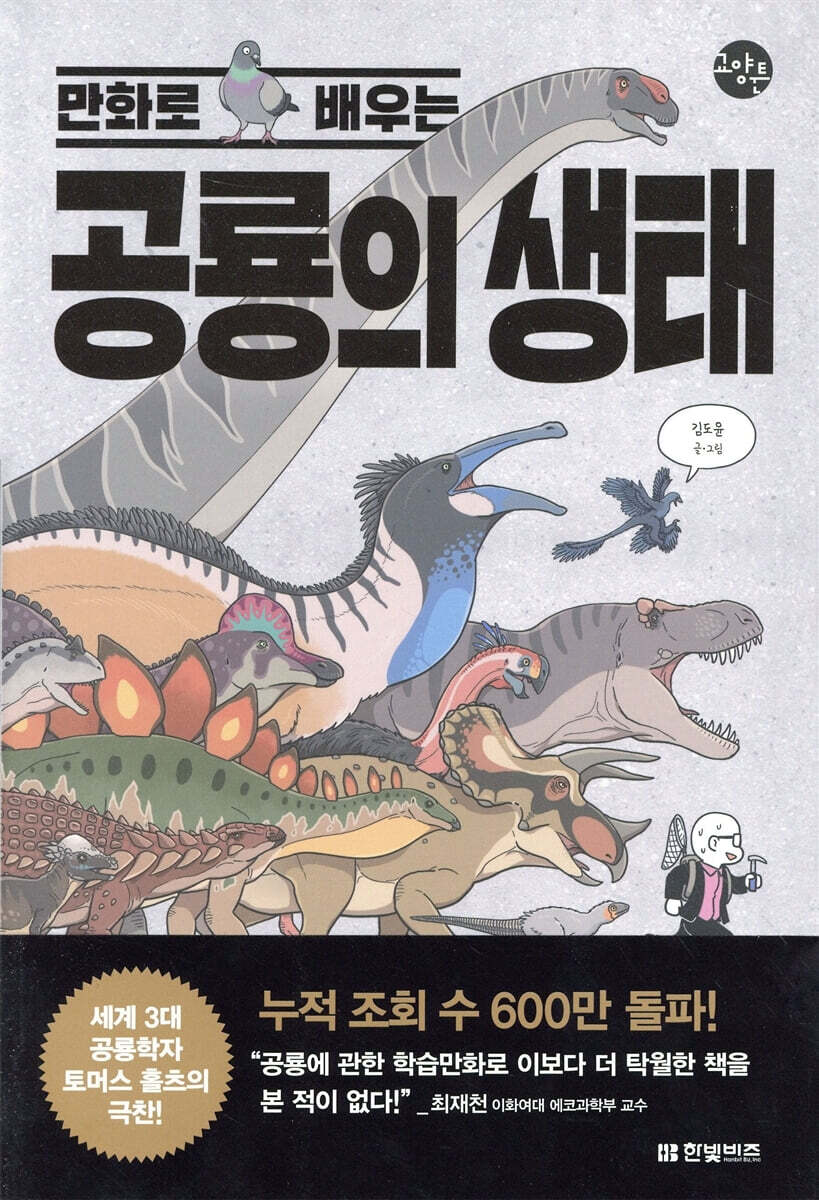
A new masterpiece from Galoa (Kim Do-yoon), author of "Learning Insect Evolution through Comics," "Learning Dinosaur Ecology through Comics," "Odyssey," and "Ladies' Notebooks"! Buy "The Three-Horned Pig" here. This time it's dinosaurs. Galoa, the king of science webtoons, has returned with 『Learning about the Evolution of Insects through Comics』, which has recorded 5 million cumulative views. Kim Do-yoon (Galoa), the author of 『Learning about the Ecology of Dinosaurs through Comics』, has returned with 『Learning about the Ecology of Dinosaurs through Comics』. Drips, parodies, and drawings have evolved further. Since this book is written in the form of a webtoon, it would be a big mistake to think of it as a dinosaur book for children. As an author majoring in biology, he covers a wide range of exciting and cutting-edge dinosaur research that is not well known to the general public, such as 'Dinosaur Skin Color,' 'Dinosaur Sex Life,' 'Why Dinosaurs Became Giant,' 'Dinosaurs with Feathers,' and 'Dinosaur Body Temperature.' Additionally, the book includes appendices on various dinosaur ecology topics that were not covered in the webtoon, such as 'the hatching period of dinosaur eggs', 'the distinction between male and female dinosaurs', 'dinosaur diet', and 'dinosaur restoration maps'. This book is highly recommended by domestic and international scholars who love dinosaurs, including Professor Choi Jae-cheon of Ewha Womans University and Professor Lee Yong-nam of Seoul National University, who have already read the book, as well as Thomas Holtz, one of the world's top three dinosaurologists, Director Lee Jeong-mo of the Seoul Science Museum, and researcher Park Jin-young, an idol in the domestic dinosaur research community. "Learning Dinosaur Ecology through Comics" is a science textbook that is suitable for students who want to become future dinosaurologists, paleontologists, and scientists, as well as adults. |
- You can preview some of the book's contents.
Preview
index
Part 1: The Dinosaur Paradigm
Appendix_Dinosaur's Cheek
Part 2: The Tyrant Lizard
Appendix_Tyrannosaurus's lips?
Part 3: The Corpse Hunter
Appendix_Correct example of Tyrannosaurus imitation/Tyrannosaurus roar?
Part 4: Ecological Position by Age Group
Appendix: Sociality of Tyrannosaurus Rex? / Nanotyrannus Controversy
Part 5: Factors in the Dinosaur's Success
Appendix_Things before dinosaurs
Part 6: The Giantization of Dinosaurs
Appendix: The Ungrowable Dinosaur Egg/A Second Brain?/The Allosaurus' Hunting Method
Part 7: The Dinosaur Renaissance: Skeletons and Evolution
Appendix_Dinosaur's Wrist/Stiff Tail
Part 8: Dinosaur Renaissance: Body Temperature and Activity
Appendix_The Posture Debate of Long-Necked Dinosaurs/The Position of the Nostrils Debate
Part 9: The Goldilocks Hypothesis
Appendix_Semi-aquatic dinosaurs/Dietary habits revealed by teeth/Stomach stones
Part 10: The Origin of Feathers
Appendix_Relationship between scales and feathers
Part 11: Irreducible Complexity and Feathers
Appendix: Another Example of Irreducible Complexity and a Refutation/May/Past Dinosaur Fossils
Function of Feathers, Part 12
Appendix_Dinosaur legs in a pumpkin/Dinosaur egg hatching period/Dinosaurs with a sac
Part 13: The Color of the Past
Appendix_Borealopelta that drifted into the sea/Colors of marine reptiles
Part 14: Dinosaur Sex Life 1
Appendix_Dinosaur Sexing/Triceratops Appearance Changes as It Grows/Still the Most Aggressive Triceratops
Part 15: Dinosaur Sex Life 2
Appendix_Nest of the Long-Necked Dinosaur
Part 16: Evolutionary History: Triassic
Appendix_Continental Drift/Two-legged or Four-legged?
Part 17: Evolutionary History: Jurassic
Appendix: Why Heterodontosaurus's Fangs Are So Special
Part 18: Evolutionary History: Cretaceous
Appendix_Cretaceous Period of the Korean Peninsula
Part 19: Evolutionary History: The Cenozoic Era
Appendix_What was the largest dinosaur? / Gastornis's diet
Part 20: What Are Dinosaurs?
Appendix_Gongdori/Things that are not dinosaurs
Part 21 Dinosaurs as Ecological Components
Appendix_Dinosaur Family Tree
Side Story 1: Drawing a Restoration of a New Dinosaur
Side Story 2: Acrocanthosaurus at the Seodaemun Museum of Natural History
Conclusion
References
Appendix_Dinosaur's Cheek
Part 2: The Tyrant Lizard
Appendix_Tyrannosaurus's lips?
Part 3: The Corpse Hunter
Appendix_Correct example of Tyrannosaurus imitation/Tyrannosaurus roar?
Part 4: Ecological Position by Age Group
Appendix: Sociality of Tyrannosaurus Rex? / Nanotyrannus Controversy
Part 5: Factors in the Dinosaur's Success
Appendix_Things before dinosaurs
Part 6: The Giantization of Dinosaurs
Appendix: The Ungrowable Dinosaur Egg/A Second Brain?/The Allosaurus' Hunting Method
Part 7: The Dinosaur Renaissance: Skeletons and Evolution
Appendix_Dinosaur's Wrist/Stiff Tail
Part 8: Dinosaur Renaissance: Body Temperature and Activity
Appendix_The Posture Debate of Long-Necked Dinosaurs/The Position of the Nostrils Debate
Part 9: The Goldilocks Hypothesis
Appendix_Semi-aquatic dinosaurs/Dietary habits revealed by teeth/Stomach stones
Part 10: The Origin of Feathers
Appendix_Relationship between scales and feathers
Part 11: Irreducible Complexity and Feathers
Appendix: Another Example of Irreducible Complexity and a Refutation/May/Past Dinosaur Fossils
Function of Feathers, Part 12
Appendix_Dinosaur legs in a pumpkin/Dinosaur egg hatching period/Dinosaurs with a sac
Part 13: The Color of the Past
Appendix_Borealopelta that drifted into the sea/Colors of marine reptiles
Part 14: Dinosaur Sex Life 1
Appendix_Dinosaur Sexing/Triceratops Appearance Changes as It Grows/Still the Most Aggressive Triceratops
Part 15: Dinosaur Sex Life 2
Appendix_Nest of the Long-Necked Dinosaur
Part 16: Evolutionary History: Triassic
Appendix_Continental Drift/Two-legged or Four-legged?
Part 17: Evolutionary History: Jurassic
Appendix: Why Heterodontosaurus's Fangs Are So Special
Part 18: Evolutionary History: Cretaceous
Appendix_Cretaceous Period of the Korean Peninsula
Part 19: Evolutionary History: The Cenozoic Era
Appendix_What was the largest dinosaur? / Gastornis's diet
Part 20: What Are Dinosaurs?
Appendix_Gongdori/Things that are not dinosaurs
Part 21 Dinosaurs as Ecological Components
Appendix_Dinosaur Family Tree
Side Story 1: Drawing a Restoration of a New Dinosaur
Side Story 2: Acrocanthosaurus at the Seodaemun Museum of Natural History
Conclusion
References
Publisher's Review
Laughter and fun, but with a terrifying author's research
There has never been a dinosaur webtoon like this before!
『Learning Dinosaur Ecology through Comics』 incorporates the unique parodies and jokes from its predecessor, 『Learning Insect Evolution through Comics』, while also undergoing terrifyingly thorough research.
The book's greatest appeal lies in the endless stream of jokes and parodies, but the author's detailed descriptions of all the dinosaurs in the book are personally verified.
To verify even a simple cut, such as the shape and angle of a Tyrannosaurus' arm, and the shape of the horns of a young and adult Triceratops, I read through domestic and foreign dinosaur-related books and papers, as well as various articles introduced in [Nature] and [Science].
While drawing the webtoon, the author personally visited Italy and collected materials by visiting the Natural History Museums in Venice and Milan, the Zoological Museum in Bologna, and the Geology and Paleontology Museum in Florence.
『Learning Dinosaur Ecology through Comics』 is a comic that combines the latest research, historical accuracy, and humor with parody.
This is a cultural book in the form of a webtoon that is easy and fun to read, but it is not something that can be taken lightly.
We don't know Tyrannosaurus!
The ever-changing paradigm of dinosaurs
Is the dinosaur image we think we know so well actually real? We don't know everything about dinosaurs with absolute certainty, and we never will.
The dinosaurs featured in movies and documentaries are actually reconstructions modeled after dinosaurs that are thought to be the most accurate and precise.
However, there is no guarantee that this model is exactly the same as the dinosaurs that lived in the past.
The appearance of Godzilla in the movie [Godzilla] released in Japan in 1954 was based on the appearance of Tyrannosaurus rex imagined by dinosaur researchers at the time.
Godzilla, the monster that first appeared at the time, was created with a very slow appearance, standing upright and dragging its tail, inspired by the Tyrannosaurus rex that dinosaur researchers at the time had imagined.
However, in the 1993 film Jurassic Park, the Tyrannosaurus was transformed into a sleek figure chasing a jeep.
The dinosaur paradigm has changed.
Iguanodon is an example of a dinosaur paradigm shift.
Iguanodon, one of the first dinosaur fossils, was initially displayed as a quadruped, bulky creature with a horn on its nose.
But later it was discovered that the nasal bone was actually the thumb bone.
As scholars accumulate the number of anomalies discovered, the dinosaurs we knew about also change.
The theme the author wants to emphasize through this book is ultimately 'paradigm change.'
The author says that the dinosaur's habits and appearance introduced here are also forms of elaborate modeling that could break at any time.
There has never been a dinosaur webtoon like this before!
『Learning Dinosaur Ecology through Comics』 incorporates the unique parodies and jokes from its predecessor, 『Learning Insect Evolution through Comics』, while also undergoing terrifyingly thorough research.
The book's greatest appeal lies in the endless stream of jokes and parodies, but the author's detailed descriptions of all the dinosaurs in the book are personally verified.
To verify even a simple cut, such as the shape and angle of a Tyrannosaurus' arm, and the shape of the horns of a young and adult Triceratops, I read through domestic and foreign dinosaur-related books and papers, as well as various articles introduced in [Nature] and [Science].
While drawing the webtoon, the author personally visited Italy and collected materials by visiting the Natural History Museums in Venice and Milan, the Zoological Museum in Bologna, and the Geology and Paleontology Museum in Florence.
『Learning Dinosaur Ecology through Comics』 is a comic that combines the latest research, historical accuracy, and humor with parody.
This is a cultural book in the form of a webtoon that is easy and fun to read, but it is not something that can be taken lightly.
We don't know Tyrannosaurus!
The ever-changing paradigm of dinosaurs
Is the dinosaur image we think we know so well actually real? We don't know everything about dinosaurs with absolute certainty, and we never will.
The dinosaurs featured in movies and documentaries are actually reconstructions modeled after dinosaurs that are thought to be the most accurate and precise.
However, there is no guarantee that this model is exactly the same as the dinosaurs that lived in the past.
The appearance of Godzilla in the movie [Godzilla] released in Japan in 1954 was based on the appearance of Tyrannosaurus rex imagined by dinosaur researchers at the time.
Godzilla, the monster that first appeared at the time, was created with a very slow appearance, standing upright and dragging its tail, inspired by the Tyrannosaurus rex that dinosaur researchers at the time had imagined.
However, in the 1993 film Jurassic Park, the Tyrannosaurus was transformed into a sleek figure chasing a jeep.
The dinosaur paradigm has changed.
Iguanodon is an example of a dinosaur paradigm shift.
Iguanodon, one of the first dinosaur fossils, was initially displayed as a quadruped, bulky creature with a horn on its nose.
But later it was discovered that the nasal bone was actually the thumb bone.
As scholars accumulate the number of anomalies discovered, the dinosaurs we knew about also change.
The theme the author wants to emphasize through this book is ultimately 'paradigm change.'
The author says that the dinosaur's habits and appearance introduced here are also forms of elaborate modeling that could break at any time.
GOODS SPECIFICS
- Date of issue: June 24, 2019
- Page count, weight, size: 308 pages | 492g | 152*225*30mm
- ISBN13: 9791157843404
- ISBN10: 1157843409
You may also like
카테고리
korean


korean

![GQ KOREA Mark (Monthly): December [2025]](http://librairie.coreenne.fr/cdn/shop/files/8ef265dbbfbf186523ed75ba7319009d.jpg?v=1765340328&width=3840)


