

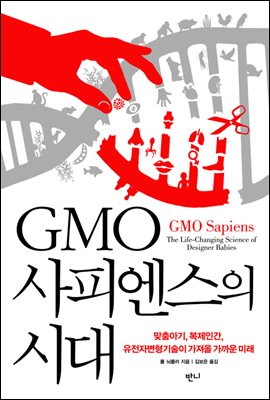
The Age of GMO Sapiens
 |
Description
Book Introduction
In the coming era of genetic modification, what do we need?
It is no exaggeration to say that the era of genetically modified humans and cloned humans has begun.
In February of this year, gene editing experiments on early embryos became legal in the UK, and several research teams are also attempting to produce genetically modified fetuses in China.
"The Age of GMO Sapiens" asks whether we are ready for the future brought about by genetic technology.
The author argues that we need to discuss this now, arguing that many people are still stuck in a state of ignorance, believing that genetic modification and cloning technologies will not directly affect them or are skeptical of their feasibility.
This book first explains why the birth of genetically modified humans has become a major issue recently and why we should be interested in it.
Next, we explore the birth of genetic modification technology, the stories of creatures that rewrote the history of genetics, and the key genetic discoveries and research that made human genetic modification and the creation of GMO sapiens possible, including human cloning. We explore how to create GMO sapiens, the future of genetics from the past to the present, and the cultural and artistic perspectives of society. We also explore recent scientific developments surrounding genetic modification technology, exploring its future and its implications for the future.
☞ Awards
- Bronze Medal in Science at the 2015 INDIEFAB Book of the Year Awards
It is no exaggeration to say that the era of genetically modified humans and cloned humans has begun.
In February of this year, gene editing experiments on early embryos became legal in the UK, and several research teams are also attempting to produce genetically modified fetuses in China.
"The Age of GMO Sapiens" asks whether we are ready for the future brought about by genetic technology.
The author argues that we need to discuss this now, arguing that many people are still stuck in a state of ignorance, believing that genetic modification and cloning technologies will not directly affect them or are skeptical of their feasibility.
This book first explains why the birth of genetically modified humans has become a major issue recently and why we should be interested in it.
Next, we explore the birth of genetic modification technology, the stories of creatures that rewrote the history of genetics, and the key genetic discoveries and research that made human genetic modification and the creation of GMO sapiens possible, including human cloning. We explore how to create GMO sapiens, the future of genetics from the past to the present, and the cultural and artistic perspectives of society. We also explore recent scientific developments surrounding genetic modification technology, exploring its future and its implications for the future.
☞ Awards
- Bronze Medal in Science at the 2015 INDIEFAB Book of the Year Awards
- You can preview some of the book's contents.
Preview
index
introduction
Chapter 1: A World Where Humans Create Humans
genetically modified human embryos
Children of the future who will not be ordinary
Menu: In Vitro Fertilization and Genetically Modified Organisms
Cutting-edge science and technology: CRISPR-Cas9
Who is the better baby?
Creation of genetically modified organisms
The Relationship Between Stem Cells and Cloning
Chapter 2: The Prelude and Explosive Growth of Genetic Modification
Germination of genetically modified plants
Where do genetically modified organisms come from?
The development race begins
Democratization of Creation
Amazing pets and unique toys
Genetically modified mosquitoes become 'weapons'
Definition of human genetic modification
Gene Therapy with Hope
Chapter 3 Who will be the first cloned human?
The Failed Student and the First Cloned
Cultural Background of Human Cloning
The Birth of Clones and Dolly
Reproductive cloning and therapeutic cloning
Successful cloning revealed to be false
Are twins clones?
The Politics of Cloning
Extinct Animal Restoration Project
When human cloning meets genetic modification
Cloning Research and Supporters
Qualifications of a clone
Chapter 4: Rebelling Against the Laws of Nature
The Birth and Dilemma of Test-Tube Babies
The Outlaws Who Created Genetically Modified Babies
Is the birth of GMO sapiens legal?
Operation Three Monkeys
The Future of In Vitro Fertilization
Chapter 5: The Double-Edged Sword of Genetic Modification
Commercialization of genetic testing
Genetic Dating Game: My Ideal Type is…
Designer babies change the genetic formula
Principles of preimplantation genetic diagnosis
CRISPR vs. Preimplantation Genetic Diagnosis
Do I have to choose between sons and daughters?
Savior Brother
The Economics of Genetically Modified Humans
Genetics and Human Choice
genetic tourism
What's next in the history of genetic modification?
Chapter 6: Creating GMO Sapiens
Preparing the materials for GMO Sapiens
Get your hands on CRISPR
CRISPR, the all-purpose tool
The Laboratory, and the Beginning of Beginnings
Genetic modification that can be freely selected
Potential Role of Stem Cells
Creation of Life and the Pangs of Conscience
What if I make a mistake? I can't undo it.
A disaster that will occur if something goes wrong
Can you correct the error?
Very real problems
Chapter 7: Eugenics and Superhumanism
Eugenics Takes Root in California
The Eugenic Creation of 'Superior Babies'
The Invisible Dangers of Eugenics
What is the definition of a 'perfect' human?
Conflicting Views on the 'Better Baby'
Superhumanism: From ACGT to H+
George Church, a pioneer in genetics
forced gene drive
Chapter 8: Audacious Imaginations toward Genetic Modification
Is humanity's fate survival or destruction?
Public attitudes toward genetic modification
Human genetic modification as seen by the world
The Return of Frankenstein
Brothers who had different paths
Gattaca, a dystopian future
DNA Dream and Reality
Same Yet Different, Orphan Black
A world full of clones
Being discriminated against or becoming famous
Human Transformation and Gender Roles
Unleash your genetically modified imagination
GMO Sapiens and Socio-Culture
Chapter 9: The Present and Future of GMO Sapiens
The first, controversial gene-edited human embryo
'Don't edit! '
Uncertain technology and cautious progress
The ABCD principles of genetic modification
Outcomes of the Stanford Law School Conference
George Church and genetically modified humans
Oxford University ethicist
The human genome, a diverse collection of variables
The Future of Human Genetic Modification
Chapter 1: A World Where Humans Create Humans
genetically modified human embryos
Children of the future who will not be ordinary
Menu: In Vitro Fertilization and Genetically Modified Organisms
Cutting-edge science and technology: CRISPR-Cas9
Who is the better baby?
Creation of genetically modified organisms
The Relationship Between Stem Cells and Cloning
Chapter 2: The Prelude and Explosive Growth of Genetic Modification
Germination of genetically modified plants
Where do genetically modified organisms come from?
The development race begins
Democratization of Creation
Amazing pets and unique toys
Genetically modified mosquitoes become 'weapons'
Definition of human genetic modification
Gene Therapy with Hope
Chapter 3 Who will be the first cloned human?
The Failed Student and the First Cloned
Cultural Background of Human Cloning
The Birth of Clones and Dolly
Reproductive cloning and therapeutic cloning
Successful cloning revealed to be false
Are twins clones?
The Politics of Cloning
Extinct Animal Restoration Project
When human cloning meets genetic modification
Cloning Research and Supporters
Qualifications of a clone
Chapter 4: Rebelling Against the Laws of Nature
The Birth and Dilemma of Test-Tube Babies
The Outlaws Who Created Genetically Modified Babies
Is the birth of GMO sapiens legal?
Operation Three Monkeys
The Future of In Vitro Fertilization
Chapter 5: The Double-Edged Sword of Genetic Modification
Commercialization of genetic testing
Genetic Dating Game: My Ideal Type is…
Designer babies change the genetic formula
Principles of preimplantation genetic diagnosis
CRISPR vs. Preimplantation Genetic Diagnosis
Do I have to choose between sons and daughters?
Savior Brother
The Economics of Genetically Modified Humans
Genetics and Human Choice
genetic tourism
What's next in the history of genetic modification?
Chapter 6: Creating GMO Sapiens
Preparing the materials for GMO Sapiens
Get your hands on CRISPR
CRISPR, the all-purpose tool
The Laboratory, and the Beginning of Beginnings
Genetic modification that can be freely selected
Potential Role of Stem Cells
Creation of Life and the Pangs of Conscience
What if I make a mistake? I can't undo it.
A disaster that will occur if something goes wrong
Can you correct the error?
Very real problems
Chapter 7: Eugenics and Superhumanism
Eugenics Takes Root in California
The Eugenic Creation of 'Superior Babies'
The Invisible Dangers of Eugenics
What is the definition of a 'perfect' human?
Conflicting Views on the 'Better Baby'
Superhumanism: From ACGT to H+
George Church, a pioneer in genetics
forced gene drive
Chapter 8: Audacious Imaginations toward Genetic Modification
Is humanity's fate survival or destruction?
Public attitudes toward genetic modification
Human genetic modification as seen by the world
The Return of Frankenstein
Brothers who had different paths
Gattaca, a dystopian future
DNA Dream and Reality
Same Yet Different, Orphan Black
A world full of clones
Being discriminated against or becoming famous
Human Transformation and Gender Roles
Unleash your genetically modified imagination
GMO Sapiens and Socio-Culture
Chapter 9: The Present and Future of GMO Sapiens
The first, controversial gene-edited human embryo
'Don't edit! '
Uncertain technology and cautious progress
The ABCD principles of genetic modification
Outcomes of the Stanford Law School Conference
George Church and genetically modified humans
Oxford University ethicist
The human genome, a diverse collection of variables
The Future of Human Genetic Modification
Into the book
Within a few years, some scientists will attempt to create genetically modified humans.
In the field of biomedical science, science fiction is becoming reality.
There is an urgent need for more exchange of opinions and discussion about how far this technology can transform the human world.
The change could be good, bad, or a complex combination of the two.
To move in a positive direction, we need to learn about genetic modification technology and engage in discussion.
The primary goal of this book is to inform as many people as possible about the reality that genetically modified humans could appear in the near future, and to capture the scientific and social nature of that change.
--- p.12
Surprisingly, few people seem to be able to estimate how close we are to actually producing genetically modified humans.
The reason relatively few people are paying attention is because there is a lack of awareness that this startling new reality is coming.
All signs point to humanity being unprepared for this crucial turning point in history, yet genetically modified humans will become a reality within a decade.
We need to make this fascinating topic known to people and spark a lively discussion.
Personally, I think it would be better to start the discussion about this now rather than wait for the media to start talking about whether the attempt was a success or a failure.
--- p.45
Shockingly, it took British embryologist Ian Wilmut over 400 experiments to clone sheep before the first mammalian clone, Dolly the sheep, was successfully born.
It means that you have to fail 400 times to achieve one success.
This unfortunate 'byproduct' of cloning research is one of the reasons people are so nervous about human cloning.
How should we respond to failed attempts at reproductive cloning? Personally, I haven't found an ethical answer to this question. The same concerns can be raised about attempts to create GMO sapiens.
--- p.89
The absence of technical barriers does not mean that the replication process will proceed properly, or that even if it does proceed properly, it will be an easy process.
However, given my personal understanding of the entire human cloning process and the fact that three research teams have made new breakthroughs in human therapeutic cloning research, I predict that human cloning is bound to succeed.
The key ingredients for the remaining successful cloning will be indifference to the harm cloning will cause and an abundant supply of funds.
Ironically, we now know that the proposition that "human cloning is impossible" is a myth, but a decade or two ago, people argued that the proposition that "human cloning is possible" was a myth.
Today's reality is the exact opposite of the past.
--- p.100
It's wonderful that IVF is being used to treat infertility, but once the technology is developed and information about the methodology begins to spread, it's inevitable that someone will try to combine it with other techniques or use it in different ways.
In the process, it may lead to unintended or negative results, and may raise serious ethical dilemmas such as gender selection, genetic modification, and cloning.
So some people even oppose creating human embryonic stem cells from embryos left over from in vitro fertilization.
--- p.125
Creating digitally customized babies without regulation? In video games, users can create and choose the characteristics of their in-game characters, or avatars.
All you need to do is click the menu on the screen a few times.
In the future, won't you actually be able to conceive your own baby with just a few simple menu choices? It might seem unbelievable, but it feels a lot closer to reality now.
For example, although still a minority worldwide, there is a growing trend of expectant parents choosing the sex of their baby.
In some countries, such as India and China, where the preference for male children persists, the gender imbalance has reached a dangerous level.
--- p.159
We have seen the evolution of genetic engineering, from cutting and pasting genes in test tubes to manipulating bacterial genes, transforming mammalian cells, creating genetically modified plants, and even genetically modified animals.
At the same time, genome sequencing, stem cells, cloning, and assisted reproductive technologies have also been accelerating.
In other words, the table has been set for the next step, the creation of genetically modified humans in the near future.
The tools and methods already exist.
There is also a wide range of needs, from therapeutic purposes such as treating genetic diseases to human enhancement purposes such as creating smart or well-behaved children.
--- p.183
The bottom line is that creating designer babies is a risky, generational experiment, more than anything else.
Above all, those who bear the greatest risk are GMO sapiens, who, being nonexistent at the start of the experiment, cannot consent to their own production. The children and descendants of GMO sapiens will all be affected, yet no one can consent.
It is not even clear whether this dilemma regarding consent can be resolved.
--- p.212
There are other situations that are scary just thinking about them.
Gene drive technology, designed for human genetic modification, is being combined with viral technology to become a weapon.
If we were to spray people with a highly contagious substance containing a genetic drive factor, it would be tantamount to terrorism targeting all of humanity.
Such substances could spread globally like an epidemic, based on the gene drive factor and the strong transmissibility of the virus.
If people are intentionally or accidentally exposed to a genetically modified virus with a gene drive, mandatory reproductive isolation for them becomes a necessary evil.
--- p.259
Cutting-edge technology increases the possibility of cloning and genetic modification, while art and cultural perspectives provide clues about what might happen to humanity.
And like it or not, culture will adapt to the status quo.
For centuries, humanity has been fighting in various ways to gain control of human creation.
What's different now is that the technology that allows us to create humans is within our grasp, easy to use, and available everywhere.
The decisions we make today can fundamentally change the future of humanity and the world.
In the field of biomedical science, science fiction is becoming reality.
There is an urgent need for more exchange of opinions and discussion about how far this technology can transform the human world.
The change could be good, bad, or a complex combination of the two.
To move in a positive direction, we need to learn about genetic modification technology and engage in discussion.
The primary goal of this book is to inform as many people as possible about the reality that genetically modified humans could appear in the near future, and to capture the scientific and social nature of that change.
--- p.12
Surprisingly, few people seem to be able to estimate how close we are to actually producing genetically modified humans.
The reason relatively few people are paying attention is because there is a lack of awareness that this startling new reality is coming.
All signs point to humanity being unprepared for this crucial turning point in history, yet genetically modified humans will become a reality within a decade.
We need to make this fascinating topic known to people and spark a lively discussion.
Personally, I think it would be better to start the discussion about this now rather than wait for the media to start talking about whether the attempt was a success or a failure.
--- p.45
Shockingly, it took British embryologist Ian Wilmut over 400 experiments to clone sheep before the first mammalian clone, Dolly the sheep, was successfully born.
It means that you have to fail 400 times to achieve one success.
This unfortunate 'byproduct' of cloning research is one of the reasons people are so nervous about human cloning.
How should we respond to failed attempts at reproductive cloning? Personally, I haven't found an ethical answer to this question. The same concerns can be raised about attempts to create GMO sapiens.
--- p.89
The absence of technical barriers does not mean that the replication process will proceed properly, or that even if it does proceed properly, it will be an easy process.
However, given my personal understanding of the entire human cloning process and the fact that three research teams have made new breakthroughs in human therapeutic cloning research, I predict that human cloning is bound to succeed.
The key ingredients for the remaining successful cloning will be indifference to the harm cloning will cause and an abundant supply of funds.
Ironically, we now know that the proposition that "human cloning is impossible" is a myth, but a decade or two ago, people argued that the proposition that "human cloning is possible" was a myth.
Today's reality is the exact opposite of the past.
--- p.100
It's wonderful that IVF is being used to treat infertility, but once the technology is developed and information about the methodology begins to spread, it's inevitable that someone will try to combine it with other techniques or use it in different ways.
In the process, it may lead to unintended or negative results, and may raise serious ethical dilemmas such as gender selection, genetic modification, and cloning.
So some people even oppose creating human embryonic stem cells from embryos left over from in vitro fertilization.
--- p.125
Creating digitally customized babies without regulation? In video games, users can create and choose the characteristics of their in-game characters, or avatars.
All you need to do is click the menu on the screen a few times.
In the future, won't you actually be able to conceive your own baby with just a few simple menu choices? It might seem unbelievable, but it feels a lot closer to reality now.
For example, although still a minority worldwide, there is a growing trend of expectant parents choosing the sex of their baby.
In some countries, such as India and China, where the preference for male children persists, the gender imbalance has reached a dangerous level.
--- p.159
We have seen the evolution of genetic engineering, from cutting and pasting genes in test tubes to manipulating bacterial genes, transforming mammalian cells, creating genetically modified plants, and even genetically modified animals.
At the same time, genome sequencing, stem cells, cloning, and assisted reproductive technologies have also been accelerating.
In other words, the table has been set for the next step, the creation of genetically modified humans in the near future.
The tools and methods already exist.
There is also a wide range of needs, from therapeutic purposes such as treating genetic diseases to human enhancement purposes such as creating smart or well-behaved children.
--- p.183
The bottom line is that creating designer babies is a risky, generational experiment, more than anything else.
Above all, those who bear the greatest risk are GMO sapiens, who, being nonexistent at the start of the experiment, cannot consent to their own production. The children and descendants of GMO sapiens will all be affected, yet no one can consent.
It is not even clear whether this dilemma regarding consent can be resolved.
--- p.212
There are other situations that are scary just thinking about them.
Gene drive technology, designed for human genetic modification, is being combined with viral technology to become a weapon.
If we were to spray people with a highly contagious substance containing a genetic drive factor, it would be tantamount to terrorism targeting all of humanity.
Such substances could spread globally like an epidemic, based on the gene drive factor and the strong transmissibility of the virus.
If people are intentionally or accidentally exposed to a genetically modified virus with a gene drive, mandatory reproductive isolation for them becomes a necessary evil.
--- p.259
Cutting-edge technology increases the possibility of cloning and genetic modification, while art and cultural perspectives provide clues about what might happen to humanity.
And like it or not, culture will adapt to the status quo.
For centuries, humanity has been fighting in various ways to gain control of human creation.
What's different now is that the technology that allows us to create humans is within our grasp, easy to use, and available everywhere.
The decisions we make today can fundamentally change the future of humanity and the world.
--- p.293
Publisher's Review
The era of genetic modification, standing at the doorstep of human creation!
The current state of genetic modification technology, explained to the general public.
CRISPR technology, a remarkable achievement in the field of life sciences
The feasibility of custom babies has increased.
Will we actually create a new race called GMO sapiens?
On September 27, 2016, a research team in the United States unveiled the world's first "three-parent child" with two mothers and one father.
The baby, who was born in Mexico in April and was found to have grown healthily until the age of five months, was created by fertilizing a new egg made by combining the eggs of two mothers with the father's sperm, and inherited the genetic traits of all three parents.
The reason they attempted to create a child in this way was because the child's biological mother had a factor in 'Lee Syndrome', a central nervous system disorder.
This disease is a type of 'mitochondrial disease' that is caused by mutations in the mitochondrial gene sequence and is a genetic disease.
To avoid the tragedy of passing the disease on to the child, the researchers were able to create a healthy baby by transferring the mother's nucleus into a healthy egg from another woman who did not have the genetic disease.
In February of this year, gene editing experiments on early embryos were legalized in the UK.
In China, attempts to produce genetically modified embryos are being made by several research teams, and some have been published in academic papers.
In other words, the era of so-called 'designer babies', where humans can artificially create humans, is right before our eyes.
▼ The emergence of genetically modified babies is not a distant future!
Genetics and genomics are two of the most rapidly developing fields of science today.
Moreover, the discovery of CRISPR-Cas9 has accelerated the development of genetic engineering technology.
This technology, which allows for the cutting and editing of specific genes at the desired location, has had a major impact on the emergence of designer babies born with desired genes.
However, genetics-related technologies are already being used in various ways in our lives.
Genetically modified plants and animals have been developed for commercial purposes and are being used to grow crops with increased yields or productivity and to eliminate harmful organisms.
More than 5 million test-tube babies have already been born using in vitro fertilization.
Preimplantation genetic diagnosis can be used to determine not only the sex of the fetus but also genetic defects and mutations.
Gene therapy, which treats genetic diseases by modifying the genes of cells, is already being used experimentally, and research on stem cells will further expand their potential for medical use.
Ultimately, in the near future, we will face the reality that genetic modification technology is a natural part of life.
▼ What discussion do we need about the future brought by genetic technology?
In fact, it is no exaggeration to say that the era of genetically modified humans and cloned humans has already begun.
The technology needed to create designer babies—whether cloned, genetically modified, or both—is already within scientists' grasp.
But are we truly prepared for this era? Will these custom-made babies be human beings like us, or not? What needs to change in the future when these babies are born?
It is clear that no one can stop the speeding train of technology.
Still, we need to do a lot of preparation before that time arrives.
The author argues that we need to discuss this now, arguing that many people are still stuck in a state of ignorance, believing that genetic modification and cloning technologies will not directly affect them or are skeptical of their feasibility.
From now on, we must share information about technological advancements and engage in social discussion to discuss what systems, ethical standards, and principles are necessary.
And until such preparations are complete, they say, an international moratorium on human germline editing for clinical therapeutic purposes should be agreed upon.
Ultimately, the era of designer babies, which could be a huge event that changes the world, requires not only scientists but also all of us to take an interest and make efforts to lead positive change.
★ 2015 INDIEFAB Book of the Year Awards Bronze Medal Winner in the Science Category
The current state of genetic modification technology, explained to the general public.
CRISPR technology, a remarkable achievement in the field of life sciences
The feasibility of custom babies has increased.
Will we actually create a new race called GMO sapiens?
On September 27, 2016, a research team in the United States unveiled the world's first "three-parent child" with two mothers and one father.
The baby, who was born in Mexico in April and was found to have grown healthily until the age of five months, was created by fertilizing a new egg made by combining the eggs of two mothers with the father's sperm, and inherited the genetic traits of all three parents.
The reason they attempted to create a child in this way was because the child's biological mother had a factor in 'Lee Syndrome', a central nervous system disorder.
This disease is a type of 'mitochondrial disease' that is caused by mutations in the mitochondrial gene sequence and is a genetic disease.
To avoid the tragedy of passing the disease on to the child, the researchers were able to create a healthy baby by transferring the mother's nucleus into a healthy egg from another woman who did not have the genetic disease.
In February of this year, gene editing experiments on early embryos were legalized in the UK.
In China, attempts to produce genetically modified embryos are being made by several research teams, and some have been published in academic papers.
In other words, the era of so-called 'designer babies', where humans can artificially create humans, is right before our eyes.
▼ The emergence of genetically modified babies is not a distant future!
Genetics and genomics are two of the most rapidly developing fields of science today.
Moreover, the discovery of CRISPR-Cas9 has accelerated the development of genetic engineering technology.
This technology, which allows for the cutting and editing of specific genes at the desired location, has had a major impact on the emergence of designer babies born with desired genes.
However, genetics-related technologies are already being used in various ways in our lives.
Genetically modified plants and animals have been developed for commercial purposes and are being used to grow crops with increased yields or productivity and to eliminate harmful organisms.
More than 5 million test-tube babies have already been born using in vitro fertilization.
Preimplantation genetic diagnosis can be used to determine not only the sex of the fetus but also genetic defects and mutations.
Gene therapy, which treats genetic diseases by modifying the genes of cells, is already being used experimentally, and research on stem cells will further expand their potential for medical use.
Ultimately, in the near future, we will face the reality that genetic modification technology is a natural part of life.
▼ What discussion do we need about the future brought by genetic technology?
In fact, it is no exaggeration to say that the era of genetically modified humans and cloned humans has already begun.
The technology needed to create designer babies—whether cloned, genetically modified, or both—is already within scientists' grasp.
But are we truly prepared for this era? Will these custom-made babies be human beings like us, or not? What needs to change in the future when these babies are born?
It is clear that no one can stop the speeding train of technology.
Still, we need to do a lot of preparation before that time arrives.
The author argues that we need to discuss this now, arguing that many people are still stuck in a state of ignorance, believing that genetic modification and cloning technologies will not directly affect them or are skeptical of their feasibility.
From now on, we must share information about technological advancements and engage in social discussion to discuss what systems, ethical standards, and principles are necessary.
And until such preparations are complete, they say, an international moratorium on human germline editing for clinical therapeutic purposes should be agreed upon.
Ultimately, the era of designer babies, which could be a huge event that changes the world, requires not only scientists but also all of us to take an interest and make efforts to lead positive change.
★ 2015 INDIEFAB Book of the Year Awards Bronze Medal Winner in the Science Category
GOODS SPECIFICS
- Publication date: November 10, 2016
- Page count, weight, size: 348 pages | 495g | 148*218*20mm
- ISBN13: 9791185435923
- ISBN10: 1185435921
You may also like
카테고리
korean


korean

![GQ KOREA Mark (Monthly): December [2025]](http://librairie.coreenne.fr/cdn/shop/files/8ef265dbbfbf186523ed75ba7319009d.jpg?v=1765340328&width=3840)


