

Farm Anatomy Atlas
 |
Description
Book Introduction
Bestselling author Julia Rothman's "Farm Anatomy" is finally out!
Following the 『Natural Anatomy Atlas』, there were things that could not be seen in the city.
Unraveling exciting new things to learn and talk about
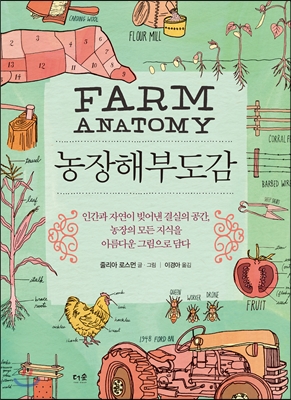
Artist Julia Rothman's "Farm Anatomy," which has captivated readers with its delicate yet vivid illustrations and warm gaze exploring nature, has finally been published in Korea.
This is the second work by Julia Rothman to be introduced in Korea, following 『Anatomy Illustrated Guide』, which received much attention and love from domestic readers, including students, teachers, parents, art professionals, and general adult readers.
If 『Natural Anatomy Atlas』 captured the nature within the city, 『Farm Anatomy Atlas』 deals with nature in a more authentic and friendly way, set in a rural farm outside the city.
‘Farm’ is a space that intensively captures the process of living by obtaining precious things that nature provides.
In this space created by nature and humans, the author encounters the wondrous and diverse aspects of nature that he had never seen while living in the city.
And the author introduces the interesting knowledge and aspects of rural life he encountered in a fascinating way that has never been seen before.
Her vivid pictures of farm scenes convey the vitality of experiencing each day in the countryside, from the farm implements and machinery with their own uses, to the methods and breeds of animals that provide us with meat, fur, and eggs, to the proper use of each part, to the surprising variety of varieties and characteristics of vegetables we enjoy eating, such as tomatoes, apples, and carrots, to the cultivation methods, and even the healthy and delicious food we cook with these natural ingredients.
For adults who have dreamed of living outside the city, it will show them the vivid reality of rural life, and for curious young people, it will introduce them to a new way of life.
Following the 『Natural Anatomy Atlas』, there were things that could not be seen in the city.
Unraveling exciting new things to learn and talk about
Artist Julia Rothman's "Farm Anatomy," which has captivated readers with its delicate yet vivid illustrations and warm gaze exploring nature, has finally been published in Korea.
This is the second work by Julia Rothman to be introduced in Korea, following 『Anatomy Illustrated Guide』, which received much attention and love from domestic readers, including students, teachers, parents, art professionals, and general adult readers.
If 『Natural Anatomy Atlas』 captured the nature within the city, 『Farm Anatomy Atlas』 deals with nature in a more authentic and friendly way, set in a rural farm outside the city.
‘Farm’ is a space that intensively captures the process of living by obtaining precious things that nature provides.
In this space created by nature and humans, the author encounters the wondrous and diverse aspects of nature that he had never seen while living in the city.
And the author introduces the interesting knowledge and aspects of rural life he encountered in a fascinating way that has never been seen before.
Her vivid pictures of farm scenes convey the vitality of experiencing each day in the countryside, from the farm implements and machinery with their own uses, to the methods and breeds of animals that provide us with meat, fur, and eggs, to the proper use of each part, to the surprising variety of varieties and characteristics of vegetables we enjoy eating, such as tomatoes, apples, and carrots, to the cultivation methods, and even the healthy and delicious food we cook with these natural ingredients.
For adults who have dreamed of living outside the city, it will show them the vivid reality of rural life, and for curious young people, it will introduce them to a new way of life.
- You can preview some of the book's contents.
Preview
index
preface
Reviewer's Note
CHAPTER 1 Tilling the Land
Soil · Topsoil · Soil triangulation · Mineral nutrients in soil · Crop rotation · Contour and terrace farming · Windbreaks · Weather forecast · Composting · Acres and sections
CHAPTER 2 Farm Structure
Common types of barn roofs · Various types of barn doors · Barn roof decorations · Birds and various farm buildings living in barns · Chicken coops and livestock pens · Animal feeders · Goat pens · Sheep pens · Stables · Rabbit pens · Pasture fences · Pasture entrances
CHAPTER 3 Various agricultural machinery and implements
Tractors · History of tractors · Plowing tips · Hay harvesting and storage · Combines and farm machinery · Logging and firewood · Identifying trees · Tools found in the tool shed
CHAPTER 4 Various crops in the fields
Dates for the last late frost in the United States by region · Dates for the first frost in the United States by region · Asteraceae · Brassicaceae · Cucurbitaceae · Legumes · Liliaceae · Gramineae · Solanaceae · Apiaceae · Types of herbs · Other grains · Gardening · Bugs that ruin your garden and bugs you'll be grateful to find in the garden
* How to make borsch, a popular soup in Russia and Poland / How to make a frozen dill salad / How to make a teepee tent using bean vines / How to can tomatoes for a healthy and long-lasting storage / How to make carrot cake / How to make herb bread / How to make buckwheat pancakes / How to make oatmeal crisps / How to make whole wheat granola coffee cake /
CHAPTER 5 Various animals you can meet on the farm
Rooster anatomy · Comb shape · Chickens raised for eggs · Chickens raised for meat · Chickens raised for both eggs and meat · Egg anatomy · How to tell if an egg is fresh · Other poultry · Native American turkeys · Anatomy of a cow for food · What happens inside a cow's stomach · British meat cattle · European and North American meat cattle · Other meat cattle · Various dairy cattle breeds · Milking a cow · Goat anatomy · Goats raised for milk · Goats raised for meat · Goats raised for wool · Horse anatomy · Identifying horses · Horse breeds · Harnesses · Mules · Pig anatomy · Common pig breeds · Daily water consumption of livestock · Sheep anatomy · Various sheep breeds · Sheep shearing · Fleece grooming and grading · Rabbit anatomy · Pet rabbits · Meat rabbits · Hair rabbits · Hair types and colors · Bee anatomy · Structure of a beehive
* Words related to chickens, cows, goats, horses, pigs, and sheep that are useful to know / The average number of eggs a hen lays per year / Milking a cow / Tying various knots
CHAPTER 6 Cooking and Tasting in the Countryside
Old cooking utensils found in country kitchens · Supplies needed for winemaking · Edible flowers · Bread making anyone can do · Various dairy products · Homemade cheese making · Various butcher knives · How to prepare chicken · Top grade beef · Making a smokehouse · Top grade pork · Making ham using the dry-curing method · Top grade lamb · Maximum shelf life of frozen meat · Canning various vegetables · Cellar · Making maple syrup
* Making dandelion wine / Bread anyone can make / Shepherd's pie with lots of meat and potatoes / Ham roast with pineapple / Lamb stew / Fudge with maple syrup
CHAPTER 7 Hobbies in Nature
Yarn making · Yarn spinning · Natural dyeing · Pressed flower making · Corn husk doll making · Rag rug making · Candle making · Quilt making · Popular quilt patterns
References
Acknowledgements
Reviewer's Note
CHAPTER 1 Tilling the Land
Soil · Topsoil · Soil triangulation · Mineral nutrients in soil · Crop rotation · Contour and terrace farming · Windbreaks · Weather forecast · Composting · Acres and sections
CHAPTER 2 Farm Structure
Common types of barn roofs · Various types of barn doors · Barn roof decorations · Birds and various farm buildings living in barns · Chicken coops and livestock pens · Animal feeders · Goat pens · Sheep pens · Stables · Rabbit pens · Pasture fences · Pasture entrances
CHAPTER 3 Various agricultural machinery and implements
Tractors · History of tractors · Plowing tips · Hay harvesting and storage · Combines and farm machinery · Logging and firewood · Identifying trees · Tools found in the tool shed
CHAPTER 4 Various crops in the fields
Dates for the last late frost in the United States by region · Dates for the first frost in the United States by region · Asteraceae · Brassicaceae · Cucurbitaceae · Legumes · Liliaceae · Gramineae · Solanaceae · Apiaceae · Types of herbs · Other grains · Gardening · Bugs that ruin your garden and bugs you'll be grateful to find in the garden
* How to make borsch, a popular soup in Russia and Poland / How to make a frozen dill salad / How to make a teepee tent using bean vines / How to can tomatoes for a healthy and long-lasting storage / How to make carrot cake / How to make herb bread / How to make buckwheat pancakes / How to make oatmeal crisps / How to make whole wheat granola coffee cake /
CHAPTER 5 Various animals you can meet on the farm
Rooster anatomy · Comb shape · Chickens raised for eggs · Chickens raised for meat · Chickens raised for both eggs and meat · Egg anatomy · How to tell if an egg is fresh · Other poultry · Native American turkeys · Anatomy of a cow for food · What happens inside a cow's stomach · British meat cattle · European and North American meat cattle · Other meat cattle · Various dairy cattle breeds · Milking a cow · Goat anatomy · Goats raised for milk · Goats raised for meat · Goats raised for wool · Horse anatomy · Identifying horses · Horse breeds · Harnesses · Mules · Pig anatomy · Common pig breeds · Daily water consumption of livestock · Sheep anatomy · Various sheep breeds · Sheep shearing · Fleece grooming and grading · Rabbit anatomy · Pet rabbits · Meat rabbits · Hair rabbits · Hair types and colors · Bee anatomy · Structure of a beehive
* Words related to chickens, cows, goats, horses, pigs, and sheep that are useful to know / The average number of eggs a hen lays per year / Milking a cow / Tying various knots
CHAPTER 6 Cooking and Tasting in the Countryside
Old cooking utensils found in country kitchens · Supplies needed for winemaking · Edible flowers · Bread making anyone can do · Various dairy products · Homemade cheese making · Various butcher knives · How to prepare chicken · Top grade beef · Making a smokehouse · Top grade pork · Making ham using the dry-curing method · Top grade lamb · Maximum shelf life of frozen meat · Canning various vegetables · Cellar · Making maple syrup
* Making dandelion wine / Bread anyone can make / Shepherd's pie with lots of meat and potatoes / Ham roast with pineapple / Lamb stew / Fudge with maple syrup
CHAPTER 7 Hobbies in Nature
Yarn making · Yarn spinning · Natural dyeing · Pressed flower making · Corn husk doll making · Rag rug making · Candle making · Quilt making · Popular quilt patterns
References
Acknowledgements
Detailed image
.jpg)
Into the book
While working on this book, I learned a lot about self-sufficiency and was able to fully understand the roots of the life my husband, Matt, grew up in.
I want to bring the values and traditions of life that formed his upbringing, however small, into our ordinary daily lives.
Matt insists that if we go back to that farm, he can tell the world what the springtooths the farmers use for hoeing look like, and even guess what breed of chicken the neighbors are raising.
Of course, I sincerely hope so too!
---From the "Preface"
Goats need shelter from wind, rain, and snow.
A cozy cage will keep them warm even in the bitter cold.
However, it should be well ventilated and shaded to prepare for hot weather.
Hay makes an excellent bedding material.
The upper straw should be replaced every few days, and in spring and fall, the old straw at the bottom should be removed and new hay should be laid down.
Goats are great climbers and can squeeze through even the smallest of holes, so it's important to have a strong fence.
As an experienced goatherd would say, a fence that cannot contain water cannot contain goats.
Old cable reels or tractor tires make fun toys for goats.
---From "The Goat Cage"
· Spinach comes in many varieties, including Savoy, Semi-Savoy, and Flatleaf.
· Savoy has wrinkled, curled leaves and is dark green in color.
· Semi-Savoy leaves are less dried than Savoy leaves, making them easier to wash.
· Flatleaf has smooth and straight leaves.
This spinach is used in soups, baby food, canning, and freezing.
The taste is slightly milder than Savoy.
· Rich in antioxidants and iron.
· It is resistant to cold and can survive the winter.
· It grows quickly and can be harvested in 40 to 45 days.
---From "Myeong-a-jut and Spinach"
Cellars are used for long-term storage of vegetables, fruits, and various preserved foods.
Beets, turnips, onions, potatoes, carrots, winter squash, apples, and other foods can be stored for a long time under the right conditions.
Crops can be layered in straw or wet sand, wrapped in newspaper, or hung in netting in a well-ventilated area.
Cellars are usually dug into the ground in cool basements or on the slopes of hills.
To avoid sunlight, the storage should be located on the north side of the hill.
Above all, a cool temperature (0 to 5 degrees Celsius) and high humidity must be maintained to prevent food from spoiling in the summer or freezing in the winter.
Ventilation vents allow warm air to escape, and the dirt floor helps maintain a constant humidity level.
I want to bring the values and traditions of life that formed his upbringing, however small, into our ordinary daily lives.
Matt insists that if we go back to that farm, he can tell the world what the springtooths the farmers use for hoeing look like, and even guess what breed of chicken the neighbors are raising.
Of course, I sincerely hope so too!
---From the "Preface"
Goats need shelter from wind, rain, and snow.
A cozy cage will keep them warm even in the bitter cold.
However, it should be well ventilated and shaded to prepare for hot weather.
Hay makes an excellent bedding material.
The upper straw should be replaced every few days, and in spring and fall, the old straw at the bottom should be removed and new hay should be laid down.
Goats are great climbers and can squeeze through even the smallest of holes, so it's important to have a strong fence.
As an experienced goatherd would say, a fence that cannot contain water cannot contain goats.
Old cable reels or tractor tires make fun toys for goats.
---From "The Goat Cage"
· Spinach comes in many varieties, including Savoy, Semi-Savoy, and Flatleaf.
· Savoy has wrinkled, curled leaves and is dark green in color.
· Semi-Savoy leaves are less dried than Savoy leaves, making them easier to wash.
· Flatleaf has smooth and straight leaves.
This spinach is used in soups, baby food, canning, and freezing.
The taste is slightly milder than Savoy.
· Rich in antioxidants and iron.
· It is resistant to cold and can survive the winter.
· It grows quickly and can be harvested in 40 to 45 days.
---From "Myeong-a-jut and Spinach"
Cellars are used for long-term storage of vegetables, fruits, and various preserved foods.
Beets, turnips, onions, potatoes, carrots, winter squash, apples, and other foods can be stored for a long time under the right conditions.
Crops can be layered in straw or wet sand, wrapped in newspaper, or hung in netting in a well-ventilated area.
Cellars are usually dug into the ground in cool basements or on the slopes of hills.
To avoid sunlight, the storage should be located on the north side of the hill.
Above all, a cool temperature (0 to 5 degrees Celsius) and high humidity must be maintained to prevent food from spoiling in the summer or freezing in the winter.
Ventilation vents allow warm air to escape, and the dirt floor helps maintain a constant humidity level.
---From "Thoughts on Environmental Protection"
Publisher's Review
A farm where humans live in harmony with the vast being of nature.
Discover the vitality and richness of nature, and the fascinating knowledge contained within.
Born and raised in the big city of New York, the author, a New Yorker at heart, visits the rural farm where her husband grew up one Christmas.
This book follows the author's curious gaze as she explores everything from the vast landscape she encounters for the first time, to the curious farm implements and animals scattered throughout the farm, to the crops in the fields, and even the old kitchen in the countryside.
Caring for livestock, farming, harvesting, and living in harmony with nature, fulfilling our necessities, allows city dwellers to experience the regular hustle and bustle and peace that nature provides.
One of the great pleasures of reading this book is encountering knowledge that is relevant to our lives.
It shows useful knowledge that we didn't know before, such as the fact that there are more than ten varieties of tomatoes and apples that we usually buy and eat without thinking, the different appearances and characteristics of cows that give meat and cows that give milk, and how to make cheese and healthy carrot cake with freshly squeezed milk.
Another special thing is that it naturally talks about communion with nature through a scene from daily life on the farm.
These include the consideration of farmers who change their crops every year to avoid overworking the soil, the wisdom of saving energy by planting trees near their homes and using them to block the wind, and the various animal cages and equipment designed to create a good environment for animals that provide useful fur and meat to humans.
A 'farm' is a place that shows how humans live in harmony with the vast being of nature, rather than simply exploiting nature unilaterally. This book contains the interesting process that has been going on for a long time.
A Guide to Country Living for City People Who Dream of Self-Sufficiency
In this era, TV programs that show the daily lives of people leaving the city and living in the countryside are receiving more attention and response than ever before.
Anyone who lives in a city has probably dreamed of living a self-sufficient life in nature, free from artificial things, at least once.
This book shows how nature provides us with an endless supply of food, plants, and animals, enriching our lives.
At the same time, we come to realize that all of our basic living, including what we eat, what we wear, and where we live, cannot be considered separate from nature.
Yet, reading this book makes us realize once again that we are not too ignorant of the things that nature gives us.
The author, who has lived his entire life in the city, says that experiencing a self-sufficient rural life made him reflect on the roots of our lives, and that he wants to bring those values and traditions to the daily lives of city dwellers.
The abundance of nature reminds us, accustomed to the same urban life, that there are diverse spaces and ways of living.
Living and eating in nature is not a grand story.
The rural life and knowledge this book presents will help us rediscover what nature has to offer us and provide an opportunity to reflect on the relationship between nature and humans.
Discover the vitality and richness of nature, and the fascinating knowledge contained within.
Born and raised in the big city of New York, the author, a New Yorker at heart, visits the rural farm where her husband grew up one Christmas.
This book follows the author's curious gaze as she explores everything from the vast landscape she encounters for the first time, to the curious farm implements and animals scattered throughout the farm, to the crops in the fields, and even the old kitchen in the countryside.
Caring for livestock, farming, harvesting, and living in harmony with nature, fulfilling our necessities, allows city dwellers to experience the regular hustle and bustle and peace that nature provides.
One of the great pleasures of reading this book is encountering knowledge that is relevant to our lives.
It shows useful knowledge that we didn't know before, such as the fact that there are more than ten varieties of tomatoes and apples that we usually buy and eat without thinking, the different appearances and characteristics of cows that give meat and cows that give milk, and how to make cheese and healthy carrot cake with freshly squeezed milk.
Another special thing is that it naturally talks about communion with nature through a scene from daily life on the farm.
These include the consideration of farmers who change their crops every year to avoid overworking the soil, the wisdom of saving energy by planting trees near their homes and using them to block the wind, and the various animal cages and equipment designed to create a good environment for animals that provide useful fur and meat to humans.
A 'farm' is a place that shows how humans live in harmony with the vast being of nature, rather than simply exploiting nature unilaterally. This book contains the interesting process that has been going on for a long time.
A Guide to Country Living for City People Who Dream of Self-Sufficiency
In this era, TV programs that show the daily lives of people leaving the city and living in the countryside are receiving more attention and response than ever before.
Anyone who lives in a city has probably dreamed of living a self-sufficient life in nature, free from artificial things, at least once.
This book shows how nature provides us with an endless supply of food, plants, and animals, enriching our lives.
At the same time, we come to realize that all of our basic living, including what we eat, what we wear, and where we live, cannot be considered separate from nature.
Yet, reading this book makes us realize once again that we are not too ignorant of the things that nature gives us.
The author, who has lived his entire life in the city, says that experiencing a self-sufficient rural life made him reflect on the roots of our lives, and that he wants to bring those values and traditions to the daily lives of city dwellers.
The abundance of nature reminds us, accustomed to the same urban life, that there are diverse spaces and ways of living.
Living and eating in nature is not a grand story.
The rural life and knowledge this book presents will help us rediscover what nature has to offer us and provide an opportunity to reflect on the relationship between nature and humans.
GOODS SPECIFICS
- Date of publication: November 3, 2016
- Page count, weight, size: 228 pages | 665g | 165*227*20mm
- ISBN13: 9791186900185
- ISBN10: 1186900180
You may also like
카테고리
korean


korean

![ELLE 엘르 스페셜 에디션 A형 : 12월 [2025]](http://librairie.coreenne.fr/cdn/shop/files/b8e27a3de6c9538896439686c6b0e8fb.jpg?v=1766436872&width=3840)


