

Whispers of the Earth
 |
Description
Book Introduction
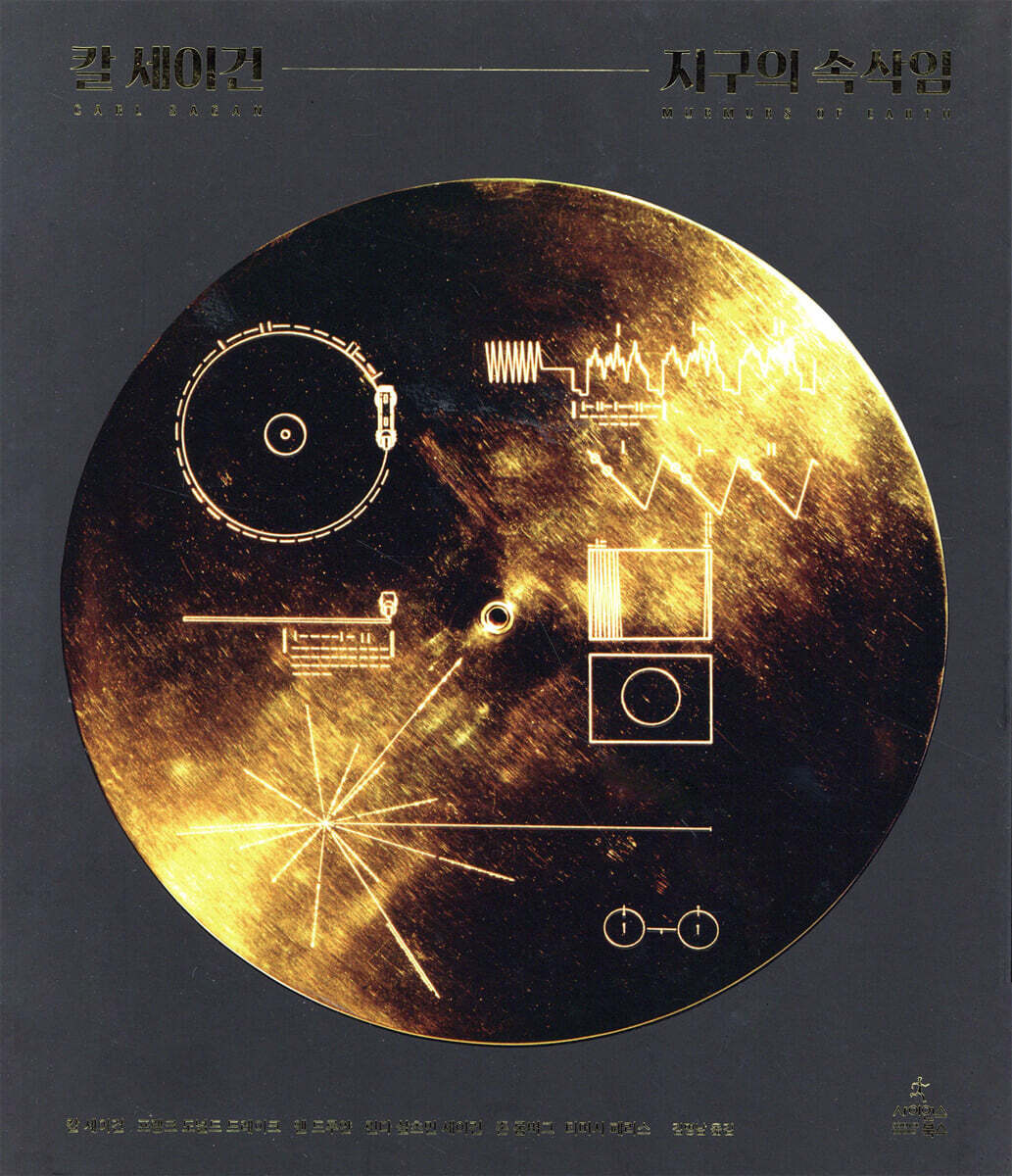
Voyager and Golden Record, celebrating 40 years of space exploration Carl Sagan delivers a message from Earth to an unknown alien civilization! The grand birth narrative of the Golden Record, imbued with scientific imagination and cosmic romance. If life existed only on Earth in this universe, it would be a huge waste of space. ―Carl Sagan The cosmos is huge. There are over 100 billion galaxies in the observable universe alone, each containing hundreds of billions of stars and planets. It is not at all outlandish to imagine that among those countless celestial bodies there might exist intelligent life forms similar to ours. If extraterrestrial life exists and they possess a scientific civilization advanced enough to explore interstellar space, what kind of greeting would we offer them? Voyager 1 and 2, two space probes named "Travelers," were launched about 40 years ago in 1977 to observe celestial bodies in our solar system and even stars beyond it. Attached to the two space probes that will never return to Earth are gold-plated LP records, known as "golden records," each about 30 centimeters in diameter. The record is a message from Earth and humanity to an unknown alien civilization that Voyager might encounter in the future. It contains 27 songs representing the Earth, greetings in 55 languages, 19 sounds expressing the evolution of the Earth and life, and 118 photos suggesting the Earth's environment and human civilization. 『Murmurs of Earth』, published by Science Books, is a book that tells the story of how the Golden Record was planned, produced, and sent into space, like a movie. The film vividly portrays the heated debate and discussion among Carl Sagan (general manager), Frank Donald Drake (technical director), Ann Druyan (creative director), Linda Saltzman Sagan (composer of greetings), John Romberg (artistic director), and Timothy Ferris (producer), who were directly involved in the production of the Golden Record, about the content to be included. Additionally, the hilarious incidents and amusing episodes experienced during the preparation process appear like licorice, adding to the fun. In 『Whispers of the Earth』, readers will be able to enjoy the pleasure and romance of sailing the sea of Cosmos on a time machine called Voyager, holding a letter from Earth in their hearts. |
- You can preview some of the book's contents.
Preview
index
Introduction 11
Chapter 1 For Posterity - Carl Sagan 13
Chapter 2: The Birth of the Voyager Record - Frank Donald Drake 67
Chapter 3: Photos of Earth - John Romberg 99
Chapter 4: Greetings from Voyager - Linda Saltzman Sagan 173
Chapter 5: Sounds of the Earth - Ann Druyan 203
Chapter 6: Music from Voyager - Timothy Ferris 219
Chapter 7: Voyager's Exploration of the Outer Planets - Carl Sagan 283
Epilogue - Carl Sagan 305
Acknowledgments 313
Appendix 323
Translator's Note 351
Search 357
Photographs and illustrations copyright 363
Chapter 1 For Posterity - Carl Sagan 13
Chapter 2: The Birth of the Voyager Record - Frank Donald Drake 67
Chapter 3: Photos of Earth - John Romberg 99
Chapter 4: Greetings from Voyager - Linda Saltzman Sagan 173
Chapter 5: Sounds of the Earth - Ann Druyan 203
Chapter 6: Music from Voyager - Timothy Ferris 219
Chapter 7: Voyager's Exploration of the Outer Planets - Carl Sagan 283
Epilogue - Carl Sagan 305
Acknowledgments 313
Appendix 323
Translator's Note 351
Search 357
Photographs and illustrations copyright 363
Detailed image

Publisher's Review
Long after the Voyager spacecraft has crossed the heliopause, even into the distant future, the two records containing greetings from Earth will continue to sail through space, steadfastly.
―Carl Sagan
A letter from Earth, sent into the future, containing humanity's dreams and challenges.
"Whispers of the Earth" is a collection of essays written by the six managers who led the Voyager vinyl record production project, detailing their experiences and feelings during the production process.
The idea of sending Earth's message into space was intriguing, but it wasn't easy to implement in the real world.
The staff and their assistants had to drive countless miles all day to rent machines that would convert video signals into audio signals, were kicked out or treated like crazy when they went to get data, had to endure the painstakingly chosen nude photos of men and women being removed by NASA as pornography, and had to endure the situation where the person who had promised to record the greetings did not show up and could not post them.
But they didn't give up.
I'd call at 11 p.m. for advice, search under tables in Indian shops for traditional Indian music, "Jat Kahan Ho," pose at the local supermarket for market photos, and eat tuna sandwiches and gulp water, things I didn't even like, to demonstrate the function of the human mouth.
Readers can discover all these stories related to the Voyager Golden Record in Whispers of Earth.
Chapter 1: For Posterity - Carl Sagan (Director)
This is the story of astronomer Carl Sagan, author of the international bestseller "Cosmos," who led the project as its chief administrator. NASA granted him a mere six weeks, funding and staffing were tight, and government officials were frustrating. Yet, his extraordinary passion and dedication, recalling the time capsule he had created at the New York World's Fair as a child, made the project a success. His story is deeply moving.
Chapter 2: The Birth of the Voyager Record - Frank Donald Drake (Technical Director)
Astronomer Frank Donald Drake, one of the founding members of SETI, tells the story of how he came to send an LP record into space.
The story of the Pioneer's metal plate and the Arecibo radio message, both of which he personally participated in, is also covered.
As technical director, his resourcefulness in solving problems related to selecting storage media for Voyager messages and securing storage capacity stands out.
Chapter 3: Photographs of the Earth - John Romberg (Design Director)
Renowned space artist John Romberg presents 118 photographs of Earth and human civilization taken by Voyager.
Pictures are provided showing the planets of the solar system, human biometrics, Earth's ecosystem, human culture and artifacts, etc.
It also included nude photos of men and women that were intended to show aliens the human body, but were rejected by NASA.
Of the 118 pages, 20 are in color and can be viewed as actual color pictorials.
Chapter 4: Voyager's Greetings - Linda Saltzman Sagan (Writer of the Greetings)
Content creator Linda Saltzman Sagan, Carl Sagan's second wife, introduces 55 greetings from the vinyl record.
It includes not only widely spoken modern languages such as English and Chinese, but also important ancient languages such as Hittite and Sumerian.
Korean greetings stand out.
The world's most widely spoken languages, greetings from Voyager, and the speakers, meanings, and population of each language are all clearly organized in tables and maps.
Chapter 5: Sounds of the Earth - Ann Druyan (creative director)
Ann Druyan, Carl Sagan's last wife and current president of the Carl Sagan Foundation and CEO of Cosmos Studios, introduces 19 "Sounds of Earth," which are also the words on the Voyager record labels.
It consists of dizzying whirlpool sounds and thunder and lightning that symbolize the early history of our solar system, as well as the sounds of wind and rain, animal and human sounds, and the mechanical sounds of civilization.
Chapter 6: Music from Voyager - Timothy Ferris (Producer)
World-renowned science writer Timothy Ferriss presents 27 of Earth's greatest hits, recorded on vinyl, in 90 minutes.
It includes a variety of music from various cultures, including Western classical music composed by Mozart, Bach, and Beethoven, as well as Georgian choral music, African Pygmy songs, Chinese kojin and Japanese shakuhachi performances, and Javanese gamelan.
The lifespan of the Voyager record is estimated at 1 billion years.
Considering that it took only 20,000 years for Homo sapiens to emerge and build today's advanced civilization, it's hard to imagine when and to whom the Golden Record would be passed on.
So the Golden Record should be perceived as the most friendly and positive gesture possible.
It's a bit embarrassing, but this is why negative images like weapons of mass destruction, famine, and war are missing.
One could criticize the Golden Record as an imperfect self-portrait that only shows our good points.
But thanks to that, humans have overcome the finiteness of existence and have obtained 'eternal life', which allows them to transcend time and space and communicate with the future.
Even if billions of years pass and the Earth and modern humans disappear, our voices will be carried aboard Voyager and resonate throughout the cosmos forever.
Voyager is traveling through space carrying our echoes and images, and it will keep us alive for as long as its journey.
―Ann Druyan
A Message of Reflection and Hope from the Voyager Space Probes
Voyager's Logbook
Voyager 2 launched on August 20, 1977
Voyager 1 launched on September 5, 1977
Voyager 1's flyby of Jupiter on March 5, 1979
Voyager 2's flyby of Jupiter on July 9, 1979
Voyager 1 began its exploration of the outer solar system after observing Saturn on November 12, 1980.
Voyager 2's observation of Saturn on August 25, 1981
Voyager 2's first encounter with Uranus on January 24, 1986
Voyager 2 observation of supernova 1987A in 1987
Voyager 2 takes its first color photograph of Neptune in 1988
Voyager 2 begins its exploration of the outer solar system after observing Neptune on August 25, 1989.
January 1, 1990: The Voyager interstellar exploration mission begins.
Voyager's last photo of the solar system on February 14, 1990
February 17, 1998 Voyager 1 recorded the farthest man-made object from Earth.
Voyager 1 passes through the terminal shock region on December 15, 2004.
Voyager 2 passes through the terminal shock region on September 5, 2007.
Voyager 1 enters interstellar space on August 25, 2012
On August 25, 2012, Voyager 1 entered interstellar space outside our solar system.
In fact, the chances of Voyager encountering another alien civilization are extremely low.
Despite countless space exploration projects over the past half-century, we have yet to leave our solar system or discover life elsewhere.
Moreover, even if there were advanced extraterrestrial civilizations traveling interstellar space, the chances of them encountering a Voyager spacecraft floating in this vast ocean of cosmos are slim.
Even if we were to accidentally discover and retrieve the Voyager spacecraft, it is unlikely that the Golden Record would be fully deciphered, or that our thoughts and intentions would be fully conveyed.
But at least for Earthlings, the Golden Record represents more than just a one-time event.
The Golden Record is a formal declaration that human civilization, prone to short-sighted egoism and regional exclusion, has overcome its own vulnerabilities and irrationality and recognized itself as a member of the galactic community.
It is also a liberation from religious fanaticism, extreme nationalism, childish statism, and arrogant humanism, and an active gesture to transform cosmic loneliness into hope for the future.
Unfortunately, human existence is still as precarious today as it was 40 years ago, during the Cold War, when Voyager was launched.
We must create a sustainable global civilization with new values and thinking.
Now let's listen to the Voyager Golden Record.
Let us think about the future of humanity and the Earth, following the chattering sounds of life and the melodies of beautiful music.
What are we? And where are we going?
quote
Long after the Voyager spacecraft has crossed the heliopause, even into the distant future, the two records containing greetings from Earth will continue to sail through space, steadfastly.
―Carl Sagan
The Voyager record, like the celestial chariot it carries, is a step closer to our grand intellectual and technological goal of contact with extraterrestrial civilizations.
― Frank Donald Drake
Voyager is traveling through space carrying our echoes and images, and it will keep us alive for as long as its journey.
―Ann Druyan
We felt that even a small clue to the chemical properties of our biology would be of great interest to the scientists of the species that discovered Voyager.
― John Romberg
We are saying that language is important on our planet, and that if there were civilizations elsewhere in the universe that could communicate, we would welcome—even enjoy—conversation with them.
―Linda Saltzman Sagan
The record is saying this.
However small we may be, there is something within us that is so great that it longs to reach out to some unknown discoverer in the distant future, when we will undoubtedly have either become extinct or changed beyond recognition.
― Timothy Ferriss
―Carl Sagan
A letter from Earth, sent into the future, containing humanity's dreams and challenges.
"Whispers of the Earth" is a collection of essays written by the six managers who led the Voyager vinyl record production project, detailing their experiences and feelings during the production process.
The idea of sending Earth's message into space was intriguing, but it wasn't easy to implement in the real world.
The staff and their assistants had to drive countless miles all day to rent machines that would convert video signals into audio signals, were kicked out or treated like crazy when they went to get data, had to endure the painstakingly chosen nude photos of men and women being removed by NASA as pornography, and had to endure the situation where the person who had promised to record the greetings did not show up and could not post them.
But they didn't give up.
I'd call at 11 p.m. for advice, search under tables in Indian shops for traditional Indian music, "Jat Kahan Ho," pose at the local supermarket for market photos, and eat tuna sandwiches and gulp water, things I didn't even like, to demonstrate the function of the human mouth.
Readers can discover all these stories related to the Voyager Golden Record in Whispers of Earth.
Chapter 1: For Posterity - Carl Sagan (Director)
This is the story of astronomer Carl Sagan, author of the international bestseller "Cosmos," who led the project as its chief administrator. NASA granted him a mere six weeks, funding and staffing were tight, and government officials were frustrating. Yet, his extraordinary passion and dedication, recalling the time capsule he had created at the New York World's Fair as a child, made the project a success. His story is deeply moving.
Chapter 2: The Birth of the Voyager Record - Frank Donald Drake (Technical Director)
Astronomer Frank Donald Drake, one of the founding members of SETI, tells the story of how he came to send an LP record into space.
The story of the Pioneer's metal plate and the Arecibo radio message, both of which he personally participated in, is also covered.
As technical director, his resourcefulness in solving problems related to selecting storage media for Voyager messages and securing storage capacity stands out.
Chapter 3: Photographs of the Earth - John Romberg (Design Director)
Renowned space artist John Romberg presents 118 photographs of Earth and human civilization taken by Voyager.
Pictures are provided showing the planets of the solar system, human biometrics, Earth's ecosystem, human culture and artifacts, etc.
It also included nude photos of men and women that were intended to show aliens the human body, but were rejected by NASA.
Of the 118 pages, 20 are in color and can be viewed as actual color pictorials.
Chapter 4: Voyager's Greetings - Linda Saltzman Sagan (Writer of the Greetings)
Content creator Linda Saltzman Sagan, Carl Sagan's second wife, introduces 55 greetings from the vinyl record.
It includes not only widely spoken modern languages such as English and Chinese, but also important ancient languages such as Hittite and Sumerian.
Korean greetings stand out.
The world's most widely spoken languages, greetings from Voyager, and the speakers, meanings, and population of each language are all clearly organized in tables and maps.
Chapter 5: Sounds of the Earth - Ann Druyan (creative director)
Ann Druyan, Carl Sagan's last wife and current president of the Carl Sagan Foundation and CEO of Cosmos Studios, introduces 19 "Sounds of Earth," which are also the words on the Voyager record labels.
It consists of dizzying whirlpool sounds and thunder and lightning that symbolize the early history of our solar system, as well as the sounds of wind and rain, animal and human sounds, and the mechanical sounds of civilization.
Chapter 6: Music from Voyager - Timothy Ferris (Producer)
World-renowned science writer Timothy Ferriss presents 27 of Earth's greatest hits, recorded on vinyl, in 90 minutes.
It includes a variety of music from various cultures, including Western classical music composed by Mozart, Bach, and Beethoven, as well as Georgian choral music, African Pygmy songs, Chinese kojin and Japanese shakuhachi performances, and Javanese gamelan.
The lifespan of the Voyager record is estimated at 1 billion years.
Considering that it took only 20,000 years for Homo sapiens to emerge and build today's advanced civilization, it's hard to imagine when and to whom the Golden Record would be passed on.
So the Golden Record should be perceived as the most friendly and positive gesture possible.
It's a bit embarrassing, but this is why negative images like weapons of mass destruction, famine, and war are missing.
One could criticize the Golden Record as an imperfect self-portrait that only shows our good points.
But thanks to that, humans have overcome the finiteness of existence and have obtained 'eternal life', which allows them to transcend time and space and communicate with the future.
Even if billions of years pass and the Earth and modern humans disappear, our voices will be carried aboard Voyager and resonate throughout the cosmos forever.
Voyager is traveling through space carrying our echoes and images, and it will keep us alive for as long as its journey.
―Ann Druyan
A Message of Reflection and Hope from the Voyager Space Probes
Voyager's Logbook
Voyager 2 launched on August 20, 1977
Voyager 1 launched on September 5, 1977
Voyager 1's flyby of Jupiter on March 5, 1979
Voyager 2's flyby of Jupiter on July 9, 1979
Voyager 1 began its exploration of the outer solar system after observing Saturn on November 12, 1980.
Voyager 2's observation of Saturn on August 25, 1981
Voyager 2's first encounter with Uranus on January 24, 1986
Voyager 2 observation of supernova 1987A in 1987
Voyager 2 takes its first color photograph of Neptune in 1988
Voyager 2 begins its exploration of the outer solar system after observing Neptune on August 25, 1989.
January 1, 1990: The Voyager interstellar exploration mission begins.
Voyager's last photo of the solar system on February 14, 1990
February 17, 1998 Voyager 1 recorded the farthest man-made object from Earth.
Voyager 1 passes through the terminal shock region on December 15, 2004.
Voyager 2 passes through the terminal shock region on September 5, 2007.
Voyager 1 enters interstellar space on August 25, 2012
On August 25, 2012, Voyager 1 entered interstellar space outside our solar system.
In fact, the chances of Voyager encountering another alien civilization are extremely low.
Despite countless space exploration projects over the past half-century, we have yet to leave our solar system or discover life elsewhere.
Moreover, even if there were advanced extraterrestrial civilizations traveling interstellar space, the chances of them encountering a Voyager spacecraft floating in this vast ocean of cosmos are slim.
Even if we were to accidentally discover and retrieve the Voyager spacecraft, it is unlikely that the Golden Record would be fully deciphered, or that our thoughts and intentions would be fully conveyed.
But at least for Earthlings, the Golden Record represents more than just a one-time event.
The Golden Record is a formal declaration that human civilization, prone to short-sighted egoism and regional exclusion, has overcome its own vulnerabilities and irrationality and recognized itself as a member of the galactic community.
It is also a liberation from religious fanaticism, extreme nationalism, childish statism, and arrogant humanism, and an active gesture to transform cosmic loneliness into hope for the future.
Unfortunately, human existence is still as precarious today as it was 40 years ago, during the Cold War, when Voyager was launched.
We must create a sustainable global civilization with new values and thinking.
Now let's listen to the Voyager Golden Record.
Let us think about the future of humanity and the Earth, following the chattering sounds of life and the melodies of beautiful music.
What are we? And where are we going?
quote
Long after the Voyager spacecraft has crossed the heliopause, even into the distant future, the two records containing greetings from Earth will continue to sail through space, steadfastly.
―Carl Sagan
The Voyager record, like the celestial chariot it carries, is a step closer to our grand intellectual and technological goal of contact with extraterrestrial civilizations.
― Frank Donald Drake
Voyager is traveling through space carrying our echoes and images, and it will keep us alive for as long as its journey.
―Ann Druyan
We felt that even a small clue to the chemical properties of our biology would be of great interest to the scientists of the species that discovered Voyager.
― John Romberg
We are saying that language is important on our planet, and that if there were civilizations elsewhere in the universe that could communicate, we would welcome—even enjoy—conversation with them.
―Linda Saltzman Sagan
The record is saying this.
However small we may be, there is something within us that is so great that it longs to reach out to some unknown discoverer in the distant future, when we will undoubtedly have either become extinct or changed beyond recognition.
― Timothy Ferriss
GOODS SPECIFICS
- Date of issue: September 2, 2016
- Format: Hardcover book binding method guide
- Page count, weight, size: 384 pages | 1,172g | 213*248*28mm
- ISBN13: 9788983718082
- ISBN10: 8983718080
You may also like
카테고리
korean


korean

![ELLE 엘르 스페셜 에디션 A형 : 12월 [2025]](http://librairie.coreenne.fr/cdn/shop/files/b8e27a3de6c9538896439686c6b0e8fb.jpg?v=1766436872&width=3840)


