

The Brain, Speaking of Beauty
 |
 |
 |
 |
Description
Book Introduction
Where does the 'beauty' that humans feel come from?
Why does Mona Lisa's smile look so mysterious?
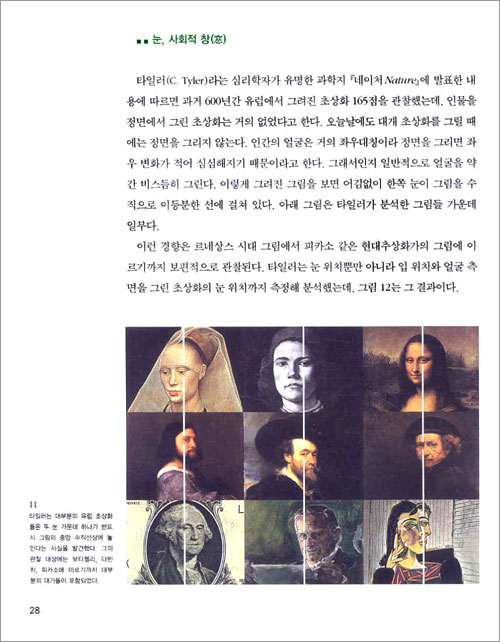
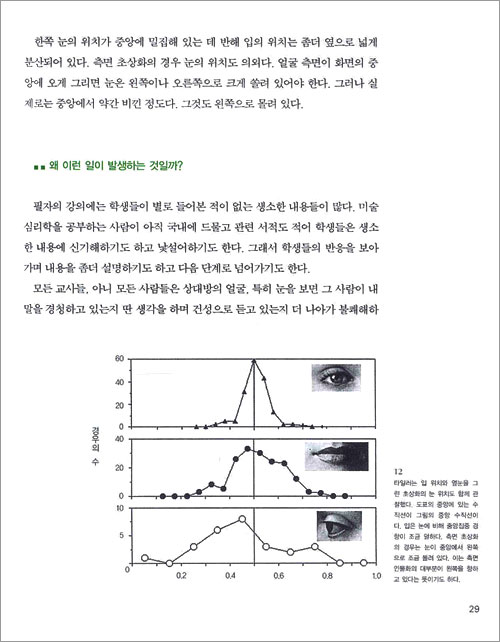
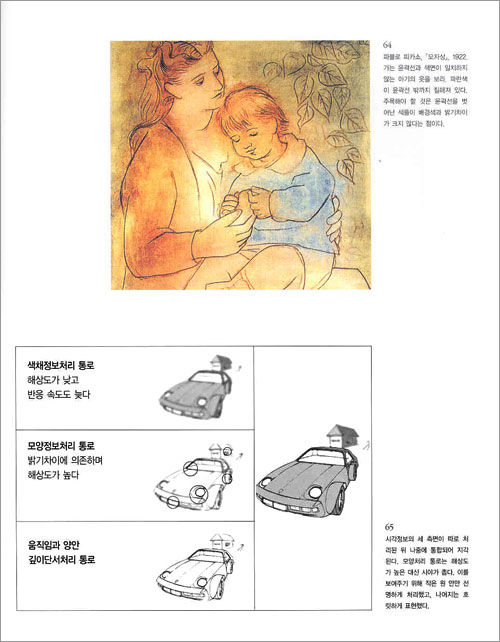
This book analyzes the principles by which humans perceive beauty in works of art from a 'neuroaesthetic' perspective, different from the 'philosophical' approach of aesthetics used so far.
The aesthetic and psychological principles of 'beauty' are specifically elucidated through the latest achievements in neuroaesthetics and art psychology.
According to the author, the male brain has a mechanism that automatically allows it to recognize beautiful female faces.
The joy we feel from appreciating art follows the same logic: our brains have cells that instinctively recognize beauty, and when a work of art contains elements that stimulate these cells, we feel beauty there.
The experience of beauty is not a single entity, and there are numerous factors involved in this diverse inner experience. However, it seems certain that the "neuroaesthetic" perspective of this book can provide essential knowledge and methods for understanding the creation and appreciation of works of art, as well as the mysterious mental processes.
If we examine the principles of specific techniques that modern science has barely discovered in the works of masters, we will understand the clear reason why those works are so beautiful.
The vague awe you had for a masterpiece might turn into a clear and confident emotion.
Why does Mona Lisa's smile look so mysterious?
This book analyzes the principles by which humans perceive beauty in works of art from a 'neuroaesthetic' perspective, different from the 'philosophical' approach of aesthetics used so far.
The aesthetic and psychological principles of 'beauty' are specifically elucidated through the latest achievements in neuroaesthetics and art psychology.
According to the author, the male brain has a mechanism that automatically allows it to recognize beautiful female faces.
The joy we feel from appreciating art follows the same logic: our brains have cells that instinctively recognize beauty, and when a work of art contains elements that stimulate these cells, we feel beauty there.
The experience of beauty is not a single entity, and there are numerous factors involved in this diverse inner experience. However, it seems certain that the "neuroaesthetic" perspective of this book can provide essential knowledge and methods for understanding the creation and appreciation of works of art, as well as the mysterious mental processes.
If we examine the principles of specific techniques that modern science has barely discovered in the works of masters, we will understand the clear reason why those works are so beautiful.
The vague awe you had for a masterpiece might turn into a clear and confident emotion.
The brain is still an unknown area that humans have not yet been able to uncover its mysteries.
Overseas, the latest achievements in brain science have been published in various books, satisfying readers' curiosity and introducing them to us as well.
However, the content was somewhat difficult for the general public, but Professor Kim Jong-seong, the author of 'Dancing Brain', easily tells readers stories about the brain that have been hidden in our lives and hidden secrets about the brain that are usually not found in movies.
It goes beyond simple essays to warn us about diseases and dangers we see around us, and also tells touching stories.
The brain is still an unknown area that humans have not yet been able to uncover its mysteries.
Overseas, the latest achievements in brain science have been published in various books, satisfying readers' curiosity and introducing them to us as well.
However, the content was somewhat difficult for the general public, but Professor Kim Jong-seong, the author of 'Dancing Brain', easily tells readers stories about the brain that have been hidden in our lives and hidden secrets about the brain that are usually not found in movies.
It goes beyond simple essays to warn us about diseases and dangers we see around us, and also tells touching stories.
Overseas, the latest achievements in brain science have been published in various books, satisfying readers' curiosity and introducing them to us as well.
However, the content was somewhat difficult for the general public, but Professor Kim Jong-seong, the author of 'Dancing Brain', easily tells readers stories about the brain that have been hidden in our lives and hidden secrets about the brain that are usually not found in movies.
It goes beyond simple essays to warn us about diseases and dangers we see around us, and also tells touching stories.
The brain is still an unknown area that humans have not yet been able to uncover its mysteries.
Overseas, the latest achievements in brain science have been published in various books, satisfying readers' curiosity and introducing them to us as well.
However, the content was somewhat difficult for the general public, but Professor Kim Jong-seong, the author of 'Dancing Brain', easily tells readers stories about the brain that have been hidden in our lives and hidden secrets about the brain that are usually not found in movies.
It goes beyond simple essays to warn us about diseases and dangers we see around us, and also tells touching stories.
index
1.
Why is Christ tilting his head to the right?
2.
A face more beautiful than flowers
3.
The left and right brains see faces differently.
4.
Cells that sense beauty
5.
Two ways to see a face
6.
Blessing of Neurons, Chagall's Blue
7.
Learning visual perception from Picasso and Kim Hong-do
8.
Neurons that love straight lines
9.
A taster of form
10.
Picasso, this one sketch
11.
Colliding colors
12.
What Van Gogh wanted
13.
Renoir's Choice, the Expression of Movement
14.
Creating Impressionist Colors
15.
Like a flowing river, like a burning fire - Op Art
Why is Christ tilting his head to the right?
2.
A face more beautiful than flowers
3.
The left and right brains see faces differently.
4.
Cells that sense beauty
5.
Two ways to see a face
6.
Blessing of Neurons, Chagall's Blue
7.
Learning visual perception from Picasso and Kim Hong-do
8.
Neurons that love straight lines
9.
A taster of form
10.
Picasso, this one sketch
11.
Colliding colors
12.
What Van Gogh wanted
13.
Renoir's Choice, the Expression of Movement
14.
Creating Impressionist Colors
15.
Like a flowing river, like a burning fire - Op Art
GOODS SPECIFICS
- Date of issue: March 7, 2005
- Format: Hardcover book binding method guide
- Page count, weight, size: 248 pages | 782g | 188*226*20mm
- ISBN13: 9788989799443
- ISBN10: 8989799449
You may also like
카테고리
korean


korean

![GQ KOREA Mark (Monthly): December [2025]](http://librairie.coreenne.fr/cdn/shop/files/8ef265dbbfbf186523ed75ba7319009d.jpg?v=1765340328&width=3840)


