

Seeing the universe from the forest
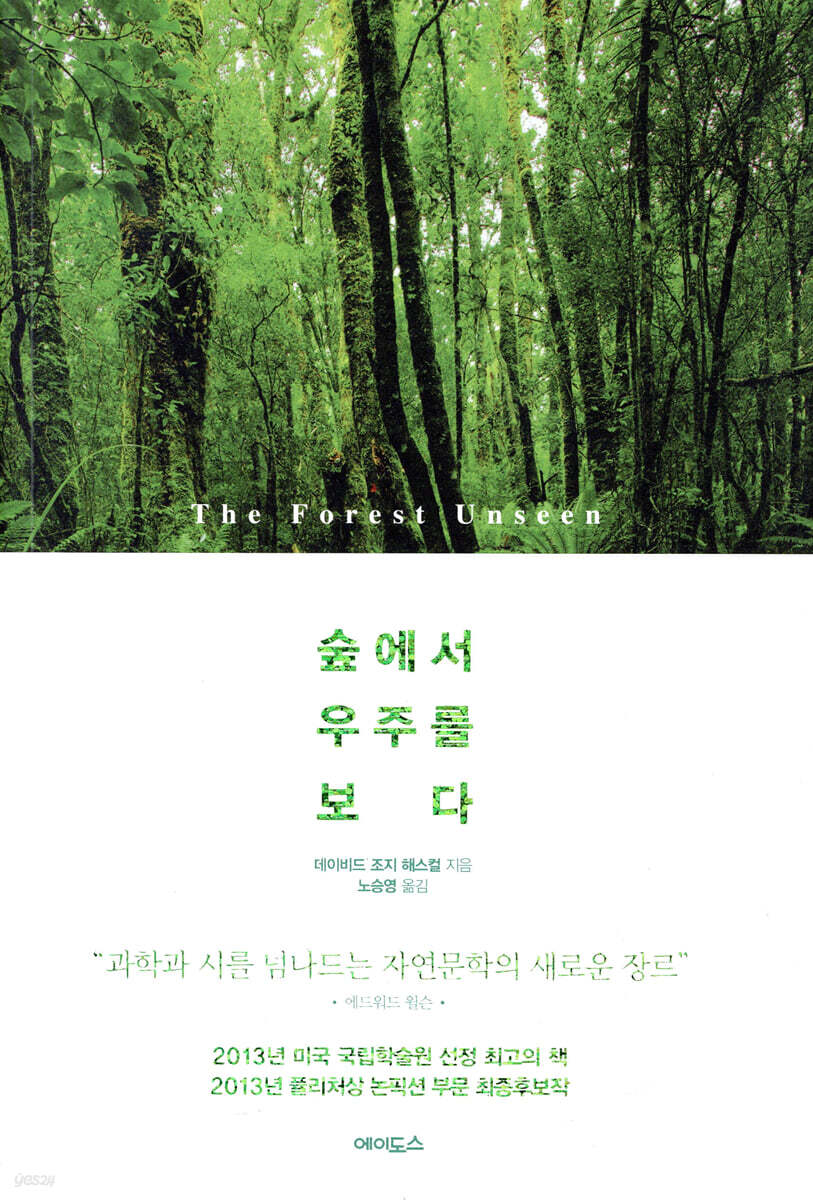 |
Description
Book Introduction
A 2013 National Academy of Sciences Best Book, a finalist for the Pulitzer Prize in Nonfiction, and PEN/E.
This book has emerged as a hot topic in the liberal arts science category, winning honorable mentions for the O. Wilson Science Writing Award.
By observing a patch of forest, the author presents a unique perspective on the lives and evolution of the elements that inhabit the natural world, from tiny creatures like lichens, mosses, and fungi to flowers, plants, trees, and animals like coyotes and deer.
Even in a tiny patch of forest, there is a hidden, vast, cyclical order that moves the natural world, and it is said to be like a universe, like a Buddhist mandala.
This book has emerged as a hot topic in the liberal arts science category, winning honorable mentions for the O. Wilson Science Writing Award.
By observing a patch of forest, the author presents a unique perspective on the lives and evolution of the elements that inhabit the natural world, from tiny creatures like lichens, mosses, and fungi to flowers, plants, trees, and animals like coyotes and deer.
Even in a tiny patch of forest, there is a hidden, vast, cyclical order that moves the natural world, and it is said to be like a universe, like a Buddhist mandala.
- You can preview some of the book's contents.
Preview
index
preface
January 1st wedding
Kepler's Gift on January 17th
January 21st experiment
Winter Plants on January 30th
February 2nd Footprints
February 16th Moss
February 28th Salamander
March 13th, Deer Ears
March 13th Snail
March 25th Spring Seasonal Plants
April 2 Chainsaw
April 2nd Flowers
April 8th Water Pipe
April 14th Moth
Birds of the Sunrise on April 16th
Walking Seeds on April 22nd
April 29th earthquake
May 7th wind
Vegetarians looting on May 18th
May 25th wave
June 2nd Exploration
June 10th Fern
June 20th Entanglement
July 2nd Fungi
July 13th Firefly
July 27th, Yangdal
August 1st Youngone and Coyote
August 8th Fart Mushroom
August 26th Yeochi
Around September 21st
September 23rd Hairy Caterpillar
September 23rd Eagle
September 26th Migratory Birds
Wave of alarms on October 5th
October 14th, Si-Gwa
October 29th Face
November 5th Light
November 15th, Ganeundari Saemae
November 21st Side Story
December 3rd Fallen Leaves
December 6th Underground Animals
December 26th, Udeumji
Observed on December 31st
Reviews
Acknowledgements
References
Search
January 1st wedding
Kepler's Gift on January 17th
January 21st experiment
Winter Plants on January 30th
February 2nd Footprints
February 16th Moss
February 28th Salamander
March 13th, Deer Ears
March 13th Snail
March 25th Spring Seasonal Plants
April 2 Chainsaw
April 2nd Flowers
April 8th Water Pipe
April 14th Moth
Birds of the Sunrise on April 16th
Walking Seeds on April 22nd
April 29th earthquake
May 7th wind
Vegetarians looting on May 18th
May 25th wave
June 2nd Exploration
June 10th Fern
June 20th Entanglement
July 2nd Fungi
July 13th Firefly
July 27th, Yangdal
August 1st Youngone and Coyote
August 8th Fart Mushroom
August 26th Yeochi
Around September 21st
September 23rd Hairy Caterpillar
September 23rd Eagle
September 26th Migratory Birds
Wave of alarms on October 5th
October 14th, Si-Gwa
October 29th Face
November 5th Light
November 15th, Ganeundari Saemae
November 21st Side Story
December 3rd Fallen Leaves
December 6th Underground Animals
December 26th, Udeumji
Observed on December 31st
Reviews
Acknowledgements
References
Search
Into the book
Unlike birds that survive the cold by foraging for food from winter's tight grip, plants survive winter without creating summer within themselves.
While the survival skills of birds are amazing, the resurgence of plants that appeared to be completely dead is a miracle that humans have never experienced before.
How can a dead person, especially one who is frozen to death, come back?
But they really do come back.
The way plants survive is similar to the trick of swallowing a sword.
You must be well prepared and pay close attention to the sharp edge.
The physiological structure of plants can only withstand cold temperatures.
Unlike chemical reactions that occur in the human body, biochemical reactions in plants can operate over a wide range of temperatures and do not stop when the temperature drops.
But when cooling reaches freezing, problems begin to arise.
As ice crystals grow larger, they penetrate, tear, and break the delicate internal tissues of plant cells.
Plants must swallow tens of thousands of knives every winter, but not one of them must touch their tender hearts. (42-43)
Scientific models and machine metaphors are useful, but they also have limitations.
Because it can't tell us everything we need to know.
What lies beyond the theories we apply to nature? This year, I've tried to put down my scientific tools and listen.
We wanted to approach nature without forming hypotheses, without constructing a data extraction system, without devising lesson plans to convey answers to students, and without using machines and observation equipment.
I realized how rich science is, but at the same time how impoverished it is in scale and spirit.
It is unfortunate that listening training is missing from the formal process of cultivating future scientists.
Science that fails to listen is doomed to unnecessary failure.
Because of this, we will become more mentally dry and perhaps more harmful beings.
What Christmas gift will a listening culture give the forest?
What was the epiphany that flashed through my mind as I watched the squirrel sunbathing? It wasn't a warning to turn away from science.
Knowing about animals enriches our experience of them, and science is an effective way to gain a deeper understanding of them.
What I've come to realize is that every story is a little bit wrapped in fiction.
A fiction that simplifies common sense, a fiction of cultural myopia, a fiction driven by the storyteller's pride.
I learned to enjoy stories to my heart's content, but not to confuse them with the splendid and ineffable nature of the world. (335-336)
While the survival skills of birds are amazing, the resurgence of plants that appeared to be completely dead is a miracle that humans have never experienced before.
How can a dead person, especially one who is frozen to death, come back?
But they really do come back.
The way plants survive is similar to the trick of swallowing a sword.
You must be well prepared and pay close attention to the sharp edge.
The physiological structure of plants can only withstand cold temperatures.
Unlike chemical reactions that occur in the human body, biochemical reactions in plants can operate over a wide range of temperatures and do not stop when the temperature drops.
But when cooling reaches freezing, problems begin to arise.
As ice crystals grow larger, they penetrate, tear, and break the delicate internal tissues of plant cells.
Plants must swallow tens of thousands of knives every winter, but not one of them must touch their tender hearts. (42-43)
Scientific models and machine metaphors are useful, but they also have limitations.
Because it can't tell us everything we need to know.
What lies beyond the theories we apply to nature? This year, I've tried to put down my scientific tools and listen.
We wanted to approach nature without forming hypotheses, without constructing a data extraction system, without devising lesson plans to convey answers to students, and without using machines and observation equipment.
I realized how rich science is, but at the same time how impoverished it is in scale and spirit.
It is unfortunate that listening training is missing from the formal process of cultivating future scientists.
Science that fails to listen is doomed to unnecessary failure.
Because of this, we will become more mentally dry and perhaps more harmful beings.
What Christmas gift will a listening culture give the forest?
What was the epiphany that flashed through my mind as I watched the squirrel sunbathing? It wasn't a warning to turn away from science.
Knowing about animals enriches our experience of them, and science is an effective way to gain a deeper understanding of them.
What I've come to realize is that every story is a little bit wrapped in fiction.
A fiction that simplifies common sense, a fiction of cultural myopia, a fiction driven by the storyteller's pride.
I learned to enjoy stories to my heart's content, but not to confuse them with the splendid and ineffable nature of the world. (335-336)
---pp.335~336
GOODS SPECIFICS
- Date of publication: June 27, 2014
- Page count, weight, size: 374 pages | 616g | 145*215*22mm
- ISBN13: 9791185415031
- ISBN10: 1185415033
You may also like
카테고리
korean


korean

![GQ KOREA Mark (Monthly): December [2025]](http://librairie.coreenne.fr/cdn/shop/files/8ef265dbbfbf186523ed75ba7319009d.jpg?v=1765340328&width=3840)


