

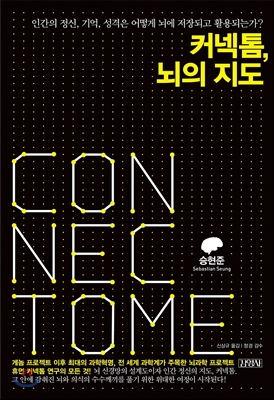
Connectome, a map of the brain
 |
Description
Book Introduction
The greatest scientific revolution since the Genome Project: the connectome!
The secrets of humanity and the mind are finally revealed by the brain's neural network!
The human connectome, an unprecedented project to understand the entire network structure and operating principles of 100 billion neurons, is everything you need to know about this research! From how all human memories, emotions, and personality are stored and utilized in the brain to fundamental questions about human nature, the connectome is the blueprint for the brain's neural networks and a map of the human mind, holding the answers to all these mysteries.
Exciting experiments and astonishing discoveries aiming to uncover the secrets of the brain and consciousness hidden within! Is the mind merely the neural activity occurring within the human brain? What conclusion will we reach at the end of this bold and wondrous challenge? This fascinating and exciting journey unfolds vividly, transcending medical advancements and transforming the very meaning of life and death, bringing revolutionary change to future society!
The secrets of humanity and the mind are finally revealed by the brain's neural network!
The human connectome, an unprecedented project to understand the entire network structure and operating principles of 100 billion neurons, is everything you need to know about this research! From how all human memories, emotions, and personality are stored and utilized in the brain to fundamental questions about human nature, the connectome is the blueprint for the brain's neural networks and a map of the human mind, holding the answers to all these mysteries.
Exciting experiments and astonishing discoveries aiming to uncover the secrets of the brain and consciousness hidden within! Is the mind merely the neural activity occurring within the human brain? What conclusion will we reach at the end of this bold and wondrous challenge? This fascinating and exciting journey unfolds vividly, transcending medical advancements and transforming the very meaning of life and death, bringing revolutionary change to future society!
- You can preview some of the book's contents.
Preview
index
Part 1: Does size matter?
Chapter 1: Genius and Madness
Chapter 2: The Boundary Debate
Part 2 Connectionism
Chapter 3: Neurons Are Not Islands
All neurons to the bottom of Chapter 4
Chapter 5: Assembly of Memory
Part 3: Nature and Nurture
Chapter 6: Managing the Forest of Genes
Chapter 7: Renewing Your Potential
Part 4 Connectomics
Chapter 8: Seeing is Believing
Chapter 9: Following the Footsteps
Cut and divide into 10 pieces
Chapter 11: Decoding the Code
Compare Chapter 12
Chapter 13: Making Changes
Part 5: Beyond Human Limits
Chapter 14 Freezing or Pickling
Chapter 15 ~ Save (or Save)
Chapter 1: Genius and Madness
Chapter 2: The Boundary Debate
Part 2 Connectionism
Chapter 3: Neurons Are Not Islands
All neurons to the bottom of Chapter 4
Chapter 5: Assembly of Memory
Part 3: Nature and Nurture
Chapter 6: Managing the Forest of Genes
Chapter 7: Renewing Your Potential
Part 4 Connectomics
Chapter 8: Seeing is Believing
Chapter 9: Following the Footsteps
Cut and divide into 10 pieces
Chapter 11: Decoding the Code
Compare Chapter 12
Chapter 13: Making Changes
Part 5: Beyond Human Limits
Chapter 14 Freezing or Pickling
Chapter 15 ~ Save (or Save)
Into the book
Can cortical areas acquire new functions after brain damage? Evidence suggests this is possible in patients recovering from stroke.
But even stronger evidence comes from cases of brain damage in childhood.
Epilepsy is defined as recurrent, spontaneous seizures or episodes of excessive neurological activity.
In children who have seizures so frequent that they become mentally and physically debilitating, one hemisphere of the brain is removed for treatment.
This is one of the most radical neurosurgical procedures, and it is remarkable that most children recover successfully from it.
Although the surgery will result in impaired movement of the opposite hand, the children will be able to walk.
Even running.
Their intellectual abilities are mostly intact, and sometimes even improve after successful surgical treatment of seizure symptoms.
Pages 69-70
For most of their journey through the brain, axons grow in a straight line, like the trunk of a tree.
Once the growth cone reaches its destination, the axon begins to branch.
Scientists believe, with good reason, that this final branching is not under strict genetic control.
If this is true, the overall shape of a neuron may be genetically determined, but its detailed branching pattern is largely random.
Similarly, trees in a pine forest look similar to each other because they grow according to the same genetic plan.
However, no tree has branches that are exactly the same shape as the others, as growth is not only random but also influenced by the environment.
Page 186
Could it ever be possible to read memories from your connectome? Could someone read your perceptions or thoughts by measuring and decoding the spikes of every neuron in your brain? Some neuroscientists believe this will become possible once the technology to measure spikes is sufficiently advanced.
How do they think this is possible? When we see Jennifer Aniston neurons firing, we can already guess that the person is perceiving Jennifer Aniston.
This small success led neuroscientists to speculate that the spikes emitted by every neuron could provide a complete picture of our thoughts or perceptions.
Page 296
Heaven seems like a truly wonderful place, but how can I get there? That's the difficult question.
As will be explained in this chapter, only one method has been proposed, which is not yet very feasible.
It simulates the electrical signals that travel through the network of neurons in our brain.
It is said that a computer powerful enough to perform such simulations could be developed by the end of this century.
Discovering the connectome is essential for properly wiring neuron models in computer simulations.
For now, it's unimaginable to discover that connectome without destroying the brain.
This may sound worrying, but the Christian heaven is no better.
To go to heaven, you must first die.
Page 404
But even stronger evidence comes from cases of brain damage in childhood.
Epilepsy is defined as recurrent, spontaneous seizures or episodes of excessive neurological activity.
In children who have seizures so frequent that they become mentally and physically debilitating, one hemisphere of the brain is removed for treatment.
This is one of the most radical neurosurgical procedures, and it is remarkable that most children recover successfully from it.
Although the surgery will result in impaired movement of the opposite hand, the children will be able to walk.
Even running.
Their intellectual abilities are mostly intact, and sometimes even improve after successful surgical treatment of seizure symptoms.
Pages 69-70
For most of their journey through the brain, axons grow in a straight line, like the trunk of a tree.
Once the growth cone reaches its destination, the axon begins to branch.
Scientists believe, with good reason, that this final branching is not under strict genetic control.
If this is true, the overall shape of a neuron may be genetically determined, but its detailed branching pattern is largely random.
Similarly, trees in a pine forest look similar to each other because they grow according to the same genetic plan.
However, no tree has branches that are exactly the same shape as the others, as growth is not only random but also influenced by the environment.
Page 186
Could it ever be possible to read memories from your connectome? Could someone read your perceptions or thoughts by measuring and decoding the spikes of every neuron in your brain? Some neuroscientists believe this will become possible once the technology to measure spikes is sufficiently advanced.
How do they think this is possible? When we see Jennifer Aniston neurons firing, we can already guess that the person is perceiving Jennifer Aniston.
This small success led neuroscientists to speculate that the spikes emitted by every neuron could provide a complete picture of our thoughts or perceptions.
Page 296
Heaven seems like a truly wonderful place, but how can I get there? That's the difficult question.
As will be explained in this chapter, only one method has been proposed, which is not yet very feasible.
It simulates the electrical signals that travel through the network of neurons in our brain.
It is said that a computer powerful enough to perform such simulations could be developed by the end of this century.
Discovering the connectome is essential for properly wiring neuron models in computer simulations.
For now, it's unimaginable to discover that connectome without destroying the brain.
This may sound worrying, but the Christian heaven is no better.
To go to heaven, you must first die.
Page 404
---p.404
Publisher's Review
Throwing the topic of connectome to the intellectual world around the world
A unique book that has garnered attention from world-renowned scholars and the media!
In April 2013, US President Obama announced plans to invest more than $100 million in a brain project to develop technologies to measure human brain activity and uncover how it works.
The goal of the project, called the Brain Initiative, is to complete a complete map of all the pathways and activities of the human brain, revealing how neurons within it interact.
The European Union also plans to invest more than €1 billion in brain research starting in 2013.
At the center of the brain research, which is being conducted competitively to solve the mysteries of the brain, which remains the greatest and final mystery of the human body, is the 'connectome', a map of the brain that contains all the connections and operating principles of its 100 billion nerve cells.
This book is the first popular book written by MIT professor Dr. Seung Hyun-jun (Sebastian Seung), a world authority in the field of 'connectome' research, which is receiving attention from the scientific community around the world and called the greatest scientific revolution since the Genome Project, about the connectome research process, its achievements, and future vision. It is evaluated as the best scientific book showing the current state of advanced brain science and its future prospects.
Dr. Seung-Hyun Jun introduced the concept of 'connectome' in his TED talk titled 'I am my connectome' in 2010. This lecture received worldwide attention and became the catalyst for popularizing the concept of 'connectome'.
This book, written based on this lecture, not only raised the topic of "connectome" in the global intellectual community as soon as it was published, but also attracted the attention of world-renowned scholars and the media, and was selected as one of the top 10 non-fiction books by the Wall Street Journal.
In this book, Dr. Seung-Hyun Jun provides a fascinating account of the experiments of countless scientists who have attempted to understand the structure of the brain and unravel its mysteries, from 19th-century phrenology to connectome research utilizing cutting-edge technologies like fMRI, and the development of neuroscience to map the brain.
Not only does it explain the principles by which our memories, minds, and personalities are stored and utilized in the brain, but it also delves into the future prospects of connectomics, which will completely change the meaning of life and death, drawing readers into the unfamiliar world of connectomes.
The most daring and ambitious challenge to the human brain and mind!
The vision and future prospects of human connectome research, a brain science project that has captured the attention of the global scientific community!
The reason the scientific community is paying attention to connectome research is because the solutions to mental illnesses such as dementia, stroke, Parkinson's disease, and depression are contained within the connectome.
And furthermore, it can explain the understanding of human nature and even the differences between people.
For decades, the most scientific basis for explaining human characteristics has been genetics.
However, genes alone cannot explain the specific causes of mental illness, how each human being came to have the brain structure they do today, or where differences in the human mind originate.
Considering that all of the basic human behaviors—thinking, deciding, and acting—are achieved through electrical and chemical signal transmission between neurons in the brain, it can be said that what makes us who we are, that is, what determines our uniqueness, is our connectome.
In this context, Dr. Seunghyun Jun says:
"I am my connectome."
Unlike genes, connectomes change throughout life through processes of reconnection, reweighting, rewiring, and regeneration.
This book provides a fascinating account of various experimental results showing how the connectome, which forms the basis of the human mind, memory, and personality, changes through these four processes, and how genes and the environment relate to changes in the connectome. It also explains the bold and ambitious challenges of numerous scientists to find ways to complete and change the human connectome.
There are still technological limitations that must be overcome to complete the connectome, which can be considered a map of the human mind and a blueprint for the spirit.
However, Dr. Seung-Hyun Jun predicts that the human connectome will be completed before the end of the 21st century, and says that the completion of the human connectome will not only bring medical advancements in the treatment of mental disorders, but will also completely change our thinking about what it means to be human.
And going one step further, it vividly depicts the revolutionary future that the discovery of the connectome will bring, from cryonics, which freezes the human body and later revives it, to mind uploading, which uploads the human mind to a computer and allows it to live as a computer simulation.
A unique book that has garnered attention from world-renowned scholars and the media!
In April 2013, US President Obama announced plans to invest more than $100 million in a brain project to develop technologies to measure human brain activity and uncover how it works.
The goal of the project, called the Brain Initiative, is to complete a complete map of all the pathways and activities of the human brain, revealing how neurons within it interact.
The European Union also plans to invest more than €1 billion in brain research starting in 2013.
At the center of the brain research, which is being conducted competitively to solve the mysteries of the brain, which remains the greatest and final mystery of the human body, is the 'connectome', a map of the brain that contains all the connections and operating principles of its 100 billion nerve cells.
This book is the first popular book written by MIT professor Dr. Seung Hyun-jun (Sebastian Seung), a world authority in the field of 'connectome' research, which is receiving attention from the scientific community around the world and called the greatest scientific revolution since the Genome Project, about the connectome research process, its achievements, and future vision. It is evaluated as the best scientific book showing the current state of advanced brain science and its future prospects.
Dr. Seung-Hyun Jun introduced the concept of 'connectome' in his TED talk titled 'I am my connectome' in 2010. This lecture received worldwide attention and became the catalyst for popularizing the concept of 'connectome'.
This book, written based on this lecture, not only raised the topic of "connectome" in the global intellectual community as soon as it was published, but also attracted the attention of world-renowned scholars and the media, and was selected as one of the top 10 non-fiction books by the Wall Street Journal.
In this book, Dr. Seung-Hyun Jun provides a fascinating account of the experiments of countless scientists who have attempted to understand the structure of the brain and unravel its mysteries, from 19th-century phrenology to connectome research utilizing cutting-edge technologies like fMRI, and the development of neuroscience to map the brain.
Not only does it explain the principles by which our memories, minds, and personalities are stored and utilized in the brain, but it also delves into the future prospects of connectomics, which will completely change the meaning of life and death, drawing readers into the unfamiliar world of connectomes.
The most daring and ambitious challenge to the human brain and mind!
The vision and future prospects of human connectome research, a brain science project that has captured the attention of the global scientific community!
The reason the scientific community is paying attention to connectome research is because the solutions to mental illnesses such as dementia, stroke, Parkinson's disease, and depression are contained within the connectome.
And furthermore, it can explain the understanding of human nature and even the differences between people.
For decades, the most scientific basis for explaining human characteristics has been genetics.
However, genes alone cannot explain the specific causes of mental illness, how each human being came to have the brain structure they do today, or where differences in the human mind originate.
Considering that all of the basic human behaviors—thinking, deciding, and acting—are achieved through electrical and chemical signal transmission between neurons in the brain, it can be said that what makes us who we are, that is, what determines our uniqueness, is our connectome.
In this context, Dr. Seunghyun Jun says:
"I am my connectome."
Unlike genes, connectomes change throughout life through processes of reconnection, reweighting, rewiring, and regeneration.
This book provides a fascinating account of various experimental results showing how the connectome, which forms the basis of the human mind, memory, and personality, changes through these four processes, and how genes and the environment relate to changes in the connectome. It also explains the bold and ambitious challenges of numerous scientists to find ways to complete and change the human connectome.
There are still technological limitations that must be overcome to complete the connectome, which can be considered a map of the human mind and a blueprint for the spirit.
However, Dr. Seung-Hyun Jun predicts that the human connectome will be completed before the end of the 21st century, and says that the completion of the human connectome will not only bring medical advancements in the treatment of mental disorders, but will also completely change our thinking about what it means to be human.
And going one step further, it vividly depicts the revolutionary future that the discovery of the connectome will bring, from cryonics, which freezes the human body and later revives it, to mind uploading, which uploads the human mind to a computer and allows it to live as a computer simulation.
GOODS SPECIFICS
- Date of issue: April 14, 2014
- Page count, weight, size: 484 pages | 797g | 149*210*30mm
- ISBN13: 9788934967057
- ISBN10: 8934967056
You may also like
카테고리
korean


korean

![ELLE 엘르 스페셜 에디션 A형 : 12월 [2025]](http://librairie.coreenne.fr/cdn/shop/files/b8e27a3de6c9538896439686c6b0e8fb.jpg?v=1766436872&width=3840)


