

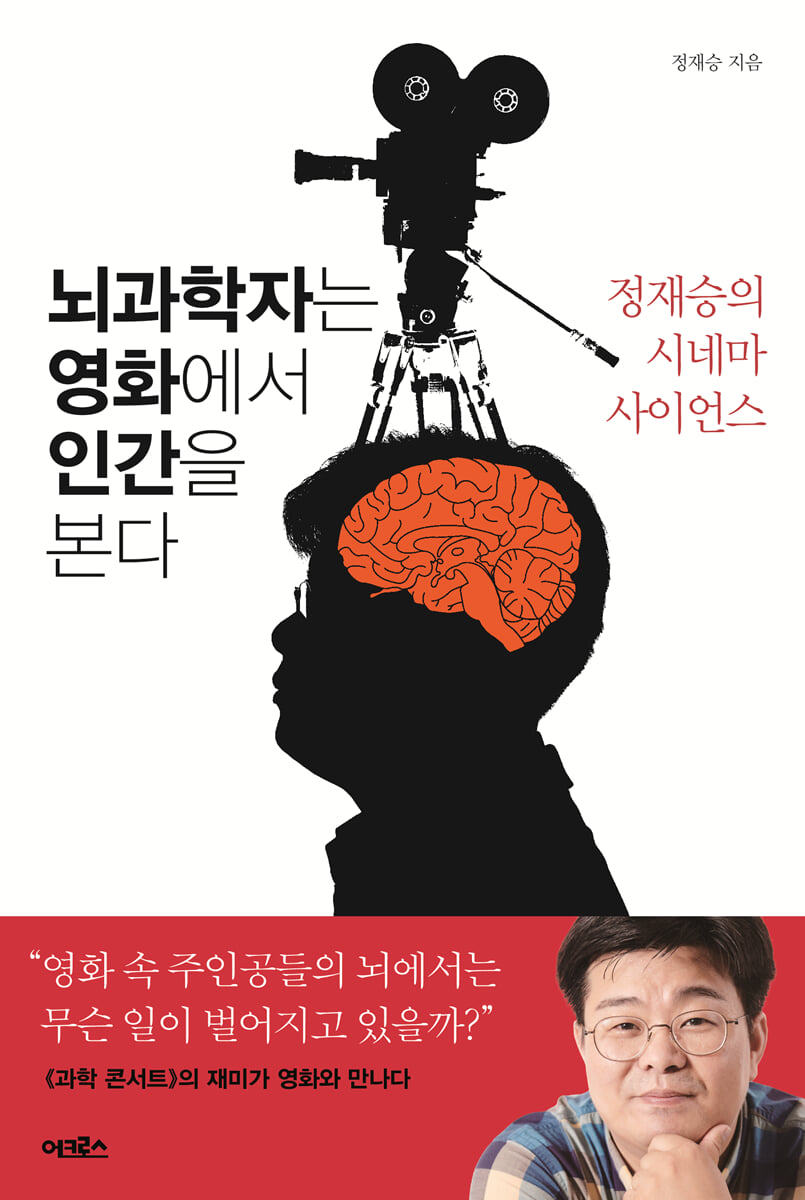
Neuroscientists see humans in movies
 |
Description
Book Introduction
The 'Brain Science' section of 'Physicists See Science in Film'.
This is a story about neuroscience in a movie that allows me to discover hidden science through myself and discover a part of myself I didn't know about through science.
If the previous work, "A Physicist Sees Science in Film," was a process of young scientists sharing the science they discovered on screen, this book, "A Neuroscientist Sees Humans in Film," is a consolation that a neuroscientist in his forties offers to life in his own way.
Why do these symptoms, which we can't control—the obsessive-compulsive disorder that makes it difficult to tolerate dirt, the compulsive need for everything to be in its proper place, the amnesia that causes us to forget even loved ones—occur? This book examines these mental illnesses, which have become a major problem in today's world where deep relationships are scarce and only superficial ones proliferate, through film.
Along with psychological, psychoanalytic, and sociological approaches, the author focuses on the question, 'What changes occur in the human brain when such diseases occur?'
However, the author does not limit mental illness to diseases determined by genetic traits and does not prioritize the method of controlling neurotransmitters with drugs.
The book emphasizes that research in the field of neuroscience is not intended to solidify 'genetic determinism', but rather, along with research in the fields of psychology, psychoanalysis, and sociology, is 'ultimately an effort in a different direction to make humans less sick'.
Chapter 13 of Part 1 of this book and Part 2, “Biotechnology, Answering Human Desires,” are manuscripts from the life sciences section of “Physicists See Science in Film (2002 Edition)” that are closely related to neuroscience, rearranged.
It has been reorganized to enable a broad understanding of the field of neuroscience, encompassing not only the relationship between the brain and consciousness but also the relationship between the brain and the body.
This is a story about neuroscience in a movie that allows me to discover hidden science through myself and discover a part of myself I didn't know about through science.
If the previous work, "A Physicist Sees Science in Film," was a process of young scientists sharing the science they discovered on screen, this book, "A Neuroscientist Sees Humans in Film," is a consolation that a neuroscientist in his forties offers to life in his own way.
Why do these symptoms, which we can't control—the obsessive-compulsive disorder that makes it difficult to tolerate dirt, the compulsive need for everything to be in its proper place, the amnesia that causes us to forget even loved ones—occur? This book examines these mental illnesses, which have become a major problem in today's world where deep relationships are scarce and only superficial ones proliferate, through film.
Along with psychological, psychoanalytic, and sociological approaches, the author focuses on the question, 'What changes occur in the human brain when such diseases occur?'
However, the author does not limit mental illness to diseases determined by genetic traits and does not prioritize the method of controlling neurotransmitters with drugs.
The book emphasizes that research in the field of neuroscience is not intended to solidify 'genetic determinism', but rather, along with research in the fields of psychology, psychoanalysis, and sociology, is 'ultimately an effort in a different direction to make humans less sick'.
Chapter 13 of Part 1 of this book and Part 2, “Biotechnology, Answering Human Desires,” are manuscripts from the life sciences section of “Physicists See Science in Film (2002 Edition)” that are closely related to neuroscience, rearranged.
It has been reorganized to enable a broad understanding of the field of neuroscience, encompassing not only the relationship between the brain and consciousness but also the relationship between the brain and the body.
- You can preview some of the book's contents.
Preview
index
In publishing the book
PART 1.
Psycho Cinema: A Look Inside the Human Brain
Cinema 1.
Rain Man | An autistic person who cannot open his mind's eye
Cinema 2.
Idaho | Cataplexy, Dangerous Sleep
Cinema 3.
Cybill | Multiple minds inhabiting a single body, multiple personalities
Cinema 4.
The White War | The Grief of Survivors, Post-Traumatic Stress Disorder
Cinema 5.
301 302 | Extreme rejection and obsession with food
Cinema 6.
It can't get any better than this | The shackles of self-imposed repetition
Cinema 7.
Boys Don't Cry | Sex Mismatched with the Body
Cinema 8.
One Flew Over the Cuckoo's Nest | The Asylum: The Myth of Fear
Cinema 9.
Gas Station Attack | Unprovoked Crime: Is Violence Innate?
[Simultaneous Screening] Memories of Murder: Actions and Expressions Speak Louder Than Words
Cinema 10.
Minority Report | The Crime-Free City
[Simultaneous Screening] Minority Report: Flying high on a backpack rotor?
Cinema 11.
Memento | Engraving Lost Memories into Your Body
[Simultaneous Screening] Starship Troopers: Does Eating Brains Make You Smarter?
Cinema 12.
Inception | Can Dreams Be Manipulated?
[Simultaneous Screening] Insomnia: White Nights Cause Insomnia
Cinema 13.
Reincarnation | How Do Scientists Explain Hypnosis and Past Life?
[ART 2.
Biotechnology: Answering Human Desires
Cinema 14.
Gattaca | The Human Genome Project Reveals the Blueprint of Life
Cinema 15.
Unbreakable | Imagining Osteogenesis Imperfecta
Cinema 16.
Barlows | The World's Smallest People
[Simultaneous Screening] Moulin Rouge: The Painter Lautrec
Cinema 17.
The Nutty Professor | Is it a crime to neglect your daughter's obesity?
Cinema 18.
Twins | A Genetically Engineered Comedy That's Not All Laughable
Cinema 19.
Tom and Jerry | Genetically Engineering a Mice Smarter Than Cats
Cinema 20.
Multiplicity | Will human cloning technology create lizard-humans?
Cinema 21.
Alien | Space Travel in a Hibernation Capsule
[Simultaneous Screening] Joe's Apartment: A Lesson for Cockroaches!
Cinema 22.
Women Who Die to Live | Women Destined to Live to Death
[Simultaneous Screening] Does the Academy Award Extend an Actor's Life?
Cinema 23.
Martian Invasion | Attaching a Dog's Body to a Human Head
Cinema 24.
Galaxy Express 999 | Embark on a Journey to Live Forever
Cinema 25.
Dracula | Dracula was a rabid patient.
[Simultaneous Screening] Spider-Man: 'Spider-Man' is Just a Movie
Cinema 26.
Outbreak | Knowing about the Ebola virus makes the movie even more enjoyable.
Cinema 27.
Mickey Mouse | Mickey Mouse is evolving too.
[Simultaneous Screening] Knowing Evolution Will Make You See Aliens
Cinema 28.
Moon and the Peak | The Secret of Biogas, the Fart
Cinema 29.
Doctor Dolittle | Can Tarzan Talk to Cheetahs?
[Simultaneous Screening] Waterworld: Are Cow Trims Causing Global Warming?
Cinema 30.
Gorillas in the Fog | Finding Humanity Among Chimpanzees, Gorillas, and Orangutans
PART 1.
Psycho Cinema: A Look Inside the Human Brain
Cinema 1.
Rain Man | An autistic person who cannot open his mind's eye
Cinema 2.
Idaho | Cataplexy, Dangerous Sleep
Cinema 3.
Cybill | Multiple minds inhabiting a single body, multiple personalities
Cinema 4.
The White War | The Grief of Survivors, Post-Traumatic Stress Disorder
Cinema 5.
301 302 | Extreme rejection and obsession with food
Cinema 6.
It can't get any better than this | The shackles of self-imposed repetition
Cinema 7.
Boys Don't Cry | Sex Mismatched with the Body
Cinema 8.
One Flew Over the Cuckoo's Nest | The Asylum: The Myth of Fear
Cinema 9.
Gas Station Attack | Unprovoked Crime: Is Violence Innate?
[Simultaneous Screening] Memories of Murder: Actions and Expressions Speak Louder Than Words
Cinema 10.
Minority Report | The Crime-Free City
[Simultaneous Screening] Minority Report: Flying high on a backpack rotor?
Cinema 11.
Memento | Engraving Lost Memories into Your Body
[Simultaneous Screening] Starship Troopers: Does Eating Brains Make You Smarter?
Cinema 12.
Inception | Can Dreams Be Manipulated?
[Simultaneous Screening] Insomnia: White Nights Cause Insomnia
Cinema 13.
Reincarnation | How Do Scientists Explain Hypnosis and Past Life?
[ART 2.
Biotechnology: Answering Human Desires
Cinema 14.
Gattaca | The Human Genome Project Reveals the Blueprint of Life
Cinema 15.
Unbreakable | Imagining Osteogenesis Imperfecta
Cinema 16.
Barlows | The World's Smallest People
[Simultaneous Screening] Moulin Rouge: The Painter Lautrec
Cinema 17.
The Nutty Professor | Is it a crime to neglect your daughter's obesity?
Cinema 18.
Twins | A Genetically Engineered Comedy That's Not All Laughable
Cinema 19.
Tom and Jerry | Genetically Engineering a Mice Smarter Than Cats
Cinema 20.
Multiplicity | Will human cloning technology create lizard-humans?
Cinema 21.
Alien | Space Travel in a Hibernation Capsule
[Simultaneous Screening] Joe's Apartment: A Lesson for Cockroaches!
Cinema 22.
Women Who Die to Live | Women Destined to Live to Death
[Simultaneous Screening] Does the Academy Award Extend an Actor's Life?
Cinema 23.
Martian Invasion | Attaching a Dog's Body to a Human Head
Cinema 24.
Galaxy Express 999 | Embark on a Journey to Live Forever
Cinema 25.
Dracula | Dracula was a rabid patient.
[Simultaneous Screening] Spider-Man: 'Spider-Man' is Just a Movie
Cinema 26.
Outbreak | Knowing about the Ebola virus makes the movie even more enjoyable.
Cinema 27.
Mickey Mouse | Mickey Mouse is evolving too.
[Simultaneous Screening] Knowing Evolution Will Make You See Aliens
Cinema 28.
Moon and the Peak | The Secret of Biogas, the Fart
Cinema 29.
Doctor Dolittle | Can Tarzan Talk to Cheetahs?
[Simultaneous Screening] Waterworld: Are Cow Trims Causing Global Warming?
Cinema 30.
Gorillas in the Fog | Finding Humanity Among Chimpanzees, Gorillas, and Orangutans
Detailed image
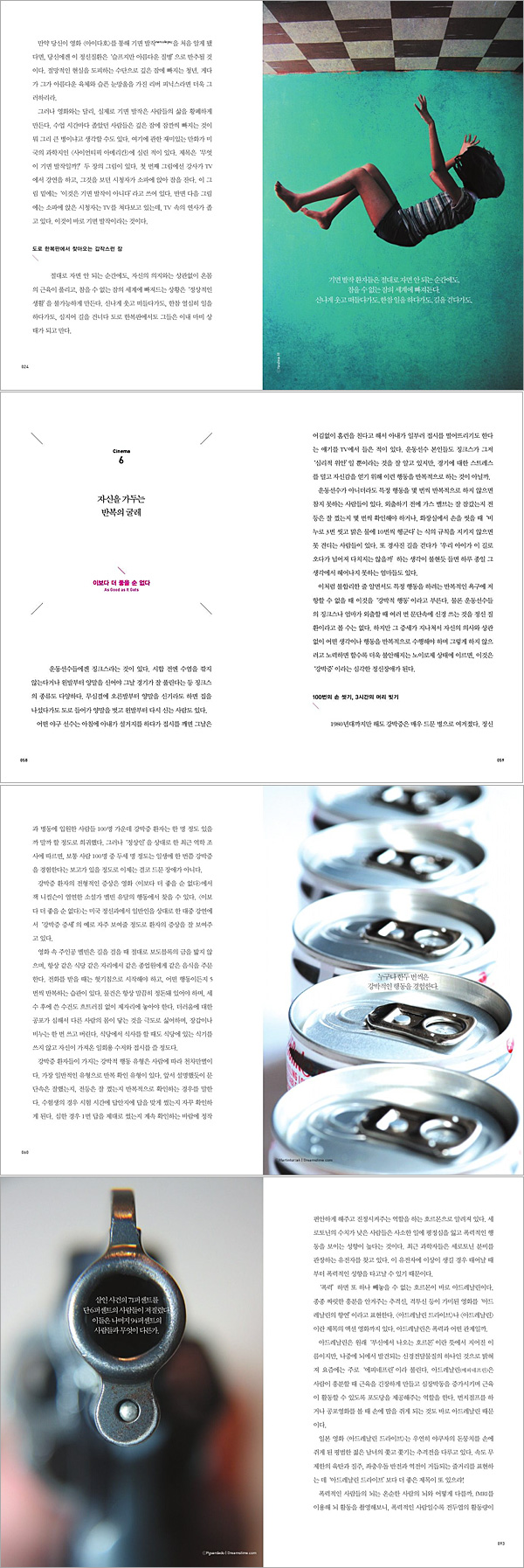
Into the book
Studies of the brain structure of deceased autistic patients have shown that the amygdala and hippocampus, parts of the limbic system in the inner temporal lobe of the brain, are underdeveloped.
The amygdala is an area responsible for emotions and aggression, and the hippocampus is an area responsible for short-term memory, stimulus input, and learning.
Additionally, MRI (magnetic resonance imaging) studies show that the cerebellum of autistic children is smaller than that of normal children.
The cerebellum is known as an area involved in 'attention focus'.
-Cinema 1.
Rain Man | Among autistic patients who cannot open their mind's eye
He meets his mother in a dream (hallucination) brought on by a cataplexy, and they sing together and have a good time.
Waking up from his dream, he heads to Idaho in search of his mother, just as salmon, using their instincts as a compass, swim against the current to find their birthplace.
Could this be why the image of a school of salmon swimming against the current often appears, and why his last name is Waters (water source)?
-Cinema 2.
Idaho | From narcolepsy to dangerous sleep
In modern society, obsessed with materialism, brutal crimes are on the rise.
Even if we are lucky enough to survive in it, it is difficult to avoid ‘excessive mental stress.’
Post-traumatic stress disorder is often featured in films because it serves as a device that clearly shows how modern material civilization devastates the human mind, and post-war syndrome can be seen as its most extreme form.
We, who live in the modern era, are precarious beings thrown into the battlefield called the 'city'.
-Cinema 4.
The White War | The Grief of a Survivor, Post-Traumatic Stress Disorder
When you cannot resist the repetitive desire to perform a certain behavior even though you know it is irrational, it is called a 'compulsive behavior'.
Of course, athletes' jinxes or the mother's constant fretting about locking the door when she goes out cannot be considered mental illnesses.
However, if the symptoms become excessive and lead to a neurotic state where one must repeatedly perform certain thoughts or actions regardless of one's will and the more one tries not to do so, the more anxious one becomes, this becomes a serious mental disorder called 'obsessive-compulsive disorder'.
-Cinema 6.
It can't get any better than this | Among the shackles of repetition that imprison you
Cloning technology could be used to extend life.
We age not because differentiated cells reach the end of their lifespan, but because stem cells are no longer able to produce differentiated cells in sufficient numbers and quantities.
Nuclear transfer technology, which is a method of creating Dolly the cloned sheep by inserting DNA from a somatic cell into an egg cell, suggests that it is possible to use differentiated cells to create new stem cells and live long lives.
-Cinema 20.
Multiplicity | Will human cloning technology create lizard-humans?
A few simple experiments have revealed that a hormone called enkephalin, secreted from the brain of animals, induces hibernation.
If this is true, wouldn't it be possible to synthesize enkephalin and inject it into humans, allowing them to hibernate? Furthermore, since hearts could be preserved in enkephalin solution for several days, doctors wouldn't have to run around carrying hearts during organ transplants.
However, the chemical structure and role of enkephalin hormones in the body have not yet been elucidated, so it can be said that the current research is insufficient.
-Cinema 21.
Alien | From a space trip in a hibernation capsule
The amygdala is an area responsible for emotions and aggression, and the hippocampus is an area responsible for short-term memory, stimulus input, and learning.
Additionally, MRI (magnetic resonance imaging) studies show that the cerebellum of autistic children is smaller than that of normal children.
The cerebellum is known as an area involved in 'attention focus'.
-Cinema 1.
Rain Man | Among autistic patients who cannot open their mind's eye
He meets his mother in a dream (hallucination) brought on by a cataplexy, and they sing together and have a good time.
Waking up from his dream, he heads to Idaho in search of his mother, just as salmon, using their instincts as a compass, swim against the current to find their birthplace.
Could this be why the image of a school of salmon swimming against the current often appears, and why his last name is Waters (water source)?
-Cinema 2.
Idaho | From narcolepsy to dangerous sleep
In modern society, obsessed with materialism, brutal crimes are on the rise.
Even if we are lucky enough to survive in it, it is difficult to avoid ‘excessive mental stress.’
Post-traumatic stress disorder is often featured in films because it serves as a device that clearly shows how modern material civilization devastates the human mind, and post-war syndrome can be seen as its most extreme form.
We, who live in the modern era, are precarious beings thrown into the battlefield called the 'city'.
-Cinema 4.
The White War | The Grief of a Survivor, Post-Traumatic Stress Disorder
When you cannot resist the repetitive desire to perform a certain behavior even though you know it is irrational, it is called a 'compulsive behavior'.
Of course, athletes' jinxes or the mother's constant fretting about locking the door when she goes out cannot be considered mental illnesses.
However, if the symptoms become excessive and lead to a neurotic state where one must repeatedly perform certain thoughts or actions regardless of one's will and the more one tries not to do so, the more anxious one becomes, this becomes a serious mental disorder called 'obsessive-compulsive disorder'.
-Cinema 6.
It can't get any better than this | Among the shackles of repetition that imprison you
Cloning technology could be used to extend life.
We age not because differentiated cells reach the end of their lifespan, but because stem cells are no longer able to produce differentiated cells in sufficient numbers and quantities.
Nuclear transfer technology, which is a method of creating Dolly the cloned sheep by inserting DNA from a somatic cell into an egg cell, suggests that it is possible to use differentiated cells to create new stem cells and live long lives.
-Cinema 20.
Multiplicity | Will human cloning technology create lizard-humans?
A few simple experiments have revealed that a hormone called enkephalin, secreted from the brain of animals, induces hibernation.
If this is true, wouldn't it be possible to synthesize enkephalin and inject it into humans, allowing them to hibernate? Furthermore, since hearts could be preserved in enkephalin solution for several days, doctors wouldn't have to run around carrying hearts during organ transplants.
However, the chemical structure and role of enkephalin hormones in the body have not yet been elucidated, so it can be said that the current research is insufficient.
-Cinema 21.
Alien | From a space trip in a hibernation capsule
---From the text
Publisher's Review
What's really going on in the brains of the film's protagonists? This book is the "Brain Science" edition of "Physicists See Science in Film," which has sold over 200,000 copies.
If the previous work presented the pleasure of learning science through film and enjoying film through science, this time it delves into the abyss of humanity on screen.
In the stories created by extreme neuropsychiatric disorders and the biological characteristics of the brain, such as the obsessive-compulsive disorder in 'As Good As It Gets', the autism in 'Rain Man', and the dreams in 'Inception', it discovers and comforts the precarious state of human life today, while also conveying to readers the secrets of the brain, the most complex system in this universe.
This is a story about neuroscience in a movie that allows me to discover hidden science through myself and discover a part of myself I didn't know about through science.
Jaeseung Jeong of "Science Concert" and "Physicists See Science in Film"
This time, we are opening an academy for learning neuroscience through movies!
The author, who has guided readers to approach science in an easy and fun way in previous works such as "Science Concert" and "Physicists See Science in Film," now guides readers into the world of neuroscience.
While studying astrophysics, the author encountered 'complexity science', which studies extremely complex systems, and entered the field of neuroscience, which studies the brain, the most complex system in the universe.
If we had previously studied the origins of the universe surrounding humans, we are now immersed in the abyss of humanity, the depths of which are unknown.
For him, the protagonists in movies who suffer from extreme obsessions and paranoia are perfect subjects for study.
This is because, through the biological characteristics of the brain and the changes in the human brain caused by neuropsychiatric disorders, we can understand the protagonist's life, uncover the full story of the incident, and ultimately discover the essence of human existence within it.
If the previous work, "A Physicist Sees Science in Film," was a process of young scientists sharing the science they discovered on screen, this book, "A Neuroscientist Sees Humans in Film," is a consolation that a neuroscientist in his forties offers to life in his own way.
The obsessive-compulsive disorder of 'As Good As It Gets', the amnesia of 'Memento', the narcolepsy of 'Idaho'...
What is going on in the brains of the characters in the movie?
Why do these symptoms, which we can't control—the obsessive-compulsive disorder that makes it difficult to tolerate dirt, the compulsive need for everything to be in its proper place, the amnesia that causes us to forget even loved ones—occur? This book examines these mental illnesses, which have become a major problem in today's world where deep relationships are scarce and only superficial ones proliferate, through film.
These films, such as "As Good As It Gets," which depicts a novelist who has severe obsessive-compulsive disorder and cuts off relationships with others, being healed through love; "Idaho," which depicts a sad and anxious youth who only sees his mother in fits of sleep; and "Memento," which depicts a man who cannot remember the present due to the shock of losing a loved one, are films that intimately deal with neuropsychiatric illnesses to the point of being considered major texts in psychopathology.
Along with psychological, psychoanalytic, and sociological approaches, the author focuses on the question, 'What changes occur in the human brain when such diseases occur?'
For example, neuroscientists have discovered that obsessive-compulsive disorder is linked to a deficiency of serotonin, a neurotransmitter linked to impulsivity, aggression, and anxiety, and figuring out the cause of amnesia is essentially uncovering how the brain stores memories.
However, the author does not limit mental illness to diseases determined by genetic traits and does not prioritize the method of controlling neurotransmitters with drugs.
As the film Minority Report, which deals with eugenics-based themes, directly addresses, the book emphasizes that research in the field of neuroscience is not about solidifying 'genetic determinism', but rather, along with research in the fields of psychology, psychoanalysis, and sociology, 'ultimately an effort in a different direction to make humans less sick.'
The hibernation capsules of 'Alien', the biotransplants of 'Mars Attacks', the human cloning technology of 'Multiplicity'...
How does the brain answer human desires?
The author also documents the struggles of life sciences to address our obsession with the human appearance projected onto screens and our desire to not grow old or get sick.
In 'Alien', the hibernation capsule in which the female protagonist sleeps is being studied for dangerous long-term surgery and long-term space travel, and the shocking and ridiculous 'Mars Attacks' setting of attaching an announcer's head to a dog's body is not at all funny to scholars who research replacing dysfunctional body organs with body transplants.
And at the center of it all is the brain.
Scientists have discovered that a hormone called enkephalin, secreted from the brain of animals, induces hibernation, and some scientists have opened the possibility of connecting another person's body to the head of a monkey through a full-body transplant.
In addition, the book unravels surprising scientific facts surrounding human life, including issues of genes, viruses, and evolution, through works such as 'Multiplicity', which deals with the issue of human cloning, and 'Outbreak', which is based on the Ebola virus.
Science that was inherent within us but was previously unknown is unfolding before us through movies.
Chapter 13 of Part 1 of this book and Part 2, “Biotechnology, Answering Human Desires,” are manuscripts from the life sciences section of “Physicists See Science in Film (2002 Edition)” that are closely related to neuroscience, rearranged.
It has been reorganized to enable a broad understanding of the field of neuroscience, encompassing not only the relationship between the brain and consciousness but also the relationship between the brain and the body.
If the previous work presented the pleasure of learning science through film and enjoying film through science, this time it delves into the abyss of humanity on screen.
In the stories created by extreme neuropsychiatric disorders and the biological characteristics of the brain, such as the obsessive-compulsive disorder in 'As Good As It Gets', the autism in 'Rain Man', and the dreams in 'Inception', it discovers and comforts the precarious state of human life today, while also conveying to readers the secrets of the brain, the most complex system in this universe.
This is a story about neuroscience in a movie that allows me to discover hidden science through myself and discover a part of myself I didn't know about through science.
Jaeseung Jeong of "Science Concert" and "Physicists See Science in Film"
This time, we are opening an academy for learning neuroscience through movies!
The author, who has guided readers to approach science in an easy and fun way in previous works such as "Science Concert" and "Physicists See Science in Film," now guides readers into the world of neuroscience.
While studying astrophysics, the author encountered 'complexity science', which studies extremely complex systems, and entered the field of neuroscience, which studies the brain, the most complex system in the universe.
If we had previously studied the origins of the universe surrounding humans, we are now immersed in the abyss of humanity, the depths of which are unknown.
For him, the protagonists in movies who suffer from extreme obsessions and paranoia are perfect subjects for study.
This is because, through the biological characteristics of the brain and the changes in the human brain caused by neuropsychiatric disorders, we can understand the protagonist's life, uncover the full story of the incident, and ultimately discover the essence of human existence within it.
If the previous work, "A Physicist Sees Science in Film," was a process of young scientists sharing the science they discovered on screen, this book, "A Neuroscientist Sees Humans in Film," is a consolation that a neuroscientist in his forties offers to life in his own way.
The obsessive-compulsive disorder of 'As Good As It Gets', the amnesia of 'Memento', the narcolepsy of 'Idaho'...
What is going on in the brains of the characters in the movie?
Why do these symptoms, which we can't control—the obsessive-compulsive disorder that makes it difficult to tolerate dirt, the compulsive need for everything to be in its proper place, the amnesia that causes us to forget even loved ones—occur? This book examines these mental illnesses, which have become a major problem in today's world where deep relationships are scarce and only superficial ones proliferate, through film.
These films, such as "As Good As It Gets," which depicts a novelist who has severe obsessive-compulsive disorder and cuts off relationships with others, being healed through love; "Idaho," which depicts a sad and anxious youth who only sees his mother in fits of sleep; and "Memento," which depicts a man who cannot remember the present due to the shock of losing a loved one, are films that intimately deal with neuropsychiatric illnesses to the point of being considered major texts in psychopathology.
Along with psychological, psychoanalytic, and sociological approaches, the author focuses on the question, 'What changes occur in the human brain when such diseases occur?'
For example, neuroscientists have discovered that obsessive-compulsive disorder is linked to a deficiency of serotonin, a neurotransmitter linked to impulsivity, aggression, and anxiety, and figuring out the cause of amnesia is essentially uncovering how the brain stores memories.
However, the author does not limit mental illness to diseases determined by genetic traits and does not prioritize the method of controlling neurotransmitters with drugs.
As the film Minority Report, which deals with eugenics-based themes, directly addresses, the book emphasizes that research in the field of neuroscience is not about solidifying 'genetic determinism', but rather, along with research in the fields of psychology, psychoanalysis, and sociology, 'ultimately an effort in a different direction to make humans less sick.'
The hibernation capsules of 'Alien', the biotransplants of 'Mars Attacks', the human cloning technology of 'Multiplicity'...
How does the brain answer human desires?
The author also documents the struggles of life sciences to address our obsession with the human appearance projected onto screens and our desire to not grow old or get sick.
In 'Alien', the hibernation capsule in which the female protagonist sleeps is being studied for dangerous long-term surgery and long-term space travel, and the shocking and ridiculous 'Mars Attacks' setting of attaching an announcer's head to a dog's body is not at all funny to scholars who research replacing dysfunctional body organs with body transplants.
And at the center of it all is the brain.
Scientists have discovered that a hormone called enkephalin, secreted from the brain of animals, induces hibernation, and some scientists have opened the possibility of connecting another person's body to the head of a monkey through a full-body transplant.
In addition, the book unravels surprising scientific facts surrounding human life, including issues of genes, viruses, and evolution, through works such as 'Multiplicity', which deals with the issue of human cloning, and 'Outbreak', which is based on the Ebola virus.
Science that was inherent within us but was previously unknown is unfolding before us through movies.
Chapter 13 of Part 1 of this book and Part 2, “Biotechnology, Answering Human Desires,” are manuscripts from the life sciences section of “Physicists See Science in Film (2002 Edition)” that are closely related to neuroscience, rearranged.
It has been reorganized to enable a broad understanding of the field of neuroscience, encompassing not only the relationship between the brain and consciousness but also the relationship between the brain and the body.
GOODS SPECIFICS
- Date of publication: July 15, 2012
- Page count, weight, size: 272 pages | 438g | 153*224*20mm
- ISBN13: 9788997379040
- ISBN10: 8997379046
You may also like
카테고리
korean


korean

![ELLE 엘르 스페셜 에디션 A형 : 12월 [2025]](http://librairie.coreenne.fr/cdn/shop/files/b8e27a3de6c9538896439686c6b0e8fb.jpg?v=1766436872&width=3840)


