

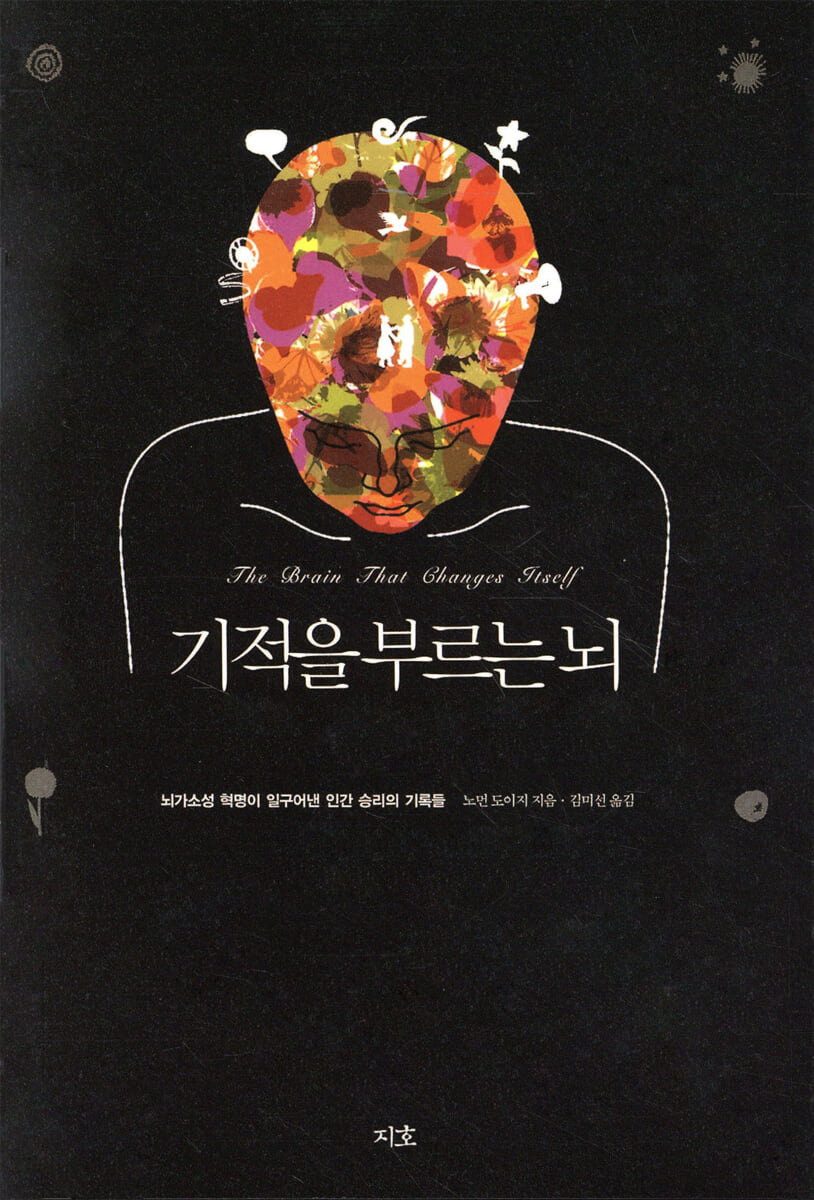
The brain that calls for miracles
 |
Description
Book Introduction
A popular neuroscience book that introduces the amazing possibilities of the human brain, including its ability to heal diseases previously considered incurable.
For many years, people believed that the brain was immutable, that it had clearly defined limits, and that these limits were largely genetically determined. This was the prevailing view in mainstream science and medicine.
But as precise brain scans become available, this 'unchanging brain' theory is gradually crumbling.
The concept of neuroplasticity, which states that the brain can be transformed like clay or plastic, has emerged in the scientific community.
In this book, author Norman Doidge, a psychiatrist and psychoanalyst, meets with scientists at the forefront of brain science to introduce their research on neuroplasticity and share stories of patients treated using the principles of neuroplasticity.
Their seemingly miraculous healings, including a woman with half a brain who reprograms her brain to behave almost normally, a person with phantom limbs who still experience amputated limbs, and stroke victims who get back on their feet, highlight the incredible potential of neuroplasticity.
How far can the human brain change, and what are its limits?
"The Brain That Calls Miracles" reveals both the possibilities and limitations of neuroplasticity, offering a new perspective on the human mind and nature.
For many years, people believed that the brain was immutable, that it had clearly defined limits, and that these limits were largely genetically determined. This was the prevailing view in mainstream science and medicine.
But as precise brain scans become available, this 'unchanging brain' theory is gradually crumbling.
The concept of neuroplasticity, which states that the brain can be transformed like clay or plastic, has emerged in the scientific community.
In this book, author Norman Doidge, a psychiatrist and psychoanalyst, meets with scientists at the forefront of brain science to introduce their research on neuroplasticity and share stories of patients treated using the principles of neuroplasticity.
Their seemingly miraculous healings, including a woman with half a brain who reprograms her brain to behave almost normally, a person with phantom limbs who still experience amputated limbs, and stroke victims who get back on their feet, highlight the incredible potential of neuroplasticity.
How far can the human brain change, and what are its limits?
"The Brain That Calls Miracles" reveals both the possibilities and limitations of neuroplasticity, offering a new perspective on the human mind and nature.
- You can preview some of the book's contents.
Preview
index
Chapter 1.
A woman who regained her senses
Chapter 2.
Building a Better Brain
Chapter 3.
Rewiring the Brain
Chapter 4.
How Sex and Love Change the Brain
Chapter 5.
Resurrection of a stroke patient
Chapter 6.
Open the locked brain
Chapter 7.
Pain, an illusion of the brain
Chapter 8.
The power of imagination
Chapter 9.
Revisiting Freud
Chapter 10.
Brain rejuvenation
Chapter 11.
The brain is greater than the sum of its parts
Acknowledgements
Translator's Note
Notes and References
Search
A woman who regained her senses
Chapter 2.
Building a Better Brain
Chapter 3.
Rewiring the Brain
Chapter 4.
How Sex and Love Change the Brain
Chapter 5.
Resurrection of a stroke patient
Chapter 6.
Open the locked brain
Chapter 7.
Pain, an illusion of the brain
Chapter 8.
The power of imagination
Chapter 9.
Revisiting Freud
Chapter 10.
Brain rejuvenation
Chapter 11.
The brain is greater than the sum of its parts
Acknowledgements
Translator's Note
Notes and References
Search
Publisher's Review
The brain changes itself
The Best Book to Guide You Through the World of Neuroplasticity
The concept of neuroplasticity emerged in the scientific community several years ago and began to be known to the public through the media and books.
Neuroplasticity is the concept that the brain can be shaped like clay or plastic.
In the past, such claims were considered nonsense.
For a long time, scholars have likened the human body to a machine, and the brain is no exception.
The prevailing view was that the brain was a kind of computer-like organ, with each part having a specific function, and that damage to that area could never be repaired.
The discovery of Broca's area and Wernicke's area supported these ideas.
However, continuing scientific discoveries are beginning to show that this thinking may not be correct.
People with damage to Broca's area were able to speak normally, and animals with their motor cortex removed were still able to move.
The visual cortex of a blind person is reorganized to process auditory signals.
Animals raised in stimulating environments had larger brain volumes, and new brain cells were also observed to be produced even in old age.
The evidence of brain plasticity was everywhere and undeniably clear.
The scientific community has now accepted neuroplasticity, and research on its application is actively underway.
This book closely examines the emerging paradigm of neuroplasticity in neuroscience, vividly illustrating its amazing potential for readers.
Neuroplasticity Offers New Hope
Author Dr. Doiji meets with scientists at the forefront of brain science to introduce their research on neuroplasticity and share stories of patients treated using the principles of neuroplasticity.
Their seemingly miraculous healing demonstrates the amazing potential of brain plasticity.
Patients with stroke, autism, and other severe brain disorders are often told that there is no other way, that they must give up on returning to normal, but in this book, Doiji presents cases of new hope.
The rehabilitation stories of the patients featured in each chapter are heartwarming, hopeful, and practical enough to help anyone with similar challenges.
Chapter 1.
A woman who regained her senses
- Neuroscientist Bach-Irita discovered the brain's plasticity and developed a method to rewire the senses.
He developed a device that converted tactile sensations into visual signals, allowing blind people to see.
A woman who had completely lost her sense of balance also regained it with his help.
Chapter 2.
Building a Better Brain
- Barbara Arrowsmith Young had learning problems from birth.
She had a great memory, but no spatial sense, and could not understand the relationships between symbols, not even why 1+1 equals 2.
However, she knew that the brain was plastic and returned to normal through self-designed training.
She has now founded the Arrowsmith School to help people with brain dysfunction like herself.
Chapter 3.
Rewiring the Brain
- Michael Merzenich, a leading authority on neuroplasticity research, developed a program called 'Fast Forward' that has helped countless children with learning disabilities.
The program also helps improve memory and IQ, and he has even developed a program that is effective for autism.
Fast Forward is currently operating as an educational program for immigrants in 4,300 schools designated by the U.S. Department of Education.
Chapter 4.
How Sex and Love Change the Brain
- In this chapter, the author shows that our sexual preferences and instincts are also plastic, that is, they can change.
He also shows that love really does change our brains and the effects of pornography.
He uses neuroplastic principles to treat 'porn addicts' and men with problematic sexual preferences.
Chapter 5.
Resurrection of a stroke patient
- Until now, there has been no effective treatment to help stroke patients.
That was until Edward Taub developed constraint-induced (CI) exercise therapy.
He used a method that forced stroke patients to use their damaged arms with great success.
Some stroke and paralysis patients due to brain problems have regained movement using Tob's CI therapy.
Chapter 6.
Open the locked brain
- Brain scans have revealed that obsessive-compulsive disorder, which causes people to have obsessive worries, is not simply a problem with their thoughts, but a problem that originates in the brain.
The brain 'locks' obsessive thoughts and cannot break free.
Jeffrey Schwartz has helped patients with OCD by developing a method to unwind their brains by focusing on other positive thoughts during moments of OCD.
Chapter 7.
Pain, an illusion of the brain
- The phenomenon of phantom limbs, in which an amputated limb is experienced as still existing, has long been a mystery in neurology.
Neurologist Ramachandran showed that this phantom limb arises from a plastic phenomenon in which the brain map of the missing area is invaded by the brain map of another body part.
Ramachandran then used a mirror box to trick the brain and 'amputate' the phantom limbs.
Chapter 8.
The power of imagination
- Pascual-Leone shows that our imagination is integrated with our actions.
In one incredibly surprising experiment, subjects who imagined themselves training their muscles actually experienced increases in muscle strength.
Trainees who practiced playing the piano only by imagining it were also able to achieve a certain level of success.
Our thoughts really change us.
Chapter 9.
Revisiting Freud
- In this chapter, the author reexplains Freud's psychoanalytic therapy in terms of the principle of brain plasticity.
He says that psychoanalysis is a neuroplastic therapy that actually changes the brain, and that is why it works.
This chapter provides new scientific support for Freud's psychology, which many scientists have dismissed as baseless.
Chapter 10.
Brain rejuvenation
- For a long time, it was thought that the brain had no stem cells that could create new cells, and that brain cells simply died and were not replenished.
But now scientists have discovered stem cells in the brain, and even in people nearing death, new brain cells are being generated.
This chapter shows that proper training and education can truly rejuvenate our brains.
Chapter 11.
The brain is greater than the sum of its parts
- The protagonist of this chapter was born without the left half of his brain.
However, even with only half her brain, she is alive and can lead a normal life, albeit with some disabilities.
She is living proof that the brain is plastic, and that half a brain does not make half a mind.
Meet the neuroplasticity that brings miracles
Neuroplasticity is currently a hot topic in the field of rehabilitation medicine and is being applied to the treatment of stroke, hemiplegia, dementia, etc.
Additionally, there are active attempts in academic circles to incorporate brain plasticity into the treatment of learning disabilities such as attention deficit disorder and the development of new educational methods.
For example, there are ways to use neuroplasticity to learn a foreign language without much effort, just like we learn to speak as children, and ways to maintain youthful memory even in old age.
Meanwhile, they're also exploring cinematic therapies that use neuroplasticity to "erase" horrific memories we'd rather forget.
Although these stories may sound miraculous, they are actually natural and fundamental properties of our brains.
Rather, we should see that we have not yet fully understood the potential of the human brain, and that we are only now beginning to open our eyes to it.
This book informs us of both the possibilities and limitations of neuroplasticity, offering a new perspective on the human mind and nature.
The Best Book to Guide You Through the World of Neuroplasticity
The concept of neuroplasticity emerged in the scientific community several years ago and began to be known to the public through the media and books.
Neuroplasticity is the concept that the brain can be shaped like clay or plastic.
In the past, such claims were considered nonsense.
For a long time, scholars have likened the human body to a machine, and the brain is no exception.
The prevailing view was that the brain was a kind of computer-like organ, with each part having a specific function, and that damage to that area could never be repaired.
The discovery of Broca's area and Wernicke's area supported these ideas.
However, continuing scientific discoveries are beginning to show that this thinking may not be correct.
People with damage to Broca's area were able to speak normally, and animals with their motor cortex removed were still able to move.
The visual cortex of a blind person is reorganized to process auditory signals.
Animals raised in stimulating environments had larger brain volumes, and new brain cells were also observed to be produced even in old age.
The evidence of brain plasticity was everywhere and undeniably clear.
The scientific community has now accepted neuroplasticity, and research on its application is actively underway.
This book closely examines the emerging paradigm of neuroplasticity in neuroscience, vividly illustrating its amazing potential for readers.
Neuroplasticity Offers New Hope
Author Dr. Doiji meets with scientists at the forefront of brain science to introduce their research on neuroplasticity and share stories of patients treated using the principles of neuroplasticity.
Their seemingly miraculous healing demonstrates the amazing potential of brain plasticity.
Patients with stroke, autism, and other severe brain disorders are often told that there is no other way, that they must give up on returning to normal, but in this book, Doiji presents cases of new hope.
The rehabilitation stories of the patients featured in each chapter are heartwarming, hopeful, and practical enough to help anyone with similar challenges.
Chapter 1.
A woman who regained her senses
- Neuroscientist Bach-Irita discovered the brain's plasticity and developed a method to rewire the senses.
He developed a device that converted tactile sensations into visual signals, allowing blind people to see.
A woman who had completely lost her sense of balance also regained it with his help.
Chapter 2.
Building a Better Brain
- Barbara Arrowsmith Young had learning problems from birth.
She had a great memory, but no spatial sense, and could not understand the relationships between symbols, not even why 1+1 equals 2.
However, she knew that the brain was plastic and returned to normal through self-designed training.
She has now founded the Arrowsmith School to help people with brain dysfunction like herself.
Chapter 3.
Rewiring the Brain
- Michael Merzenich, a leading authority on neuroplasticity research, developed a program called 'Fast Forward' that has helped countless children with learning disabilities.
The program also helps improve memory and IQ, and he has even developed a program that is effective for autism.
Fast Forward is currently operating as an educational program for immigrants in 4,300 schools designated by the U.S. Department of Education.
Chapter 4.
How Sex and Love Change the Brain
- In this chapter, the author shows that our sexual preferences and instincts are also plastic, that is, they can change.
He also shows that love really does change our brains and the effects of pornography.
He uses neuroplastic principles to treat 'porn addicts' and men with problematic sexual preferences.
Chapter 5.
Resurrection of a stroke patient
- Until now, there has been no effective treatment to help stroke patients.
That was until Edward Taub developed constraint-induced (CI) exercise therapy.
He used a method that forced stroke patients to use their damaged arms with great success.
Some stroke and paralysis patients due to brain problems have regained movement using Tob's CI therapy.
Chapter 6.
Open the locked brain
- Brain scans have revealed that obsessive-compulsive disorder, which causes people to have obsessive worries, is not simply a problem with their thoughts, but a problem that originates in the brain.
The brain 'locks' obsessive thoughts and cannot break free.
Jeffrey Schwartz has helped patients with OCD by developing a method to unwind their brains by focusing on other positive thoughts during moments of OCD.
Chapter 7.
Pain, an illusion of the brain
- The phenomenon of phantom limbs, in which an amputated limb is experienced as still existing, has long been a mystery in neurology.
Neurologist Ramachandran showed that this phantom limb arises from a plastic phenomenon in which the brain map of the missing area is invaded by the brain map of another body part.
Ramachandran then used a mirror box to trick the brain and 'amputate' the phantom limbs.
Chapter 8.
The power of imagination
- Pascual-Leone shows that our imagination is integrated with our actions.
In one incredibly surprising experiment, subjects who imagined themselves training their muscles actually experienced increases in muscle strength.
Trainees who practiced playing the piano only by imagining it were also able to achieve a certain level of success.
Our thoughts really change us.
Chapter 9.
Revisiting Freud
- In this chapter, the author reexplains Freud's psychoanalytic therapy in terms of the principle of brain plasticity.
He says that psychoanalysis is a neuroplastic therapy that actually changes the brain, and that is why it works.
This chapter provides new scientific support for Freud's psychology, which many scientists have dismissed as baseless.
Chapter 10.
Brain rejuvenation
- For a long time, it was thought that the brain had no stem cells that could create new cells, and that brain cells simply died and were not replenished.
But now scientists have discovered stem cells in the brain, and even in people nearing death, new brain cells are being generated.
This chapter shows that proper training and education can truly rejuvenate our brains.
Chapter 11.
The brain is greater than the sum of its parts
- The protagonist of this chapter was born without the left half of his brain.
However, even with only half her brain, she is alive and can lead a normal life, albeit with some disabilities.
She is living proof that the brain is plastic, and that half a brain does not make half a mind.
Meet the neuroplasticity that brings miracles
Neuroplasticity is currently a hot topic in the field of rehabilitation medicine and is being applied to the treatment of stroke, hemiplegia, dementia, etc.
Additionally, there are active attempts in academic circles to incorporate brain plasticity into the treatment of learning disabilities such as attention deficit disorder and the development of new educational methods.
For example, there are ways to use neuroplasticity to learn a foreign language without much effort, just like we learn to speak as children, and ways to maintain youthful memory even in old age.
Meanwhile, they're also exploring cinematic therapies that use neuroplasticity to "erase" horrific memories we'd rather forget.
Although these stories may sound miraculous, they are actually natural and fundamental properties of our brains.
Rather, we should see that we have not yet fully understood the potential of the human brain, and that we are only now beginning to open our eyes to it.
This book informs us of both the possibilities and limitations of neuroplasticity, offering a new perspective on the human mind and nature.
GOODS SPECIFICS
- Date of issue: July 21, 2008
- Page count, weight, size: 478 pages | 664g | 153*224*30mm
- ISBN13: 9788959090419
- ISBN10: 8959090417
You may also like
카테고리
korean


korean

![ELLE 엘르 스페셜 에디션 A형 : 12월 [2025]](http://librairie.coreenne.fr/cdn/shop/files/b8e27a3de6c9538896439686c6b0e8fb.jpg?v=1766436872&width=3840)


