

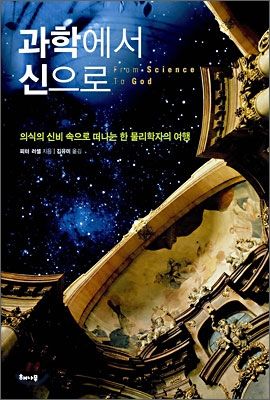
From Science to God
 |
Description
Book Introduction
This book is an interesting account of a physics student who, fascinated by disciplines like mathematics that have definitive answers, explores Eastern philosophy, including meditation, to find answers to his questions about human consciousness.
The author, who majored in theoretical physics and experimental psychology, draws on his background and solid scientific knowledge to argue, based on rational evidence, that consciousness within humans is the most important element that constitutes the universe and this world.
Furthermore, the author pursues the meeting of science and religion, and the connection between science and the soul, with the keyword 'consciousness' as its core.
He believes that the world today, despite the achievements of engineering and scientific advancement, is facing increasingly serious dangers. He urges us to focus our consciousness and free ourselves from many delusions, fears, and misjudgments as a way to overcome this.
The author, who majored in theoretical physics and experimental psychology, draws on his background and solid scientific knowledge to argue, based on rational evidence, that consciousness within humans is the most important element that constitutes the universe and this world.
Furthermore, the author pursues the meeting of science and religion, and the connection between science and the soul, with the keyword 'consciousness' as its core.
He believes that the world today, despite the achievements of engineering and scientific advancement, is facing increasingly serious dangers. He urges us to focus our consciousness and free ourselves from many delusions, fears, and misjudgments as a way to overcome this.
- You can preview some of the book's contents.
Preview
index
preface
Chapter 1 | From Science to Consciousness
Chapter 2 | The Exception Called Consciousness
Chapter 3 | The Conscious Universe
Chapter 4 | The Illusion of Reality
Chapter 5 | The Mystery of Light
Chapter 6 | The Light of Consciousness
Chapter 7 | Consciousness as God
Chapter 8 | Science and the Soul Meet
Chapter 9 | The Great Enlightenment
Translator's Note
Search
Chapter 1 | From Science to Consciousness
Chapter 2 | The Exception Called Consciousness
Chapter 3 | The Conscious Universe
Chapter 4 | The Illusion of Reality
Chapter 5 | The Mystery of Light
Chapter 6 | The Light of Consciousness
Chapter 7 | Consciousness as God
Chapter 8 | Science and the Soul Meet
Chapter 9 | The Great Enlightenment
Translator's Note
Search
Publisher's Review
A harmony of science and spirituality explained through rational reason!
Pure scientific skepticism about the nature of consciousness leads to inner enlightenment and reflection!
Science without religion is lame, and religion without science is blind.
_ Albert Einstein
'Future civilization will be shaped by the two most powerful forces in history,
That is, it depends on how science and religion relate to each other.' _Alfred North Whitehead
One of the notable publishing trends of the year is the surge in books on the subject of spirituality, such as The Secret and The Power of Positive Thinking.
In the English-speaking world, books on spirituality, meditation, and other topics have long been attracting readers' attention, in line with the New Age craze.
Now, that craze has reached Korea, led by 『The Secret』.
However, existing books on spirituality were somewhat ambiguous, simply conveying abstract messages such as meditation, mystical experiences, and the message, "Wake up!"
There was a limitation that it could not escape from conveying personal experiences.
In contrast, in "From Science to God," the author, who majored in theoretical physics and experimental psychology, draws on his background and solid scientific knowledge to argue, based on rational evidence, that consciousness within humans is the most important element that constitutes the universe and this world.
The quote from Alfred North White, who said that the future of civilization depends on how science and religion relate to each other, is a meaningful hint at the commitment to harmoniously weaving together scientific knowledge and religious meditative experiences.
'Mind does not come from matter, but matter comes from mind' _ The Book of the Great Tibetan Buddha
"From Science to God" is an interesting account of a physics student who, fascinated by disciplines like mathematics that have definitive answers, turns to meditation and other Eastern philosophies to explore his questions about human consciousness.
The author diagnoses that the current scientific worldview cannot provide an answer to the question of 'consciousness', that is, the inner world of humans.
The dominant scientific paradigm since modern classical physics has been built on the assumption that the measurable physical world is the real world, and that time, space, matter, and energy are the fundamental elements of reality.
However, in the 21st century, as the realm of science expanded into areas that could not be quantified and measured—such as the human mind, the brain, and its workings and principles—the modern materialistic paradigm faced difficulties.
Western science cannot answer the question of consciousness, which is not made of matter.
However, although we cannot precisely explain consciousness, we are aware that we are engaging in conscious activity.
Descartes' cogito is the most famous proposition that represents this.
The paradox of consciousness is that something exists but cannot be explained.
According to the materialist metaparadigm, consciousness is ultimately the greatest exception of our time.
Peter Russell argues that in order to explain consciousness, we must move beyond the attempt to explain it in the language of the material world and adopt a new worldview in which consciousness is a fundamental element that constitutes reality, and that we must attempt a shift in the Copernican paradigm.
It is not that mind comes from matter, but that matter emerges from mind.
This is why self-reflection and listening to your inner voice are important.
He defines human consciousness as the ability to have inner experiences.
And he says that sensations, perceptions, dreams, memories, and thoughts, which we have thought of as conscious acts so far, are just some of the various forms in which consciousness is expressed.
Furthermore, the nervous system, which has been pointed out as the origin of consciousness, does not 'form' consciousness, but rather simply expands the consciousness that originally existed on its own, thereby improving the quantity and quality of consciousness.
According to him, the sophisticated human ability to think is merely a further evolution of the conscious ability that exists universally in nature.
Humans form the world by accepting the external world through their conscious ability and reconstructing experiences.
This view is similar to Immanuel Kant's view that we do not experience the physical world directly, but only phenomena, and that reality is merely something we construct ourselves.
'Ultimately, everyone's only hope is peace of mind' - Dalai Lama
The author reiterates that we must move beyond the materialistic worldview that holds that what we perceive is shaped by the world composed of time, space, and matter, and instead view our experiences from the perspective that they are all constructs of consciousness that exist within us.
And he argues that experiencing the world of pure consciousness is experiencing the realm of God in the sense of religion, and attaining spirituality such as peace of mind and rest.
At this point, the meeting of science and religion, the connection between science and the soul that the author had been pursuing, with the keyword of 'consciousness' at its core, is finally realized.
When science sees consciousness as the foundation of reality, and religion sees God as the light of consciousness shining within us all, the two worldviews begin to harmonize.
Peter Russell believes that the world today is facing increasingly serious dangers despite the achievements of engineering and scientific advancement.
And as a way to overcome this (to reconstruct the world in a healthy way), I urge you to focus your consciousness and free yourself from many delusions, fears, and wrong judgments.
His prediction that darkness will disappear and light will come when we realize the errors of our thinking, let go of our attachments, transcend our limited sense of self, and discover the true nature of our being.
The message that only then will the mind find peace reminds us that what our generation must ultimately pursue is the restoration of soundness and clarity of mind through self-awareness and concentration on the inner world.
Ultimately, "From Science to God" is a meaningful journey and footsteps of a physicist who logically and step by step walked through scientific arguments to reach the Dalai Lama's religious enlightenment that "ultimately, all people's hope is peace of mind."
Pure scientific skepticism about the nature of consciousness leads to inner enlightenment and reflection!
Science without religion is lame, and religion without science is blind.
_ Albert Einstein
'Future civilization will be shaped by the two most powerful forces in history,
That is, it depends on how science and religion relate to each other.' _Alfred North Whitehead
One of the notable publishing trends of the year is the surge in books on the subject of spirituality, such as The Secret and The Power of Positive Thinking.
In the English-speaking world, books on spirituality, meditation, and other topics have long been attracting readers' attention, in line with the New Age craze.
Now, that craze has reached Korea, led by 『The Secret』.
However, existing books on spirituality were somewhat ambiguous, simply conveying abstract messages such as meditation, mystical experiences, and the message, "Wake up!"
There was a limitation that it could not escape from conveying personal experiences.
In contrast, in "From Science to God," the author, who majored in theoretical physics and experimental psychology, draws on his background and solid scientific knowledge to argue, based on rational evidence, that consciousness within humans is the most important element that constitutes the universe and this world.
The quote from Alfred North White, who said that the future of civilization depends on how science and religion relate to each other, is a meaningful hint at the commitment to harmoniously weaving together scientific knowledge and religious meditative experiences.
'Mind does not come from matter, but matter comes from mind' _ The Book of the Great Tibetan Buddha
"From Science to God" is an interesting account of a physics student who, fascinated by disciplines like mathematics that have definitive answers, turns to meditation and other Eastern philosophies to explore his questions about human consciousness.
The author diagnoses that the current scientific worldview cannot provide an answer to the question of 'consciousness', that is, the inner world of humans.
The dominant scientific paradigm since modern classical physics has been built on the assumption that the measurable physical world is the real world, and that time, space, matter, and energy are the fundamental elements of reality.
However, in the 21st century, as the realm of science expanded into areas that could not be quantified and measured—such as the human mind, the brain, and its workings and principles—the modern materialistic paradigm faced difficulties.
Western science cannot answer the question of consciousness, which is not made of matter.
However, although we cannot precisely explain consciousness, we are aware that we are engaging in conscious activity.
Descartes' cogito is the most famous proposition that represents this.
The paradox of consciousness is that something exists but cannot be explained.
According to the materialist metaparadigm, consciousness is ultimately the greatest exception of our time.
Peter Russell argues that in order to explain consciousness, we must move beyond the attempt to explain it in the language of the material world and adopt a new worldview in which consciousness is a fundamental element that constitutes reality, and that we must attempt a shift in the Copernican paradigm.
It is not that mind comes from matter, but that matter emerges from mind.
This is why self-reflection and listening to your inner voice are important.
He defines human consciousness as the ability to have inner experiences.
And he says that sensations, perceptions, dreams, memories, and thoughts, which we have thought of as conscious acts so far, are just some of the various forms in which consciousness is expressed.
Furthermore, the nervous system, which has been pointed out as the origin of consciousness, does not 'form' consciousness, but rather simply expands the consciousness that originally existed on its own, thereby improving the quantity and quality of consciousness.
According to him, the sophisticated human ability to think is merely a further evolution of the conscious ability that exists universally in nature.
Humans form the world by accepting the external world through their conscious ability and reconstructing experiences.
This view is similar to Immanuel Kant's view that we do not experience the physical world directly, but only phenomena, and that reality is merely something we construct ourselves.
'Ultimately, everyone's only hope is peace of mind' - Dalai Lama
The author reiterates that we must move beyond the materialistic worldview that holds that what we perceive is shaped by the world composed of time, space, and matter, and instead view our experiences from the perspective that they are all constructs of consciousness that exist within us.
And he argues that experiencing the world of pure consciousness is experiencing the realm of God in the sense of religion, and attaining spirituality such as peace of mind and rest.
At this point, the meeting of science and religion, the connection between science and the soul that the author had been pursuing, with the keyword of 'consciousness' at its core, is finally realized.
When science sees consciousness as the foundation of reality, and religion sees God as the light of consciousness shining within us all, the two worldviews begin to harmonize.
Peter Russell believes that the world today is facing increasingly serious dangers despite the achievements of engineering and scientific advancement.
And as a way to overcome this (to reconstruct the world in a healthy way), I urge you to focus your consciousness and free yourself from many delusions, fears, and wrong judgments.
His prediction that darkness will disappear and light will come when we realize the errors of our thinking, let go of our attachments, transcend our limited sense of self, and discover the true nature of our being.
The message that only then will the mind find peace reminds us that what our generation must ultimately pursue is the restoration of soundness and clarity of mind through self-awareness and concentration on the inner world.
Ultimately, "From Science to God" is a meaningful journey and footsteps of a physicist who logically and step by step walked through scientific arguments to reach the Dalai Lama's religious enlightenment that "ultimately, all people's hope is peace of mind."
GOODS SPECIFICS
- Date of issue: December 28, 2007
- Format: Hardcover book binding method guide
- Page count, weight, size: 171 pages | 398g | 153*224*20mm
- ISBN13: 9788956052137
- ISBN10: 8956052131
You may also like
카테고리
korean


korean

![GQ KOREA Mark (Monthly): December [2025]](http://librairie.coreenne.fr/cdn/shop/files/8ef265dbbfbf186523ed75ba7319009d.jpg?v=1765340328&width=3840)


