

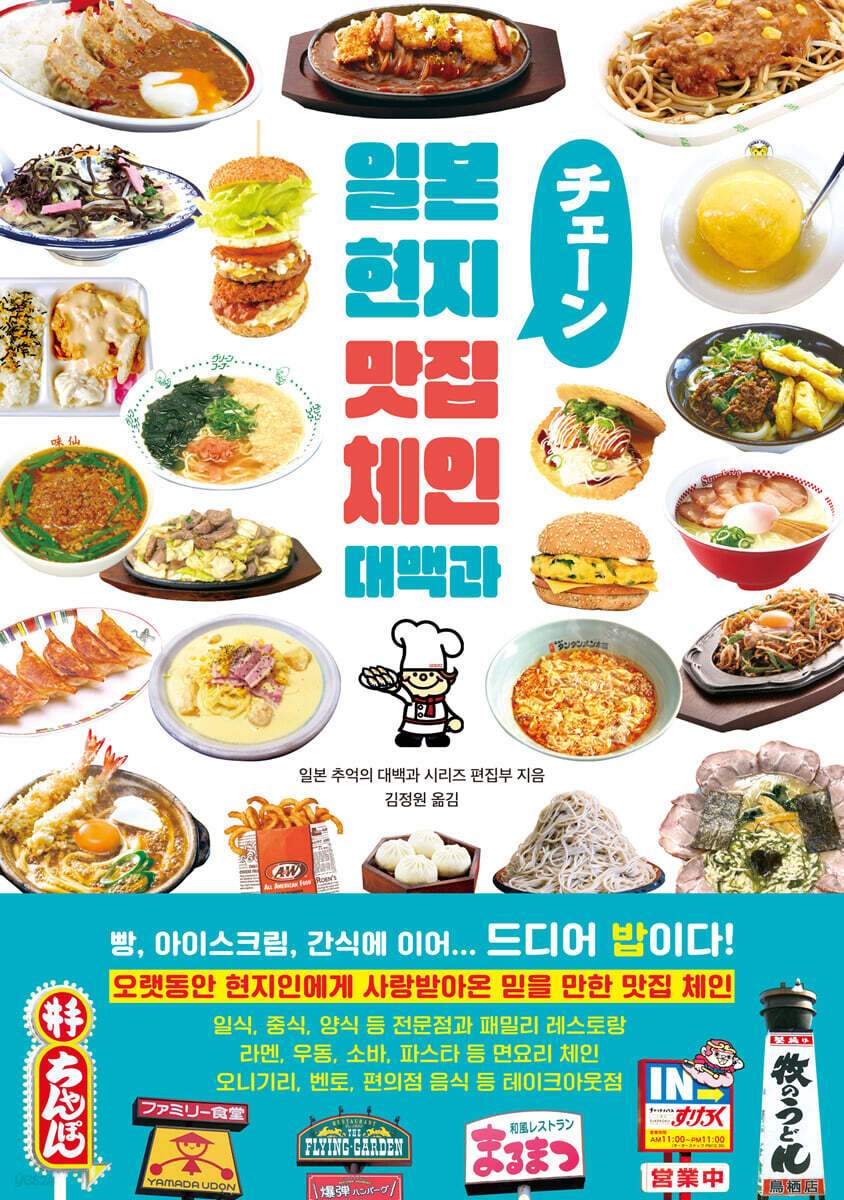
Encyclopedia of Japanese Local Restaurant Chains
 |
Description
Book Introduction
No matter what style of traveler you are, you're expected to eat two or three meals a day locally.
"Encyclopedia of Local Japanese Restaurant Chains" is packed with gourmet information that will instantly eliminate the hassle and difficulty of choosing a restaurant while traveling in Japan.
The protagonists of this book are locally recognized restaurant chains that have been operating for decades in various regions, gaining the love of locals and expanding their stores.
It offers Japanese food such as ramen, udon, soba, sushi, and bento, as well as Japanese-style Chinese and Western food, and even takeout food.
They will also kindly tell you what the most popular menu items are among those enjoyed by locals and what combinations are good to order.
With this book, enjoy your trip to Japan more fully with the comfort of visiting a local restaurant with the guidance of a local friend.
"Encyclopedia of Local Japanese Restaurant Chains" is packed with gourmet information that will instantly eliminate the hassle and difficulty of choosing a restaurant while traveling in Japan.
The protagonists of this book are locally recognized restaurant chains that have been operating for decades in various regions, gaining the love of locals and expanding their stores.
It offers Japanese food such as ramen, udon, soba, sushi, and bento, as well as Japanese-style Chinese and Western food, and even takeout food.
They will also kindly tell you what the most popular menu items are among those enjoyed by locals and what combinations are good to order.
With this book, enjoy your trip to Japan more fully with the comfort of visiting a local restaurant with the guidance of a local friend.
- You can preview some of the book's contents.
Preview
index
Welcome to the world of 'Japanese local restaurant chains'!
Featured: A True Local Representative! Popular Local Restaurant Chains
Sugakiya (Aichi), Yamada Udon Restaurant (Saitama), Lucky Pierrot (Hokkaido), Flying Garden (Tochigi), 551 Horai (Osaka), Kiyoken (Kanagawa)
Part 1: A Special Taste Locals Love! Family Restaurant & Specialty Store Chain
[Japanese restaurant]
Bandotaro (Ibaraki), Nanbuyashiki (Iwate), Marumatsu Japanese Restaurant (Miyagi), Tempuradokoro Hirao (Fukuoka), Conveyor Belt Sushi Hokkaido (Tottori), Gifu (Gifu Hatsuzushi)
[Chinese restaurant]
China House Sukeroku (Ehime) ㆍ Sankok (Gifu) ㆍ Hidakaya (Saitama) ㆍ Gomi Hatchin (Shizuoka) ㆍ Utsunomiya Minmin (Tochigi) ㆍ Gyoza no Manshu (Saitama) ㆍ Kagoshima Gyoza no Osho (Kagoshima)
[Specialty store]
Isshobin (Mie) ㆍ Bikkuri-tei Honke (Fukuoka) ㆍ Tokugawa (Hiroshima) ㆍ Nanpu (Hyogo) ㆍ Miyoshino (Hokkaido) ㆍ Curry Shop Indean (Hokkaido) ㆍ Champion Curry (Ishikawa) ㆍ Nagasaki Chanmen (Yamaguchi) ㆍ Ide Champon (Saga) ㆍ Omi Champon-tei (Shiga) ㆍ Green Corner (Wakayama) ㆍ Drive-in Dori (Saga) ㆍ Pasta House Itchome (Shizuoka) ㆍ Takoyaki Doraku Wanaka (Osaka) ㆍ Kohiya OB (Saitama)
Part 2: Japan is truly a noodle kingdom! The golden age of local noodle chains.
[Ramen]
Everyone's Tenho (Nagano) ㆍ Saikaramen (Nara) ㆍ Nintama Ramen (Ibaraki) ㆍ Misen (Aichi) ㆍ Ajisen Ramen (Kumamoto) ㆍ Ippatsu Ramen (Tokyo) ㆍ Shinkyo (Aichi) ㆍ Genchan Ramen (Yamagata)
[Udon]
Yamamotoya Honten (Aichi) ㆍ Chomei Udon (Aichi) ㆍ Sakaeda Udon (Kagawa) ㆍ Daisuke Udon (Ehime) ㆍ Chikara (Hiroshima) ㆍ Dondon (Yamaguchi) ㆍ Naruto Udon (Oita)
[Soba]
Echizen Tsuruki Soba (Fukui), Sobakichi (Ehime), and Minatoan (Kanagawa)
[Individualist]
Spaghetti Chao (Aichi), Friend (Niigata), Mikazuki (Niigata), Sofuren (Oita), Original Nyutantanmen Honpo (Kanagawa)
Part 3: Packing Up Delicious Happiness! Lunchboxes, Takeout, and Convenience Store Chains
Onigiri Momotaro (Mie), Kuishinbokisaragi (Kochi), Hirai (Kumamoto), Torihei (Gunma), Toshimaya Bento (Chiba), Musashi (Hiroshima), Fukuda Bread (Iwate), Seicomart (Hokkaido)
Mini-Special Feature 1: Locals' Favorites! 3 Tokyo Noodle Chains
Fujisoba / Fukushin / Hakata Tenjin
Mini-Special 2: Restaurants for Locals! Fukuoka's Top 3 Udon Chains
West / Sukesan Udon / Makino Udon
Mini-Special Feature 3: Unique Culture! 3 American-Style Okinawan Chains
Steakhouse 88 / A&W / Jef
Column: Local Restaurant Chain Design Gallery
Items with logos · Logos & characters · Signs
Featured: A True Local Representative! Popular Local Restaurant Chains
Sugakiya (Aichi), Yamada Udon Restaurant (Saitama), Lucky Pierrot (Hokkaido), Flying Garden (Tochigi), 551 Horai (Osaka), Kiyoken (Kanagawa)
Part 1: A Special Taste Locals Love! Family Restaurant & Specialty Store Chain
[Japanese restaurant]
Bandotaro (Ibaraki), Nanbuyashiki (Iwate), Marumatsu Japanese Restaurant (Miyagi), Tempuradokoro Hirao (Fukuoka), Conveyor Belt Sushi Hokkaido (Tottori), Gifu (Gifu Hatsuzushi)
[Chinese restaurant]
China House Sukeroku (Ehime) ㆍ Sankok (Gifu) ㆍ Hidakaya (Saitama) ㆍ Gomi Hatchin (Shizuoka) ㆍ Utsunomiya Minmin (Tochigi) ㆍ Gyoza no Manshu (Saitama) ㆍ Kagoshima Gyoza no Osho (Kagoshima)
[Specialty store]
Isshobin (Mie) ㆍ Bikkuri-tei Honke (Fukuoka) ㆍ Tokugawa (Hiroshima) ㆍ Nanpu (Hyogo) ㆍ Miyoshino (Hokkaido) ㆍ Curry Shop Indean (Hokkaido) ㆍ Champion Curry (Ishikawa) ㆍ Nagasaki Chanmen (Yamaguchi) ㆍ Ide Champon (Saga) ㆍ Omi Champon-tei (Shiga) ㆍ Green Corner (Wakayama) ㆍ Drive-in Dori (Saga) ㆍ Pasta House Itchome (Shizuoka) ㆍ Takoyaki Doraku Wanaka (Osaka) ㆍ Kohiya OB (Saitama)
Part 2: Japan is truly a noodle kingdom! The golden age of local noodle chains.
[Ramen]
Everyone's Tenho (Nagano) ㆍ Saikaramen (Nara) ㆍ Nintama Ramen (Ibaraki) ㆍ Misen (Aichi) ㆍ Ajisen Ramen (Kumamoto) ㆍ Ippatsu Ramen (Tokyo) ㆍ Shinkyo (Aichi) ㆍ Genchan Ramen (Yamagata)
[Udon]
Yamamotoya Honten (Aichi) ㆍ Chomei Udon (Aichi) ㆍ Sakaeda Udon (Kagawa) ㆍ Daisuke Udon (Ehime) ㆍ Chikara (Hiroshima) ㆍ Dondon (Yamaguchi) ㆍ Naruto Udon (Oita)
[Soba]
Echizen Tsuruki Soba (Fukui), Sobakichi (Ehime), and Minatoan (Kanagawa)
[Individualist]
Spaghetti Chao (Aichi), Friend (Niigata), Mikazuki (Niigata), Sofuren (Oita), Original Nyutantanmen Honpo (Kanagawa)
Part 3: Packing Up Delicious Happiness! Lunchboxes, Takeout, and Convenience Store Chains
Onigiri Momotaro (Mie), Kuishinbokisaragi (Kochi), Hirai (Kumamoto), Torihei (Gunma), Toshimaya Bento (Chiba), Musashi (Hiroshima), Fukuda Bread (Iwate), Seicomart (Hokkaido)
Mini-Special Feature 1: Locals' Favorites! 3 Tokyo Noodle Chains
Fujisoba / Fukushin / Hakata Tenjin
Mini-Special 2: Restaurants for Locals! Fukuoka's Top 3 Udon Chains
West / Sukesan Udon / Makino Udon
Mini-Special Feature 3: Unique Culture! 3 American-Style Okinawan Chains
Steakhouse 88 / A&W / Jef
Column: Local Restaurant Chain Design Gallery
Items with logos · Logos & characters · Signs
Detailed image
.jpg)
Into the book
There are many local food chains that are well-known to everyone in their local area, but are not well-known nationwide.
Unlike large corporations that operate nationwide, you can find unique flavors that are loved by locals and can only be found in your local area.
That is also the biggest appeal of ‘local restaurant chains.’
--- From "Welcome to the world of 'Japanese local restaurant chains'!"
The biggest feature is probably the cheap and generous set menu, also known as 'calories that go beyond the limit'.
For a typical set menu, either the noodles or the donburi are half-serving or mini-sized, but at this restaurant, both are single-serving.
Of course, it is also high in calories.
If you order the popular katsudon set with tanuki udon, it will easily exceed 1,000 calories.
This is because there is a history of diversifying set menus to satisfy the main customer base of drivers and blue-collar workers.
Another advantage of the set menu is that you can choose between udon, soba, ramen, and zaru ramen.
--- From "(Saitama) Yamada Udon Restaurant"
"Conveyor Belt Sushi Hokkaido" is very popular for its use of fresh, large neta (toppings for sushi) from Tottori Sakaiminato.
This restaurant's predecessor was 'Gurukuru Zushi', which was founded in 1979, and is one of the earliest restaurants in the conveyor belt sushi industry.
In 'Hokkaido', we use our experience and achievements to provide sushi that focuses on the freshness of rice and neta.
We use rice grown in the local mountainous region.
We buy fresh fish from Sakaiminato, and rare fish that can only be found at that store are brought in every day.
Colorful, fresh, and thick sushi rolls along the rail.
To provide delicious freshly made sushi, the ingredients are cut in front of the customer and the sushi is turned with space between each piece.
--- From "(Tottori) Conveyor Belt Sushi Hokkaido"
In 1963, an izakaya-style restaurant opened in front of the current Minami-Fukuoka Station.
We made yakiniku with a menu that is inexpensive, nutritious, and comes in large portions.
The founder's wife tasted the product and said, "This is amazing (bikkuri)!", which became the name of the store.
In the past, they also sold nabe and ramen, but now they only sell 'yakiniku'.
It is the original 'yakiniku teppan' style, where the meat is cooked to a certain size and served with rice and miso soup.
The pork used is rich in various cuts, and the garlic stimulates the appetite.
The delicious way to eat it, as taught by the head store manager, is to 'eat it with karamiso on top.'
It is said that the fat melts due to heat and the solid content of the miso remains, making the savory taste stand out.
--- From "(Fukuoka) Bikkuri-tei Honke"
Ippatsu Ramen, popular for its generous portions of ramen, was founded in 1984.
In addition to the unique menu and taste, the atmosphere inside the store is also lively, perhaps due to its location in a university district.
For example, when a menu item called "Chashumen" with lots of chashu appears, people shout, "The flower of Ippatsu blooming in the bowl, chashu in full bloom!"
Also, when leaving the store, they say, “Thank you for the delicious meal! It gives us strength!”
The ramen broth is rich in gelatin and has a mild flavor based on pork bones without the use of chemical seasonings.
When you order an ajitama (soy sauce marinated egg), people raise both arms and shout “Genki-yoku!” to instill a sense of unity in the restaurant.
Unlike large corporations that operate nationwide, you can find unique flavors that are loved by locals and can only be found in your local area.
That is also the biggest appeal of ‘local restaurant chains.’
--- From "Welcome to the world of 'Japanese local restaurant chains'!"
The biggest feature is probably the cheap and generous set menu, also known as 'calories that go beyond the limit'.
For a typical set menu, either the noodles or the donburi are half-serving or mini-sized, but at this restaurant, both are single-serving.
Of course, it is also high in calories.
If you order the popular katsudon set with tanuki udon, it will easily exceed 1,000 calories.
This is because there is a history of diversifying set menus to satisfy the main customer base of drivers and blue-collar workers.
Another advantage of the set menu is that you can choose between udon, soba, ramen, and zaru ramen.
--- From "(Saitama) Yamada Udon Restaurant"
"Conveyor Belt Sushi Hokkaido" is very popular for its use of fresh, large neta (toppings for sushi) from Tottori Sakaiminato.
This restaurant's predecessor was 'Gurukuru Zushi', which was founded in 1979, and is one of the earliest restaurants in the conveyor belt sushi industry.
In 'Hokkaido', we use our experience and achievements to provide sushi that focuses on the freshness of rice and neta.
We use rice grown in the local mountainous region.
We buy fresh fish from Sakaiminato, and rare fish that can only be found at that store are brought in every day.
Colorful, fresh, and thick sushi rolls along the rail.
To provide delicious freshly made sushi, the ingredients are cut in front of the customer and the sushi is turned with space between each piece.
--- From "(Tottori) Conveyor Belt Sushi Hokkaido"
In 1963, an izakaya-style restaurant opened in front of the current Minami-Fukuoka Station.
We made yakiniku with a menu that is inexpensive, nutritious, and comes in large portions.
The founder's wife tasted the product and said, "This is amazing (bikkuri)!", which became the name of the store.
In the past, they also sold nabe and ramen, but now they only sell 'yakiniku'.
It is the original 'yakiniku teppan' style, where the meat is cooked to a certain size and served with rice and miso soup.
The pork used is rich in various cuts, and the garlic stimulates the appetite.
The delicious way to eat it, as taught by the head store manager, is to 'eat it with karamiso on top.'
It is said that the fat melts due to heat and the solid content of the miso remains, making the savory taste stand out.
--- From "(Fukuoka) Bikkuri-tei Honke"
Ippatsu Ramen, popular for its generous portions of ramen, was founded in 1984.
In addition to the unique menu and taste, the atmosphere inside the store is also lively, perhaps due to its location in a university district.
For example, when a menu item called "Chashumen" with lots of chashu appears, people shout, "The flower of Ippatsu blooming in the bowl, chashu in full bloom!"
Also, when leaving the store, they say, “Thank you for the delicious meal! It gives us strength!”
The ramen broth is rich in gelatin and has a mild flavor based on pork bones without the use of chemical seasonings.
When you order an ajitama (soy sauce marinated egg), people raise both arms and shout “Genki-yoku!” to instill a sense of unity in the restaurant.
--- From "(Tokyo) Ippatsu Ramen"
Publisher's Review
From a restaurant chain that has been loved by locals for a long time.
Now eat local Japanese food like a local, not a tourist!
Everyone has different goals for their trip to Japan, but they all share the same desire to try authentic local Japanese food during their trip.
If the already beloved books 《Encyclopedia of Japanese Local Bread》, 《Encyclopedia of Japanese Local Ice Cream》, and 《Encyclopedia of Japanese Local Snacks》 provided a new and unique enjoyment of traveling in Japan, this book 《Encyclopedia of Japanese Local Restaurant Chains》 was planned to firmly take responsibility for the basics of traveling in Japan: choosing two or three local meals a day.
A trustworthy combination of 'local + delicious + chain'
The places featured in this book are restaurants that operate in each region, highlighting the flavors of local ingredients, and have become popular restaurants frequented by locals for decades.
It is a chain restaurant that is becoming increasingly popular, expanding its stores and providing stable service.
If we were to define a 'local restaurant chain' in one word, it would be a local restaurant recognized by locals for its tradition and trust.
The longer the trip, the more you worry about where to go and what to eat.
For travelers who find it difficult to choose between restaurants and restaurants that all look the same, this book serves as a reliable guide.
Especially if you're a "planning type J" who hates adventure and is tired of coincidences, this book will recommend restaurants that deliver the best taste you've ever tasted.
Popular menu items at local favorite restaurants
Since it is a restaurant frequented by locals rather than a restaurant targeting tourists in a tourist area, the range of choices has expanded.
We cover everything from basic Japanese restaurants to Chinese and Western restaurants, and we also introduce Chinese cuisine unique to Japan and Western cuisine evolved in a Japanese style.
As befitting Japan, a 'noodle powerhouse', we devote a whole chapter to examining noodle restaurants specializing in ramen, udon, soba, and pasta.
We've compiled a comprehensive list of convenient takeout foods, including onigiri, bento, and convenience store food.
This is a composition that allows you to experience the daily dining culture of Japanese people.
It doesn't stop at introducing the restaurant, but also presents its signature menu and the #1 and #2 most popular menu items with photos.
They also provide detailed information on what ingredients are used to make the dish, what kind of flavor it has, what kind of customers like it most, and what other dishes go well with it.
This book is a friendly guide that makes you feel like you're going to a local restaurant with a local friend, so if you have this book, you'll be able to order confidently even if you don't speak the language well.
Now eat local Japanese food like a local, not a tourist!
Everyone has different goals for their trip to Japan, but they all share the same desire to try authentic local Japanese food during their trip.
If the already beloved books 《Encyclopedia of Japanese Local Bread》, 《Encyclopedia of Japanese Local Ice Cream》, and 《Encyclopedia of Japanese Local Snacks》 provided a new and unique enjoyment of traveling in Japan, this book 《Encyclopedia of Japanese Local Restaurant Chains》 was planned to firmly take responsibility for the basics of traveling in Japan: choosing two or three local meals a day.
A trustworthy combination of 'local + delicious + chain'
The places featured in this book are restaurants that operate in each region, highlighting the flavors of local ingredients, and have become popular restaurants frequented by locals for decades.
It is a chain restaurant that is becoming increasingly popular, expanding its stores and providing stable service.
If we were to define a 'local restaurant chain' in one word, it would be a local restaurant recognized by locals for its tradition and trust.
The longer the trip, the more you worry about where to go and what to eat.
For travelers who find it difficult to choose between restaurants and restaurants that all look the same, this book serves as a reliable guide.
Especially if you're a "planning type J" who hates adventure and is tired of coincidences, this book will recommend restaurants that deliver the best taste you've ever tasted.
Popular menu items at local favorite restaurants
Since it is a restaurant frequented by locals rather than a restaurant targeting tourists in a tourist area, the range of choices has expanded.
We cover everything from basic Japanese restaurants to Chinese and Western restaurants, and we also introduce Chinese cuisine unique to Japan and Western cuisine evolved in a Japanese style.
As befitting Japan, a 'noodle powerhouse', we devote a whole chapter to examining noodle restaurants specializing in ramen, udon, soba, and pasta.
We've compiled a comprehensive list of convenient takeout foods, including onigiri, bento, and convenience store food.
This is a composition that allows you to experience the daily dining culture of Japanese people.
It doesn't stop at introducing the restaurant, but also presents its signature menu and the #1 and #2 most popular menu items with photos.
They also provide detailed information on what ingredients are used to make the dish, what kind of flavor it has, what kind of customers like it most, and what other dishes go well with it.
This book is a friendly guide that makes you feel like you're going to a local restaurant with a local friend, so if you have this book, you'll be able to order confidently even if you don't speak the language well.
GOODS SPECIFICS
- Date of issue: November 29, 2024
- Page count, weight, size: 168 pages | 442g | 148*210*12mm
- ISBN13: 9791194374091
- ISBN10: 1194374093
You may also like
카테고리
korean


korean

![GQ KOREA Mark (Monthly): December [2025]](http://librairie.coreenne.fr/cdn/shop/files/8ef265dbbfbf186523ed75ba7319009d.jpg?v=1765340328&width=3840)


