

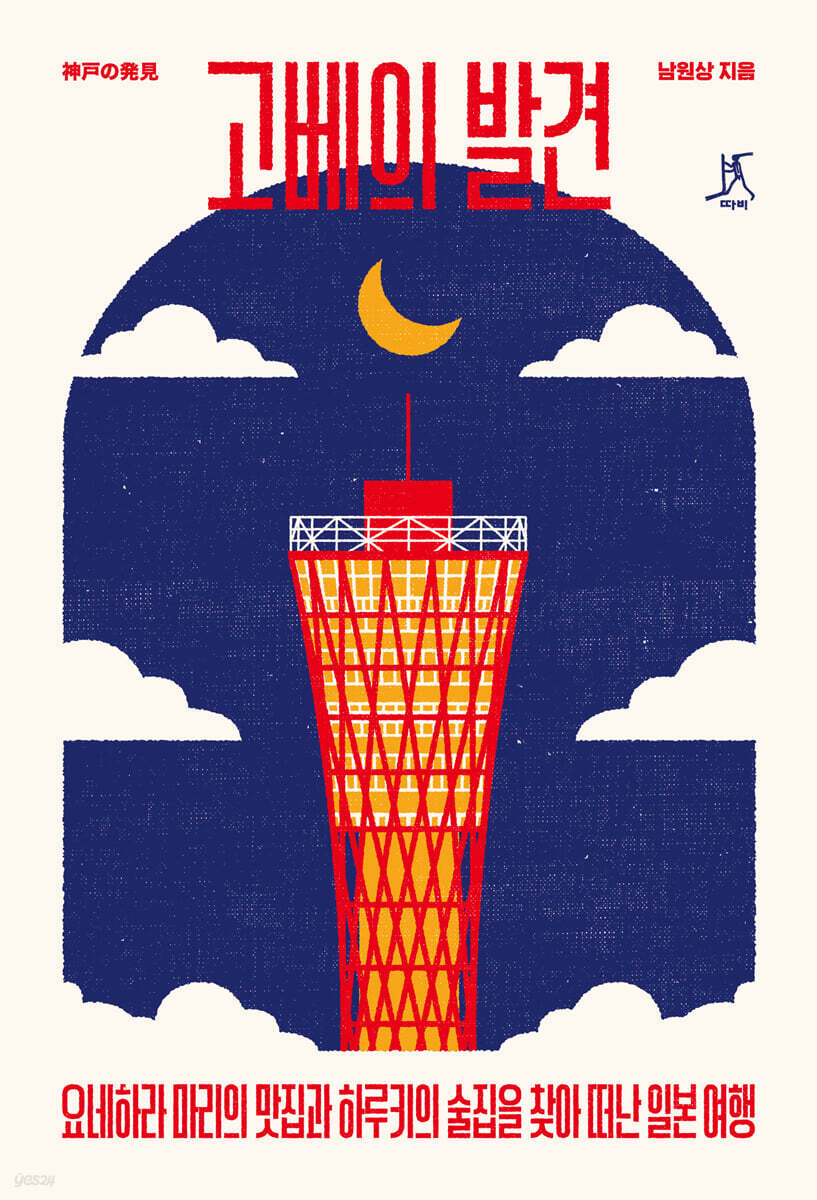
Discovery of Kobe
 |
Description
Book Introduction
- A word from MD
- [Kobe's unexpected charm] Kobe has long been recognized as a city that is briefly introduced as a side trip for tourists traveling to Osaka or Kyoto.
Traveler Nam Won-sang introduces the unexpected charm of Kobe, the city that first opened its doors to the West.
From Nankinmachi to Kitano Ijinkan and Japan's first Islamic mosque, let's explore Kobe, a city that never attracts crowds but is always open.
- Ahn Hyun-jae, travel PD
In Kobe, where I went to escape the tourist pollution caused by overtourism,
We meet a new face of Japan that neither dwells on the past nor is obsessed with cutting edge technology.
The place that Koreans visit the most is, of course, Japan, which is close by.
So, in Japan, Osaka, Fukuoka, and Tokyo are the 1st, 2nd, and 3rd most visited foreign cities by Koreans.
Osaka is especially close to Kyoto, the most Japanese city, so Koreans are accustomed to traveling to Osaka and Kyoto together.
However, there is one city that always appears together in travel guidebooks introducing these two cities.
It's Kobe.
Kobe is a city that tourists visiting Osaka and Kyoto stop by at least once.
To see Nankinmachi, one of the three major Chinatowns in China, and Kitano Ijinkan, where Westerners gathered and lived after the opening of the port.
However, it is rare for people to stay in Kobe for more than a day and travel only to Kobe.
Because, other than the places mentioned above, there are no historical sites or well-known landmarks that come to mind.
Why did traveler Nam Won-sang, who has visited 115 cities across 25 countries, go to Kobe, and what did he discover? Tabi Publishing's new book, "Discovery of Kobe," reveals the unexpected charm of Kobe, a city often overlooked.
We meet a new face of Japan that neither dwells on the past nor is obsessed with cutting edge technology.
The place that Koreans visit the most is, of course, Japan, which is close by.
So, in Japan, Osaka, Fukuoka, and Tokyo are the 1st, 2nd, and 3rd most visited foreign cities by Koreans.
Osaka is especially close to Kyoto, the most Japanese city, so Koreans are accustomed to traveling to Osaka and Kyoto together.
However, there is one city that always appears together in travel guidebooks introducing these two cities.
It's Kobe.
Kobe is a city that tourists visiting Osaka and Kyoto stop by at least once.
To see Nankinmachi, one of the three major Chinatowns in China, and Kitano Ijinkan, where Westerners gathered and lived after the opening of the port.
However, it is rare for people to stay in Kobe for more than a day and travel only to Kobe.
Because, other than the places mentioned above, there are no historical sites or well-known landmarks that come to mind.
Why did traveler Nam Won-sang, who has visited 115 cities across 25 countries, go to Kobe, and what did he discover? Tabi Publishing's new book, "Discovery of Kobe," reveals the unexpected charm of Kobe, a city often overlooked.
- You can preview some of the book's contents.
Preview
index
Packing my bag
The night tour changed in just 30 minutes on the first day.
I missed it
Hello! Hello Kitty Haruka
Why did I have to go to Himeji?
Oideya Momo's Time-Limited Dinner
A pure white egret floating in the pitch-black night sky
On the second day, leaving Himeji Castle and heading to Kobe
A masterpiece of war and bravado
Don't come in without permission
Shachihoko and sprinkler
For only 45 days in 14 years
Conger eel rice bowl in a Japanese garden
Veteran grandmother at the Kobe Tourist Information Center
The birthplace of teppanyaki
The Land of Amazing Steaks
From the high-end shopping district to the red street
How delicious are the dumplings from 'Ganso Gyozaen'!
Day 3: Arima Onsen and Haruki
Sannomiya's morning face
Fresh play on Mt. Rokko
Is it a gold hot spring or a mud hot spring?
Curry udon after a hot spring
Kobe's roots
The identity of the line for the cream puffs from 'Est Royale' that people are waiting in line to eat
$0 night view
Haruki and the 'Half Time' Bar
Halftime Souvenir
Day Four: The Longing Yonehara Mari and Kobe Port
He was right
House of the Rooster Weathervane
Miracle Mosque
Let's go to 'Fujihara'!
Fried Omakase Just for Me
Ah, Natsukashii
A beautiful yet sad aquarium
Harborland night view and a quick lunch box
On the last day, with Kobe's open heart
Become Kobe
And, Kobe
The night tour changed in just 30 minutes on the first day.
I missed it
Hello! Hello Kitty Haruka
Why did I have to go to Himeji?
Oideya Momo's Time-Limited Dinner
A pure white egret floating in the pitch-black night sky
On the second day, leaving Himeji Castle and heading to Kobe
A masterpiece of war and bravado
Don't come in without permission
Shachihoko and sprinkler
For only 45 days in 14 years
Conger eel rice bowl in a Japanese garden
Veteran grandmother at the Kobe Tourist Information Center
The birthplace of teppanyaki
The Land of Amazing Steaks
From the high-end shopping district to the red street
How delicious are the dumplings from 'Ganso Gyozaen'!
Day 3: Arima Onsen and Haruki
Sannomiya's morning face
Fresh play on Mt. Rokko
Is it a gold hot spring or a mud hot spring?
Curry udon after a hot spring
Kobe's roots
The identity of the line for the cream puffs from 'Est Royale' that people are waiting in line to eat
$0 night view
Haruki and the 'Half Time' Bar
Halftime Souvenir
Day Four: The Longing Yonehara Mari and Kobe Port
He was right
House of the Rooster Weathervane
Miracle Mosque
Let's go to 'Fujihara'!
Fried Omakase Just for Me
Ah, Natsukashii
A beautiful yet sad aquarium
Harborland night view and a quick lunch box
On the last day, with Kobe's open heart
Become Kobe
And, Kobe
Detailed image

Into the book
Mari Yonehara's "Gourmet Travelogue" sparked curiosity and interest in this city, which seemed to have no particular connection with me.
The gourmet cuisine of Kobe, which I admired and which was praised warmly (although there were also quite a few harsh criticisms), beckoned to me, a glutton.
--- p.8
Himeji, in terms of city size, is far behind not only Osaka and Kyoto, but even Kobe.
Although the area is similar, Kobe's population is around 1.5 million, while Himeji is a small city with a population of just over 500,000.
But Himeji has a very powerful landmark called Himeji Castle.
--- p.28
Grandma takes out a map and shows us where to buy tickets, explaining things in a fluent and easy manner.
I was worried that he might not be able to explain things well since he looks quite old, but it turned out to be for nothing.
It provides detailed information on how to transfer at complex transportation points and how long it will take, without having to search for it on your smartphone.
I admire your experience.
--- p.83
It melts in your mouth! I was worried it might be a bit tough because it was well-done, but contrary to my expectations, the meat was tender like tuna sashimi.
I don't even feel it.
With every bite, the rich, meaty flavor spreads in your mouth, and the meat juices cling to your tongue, making it almost a shame to swallow them.
--- p.98
Still, if anyone is going to Kobe, I would strongly recommend the Rokko-Arima Ropeway.
Kobe is more about mountains than the sea.
Kobe, I'm sorry I ignored you because I didn't know you well and thought there wouldn't be much to see.
--- p.129
We've already decided where to eat.
This is the Ganso Gyoza I went to yesterday.
Mari Yonehara, who was pressed for time with a tight schedule of one night and two days, was very disappointed that she couldn't eat one more plate, but I, who was only spending three nights and four days in Kobe, had another chance to eat.
--- p.157
Anyway, the English written on the halftime sign and awning contains typos and grammatically incorrect expressions.
It seems that they may have fixed it by replacing the old sign and awning, but they left the typos and grammatical errors as if they were part of the store's history.
It's a store with a lot of energy.
--- p.171
He showed me a photo taken right after the Kobe air raid in 1945, and it really was just the rubble of collapsed buildings, with only the mosque left standing.
It can only be described as a miracle that they were able to provide free food and shelter to their neighbors who had become refugees after the 1995 earthquake.
--- p.207
A look of sadness passes across his face.
Soon, the area around my eyes becomes moist.
To the lady, Mari Yonehara is not just a regular customer from the past.
He is the benefactor who recognized the true value of this store and made it widely known.
As a fan of Mari Yonehara, I regret that she died young and we won't be able to read more of her talent and wit.
But that would be on a different level from the sense of loss felt by Fujihara's landlady.
--- pp.225~226
The night sea gently ripples under the soft lights of Harborland.
The taste of a 7,000 won lunch box eaten while enjoying the scenery is just as good as an expensive dinner course at a hotel restaurant.
The gourmet cuisine of Kobe, which I admired and which was praised warmly (although there were also quite a few harsh criticisms), beckoned to me, a glutton.
--- p.8
Himeji, in terms of city size, is far behind not only Osaka and Kyoto, but even Kobe.
Although the area is similar, Kobe's population is around 1.5 million, while Himeji is a small city with a population of just over 500,000.
But Himeji has a very powerful landmark called Himeji Castle.
--- p.28
Grandma takes out a map and shows us where to buy tickets, explaining things in a fluent and easy manner.
I was worried that he might not be able to explain things well since he looks quite old, but it turned out to be for nothing.
It provides detailed information on how to transfer at complex transportation points and how long it will take, without having to search for it on your smartphone.
I admire your experience.
--- p.83
It melts in your mouth! I was worried it might be a bit tough because it was well-done, but contrary to my expectations, the meat was tender like tuna sashimi.
I don't even feel it.
With every bite, the rich, meaty flavor spreads in your mouth, and the meat juices cling to your tongue, making it almost a shame to swallow them.
--- p.98
Still, if anyone is going to Kobe, I would strongly recommend the Rokko-Arima Ropeway.
Kobe is more about mountains than the sea.
Kobe, I'm sorry I ignored you because I didn't know you well and thought there wouldn't be much to see.
--- p.129
We've already decided where to eat.
This is the Ganso Gyoza I went to yesterday.
Mari Yonehara, who was pressed for time with a tight schedule of one night and two days, was very disappointed that she couldn't eat one more plate, but I, who was only spending three nights and four days in Kobe, had another chance to eat.
--- p.157
Anyway, the English written on the halftime sign and awning contains typos and grammatically incorrect expressions.
It seems that they may have fixed it by replacing the old sign and awning, but they left the typos and grammatical errors as if they were part of the store's history.
It's a store with a lot of energy.
--- p.171
He showed me a photo taken right after the Kobe air raid in 1945, and it really was just the rubble of collapsed buildings, with only the mosque left standing.
It can only be described as a miracle that they were able to provide free food and shelter to their neighbors who had become refugees after the 1995 earthquake.
--- p.207
A look of sadness passes across his face.
Soon, the area around my eyes becomes moist.
To the lady, Mari Yonehara is not just a regular customer from the past.
He is the benefactor who recognized the true value of this store and made it widely known.
As a fan of Mari Yonehara, I regret that she died young and we won't be able to read more of her talent and wit.
But that would be on a different level from the sense of loss felt by Fujihara's landlady.
--- pp.225~226
The night sea gently ripples under the soft lights of Harborland.
The taste of a 7,000 won lunch box eaten while enjoying the scenery is just as good as an expensive dinner course at a hotel restaurant.
--- p.245
Publisher's Review
Why Kobe?
Everyone has a day when they suddenly want to leave.
When you suddenly feel like getting away, nearby Japan is the best option.
But of all the cities in Japan, why Kobe? The author even planned to spend three nights and four days of her four-night, five-day trip entirely in Kobe.
The time is September 2023.
Not long after emerging from the long tunnel of border closures due to COVID-19, famous tourist destinations in Europe and Asia were suffering from overflowing tourists.
The first reason was to avoid overtourism, which is difficult for both local residents who have to endure inconveniences due to the influx of tourists, and tourists who have to see only tourists in the same situation during their long-awaited trip.
In other words, Kobe doesn't seem to have much to see, but that's precisely why it was chosen.
However, it was the translator and essayist Mari Yonehara who impressed the author with the city of Kobe.
The author, who had not forgotten the description of the delicious restaurants in Kobe that she had introduced in her book “Gourmet Travels,” decided to take this opportunity to eat like Mari Yonehara in Kobe.
Kobe's open heart, shaped by Kobe's history
Come to think of it, Kobe is the home of Kobe beef, a world-renowned delicious beef, and is also one of Japan's leading cities for bread and sweets.
This is related to the history of Kobe as a city that opened its doors to foreign countries early on.
The author tastes the yakigyoza (fried dumplings) that Mari Yonehara said were delicious, and the Kobe beef teppanyaki (iron-grilled dish) that requires a line, and delves into the history of Nankinmachi, one of Japan's three major Chinatowns, and how Kobe beef became famous.
Because the more you know, the more delicious it is!
Kobe was one of the earliest Japanese cities to open its doors to China and the West.
This history has also influenced the unique nature of Kobe people, who are open to foreign cultures.
The author hears these words from the master of the bar 'Half Time', which is considered a mecca for Harukists.
“Kobe is a place where anything is accepted.
It's an open port city.
We accept everything that comes from outside, whether it be the West or China.
And you quickly get used to digesting it as Kobe's.
Kobe people are open-minded.
“I don’t have any prejudices.”
In fact, Kobe is a city where the Nankinmachi area, where Chinese people gathered early on, the Kitano Ijinkan area, where Westerners settled after the opening of the port, and the K-pop shops of Motomachi coexist alongside Japan's first Islamic mosque, which survived World War II and the Great Kobe Earthquake.
Although it is not a tourist destination built to preserve the past, nor does it attract people with cutting-edge landmarks, Kobe has many attractive sights and foods.
Travel, unexpected encounters
Among the travel destinations the author included in his 4-night, 5-day itinerary, there is one that is not Kobe.
This is Himeji Castle, Japan's first UNESCO World Heritage Site.
To avoid overtourism, I planned a trip to Kobe following Mari Yonehara, but I thought that Kobe alone might not have enough to see.
Boasting the largest castle keep of any existing Japanese castle and retaining its original appearance, Himeji Castle offers, as expected, plenty to see.
But contrary to the author's expectations, Kobe had some unexpected attractions.
The scenery of Mt. Rokko, which I encountered after enduring the hassle of changing trains, city buses, cable cars, buses, and ropeways, pleasantly exceeded the author's expectations.
The author expressed his appreciation for the magnificent scenery of Mt. Rokko with the words, “I’m sorry for ignoring Kobe, thinking there wouldn’t be much to see, even though I don’t know much about it.”
No matter how thoroughly you plan your travel itinerary, you will experience things that go against your expectations or expectations at your destination.
But perhaps the purpose of travel is to encounter such unexpected situations.
The author also experiences the misfortune of having his carefully planned itinerary disrupted upon arriving at the airport, but the unexpected sights, food, and people he encounters more than make up for it.
The charm of Kobe, discovered in this way, is introduced to readers through dry yet humorous sentences along with meticulously researched background knowledge.
So that I can think of Kobe whenever I suddenly want to leave.
Everyone has a day when they suddenly want to leave.
When you suddenly feel like getting away, nearby Japan is the best option.
But of all the cities in Japan, why Kobe? The author even planned to spend three nights and four days of her four-night, five-day trip entirely in Kobe.
The time is September 2023.
Not long after emerging from the long tunnel of border closures due to COVID-19, famous tourist destinations in Europe and Asia were suffering from overflowing tourists.
The first reason was to avoid overtourism, which is difficult for both local residents who have to endure inconveniences due to the influx of tourists, and tourists who have to see only tourists in the same situation during their long-awaited trip.
In other words, Kobe doesn't seem to have much to see, but that's precisely why it was chosen.
However, it was the translator and essayist Mari Yonehara who impressed the author with the city of Kobe.
The author, who had not forgotten the description of the delicious restaurants in Kobe that she had introduced in her book “Gourmet Travels,” decided to take this opportunity to eat like Mari Yonehara in Kobe.
Kobe's open heart, shaped by Kobe's history
Come to think of it, Kobe is the home of Kobe beef, a world-renowned delicious beef, and is also one of Japan's leading cities for bread and sweets.
This is related to the history of Kobe as a city that opened its doors to foreign countries early on.
The author tastes the yakigyoza (fried dumplings) that Mari Yonehara said were delicious, and the Kobe beef teppanyaki (iron-grilled dish) that requires a line, and delves into the history of Nankinmachi, one of Japan's three major Chinatowns, and how Kobe beef became famous.
Because the more you know, the more delicious it is!
Kobe was one of the earliest Japanese cities to open its doors to China and the West.
This history has also influenced the unique nature of Kobe people, who are open to foreign cultures.
The author hears these words from the master of the bar 'Half Time', which is considered a mecca for Harukists.
“Kobe is a place where anything is accepted.
It's an open port city.
We accept everything that comes from outside, whether it be the West or China.
And you quickly get used to digesting it as Kobe's.
Kobe people are open-minded.
“I don’t have any prejudices.”
In fact, Kobe is a city where the Nankinmachi area, where Chinese people gathered early on, the Kitano Ijinkan area, where Westerners settled after the opening of the port, and the K-pop shops of Motomachi coexist alongside Japan's first Islamic mosque, which survived World War II and the Great Kobe Earthquake.
Although it is not a tourist destination built to preserve the past, nor does it attract people with cutting-edge landmarks, Kobe has many attractive sights and foods.
Travel, unexpected encounters
Among the travel destinations the author included in his 4-night, 5-day itinerary, there is one that is not Kobe.
This is Himeji Castle, Japan's first UNESCO World Heritage Site.
To avoid overtourism, I planned a trip to Kobe following Mari Yonehara, but I thought that Kobe alone might not have enough to see.
Boasting the largest castle keep of any existing Japanese castle and retaining its original appearance, Himeji Castle offers, as expected, plenty to see.
But contrary to the author's expectations, Kobe had some unexpected attractions.
The scenery of Mt. Rokko, which I encountered after enduring the hassle of changing trains, city buses, cable cars, buses, and ropeways, pleasantly exceeded the author's expectations.
The author expressed his appreciation for the magnificent scenery of Mt. Rokko with the words, “I’m sorry for ignoring Kobe, thinking there wouldn’t be much to see, even though I don’t know much about it.”
No matter how thoroughly you plan your travel itinerary, you will experience things that go against your expectations or expectations at your destination.
But perhaps the purpose of travel is to encounter such unexpected situations.
The author also experiences the misfortune of having his carefully planned itinerary disrupted upon arriving at the airport, but the unexpected sights, food, and people he encounters more than make up for it.
The charm of Kobe, discovered in this way, is introduced to readers through dry yet humorous sentences along with meticulously researched background knowledge.
So that I can think of Kobe whenever I suddenly want to leave.
GOODS SPECIFICS
- Date of issue: June 30, 2024
- Page count, weight, size: 260 pages | 324g | 128*188*15mm
- ISBN13: 9791192169385
You may also like
카테고리
korean


korean

![ELLE 엘르 스페셜 에디션 A형 : 12월 [2025]](http://librairie.coreenne.fr/cdn/shop/files/b8e27a3de6c9538896439686c6b0e8fb.jpg?v=1766436872&width=3840)


