

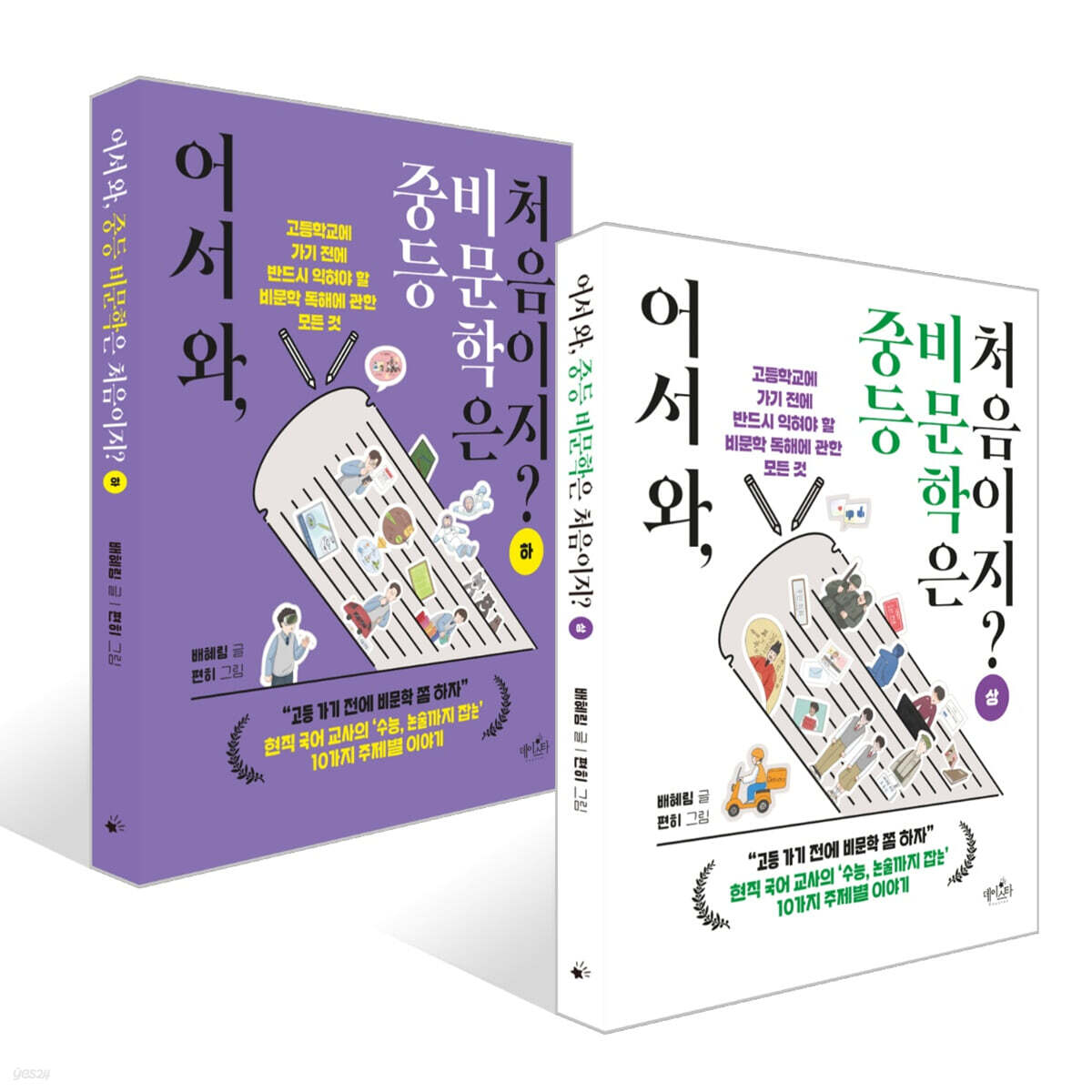
Welcome, is this your first time reading nonfiction in middle school? (Part 1 + Part 2)
 |
Description
Book Introduction
This product is a product made by YES24. (Individual returns are not possible.)
[Book] Welcome, First Time in Middle School Nonfiction? Part 1: Everything You Need to Know About Nonfiction Reading Before High School
“Finish middle school non-fiction reading with this one book!”
“The power of reading is the power of thinking.”
In an era where reading comprehension skills make a decisive difference in Korean language scores,
A must-read non-fiction reading comprehension training book before entering high school.
This book is the result of the author's long-term thinking and experience on how to make reading non-fiction easy and fun for students.
As students progress from middle school to high school, they encounter non-fiction texts that are much longer and more complex than before.
It requires the ability to go beyond simply reading text to grasp the core content, organize the structure of paragraphs, and further summarize and express it in one's own words.
However, if you start practicing reading comprehension in non-fiction only when you are already overwhelmed with your academic studies, you will easily get tired and fall behind.
Students who lack the ability to read and understand long texts quickly give up on summarizing and organizing, ultimately failing to internalize anything.
This is why you need to gradually build up your non-fiction reading skills starting from middle school.
[Book] Welcome, First Time to Middle School Nonfiction? Part 1: Everything You Need to Know About Nonfiction Reading Before High School
“Finish middle school non-fiction reading with this one book!”
“The power of reading is the power of thinking.”
In an era where reading comprehension skills make a decisive difference in Korean language scores,
A must-read non-fiction reading comprehension training book before entering high school.
This book is the result of the author's long-term thinking and experience on how to make reading non-fiction easy and fun for students.
As students progress from middle school to high school, they encounter non-fiction texts that are much longer and more complex than before.
It requires the ability to go beyond simply reading text to grasp the core content, organize the structure of paragraphs, and further summarize and express it in one's own words.
However, if you start practicing reading comprehension in non-fiction only when you are already overwhelmed with your academic studies, you will easily get tired and fall behind.
Students who lack the ability to read and understand long texts quickly give up on summarizing and organizing, ultimately failing to internalize anything.
This is why you need to gradually build up your non-fiction reading skills starting from middle school.
[Book] Welcome, First Time in Middle School Nonfiction? Part 1: Everything You Need to Know About Nonfiction Reading Before High School
“Finish middle school non-fiction reading with this one book!”
“The power of reading is the power of thinking.”
In an era where reading comprehension skills make a decisive difference in Korean language scores,
A must-read non-fiction reading comprehension training book before entering high school.
This book is the result of the author's long-term thinking and experience on how to make reading non-fiction easy and fun for students.
As students progress from middle school to high school, they encounter non-fiction texts that are much longer and more complex than before.
It requires the ability to go beyond simply reading text to grasp the core content, organize the structure of paragraphs, and further summarize and express it in one's own words.
However, if you start practicing reading comprehension in non-fiction only when you are already overwhelmed with your academic studies, you will easily get tired and fall behind.
Students who lack the ability to read and understand long texts quickly give up on summarizing and organizing, ultimately failing to internalize anything.
This is why you need to gradually build up your non-fiction reading skills starting from middle school.
[Book] Welcome, First Time to Middle School Nonfiction? Part 1: Everything You Need to Know About Nonfiction Reading Before High School
“Finish middle school non-fiction reading with this one book!”
“The power of reading is the power of thinking.”
In an era where reading comprehension skills make a decisive difference in Korean language scores,
A must-read non-fiction reading comprehension training book before entering high school.
This book is the result of the author's long-term thinking and experience on how to make reading non-fiction easy and fun for students.
As students progress from middle school to high school, they encounter non-fiction texts that are much longer and more complex than before.
It requires the ability to go beyond simply reading text to grasp the core content, organize the structure of paragraphs, and further summarize and express it in one's own words.
However, if you start practicing reading comprehension in non-fiction only when you are already overwhelmed with your academic studies, you will easily get tired and fall behind.
Students who lack the ability to read and understand long texts quickly give up on summarizing and organizing, ultimately failing to internalize anything.
This is why you need to gradually build up your non-fiction reading skills starting from middle school.
index
Welcome, is this your first time in middle school non-fiction?
prolog
Chapter 1 Society
1.
What impact will the rise of single-person households have on society?
2.
What are effective measures to prevent juvenile crime?
3.
What are the health effects of fast food consumption?
4.
Why are fair elections important for the future we create?
5.
What is the role of citizens in creating a healthy civil society?
6.
How is public transportation changing our society and lives?
7.
Do we really need to limit teenagers' use of social media?
8.
Is online anonymity freedom of expression or the beginning of irresponsibility?
Chapter 2 History
1.
What lessons can we learn from history?
2.
How has the world changed since World War II?
3.
What value does India's nonviolent resistance movement have?
4.
Was Syngman Rhee's decision to blow up the Han River Bridge during the Korean War justified?
5.
Should all those who changed their names during the Japanese colonial period be condemned?
6.
How should we view Heungseon Daewongun's isolationist policy?
7.
Was the unification of the three kingdoms led by Silla truly the most effective?
8.
Was Empress Myeongseong really a great queen of Joseon?
Chapter 3 Humanities
1.
How are gender role stereotypes changing?
2. What impact does SNS have on human relationships?
3.
What are the advantages and disadvantages of a multicultural society?
4.
What message does classical literature give to modern society?
5.
How are views on the legalization of same-sex marriage changing?
6.
Why should we live a good life?
7.
Is there anything in the world that does not change?
8.
What is true happiness?
Chapter 4 Politics
1.
Why is youth political participation important?
2.
What measures should be taken to address the aging society?
3.
What are the conditions for a fair trial?
4.
What would be the democratic process for resolving issues?
5.
What are the pros and cons of free trade agreements?
6.
Why do wars occur?
7.
What is the difference between a nuclear power and a non-nuclear power?
8.
Why is cultural exchange between countries important?
Chapter 5 Education
1.
Is smartphone use in schools positive or negative?
2.
How can I balance my study and leisure time?
3.
Why is media literacy necessary?
4.
What are effective ways to manage stress in teenagers?
5.
How will the Fourth Industrial Revolution change education?
6.
Do adolescents really need peer groups?
7.
Is it really necessary to wear a school uniform?
8.
During adolescence, is dating beneficial or detrimental?
"Welcome, is this your first time in middle school non-fiction? Ha."
prolog
Chapter 1 Environment
1.
How will climate change affect our lives?
2.
Is a waste-free daily life possible to protect the environment?
3.
Is a carbon tax really effective in combating global warming?
4.
Is nuclear power, which produces electricity through nuclear fission, a rational choice?
5.
Is a plastic ban realistically possible?
6.
What is the importance of protecting endangered animals?
7.
Could reducing meat consumption help combat the climate crisis?
8.
Is mandatory labeling of genetically modified organisms (GMOs) appropriate?
Chapter 2 Science
1.
What impact will advances in artificial intelligence have on jobs?
2.
How have vaccines reduced the spread of infectious diseases?
3.
What are the ethical issues surrounding the development of biotechnology?
4.
Are alternative energy options essential for the future?
5.
What are the environmental impacts of microplastics?
6.
Is pursuing a sterile environment really good for our health?
7.
Is human colonization of Mars a realistic goal or a pipe dream?
8.
How can we solve the problems of nuclear power plants and nuclear waste management?
Chapter 3 Technology
1.
How have smartphones changed our lives?
2.
Why is privacy important?
3.
How will education change in the future with edutech?
4.
What does the future of autonomous vehicles have to do with safety concerns?
5.
What are the causes and solutions to Internet addiction?
6.
What are the principles of blockchain and how can it be applied?
7.
How will advances in artificial intelligence impact human creativity?
8.
How can we envision the future of space exploration?
Chapter 4 Culture
1.
How far does the media extend its influence and responsibility?
2.
How do movies convey social messages?
3.
How can traditional arts be preserved and modernized?
4.
What is the importance and role of public art?
5.
How can copyright issues related to content creation be resolved?
6.
What are the developments in digital art and the issues that arise from them?
7.
How much influence do influencers have on young people?
8.
How should we view the rapidly growing webtoon market?
Chapter 5 Economy
1.
Why is consumer rights protection important?
2.
What is Korea's position in the global economy?
3.
What happens if the stock market crashes?
4.
What is sustainable economic development?
5.
How can we solve the problem of wealth inequality?
6.
What is the relationship between the environment and the economy?
7.
Why is financial education necessary during adolescence?
8.
Is introducing a basic income system really the right choice?
prolog
Chapter 1 Society
1.
What impact will the rise of single-person households have on society?
2.
What are effective measures to prevent juvenile crime?
3.
What are the health effects of fast food consumption?
4.
Why are fair elections important for the future we create?
5.
What is the role of citizens in creating a healthy civil society?
6.
How is public transportation changing our society and lives?
7.
Do we really need to limit teenagers' use of social media?
8.
Is online anonymity freedom of expression or the beginning of irresponsibility?
Chapter 2 History
1.
What lessons can we learn from history?
2.
How has the world changed since World War II?
3.
What value does India's nonviolent resistance movement have?
4.
Was Syngman Rhee's decision to blow up the Han River Bridge during the Korean War justified?
5.
Should all those who changed their names during the Japanese colonial period be condemned?
6.
How should we view Heungseon Daewongun's isolationist policy?
7.
Was the unification of the three kingdoms led by Silla truly the most effective?
8.
Was Empress Myeongseong really a great queen of Joseon?
Chapter 3 Humanities
1.
How are gender role stereotypes changing?
2. What impact does SNS have on human relationships?
3.
What are the advantages and disadvantages of a multicultural society?
4.
What message does classical literature give to modern society?
5.
How are views on the legalization of same-sex marriage changing?
6.
Why should we live a good life?
7.
Is there anything in the world that does not change?
8.
What is true happiness?
Chapter 4 Politics
1.
Why is youth political participation important?
2.
What measures should be taken to address the aging society?
3.
What are the conditions for a fair trial?
4.
What would be the democratic process for resolving issues?
5.
What are the pros and cons of free trade agreements?
6.
Why do wars occur?
7.
What is the difference between a nuclear power and a non-nuclear power?
8.
Why is cultural exchange between countries important?
Chapter 5 Education
1.
Is smartphone use in schools positive or negative?
2.
How can I balance my study and leisure time?
3.
Why is media literacy necessary?
4.
What are effective ways to manage stress in teenagers?
5.
How will the Fourth Industrial Revolution change education?
6.
Do adolescents really need peer groups?
7.
Is it really necessary to wear a school uniform?
8.
During adolescence, is dating beneficial or detrimental?
"Welcome, is this your first time in middle school non-fiction? Ha."
prolog
Chapter 1 Environment
1.
How will climate change affect our lives?
2.
Is a waste-free daily life possible to protect the environment?
3.
Is a carbon tax really effective in combating global warming?
4.
Is nuclear power, which produces electricity through nuclear fission, a rational choice?
5.
Is a plastic ban realistically possible?
6.
What is the importance of protecting endangered animals?
7.
Could reducing meat consumption help combat the climate crisis?
8.
Is mandatory labeling of genetically modified organisms (GMOs) appropriate?
Chapter 2 Science
1.
What impact will advances in artificial intelligence have on jobs?
2.
How have vaccines reduced the spread of infectious diseases?
3.
What are the ethical issues surrounding the development of biotechnology?
4.
Are alternative energy options essential for the future?
5.
What are the environmental impacts of microplastics?
6.
Is pursuing a sterile environment really good for our health?
7.
Is human colonization of Mars a realistic goal or a pipe dream?
8.
How can we solve the problems of nuclear power plants and nuclear waste management?
Chapter 3 Technology
1.
How have smartphones changed our lives?
2.
Why is privacy important?
3.
How will education change in the future with edutech?
4.
What does the future of autonomous vehicles have to do with safety concerns?
5.
What are the causes and solutions to Internet addiction?
6.
What are the principles of blockchain and how can it be applied?
7.
How will advances in artificial intelligence impact human creativity?
8.
How can we envision the future of space exploration?
Chapter 4 Culture
1.
How far does the media extend its influence and responsibility?
2.
How do movies convey social messages?
3.
How can traditional arts be preserved and modernized?
4.
What is the importance and role of public art?
5.
How can copyright issues related to content creation be resolved?
6.
What are the developments in digital art and the issues that arise from them?
7.
How much influence do influencers have on young people?
8.
How should we view the rapidly growing webtoon market?
Chapter 5 Economy
1.
Why is consumer rights protection important?
2.
What is Korea's position in the global economy?
3.
What happens if the stock market crashes?
4.
What is sustainable economic development?
5.
How can we solve the problem of wealth inequality?
6.
What is the relationship between the environment and the economy?
7.
Why is financial education necessary during adolescence?
8.
Is introducing a basic income system really the right choice?
Publisher's Review
“Welcome, is this your first time in middle school non-fiction?”
Society, history, humanities, politics, education, environment, science, technology, culture, economy
Non-fiction reading stories in 10 thematic sections
When students advance to high school, they are immediately faced with the vast amount of non-fiction texts in the Korean language section of the College Scholastic Ability Test.
However, since the amount of learning has already increased rapidly, there is not enough time to develop reading comprehension and summary skills.
The ability to read and summarize the main points of a text cannot be developed overnight, so you need to build a solid foundation starting in middle school so that you can quickly understand and organize long texts without wavering in high school.
Therefore, it is wisest to start non-fiction reading and summarization training in advance.
This book is a non-fiction reading and summary training book designed and written by a current Korean language teacher, tailored to middle school students' level.
While experiencing the diverse range of texts covered in the Korean language section of the College Scholastic Ability Test (CSAT), we help students develop their non-fiction reading comprehension skills without pressure through topics selected for middle school students to understand.
A variety of non-fiction texts on ten different topics help students broaden their perspectives on the world beyond simply studying Korean.
It covers a wide range of topics and allows you to enjoy the fun of gaining new knowledge while reading.
Furthermore, it cultivates the ability to grasp meaning without losing focus even in complex texts, and the ability to organize and judge various information on one's own, thereby laying a solid foundation for learning beyond high school.
It doesn't end with reading, but expands by analyzing, thinking, and expressing.
Complete your non-fiction reading comprehension training with step-by-step learning activities.
Beyond simple reading practice, this book has a three-dimensional structure that extends to expanding thinking and expressive skills.
At the end of each topic, systematic activities such as [Analyze], [Think], [Express], and [Expand Reading] are provided to help students go beyond simply reading the text and gain a deeper understanding and active use of the text.
For example, in [Analyze], you find the central sentence of each paragraph and understand the text as a whole.
[Thinking] stimulates critical and creative thinking by connecting the topic of the text with one's own experiences and social context.
[Expressing] develops both expressive and writing skills.
Finally, [Extended Reading] allows students to further explore materials, books, people, events, etc. related to the topic, thereby broadening their background knowledge and sustaining their curiosity.
Through this process, students can naturally develop the ability to read, summarize key points, and expand and organize their thoughts simultaneously.
Furthermore, you will develop the ability to focus on complex and difficult texts, select important parts, organize various information, and reconstruct meaning on your own.
The goal of this book is to foster the ability to express one's own thoughts independently, beyond the reading comprehension skills required for simple academic study.
The ability to read, organize thoughts, and express them confidently is a core competency that goes beyond academic study and is essential for all aspects of life.
Reading comprehension and summarizing skills developed during middle school serve as a solid foundation for high school studies, college, and even social life.
I hope this book will help students not be afraid of writing, but rather understand the world through writing and experience personal growth.
Society, history, humanities, politics, education, environment, science, technology, culture, economy
Non-fiction reading stories in 10 thematic sections
When students advance to high school, they are immediately faced with the vast amount of non-fiction texts in the Korean language section of the College Scholastic Ability Test.
However, since the amount of learning has already increased rapidly, there is not enough time to develop reading comprehension and summary skills.
The ability to read and summarize the main points of a text cannot be developed overnight, so you need to build a solid foundation starting in middle school so that you can quickly understand and organize long texts without wavering in high school.
Therefore, it is wisest to start non-fiction reading and summarization training in advance.
This book is a non-fiction reading and summary training book designed and written by a current Korean language teacher, tailored to middle school students' level.
While experiencing the diverse range of texts covered in the Korean language section of the College Scholastic Ability Test (CSAT), we help students develop their non-fiction reading comprehension skills without pressure through topics selected for middle school students to understand.
A variety of non-fiction texts on ten different topics help students broaden their perspectives on the world beyond simply studying Korean.
It covers a wide range of topics and allows you to enjoy the fun of gaining new knowledge while reading.
Furthermore, it cultivates the ability to grasp meaning without losing focus even in complex texts, and the ability to organize and judge various information on one's own, thereby laying a solid foundation for learning beyond high school.
It doesn't end with reading, but expands by analyzing, thinking, and expressing.
Complete your non-fiction reading comprehension training with step-by-step learning activities.
Beyond simple reading practice, this book has a three-dimensional structure that extends to expanding thinking and expressive skills.
At the end of each topic, systematic activities such as [Analyze], [Think], [Express], and [Expand Reading] are provided to help students go beyond simply reading the text and gain a deeper understanding and active use of the text.
For example, in [Analyze], you find the central sentence of each paragraph and understand the text as a whole.
[Thinking] stimulates critical and creative thinking by connecting the topic of the text with one's own experiences and social context.
[Expressing] develops both expressive and writing skills.
Finally, [Extended Reading] allows students to further explore materials, books, people, events, etc. related to the topic, thereby broadening their background knowledge and sustaining their curiosity.
Through this process, students can naturally develop the ability to read, summarize key points, and expand and organize their thoughts simultaneously.
Furthermore, you will develop the ability to focus on complex and difficult texts, select important parts, organize various information, and reconstruct meaning on your own.
The goal of this book is to foster the ability to express one's own thoughts independently, beyond the reading comprehension skills required for simple academic study.
The ability to read, organize thoughts, and express them confidently is a core competency that goes beyond academic study and is essential for all aspects of life.
Reading comprehension and summarizing skills developed during middle school serve as a solid foundation for high school studies, college, and even social life.
I hope this book will help students not be afraid of writing, but rather understand the world through writing and experience personal growth.
GOODS SPECIFICS
- Date of issue: September 25, 2025
- Page count, weight, size: 440 pages | 170*225*26mm
You may also like
카테고리
korean


korean

![GQ KOREA Mark (Monthly): December [2025]](http://librairie.coreenne.fr/cdn/shop/files/8ef265dbbfbf186523ed75ba7319009d.jpg?v=1765340328&width=3840)


