

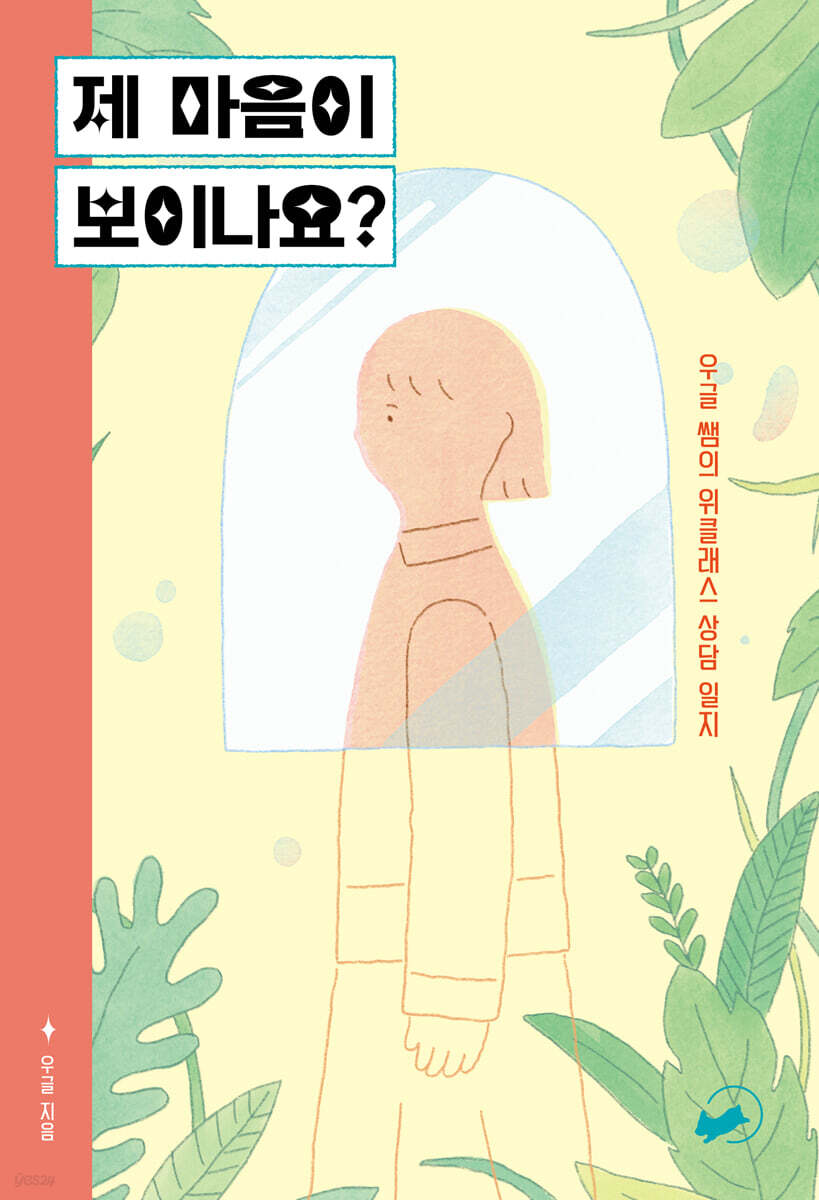
Can you see my heart?
 |
Description
Book Introduction
'School, home, it's so frustrating.'
'The very existence of a country is a weakness.'
'I was just trying to play one more round'
I want to die, but… I want to live.
Children who have difficulty breathing today
A signal of life sent out precariously and desperately
“Can you see my heart?”
This book contains the records of the past five years written by 'Woogle Teacher', who majored in psychology because he likes people and became a counselor for WeClass because he likes teenagers.
Without describing specific situations or limiting ourselves to any particular subject, this book presents eleven stories of youth counseling cases that have been considered major social phenomena in recent years, drawing on overlapping background factors and experiences.
The book vividly portrays almost every problem faced by today's youth, including self-harm, suicide, game addiction, gambling, school violence, drug addiction, and running away from home.
Although it is a considerable amount of text, as you read, you will be immersed in the unvarnished realism and be instantly drawn into the story.
It seems like a surprising and shocking story, but the author's words that it is 'extremely realistic' rather than provocative make me feel bitter again.
Still, the author does not give up hope.
I want to listen more closely to the quiet screams of the children.
Before the main text, the author carefully addresses the readers' various questions about the 'Counseling Room (WeClass)'.
Additionally, through the counseling psychology corner 'Looking into the Mind' included after each story, we provide ways to examine the situation with a clear perspective and receive professional help.
As you encounter the miraculous scenes of people finding their own 'light' and holding on to life after a time of suffering, you will not be able to hide the hot relief that wells up in your chest.
The eighth book in the Bookpole knowledge and culture series, 'Polpole'.
'The very existence of a country is a weakness.'
'I was just trying to play one more round'
I want to die, but… I want to live.
Children who have difficulty breathing today
A signal of life sent out precariously and desperately
“Can you see my heart?”
This book contains the records of the past five years written by 'Woogle Teacher', who majored in psychology because he likes people and became a counselor for WeClass because he likes teenagers.
Without describing specific situations or limiting ourselves to any particular subject, this book presents eleven stories of youth counseling cases that have been considered major social phenomena in recent years, drawing on overlapping background factors and experiences.
The book vividly portrays almost every problem faced by today's youth, including self-harm, suicide, game addiction, gambling, school violence, drug addiction, and running away from home.
Although it is a considerable amount of text, as you read, you will be immersed in the unvarnished realism and be instantly drawn into the story.
It seems like a surprising and shocking story, but the author's words that it is 'extremely realistic' rather than provocative make me feel bitter again.
Still, the author does not give up hope.
I want to listen more closely to the quiet screams of the children.
Before the main text, the author carefully addresses the readers' various questions about the 'Counseling Room (WeClass)'.
Additionally, through the counseling psychology corner 'Looking into the Mind' included after each story, we provide ways to examine the situation with a clear perspective and receive professional help.
As you encounter the miraculous scenes of people finding their own 'light' and holding on to life after a time of suffering, you will not be able to hide the hot relief that wells up in your chest.
The eighth book in the Bookpole knowledge and culture series, 'Polpole'.
- You can preview some of the book's contents.
Preview
index
- To you who are curious about the counseling room
- To you who knocked on the door of the counseling room
- To you who wants to consult but lacks the courage
Chapter 1: It's Better Than a World That Torments Me
- Story 1: Sending a signal with your own life (Looking into the mind - Borderline personality disorder)
- Story 2: I Want to Die, But… I Want to Live (Introspection - Introspection)
Chapter 2 I Want to Stop, But I Can't Do It My Way Anymore
- Story 3 I was really just going to play one more round (Looking into the Mind - Gambling Addiction)
- Story 4: Only Games Are Safe (Looking into Your Mind - Corona Blues)
- Story 5: What does it matter whether you do bad things or not (Looking into the mind - Drug addiction)
Chapter 3 My Fence Is Not Safe
- Story 6: Isn't Hell Better Than This Place? (Looking into the Mind - Child Abuse)
Story 7: Existence itself becomes a weakness (Looking into the heart - single-parent families)
Chapter 4 I Don't Know Where I Belong
- Story 8: School and home were both so frustrating (Looking into the heart - The difficulty of establishing a sense of identity)
- Story 9 I'd rather be a shadow, as long as I'm by your side (Looking into your heart - Dependent personality disorder)
Chapter 5 I Want to Believe in the World as I Imagine It
- Story 10 Everyone is watching and liking me (Looking into the mind - Delusional disorder)
- Story 11 My Friend Nobody Knows (Looking into the Mind - Epilepsy, Hallucinations)
Epilogue
- To you who knocked on the door of the counseling room
- To you who wants to consult but lacks the courage
Chapter 1: It's Better Than a World That Torments Me
- Story 1: Sending a signal with your own life (Looking into the mind - Borderline personality disorder)
- Story 2: I Want to Die, But… I Want to Live (Introspection - Introspection)
Chapter 2 I Want to Stop, But I Can't Do It My Way Anymore
- Story 3 I was really just going to play one more round (Looking into the Mind - Gambling Addiction)
- Story 4: Only Games Are Safe (Looking into Your Mind - Corona Blues)
- Story 5: What does it matter whether you do bad things or not (Looking into the mind - Drug addiction)
Chapter 3 My Fence Is Not Safe
- Story 6: Isn't Hell Better Than This Place? (Looking into the Mind - Child Abuse)
Story 7: Existence itself becomes a weakness (Looking into the heart - single-parent families)
Chapter 4 I Don't Know Where I Belong
- Story 8: School and home were both so frustrating (Looking into the heart - The difficulty of establishing a sense of identity)
- Story 9 I'd rather be a shadow, as long as I'm by your side (Looking into your heart - Dependent personality disorder)
Chapter 5 I Want to Believe in the World as I Imagine It
- Story 10 Everyone is watching and liking me (Looking into the mind - Delusional disorder)
- Story 11 My Friend Nobody Knows (Looking into the Mind - Epilepsy, Hallucinations)
Epilogue
Detailed image

Into the book
The things I encountered every day were no longer special.
It may be a shocking and surprising reality to some, but the children here were now screaming in silence, without pause.
So, I started writing.
I believed that if I could share my emptiness and loneliness, I would be able to grow into a more adaptable and healthy individual.
--- p.8
At the beginning of each year, we promote WeClass to incoming first-year students.
This is a discussion about what the counseling room does, how to apply, and whether confidentiality is guaranteed.
But what's important isn't simply conveying information.
In fact, I tell my students this:
"Where do you need a place to relax at school? The classroom is nice, the hallways are nice, but wouldn't a comfortable and safe place be better? A place with board games and even snacks?
That's Weekly Class.
Anyone can come, anytime, so come anytime.”
--- p.19
Recently, there has been an increase in the number of cases of disclosing such experiences in a covert and provocative manner through social media, such as ‘exhibiting anxiety’ and ‘sharing self-harm.’
Self-harm is addictive.
Even if you self-harmed as a child, if you experience pain that reminds you of that time or are faced with an extremely stressful situation, you may pick up a knife again.
A question may suddenly arise.
Even a slight cut on paper hurts, so how can you cut yourself with a knife?
The reason is a sense of control.
Most children in childhood and adolescence have very little freedom or choice compared to the obligations they have to fulfill.
There is nothing more praiseworthy than your school grades when you actively achieve something yourself.
At this time, if you hold a knife in your hand and harm your body, including your arms, legs, and body, there will be an immediate reaction.
--- p.22-23
I can never understand your pain.
And no one can do it.
If you don't want to tell anyone about your pain, remember just one thing.
The pain of today will not stay with you until the distant future.
Tomorrow, the bright sun we were hoping for may not rise.
It might be the same the next day, or the day after that.
But at some point in the future, after this period has passed, when I wake up to a ray of light piercing through my eyelids, I will find myself feeling lighter than I did yesterday.
--- p.32-33
Jeon Gyu turned on the monitor out of habit and spent about 10 hours a day playing games.
Even eyesight, which was once the most proud part of the body, was no longer something to be proud of.
My eyes became sunken and the dark circles became darker.
My hair is messy, and I'm wearing the same clothes I wore yesterday.
In this way, I gradually built a wall between myself and society and became alone.
After listening to Jeon Gyu's story, many thoughts came to mind.
Internet gaming addiction was evident, and it was causing a loss of balance with reality.
I faced many challenges, including academics, friends, family, and sleep problems, which caused my self-esteem and sense of accomplishment to plummet.
But I couldn't tell them to stop playing computer and mobile games right away.
Among the many methods that could be applied to this child, I had to provide realistic goals.
--- p.134
Hojin spoke and placed his hand on the bandage on his chin.
I picked up the end of the taped part with my finger and tore it off, revealing the wound inside.
I hoped it wasn't a serious injury.
There was a scratch that was not deep but wide.
And beneath the wound was a purple bruise.
"eww.
It must have been painful.
“With a fist?” “Yes.” “Oh, no.
“When did you start doing this, Dad?” “Um… I think it was around the third grade.” “Was there a reason?” “I don’t really remember.
I think it was because of our friendship.” “I see.
“It’s been a very long time since then, how did you endure it?” “I’ve often thought that it would be better to die.
“Actually, I did a lot of bad things.” “Bad things… like trying to die?” The child nodded silently.
Looking back, I saw that his face was dark and shadowy, perhaps because he was a little tired or depressed.
--- p.177
There are certain places that troubled children often go to in school.
There is a health room, a counseling room, and a library.
Maybe this is a good case.
Because it tells me that at least I have the strength to take that step and the courage to talk to someone.
Sometimes, there are children who hide in bathroom stalls or don't come to school at all.
Unless they are lucky enough to be brought to the surface by a report from their homeroom teacher or friends, their suffering is easily overlooked.
It was the day I finished three consecutive consultations.
I took off my glasses to take a break and saw fingerprints and dust on the egg.
I opened the drawer to find a glasses cleaner.
Then, deep inside the drawer, I saw some medicine.
It was painkillers and bandages.
These were things I got from the health center last month.
It was medicine for students.
It was a painkiller for children suffering from menstrual cramps or headaches, and a bandage to hide self-harm marks or wipe away blood.
There happened to be a kid looking for a band.
It may be a shocking and surprising reality to some, but the children here were now screaming in silence, without pause.
So, I started writing.
I believed that if I could share my emptiness and loneliness, I would be able to grow into a more adaptable and healthy individual.
--- p.8
At the beginning of each year, we promote WeClass to incoming first-year students.
This is a discussion about what the counseling room does, how to apply, and whether confidentiality is guaranteed.
But what's important isn't simply conveying information.
In fact, I tell my students this:
"Where do you need a place to relax at school? The classroom is nice, the hallways are nice, but wouldn't a comfortable and safe place be better? A place with board games and even snacks?
That's Weekly Class.
Anyone can come, anytime, so come anytime.”
--- p.19
Recently, there has been an increase in the number of cases of disclosing such experiences in a covert and provocative manner through social media, such as ‘exhibiting anxiety’ and ‘sharing self-harm.’
Self-harm is addictive.
Even if you self-harmed as a child, if you experience pain that reminds you of that time or are faced with an extremely stressful situation, you may pick up a knife again.
A question may suddenly arise.
Even a slight cut on paper hurts, so how can you cut yourself with a knife?
The reason is a sense of control.
Most children in childhood and adolescence have very little freedom or choice compared to the obligations they have to fulfill.
There is nothing more praiseworthy than your school grades when you actively achieve something yourself.
At this time, if you hold a knife in your hand and harm your body, including your arms, legs, and body, there will be an immediate reaction.
--- p.22-23
I can never understand your pain.
And no one can do it.
If you don't want to tell anyone about your pain, remember just one thing.
The pain of today will not stay with you until the distant future.
Tomorrow, the bright sun we were hoping for may not rise.
It might be the same the next day, or the day after that.
But at some point in the future, after this period has passed, when I wake up to a ray of light piercing through my eyelids, I will find myself feeling lighter than I did yesterday.
--- p.32-33
Jeon Gyu turned on the monitor out of habit and spent about 10 hours a day playing games.
Even eyesight, which was once the most proud part of the body, was no longer something to be proud of.
My eyes became sunken and the dark circles became darker.
My hair is messy, and I'm wearing the same clothes I wore yesterday.
In this way, I gradually built a wall between myself and society and became alone.
After listening to Jeon Gyu's story, many thoughts came to mind.
Internet gaming addiction was evident, and it was causing a loss of balance with reality.
I faced many challenges, including academics, friends, family, and sleep problems, which caused my self-esteem and sense of accomplishment to plummet.
But I couldn't tell them to stop playing computer and mobile games right away.
Among the many methods that could be applied to this child, I had to provide realistic goals.
--- p.134
Hojin spoke and placed his hand on the bandage on his chin.
I picked up the end of the taped part with my finger and tore it off, revealing the wound inside.
I hoped it wasn't a serious injury.
There was a scratch that was not deep but wide.
And beneath the wound was a purple bruise.
"eww.
It must have been painful.
“With a fist?” “Yes.” “Oh, no.
“When did you start doing this, Dad?” “Um… I think it was around the third grade.” “Was there a reason?” “I don’t really remember.
I think it was because of our friendship.” “I see.
“It’s been a very long time since then, how did you endure it?” “I’ve often thought that it would be better to die.
“Actually, I did a lot of bad things.” “Bad things… like trying to die?” The child nodded silently.
Looking back, I saw that his face was dark and shadowy, perhaps because he was a little tired or depressed.
--- p.177
There are certain places that troubled children often go to in school.
There is a health room, a counseling room, and a library.
Maybe this is a good case.
Because it tells me that at least I have the strength to take that step and the courage to talk to someone.
Sometimes, there are children who hide in bathroom stalls or don't come to school at all.
Unless they are lucky enough to be brought to the surface by a report from their homeroom teacher or friends, their suffering is easily overlooked.
It was the day I finished three consecutive consultations.
I took off my glasses to take a break and saw fingerprints and dust on the egg.
I opened the drawer to find a glasses cleaner.
Then, deep inside the drawer, I saw some medicine.
It was painkillers and bandages.
These were things I got from the health center last month.
It was medicine for students.
It was a painkiller for children suffering from menstrual cramps or headaches, and a bandage to hide self-harm marks or wipe away blood.
There happened to be a kid looking for a band.
--- p.297-298
Publisher's Review
Problems don't come from one person.
We live together, but the secrets and truths I keep locked away…
The unspoken reality of today's youth, revealed through eleven stories.
Children who have chosen to become islands of their own, closing their doors to the world and cutting off their connections.
The feelings they let out, the voices they couldn't utter, the wounds they couldn't suppress, remained all over the island, drawing a desolate map.
And there is someone who has decided to listen to the hearts of these children who have nowhere to put their hearts.
He heads to the children in search of a map that may be the only one in the world, or perhaps that may still be abandoned countless times somewhere in the world.
Because I want to hear, because I want to hear the story in your heart.
"Can you see my heart?" is a book that begins like this.
It is based on the records written over the past five years by 'Woogle Teacher', who majored in psychology because he likes people and became a counselor at WeClass because he likes teenagers.
Emphasizing professional ethics as a counselor, this book does not describe specific situations or limit itself to a specific subject, but rather adapts eleven stories of youth counseling cases that have been considered major social phenomena in recent years based on overlapping background factors and experiences.
Through the eleven stories in the book, the author meticulously captures how the keyword "growth," which is achieved throughout a person's life, resonates not only with adolescents but also with those around them—most importantly, their parents.
For example, a child's pain was directly connected to the parent's unhealed wounds.
The child's deficiency was often caused by the parents' excessive obsession and control.
The child's problems were not just one person's, but the worries and conflicts each child faced were confined 'alone'.
Where do those neglected hearts go? Every time I look at children with lost eyes, I feel that one person desperately needs more than one strength to live - living 'together' - and I want to gladly extend a hand.
Pain comes to everyone, and I wanted to convey the message that you are not alone in your struggles… I turned on the lights in the WeClass counseling room.
Where can I rest at school?
The 'WeClass' counseling room, open to anyone, anytime
The counseling room is literally a space where you can tell your true story to a psychological counseling expert.
You can talk about anything you want, from heavy topics like depression, anxiety, and panic attacks to fights with your best friend, the secret you stole money from your mom, and concerns about your future.
The Ministry of Education of the Republic of Korea first began to concretize school counseling in 2008 with the Wee Project.
To address psychological difficulties and family difficulties such as single-parent families, and to professionally address issues such as school violence and school dropouts.
In schools, it is called Wee Class, in individual education support offices, it is called Wee Center, and in the central education office, it is called Wee School. As of 2023, there are 8,863 Wee Classes, 203 Wee Centers, and 17 Wee Schools nationwide.
There are also spaces for out-of-school youth, and the most representative one is the Youth Counseling and Welfare Center.
Most centers are easily accessible within the local area and offer free psychological counseling.
The author is a WeClass counselor working at a high school in a certain region.
Although counseling at counseling centers and counseling at schools are broadly similar, the unique characteristics of school counseling cannot be ruled out.
Since counseling is usually conducted during class time, it is difficult to provide counseling when there are performance evaluations or tests.
Counseling dates often change due to personal circumstances of the student, and may also be suddenly canceled.
There are cases where students knock on the door of WeClass and request counseling, but it is often done at the request of their homeroom teacher or parents.
Children with various difficulties come to the counseling room.
The most common counseling case is interpersonal conflict experienced during school life.
Next comes personality counseling, which includes the concerns of introverted and sensitive students, and the difficulties of children who are obsessive or anxious.
Concerns about academics, career paths, family relationships, and mental health follow.
Mental health typically involves crisis counseling, with specific topics such as self-harm and suicide attempts.
Recently, the seriousness of this trend is increasing as people are disclosing these experiences in a secret and provocative manner through social media, such as through ‘exhibiting anxiety’ and ‘sharing self-harm’, and it is becoming common among peers like a fad.
The book tells readers eleven stories over five chapters.
Chapter 1, 'Because it's better than a world where bullying me is difficult,' realistically depicts the situation of teenagers where self-harm and suicide are constant issues.
Chapter 2, “I Want to Stop, But I Can’t Do It My Way Anymore,” examines the changing youth culture and existential isolation after COVID-19 through individual cases of gambling addiction, game addiction, and drug addiction.
In Chapter 3, 'My Fence Is Not Safe', the author's camera goes deeper into the youth family (parenting environment).
In the case of 'child abuse', we meet a child enduring a hellish daily life, and in the case of 'single-parent families', we face a discriminatory reality where existence itself becomes a weakness.
Chapters 4 and 5 are stories that take a particularly close look at 'relationships'.
The book introduces cases of children who hate school, hate home, and cannot set foot comfortably anywhere in the world, who have a sense of deficiency and identity confusion, who live excessively dependent on others, who have the delusion that everyone is aware of them and paying attention to them, and who suffer from hallucinations and epilepsy that lead to the belief in beings that do not actually exist.
Yesterday has passed, and tomorrow has not yet come, so today,
Let's live today
Miraculous stories of finding your own 'light' after a time of suffering.
Because counselors across the country encounter a wide variety of cases, the author's account cannot be considered a universal guide to the reality of youth.
There are regional differences, and even within Seoul, there will certainly be differences depending on the residential area.
However, the author confesses that he picked up his pen because he felt he had to do something about the reality that the things he faced every day were no longer special, and the confusion of values and psychological emptiness that children experience were increasing.
“If someone else is going through a similar experience, they can empathize with each other and experience healing.
“I have personally experienced this fact in the field, so if I share it with many people through writing, the empathy and healing power of the experience will be even more influential.” (Prologue)
The author says that when talking with children, “I realized that there wasn’t as much I had to do as I thought.”
If you just listen carefully and attentively to what the children say, they will find their own way.
So today, too, Teacher Woogle sends a signal to the hearts of the children wandering inside and outside the counseling room.
"are you okay.
Come visit anytime.
“You can tell me anything.” I hope this signal gets through to those lonely and dry hearts.
We live together, but the secrets and truths I keep locked away…
The unspoken reality of today's youth, revealed through eleven stories.
Children who have chosen to become islands of their own, closing their doors to the world and cutting off their connections.
The feelings they let out, the voices they couldn't utter, the wounds they couldn't suppress, remained all over the island, drawing a desolate map.
And there is someone who has decided to listen to the hearts of these children who have nowhere to put their hearts.
He heads to the children in search of a map that may be the only one in the world, or perhaps that may still be abandoned countless times somewhere in the world.
Because I want to hear, because I want to hear the story in your heart.
"Can you see my heart?" is a book that begins like this.
It is based on the records written over the past five years by 'Woogle Teacher', who majored in psychology because he likes people and became a counselor at WeClass because he likes teenagers.
Emphasizing professional ethics as a counselor, this book does not describe specific situations or limit itself to a specific subject, but rather adapts eleven stories of youth counseling cases that have been considered major social phenomena in recent years based on overlapping background factors and experiences.
Through the eleven stories in the book, the author meticulously captures how the keyword "growth," which is achieved throughout a person's life, resonates not only with adolescents but also with those around them—most importantly, their parents.
For example, a child's pain was directly connected to the parent's unhealed wounds.
The child's deficiency was often caused by the parents' excessive obsession and control.
The child's problems were not just one person's, but the worries and conflicts each child faced were confined 'alone'.
Where do those neglected hearts go? Every time I look at children with lost eyes, I feel that one person desperately needs more than one strength to live - living 'together' - and I want to gladly extend a hand.
Pain comes to everyone, and I wanted to convey the message that you are not alone in your struggles… I turned on the lights in the WeClass counseling room.
Where can I rest at school?
The 'WeClass' counseling room, open to anyone, anytime
The counseling room is literally a space where you can tell your true story to a psychological counseling expert.
You can talk about anything you want, from heavy topics like depression, anxiety, and panic attacks to fights with your best friend, the secret you stole money from your mom, and concerns about your future.
The Ministry of Education of the Republic of Korea first began to concretize school counseling in 2008 with the Wee Project.
To address psychological difficulties and family difficulties such as single-parent families, and to professionally address issues such as school violence and school dropouts.
In schools, it is called Wee Class, in individual education support offices, it is called Wee Center, and in the central education office, it is called Wee School. As of 2023, there are 8,863 Wee Classes, 203 Wee Centers, and 17 Wee Schools nationwide.
There are also spaces for out-of-school youth, and the most representative one is the Youth Counseling and Welfare Center.
Most centers are easily accessible within the local area and offer free psychological counseling.
The author is a WeClass counselor working at a high school in a certain region.
Although counseling at counseling centers and counseling at schools are broadly similar, the unique characteristics of school counseling cannot be ruled out.
Since counseling is usually conducted during class time, it is difficult to provide counseling when there are performance evaluations or tests.
Counseling dates often change due to personal circumstances of the student, and may also be suddenly canceled.
There are cases where students knock on the door of WeClass and request counseling, but it is often done at the request of their homeroom teacher or parents.
Children with various difficulties come to the counseling room.
The most common counseling case is interpersonal conflict experienced during school life.
Next comes personality counseling, which includes the concerns of introverted and sensitive students, and the difficulties of children who are obsessive or anxious.
Concerns about academics, career paths, family relationships, and mental health follow.
Mental health typically involves crisis counseling, with specific topics such as self-harm and suicide attempts.
Recently, the seriousness of this trend is increasing as people are disclosing these experiences in a secret and provocative manner through social media, such as through ‘exhibiting anxiety’ and ‘sharing self-harm’, and it is becoming common among peers like a fad.
The book tells readers eleven stories over five chapters.
Chapter 1, 'Because it's better than a world where bullying me is difficult,' realistically depicts the situation of teenagers where self-harm and suicide are constant issues.
Chapter 2, “I Want to Stop, But I Can’t Do It My Way Anymore,” examines the changing youth culture and existential isolation after COVID-19 through individual cases of gambling addiction, game addiction, and drug addiction.
In Chapter 3, 'My Fence Is Not Safe', the author's camera goes deeper into the youth family (parenting environment).
In the case of 'child abuse', we meet a child enduring a hellish daily life, and in the case of 'single-parent families', we face a discriminatory reality where existence itself becomes a weakness.
Chapters 4 and 5 are stories that take a particularly close look at 'relationships'.
The book introduces cases of children who hate school, hate home, and cannot set foot comfortably anywhere in the world, who have a sense of deficiency and identity confusion, who live excessively dependent on others, who have the delusion that everyone is aware of them and paying attention to them, and who suffer from hallucinations and epilepsy that lead to the belief in beings that do not actually exist.
Yesterday has passed, and tomorrow has not yet come, so today,
Let's live today
Miraculous stories of finding your own 'light' after a time of suffering.
Because counselors across the country encounter a wide variety of cases, the author's account cannot be considered a universal guide to the reality of youth.
There are regional differences, and even within Seoul, there will certainly be differences depending on the residential area.
However, the author confesses that he picked up his pen because he felt he had to do something about the reality that the things he faced every day were no longer special, and the confusion of values and psychological emptiness that children experience were increasing.
“If someone else is going through a similar experience, they can empathize with each other and experience healing.
“I have personally experienced this fact in the field, so if I share it with many people through writing, the empathy and healing power of the experience will be even more influential.” (Prologue)
The author says that when talking with children, “I realized that there wasn’t as much I had to do as I thought.”
If you just listen carefully and attentively to what the children say, they will find their own way.
So today, too, Teacher Woogle sends a signal to the hearts of the children wandering inside and outside the counseling room.
"are you okay.
Come visit anytime.
“You can tell me anything.” I hope this signal gets through to those lonely and dry hearts.
GOODS SPECIFICS
- Date of issue: August 30, 2025
- Page count, weight, size: 352 pages | 438g | 140*205*18mm
- ISBN13: 9791193162507
- ISBN10: 1193162505
You may also like
카테고리
korean


korean

![GQ KOREA Mark (Monthly): December [2025]](http://librairie.coreenne.fr/cdn/shop/files/8ef265dbbfbf186523ed75ba7319009d.jpg?v=1765340328&width=3840)


