

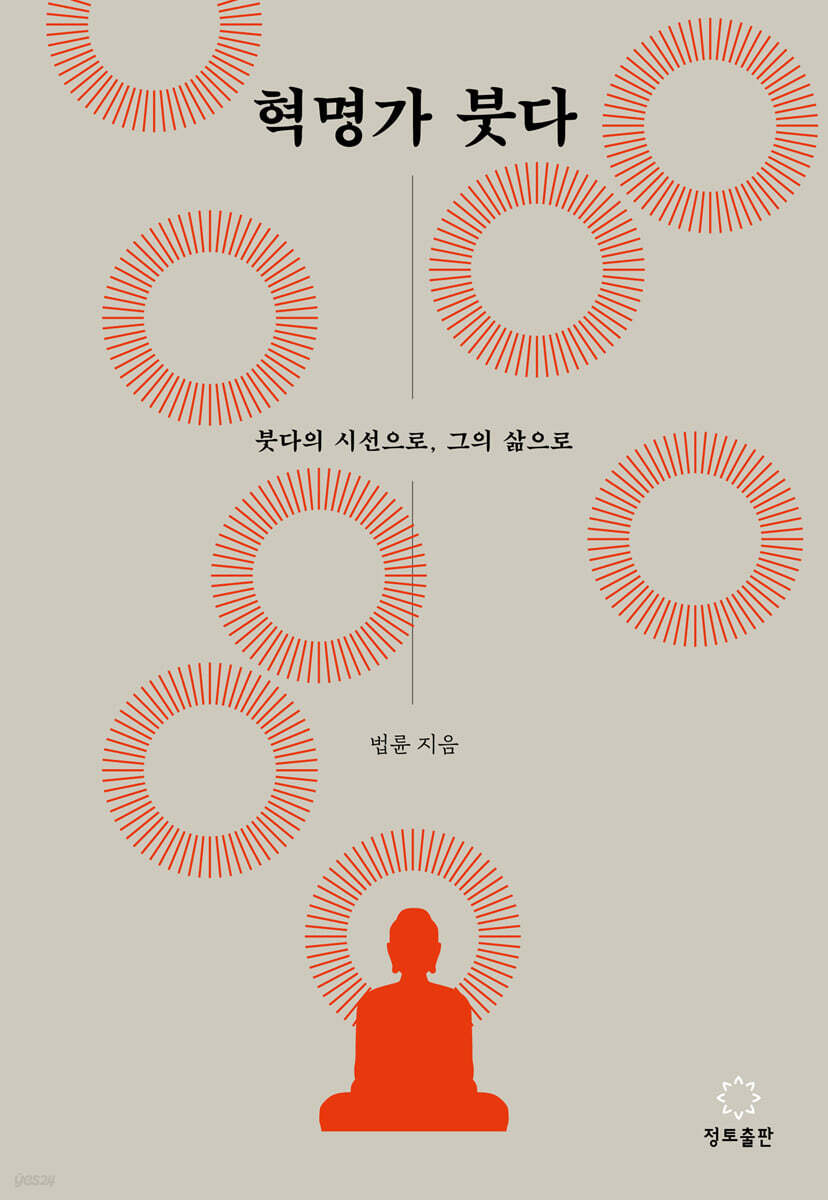
Revolutionary Buddha
 |
Description
Book Introduction
“Why must one die for the other to live?
“Isn’t there any way we can live together?”
Siddhartha, a twelve-year-old boy who began to suffer after seeing the suffering of people in the world, abandoned his status as a prince and went out into the world.
In a world rife with discrimination and violence, the human Buddha lived his entire life as a seeker and revolutionary, striving for a world where all can be happy! His footsteps are captured in the earnest yearning of Venerable Pomnyun for his master.
Leaving the palace behind, Siddhartha began extreme asceticism to find the answer to his suffering.
Through acting and the Middle Way, I finally achieved the highest enlightenment that no one had ever found.
The one who realized this became Buddha.
The Buddha did not stop at personal enlightenment, but continued to practice to save suffering beings until he reached nirvana.
But the times were oppressive and society was merciless.
Wars were constantly taking place between the 300 or so large and small nations that were divided.
Class was destiny, and for most people it was an inescapable yoke.
Even though they were talented and had a lot of money, women had no power.
It was a world where 'building one's own happiness on the misfortune of others' was taken for granted.
Buddha rejected that obviousness.
“In the Buddha’s Dharma, all are one.”
“Love your people as your only sons.”
“Allow women to become monks.”
“Don’t shed people’s precious blood for trivial water.”
The Buddha recognized women's rights, did not tolerate class discrimination among his disciples, and preached to kings to think of the people first and pursue peace.
These were words and actions that would overturn the oppressive and merciless world.
“Anyone who becomes enlightened can become a Buddha.”
Furthermore, he said that if we escape from ignorance and attain enlightenment, we can be free from all suffering.
While the Buddha's personal enlightenment was remarkable, this declaration was truly revolutionary.
These teachings of Buddha were a revolution that shook the existing social order to its core.
When Monk Beopryun looked into the life of the Buddha, he realized that he was a revolutionary who transcended the limitations of his time and opened up a new world.
The life of the Buddha contains both personal practice toward enlightenment and social practice.
This is the teaching that Buddha, the revolutionary, gives us.
To share this insight with the public, Venerable Pomnyun gave a lecture on EBS and compiled the content into this book.
Through this book, I hope you can imagine the world that the revolutionary Buddha sought.
And may we all begin with even one small action we can put into practice.
That is the path to follow the Buddha's teachings.
“Isn’t there any way we can live together?”
Siddhartha, a twelve-year-old boy who began to suffer after seeing the suffering of people in the world, abandoned his status as a prince and went out into the world.
In a world rife with discrimination and violence, the human Buddha lived his entire life as a seeker and revolutionary, striving for a world where all can be happy! His footsteps are captured in the earnest yearning of Venerable Pomnyun for his master.
Leaving the palace behind, Siddhartha began extreme asceticism to find the answer to his suffering.
Through acting and the Middle Way, I finally achieved the highest enlightenment that no one had ever found.
The one who realized this became Buddha.
The Buddha did not stop at personal enlightenment, but continued to practice to save suffering beings until he reached nirvana.
But the times were oppressive and society was merciless.
Wars were constantly taking place between the 300 or so large and small nations that were divided.
Class was destiny, and for most people it was an inescapable yoke.
Even though they were talented and had a lot of money, women had no power.
It was a world where 'building one's own happiness on the misfortune of others' was taken for granted.
Buddha rejected that obviousness.
“In the Buddha’s Dharma, all are one.”
“Love your people as your only sons.”
“Allow women to become monks.”
“Don’t shed people’s precious blood for trivial water.”
The Buddha recognized women's rights, did not tolerate class discrimination among his disciples, and preached to kings to think of the people first and pursue peace.
These were words and actions that would overturn the oppressive and merciless world.
“Anyone who becomes enlightened can become a Buddha.”
Furthermore, he said that if we escape from ignorance and attain enlightenment, we can be free from all suffering.
While the Buddha's personal enlightenment was remarkable, this declaration was truly revolutionary.
These teachings of Buddha were a revolution that shook the existing social order to its core.
When Monk Beopryun looked into the life of the Buddha, he realized that he was a revolutionary who transcended the limitations of his time and opened up a new world.
The life of the Buddha contains both personal practice toward enlightenment and social practice.
This is the teaching that Buddha, the revolutionary, gives us.
To share this insight with the public, Venerable Pomnyun gave a lecture on EBS and compiled the content into this book.
Through this book, I hope you can imagine the world that the revolutionary Buddha sought.
And may we all begin with even one small action we can put into practice.
That is the path to follow the Buddha's teachings.
- You can preview some of the book's contents.
Preview
index
Headline: Meet the Revolutionary Buddha
Chapter 1: Suffering in a Life of Abundance
The Birth of Buddha
India's natural environment and historical circumstances
The agony of young Siddhartha
Chapter 2: Siddhartha Realizes the True Nature of the World
Siddhartha's asceticism
Achievement of enlightenment
Chapter 3: Embarking on a Dharma mission to save sentient beings
The Beginning of the Dharma Transmission, the First Turning of the Dharma Wheel
Laying the foundation for tactics
The return of the great disciples
Chapter 4: All Human Beings Are Equal
Women are half the world
The doctrine of equality and mercy
Steps for Peace
A confident path despite criticism and slander
Chapter 5: If I Free Myself from Suffering, I Will Become a Buddha
Freedom from the burden of old age and illness, the path to nirvana
The history of religious sect formation and illegal propagation
When I am free from suffering, I will soon become Buddha.
Chapter 1: Suffering in a Life of Abundance
The Birth of Buddha
India's natural environment and historical circumstances
The agony of young Siddhartha
Chapter 2: Siddhartha Realizes the True Nature of the World
Siddhartha's asceticism
Achievement of enlightenment
Chapter 3: Embarking on a Dharma mission to save sentient beings
The Beginning of the Dharma Transmission, the First Turning of the Dharma Wheel
Laying the foundation for tactics
The return of the great disciples
Chapter 4: All Human Beings Are Equal
Women are half the world
The doctrine of equality and mercy
Steps for Peace
A confident path despite criticism and slander
Chapter 5: If I Free Myself from Suffering, I Will Become a Buddha
Freedom from the burden of old age and illness, the path to nirvana
The history of religious sect formation and illegal propagation
When I am free from suffering, I will soon become Buddha.
Detailed image
.jpg)
Into the book
It is said that Siddhartha's awareness of the problem began when he started participating in agricultural work at the age of twelve.
Siddhartha, who followed his father out of the palace for the first time, was very surprised to see the people's lives.
The peasants were plowing, looking very thin, covered in mud, their clothes tattered and their faces twisted in pain.
Siddhartha was so different from the people he had seen in the palace.
So Siddhartha asked the farmers.
“Why do you live in such misery?” Siddhartha then dimly realized that his comfort was not something that was simply given to him, but rather an abundance he enjoyed on the suffering of others.
--- p.23
Siddhartha decided to become a monk.
But since it was impossible to get permission from his parents, he secretly left home at night and began the life of a monk.
Having become a practitioner, something I had longed to become for over ten years, I felt like I was about to realize something.
But after one, two, three days passed, nothing changed.
I had to endure the sounds of ferocious beasts, insect bites, hunger, and cold.
Then I thought of a warm bed and food.
As time passed, I continued to feel distressed and regretful.
In the process, Siddhartha found himself regretting his renunciation and scolded himself.
After reflecting on his own shortcomings and foolishness, Siddhartha decided that it would be difficult to practice alone and set out on a journey to find a teacher.
--- p.50~51
He entered the corpse-dumping forest of Dungeswari near Gaya and practiced extreme asceticism for six years with all his might.
Even after practicing for six years, Siddhartha did not achieve enlightenment.
Siddhartha then looked back on his life.
When I was young, before I became a monk, I just followed my desires.
The life back then, when fulfilling desires brought joy and happiness, was a path of chasing desires, a path of hedonism.
But on that path, I was not able to completely escape from my suffering.
So after becoming a monk, I walked the path of asceticism, unconditionally denying and suppressing desires.
But this too was not the path to freedom and liberation.
In the end, I realized that neither following desires nor suppressing them is the path to liberation.
And I discovered a third way to let go of both.
This is called the 'middle way'.
--- p.69~73
Having found a new path and a new perspective, the Buddha sat down under a bodhi tree in a forested area across the river, spreading out auspicious herbs given to him by a shepherd, and meditated.
The Buddha was no longer determined, determined, or tense, but rather diligent.
I woke up completely relaxed and focused.
And under the barley tree, he entered into a comfortable state of meditation.
The Buddha was in deep meditation when he saw the morning star rise at dawn and finally attained enlightenment.
Then, like a light turning on in the dark night, the true nature of the world became fully visible.
The world we have seen so far is made up of countless individuals with their own unique identities, and these individuals compete with each other, living in the law of the jungle and survival of the fittest. However, when the Buddha opened his eyes, he saw that the real world was not like that.
All beings are not individual and independent, but are all interconnected.
This is called causal arising.
--- p.82~89
When the Buddha realized the method of acting and came to know the truth of the world, all the questions he had as a child were resolved.
In the Indian class society, there were no separate Brahmins and royalty, and no separate commoners and slaves.
They are all connected.
The nobles and commoners were not separate; they were all connected.
So, when the commoners disappear, the nobles disappear, and when the nobles disappear, the commoners also disappear.
So, the Buddha is saying that the noble and the base are not aspects of existence, but rather that we are misperceiving them.
At the time, this realization was incredibly revolutionary.
It is sung as follows:
'Because this exists, that exists; if this does not exist, that does not exist.
When this arises, that arises, and when this disappears, that disappears.'
--- p.90
Venerable Ananda, who served the Buddha, went to see the Buddha and asked him.
“Can’t a woman attain enlightenment if she becomes a monk and practices?” The Buddha answered that even a woman can attain enlightenment if she practices diligently.
Then Ananda asked again.
“But why don’t you allow women to become monks?” Ananda continued.
“Please allow women to become monks under the Buddha’s precepts and teachings.
" "Women are permitted to become monks." In this way, women were permitted to become monks.
--- p.148~150
The Buddha's permission for women to become monks was a very groundbreaking act at the time.
Even now, in the 21st century, nuns cannot become priests in the Catholic Church.
In particular, in India, gender discrimination is still more severe than class discrimination.
In such a country, allowing women to become monks 2,600 years ago was a more radical thing than we might think.
I believe that women's ordination is the beginning of women's liberation and gender equality.
It was especially groundbreaking that women were given their own names, regardless of men.
Women have always been called someone's daughter, wife, or mother, and by becoming a nun, they have acquired their own name.
Buddha is a pioneer of women's liberation.
--- p.152~158
Buddha did not discriminate against the Untouchables, who he considered to be impure if they had physical contact with him, and he taught them the Dharma and taught them.
The most representative person among them is the poop-monger Nidai.
The excrement that Nida was carrying splashed on his clothes, ruining not only his own clothes but also the Buddha's clothes.
Nidai became a fool and begged for his life, saying that he had committed a sin worthy of death.
Then the Buddha took Nidai's hand, told him to get up, took him to the stream, had him wash his clothes, and asked him:
“The clothes got dirty, but what happened when I washed them?” “They got clean.” “Yes.
This cloth is not dirty by nature.
It is dirty because it has feces on it, but if you wash it, it becomes clean.
Likewise, there is no impurity in the birth of a human being.
It is just soaked in dirt.
So, if you wash the dirt in your heart like you wash the dirt off a cloth, the dirt will disappear.”
--- p.161~162
A young man was having a very hard time practicing.
The young man went to the Buddha and asked.
“The Brahmins say that no matter how many sins a person commits, if he bathes in the Ganges River, all his sins will be washed away and he will be born in heaven.
“Is that true?” Hearing this, the Buddha smiled and said:
“If what the Brahmins say is true, then the fish living in the Ganges River will be the first to be born in heaven.”
--- p.168~169
Ananda asked the Buddha a question.
“We have made offerings to the Buddha and have accumulated great merit. When the Buddha enters Nirvana, where can we make offerings to accumulate great merit?” “Ananda, don’t worry.
There are four things in this world that are equivalent to the merit of making offerings to Buddha.
“First, give food to the hungry, second, give medicine to the sick and cure them, third, help and comfort the poor and the lonely, and fourth, protect those who practice purely.”
--- p.223~224
We have reexamined the Buddha, a human being who lived as a practitioner, the Buddha who was compassionate to the marginalized, and the Buddha as a revolutionary who transcended his time, from a modern perspective.
As I looked into the life of Buddha as a human being living in the Indian society of that time, I realized that Buddha was a true revolutionary.
He was not a revolutionary who changed society through physical force, but a spiritual revolutionary who opened up a new world by awakening us to our foolishness.
He was not just a revolutionary, he was a great revolutionary.
I hope that those of you reading this book will also consider the "Revolutionary Buddha" I discovered as an alternative to overcome the climate crisis.
Siddhartha, who followed his father out of the palace for the first time, was very surprised to see the people's lives.
The peasants were plowing, looking very thin, covered in mud, their clothes tattered and their faces twisted in pain.
Siddhartha was so different from the people he had seen in the palace.
So Siddhartha asked the farmers.
“Why do you live in such misery?” Siddhartha then dimly realized that his comfort was not something that was simply given to him, but rather an abundance he enjoyed on the suffering of others.
--- p.23
Siddhartha decided to become a monk.
But since it was impossible to get permission from his parents, he secretly left home at night and began the life of a monk.
Having become a practitioner, something I had longed to become for over ten years, I felt like I was about to realize something.
But after one, two, three days passed, nothing changed.
I had to endure the sounds of ferocious beasts, insect bites, hunger, and cold.
Then I thought of a warm bed and food.
As time passed, I continued to feel distressed and regretful.
In the process, Siddhartha found himself regretting his renunciation and scolded himself.
After reflecting on his own shortcomings and foolishness, Siddhartha decided that it would be difficult to practice alone and set out on a journey to find a teacher.
--- p.50~51
He entered the corpse-dumping forest of Dungeswari near Gaya and practiced extreme asceticism for six years with all his might.
Even after practicing for six years, Siddhartha did not achieve enlightenment.
Siddhartha then looked back on his life.
When I was young, before I became a monk, I just followed my desires.
The life back then, when fulfilling desires brought joy and happiness, was a path of chasing desires, a path of hedonism.
But on that path, I was not able to completely escape from my suffering.
So after becoming a monk, I walked the path of asceticism, unconditionally denying and suppressing desires.
But this too was not the path to freedom and liberation.
In the end, I realized that neither following desires nor suppressing them is the path to liberation.
And I discovered a third way to let go of both.
This is called the 'middle way'.
--- p.69~73
Having found a new path and a new perspective, the Buddha sat down under a bodhi tree in a forested area across the river, spreading out auspicious herbs given to him by a shepherd, and meditated.
The Buddha was no longer determined, determined, or tense, but rather diligent.
I woke up completely relaxed and focused.
And under the barley tree, he entered into a comfortable state of meditation.
The Buddha was in deep meditation when he saw the morning star rise at dawn and finally attained enlightenment.
Then, like a light turning on in the dark night, the true nature of the world became fully visible.
The world we have seen so far is made up of countless individuals with their own unique identities, and these individuals compete with each other, living in the law of the jungle and survival of the fittest. However, when the Buddha opened his eyes, he saw that the real world was not like that.
All beings are not individual and independent, but are all interconnected.
This is called causal arising.
--- p.82~89
When the Buddha realized the method of acting and came to know the truth of the world, all the questions he had as a child were resolved.
In the Indian class society, there were no separate Brahmins and royalty, and no separate commoners and slaves.
They are all connected.
The nobles and commoners were not separate; they were all connected.
So, when the commoners disappear, the nobles disappear, and when the nobles disappear, the commoners also disappear.
So, the Buddha is saying that the noble and the base are not aspects of existence, but rather that we are misperceiving them.
At the time, this realization was incredibly revolutionary.
It is sung as follows:
'Because this exists, that exists; if this does not exist, that does not exist.
When this arises, that arises, and when this disappears, that disappears.'
--- p.90
Venerable Ananda, who served the Buddha, went to see the Buddha and asked him.
“Can’t a woman attain enlightenment if she becomes a monk and practices?” The Buddha answered that even a woman can attain enlightenment if she practices diligently.
Then Ananda asked again.
“But why don’t you allow women to become monks?” Ananda continued.
“Please allow women to become monks under the Buddha’s precepts and teachings.
" "Women are permitted to become monks." In this way, women were permitted to become monks.
--- p.148~150
The Buddha's permission for women to become monks was a very groundbreaking act at the time.
Even now, in the 21st century, nuns cannot become priests in the Catholic Church.
In particular, in India, gender discrimination is still more severe than class discrimination.
In such a country, allowing women to become monks 2,600 years ago was a more radical thing than we might think.
I believe that women's ordination is the beginning of women's liberation and gender equality.
It was especially groundbreaking that women were given their own names, regardless of men.
Women have always been called someone's daughter, wife, or mother, and by becoming a nun, they have acquired their own name.
Buddha is a pioneer of women's liberation.
--- p.152~158
Buddha did not discriminate against the Untouchables, who he considered to be impure if they had physical contact with him, and he taught them the Dharma and taught them.
The most representative person among them is the poop-monger Nidai.
The excrement that Nida was carrying splashed on his clothes, ruining not only his own clothes but also the Buddha's clothes.
Nidai became a fool and begged for his life, saying that he had committed a sin worthy of death.
Then the Buddha took Nidai's hand, told him to get up, took him to the stream, had him wash his clothes, and asked him:
“The clothes got dirty, but what happened when I washed them?” “They got clean.” “Yes.
This cloth is not dirty by nature.
It is dirty because it has feces on it, but if you wash it, it becomes clean.
Likewise, there is no impurity in the birth of a human being.
It is just soaked in dirt.
So, if you wash the dirt in your heart like you wash the dirt off a cloth, the dirt will disappear.”
--- p.161~162
A young man was having a very hard time practicing.
The young man went to the Buddha and asked.
“The Brahmins say that no matter how many sins a person commits, if he bathes in the Ganges River, all his sins will be washed away and he will be born in heaven.
“Is that true?” Hearing this, the Buddha smiled and said:
“If what the Brahmins say is true, then the fish living in the Ganges River will be the first to be born in heaven.”
--- p.168~169
Ananda asked the Buddha a question.
“We have made offerings to the Buddha and have accumulated great merit. When the Buddha enters Nirvana, where can we make offerings to accumulate great merit?” “Ananda, don’t worry.
There are four things in this world that are equivalent to the merit of making offerings to Buddha.
“First, give food to the hungry, second, give medicine to the sick and cure them, third, help and comfort the poor and the lonely, and fourth, protect those who practice purely.”
--- p.223~224
We have reexamined the Buddha, a human being who lived as a practitioner, the Buddha who was compassionate to the marginalized, and the Buddha as a revolutionary who transcended his time, from a modern perspective.
As I looked into the life of Buddha as a human being living in the Indian society of that time, I realized that Buddha was a true revolutionary.
He was not a revolutionary who changed society through physical force, but a spiritual revolutionary who opened up a new world by awakening us to our foolishness.
He was not just a revolutionary, he was a great revolutionary.
I hope that those of you reading this book will also consider the "Revolutionary Buddha" I discovered as an alternative to overcome the climate crisis.
--- p.255~256
Publisher's Review
"A human, not a god, a revolutionary of thought who launched a quiet rebellion."
The monk Beopryun, who gives immediate questions, asks questions through the life of Buddha.
Why have we stopped asking questions? Why don't we think? "Revolutionary Buddha" doesn't view Buddha solely as a meditator or religious symbol.
He faced suffering, gained enlightenment through it, changed the social structure, and proved it through his actions in his life's journey.
A man who allowed women to become monks, created a classless community, and changed the world through his thoughts.
This book unravels the myth of Buddha, the Buddha as a seeker and a practicing thinker, through the language of Venerable Pomnyun.
This journey of rewriting the life of Buddha in today's language also poses a question to us living in this age.
“What will you do after enlightenment?”
Buddha said that anyone who attains enlightenment like he did can become a Buddha.
Since we see as much as we know, and know as much as we see, we need to learn about the Buddha, who lived as a human being and a practitioner in a three-dimensional reality like ours.
Before discussing abstract things that are invisible and incomprehensible, shouldn't we first understand this?
From this perspective, Venerable Pomnyun speaks of the revolutionary Buddha.
In fact, it is easy to understand that the Buddha's life itself was revolutionary, both personally and socially.
From the position of a prince who was guaranteed a comfortable life, he suffered from fundamental anguish about life and the world. He eventually became a monk and lived the life of a beggar and homeless ascetic. He did not hesitate to explore any path to attain enlightenment, and underwent extreme asceticism for six years. At the end, he attained enlightenment and became Buddha.
The social revolution of Buddha is truly timeless.
The society of disciples and practitioners who followed the Buddha is reminiscent of the ideal democratic society we pursue today, but have not yet achieved.
The education of the people was also of the same content and was a social practice that naturally followed enlightenment.
Considering that the era was a strictly hierarchical society and a dynastic era, the very fact that a society of this nature could coexist and that its ideology could spread was nothing short of revolutionary.
It could be accomplished because he was Buddha.
It is said that the monk Beopryun was turned back at a crossroads and re-invented after discovering the revolutionary Buddha long ago.
This monk was disappointed with the reality of Buddhism and almost went down a different path, so could we say that this was also a revolution for him?
『Revolutionary Buddha』 is a complete account of the life of Buddha, from birth to nirvana, as discovered by Monk Beopryun.
Without any mythological elements, it illuminates the Buddha as a human being and as a practitioner who lived in India 2,600 years ago, in the circumstances of that time.
Anyone who reads this book will discover a revolutionary in his or her life.
And now, in this day and age, we will meet again and ask about the challenges we face.
What teachings from the Buddha can awaken us and transform us in the face of the climate crisis, the dangers of war, the gap between rich and poor, the overflow of materialism and consumerism, and collective egoism?
The monk Beopryun, who gives immediate questions, asks questions through the life of Buddha.
Why have we stopped asking questions? Why don't we think? "Revolutionary Buddha" doesn't view Buddha solely as a meditator or religious symbol.
He faced suffering, gained enlightenment through it, changed the social structure, and proved it through his actions in his life's journey.
A man who allowed women to become monks, created a classless community, and changed the world through his thoughts.
This book unravels the myth of Buddha, the Buddha as a seeker and a practicing thinker, through the language of Venerable Pomnyun.
This journey of rewriting the life of Buddha in today's language also poses a question to us living in this age.
“What will you do after enlightenment?”
Buddha said that anyone who attains enlightenment like he did can become a Buddha.
Since we see as much as we know, and know as much as we see, we need to learn about the Buddha, who lived as a human being and a practitioner in a three-dimensional reality like ours.
Before discussing abstract things that are invisible and incomprehensible, shouldn't we first understand this?
From this perspective, Venerable Pomnyun speaks of the revolutionary Buddha.
In fact, it is easy to understand that the Buddha's life itself was revolutionary, both personally and socially.
From the position of a prince who was guaranteed a comfortable life, he suffered from fundamental anguish about life and the world. He eventually became a monk and lived the life of a beggar and homeless ascetic. He did not hesitate to explore any path to attain enlightenment, and underwent extreme asceticism for six years. At the end, he attained enlightenment and became Buddha.
The social revolution of Buddha is truly timeless.
The society of disciples and practitioners who followed the Buddha is reminiscent of the ideal democratic society we pursue today, but have not yet achieved.
The education of the people was also of the same content and was a social practice that naturally followed enlightenment.
Considering that the era was a strictly hierarchical society and a dynastic era, the very fact that a society of this nature could coexist and that its ideology could spread was nothing short of revolutionary.
It could be accomplished because he was Buddha.
It is said that the monk Beopryun was turned back at a crossroads and re-invented after discovering the revolutionary Buddha long ago.
This monk was disappointed with the reality of Buddhism and almost went down a different path, so could we say that this was also a revolution for him?
『Revolutionary Buddha』 is a complete account of the life of Buddha, from birth to nirvana, as discovered by Monk Beopryun.
Without any mythological elements, it illuminates the Buddha as a human being and as a practitioner who lived in India 2,600 years ago, in the circumstances of that time.
Anyone who reads this book will discover a revolutionary in his or her life.
And now, in this day and age, we will meet again and ask about the challenges we face.
What teachings from the Buddha can awaken us and transform us in the face of the climate crisis, the dangers of war, the gap between rich and poor, the overflow of materialism and consumerism, and collective egoism?
GOODS SPECIFICS
- Date of issue: April 30, 2025
- Page count, weight, size: 260 pages | 392g | 138*200*16mm
- ISBN13: 9791187297826
- ISBN10: 1187297828
You may also like
카테고리
korean


korean

![GQ KOREA Mark (Monthly): December [2025]](http://librairie.coreenne.fr/cdn/shop/files/8ef265dbbfbf186523ed75ba7319009d.jpg?v=1765340328&width=3840)


