

Command + He Didn't Come set
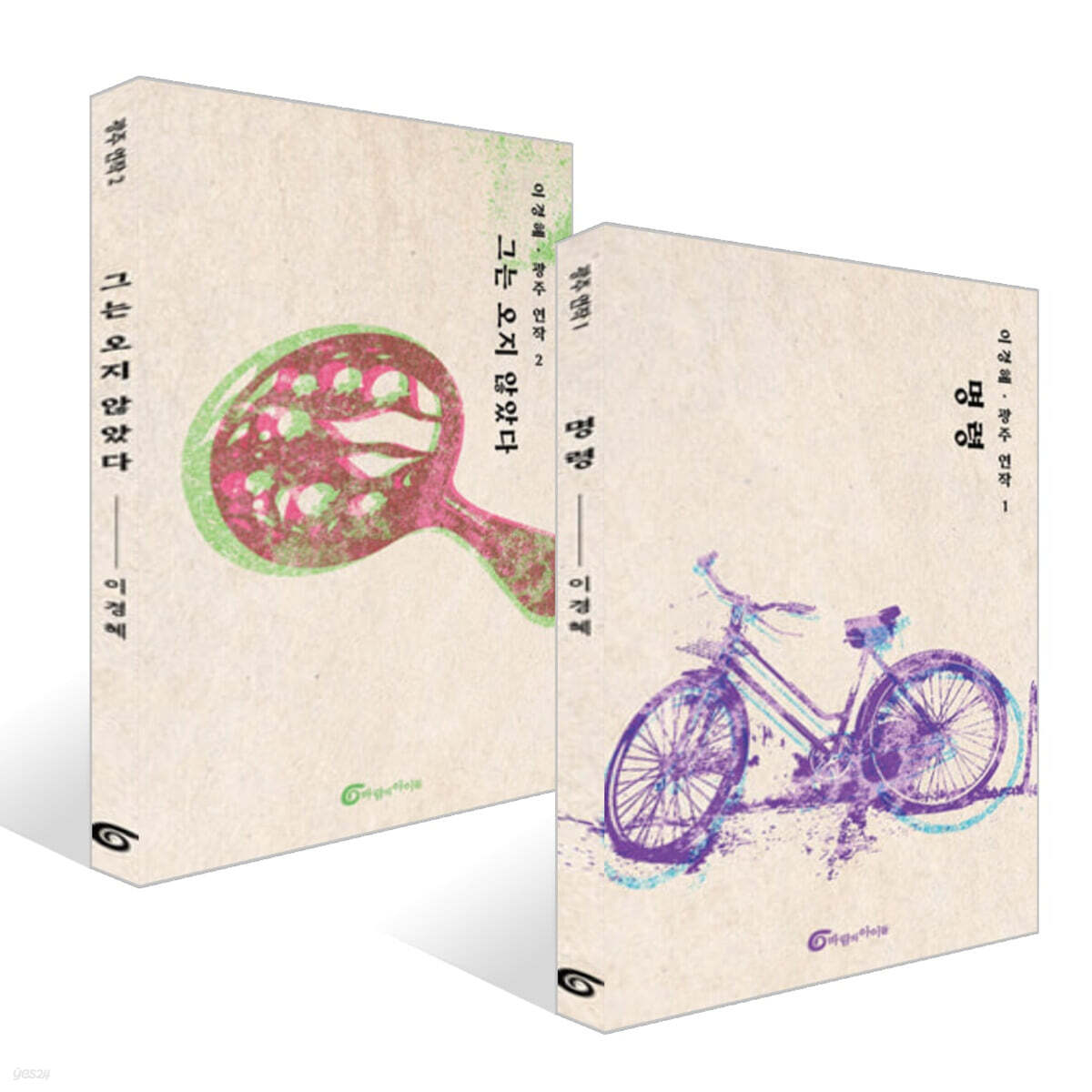 |
Description
Book Introduction
This product is a product made by YES24. (Individual returns are not possible.)
[Book] Command
Gwangju, May 1980: The tragedy that unfolded there and the lives that were shattered.
Stories we must remember today
"The Command" is a story that explores the death of a young boy and the source of the violence that led to his death.
The author asks, “How evil can humans become when orders become their shield?”
Many of the war crimes committed by mankind are systematically committed in the name of orders, with those who give the orders not getting their hands dirty and those who receive the orders not being held accountable for their evil deeds.
The teacher who quits the school asks his students, “What can someone who has no faith in humanity teach young students?”
Because schools are also spaces with hierarchy and rules, the weighty questions asked in the classroom have a special resonance.
For children who are about to graduate from middle school, asking them what it means to be human and what kind of human they should be may be more important than any mathematical formula.
[Book] He Didn't Come
Gwangju, May 1980: The tragedy that unfolded there and the lives that were shattered.
Stories we must remember today
"He Didn't Come" already reveals the tragedy of the protagonist, Inho, in the title.
This story is a novel based on information about a real person named Park In-bae, a victim of the May 18th Gwangju Democratization Movement.
This retro love story ends tragically because of evil state violence.
5.18 is a tragic history in itself, but it is difficult to fathom how it trampled and ruined the lives of each and every individual.
Why did a boy who had just fallen in love, met a respectable adult, and even glimmered a glimmer of hope for the future end up shot on the street? If a state can't protect the ordinary life of an individual, what purpose does it serve?
What should we demand from a country that cannot even fulfill the simple dreams of a single boy?
[Book] Command
Gwangju, May 1980: The tragedy that unfolded there and the lives that were shattered.
Stories we must remember today
"The Command" is a story that explores the death of a young boy and the source of the violence that led to his death.
The author asks, “How evil can humans become when orders become their shield?”
Many of the war crimes committed by mankind are systematically committed in the name of orders, with those who give the orders not getting their hands dirty and those who receive the orders not being held accountable for their evil deeds.
The teacher who quits the school asks his students, “What can someone who has no faith in humanity teach young students?”
Because schools are also spaces with hierarchy and rules, the weighty questions asked in the classroom have a special resonance.
For children who are about to graduate from middle school, asking them what it means to be human and what kind of human they should be may be more important than any mathematical formula.
[Book] He Didn't Come
Gwangju, May 1980: The tragedy that unfolded there and the lives that were shattered.
Stories we must remember today
"He Didn't Come" already reveals the tragedy of the protagonist, Inho, in the title.
This story is a novel based on information about a real person named Park In-bae, a victim of the May 18th Gwangju Democratization Movement.
This retro love story ends tragically because of evil state violence.
5.18 is a tragic history in itself, but it is difficult to fathom how it trampled and ruined the lives of each and every individual.
Why did a boy who had just fallen in love, met a respectable adult, and even glimmered a glimmer of hope for the future end up shot on the street? If a state can't protect the ordinary life of an individual, what purpose does it serve?
What should we demand from a country that cannot even fulfill the simple dreams of a single boy?
index
"command"
Command 7
Commentary on the May 18 Gwangju Democratization Movement, Part 91
Essay 103 on the "Gwangju Series"
Author's Note 125
He didn't come
He didn't come 7
Commentary on the May 18 Gwangju Democratization Movement 103
Essay 113 on the "Gwangju Series"
Author's Note 133
Command 7
Commentary on the May 18 Gwangju Democratization Movement, Part 91
Essay 103 on the "Gwangju Series"
Author's Note 125
He didn't come
He didn't come 7
Commentary on the May 18 Gwangju Democratization Movement 103
Essay 113 on the "Gwangju Series"
Author's Note 133
Publisher's Review
Gwangju, May 1980: The tragedy that unfolded there and the lives that were shattered.
Stories we must remember today
On the night of December 3, 2024, an unprecedented 'peacetime' martial law was declared and then quickly lifted by a vote of the National Assembly.
This was possible because immediately after martial law was declared, hundreds of citizens, journalists, National Assembly staff, and aides to members of the National Assembly rushed to the National Assembly and blocked the martial law troops.
The military and police also rendered the illegal martial law ineffective by failing to carry out the orders given to them or by being passive in carrying them out.
The Constitutional Court also stated in its ruling on President Yoon Seok-yeol's impeachment that "the National Assembly was able to quickly pass a resolution demanding the lifting of martial law thanks to the resistance of citizens and the passive performance of their duties by the military and police."
In her Nobel Prize in Literature acceptance speech, novelist Han Kang said that while writing “Human Acts,” there was a moment when she “felt that the dead were saving the living.”
Paradoxically, the people of South Korea, thanks to their painful modern history marked by military dictatorships and coups, are better equipped to respond quickly than any other country in the world when a crisis of democracy strikes.
We have accumulated historical experience through events such as the April 3rd and May 18th incidents, showing how martial law can lead to state violence.
We all witnessed the answer to the weighty question: "Can the past help the present? Can the dead save the living?" on the night of December 3rd.
Lee Kyung-hye, author of "One Day I Died," is launching the "Gwangju Series," a series of small books that tell the stories of children and teenagers who were sacrificed during the May 18th Democratization Movement.
The author confesses that as a college student during the 'Seoul Spring' of 1980, he participated in the Seoul Station protests and that the 5.18 Gwangju Democratization Movement greatly changed the course of his life.
And after 30 years, while living in Yeonhui Literature Village, I felt anger and sadness at the fact that dictator Chun Doo-hwan was still alive and well right next door, and that's why I started writing short stories about the May 18th Democratization Movement for young people.
It was the “command” that would become the beginning of the “Gwangju series.”
Can we find justice in a world where an old dictator who has caused countless deaths enjoys a long life? Where should the rage seething in those depths be directed?
Instead of getting angry and crying, the author suggests that we call out the names of those who were sacrificed at that time quietly but cherishably.
Among the civilians sacrificed on May 18, there were children and teenagers, and their very existence is proof of the senseless and brutal state violence.
"The Order" is based on the life and death of Park Ki-hyun, a third-year middle school student who was struck down by a club wielded by martial law soldiers in front of a bookstore, and "He Didn't Come" is based on the life and death of Park In-bae, an eighteen-year-old boy worker at a mother-of-pearl factory who was about to receive his first paycheck, but they are all works of fiction.
It is an attempt to “freely portray the character’s life in writing” by making it clear that “anyone in that position could have experienced this.”
The 'Gwangju Series' is a project that begins with the idea that "history is ultimately nothing more than calling out and remembering one person's name."
When orders become a shield
How evil can humans become?
In a third-year middle school classroom, a math teacher who has decided to quit teaching begins his last class.
The class content was, unexpectedly, about a childhood friend.
A friend who used to be like twins, who liked the Beatles and Bruce Lee and read comic books together.
Ki-hoon, who was born late in life and was loved by his mother and even wore a gold badge as an honor student because he liked math, is still sixteen years old, unlike his middle-aged math teacher.
Because he passed away in Gwangju a long time ago.
The story explains how middle school student Ki-hoon was killed by martial law troops deployed to Gwangju in May 1980, and how absurd and tragic it was.
Why did soldiers swing their clubs so vigorously that they shattered the skulls of young middle school students riding bicycles in front of a bookstore? Did the soldiers who wielded those clubs realize what they had done, and do they still remember it? Do they repent, or do they rationalize that they were simply following orders and the rules of obedience?
"The Command" is a story that explores the death of a young boy and the source of the violence that led to his death.
The author asks, “How evil can humans become when orders become their shield?”
Many of the war crimes committed by mankind are systematically committed in the name of orders, with those who give the orders not getting their hands dirty and those who receive the orders not being held accountable for their evil deeds.
The teacher who quits the school asks his students, “What can someone who has no faith in humanity teach young students?”
Because schools are also spaces with hierarchy and rules, the weighty questions asked in the classroom have a special resonance.
For children who are about to graduate from middle school, asking them what it means to be human and what kind of human they should be may be more important than any mathematical formula.
Some orders from above can be unjust and cruel.
In that case, those who receive the order have to make a choice.
While the author was planning and preparing the Gwangju series, the December 3 martial law took place.
The passive performance of the military and police at that time saved democracy from crisis.
"Command" is a novel written in 2011, but it still shows that the questions are relevant to the present.
History repeats itself, but as long as we remember, mistakes will not be repeated.
This is why we need this series even more.
Although it is a small book that can be held in one hand, it is a good book to read in May as it includes an explanation of the May 18 Gwangju Democratization Movement and the author's faithful review as an appendix.
Stories we must remember today
On the night of December 3, 2024, an unprecedented 'peacetime' martial law was declared and then quickly lifted by a vote of the National Assembly.
This was possible because immediately after martial law was declared, hundreds of citizens, journalists, National Assembly staff, and aides to members of the National Assembly rushed to the National Assembly and blocked the martial law troops.
The military and police also rendered the illegal martial law ineffective by failing to carry out the orders given to them or by being passive in carrying them out.
The Constitutional Court also stated in its ruling on President Yoon Seok-yeol's impeachment that "the National Assembly was able to quickly pass a resolution demanding the lifting of martial law thanks to the resistance of citizens and the passive performance of their duties by the military and police."
In her Nobel Prize in Literature acceptance speech, novelist Han Kang said that while writing “Human Acts,” there was a moment when she “felt that the dead were saving the living.”
Paradoxically, the people of South Korea, thanks to their painful modern history marked by military dictatorships and coups, are better equipped to respond quickly than any other country in the world when a crisis of democracy strikes.
We have accumulated historical experience through events such as the April 3rd and May 18th incidents, showing how martial law can lead to state violence.
We all witnessed the answer to the weighty question: "Can the past help the present? Can the dead save the living?" on the night of December 3rd.
Lee Kyung-hye, author of "One Day I Died," is launching the "Gwangju Series," a series of small books that tell the stories of children and teenagers who were sacrificed during the May 18th Democratization Movement.
The author confesses that as a college student during the 'Seoul Spring' of 1980, he participated in the Seoul Station protests and that the 5.18 Gwangju Democratization Movement greatly changed the course of his life.
And after 30 years, while living in Yeonhui Literature Village, I felt anger and sadness at the fact that dictator Chun Doo-hwan was still alive and well right next door, and that's why I started writing short stories about the May 18th Democratization Movement for young people.
It was the “command” that would become the beginning of the “Gwangju series.”
Can we find justice in a world where an old dictator who has caused countless deaths enjoys a long life? Where should the rage seething in those depths be directed?
Instead of getting angry and crying, the author suggests that we call out the names of those who were sacrificed at that time quietly but cherishably.
Among the civilians sacrificed on May 18, there were children and teenagers, and their very existence is proof of the senseless and brutal state violence.
"The Order" is based on the life and death of Park Ki-hyun, a third-year middle school student who was struck down by a club wielded by martial law soldiers in front of a bookstore, and "He Didn't Come" is based on the life and death of Park In-bae, an eighteen-year-old boy worker at a mother-of-pearl factory who was about to receive his first paycheck, but they are all works of fiction.
It is an attempt to “freely portray the character’s life in writing” by making it clear that “anyone in that position could have experienced this.”
The 'Gwangju Series' is a project that begins with the idea that "history is ultimately nothing more than calling out and remembering one person's name."
When orders become a shield
How evil can humans become?
In a third-year middle school classroom, a math teacher who has decided to quit teaching begins his last class.
The class content was, unexpectedly, about a childhood friend.
A friend who used to be like twins, who liked the Beatles and Bruce Lee and read comic books together.
Ki-hoon, who was born late in life and was loved by his mother and even wore a gold badge as an honor student because he liked math, is still sixteen years old, unlike his middle-aged math teacher.
Because he passed away in Gwangju a long time ago.
The story explains how middle school student Ki-hoon was killed by martial law troops deployed to Gwangju in May 1980, and how absurd and tragic it was.
Why did soldiers swing their clubs so vigorously that they shattered the skulls of young middle school students riding bicycles in front of a bookstore? Did the soldiers who wielded those clubs realize what they had done, and do they still remember it? Do they repent, or do they rationalize that they were simply following orders and the rules of obedience?
"The Command" is a story that explores the death of a young boy and the source of the violence that led to his death.
The author asks, “How evil can humans become when orders become their shield?”
Many of the war crimes committed by mankind are systematically committed in the name of orders, with those who give the orders not getting their hands dirty and those who receive the orders not being held accountable for their evil deeds.
The teacher who quits the school asks his students, “What can someone who has no faith in humanity teach young students?”
Because schools are also spaces with hierarchy and rules, the weighty questions asked in the classroom have a special resonance.
For children who are about to graduate from middle school, asking them what it means to be human and what kind of human they should be may be more important than any mathematical formula.
Some orders from above can be unjust and cruel.
In that case, those who receive the order have to make a choice.
While the author was planning and preparing the Gwangju series, the December 3 martial law took place.
The passive performance of the military and police at that time saved democracy from crisis.
"Command" is a novel written in 2011, but it still shows that the questions are relevant to the present.
History repeats itself, but as long as we remember, mistakes will not be repeated.
This is why we need this series even more.
Although it is a small book that can be held in one hand, it is a good book to read in May as it includes an explanation of the May 18 Gwangju Democratization Movement and the author's faithful review as an appendix.
GOODS SPECIFICS
- Date of issue: May 18, 2025
- Page count, weight, size: 280 pages | 324g | 118*180*18mm
You may also like
카테고리
korean


korean

![GQ KOREA Mark (Monthly): December [2025]](http://librairie.coreenne.fr/cdn/shop/files/8ef265dbbfbf186523ed75ba7319009d.jpg?v=1765340328&width=3840)


