

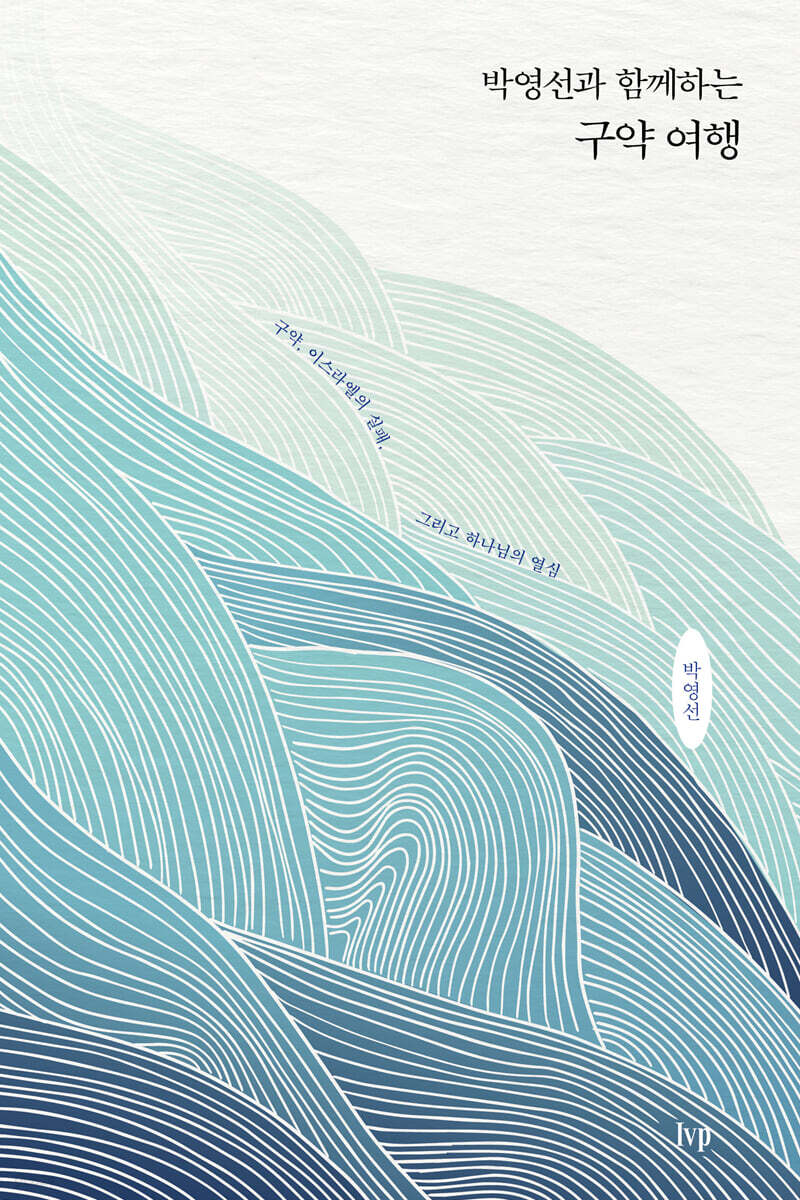
An Old Testament Journey with Park Young-sun
 |
Description
Book Introduction
Park Young-sun, a unique thinker and unparalleled preacher
The first Bible lecture for thinking Christians!
“My preaching ministry has focused on the question of how to interpret the Bible.
This book is the fruit of my ministry to share my insight into biblical interpretation with readers.”_Park Young-seon
The Christian faith is about honor and glory that come to fruition through love and faith.
The Christian gospel of grace and love is so great and deep that it is expressed in our lives through gratitude and praise.
The Bible describes this as eternal life, a life in which life blossoms abundantly.
Christians are invited to this abundant life.
The Bible is a drama written by God that shows us the life of a Christian.
From this biblical drama, Christians learn about who God is, the vastness of His creation, and the purpose of humanity—the responsibility God has entrusted to us.
Based on this, Christians, who are the objects of God's love and faith, are fully completed as children of God through countless experiences and realities that lead to reflection, enlightenment, and discernment.
This book is the fruit of 40 years of preaching by Pastor Park Young-sun, who preached “God’s zeal” in a time when everyone emphasized “zeal for God.”
With his brilliant insight and vision, he has awakened us to the depth of the Bible, the glory of salvation, and the honorable value of the Christian life. In this first special lecture, he will reveal the core message of the Old Testament and help us understand God's work unfolding throughout human and world history.
The first Bible lecture for thinking Christians!
“My preaching ministry has focused on the question of how to interpret the Bible.
This book is the fruit of my ministry to share my insight into biblical interpretation with readers.”_Park Young-seon
The Christian faith is about honor and glory that come to fruition through love and faith.
The Christian gospel of grace and love is so great and deep that it is expressed in our lives through gratitude and praise.
The Bible describes this as eternal life, a life in which life blossoms abundantly.
Christians are invited to this abundant life.
The Bible is a drama written by God that shows us the life of a Christian.
From this biblical drama, Christians learn about who God is, the vastness of His creation, and the purpose of humanity—the responsibility God has entrusted to us.
Based on this, Christians, who are the objects of God's love and faith, are fully completed as children of God through countless experiences and realities that lead to reflection, enlightenment, and discernment.
This book is the fruit of 40 years of preaching by Pastor Park Young-sun, who preached “God’s zeal” in a time when everyone emphasized “zeal for God.”
With his brilliant insight and vision, he has awakened us to the depth of the Bible, the glory of salvation, and the honorable value of the Christian life. In this first special lecture, he will reveal the core message of the Old Testament and help us understand God's work unfolding throughout human and world history.
- You can preview some of the book's contents.
Preview
index
Author's Preface
1.
Reading the Old Testament from a Historical Perspective
2.
God Comes to the Patriarchs 1
3.
God Comes to the Patriarchs 2
4.
God came to Moses
5.
God Encountered in the Wilderness 1
6.
God Encountered in the Wilderness 2
7.
God Encountered in the Promised Land
8.
God met by kings
9.
God Encountered by the Poet
10.
God met by the prophet
1.
Reading the Old Testament from a Historical Perspective
2.
God Comes to the Patriarchs 1
3.
God Comes to the Patriarchs 2
4.
God came to Moses
5.
God Encountered in the Wilderness 1
6.
God Encountered in the Wilderness 2
7.
God Encountered in the Promised Land
8.
God met by kings
9.
God Encountered by the Poet
10.
God met by the prophet
Detailed image

Into the book
So what is a Christian worldview? My answer to that question is this.
“The Christian worldview is a world of creation and resurrection!” Here, the world of creation and resurrection means that there is a beginning and an end.
The end of Christianity is resurrection and eternal life.
Death is not the end of Christianity.
The Christian faith should be able to explain the irrational and absurd reality of what exists between birth and death—that is, evil, tragedy, and disaster. But today, our faith simply repeats, “Even if I die today, I believe I will go to heaven.”
It's because I don't have the confidence to live in today's reality and tomorrow's future.
The Christian faith must be able to explain this.
Through this Bible journey, we hope to discover how much the Bible has to say between creation and resurrection, develop a biblical perspective, and broaden the horizons of our faith.
--- 「1.
From “Reading the Old Testament with a Historical View of Faith”
Salvation is not simply washing away our sins and returning us to our original position and status as if nothing had happened.
Salvation is about fulfilling the original purpose of creation—to be fruitful and multiply, fill the earth, and subdue and rule over it—through our responses in the space and time of reality.
After the fall of Adam, the reality of separation from God began to unfold in earnest, including the events of Noah's flood and the Tower of Babel.
The direct result of sin is death.
Many people in Genesis 5 live to be nearly 900 years old, but they all eventually die.
No matter how long we live, we all die without exception.
God judged humanity, whose sins were rampant in the world and whose thoughts were all evil, and created a second humanity through Noah. However, the Tower of Babel incident clearly shows that humanity, separated from God, ultimately cannot be restored.
God not only warned us of judgment during the flood of Noah, but also actively prevented the destruction of humanity in the Tower of Babel incident that occurred after Noah.
If you go against God, you will die and deserve to die, but He will scatter humanity and not carry out the final judgment.
This is where we must ask questions from the perspective of historical faith.
--- 「2.
From "God Who Seeks the Patriarch 1"
Faith cannot be defined as good or bad.
In Romans, Paul says:
“For in it the righteousness of God is revealed from faith to faith, as it is written: ‘The righteous shall live by faith’” (Romans 1:17).
The phrase “from faith to faith” means that faith, the method God introduced to complete creation, makes us people of faith.
If we divide faith into faith A and faith B, then faith A, which God initiated, is revealed to us as faith B, which is its result.
However, based on the verse “in whom he [Abraham] believed, God, who gives life to the dead and calls into existence the things that do not exist” (Romans 4:17), we believe that Abraham had the right faith to confess God as the Lord of creation and resurrection.
But from a historical perspective, we can say the following:
The reason Abraham became the father of faith, that is, the reason Abraham could believe in God, is because God applied His creation and resurrection to the unqualified.
In that sense, good faith is confessing that God is God.
When do we make such confessions? When our faith is rising, or when it's stagnating? We make these confessions when our faith is at its peak, when we have something to boast about, when we are morally and ethically free from shame.
When you are in despair, when you are utterly ashamed of yourself, you cannot make such a confession.
This is because we understand faith as our condition or qualification.
--- 「3.
From "God Who Visited the Patriarch 2"
The Bible says that God does as He pleases.
He assigns some people the role of villains and others the role of good people.
Then, those who take on the evil role feel wronged.
That could be the case.
However, those who take on the evil role are not the chosen ones, and it is not only the chosen ones who take on the good role.
All of this is God's world, the stage that God has set up to create His people.
Before we throw around theological terms like election, predestination, and reprobation in terms of evil or good roles, we must first understand that all of these things are tools God uses for our benefit and to shape us as those who are called.
When we face difficulties and hardships in our religious life, we should not doubt our identity as believers or blame ourselves. Instead, we should consider that all of this is for us and to create us, and use it as an opportunity to encourage ourselves.
We cannot live without making mistakes and errors.
Instead, we must not allow our mistakes to lead us into frustration or despair.
“Even your mistakes will work for your good! Turn around quickly.
If that doesn't work, turn around, even if it's slowly.
But the later you do it, the more you lose.” This is the story of the Bible.
--- 「4.
From “God Who Seeked Moses”
Moses ends his life and dies at the age of 120.
When we think of Moses, we know him as a hero, a victor in all things, a man of abundance, and a protagonist, but the most surprising thing about his life is that he lived in the wilderness with the Israelites for 40 years, even though they had complained and criticized him, asking why he had saved them and wanted to go back to Egypt, and he eventually died with them.
It is the conclusion of one who knows what is one's honor and responsibility, that is, as the protagonist on the stage where God works.
Isn't that amazing? This fact must be amazing to truly grasp the truth that Jesus died on the cross for us.
It is not something that happens all of a sudden one day, but rather, through the daily grind of constantly encountering things in a frustrating and overwhelming time, our thoughts are overturned and the essence, level, and dimension of what we expect gradually change.
Just as Moses finally understood God's intention of telling him to die with the Israelites under the pretext of something completely incomprehensible.
Through this strange ending of the Bible, we finally realize that Moses' death, which is completely different from the ending where he lived a healthy life and saw four generations, and died peacefully, is actually the most beautiful scene and the most amazing testimony of his entire life.
Only then can we move beyond the obvious happy ending we hope for and imagine the truly shocking possibility that God would allow His Son to die on the cross for us.
--- 「5.
From "God Met in the Wilderness 1"
We understand and use grace as a tool to solve our problems, focusing on ourselves, but grace is not like that.
It is not grace that God gives me everything I ask for, but grace that gives me the ability to do so.
It's what makes me.
It is often mistakenly thought that grace means not failing, not regretting, and not despairing.
no.
Grace is what makes failure, regret, and despair ultimately beneficial to me.
The benefit is not so much in making failures disappear or in redeeming them.
More than that, it is about actively turning failure into something beneficial.
That is God's work and our life.
Grace is what makes us realize that what we've experienced wasn't meant to be this way.
And all of this combined is called skill.
--- 「6.
From "God Met in the Wilderness 2"
Reading the Book of Judges, which tells the story of the failure of the generation that knew Joshua among the covenant people who entered the Promised Land, who betrayed God and served idols after they died, many people talk about the importance of religious education, such as strengthening Sunday school education and introducing new programs suited to the new generation.
But history is not that simple.
The older generation, who knew Joshua, walked through the wilderness and learned what life was and who God was, and the new generation, rather than returning to life in the wilderness, is trained for freedom in the new context of Canaan.
In this way, the history of Israel asks us what we will become and how we will live in the present.
We confuse this life, this living, this everyday life with our mission.
Life is not a mission, it is life.
However, for us, the life of faith is closer to a ‘mission’ than a ‘life’.
Serving as president is a duty, not his life.
Life is a holistic and complete thing that includes not only one's doing but also one's being.
Life is something that can only be answered internally, even when it comes to challenges from the external environment.
You must answer with your personality, your skills, and your wisdom.
“The Christian worldview is a world of creation and resurrection!” Here, the world of creation and resurrection means that there is a beginning and an end.
The end of Christianity is resurrection and eternal life.
Death is not the end of Christianity.
The Christian faith should be able to explain the irrational and absurd reality of what exists between birth and death—that is, evil, tragedy, and disaster. But today, our faith simply repeats, “Even if I die today, I believe I will go to heaven.”
It's because I don't have the confidence to live in today's reality and tomorrow's future.
The Christian faith must be able to explain this.
Through this Bible journey, we hope to discover how much the Bible has to say between creation and resurrection, develop a biblical perspective, and broaden the horizons of our faith.
--- 「1.
From “Reading the Old Testament with a Historical View of Faith”
Salvation is not simply washing away our sins and returning us to our original position and status as if nothing had happened.
Salvation is about fulfilling the original purpose of creation—to be fruitful and multiply, fill the earth, and subdue and rule over it—through our responses in the space and time of reality.
After the fall of Adam, the reality of separation from God began to unfold in earnest, including the events of Noah's flood and the Tower of Babel.
The direct result of sin is death.
Many people in Genesis 5 live to be nearly 900 years old, but they all eventually die.
No matter how long we live, we all die without exception.
God judged humanity, whose sins were rampant in the world and whose thoughts were all evil, and created a second humanity through Noah. However, the Tower of Babel incident clearly shows that humanity, separated from God, ultimately cannot be restored.
God not only warned us of judgment during the flood of Noah, but also actively prevented the destruction of humanity in the Tower of Babel incident that occurred after Noah.
If you go against God, you will die and deserve to die, but He will scatter humanity and not carry out the final judgment.
This is where we must ask questions from the perspective of historical faith.
--- 「2.
From "God Who Seeks the Patriarch 1"
Faith cannot be defined as good or bad.
In Romans, Paul says:
“For in it the righteousness of God is revealed from faith to faith, as it is written: ‘The righteous shall live by faith’” (Romans 1:17).
The phrase “from faith to faith” means that faith, the method God introduced to complete creation, makes us people of faith.
If we divide faith into faith A and faith B, then faith A, which God initiated, is revealed to us as faith B, which is its result.
However, based on the verse “in whom he [Abraham] believed, God, who gives life to the dead and calls into existence the things that do not exist” (Romans 4:17), we believe that Abraham had the right faith to confess God as the Lord of creation and resurrection.
But from a historical perspective, we can say the following:
The reason Abraham became the father of faith, that is, the reason Abraham could believe in God, is because God applied His creation and resurrection to the unqualified.
In that sense, good faith is confessing that God is God.
When do we make such confessions? When our faith is rising, or when it's stagnating? We make these confessions when our faith is at its peak, when we have something to boast about, when we are morally and ethically free from shame.
When you are in despair, when you are utterly ashamed of yourself, you cannot make such a confession.
This is because we understand faith as our condition or qualification.
--- 「3.
From "God Who Visited the Patriarch 2"
The Bible says that God does as He pleases.
He assigns some people the role of villains and others the role of good people.
Then, those who take on the evil role feel wronged.
That could be the case.
However, those who take on the evil role are not the chosen ones, and it is not only the chosen ones who take on the good role.
All of this is God's world, the stage that God has set up to create His people.
Before we throw around theological terms like election, predestination, and reprobation in terms of evil or good roles, we must first understand that all of these things are tools God uses for our benefit and to shape us as those who are called.
When we face difficulties and hardships in our religious life, we should not doubt our identity as believers or blame ourselves. Instead, we should consider that all of this is for us and to create us, and use it as an opportunity to encourage ourselves.
We cannot live without making mistakes and errors.
Instead, we must not allow our mistakes to lead us into frustration or despair.
“Even your mistakes will work for your good! Turn around quickly.
If that doesn't work, turn around, even if it's slowly.
But the later you do it, the more you lose.” This is the story of the Bible.
--- 「4.
From “God Who Seeked Moses”
Moses ends his life and dies at the age of 120.
When we think of Moses, we know him as a hero, a victor in all things, a man of abundance, and a protagonist, but the most surprising thing about his life is that he lived in the wilderness with the Israelites for 40 years, even though they had complained and criticized him, asking why he had saved them and wanted to go back to Egypt, and he eventually died with them.
It is the conclusion of one who knows what is one's honor and responsibility, that is, as the protagonist on the stage where God works.
Isn't that amazing? This fact must be amazing to truly grasp the truth that Jesus died on the cross for us.
It is not something that happens all of a sudden one day, but rather, through the daily grind of constantly encountering things in a frustrating and overwhelming time, our thoughts are overturned and the essence, level, and dimension of what we expect gradually change.
Just as Moses finally understood God's intention of telling him to die with the Israelites under the pretext of something completely incomprehensible.
Through this strange ending of the Bible, we finally realize that Moses' death, which is completely different from the ending where he lived a healthy life and saw four generations, and died peacefully, is actually the most beautiful scene and the most amazing testimony of his entire life.
Only then can we move beyond the obvious happy ending we hope for and imagine the truly shocking possibility that God would allow His Son to die on the cross for us.
--- 「5.
From "God Met in the Wilderness 1"
We understand and use grace as a tool to solve our problems, focusing on ourselves, but grace is not like that.
It is not grace that God gives me everything I ask for, but grace that gives me the ability to do so.
It's what makes me.
It is often mistakenly thought that grace means not failing, not regretting, and not despairing.
no.
Grace is what makes failure, regret, and despair ultimately beneficial to me.
The benefit is not so much in making failures disappear or in redeeming them.
More than that, it is about actively turning failure into something beneficial.
That is God's work and our life.
Grace is what makes us realize that what we've experienced wasn't meant to be this way.
And all of this combined is called skill.
--- 「6.
From "God Met in the Wilderness 2"
Reading the Book of Judges, which tells the story of the failure of the generation that knew Joshua among the covenant people who entered the Promised Land, who betrayed God and served idols after they died, many people talk about the importance of religious education, such as strengthening Sunday school education and introducing new programs suited to the new generation.
But history is not that simple.
The older generation, who knew Joshua, walked through the wilderness and learned what life was and who God was, and the new generation, rather than returning to life in the wilderness, is trained for freedom in the new context of Canaan.
In this way, the history of Israel asks us what we will become and how we will live in the present.
We confuse this life, this living, this everyday life with our mission.
Life is not a mission, it is life.
However, for us, the life of faith is closer to a ‘mission’ than a ‘life’.
Serving as president is a duty, not his life.
Life is a holistic and complete thing that includes not only one's doing but also one's being.
Life is something that can only be answered internally, even when it comes to challenges from the external environment.
You must answer with your personality, your skills, and your wisdom.
--- 「7.
From “God Met in the Promised Land”
From “God Met in the Promised Land”
Publisher's Review
The Bible is the foundation that shapes the Christian faith and the lives of believers.
So, throughout the ages, the church has taught the importance of the Bible.
At the same time, the church has emphasized that the Bible should be read in the way it presents itself.
However, despite these teachings and emphases of the church, reading the Bible completely is by no means easy.
This is because we are all born as children of the times and, by being influenced by someone or something, we misread the Bible and distort its meaning as we read and interpret it.
The Bible, beyond the experience and understanding of an individual, bears witness to the entirety of human history, encompassing time and space, and the cosmic dimension from the creation of the world to its end.
The God of Christianity takes the initiative and enters human history and our lives, accompanying us and ruling together with us.
Under this rule, we deepen and broaden ourselves to the point of understanding our own destiny.
The Bible contains this amazing story: God's will and humanity's blessed destiny.
And we see in the Bible how truth and life produce God's glory and praise in a chaotic reality.
Through the Bible, which contains God's grand history of salvation, we practice discerning the ongoing challenges of reality and developing the ability to wrestle with them.
With a faith centered on my own experience and understanding, I cannot fathom the depth, breadth, and lofty will of God for humanity and the world, nor can I fully enjoy the life of a believer who is promised glory, honor, and praise.
This book helps us understand God's history of salvation for us and the created world from the perspective of "historical faith," that is, God working in time and space, and encourages us to attain the full stature of Christ.
Above all, this book is the fruit of Pastor Park Young-sun's 40-year preaching ministry, which conveyed that "God's zeal" is the core message the Bible conveys to us at a time when everyone emphasized "zeal for God."
In this book, which surveys the Old Testament and examines its central message, he uses his brilliant insight and perspective to awaken readers to the depth of the Bible, the glory of salvation, and the value of a Christian's honorable life.
* For readers
- Readers who want to understand the message of the entire Old Testament
- Readers who want to understand and apply the Old Testament more deeply
- Advanced readers who want to go beyond the stereotypical reading of the Old Testament and interpret the Bible in a more three-dimensional way.
- A devoted reader of Park Young-sun's books, including "God's Zeal," "Salvation, and After," and "What Suffering Does."
So, throughout the ages, the church has taught the importance of the Bible.
At the same time, the church has emphasized that the Bible should be read in the way it presents itself.
However, despite these teachings and emphases of the church, reading the Bible completely is by no means easy.
This is because we are all born as children of the times and, by being influenced by someone or something, we misread the Bible and distort its meaning as we read and interpret it.
The Bible, beyond the experience and understanding of an individual, bears witness to the entirety of human history, encompassing time and space, and the cosmic dimension from the creation of the world to its end.
The God of Christianity takes the initiative and enters human history and our lives, accompanying us and ruling together with us.
Under this rule, we deepen and broaden ourselves to the point of understanding our own destiny.
The Bible contains this amazing story: God's will and humanity's blessed destiny.
And we see in the Bible how truth and life produce God's glory and praise in a chaotic reality.
Through the Bible, which contains God's grand history of salvation, we practice discerning the ongoing challenges of reality and developing the ability to wrestle with them.
With a faith centered on my own experience and understanding, I cannot fathom the depth, breadth, and lofty will of God for humanity and the world, nor can I fully enjoy the life of a believer who is promised glory, honor, and praise.
This book helps us understand God's history of salvation for us and the created world from the perspective of "historical faith," that is, God working in time and space, and encourages us to attain the full stature of Christ.
Above all, this book is the fruit of Pastor Park Young-sun's 40-year preaching ministry, which conveyed that "God's zeal" is the core message the Bible conveys to us at a time when everyone emphasized "zeal for God."
In this book, which surveys the Old Testament and examines its central message, he uses his brilliant insight and perspective to awaken readers to the depth of the Bible, the glory of salvation, and the value of a Christian's honorable life.
* For readers
- Readers who want to understand the message of the entire Old Testament
- Readers who want to understand and apply the Old Testament more deeply
- Advanced readers who want to go beyond the stereotypical reading of the Old Testament and interpret the Bible in a more three-dimensional way.
- A devoted reader of Park Young-sun's books, including "God's Zeal," "Salvation, and After," and "What Suffering Does."
GOODS SPECIFICS
- Date of issue: February 14, 2024
- Page count, weight, size: 192 pages | 264g | 140*210*15mm
- ISBN13: 9788932822167
- ISBN10: 8932822166
You may also like
카테고리
korean


korean

![GQ KOREA Mark (Monthly): December [2025]](http://librairie.coreenne.fr/cdn/shop/files/8ef265dbbfbf186523ed75ba7319009d.jpg?v=1765340328&width=3840)


