

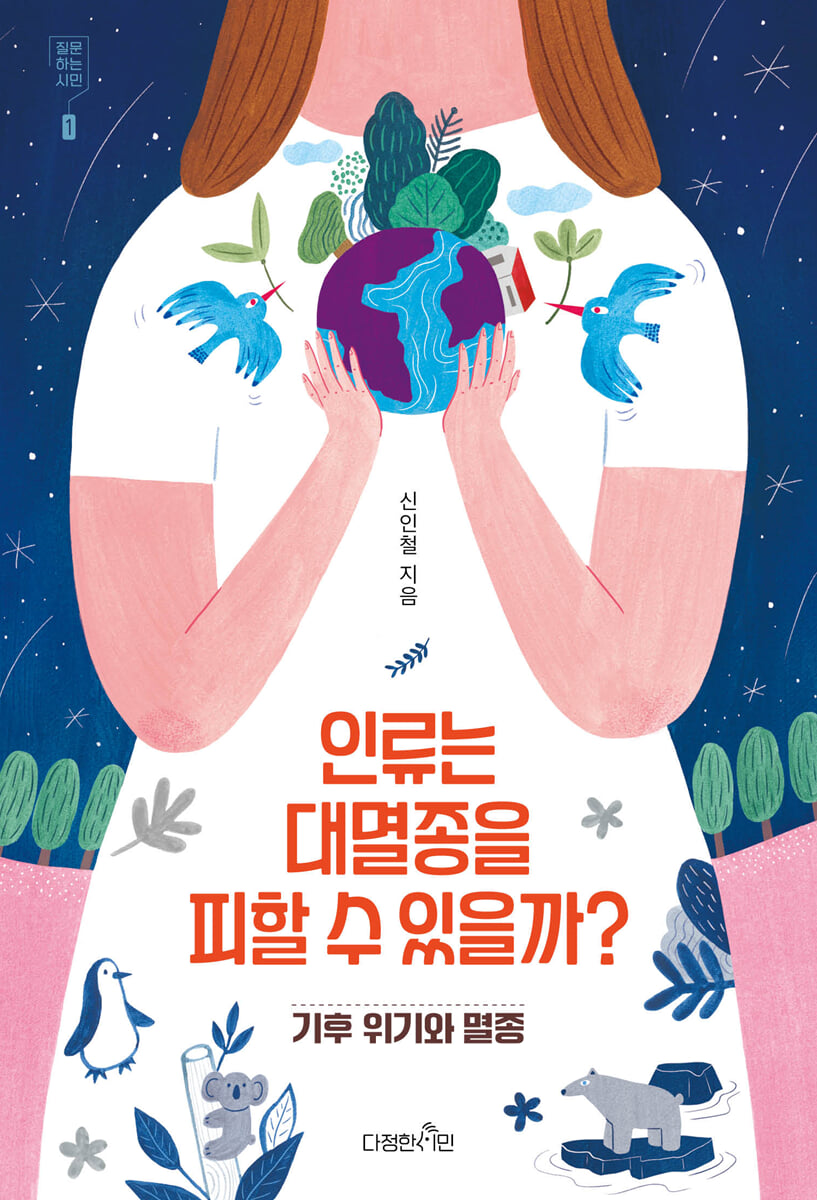
Can humanity avoid mass extinction?
 |
Description
Book Introduction
From the history of the five mass extinctions that swept the Earth
The oxygen massacre extinction we didn't know about,
The sad fate of recently extinct animals
A heartbreaking and dynamic citizenship class on the climate crisis!
"Can Humanity Avoid Mass Extinction?" is a science book for young readers that explains why extinction is a problem and how it relates to our lives.
By examining the history of the five mass extinctions that swept the Earth, we can see that the biggest cause of mass extinctions was climate change.
It also allows us to experience the mystery of life by introducing the 'oxygen mass extinction', which is much more revolutionary and has changed the paradigm of life, although it has not been well known until now.
It also introduces recently extinct animals and emphasizes that the biggest reason for the extinction of living things is 'human greed'.
In the age of climate crisis, it asks whether humanity can avoid the sixth mass extinction, and argues that Homo sapiens, the most advanced species on Earth, has been given the destiny to directly control its future.
[Questioning Citizen] Series Volume 1.
The oxygen massacre extinction we didn't know about,
The sad fate of recently extinct animals
A heartbreaking and dynamic citizenship class on the climate crisis!
"Can Humanity Avoid Mass Extinction?" is a science book for young readers that explains why extinction is a problem and how it relates to our lives.
By examining the history of the five mass extinctions that swept the Earth, we can see that the biggest cause of mass extinctions was climate change.
It also allows us to experience the mystery of life by introducing the 'oxygen mass extinction', which is much more revolutionary and has changed the paradigm of life, although it has not been well known until now.
It also introduces recently extinct animals and emphasizes that the biggest reason for the extinction of living things is 'human greed'.
In the age of climate crisis, it asks whether humanity can avoid the sixth mass extinction, and argues that Homo sapiens, the most advanced species on Earth, has been given the destiny to directly control its future.
[Questioning Citizen] Series Volume 1.
- You can preview some of the book's contents.
Preview
index
prolog
Chapter 1: Why is extinction a problem?
They're not building a road because of an endangered salamander?
What are the impacts of extinction on the ecosystem?
Sea otters are extinct, so why are sea urchins disappearing too?
Why is the Amazon rainforest being deforested?
Chapter 2: Five Mass Extinctions That Swept the Earth
Early Earth, hot as hell
Mass extinction triggered by global cooling
What happened in the dense bracken forest?
What extinction resulted in the loss of the most species?
Could a volcanic eruption have caused a mass extinction?
Did a meteorite strike cause the dinosaurs to become extinct?
Chapter 3: The Oxygen Massacre Extinction We Didn't Know About
The Three Roles of Microorganisms
Oxygen appears on the primitive Earth
Archaea that died the moment they were exposed to oxygen
Cyanobacteria: A New Era
Why don't prokaryotes have a nucleus?
Why can't we survive even for a moment without oxygen?
Humans are in symbiosis with mitochondria
Timeline of mass extinction
Chapter 4: Recently Extinct Species
Aristotle, who established the system of animal taxonomy
Why did the flightless bird, the dodo, become extinct?
Steller sea cows have a very strong sense of camaraderie
Why did the pocket wolf become an object of hatred?
Chapter 5: Endangered Species
There are levels of endangered species
How did the Sabulsang survive the threat of extinction?
Why did the axolotl decide not to become an adult?
Endangered Species in Korea
Chapter 6: Climate Change and the Sixth Mass Extinction
What causes climate change?
Types of greenhouse gases that cause global warming
Is the methane gas emitted by cows also a problem?
Will the sixth mass extinction occur?
Chapter 1: Why is extinction a problem?
They're not building a road because of an endangered salamander?
What are the impacts of extinction on the ecosystem?
Sea otters are extinct, so why are sea urchins disappearing too?
Why is the Amazon rainforest being deforested?
Chapter 2: Five Mass Extinctions That Swept the Earth
Early Earth, hot as hell
Mass extinction triggered by global cooling
What happened in the dense bracken forest?
What extinction resulted in the loss of the most species?
Could a volcanic eruption have caused a mass extinction?
Did a meteorite strike cause the dinosaurs to become extinct?
Chapter 3: The Oxygen Massacre Extinction We Didn't Know About
The Three Roles of Microorganisms
Oxygen appears on the primitive Earth
Archaea that died the moment they were exposed to oxygen
Cyanobacteria: A New Era
Why don't prokaryotes have a nucleus?
Why can't we survive even for a moment without oxygen?
Humans are in symbiosis with mitochondria
Timeline of mass extinction
Chapter 4: Recently Extinct Species
Aristotle, who established the system of animal taxonomy
Why did the flightless bird, the dodo, become extinct?
Steller sea cows have a very strong sense of camaraderie
Why did the pocket wolf become an object of hatred?
Chapter 5: Endangered Species
There are levels of endangered species
How did the Sabulsang survive the threat of extinction?
Why did the axolotl decide not to become an adult?
Endangered Species in Korea
Chapter 6: Climate Change and the Sixth Mass Extinction
What causes climate change?
Types of greenhouse gases that cause global warming
Is the methane gas emitted by cows also a problem?
Will the sixth mass extinction occur?
Detailed image

Publisher's Review
The cause of the five mass extinctions is climate change.
We vaguely know that the Paleozoic Era refers to trilobites, the Mesozoic Era to dinosaurs, and the Cenozoic Era to the present, but it is very interesting to look at the division of Earth's eras one by one.
By examining the Hades, Archean, Proterozoic, and Phanerozoic eras, and distinguishing the specific eras within them, and connecting them to the five mass extinctions, we come to understand the magnificent history of the Earth.
If we look at the five mass extinctions, we see that the cause is rather simple: alternating periods of climate warming and cooling caused by various factors, such as volcanic eruptions and meteorite impacts, lead to mass extinctions.
While previous mass extinctions were not caused by humans, the sixth mass extinction, which everyone is concerned about, could be caused by human-induced climate change, so we should pay even more attention to it.
This book emphasizes that all people around the world must take small steps to slow down the extinction express train.
The "Oxygen Massacre" Extinction That Changed the Paradigm of Life
Most people know about the extinction of the dinosaurs and the five mass extinctions, but this is the first time they've heard of the 'oxygen explosion event' or the 'oxygen mass extinction.'
I thought it was an explosion of a high-pressure oxygen tank used in a hospital or laboratory, but no.
This is the event that occurred about 3.5 billion years ago when cyanobacteria first appeared and increased oxygen indiscriminately, which led to the downfall of the anaerobic organisms, archaea.
Archaea either became extinct or went into hiding in oxygen-poor areas underground or deep in ocean trenches.
This was undoubtedly a mass extinction event that changed the paradigm of life, as it allowed oxygen-breathing life forms to dominate the Earth.
The author covers the 'oxygen mass extinction' in detail, which is no less important than the five mass extinctions, and kindly explains various life science knowledge such as how we breathe oxygen and how we came to have endosymbiosis.
The biggest reason for the extinction of species: human greed.
Everyone knows that humans have caused the current climate crisis.
Since the Industrial Revolution, excessive use of fossil fuels has led to the emission of carbon dioxide, which acts as a greenhouse gas and leads to global warming.
But why can't humanity stop? Despite knowing the immense value of the Amazon rainforest, an area the size of 3,000 soccer fields is disappearing every day.
To create cattle ranches for people who can't give up meat, to create soybean fields for animal feed, to need timber...
Ultimately, many species of the Amazon forest are disappearing, and this is causing the alpine plants of our country on the other side of the globe to become extinct as well.
This is happening for the same reason that sea otters were driven to extinction on the west coast of the United States by hunters who coveted their fur: human greed.
The sad end of Benjamin the Pocket Wolf
This book features endangered and threatened animals.
The story of the flightless bird, the dodo, being robbed of its eggs and food and eventually becoming extinct; the story of the Steller sea cow, who loved its family and companions, being thrown into the sea by humans who coveted its meat and meeting its end without being able to escape; and the story of Benjamin, the last tiger, who was falsely accused and slaughtered indiscriminately until he became extinct in a zoo. These are sad stories.
Efforts to restore their genes continue, but the authors say it won't be easy.
Readers will feel a marked difference in the sadness they feel when they hear the names of extinct creatures listed in general and when they hear the stories of each individual creature.
Even though we cannot do anything about species that are already extinct, we all need to learn more about and make efforts to preserve endangered species.
A piece full of love for living things
Professor Shin In-cheol's writing is easy, fun, and clear.
Difficult knowledge is easily conveyed through humorous metaphors, and while various side stories are added as seasoning, it allows readers to grasp the main flow.
Above all, I feel that he has an overflowing love for living things.
The boy who climbed the mountain behind the village with a lantern in his hand and looked for stag beetles, the boy who was so interested in insects that his friends would catch any beetle and ask if it was a longicorn beetle, grew up to major in biology and become a scholar.
The extinction of species is a sad thing for everyone, but it is especially poignant when reading the author's writing.
The scholarly depth, popular language, and the author's inner sincerity and humor capture the reader's attention.
[Series Introduction]
[Questioning Citizen Series] is a series of youth books designed to help us think about what we can do to make the world a better place.
It consists of Volume 1: Extinction, Volume 2: Energy, Volume 3: Food, Volume 4: Consumption, Volume 5: Inequality, and Volume 6: Refugees.
Climate crisis, biodiversity loss, global economic inequality, refugees, war, viruses, and other global issues weigh heavily on our daily lives, but pessimism cannot change the world.
This series is written by experts, including professors and doctors, and presents objective data, accurate information, and hopeful examples rather than propaganda or strong arguments.
We aim to help readers explore these issues step by step and consider what choices and actions they can take to create a sustainable future.
We vaguely know that the Paleozoic Era refers to trilobites, the Mesozoic Era to dinosaurs, and the Cenozoic Era to the present, but it is very interesting to look at the division of Earth's eras one by one.
By examining the Hades, Archean, Proterozoic, and Phanerozoic eras, and distinguishing the specific eras within them, and connecting them to the five mass extinctions, we come to understand the magnificent history of the Earth.
If we look at the five mass extinctions, we see that the cause is rather simple: alternating periods of climate warming and cooling caused by various factors, such as volcanic eruptions and meteorite impacts, lead to mass extinctions.
While previous mass extinctions were not caused by humans, the sixth mass extinction, which everyone is concerned about, could be caused by human-induced climate change, so we should pay even more attention to it.
This book emphasizes that all people around the world must take small steps to slow down the extinction express train.
The "Oxygen Massacre" Extinction That Changed the Paradigm of Life
Most people know about the extinction of the dinosaurs and the five mass extinctions, but this is the first time they've heard of the 'oxygen explosion event' or the 'oxygen mass extinction.'
I thought it was an explosion of a high-pressure oxygen tank used in a hospital or laboratory, but no.
This is the event that occurred about 3.5 billion years ago when cyanobacteria first appeared and increased oxygen indiscriminately, which led to the downfall of the anaerobic organisms, archaea.
Archaea either became extinct or went into hiding in oxygen-poor areas underground or deep in ocean trenches.
This was undoubtedly a mass extinction event that changed the paradigm of life, as it allowed oxygen-breathing life forms to dominate the Earth.
The author covers the 'oxygen mass extinction' in detail, which is no less important than the five mass extinctions, and kindly explains various life science knowledge such as how we breathe oxygen and how we came to have endosymbiosis.
The biggest reason for the extinction of species: human greed.
Everyone knows that humans have caused the current climate crisis.
Since the Industrial Revolution, excessive use of fossil fuels has led to the emission of carbon dioxide, which acts as a greenhouse gas and leads to global warming.
But why can't humanity stop? Despite knowing the immense value of the Amazon rainforest, an area the size of 3,000 soccer fields is disappearing every day.
To create cattle ranches for people who can't give up meat, to create soybean fields for animal feed, to need timber...
Ultimately, many species of the Amazon forest are disappearing, and this is causing the alpine plants of our country on the other side of the globe to become extinct as well.
This is happening for the same reason that sea otters were driven to extinction on the west coast of the United States by hunters who coveted their fur: human greed.
The sad end of Benjamin the Pocket Wolf
This book features endangered and threatened animals.
The story of the flightless bird, the dodo, being robbed of its eggs and food and eventually becoming extinct; the story of the Steller sea cow, who loved its family and companions, being thrown into the sea by humans who coveted its meat and meeting its end without being able to escape; and the story of Benjamin, the last tiger, who was falsely accused and slaughtered indiscriminately until he became extinct in a zoo. These are sad stories.
Efforts to restore their genes continue, but the authors say it won't be easy.
Readers will feel a marked difference in the sadness they feel when they hear the names of extinct creatures listed in general and when they hear the stories of each individual creature.
Even though we cannot do anything about species that are already extinct, we all need to learn more about and make efforts to preserve endangered species.
A piece full of love for living things
Professor Shin In-cheol's writing is easy, fun, and clear.
Difficult knowledge is easily conveyed through humorous metaphors, and while various side stories are added as seasoning, it allows readers to grasp the main flow.
Above all, I feel that he has an overflowing love for living things.
The boy who climbed the mountain behind the village with a lantern in his hand and looked for stag beetles, the boy who was so interested in insects that his friends would catch any beetle and ask if it was a longicorn beetle, grew up to major in biology and become a scholar.
The extinction of species is a sad thing for everyone, but it is especially poignant when reading the author's writing.
The scholarly depth, popular language, and the author's inner sincerity and humor capture the reader's attention.
[Series Introduction]
[Questioning Citizen Series] is a series of youth books designed to help us think about what we can do to make the world a better place.
It consists of Volume 1: Extinction, Volume 2: Energy, Volume 3: Food, Volume 4: Consumption, Volume 5: Inequality, and Volume 6: Refugees.
Climate crisis, biodiversity loss, global economic inequality, refugees, war, viruses, and other global issues weigh heavily on our daily lives, but pessimism cannot change the world.
This series is written by experts, including professors and doctors, and presents objective data, accurate information, and hopeful examples rather than propaganda or strong arguments.
We aim to help readers explore these issues step by step and consider what choices and actions they can take to create a sustainable future.
GOODS SPECIFICS
- Date of issue: May 10, 2024
- Page count, weight, size: 208 pages | 276g | 128*188*13mm
- ISBN13: 9791198700230
- ISBN10: 1198700238
You may also like
카테고리
korean


korean

![GQ KOREA Mark (Monthly): December [2025]](http://librairie.coreenne.fr/cdn/shop/files/8ef265dbbfbf186523ed75ba7319009d.jpg?v=1765340328&width=3840)


