

Salt Child
 |
Description
Book Introduction
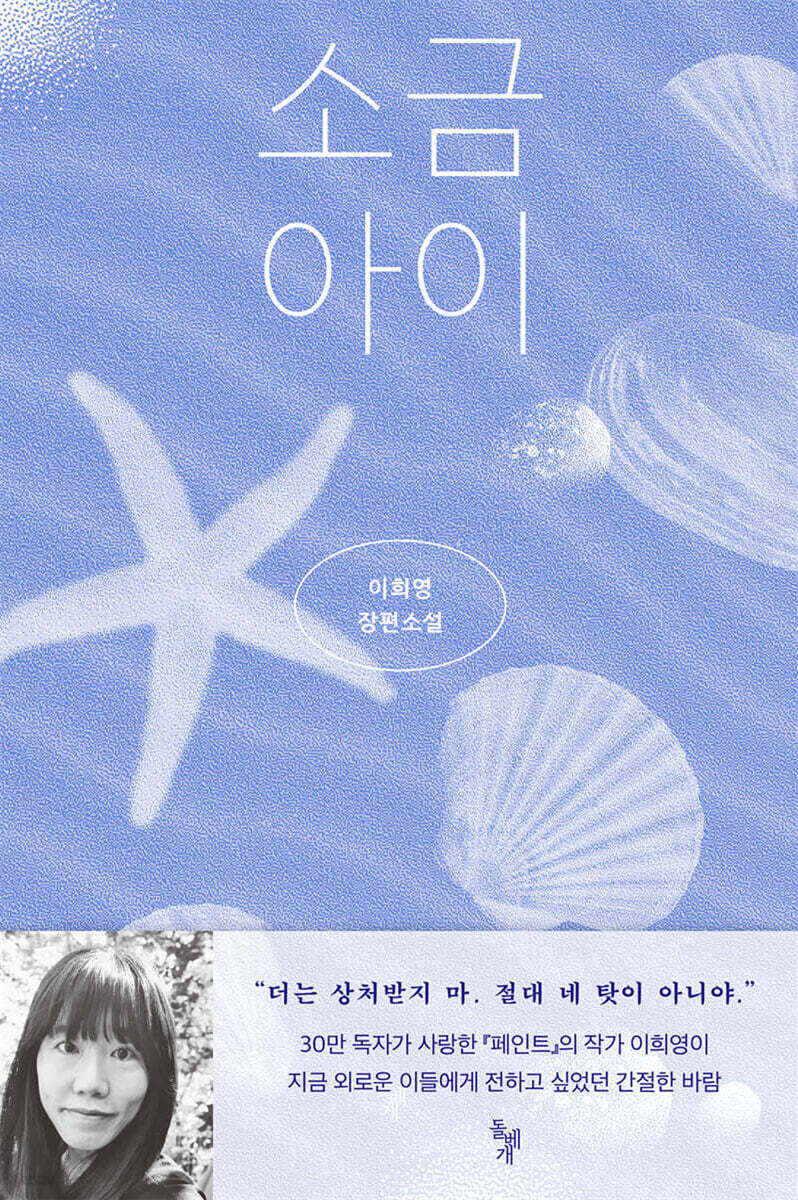
“Don’t get hurt anymore. “It’s absolutely not your fault.” Lee Hee-young, the author of 『Paint』, loved by 300,000 readers A heartfelt wish I wanted to convey to those who are lonely now. The miracle of 'people' who raise up wounded beings The new full-length novel 『Salt Child』 by author Lee Hee-young, who received love from 300,000 readers with 『Paint』, the winner of the 12th Changbi Youth Literature Award, has been published. The author, who has previously approached young readers in a friendly manner through novel genre-specific imagination, such as in a future society where children interview and choose their parents (『Paint』) and a week in which two soulless high school students struggle to find themselves (『Nana』), confronts the abyss of humanity head-on in this new work and poses a weighty question. While facing the dark sides of Korean society today, such as children who do not receive proper care due to parental neglect and youth who are constantly exposed to school violence and digital sex crimes, the film lyrically portrays the human will to take a step toward good. It has a unique thematic awareness that delves into truth and falsehood that are difficult to fully grasp through legal judgment alone, and explores the good and evil that coexist within human beings. |
- You can preview some of the book's contents.
Preview
index
prolog
1.
ocean
2.
memory
3.
candy
4.
rumor
5.
mind
6.
note
7.
hospital
8.
Sea
9.
Lee Soo
10.
salt
Epilogue
Author's Note
Recommendation
1.
ocean
2.
memory
3.
candy
4.
rumor
5.
mind
6.
note
7.
hospital
8.
Sea
9.
Lee Soo
10.
salt
Epilogue
Author's Note
Recommendation
Detailed image
Into the book
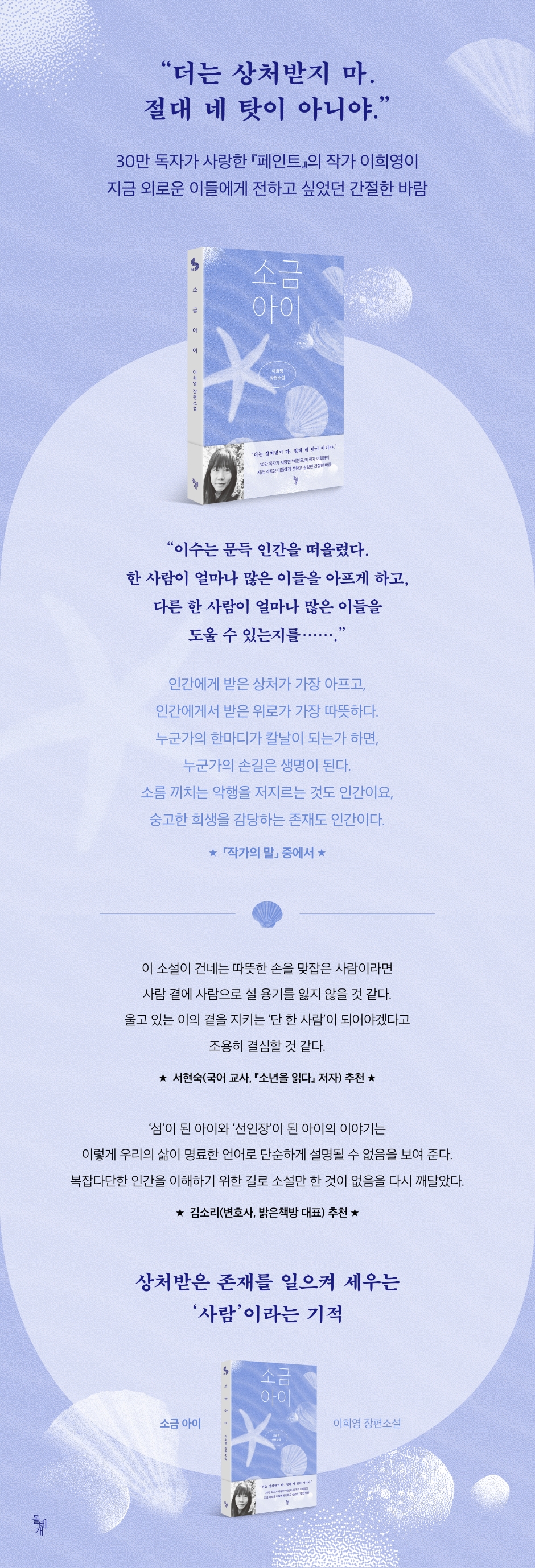
Lee Soo suddenly thought of humans.
How many people one person can hurt, and how many people one person can help… … .
--- p.192
The aunt, the grandmother, and Isu are not related by blood.
But he was the only person I could call family.
Isu thought that family was such people.
--- p.214
Those words left a heavy resonance in Lee Soo's heart.
It is only a matter of time before the truth rises to the surface.
It was said that Isu (離水) means to float up from the water.
“Yeah, it will all come to light someday.”
The night has come completely.
The sky, the sea, and even the islands floating on them turned black.
But tomorrow the sun will rise again.
Because there is no world where night lasts forever.
Someday, people will know as clearly as the morning what kind of child Sea is.
--- p.220
The island is most visited by people when it is brightest and sunniest.
But no one stays long.
The same would apply to relationships between people.
Even if we meet briefly, he soon turns his back on us.
Even faster if your opponent is going through a cold, snowy winter.
(…) But sometimes, as if looking for a colorless winter island, there were those who stayed next to the naked person.
Lee Soo put his hand in his pocket and stroked the letter folded in half.
--- p.221
Snowflakes fell into the sea and turned into salt.
Salt has fallen on the world.
To melt a cold heart.
I poured salty snow on him so that he would not forget the precious memories.
Maybe it was someone's heart.
The earnest desire to wrap it tightly and protect it so that it doesn't get soft or damaged.
The world, where the sky and the sea were once blue, was dyed pure white as if it were a lie.
There was a boy in it, a black dot.
For a long, long time, I stood looking out at the white salt sea.
How many people one person can hurt, and how many people one person can help… … .
--- p.192
The aunt, the grandmother, and Isu are not related by blood.
But he was the only person I could call family.
Isu thought that family was such people.
--- p.214
Those words left a heavy resonance in Lee Soo's heart.
It is only a matter of time before the truth rises to the surface.
It was said that Isu (離水) means to float up from the water.
“Yeah, it will all come to light someday.”
The night has come completely.
The sky, the sea, and even the islands floating on them turned black.
But tomorrow the sun will rise again.
Because there is no world where night lasts forever.
Someday, people will know as clearly as the morning what kind of child Sea is.
--- p.220
The island is most visited by people when it is brightest and sunniest.
But no one stays long.
The same would apply to relationships between people.
Even if we meet briefly, he soon turns his back on us.
Even faster if your opponent is going through a cold, snowy winter.
(…) But sometimes, as if looking for a colorless winter island, there were those who stayed next to the naked person.
Lee Soo put his hand in his pocket and stroked the letter folded in half.
--- p.221
Snowflakes fell into the sea and turned into salt.
Salt has fallen on the world.
To melt a cold heart.
I poured salty snow on him so that he would not forget the precious memories.
Maybe it was someone's heart.
The earnest desire to wrap it tightly and protect it so that it doesn't get soft or damaged.
The world, where the sky and the sea were once blue, was dyed pure white as if it were a lie.
There was a boy in it, a black dot.
For a long, long time, I stood looking out at the white salt sea.
--- p.227
Publisher's Review
“Lee Soo suddenly thought of humans.
How many people can one person hurt,
“How much more can one person help… … .”
Since winning the Changbi Youth Literature Award for "Paint," Lee Hee-young has consistently guided readers to break free from prejudice and imagine a better world.
In his new work, "Salt Child," he unfolds his themes not in the future but in the "here and now," using a new narrative style, striking a chord with readers who have cherished his work.
The small island of Soldo, the setting of the work, is so remote that it was a place of exile during the Joseon Dynasty.
Lee Soo, a boy who was neglected by his irresponsible mother, follows his mother to her hometown, Usol-eup, with a new man she has met.
As the days pass by in the midst of the mother and man's discord, the mother and man pass away in an irreversible accident.
Left alone with no clear memories of that night due to the shock, Lee Soo ends up living with the man's elderly mother on Soldo, an island in Usol-eup.
Lee Soo is suddenly overcome with anxiety as people look at him and his grandmother with suspicious eyes.
As time passes, Lee Soo, now a high school student, meets Ki Yoon, who bullies him using past events as an excuse, and Se Ah, a transfer student who seems to have a hidden story.
Meanwhile, the grandmother, who had kept the truth in her heart to protect the young Lee Soo, develops dementia, and the secrets of the past that she had consciously hidden begin to be revealed unconsciously...
What is the truth of that night that remains in the fading memories of the grandmother?
My grandmother always called the sea breeze the salt wind.
Salty things change and spoil easily.
Lee Soo's gaze fell on the red pickled clams seasoned with red pepper powder.
Salty things can fade easily, or they can retain their shape for a long time.
What did the salt wind leave behind for Grandma? And what did it take away?
(Page 10)
A message of comfort to the boy who became an 'island' and the boy who became a 'cactus'.
Lee Soo, the protagonist of "Salt Child," had an unprotected childhood due to neglect by his caregivers, and lost his irresponsible caregiver in a tragic incident. However, as a result, he develops an unexpected relationship with his "grandmother."
At school, he is constantly bullied by his classmate Ki-yoon, who is always trying to show off his power, but this also becomes an opportunity for him to start talking to the transfer student, Se-ah.
To Isu, who grew up alone like an isolated island, the world has never offered him a shoulder to lean on. However, in the eyes of that cruel world, his grandmother, who is not related by blood, becomes his family, and Se-ah, who is often criticized as a "problem child," extends a helping hand.
The process of each character, each with their own pain, willingly caring for one another and becoming a fence with their inner good will that cannot be seen through their outward appearances resonates even more deeply.
Thanks to the sincere care and trust of his grandmother and Sea, Isu is able to heal his wounds and walk “across the crosswalk” on his own.
Just as the salty sea breeze fades the light of something, but that very salt also protects something from changing, the author emphasizes through this work that rather than easily being optimistic about human beings being good, we must choose to move forward toward good even when good and evil coexist.
I hope that author Lee Hee-young's earnest wish to give "all the blessings, peace, and love in the world" to lonely children like islands and cacti will also reach the readers of "Salt Child."
Snowflakes fell into the sea and turned into salt.
Salt has fallen on the world.
To melt my cold heart, to not forget the precious memories, I poured salty snow on it.
Maybe it was someone's heart.
The earnest desire to wrap it tightly and protect it so that it doesn't get soft or damaged.
The world, where the sky and the sea were once blue, was dyed pure white as if it were a lie.
(Page 227)
Author's Note
The wounds received from humans are the most painful, and the comfort received from humans is the warmest.
Someone's word can become a blade, and someone's touch can become life.
It is human to commit horrific atrocities, and it is also human to make noble sacrifices.
There is a true face that we only encounter when the submerged truth emerges, when someone's superficial appearance is not everything.
I was really worried about which side I should go for, but the conclusion was simple.
It was neither.
I am a human being who has both goodness and ugliness coexisting.
I wanted to talk about good and evil that are invisible to the eye.
But in the end, I ended up only confessing my ugly side.
As I wrote the story, I was confronted with my own sharp mind, which at times was inclined to ignore, hate, and blame others.
Suddenly, it occurred to me that life is a time to smooth out those sharp emotions.
Writing served as a good guide on that difficult journey.
How many people can one person hurt,
“How much more can one person help… … .”
Since winning the Changbi Youth Literature Award for "Paint," Lee Hee-young has consistently guided readers to break free from prejudice and imagine a better world.
In his new work, "Salt Child," he unfolds his themes not in the future but in the "here and now," using a new narrative style, striking a chord with readers who have cherished his work.
The small island of Soldo, the setting of the work, is so remote that it was a place of exile during the Joseon Dynasty.
Lee Soo, a boy who was neglected by his irresponsible mother, follows his mother to her hometown, Usol-eup, with a new man she has met.
As the days pass by in the midst of the mother and man's discord, the mother and man pass away in an irreversible accident.
Left alone with no clear memories of that night due to the shock, Lee Soo ends up living with the man's elderly mother on Soldo, an island in Usol-eup.
Lee Soo is suddenly overcome with anxiety as people look at him and his grandmother with suspicious eyes.
As time passes, Lee Soo, now a high school student, meets Ki Yoon, who bullies him using past events as an excuse, and Se Ah, a transfer student who seems to have a hidden story.
Meanwhile, the grandmother, who had kept the truth in her heart to protect the young Lee Soo, develops dementia, and the secrets of the past that she had consciously hidden begin to be revealed unconsciously...
What is the truth of that night that remains in the fading memories of the grandmother?
My grandmother always called the sea breeze the salt wind.
Salty things change and spoil easily.
Lee Soo's gaze fell on the red pickled clams seasoned with red pepper powder.
Salty things can fade easily, or they can retain their shape for a long time.
What did the salt wind leave behind for Grandma? And what did it take away?
(Page 10)
A message of comfort to the boy who became an 'island' and the boy who became a 'cactus'.
Lee Soo, the protagonist of "Salt Child," had an unprotected childhood due to neglect by his caregivers, and lost his irresponsible caregiver in a tragic incident. However, as a result, he develops an unexpected relationship with his "grandmother."
At school, he is constantly bullied by his classmate Ki-yoon, who is always trying to show off his power, but this also becomes an opportunity for him to start talking to the transfer student, Se-ah.
To Isu, who grew up alone like an isolated island, the world has never offered him a shoulder to lean on. However, in the eyes of that cruel world, his grandmother, who is not related by blood, becomes his family, and Se-ah, who is often criticized as a "problem child," extends a helping hand.
The process of each character, each with their own pain, willingly caring for one another and becoming a fence with their inner good will that cannot be seen through their outward appearances resonates even more deeply.
Thanks to the sincere care and trust of his grandmother and Sea, Isu is able to heal his wounds and walk “across the crosswalk” on his own.
Just as the salty sea breeze fades the light of something, but that very salt also protects something from changing, the author emphasizes through this work that rather than easily being optimistic about human beings being good, we must choose to move forward toward good even when good and evil coexist.
I hope that author Lee Hee-young's earnest wish to give "all the blessings, peace, and love in the world" to lonely children like islands and cacti will also reach the readers of "Salt Child."
Snowflakes fell into the sea and turned into salt.
Salt has fallen on the world.
To melt my cold heart, to not forget the precious memories, I poured salty snow on it.
Maybe it was someone's heart.
The earnest desire to wrap it tightly and protect it so that it doesn't get soft or damaged.
The world, where the sky and the sea were once blue, was dyed pure white as if it were a lie.
(Page 227)
Author's Note
The wounds received from humans are the most painful, and the comfort received from humans is the warmest.
Someone's word can become a blade, and someone's touch can become life.
It is human to commit horrific atrocities, and it is also human to make noble sacrifices.
There is a true face that we only encounter when the submerged truth emerges, when someone's superficial appearance is not everything.
I was really worried about which side I should go for, but the conclusion was simple.
It was neither.
I am a human being who has both goodness and ugliness coexisting.
I wanted to talk about good and evil that are invisible to the eye.
But in the end, I ended up only confessing my ugly side.
As I wrote the story, I was confronted with my own sharp mind, which at times was inclined to ignore, hate, and blame others.
Suddenly, it occurred to me that life is a time to smooth out those sharp emotions.
Writing served as a good guide on that difficult journey.
GOODS SPECIFICS
- Date of issue: June 10, 2023
- Page count, weight, size: 232 pages | 376g | 140*210*14mm
- ISBN13: 9791192836157
- ISBN10: 1192836154
You may also like
카테고리
korean


korean

![GQ KOREA Mark (Monthly): December [2025]](http://librairie.coreenne.fr/cdn/shop/files/8ef265dbbfbf186523ed75ba7319009d.jpg?v=1765340328&width=3840)


