

Was that novel really there?
 |
Description
Book Introduction
The path the novelist walked! Reviving memories of that place
Breathing Life into Textbook Literature
12 Living Literature Tours
Can't we make textbook literature more fun to read?
Three writers, photographers, and artists have come together to create a 12-part textbook literary travelogue filled with interesting things to see.
Among the literary works included in the textbook, we selected works that resonate deeply with our times and have made a significant mark in literary history.
Starting with Park Wan-seo's "The Naked Tree" and "Who Ate Up All the Singa?", which contain anecdotes about the Japanese colonial period and the Korean War before and after liberation, the exhibition traces the lives and literary trajectories of the authors by walking through the backgrounds of 12 works, including Jo Se-hee's "The Little Ball Shot by a Dwarf" and Yoon Heung-gil's "The Man Left with Nine Pairs of Shoes," which depict the sorrows of the evictees based on the Gwangju Apartment Complex Incident in the 1970s, Yang Gui-ja's "The People of Wonmi-dong", which depicts the difficult daily lives of the common people in the 1980s, and finally Hwang Seok-yeong's "The Star Watching Dog Food", which depicts the wanderings of his youth.
As you walk through the novel and infer, "This must have been the house where Wanseo lived," "Which store did Sunam work at?" "Wasn't the factory where Yeongsu worked nearby?", you can feel the vividness as if the main character is about to jump out.
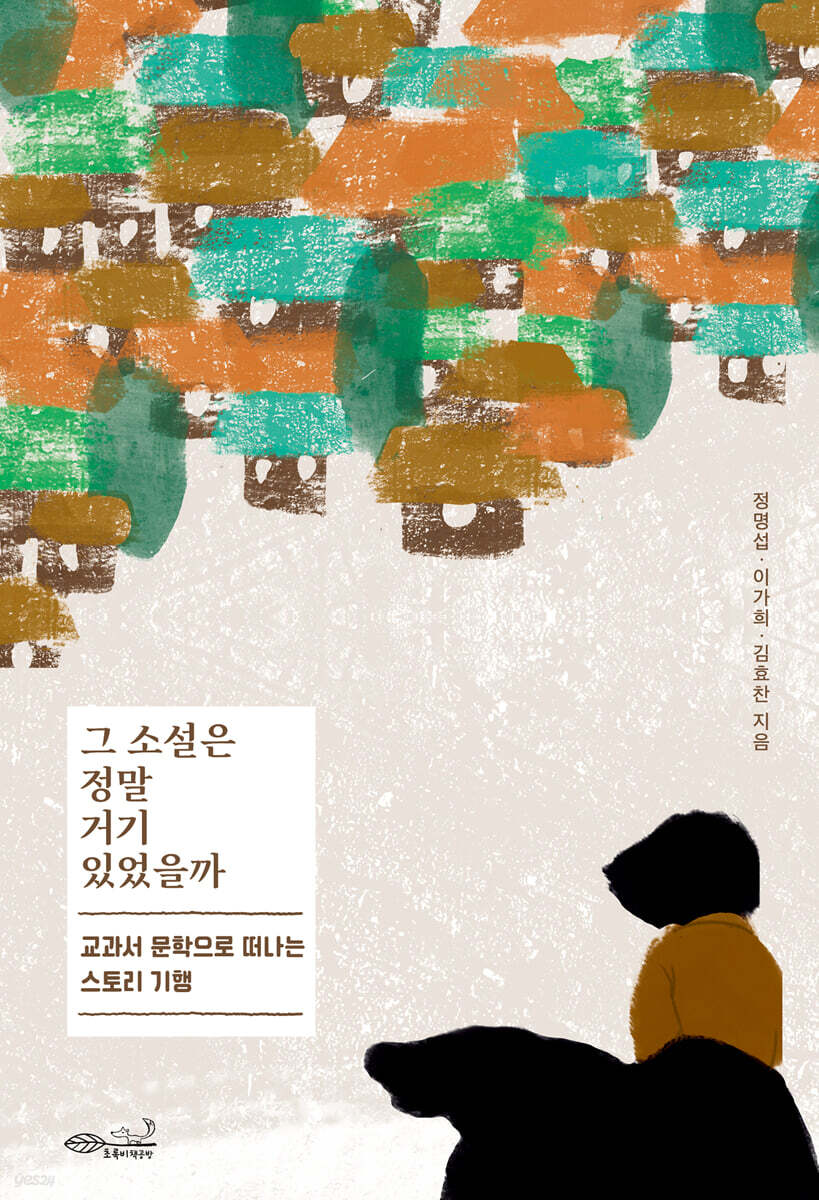
The book provides a helpful introduction to the author and the historical background of the novel in each chapter, helping readers understand the work. It also includes photos and illustrations taken while visiting locations that appear in the novel, providing a wealth of things to see.
In particular, the illustrations in the book fill the gap between the text set in the past and the landscapes in the photographs from the present, and colorfully recreate the space in the novel.
Rather than serving as a means to solve entrance exam problems, this book aims to help readers experience the charm and joy of literature itself. It guides readers into a deep literary forest created by the intersection of "author," "work," and "historical space."
Breathing Life into Textbook Literature
12 Living Literature Tours
Can't we make textbook literature more fun to read?
Three writers, photographers, and artists have come together to create a 12-part textbook literary travelogue filled with interesting things to see.
Among the literary works included in the textbook, we selected works that resonate deeply with our times and have made a significant mark in literary history.
Starting with Park Wan-seo's "The Naked Tree" and "Who Ate Up All the Singa?", which contain anecdotes about the Japanese colonial period and the Korean War before and after liberation, the exhibition traces the lives and literary trajectories of the authors by walking through the backgrounds of 12 works, including Jo Se-hee's "The Little Ball Shot by a Dwarf" and Yoon Heung-gil's "The Man Left with Nine Pairs of Shoes," which depict the sorrows of the evictees based on the Gwangju Apartment Complex Incident in the 1970s, Yang Gui-ja's "The People of Wonmi-dong", which depicts the difficult daily lives of the common people in the 1980s, and finally Hwang Seok-yeong's "The Star Watching Dog Food", which depicts the wanderings of his youth.
As you walk through the novel and infer, "This must have been the house where Wanseo lived," "Which store did Sunam work at?" "Wasn't the factory where Yeongsu worked nearby?", you can feel the vividness as if the main character is about to jump out.
The book provides a helpful introduction to the author and the historical background of the novel in each chapter, helping readers understand the work. It also includes photos and illustrations taken while visiting locations that appear in the novel, providing a wealth of things to see.
In particular, the illustrations in the book fill the gap between the text set in the past and the landscapes in the photographs from the present, and colorfully recreate the space in the novel.
Rather than serving as a means to solve entrance exam problems, this book aims to help readers experience the charm and joy of literature itself. It guides readers into a deep literary forest created by the intersection of "author," "work," and "historical space."
- You can preview some of the book's contents.
Preview
index
1 Death and Resurrection
- Tree by Park Wan-seo
2 Where did all those people from Hyeonjeong-dong go?
- Who Ate All Those Singa? by Park Wan-seo
3 Why the dwarf's ball can't reach the moon
- The Little Ball Shot by the Dwarf by Jo Se-hee
4 What did you steal?
- Bicycle Thief by Park Wan-seo
5 Spend all this money with me tonight.
- Seoul, Winter 1964 by Kim Seung-ok
6 English Republic
- Mr. Bang by Chae Man-sik
7 Do you know about the Gwangju Complex Incident?
The Man Left with Nine Pairs of Shoes by Hong-Gil Yoon
8. Go up to Dongdaemun
- History by Seungok Kim
9 A street where everyone becomes a stranger
- Chinatown by Oh Jeong-hee
10 People live there
- People of Wonmi-dong by Yang Gwi-ja
11 Don't go to the swan beak
- The Children of the Magpie by Kim Jung-mi
12 My Star
- Dog Food Baragi Star by Hwang Seok-young
- Tree by Park Wan-seo
2 Where did all those people from Hyeonjeong-dong go?
- Who Ate All Those Singa? by Park Wan-seo
3 Why the dwarf's ball can't reach the moon
- The Little Ball Shot by the Dwarf by Jo Se-hee
4 What did you steal?
- Bicycle Thief by Park Wan-seo
5 Spend all this money with me tonight.
- Seoul, Winter 1964 by Kim Seung-ok
6 English Republic
- Mr. Bang by Chae Man-sik
7 Do you know about the Gwangju Complex Incident?
The Man Left with Nine Pairs of Shoes by Hong-Gil Yoon
8. Go up to Dongdaemun
- History by Seungok Kim
9 A street where everyone becomes a stranger
- Chinatown by Oh Jeong-hee
10 People live there
- People of Wonmi-dong by Yang Gwi-ja
11 Don't go to the swan beak
- The Children of the Magpie by Kim Jung-mi
12 My Star
- Dog Food Baragi Star by Hwang Seok-young
Detailed image

Into the book
The house of Lee Kyung that appears in the novel is in Gye-dong.
It is near Anguk Station and is home to the Constitutional Court and the Hyundai Construction building.
I tried to infer the route that Lee Kyung takes to and from work in the novel.
If you start from near Anguk Station and go to the current Shinsegae Department Store main branch, the route would roughly be south of Anguk-dong Intersection, past Hwashim Department Store where Jongno Tower is now, and then through Euljiro Intersection where Lotte Department Store and a hotel stand, to arrive at the Shinsegae Department Store main branch.
It's about 2 kilometers away, so it takes about 30 minutes to walk.
There might have been a way to take the tram to and from work, but it was only recently that the Korean War broke out and Seoul was reclaimed, so it probably wasn't running properly. Furthermore, the trams at the time were always so crowded that it was more appropriate to say that you had to hang on to them rather than ride them.
Therefore, Lee Kyung would have walked to and from work at the US military PX.
I left the main branch of Shinsegae Department Store, imagining what the Seoul landscape would have been like when she worked there.
---From "Death and Resurrection"
Reading the stories in the novel makes us realize that life goes on even during war.
The Seoul of the time described by the author was not so much a battlefield as a place of chaos, but rather a place on thin ice where people had to live each day cautiously.
It is cruel that daily life went on as usual even amidst the gunfire.
Leaving aside the question of life and death, surviving was also a problem.
After South Korea took power, it became a target of ideological conflict, with people accusing it of cooperating with the People's Army.
Even though the family was large, including the older brother who had been shot, the mother decided to at least pretend to escape.
When Wanseo was barely able to cross Muakjae Pass, let alone the Han River, pulling the cart carrying her brother, the fake shelter her mother had pointed out was, of all places, Hyeonjeodong.
Looking down from the house I was hiding in Hyeonjeong-dong, I could see the prison where my uncle had been executed and the empty road of Dongnimmun Gate at a glance.
It seemed like the Wanseo family was the only one left in the big city.
There, Wanseo makes a decision.
I'm going to write it all down someday.
And as time passed, Wanseo kept that resolution.
Thanks to that, we can remember those days and the Seoul of that time with a heavy heart.
---From "Where did all those people from Hyeonjeong-dong go?"
Meanwhile, Seongnam, where Youngsu's family leaves Haengbok-dong and heads, refers to Gwangju Daedanji.
Although it does not directly mention it like "The Man Left with Nine Pairs of Shoes," "Nansogong" was banned from sale because it deals with the Gwangju Massacre.
The two novels were published around the same time, in 1977 and 1978, and both illuminate the Seoul demolition boom that triggered the Gwangju Massacre and the sorrow of the victims.
The story of the bakery that Younghee went to is also based on the reality of the bakery in Seongnam.
Working conditions in the bakery were extremely poor.
I literally had to work nonstop.
Even today, stories about the poor conditions in bakeries are still heard frequently.
---From "Why the Dwarf's Ball Can't Reach the Moon"
Looking at photos from that time, you can see that while there are many tile-roofed houses or two-story buildings in front of Jongmyo Shrine, there are still many shabby shacks across the street.
A large-scale red-light district also emerged in the heart of Seoul. It was called ‘Jongsam’ for short because it was located in Jongno 3-ga.
There was one person who was extremely displeased with this situation: Mayor Kim Hyeon-ok, nicknamed “Bulldozer.”
He wanted to get rid of the red-light district in the heart of Seoul by any means necessary.
Finally, in 1966, under the name of ‘Operation Butterfly’, Jongsam was destroyed and a shopping mall was built in its place.
It is terribly paradoxical to expect 'all the luck in the world' to gather in a building that was built after kicking out the people who lived there for whatever reason.
That's why Seun Shopping Mall only enjoys a very short heyday and continues to experience a period of stagnation.
---From "What Did You Steal?"
When I stand in front of Dongdaemun, old things come to mind.
These are stories that carry such weight that it is difficult to call them history or the past.
If you take a walk around Dongdaemun, you can clearly feel those traces.
Stones of varying sizes according to the accumulated history and bullet marks from the Korean War testify to the passage of time.
Dongdaemun appears as the stage for Kim Seung-ok's work "History Man."
"History" is a short story published in the Literary Chronicles in 1963, one year before "Mujin Gihaeng."
The 1960s were a time of total fog.
The joy of the April 19 Revolution turned to despair due to the May 16 coup, and the military dictatorship that followed left intellectuals in a state of deep frustration.
The work "History" also clearly conveys the author's frustration at not being able to find direction at the time.
---From "Standing Up at Dongdaemun"
I was excited to feel the Chinese atmosphere for the first time in a long time.
While most tourists are busy enjoying the Chinese restaurants along Jajangmyeon Street, the real excitement lies behind the hills of Chinatown.
Chinatown is built along a small mountain called Eungbongsan, so most of the streets are hilly.
As you climb up the hill to Jayu Park, you can see the entire Chinatown area with the ocean stretching out before you at a glance.
As you come down the park, you will see a long staircase.
To the left of the stairs is the Qing concession, now Chinatown, and to the right is the Japanese concession, with a Japanese-style street created.
At the top of the stairs, there is a statue of Confucius, slightly tilted to the left of the center.
It is as if they are sticking to the Qing concession as if they are not going to cross the line.
---From "The Street Where Everyone Becomes a Stranger"
This story is an autobiographical novel by author Oh Jeong-hee.
Author Oh Jeong-hee's parents fled to South Korea in 1947, immediately after liberation, and settled in Seoul. Author Oh Jeong-hee was born in Sajik-dong in November of that year.
In 1951, the family was unable to evacuate because the mother was pregnant with her sixth child, and the war broke out in Seoul.
Later, he followed the retreating national army and fled, but his father was drafted into the army and his family began living as refugees in Hongseong, South Chungcheong Province.
In April 1955, he moved to Incheon when his father got a job as the head of the Incheon branch of an oil company.
I transferred to Shinheung Elementary School as a second grader and moved three times in four years in Incheon.
The hill across the street from my last home was Chinatown.
The novel begins with the father getting a job at an oil company and going from a refugee camp to Incheon, all of which are experiences of the author.
In 1959, he moved to Mapo-gu, Seoul due to his father's transfer.
The novel captures the life in Incheon from the second to sixth grades.
---From "The Street Where Everyone Becomes a Stranger"
In the late 1980s, when author Yang Gui-ja was writing “People of Wonmi-dong,” two crazes were blowing in South Korea.
One was democratization and the other was economic development.
Although the regime change failed, the new military junta achieved progress by making the June 29th Declaration, allowing the people to directly elect the president.
Economic development occurred in the late 1980s, more precisely during the transition of power between Chun Doo-hwan and Roh Tae-woo, with the triple low boom brought about by low oil prices, low interest rates, and a low dollar.
It all started in 1985 when the United States signed the Plaza Accord, which aimed to boost the value of the yen in an attempt to curb Japan's economic growth.
As the value of the Japanese yen rose, Korean products, which had relatively competitive prices, began to stand out on the international stage.
Oil prices fell there, and interest rates fell as a result, creating favorable conditions for exports.
It was said to be the greatest boom since Dangun, and it also recorded high growth of over 10% every year and a surplus in the international balance of payments.
This boom wind reaches even Wonmi-dong in Bucheon.
It is not unrelated to this background that Team Leader Kim went to great lengths to buy a truck and open a fresh fruit and vegetable store in a quiet alley.
---From "People Live There"
Actually, when I first read 『The Children of the Magpie』, I thought it was a bit artificial.
The children were all suffering from extreme hardship, abuse in single-parent homes, or in tragic circumstances.
Moreover, with the help of those around them, these children become harmonious like in a fairy tale.
I felt like the situation was a bit exaggerated and ended up with a forced happy ending.
But when I learned that the author himself had actually been with the children of the magpies for a long time, I realized that this was not just something from a novel.
It was a story of people she had seen and experienced for a long time.
Regarding the happy ending, author Kim Jung-mi says that people were able to live with hope through the process of supporting each other in the study room.
It is near Anguk Station and is home to the Constitutional Court and the Hyundai Construction building.
I tried to infer the route that Lee Kyung takes to and from work in the novel.
If you start from near Anguk Station and go to the current Shinsegae Department Store main branch, the route would roughly be south of Anguk-dong Intersection, past Hwashim Department Store where Jongno Tower is now, and then through Euljiro Intersection where Lotte Department Store and a hotel stand, to arrive at the Shinsegae Department Store main branch.
It's about 2 kilometers away, so it takes about 30 minutes to walk.
There might have been a way to take the tram to and from work, but it was only recently that the Korean War broke out and Seoul was reclaimed, so it probably wasn't running properly. Furthermore, the trams at the time were always so crowded that it was more appropriate to say that you had to hang on to them rather than ride them.
Therefore, Lee Kyung would have walked to and from work at the US military PX.
I left the main branch of Shinsegae Department Store, imagining what the Seoul landscape would have been like when she worked there.
---From "Death and Resurrection"
Reading the stories in the novel makes us realize that life goes on even during war.
The Seoul of the time described by the author was not so much a battlefield as a place of chaos, but rather a place on thin ice where people had to live each day cautiously.
It is cruel that daily life went on as usual even amidst the gunfire.
Leaving aside the question of life and death, surviving was also a problem.
After South Korea took power, it became a target of ideological conflict, with people accusing it of cooperating with the People's Army.
Even though the family was large, including the older brother who had been shot, the mother decided to at least pretend to escape.
When Wanseo was barely able to cross Muakjae Pass, let alone the Han River, pulling the cart carrying her brother, the fake shelter her mother had pointed out was, of all places, Hyeonjeodong.
Looking down from the house I was hiding in Hyeonjeong-dong, I could see the prison where my uncle had been executed and the empty road of Dongnimmun Gate at a glance.
It seemed like the Wanseo family was the only one left in the big city.
There, Wanseo makes a decision.
I'm going to write it all down someday.
And as time passed, Wanseo kept that resolution.
Thanks to that, we can remember those days and the Seoul of that time with a heavy heart.
---From "Where did all those people from Hyeonjeong-dong go?"
Meanwhile, Seongnam, where Youngsu's family leaves Haengbok-dong and heads, refers to Gwangju Daedanji.
Although it does not directly mention it like "The Man Left with Nine Pairs of Shoes," "Nansogong" was banned from sale because it deals with the Gwangju Massacre.
The two novels were published around the same time, in 1977 and 1978, and both illuminate the Seoul demolition boom that triggered the Gwangju Massacre and the sorrow of the victims.
The story of the bakery that Younghee went to is also based on the reality of the bakery in Seongnam.
Working conditions in the bakery were extremely poor.
I literally had to work nonstop.
Even today, stories about the poor conditions in bakeries are still heard frequently.
---From "Why the Dwarf's Ball Can't Reach the Moon"
Looking at photos from that time, you can see that while there are many tile-roofed houses or two-story buildings in front of Jongmyo Shrine, there are still many shabby shacks across the street.
A large-scale red-light district also emerged in the heart of Seoul. It was called ‘Jongsam’ for short because it was located in Jongno 3-ga.
There was one person who was extremely displeased with this situation: Mayor Kim Hyeon-ok, nicknamed “Bulldozer.”
He wanted to get rid of the red-light district in the heart of Seoul by any means necessary.
Finally, in 1966, under the name of ‘Operation Butterfly’, Jongsam was destroyed and a shopping mall was built in its place.
It is terribly paradoxical to expect 'all the luck in the world' to gather in a building that was built after kicking out the people who lived there for whatever reason.
That's why Seun Shopping Mall only enjoys a very short heyday and continues to experience a period of stagnation.
---From "What Did You Steal?"
When I stand in front of Dongdaemun, old things come to mind.
These are stories that carry such weight that it is difficult to call them history or the past.
If you take a walk around Dongdaemun, you can clearly feel those traces.
Stones of varying sizes according to the accumulated history and bullet marks from the Korean War testify to the passage of time.
Dongdaemun appears as the stage for Kim Seung-ok's work "History Man."
"History" is a short story published in the Literary Chronicles in 1963, one year before "Mujin Gihaeng."
The 1960s were a time of total fog.
The joy of the April 19 Revolution turned to despair due to the May 16 coup, and the military dictatorship that followed left intellectuals in a state of deep frustration.
The work "History" also clearly conveys the author's frustration at not being able to find direction at the time.
---From "Standing Up at Dongdaemun"
I was excited to feel the Chinese atmosphere for the first time in a long time.
While most tourists are busy enjoying the Chinese restaurants along Jajangmyeon Street, the real excitement lies behind the hills of Chinatown.
Chinatown is built along a small mountain called Eungbongsan, so most of the streets are hilly.
As you climb up the hill to Jayu Park, you can see the entire Chinatown area with the ocean stretching out before you at a glance.
As you come down the park, you will see a long staircase.
To the left of the stairs is the Qing concession, now Chinatown, and to the right is the Japanese concession, with a Japanese-style street created.
At the top of the stairs, there is a statue of Confucius, slightly tilted to the left of the center.
It is as if they are sticking to the Qing concession as if they are not going to cross the line.
---From "The Street Where Everyone Becomes a Stranger"
This story is an autobiographical novel by author Oh Jeong-hee.
Author Oh Jeong-hee's parents fled to South Korea in 1947, immediately after liberation, and settled in Seoul. Author Oh Jeong-hee was born in Sajik-dong in November of that year.
In 1951, the family was unable to evacuate because the mother was pregnant with her sixth child, and the war broke out in Seoul.
Later, he followed the retreating national army and fled, but his father was drafted into the army and his family began living as refugees in Hongseong, South Chungcheong Province.
In April 1955, he moved to Incheon when his father got a job as the head of the Incheon branch of an oil company.
I transferred to Shinheung Elementary School as a second grader and moved three times in four years in Incheon.
The hill across the street from my last home was Chinatown.
The novel begins with the father getting a job at an oil company and going from a refugee camp to Incheon, all of which are experiences of the author.
In 1959, he moved to Mapo-gu, Seoul due to his father's transfer.
The novel captures the life in Incheon from the second to sixth grades.
---From "The Street Where Everyone Becomes a Stranger"
In the late 1980s, when author Yang Gui-ja was writing “People of Wonmi-dong,” two crazes were blowing in South Korea.
One was democratization and the other was economic development.
Although the regime change failed, the new military junta achieved progress by making the June 29th Declaration, allowing the people to directly elect the president.
Economic development occurred in the late 1980s, more precisely during the transition of power between Chun Doo-hwan and Roh Tae-woo, with the triple low boom brought about by low oil prices, low interest rates, and a low dollar.
It all started in 1985 when the United States signed the Plaza Accord, which aimed to boost the value of the yen in an attempt to curb Japan's economic growth.
As the value of the Japanese yen rose, Korean products, which had relatively competitive prices, began to stand out on the international stage.
Oil prices fell there, and interest rates fell as a result, creating favorable conditions for exports.
It was said to be the greatest boom since Dangun, and it also recorded high growth of over 10% every year and a surplus in the international balance of payments.
This boom wind reaches even Wonmi-dong in Bucheon.
It is not unrelated to this background that Team Leader Kim went to great lengths to buy a truck and open a fresh fruit and vegetable store in a quiet alley.
---From "People Live There"
Actually, when I first read 『The Children of the Magpie』, I thought it was a bit artificial.
The children were all suffering from extreme hardship, abuse in single-parent homes, or in tragic circumstances.
Moreover, with the help of those around them, these children become harmonious like in a fairy tale.
I felt like the situation was a bit exaggerated and ended up with a forced happy ending.
But when I learned that the author himself had actually been with the children of the magpies for a long time, I realized that this was not just something from a novel.
It was a story of people she had seen and experienced for a long time.
Regarding the happy ending, author Kim Jung-mi says that people were able to live with hope through the process of supporting each other in the study room.
---From "Don't go to the magpie's nest"
Publisher's Review
Why do we go on a literary journey?
It is not easy to properly appreciate literary works included in textbooks without the pressure of entrance exams.
While reading a novel while empathizing with the characters and immersing yourself in the story is fun, it also has the great advantage of being able to experience things indirectly within a compressed time frame that goes beyond the limits of experience.
Above all, there is nothing that is only a story as a framework for understanding humans and the world.
Through stories, humans broaden their horizons of experience and perception, and from these, gain the strength to live in the world.
But the act of reading a book takes time and training to become captivated by the story's appeal.
If it simply becomes a material or means for solving entrance exam problems, it will only reduce children's interest in reading.
A literary work has meaning only when it is savored, felt, and experienced.
So, what should we do to properly understand and enjoy the literary works in our textbooks?
It is about finding the place that is the setting of the novel and walking around it.
Although the novel is based on a flat language text, through imagination, the space within the novel is reconstructed into one's own three-dimensional world.
There is certainly a clear difference between approaching a work only as a two-dimensional text and reconstructing the story by directly following the author's path.
Literary travel gives a specific reality to literary works by raising the text lying on paper and adding vivid colors to the space thus created.
As co-author Jeong Myeong-seop of the book said, "Literature is writing, but it is also space," if you follow the path the author has taken and walk through the spaces that appear in his works, your understanding and love for literature will deepen.
A colorful literary journey combining stories, photos, and drawings!
"Was That Novel Really There?" contains 12 essays that explore the spaces within literary works found in textbooks.
Among the literary works included in middle and high school textbooks, we have selected and included those that have the greatest resonance in our time and have left a significant mark on the history of literature.
Starting with Park Wan-seo's "Naked Tree" and "Who Ate All the Singa?", which are autobiographical anecdotes about the Japanese colonial period and the Korean War before and after liberation, Chae Man-sik's "English Republic", which depicts the chaotic period after liberation, Oh Jeong-hee's "Chinatown", which depicts a girl's coming of age set against the backdrop of Incheon's Chinesetown after the Korean War, Kim Seung-ok's "Seoul, Winter 1964" and "History", which depict the foggy and hopeless 1960s, Jo Se-hee's "A Little Ball Shot by a Dwarf" and Yoon Heung-gil's "The Man Left with Nine Pairs of Shoes", which depict the sorrow of the evictees based on the Gwangju Complex Incident in the 1970s, Yang Gui-ja's "People of Wonmi-dong", which depicts the difficult daily lives of the common people set against the backdrop of Wonmi-dong in the 1980s, and "The Tale of the Gwangi-buri Horse", which tells the story of children overcoming poverty and hardship with laughter set against the backdrop of Manseok-dong, and finally, "The Story of a Young Man" A total of 12 works that appear in textbooks, including Hwang Seok-yeong's autobiographical novel "The Star of the Dog Food Bowl," which depicts the wanderings of his time, are selected, and the author's life and literary trajectory are traced by walking through the locations that serve as the backgrounds of the novels.
The book provides a helpful introduction to the author and the historical background of the novel in each chapter, helping readers understand the work. It also includes photos and illustrations taken while visiting locations that appear in the novel, providing a wealth of things to see.
In particular, the illustrations in the book fill the gap between the text set in the past and the landscapes in the photographs from the present, and colorfully recreate the space in the novel.
The story of the protagonist in a novel is the personal story of the author who wrote the novel and a testimony to the era in which the author actually lived.
Representatively, 『Namok』 is a novel written based on the author Park Wan-seo's encounter with artist Park Su-geun, whom she met while working in the portrait department of the US military PX when she was twenty.
The novel is set in the main branch of Shinsegae Department Store, which opened as Mitsukoshi Department Store during the Japanese colonial period, then served as Dongwha Department Store and US military PX, and then became what it is today.
The author of the book begins with the historical background of how the US military PX where author Park Wan-seo actually worked became the Shinsegae Department Store of today, briefly introducing author Park Wan-seo and the plot of her work, and traces the author's life and the stage that served as the backdrop for her novel.
This route starts from Gye-dong, where the main character Lee Kyung's house is located, and walks from the Anguk Station intersection to Jongno Tower and Shinsegae Department Store in Myeong-dong.
The author walks along the path that Lee Kyung took to work at the US military PX and thinks about what Lee Kyung in the novel must have thought, and what author Park Wan-seo must have thought while walking a similar path.
Although the scenery is quite different now, I am overcome with emotion as I search for traces and breath of the scenery the author created.
Modern and contemporary Korean history as seen through literary works, and reflections on myself.
If 『Namok』 is a story about the author after he became an adult and got a job, 『Who Ate All Those Singa』 is an autobiographical novel depicting the author's childhood.
The two are close to a series of novels.
"Who Ate All Those Singa?" contains episodes from the author's time growing up in Bakjeokgol, moving to Hyeonjeong-dong, Seoul, and experiencing liberation and the Korean War.
Hyeonjeong-dong is the current Muak-dong, and in Chae Man-sik's "Mr. Bang," it was the place where Bang Sam-bok stayed when he came up to Seoul. It was a neighborhood where poor people from other places lived.
Reading this book, you can get a glimpse of the times by following the traces of places where poor people without homes or temples lived, such as Hyeonjeo-dong, Jungnim-dong, a moon village in “The Little Ball Shot by a Dwarf,” Gwangju Daedanji in “The Man Left with Nine Pairs of Shoes,” and Manseok-dong in Incheon in “The Children of the Gwangi-beak.”
Published around the same time in 1977 and 1978, 『The Little Ball Shot by a Dwarf』 and 『The Man Left with Nine Pairs of Shoes』 recall the previously unknown Gwangju Complex Incident and shed light on the demolition boom in Seoul at the time and the sorrow of the evicted residents.
Moreover, if you follow the history of Seun Shopping Mall, which is the setting of “Bicycle Thieves,” you can see modern and contemporary Korean history at a glance.
As Carl Rogers said, "The most personal is the most universal," nothing can testify to history more powerfully and vividly than the personal narratives portrayed through the eyes of the protagonists in a work.
Perhaps reading one novel is a more living study of history than reading twenty dry history books that describe events in chronological order.
In that sense, the author recommends reading the book and visiting those spaces in person.
As you walk through the novel and infer, "This must have been the house where Wanseo lived," "Which store did Sunam work at?" "Wasn't the factory where Yeongsu worked nearby?", you feel a vividness that makes you feel as if the main character could jump out at you.
Literature is both a testimony to the times and an intimate confession of an individual.
Rogers' words hold true here too.
Even though the historical background of the work may be different, the conflicts and worries of the main characters in well-written literary works still make us laugh and cry.
It's as if the wandering that Yoo-jun experiences in "The Star of the Dog Bowl" and the worries and anxieties of the girl who has just entered her second puberty in "Chinatown" are still relevant to today's adolescent children.
If growing pains are inevitable as we grow into adults, we should think about ways to spend that time more wisely.
The authors of the book seek the answer by reading and savoring literary works.
The authors of this book hope that readers will experience the charm and joy of literature itself, not simply for the purpose of solving exam questions. They guide readers into the deep forest of literature created by the intersection of "author," "work," and "historical space."
It is not easy to properly appreciate literary works included in textbooks without the pressure of entrance exams.
While reading a novel while empathizing with the characters and immersing yourself in the story is fun, it also has the great advantage of being able to experience things indirectly within a compressed time frame that goes beyond the limits of experience.
Above all, there is nothing that is only a story as a framework for understanding humans and the world.
Through stories, humans broaden their horizons of experience and perception, and from these, gain the strength to live in the world.
But the act of reading a book takes time and training to become captivated by the story's appeal.
If it simply becomes a material or means for solving entrance exam problems, it will only reduce children's interest in reading.
A literary work has meaning only when it is savored, felt, and experienced.
So, what should we do to properly understand and enjoy the literary works in our textbooks?
It is about finding the place that is the setting of the novel and walking around it.
Although the novel is based on a flat language text, through imagination, the space within the novel is reconstructed into one's own three-dimensional world.
There is certainly a clear difference between approaching a work only as a two-dimensional text and reconstructing the story by directly following the author's path.
Literary travel gives a specific reality to literary works by raising the text lying on paper and adding vivid colors to the space thus created.
As co-author Jeong Myeong-seop of the book said, "Literature is writing, but it is also space," if you follow the path the author has taken and walk through the spaces that appear in his works, your understanding and love for literature will deepen.
A colorful literary journey combining stories, photos, and drawings!
"Was That Novel Really There?" contains 12 essays that explore the spaces within literary works found in textbooks.
Among the literary works included in middle and high school textbooks, we have selected and included those that have the greatest resonance in our time and have left a significant mark on the history of literature.
Starting with Park Wan-seo's "Naked Tree" and "Who Ate All the Singa?", which are autobiographical anecdotes about the Japanese colonial period and the Korean War before and after liberation, Chae Man-sik's "English Republic", which depicts the chaotic period after liberation, Oh Jeong-hee's "Chinatown", which depicts a girl's coming of age set against the backdrop of Incheon's Chinesetown after the Korean War, Kim Seung-ok's "Seoul, Winter 1964" and "History", which depict the foggy and hopeless 1960s, Jo Se-hee's "A Little Ball Shot by a Dwarf" and Yoon Heung-gil's "The Man Left with Nine Pairs of Shoes", which depict the sorrow of the evictees based on the Gwangju Complex Incident in the 1970s, Yang Gui-ja's "People of Wonmi-dong", which depicts the difficult daily lives of the common people set against the backdrop of Wonmi-dong in the 1980s, and "The Tale of the Gwangi-buri Horse", which tells the story of children overcoming poverty and hardship with laughter set against the backdrop of Manseok-dong, and finally, "The Story of a Young Man" A total of 12 works that appear in textbooks, including Hwang Seok-yeong's autobiographical novel "The Star of the Dog Food Bowl," which depicts the wanderings of his time, are selected, and the author's life and literary trajectory are traced by walking through the locations that serve as the backgrounds of the novels.
The book provides a helpful introduction to the author and the historical background of the novel in each chapter, helping readers understand the work. It also includes photos and illustrations taken while visiting locations that appear in the novel, providing a wealth of things to see.
In particular, the illustrations in the book fill the gap between the text set in the past and the landscapes in the photographs from the present, and colorfully recreate the space in the novel.
The story of the protagonist in a novel is the personal story of the author who wrote the novel and a testimony to the era in which the author actually lived.
Representatively, 『Namok』 is a novel written based on the author Park Wan-seo's encounter with artist Park Su-geun, whom she met while working in the portrait department of the US military PX when she was twenty.
The novel is set in the main branch of Shinsegae Department Store, which opened as Mitsukoshi Department Store during the Japanese colonial period, then served as Dongwha Department Store and US military PX, and then became what it is today.
The author of the book begins with the historical background of how the US military PX where author Park Wan-seo actually worked became the Shinsegae Department Store of today, briefly introducing author Park Wan-seo and the plot of her work, and traces the author's life and the stage that served as the backdrop for her novel.
This route starts from Gye-dong, where the main character Lee Kyung's house is located, and walks from the Anguk Station intersection to Jongno Tower and Shinsegae Department Store in Myeong-dong.
The author walks along the path that Lee Kyung took to work at the US military PX and thinks about what Lee Kyung in the novel must have thought, and what author Park Wan-seo must have thought while walking a similar path.
Although the scenery is quite different now, I am overcome with emotion as I search for traces and breath of the scenery the author created.
Modern and contemporary Korean history as seen through literary works, and reflections on myself.
If 『Namok』 is a story about the author after he became an adult and got a job, 『Who Ate All Those Singa』 is an autobiographical novel depicting the author's childhood.
The two are close to a series of novels.
"Who Ate All Those Singa?" contains episodes from the author's time growing up in Bakjeokgol, moving to Hyeonjeong-dong, Seoul, and experiencing liberation and the Korean War.
Hyeonjeong-dong is the current Muak-dong, and in Chae Man-sik's "Mr. Bang," it was the place where Bang Sam-bok stayed when he came up to Seoul. It was a neighborhood where poor people from other places lived.
Reading this book, you can get a glimpse of the times by following the traces of places where poor people without homes or temples lived, such as Hyeonjeo-dong, Jungnim-dong, a moon village in “The Little Ball Shot by a Dwarf,” Gwangju Daedanji in “The Man Left with Nine Pairs of Shoes,” and Manseok-dong in Incheon in “The Children of the Gwangi-beak.”
Published around the same time in 1977 and 1978, 『The Little Ball Shot by a Dwarf』 and 『The Man Left with Nine Pairs of Shoes』 recall the previously unknown Gwangju Complex Incident and shed light on the demolition boom in Seoul at the time and the sorrow of the evicted residents.
Moreover, if you follow the history of Seun Shopping Mall, which is the setting of “Bicycle Thieves,” you can see modern and contemporary Korean history at a glance.
As Carl Rogers said, "The most personal is the most universal," nothing can testify to history more powerfully and vividly than the personal narratives portrayed through the eyes of the protagonists in a work.
Perhaps reading one novel is a more living study of history than reading twenty dry history books that describe events in chronological order.
In that sense, the author recommends reading the book and visiting those spaces in person.
As you walk through the novel and infer, "This must have been the house where Wanseo lived," "Which store did Sunam work at?" "Wasn't the factory where Yeongsu worked nearby?", you feel a vividness that makes you feel as if the main character could jump out at you.
Literature is both a testimony to the times and an intimate confession of an individual.
Rogers' words hold true here too.
Even though the historical background of the work may be different, the conflicts and worries of the main characters in well-written literary works still make us laugh and cry.
It's as if the wandering that Yoo-jun experiences in "The Star of the Dog Bowl" and the worries and anxieties of the girl who has just entered her second puberty in "Chinatown" are still relevant to today's adolescent children.
If growing pains are inevitable as we grow into adults, we should think about ways to spend that time more wisely.
The authors of the book seek the answer by reading and savoring literary works.
The authors of this book hope that readers will experience the charm and joy of literature itself, not simply for the purpose of solving exam questions. They guide readers into the deep forest of literature created by the intersection of "author," "work," and "historical space."
GOODS SPECIFICS
- Date of issue: April 10, 2023
- Page count, weight, size: 232 pages | 320g | 140*205*14mm
- ISBN13: 9791191266788
- ISBN10: 1191266788
You may also like
카테고리
korean


korean

![GQ KOREA Mark (Monthly): December [2025]](http://librairie.coreenne.fr/cdn/shop/files/8ef265dbbfbf186523ed75ba7319009d.jpg?v=1765340328&width=3840)


