

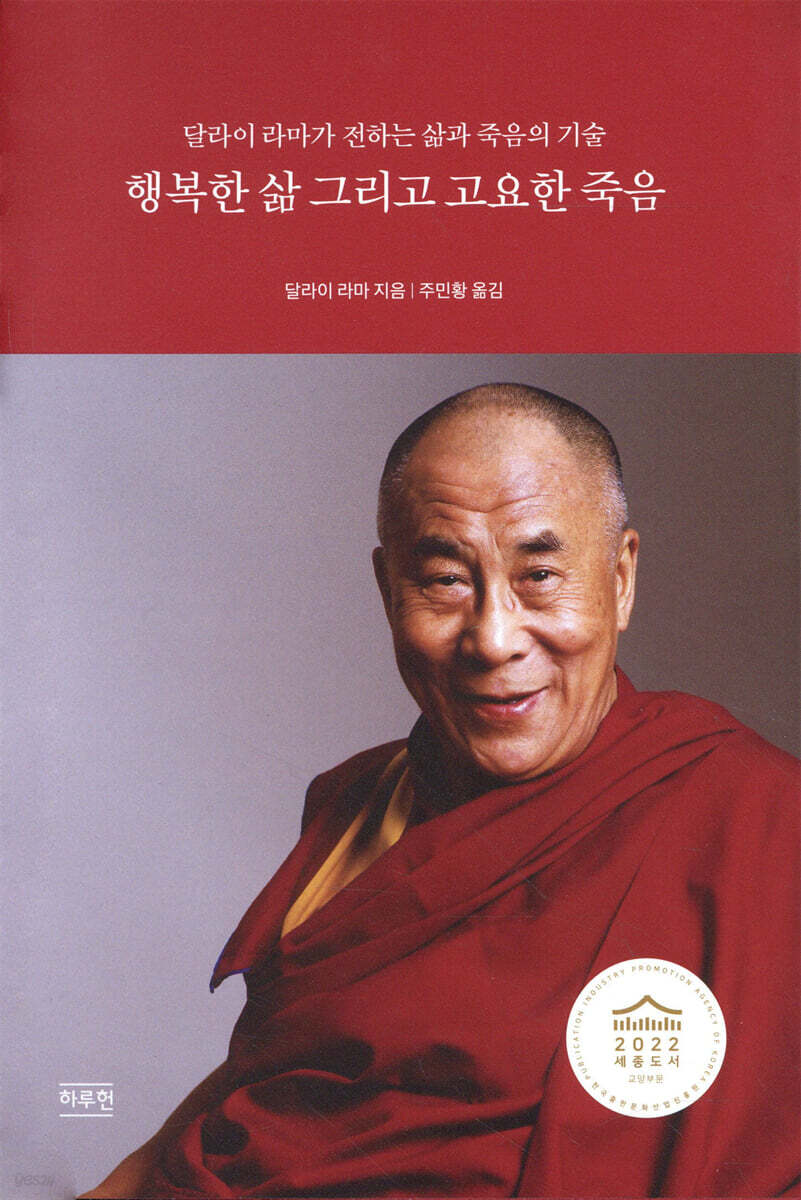
A happy life and a peaceful death
 |
Description
Book Introduction
A book containing the way of life and wisdom conveyed by Tibetan Buddhism.
This book is a practical guide that guides you along the ancient path of enlightenment.
It tells us specific ways to enrich our lives and accept death with dignity through practice—meditation, compassion, patience, diligence, and meditation.
In particular, it clearly presents the benefits of Bodhicitta, which is essential for living a happy life and facing death peacefully, and how to cultivate Bodhicitta.
It contains the way of life and wisdom conveyed by Tibetan Buddhism.
It will be an excellent guide for readers who are looking for a way to practice, what to do, and how to do it.
This book is a practical guide that guides you along the ancient path of enlightenment.
It tells us specific ways to enrich our lives and accept death with dignity through practice—meditation, compassion, patience, diligence, and meditation.
In particular, it clearly presents the benefits of Bodhicitta, which is essential for living a happy life and facing death peacefully, and how to cultivate Bodhicitta.
It contains the way of life and wisdom conveyed by Tibetan Buddhism.
It will be an excellent guide for readers who are looking for a way to practice, what to do, and how to do it.
- You can preview some of the book's contents.
Preview
index
Translator's Preface: A Guide for Practice
Introduction: Fortunately, we have now been given human bodies.
A being that awakens on its own
Intelligence and wisdom rather than faith
The truth that relieves suffering
The practitioner's refuge, the dharma
1.
The path to a happy life
good heart
The Reality of Pain
Understanding Anatta
We are all the same
Exchange your own happiness for the suffering of others
Timeless Teachings
The power of Bodhi mind
2.
quiet death
Death is a part of life
The Benefits and Losses of Meditating on Death
Death without exception
Death may come before tomorrow.
What happens in the body and mind at the last moment
3.
What we need to do here and now
Positive and negative minds
Don't put off your work until tomorrow.
penance
Altruism that helps 'me'
Meditation to cultivate altruism and bodhicitta
A life with a clear purpose
4.
Waking up everyday life
The real enemy, but the weakest enemy
Awareness
The conduct of the awake
Focus and surrender
5.
Things we learn from pain
Causes of anger
The attitude of a wise man
A heart that no one can harm
Praise and fame that bring no benefit
Fruits made with the enemy
6.
Don't lose confidence
Laziness that hinders progress
Wise Weapon
fearless mind
The most selfless gift in the world
The power of desire, the power of stability, the power of joy, the power of stillness
7.
The Gift of Meditation
Let go of obsession
The joy of practicing alone
Letting go of worldly desires
Let go of your obsession with material possessions
Two things that distract you
Object of meditation
Esoteric meditation and Tonglen meditation
Hurt others instead of yourself
The happiness that comes from hardship
Jealousy, competition, and neglect
8.
The Lotus of Life
The siege will soon be postponed
The Sutra of Essentials and the Sutra of Non-Essentials
The nature of mind and the nature of things
Old misconception
Clear vision, wisdom
Introduction: Fortunately, we have now been given human bodies.
A being that awakens on its own
Intelligence and wisdom rather than faith
The truth that relieves suffering
The practitioner's refuge, the dharma
1.
The path to a happy life
good heart
The Reality of Pain
Understanding Anatta
We are all the same
Exchange your own happiness for the suffering of others
Timeless Teachings
The power of Bodhi mind
2.
quiet death
Death is a part of life
The Benefits and Losses of Meditating on Death
Death without exception
Death may come before tomorrow.
What happens in the body and mind at the last moment
3.
What we need to do here and now
Positive and negative minds
Don't put off your work until tomorrow.
penance
Altruism that helps 'me'
Meditation to cultivate altruism and bodhicitta
A life with a clear purpose
4.
Waking up everyday life
The real enemy, but the weakest enemy
Awareness
The conduct of the awake
Focus and surrender
5.
Things we learn from pain
Causes of anger
The attitude of a wise man
A heart that no one can harm
Praise and fame that bring no benefit
Fruits made with the enemy
6.
Don't lose confidence
Laziness that hinders progress
Wise Weapon
fearless mind
The most selfless gift in the world
The power of desire, the power of stability, the power of joy, the power of stillness
7.
The Gift of Meditation
Let go of obsession
The joy of practicing alone
Letting go of worldly desires
Let go of your obsession with material possessions
Two things that distract you
Object of meditation
Esoteric meditation and Tonglen meditation
Hurt others instead of yourself
The happiness that comes from hardship
Jealousy, competition, and neglect
8.
The Lotus of Life
The siege will soon be postponed
The Sutra of Essentials and the Sutra of Non-Essentials
The nature of mind and the nature of things
Old misconception
Clear vision, wisdom
Detailed image

Into the book
- The mind is originally clear and pure.
Defilements, the confusing emotions that plague the mind, are temporary flaws.
--- p.13
- When practicing and practicing asceticism, the important thing is to know the right starting point.
--- p.18
- Bodhicitta is the best state and the most good mind.
Bodhicitta is a good heart complemented by wisdom.
…the desire to help others achieve their wishes and the desire to reach the state of Buddha.
--- p.39
- The reason I advise you to think deeply about your suffering is because there is a way to escape from it.
--- p.44
- From the perspective of reincarnation, death is like changing clothes.
When old clothes become worn out, we change them into new ones.
This perspective influences our attitude toward death.
The realization that death is a part of life becomes clear.
--- p.73
- Practice is like a guide on a journey into the unknown.
--- p.97
- A high-level practitioner will gladly welcome death, a mid-level practitioner will not fear death, and even a low-level practitioner will have no regrets when he dies.
--- p.108
- If you can solve it, there's no need to worry.
Instead, do what you need to do to prevent it from happening.
But if there's nothing you can do, don't worry.
Worrying doesn't help.
Worry and anxiety don't solve problems.
--- p.168
- Treating your enemy with mercy is like removing a large rock that is blocking the flow of water.
When you move a large rock, water begins to flow.
--- p.185
- If you want to let go of attachment, remember that you can't take anything with you when you die.
--- p.229
- The mind will focus on the mind.
There is a mind that experiences and a mind that is experienced.
This is how to use the mind as an object of meditation.
--- p.241
- When our hearts become compassionate, we will look at others with the same mind as we look at ourselves.
--- p.250
- All phenomena and objects do not exist forever and are constantly being dismantled at every moment.
Defilements, the confusing emotions that plague the mind, are temporary flaws.
--- p.13
- When practicing and practicing asceticism, the important thing is to know the right starting point.
--- p.18
- Bodhicitta is the best state and the most good mind.
Bodhicitta is a good heart complemented by wisdom.
…the desire to help others achieve their wishes and the desire to reach the state of Buddha.
--- p.39
- The reason I advise you to think deeply about your suffering is because there is a way to escape from it.
--- p.44
- From the perspective of reincarnation, death is like changing clothes.
When old clothes become worn out, we change them into new ones.
This perspective influences our attitude toward death.
The realization that death is a part of life becomes clear.
--- p.73
- Practice is like a guide on a journey into the unknown.
--- p.97
- A high-level practitioner will gladly welcome death, a mid-level practitioner will not fear death, and even a low-level practitioner will have no regrets when he dies.
--- p.108
- If you can solve it, there's no need to worry.
Instead, do what you need to do to prevent it from happening.
But if there's nothing you can do, don't worry.
Worrying doesn't help.
Worry and anxiety don't solve problems.
--- p.168
- Treating your enemy with mercy is like removing a large rock that is blocking the flow of water.
When you move a large rock, water begins to flow.
--- p.185
- If you want to let go of attachment, remember that you can't take anything with you when you die.
--- p.229
- The mind will focus on the mind.
There is a mind that experiences and a mind that is experienced.
This is how to use the mind as an object of meditation.
--- p.241
- When our hearts become compassionate, we will look at others with the same mind as we look at ourselves.
--- p.250
- All phenomena and objects do not exist forever and are constantly being dismantled at every moment.
--- p.277
Publisher's Review
Friendly practice guide
The content of the lecture on the ‘Entry into the Bodhi Path’ given by the Dalai Lama forms the core of this book.
The "Treatise on the Bodhi Path" is a treatise that has become the root of Tibetan Buddhist practice.
This treatise contains specific instructions on how to cultivate the wisdom-filled, good mind of Bodhicitta and compassion, and lead a peaceful life.
The Dalai Lama's affection for the "Buddhist Sutra" is special.
The Dalai Lama, who has been reading the “Entry to the Bodhi Path” since his teenage years and has been practicing based on it, asserts this:
“There is no better treatise to guide us towards happiness and a noble life.” In this book, the Dalai Lama explains in great detail the nature of life and death, the nature of the mind, and methods of practice based on his own experiences.
How will you face death?
In order to realize the purpose of life, the topic of 'how to die' is discussed as extensively as the topic of 'how to live'.
This is also a characteristic of Tibetan Buddhism.
In Tibetan Buddhism, the question of 'how to die' is as much addressed as the question of 'how to live'.
And it teaches us to look at the issues of life and death as they really are.
I encourage you to see things as they are, without being afraid to face them and painting over them with illusions.
Death is as important as life is because death is seen as the beginning of another life.
The point this book emphasizes is concise.
“It is easier for a person who has lived a peaceful life to end his life peacefully, and it is easier for a person who has died peacefully to start a new peaceful and happy life.
To be happy, you must have peace of mind, and to have peace of mind, you must be a good person.
To be a good person, you must not be tempted by the temptations of delusion.
So, practice is necessary.
The practice is to tame the unruly mind.
Buddhist practice is learning and practicing how to tame the mind.
Buddhist practice is to tame the mind, cultivate a good heart, and eliminate delusion without any attachment.
“So, Buddhist practice suggests a path to happiness.”
The Dalai Lama, the greatest intellectual and spiritual teacher of the 21st century
The Dalai Lama is considered the greatest spiritual teacher and intellectual of our time.
Wherever he is, it is always lively.
It's fun.
It is charming to see him let out a playful laugh, then quickly straighten his posture, seriously discuss the Dharma, and then fall into deep meditation.
In this book, the Dalai Lama shows his compassionate side by generously sharing his wisdom.
This aligns with the passage that says the purpose of Buddhist practice is to create people with warm hearts and kind minds.
Listening to the Dalai Lama's lectures, the meaning and purpose of life become clear.
It makes me think that I should live my life worthily now that I have been given a human body.
The clarity of the lecture is a masterpiece.
Another characteristic of the Dalai Lama's lectures is that they are specific and logical.
This is also a characteristic of Tibetan Buddhism.
Tibetan Buddhism likes specific explanations, so there are many commentaries.
The Dalai Lama's lectures, which follow this tradition, are like reading a detailed commentary.
Explain the topic of the lecture in a specific and logical manner so that the audience can understand it accurately.
This book captures that characteristic well.
The teachings of the Dalai Lama are a spiritual asset of our time.
Through his teachings, you will discover the path to ultimate peace and ultimate happiness.
And you will learn the skills to live happily and to die peacefully.
The content of the lecture on the ‘Entry into the Bodhi Path’ given by the Dalai Lama forms the core of this book.
The "Treatise on the Bodhi Path" is a treatise that has become the root of Tibetan Buddhist practice.
This treatise contains specific instructions on how to cultivate the wisdom-filled, good mind of Bodhicitta and compassion, and lead a peaceful life.
The Dalai Lama's affection for the "Buddhist Sutra" is special.
The Dalai Lama, who has been reading the “Entry to the Bodhi Path” since his teenage years and has been practicing based on it, asserts this:
“There is no better treatise to guide us towards happiness and a noble life.” In this book, the Dalai Lama explains in great detail the nature of life and death, the nature of the mind, and methods of practice based on his own experiences.
How will you face death?
In order to realize the purpose of life, the topic of 'how to die' is discussed as extensively as the topic of 'how to live'.
This is also a characteristic of Tibetan Buddhism.
In Tibetan Buddhism, the question of 'how to die' is as much addressed as the question of 'how to live'.
And it teaches us to look at the issues of life and death as they really are.
I encourage you to see things as they are, without being afraid to face them and painting over them with illusions.
Death is as important as life is because death is seen as the beginning of another life.
The point this book emphasizes is concise.
“It is easier for a person who has lived a peaceful life to end his life peacefully, and it is easier for a person who has died peacefully to start a new peaceful and happy life.
To be happy, you must have peace of mind, and to have peace of mind, you must be a good person.
To be a good person, you must not be tempted by the temptations of delusion.
So, practice is necessary.
The practice is to tame the unruly mind.
Buddhist practice is learning and practicing how to tame the mind.
Buddhist practice is to tame the mind, cultivate a good heart, and eliminate delusion without any attachment.
“So, Buddhist practice suggests a path to happiness.”
The Dalai Lama, the greatest intellectual and spiritual teacher of the 21st century
The Dalai Lama is considered the greatest spiritual teacher and intellectual of our time.
Wherever he is, it is always lively.
It's fun.
It is charming to see him let out a playful laugh, then quickly straighten his posture, seriously discuss the Dharma, and then fall into deep meditation.
In this book, the Dalai Lama shows his compassionate side by generously sharing his wisdom.
This aligns with the passage that says the purpose of Buddhist practice is to create people with warm hearts and kind minds.
Listening to the Dalai Lama's lectures, the meaning and purpose of life become clear.
It makes me think that I should live my life worthily now that I have been given a human body.
The clarity of the lecture is a masterpiece.
Another characteristic of the Dalai Lama's lectures is that they are specific and logical.
This is also a characteristic of Tibetan Buddhism.
Tibetan Buddhism likes specific explanations, so there are many commentaries.
The Dalai Lama's lectures, which follow this tradition, are like reading a detailed commentary.
Explain the topic of the lecture in a specific and logical manner so that the audience can understand it accurately.
This book captures that characteristic well.
The teachings of the Dalai Lama are a spiritual asset of our time.
Through his teachings, you will discover the path to ultimate peace and ultimate happiness.
And you will learn the skills to live happily and to die peacefully.
GOODS SPECIFICS
- Publication date: April 20, 2022
- Page count, weight, size: 288 pages | 410g | 140*210*20mm
- ISBN13: 9791196261160
- ISBN10: 1196261164
You may also like
카테고리
korean


korean

![GQ KOREA Mark (Monthly): December [2025]](http://librairie.coreenne.fr/cdn/shop/files/8ef265dbbfbf186523ed75ba7319009d.jpg?v=1765340328&width=3840)


