

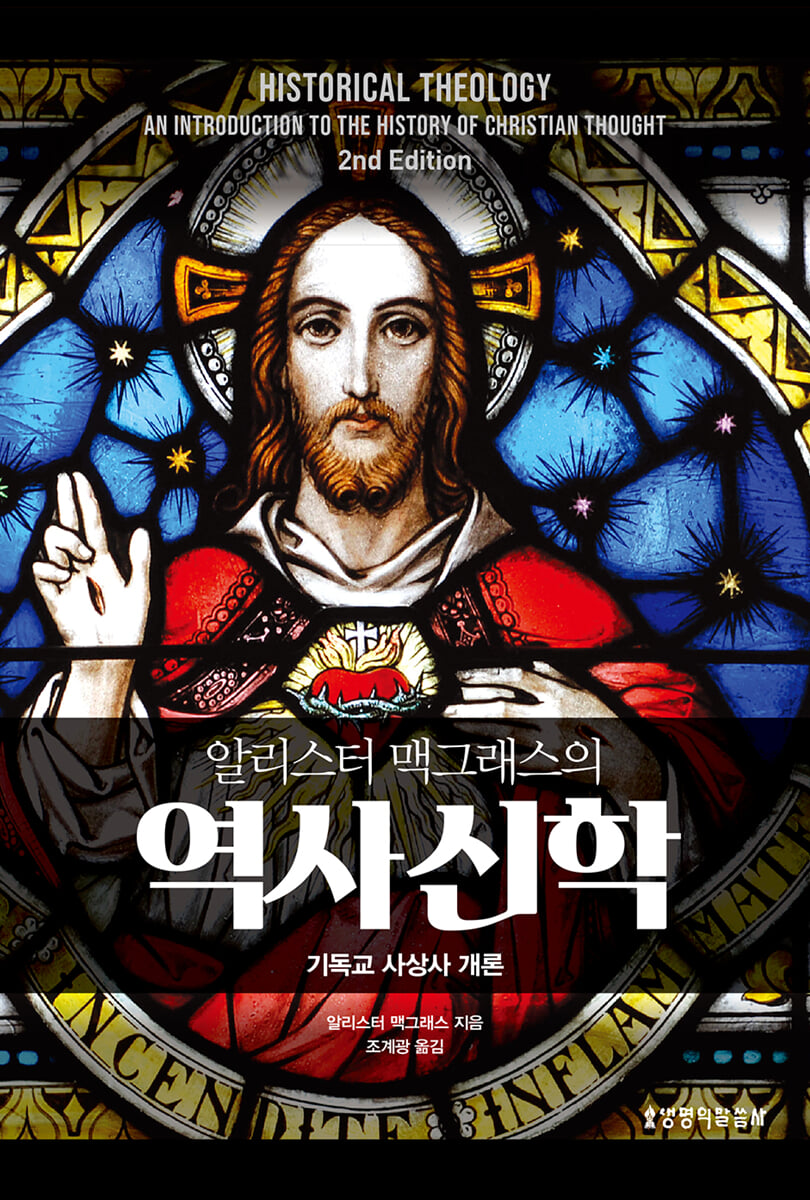
Alister McGrath's Historical Theology
 |
Description
Book Introduction
“The history of Christian thought in one volume!”
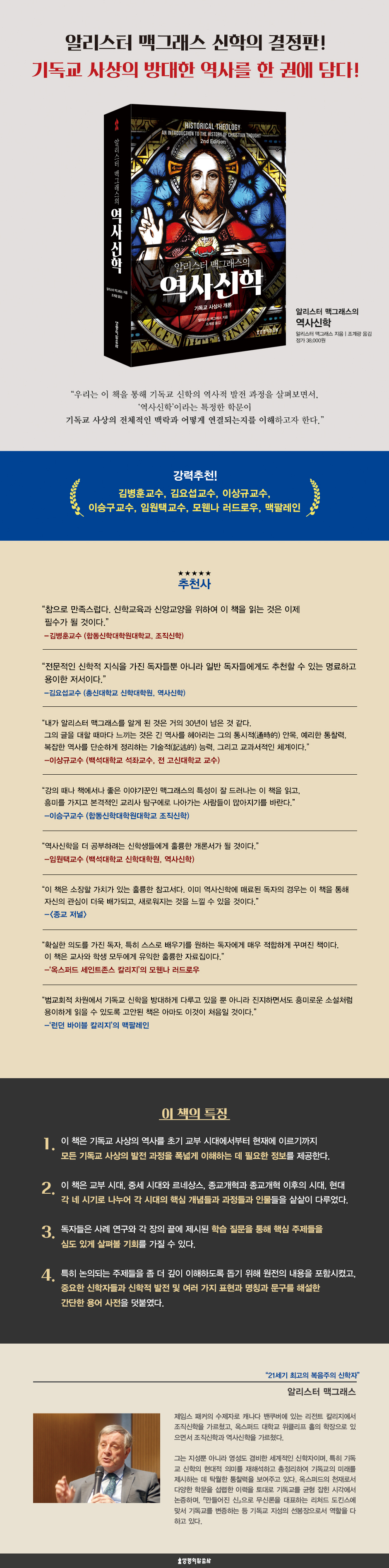
This book, which comprehensively surveys the history of Christian thought, provides all the information necessary to broadly understand the development of Christian theology from the early patristic period to the present.
This book divides history into four periods: the patristic era, the Middle Ages and Renaissance, the Reformation and post-Reformation era, and modern times, and thoroughly covers the key concepts, processes, and figures of each period.
Readers will have the opportunity to delve deeper into key topics through case studies and learning questions presented at the end of each chapter.
To help you understand the topics discussed more deeply, we have included original texts and added a brief glossary of terms explaining important theologians, theological developments, and various expressions, names, and phrases.
Compiled to meet the demand for a historically vibrant, chronologically presented book, this useful and authoritative book has all the makings of a new bestseller.
For additional material related to this book, see 'www.wiley.com/go/mcgrath'.
You can watch the author's lecture videos directly.
For reference, this book is a completely new translation of the 2nd Edition of Historical Theology, with additional content covering topics such as orthodox theology, pneumatology, medieval mysticism, liberation, feminism, Latin theology, and the global expansion of Christianity.
This book, which comprehensively surveys the history of Christian thought, provides all the information necessary to broadly understand the development of Christian theology from the early patristic period to the present.
This book divides history into four periods: the patristic era, the Middle Ages and Renaissance, the Reformation and post-Reformation era, and modern times, and thoroughly covers the key concepts, processes, and figures of each period.
Readers will have the opportunity to delve deeper into key topics through case studies and learning questions presented at the end of each chapter.
To help you understand the topics discussed more deeply, we have included original texts and added a brief glossary of terms explaining important theologians, theological developments, and various expressions, names, and phrases.
Compiled to meet the demand for a historically vibrant, chronologically presented book, this useful and authoritative book has all the makings of a new bestseller.
For additional material related to this book, see 'www.wiley.com/go/mcgrath'.
You can watch the author's lecture videos directly.
For reference, this book is a completely new translation of the 2nd Edition of Historical Theology, with additional content covering topics such as orthodox theology, pneumatology, medieval mysticism, liberation, feminism, Latin theology, and the global expansion of Christianity.
- You can preview some of the book's contents.
Preview
index
Recommendation
How to use this book
introduction
The concept of 'theology': a simple definition
-The structure of theology
Biblical Studies / Systematic Theology / Philosophical Theology / Pastoral Theology / Church History
-The purpose and position of historical theology
The Development of Historical Theology / Historical Theology as an Educational Tool / Historical Theology as a Critical Tool / Historical Theology as a Resource for Systematic Theology
Chapter 1: The Patristic Period (100-451)
-Glossary
-The difficulties that follow in dealing with patristic theology.
-Historical background of patristic theology
The historical significance of Rome / The problem of persecution / The conversion of Constantine / The development of public theological debate
-Center for theological studies
-Representative theologian
Justin Martyr (100-165) / Irenaeus of Lyons (130-200) / Origen (185-254) / Tertullian (160-225) / Athanasius (296-373) / Augustine of Hippo (354-430)
-Important theological developments
The Relationship Between Christian Faith and Classical Culture / The Scope of the New Testament Canon / The Role of Tradition / The Establishment of a Universal Creed / The Two Natures of Jesus Christ / The Trinity / Ecclesiology / The Doctrine of Grace
-Important names, terms, and phrases
-question
-Case study
Case Study 1.1 Scripture and Tradition / Case Study 1.2 The Arian Controversy: The Deity of Christ / Case Study 1.3 The Christology of the Alexandrian School: The Apollinarian Controversy / Case Study 1.4.
Christology of the Antioch School: Nestorian Controversy / Case Study 1.5 The Trinity: Early Development and Controversies / Case Study 1.6 The Church: Donatist Controversy / Case Study 1.7 Grace: Pelagian Controversy / Case Study 1.8 Faith and Philosophy
Chapter 2: The Middle Ages and the Renaissance (500–1500)
-Definition of 'Middle Ages'
-Medieval theology in Western Europe
The Carolingian Renaissance / The rise of cathedral and monastic schools / The various monastic orders and their "seminaries" / The founding of universities / Pierre Lombard's Four Books of Sentences
-The rise of scholasticism
-Italian Renaissance
-The rise of humanism
-Medieval theology of Eastern Europe
The Rise of Byzantine Theology / The Iconoclastic Controversy / The Quietist Controversy / The Fall of Constantinople (1453)
-Representative theologian
John of Damascus / Simeon the New Theologian / Anselm of Canterbury / Thomas Aquinas / Duns Scotus / William of Ockham / Erasmus of Rotterdam
-Important theological developments
Strengthening the patristic heritage / Commentary on the role of reason in theology / Development of theological systems / Development of sacramental theology / Development of the theology of grace / The plan of salvation and the role of Mary / Tendency to return directly to the sources of Christian theology / Criticism of the Vulgate
-Important names, terms, and phrases
-question
-Case study
Case Study 2.1 Proof of God's Existence / Case Study 2.2 Understanding the Atonement / Case Study 2.3 Sacramental Theology / Case Study 2.4 Biblical Interpretation / Case Study 2.5 Renaissance Humanism and the Bible / Case Study 2.6 Augustinianism and Pelagianism in Late Medieval Theology
Chapter 3: The Reformation and the Aftermath (1500-1750)
-Is it the Reformation or the Reformers?
-Glossary
German Reformation - Lutheran / Swiss Reformation - Reformed Church / Radical Reformation - Anabaptist / English Reformation - Anglican / Catholic Reformation / Protestant Orthodoxy
-Movements after the Reformation
Strengthening of Catholicism / Puritanism / Pietism
-Representative theologian
Martin Luther / Huldrych Zwingli / John Calvin / Teresa of Avila / Theodore Beza / Johann Gerhard / Roberto Bellarmine / Jonathan Edwards
-Important theological developments
Sources of Theology / Doctrine of Grace / Doctrine of the Sacraments / Doctrine of the Church
-Development of theological literature
Catechism / Confession of Faith / Systematic Theological Literature
-Important names, terms, and phrases
-question
-Case study
Case Study 3.1 The Problem of Scripture and Tradition in the Reformation Debate / Case Study 3.2 Justification by Faith: Protestantism and the Council of Trent / Case Study 3.3 The Eucharistic Presence: Luther, Zwingli, and the Council of Trent / Case Study 3.4 The Infant Baptism Controversy / Case Study 3.5 Ecclesiology: Various Tendencies within Protestantism / Case Study 3.6 Theology and Astronomy: The Copernican-Galileo Controversy
Chapter 4 Modern Times (1750 to the Present)
-Cultural Watershed: Enlightenment
-Enlightenment critique of Christian theology
The concept of revelation / The status and interpretation of the Bible / The identity and meaning of Jesus Christ / The doctrine of the Trinity / Criticism of miracles / Denial of original sin / The problem of evil
-The emergence of Romanticism and criticism of the Enlightenment
The Victorian Era and the Crisis of Faith
-Postmodernism and new theological trends
-Representative theologian
Schleiermacher / John Henry Newman / Karl Barth / Paul Tillich / Karl Rahner / Hans Urs von Balthasar / Jürgen Moltmann / Wolfhard Pannenberg
-Recent Western theology and its trends
Protestant liberalism / modernism/neo-orthodoxy / 'Return to the Sources (Ressourcement)' or 'New Theology (la nouvelle theologie)' / feminism / liberation theology / black theology / post-liberalism / radical orthodoxy
-Important names, terms, and phrases
-question
-Case study
- Case Study 4.1 Exploration of the Historical Jesus / Case Study 4.2 Basis and Essence of Salvation / Case Study 4.3 Debate on the Resurrection / Case Study 4.4 The Doctrine of the Trinity Discussed in the 20th Century / Case Study 4.5 Debate on Ecclesiology in the 20th Century / Case Study 4.6 Natural Theology and the Rationality of Faith / Case Study 4.7 Feminist Criticism of Traditional Christian Theology / Case Study 4.8 Christianity's Position on Other Religions
The direction to move forward
Introduction to major theologians
A brief glossary of terms
More books to read
How to use this book
introduction
The concept of 'theology': a simple definition
-The structure of theology
Biblical Studies / Systematic Theology / Philosophical Theology / Pastoral Theology / Church History
-The purpose and position of historical theology
The Development of Historical Theology / Historical Theology as an Educational Tool / Historical Theology as a Critical Tool / Historical Theology as a Resource for Systematic Theology
Chapter 1: The Patristic Period (100-451)
-Glossary
-The difficulties that follow in dealing with patristic theology.
-Historical background of patristic theology
The historical significance of Rome / The problem of persecution / The conversion of Constantine / The development of public theological debate
-Center for theological studies
-Representative theologian
Justin Martyr (100-165) / Irenaeus of Lyons (130-200) / Origen (185-254) / Tertullian (160-225) / Athanasius (296-373) / Augustine of Hippo (354-430)
-Important theological developments
The Relationship Between Christian Faith and Classical Culture / The Scope of the New Testament Canon / The Role of Tradition / The Establishment of a Universal Creed / The Two Natures of Jesus Christ / The Trinity / Ecclesiology / The Doctrine of Grace
-Important names, terms, and phrases
-question
-Case study
Case Study 1.1 Scripture and Tradition / Case Study 1.2 The Arian Controversy: The Deity of Christ / Case Study 1.3 The Christology of the Alexandrian School: The Apollinarian Controversy / Case Study 1.4.
Christology of the Antioch School: Nestorian Controversy / Case Study 1.5 The Trinity: Early Development and Controversies / Case Study 1.6 The Church: Donatist Controversy / Case Study 1.7 Grace: Pelagian Controversy / Case Study 1.8 Faith and Philosophy
Chapter 2: The Middle Ages and the Renaissance (500–1500)
-Definition of 'Middle Ages'
-Medieval theology in Western Europe
The Carolingian Renaissance / The rise of cathedral and monastic schools / The various monastic orders and their "seminaries" / The founding of universities / Pierre Lombard's Four Books of Sentences
-The rise of scholasticism
-Italian Renaissance
-The rise of humanism
-Medieval theology of Eastern Europe
The Rise of Byzantine Theology / The Iconoclastic Controversy / The Quietist Controversy / The Fall of Constantinople (1453)
-Representative theologian
John of Damascus / Simeon the New Theologian / Anselm of Canterbury / Thomas Aquinas / Duns Scotus / William of Ockham / Erasmus of Rotterdam
-Important theological developments
Strengthening the patristic heritage / Commentary on the role of reason in theology / Development of theological systems / Development of sacramental theology / Development of the theology of grace / The plan of salvation and the role of Mary / Tendency to return directly to the sources of Christian theology / Criticism of the Vulgate
-Important names, terms, and phrases
-question
-Case study
Case Study 2.1 Proof of God's Existence / Case Study 2.2 Understanding the Atonement / Case Study 2.3 Sacramental Theology / Case Study 2.4 Biblical Interpretation / Case Study 2.5 Renaissance Humanism and the Bible / Case Study 2.6 Augustinianism and Pelagianism in Late Medieval Theology
Chapter 3: The Reformation and the Aftermath (1500-1750)
-Is it the Reformation or the Reformers?
-Glossary
German Reformation - Lutheran / Swiss Reformation - Reformed Church / Radical Reformation - Anabaptist / English Reformation - Anglican / Catholic Reformation / Protestant Orthodoxy
-Movements after the Reformation
Strengthening of Catholicism / Puritanism / Pietism
-Representative theologian
Martin Luther / Huldrych Zwingli / John Calvin / Teresa of Avila / Theodore Beza / Johann Gerhard / Roberto Bellarmine / Jonathan Edwards
-Important theological developments
Sources of Theology / Doctrine of Grace / Doctrine of the Sacraments / Doctrine of the Church
-Development of theological literature
Catechism / Confession of Faith / Systematic Theological Literature
-Important names, terms, and phrases
-question
-Case study
Case Study 3.1 The Problem of Scripture and Tradition in the Reformation Debate / Case Study 3.2 Justification by Faith: Protestantism and the Council of Trent / Case Study 3.3 The Eucharistic Presence: Luther, Zwingli, and the Council of Trent / Case Study 3.4 The Infant Baptism Controversy / Case Study 3.5 Ecclesiology: Various Tendencies within Protestantism / Case Study 3.6 Theology and Astronomy: The Copernican-Galileo Controversy
Chapter 4 Modern Times (1750 to the Present)
-Cultural Watershed: Enlightenment
-Enlightenment critique of Christian theology
The concept of revelation / The status and interpretation of the Bible / The identity and meaning of Jesus Christ / The doctrine of the Trinity / Criticism of miracles / Denial of original sin / The problem of evil
-The emergence of Romanticism and criticism of the Enlightenment
The Victorian Era and the Crisis of Faith
-Postmodernism and new theological trends
-Representative theologian
Schleiermacher / John Henry Newman / Karl Barth / Paul Tillich / Karl Rahner / Hans Urs von Balthasar / Jürgen Moltmann / Wolfhard Pannenberg
-Recent Western theology and its trends
Protestant liberalism / modernism/neo-orthodoxy / 'Return to the Sources (Ressourcement)' or 'New Theology (la nouvelle theologie)' / feminism / liberation theology / black theology / post-liberalism / radical orthodoxy
-Important names, terms, and phrases
-question
-Case study
- Case Study 4.1 Exploration of the Historical Jesus / Case Study 4.2 Basis and Essence of Salvation / Case Study 4.3 Debate on the Resurrection / Case Study 4.4 The Doctrine of the Trinity Discussed in the 20th Century / Case Study 4.5 Debate on Ecclesiology in the 20th Century / Case Study 4.6 Natural Theology and the Rationality of Faith / Case Study 4.7 Feminist Criticism of Traditional Christian Theology / Case Study 4.8 Christianity's Position on Other Religions
The direction to move forward
Introduction to major theologians
A brief glossary of terms
More books to read
Detailed image
Into the book
“The purpose of this book is to introduce historical theology, an important and interesting subject.
Historical theology is such a vast subject that to do it justice would require at least five volumes.
This book is an introductory text covering the purpose and materials of historical theology. It aims to pack as much information as is realistically possible into a single volume, based on an approach that has been thoroughly tested in classrooms in Europe, North America, Australia, and New Zealand.
This book, which includes excerpts from the author's best-selling book, What is Theology?, has been reorganized specifically to introduce historical theology to students.
Although much new material has been added and some existing material has been rewritten, the basic approach and some of the content of the previous book have been retained.
This book follows the principle of 'selective attention'.
This principle functions like a map in that it helps us understand the situation by showing the overall picture while providing sufficient details, and makes it easier to understand one of the many features in more detail.
This is for those who do not have time to understand every aspect of the history of Christian thought, but who want to know the most important aspects.
In other words, just as when drawing a picture, I sketch the overall scene with thick strokes and then delicately paint in the details, I adopted a method of outlining the overall picture and then dealing with the important parts that were specifically selected in detail.
Therefore, by the time you finish reading this book, you will have a good overview of the development of Christian theology.
But despite its brevity, this book covers much more than these types of introductory books.”
Historical theology is such a vast subject that to do it justice would require at least five volumes.
This book is an introductory text covering the purpose and materials of historical theology. It aims to pack as much information as is realistically possible into a single volume, based on an approach that has been thoroughly tested in classrooms in Europe, North America, Australia, and New Zealand.
This book, which includes excerpts from the author's best-selling book, What is Theology?, has been reorganized specifically to introduce historical theology to students.
Although much new material has been added and some existing material has been rewritten, the basic approach and some of the content of the previous book have been retained.
This book follows the principle of 'selective attention'.
This principle functions like a map in that it helps us understand the situation by showing the overall picture while providing sufficient details, and makes it easier to understand one of the many features in more detail.
This is for those who do not have time to understand every aspect of the history of Christian thought, but who want to know the most important aspects.
In other words, just as when drawing a picture, I sketch the overall scene with thick strokes and then delicately paint in the details, I adopted a method of outlining the overall picture and then dealing with the important parts that were specifically selected in detail.
Therefore, by the time you finish reading this book, you will have a good overview of the development of Christian theology.
But despite its brevity, this book covers much more than these types of introductory books.”
---From the text
Publisher's Review
“The history of Christian thought in one volume!”
This book, which comprehensively surveys the history of Christian thought, provides all the information necessary to broadly understand the development of Christian theology from the early patristic period to the present.
This book divides history into four periods: the patristic era, the Middle Ages and Renaissance, the Reformation and post-Reformation era, and modern times, and thoroughly covers the key concepts, processes, and figures of each period.
Readers will have the opportunity to delve deeper into key topics through case studies and learning questions presented at the end of each chapter.
To help you understand the topics discussed more deeply, we have included original texts and added a brief glossary of terms explaining important theologians, theological developments, and various expressions, names, and phrases.
Compiled to meet the demand for a historically vibrant, chronologically presented book, this useful and authoritative book has all the makings of a new bestseller.
For additional material related to this book, see 'www.wiley.com/go/mcgrath'.
You can watch the author's lecture videos directly.
For reference, this book is a completely new translation of [Historical Theology 2nd Edition], and includes additional content covering topics such as orthodox theology, pneumatology, medieval mysticism, liberation, feminism, Latin theology, and the global expansion of Christianity.
This book, which comprehensively surveys the history of Christian thought, provides all the information necessary to broadly understand the development of Christian theology from the early patristic period to the present.
This book divides history into four periods: the patristic era, the Middle Ages and Renaissance, the Reformation and post-Reformation era, and modern times, and thoroughly covers the key concepts, processes, and figures of each period.
Readers will have the opportunity to delve deeper into key topics through case studies and learning questions presented at the end of each chapter.
To help you understand the topics discussed more deeply, we have included original texts and added a brief glossary of terms explaining important theologians, theological developments, and various expressions, names, and phrases.
Compiled to meet the demand for a historically vibrant, chronologically presented book, this useful and authoritative book has all the makings of a new bestseller.
For additional material related to this book, see 'www.wiley.com/go/mcgrath'.
You can watch the author's lecture videos directly.
For reference, this book is a completely new translation of [Historical Theology 2nd Edition], and includes additional content covering topics such as orthodox theology, pneumatology, medieval mysticism, liberation, feminism, Latin theology, and the global expansion of Christianity.
GOODS SPECIFICS
- Publication date: February 28, 2022
- Format: Hardcover book binding method guide
- Page count, weight, size: 552 pages | 1,100g | 150*225*35mm
- ISBN13: 9788904031801
- ISBN10: 890403180X
You may also like
카테고리
korean


korean

![GQ KOREA Mark (Monthly): December [2025]](http://librairie.coreenne.fr/cdn/shop/files/8ef265dbbfbf186523ed75ba7319009d.jpg?v=1765340328&width=3840)


