

How did we become who we are?
 |
Description
Book Introduction
From the first humans to Homo sapiens
In search of the origin of 'humanity'
With Professor Lee Sang-hee, the first Korean to hold a doctorate in paleoanthropology
A Special Journey of 5 Million Years of Human Evolution
What does it mean to be human? In an age of unprecedented rapid and massive change, there is perhaps no question more fundamental and important to us.
So where did "humanity" begin? How did we become who we are today? Paleoanthropology holds the key to answering these questions.
Paleoanthropology, which explores the ancestors of people living today, the people of the past who created us today, is dynamically evolving and being rewritten every day as a discipline that looks into human 'evolution.'
Professor Lee Sang-hee of the University of California, Riverside, is a paleoanthropologist at the forefront of this vibrant field of paleoanthropological research.
He travels the world to excavation sites to study fossils, teaches cutting-edge paleoanthropology at universities, and is also dedicated to introducing the story of human origins and evolution to the public.
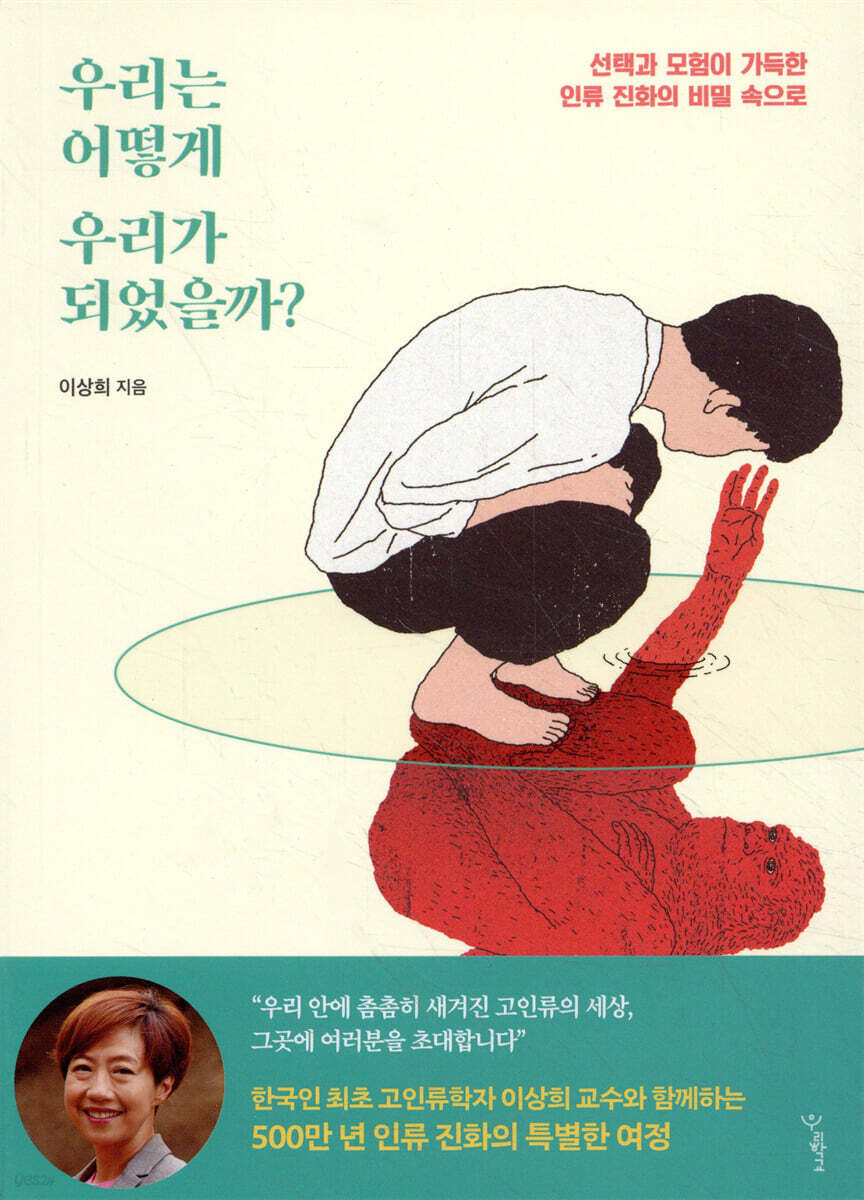
This time, he has published a book titled "How Did We Become Who We Are?" in which he sets out to find clues and the origins of "humanity," inviting readers on a remarkable journey of 5 million years of human evolution, from the first humans to modern humans.
Based on new findings from the latest paleoanthropology, this book closely unfolds the diverse lives and footsteps of humanity from millions to hundreds of thousands of years ago.
In the story of ancient humans, who had to constantly choose and take risks at every moment, fiercely adapt to any situation, and survive to the best of their ability, you will discover the secret of 'humanity' that has been perfected over a long period of time.
Now, it is time to enter the world of ancient humans, so close yet so far away, so deeply engraved within us, so alive and breathing even now.
In search of the origin of 'humanity'
With Professor Lee Sang-hee, the first Korean to hold a doctorate in paleoanthropology
A Special Journey of 5 Million Years of Human Evolution
What does it mean to be human? In an age of unprecedented rapid and massive change, there is perhaps no question more fundamental and important to us.
So where did "humanity" begin? How did we become who we are today? Paleoanthropology holds the key to answering these questions.
Paleoanthropology, which explores the ancestors of people living today, the people of the past who created us today, is dynamically evolving and being rewritten every day as a discipline that looks into human 'evolution.'
Professor Lee Sang-hee of the University of California, Riverside, is a paleoanthropologist at the forefront of this vibrant field of paleoanthropological research.
He travels the world to excavation sites to study fossils, teaches cutting-edge paleoanthropology at universities, and is also dedicated to introducing the story of human origins and evolution to the public.
This time, he has published a book titled "How Did We Become Who We Are?" in which he sets out to find clues and the origins of "humanity," inviting readers on a remarkable journey of 5 million years of human evolution, from the first humans to modern humans.
Based on new findings from the latest paleoanthropology, this book closely unfolds the diverse lives and footsteps of humanity from millions to hundreds of thousands of years ago.
In the story of ancient humans, who had to constantly choose and take risks at every moment, fiercely adapt to any situation, and survive to the best of their ability, you will discover the secret of 'humanity' that has been perfected over a long period of time.
Now, it is time to enter the world of ancient humans, so close yet so far away, so deeply engraved within us, so alive and breathing even now.
- You can preview some of the book's contents.
Preview
index
Introductory text.
Their world within us
Chapter 0.
From the face of a lost ancient human
Chapter 1.
The Beginning of Humanity: Where and How Did We Come From?
The startling idea of 'evolution' begins
The origins of humanity, cool, smart, powerful, but manipulated
A very human story told by the hips and pelvic bones
The first condition of humanity: walking on two feet
Chapter 2.
Born Hard: A Survival Strategy That Seems Beneficial
Childbirth, a problem of the species and a problem of the pelvis
A premature and immature human baby
Grow slowly and grow old slowly
The Second Condition of Humanity: Slow Life
Chapter 3.
The Origins of the Human Brain: A Choice That Cost the Digestive System
The third condition of humanity: a big brain
In search of the secret of the missing back of the head
right-handed Neanderthals
Why the brain suddenly grew larger 2 million years ago
Chapter 4.
Eat Anything: Stone Age, No Diets
Changes in canines, incisors, and molars
From vegetarian to meat-eating
The Fourth Condition of Humanity: Tool Use
Homo, eat whatever you can get your hands on
Chapter 5.
Stones, Sweat, and Joints: How the Long-Legged Boy Lives
Find out your weight by joints
The fifth condition of humanity: long legs
Homo erectus, giving up hair for sweat
Long-legged humans are hunters
Chapter 6.
Asia's Archaic Humans: An Unexpected Global Scenario
New archaic species appearing in Eurasia
Dmanishin equipped with caregiving abilities
The late recognition of Dmanisi's solidarity
Archaic humans lived everywhere
Chapter 7.
Diverse Humanity: We Meet Near and Far
Front teeth, how far have you used them?
Being able to speak and sing
Homo rhodesiensis, between 30,000 and 300,000 years ago
Homo naledi Opens New Horizons in Paleoanthropology
Hobbit humans from 60,000 years ago
Chapter 8.
The Neanderthal Within Us: A History of Caring for the Weak
Is Neanderthal a common noun or a proper noun?
Archaic humans who suffered from arthritis
Are you a Neanderthal?
Even if it disappears, it doesn't disappear
Chapter 9.
Survival of Homo Sapiens: In Search of the Origins of Diversity
A different species? A different looking person!
The origin of Homo sapiens
The importance of 10 percent humanity
Homo sapiens is constantly changing
Outgoing text.
To us yesterday, today and tomorrow
A Timeline of Human Evolution Through Representative Fossils
Their world within us
Chapter 0.
From the face of a lost ancient human
Chapter 1.
The Beginning of Humanity: Where and How Did We Come From?
The startling idea of 'evolution' begins
The origins of humanity, cool, smart, powerful, but manipulated
A very human story told by the hips and pelvic bones
The first condition of humanity: walking on two feet
Chapter 2.
Born Hard: A Survival Strategy That Seems Beneficial
Childbirth, a problem of the species and a problem of the pelvis
A premature and immature human baby
Grow slowly and grow old slowly
The Second Condition of Humanity: Slow Life
Chapter 3.
The Origins of the Human Brain: A Choice That Cost the Digestive System
The third condition of humanity: a big brain
In search of the secret of the missing back of the head
right-handed Neanderthals
Why the brain suddenly grew larger 2 million years ago
Chapter 4.
Eat Anything: Stone Age, No Diets
Changes in canines, incisors, and molars
From vegetarian to meat-eating
The Fourth Condition of Humanity: Tool Use
Homo, eat whatever you can get your hands on
Chapter 5.
Stones, Sweat, and Joints: How the Long-Legged Boy Lives
Find out your weight by joints
The fifth condition of humanity: long legs
Homo erectus, giving up hair for sweat
Long-legged humans are hunters
Chapter 6.
Asia's Archaic Humans: An Unexpected Global Scenario
New archaic species appearing in Eurasia
Dmanishin equipped with caregiving abilities
The late recognition of Dmanisi's solidarity
Archaic humans lived everywhere
Chapter 7.
Diverse Humanity: We Meet Near and Far
Front teeth, how far have you used them?
Being able to speak and sing
Homo rhodesiensis, between 30,000 and 300,000 years ago
Homo naledi Opens New Horizons in Paleoanthropology
Hobbit humans from 60,000 years ago
Chapter 8.
The Neanderthal Within Us: A History of Caring for the Weak
Is Neanderthal a common noun or a proper noun?
Archaic humans who suffered from arthritis
Are you a Neanderthal?
Even if it disappears, it doesn't disappear
Chapter 9.
Survival of Homo Sapiens: In Search of the Origins of Diversity
A different species? A different looking person!
The origin of Homo sapiens
The importance of 10 percent humanity
Homo sapiens is constantly changing
Outgoing text.
To us yesterday, today and tomorrow
A Timeline of Human Evolution Through Representative Fossils
Detailed image

Into the book
Anthropology is the study of human ancestors who no longer exist, millions or hundreds of thousands of years ago.
It not only tells us where we came from, but it also serves as a mirror that allows us to reflect on ourselves through the eyes of ancient humans.
Paleoanthropology, the study of human evolution, is also evolving in a new and dynamic way every day.
--- 「Chapter 0.
From “The Face of the Vanished Ancient Human”
Our human ancestors, who began as a new lineage 5 million years ago, were not much different from other apes.
The only trace of humanity was that he walked on two feet.
Moreover, bipedal walking did not appear in a single, complete form.
Humans are special.
However, human specialness was not achieved all at once, but was built little by little over a long period of time.
--- 「Chapter 1.
From "The Beginning of Humanity"
About 2 million years ago, when the human brain capacity began to increase significantly, Homo began to face a dilemma regarding the pelvis.
Because we had to give birth to a child with a big brain while continuing to walk on two feet.
This isn't just a problem for people giving birth.
It's a question of species.
It's not a problem with the female pelvis, it's a problem with the 'Homo sapiens' pelvis.
--- From "Chapter 2, Being Born with Difficulty"
If you make a mistake while making a stone tool, it cannot be undone.
You have to give up and start over.
So when making a stone tool, you have to imagine in your head the numerous steps that go from the raw stone to the finished product.
When I look at a gemstone, I think about its future.
I'm talking about imagining some point in the future, not the present.
And we're moving towards that point.
In this way, Homo erectus began to show human-like characteristics.
But there is no such thing as a free lunch.
The increased size came at a price.
--- 「Chapter 5.
From "Stone, Sweat, and Joints"
The old man from LaChapelle had lost all his molars, and judging by the gums that had healed over the empty spaces, it is assumed that he had survived for a long time without them.
That means someone was taking care of it.
This allows us to interpret that real Neanderthals were more human than the savage images portrayed in illustrations and in people's minds.
As more research and data accumulate about Neanderthals, their appearance is being estimated to be much closer to reality.
--- Chapter 8.
From "The Neanderthal Within Us"
The concept of ‘species’ is not fixed but rather fluid.
It may be against the very concept of species to put a dynamic concept of beginning, change, and annihilation into a rigid standard and to distinguish between this species and that species.
It is possible that the genes of Homo sapiens did not originate from a new species called Homo sapiens.
Australian Aboriginal people lived in isolation for 60,000 years.
But 60,000 years later, they met again with Europeans and were able to confirm that they were Homo sapiens without any problems.
It not only tells us where we came from, but it also serves as a mirror that allows us to reflect on ourselves through the eyes of ancient humans.
Paleoanthropology, the study of human evolution, is also evolving in a new and dynamic way every day.
--- 「Chapter 0.
From “The Face of the Vanished Ancient Human”
Our human ancestors, who began as a new lineage 5 million years ago, were not much different from other apes.
The only trace of humanity was that he walked on two feet.
Moreover, bipedal walking did not appear in a single, complete form.
Humans are special.
However, human specialness was not achieved all at once, but was built little by little over a long period of time.
--- 「Chapter 1.
From "The Beginning of Humanity"
About 2 million years ago, when the human brain capacity began to increase significantly, Homo began to face a dilemma regarding the pelvis.
Because we had to give birth to a child with a big brain while continuing to walk on two feet.
This isn't just a problem for people giving birth.
It's a question of species.
It's not a problem with the female pelvis, it's a problem with the 'Homo sapiens' pelvis.
--- From "Chapter 2, Being Born with Difficulty"
If you make a mistake while making a stone tool, it cannot be undone.
You have to give up and start over.
So when making a stone tool, you have to imagine in your head the numerous steps that go from the raw stone to the finished product.
When I look at a gemstone, I think about its future.
I'm talking about imagining some point in the future, not the present.
And we're moving towards that point.
In this way, Homo erectus began to show human-like characteristics.
But there is no such thing as a free lunch.
The increased size came at a price.
--- 「Chapter 5.
From "Stone, Sweat, and Joints"
The old man from LaChapelle had lost all his molars, and judging by the gums that had healed over the empty spaces, it is assumed that he had survived for a long time without them.
That means someone was taking care of it.
This allows us to interpret that real Neanderthals were more human than the savage images portrayed in illustrations and in people's minds.
As more research and data accumulate about Neanderthals, their appearance is being estimated to be much closer to reality.
--- Chapter 8.
From "The Neanderthal Within Us"
The concept of ‘species’ is not fixed but rather fluid.
It may be against the very concept of species to put a dynamic concept of beginning, change, and annihilation into a rigid standard and to distinguish between this species and that species.
It is possible that the genes of Homo sapiens did not originate from a new species called Homo sapiens.
Australian Aboriginal people lived in isolation for 60,000 years.
But 60,000 years later, they met again with Europeans and were able to confirm that they were Homo sapiens without any problems.
--- Chapter 9.
From "Survivor Homo Sapiens"
From "Survivor Homo Sapiens"
Publisher's Review
What is humanity?
In an amazing journey spanning millions of years,
Our story right now
We all want to know the roots that connect us to ourselves, that is, 'who am I?'
This curiosity extends to the questions, “How did humans become human?” and “How was the human form, humanity, created?”
The discipline that holds the answer to this question is paleoanthropology.
Professor Lee Sang-hee is a world-renowned paleoanthropologist who explores human origins at the forefront of paleoanthropology.
In addition to research and educational activities, he has actively communicated with the public through books and lectures, introducing discoveries about human evolution.
He has returned to meet readers anew with "How Did We Become Who We Are?", a book that looks back to the distant past of mankind and into the origins of "humanity."
This book vividly recreates the 5 million-year journey of human evolution, from the first humans to modern humans, and retraces the traces of ancient humans that remain within us and the crucial moments in human evolution.
Surprisingly, traces of ancient humans still remain in our bodies.
No, it is not an exaggeration to say that from the time of ancient humans to the present day, humans have gradually built up the ability to live as humans.
(…) Of course, there were as many ancient humans who did not survive as there were ancient humans who survived.
And they all became the ancestors of people living on Earth today.
_From the 'Introduction'
The story of human history unfolds in a colorful manner, including how the idea of 'evolution' began, what the first clues to 'humanity' were, what humans had to give up in exchange for standing on two feet and having a large brain, how humans have responded to various environmental changes and crises, and what connections existed between various ancient human species.
As you delve into humanity's long-standing adventures, you'll realize that this story, which spans millions of years, is not a distant past, but is deeply connected to us today.
You and I, our history!
Throw away old knowledge and ideas
The world of humanity seen through an expanded perspective
Were Neanderthals inferior to modern humans, Homo sapiens? Are we, Homo sapiens, somehow unrelated to Neanderthals? Were all the ancient humans who hunted and made tools male? Was the assumption that the Australopithecus afarensis fossil "Lucy" was a "woman" sufficiently validated?
For a long time, many people have portrayed Neanderthals as uncivilized and unmixed with modern humans.
That gaze reflected the Western perspective of viewing the colonial indigenous people as inferior.
The representative classical literature dealing with the origins and evolution of mankind is structured around 'men' rather than 'all'.
Even if you search for "prehistoric people" on Google and see that the majority of images that come up are of adult males, you can see how gender and age biases and stereotypes have permeated the way we view ancient humans.
As with most academic disciplines, the history of paleoanthropology cannot avoid issues of deep-rooted sexism, racism, and imperialism.
As Professor Lee Sang-hee said in an interview, “At some point, I started to wonder why women were erased, disappeared, and blurred out of sight in paleoanthropology, which studies what is visible to the eye,” he has not hesitated to raise his voice, questioning the fact that only certain faces among the many faces that make up humanity are highlighted.
Before delving into the main topic, "How We Became Who We Are" also highlights the importance of being wary of prejudice and having an expanded perspective when looking at the world of ancient humanity.
Readers also share the author's concerns and reflect on and examine their own perspectives on ancient humans.
Anthropologists formulate hypotheses about ancient humans, test them with traces they left behind, and draw conclusions to build a bigger picture.
But surprisingly, sometimes the picture is not a story of ancient humanity, but rather our own story.
It is because we have colored glasses on our eyes when looking at ancient mankind.
_'Chapter 0.
From the face of a lost ancient human
Based on the gender and racial sensitivity required in this era, the book is filled with new stories and hot-button issues revealed by the latest paleoanthropology.
Rather than confining the concept of fluid species to rigid standards and dividing it into stages, it guides readers into a dynamically changing and reconstructed story.
There, we will encounter a world where the faces of various ancient humans come alive, without being marginalized or erased.
From the first humans to Homo sapiens
In search of the origin of humanity
Moments of choice and adventure
The story of ancient humanity, who had to constantly make choices and take risks at every moment, fiercely adapt to any situation, and survive to the best of their ability, continues over nine chapters.
The secret of 'humanity', which has been perfected over a long period of time, begins now.
Chapter 1.
'The Beginning of Humanity' goes back to the beginning of the idea that humans, like other species, evolve and change.
We meet several candidates for human ancestors who have been manipulated or under-recognized, and through the pelvic bone of the most famous paleontological fossil, Lucy, we examine how bipedalism became the first condition of "humanity" in the history of human evolution.
Next, Chapter 2.
In 'Born with Difficulty', we look into the struggles of humanity, which had to give birth to children with large brains while learning to walk on two feet, and learn why humans inevitably became social animals and lived lives where they grew slowly and aged slowly.
Chapter 3.
In 'The Origin of the Human Brain,' the story of the human brain continues, from how to find missing brain information from fossils, to the controversy surrounding the Taung Ai fossil, and why the brain suddenly grew larger 2 million years ago.
Chapter 4.
In 'Eat Anything', we examine how the chewing muscles and teeth of humans have changed since the appearance of stone tools. We meet the Australopithecus lineage, which boasts powerful chewing muscles, and Homo habilis, which has a larger brain but smaller chewing muscles.
Chapter 5.
'Stones, Sweat, and Joints' is the story of Homo erectus, the third human species to appear in Africa.
We explore how Homo erectus, with its large brain, large body, and long legs, lived, what human characteristics it displayed, and how it expanded the boundaries of humanity.
Chapter 6.
In 'Asian Archaic Humans', we meet a new archaic human discovered in Eurasia.
You can discover the surprising fact that ancient humans have long since adapted to diverse environments, including the Caucasus region, Northeast Asia, and Southeast Asia.
As humans spread across Africa and Eurasia, they constantly migrated and encountered each other, and as a result, diverse human populations with different appearances began to appear around the world.
Chapter 7.
'Diverse Humans' introduces various types of humans with distinct characteristics, such as Atapuerca humans, who are believed to have had the ability to hear and speak, Homo rhodesiensis, who appears to have used their front teeth as tools, Homo naledi, who may have practiced burial, and Homo floresiensis, who had the smallest head in the history of ancient humans.
Chapter 8.
'The Neanderthal Within Us' is the story about Neanderthals that receives the most attention and love.
We will examine in detail how the image of Neanderthals, which began with the fossil known as 'La Chapelle's Man', differs from their actual appearance.
We examine the unique characteristics of Neanderthals, who survived the extreme ice age, and take a close look at the diverse appearances and culture of Neanderthals, including the fact that many were right-handed like modern humans and began to use markers to express group spirit and identity.
Chapter 9.
In 'Survivor Homo Sapiens', we examine the debates and people's perceptions surrounding the origins and definition of Homo sapiens in the history of human evolution.
We explore the connection between Cro-Magnon and Neanderthal, and rethink the concept and meaning of species.
We will come to realize that modern humans, Homo sapiens, who still exist as one species, are in fact diversity itself.
Includes photos of various bone fossils and research materials.
What makes this book's exciting journey, following the traces of ancient humans, even more colorful are the expert resources scattered throughout the text.
It is filled with photos of ancient human fossils and stone tools provided by the National Museum of Korea and the Jeongok Prehistoric Museum, and is organized so that the faces of various ancient humans introduced in the text can be imagined in detail and their lives.
Statistical data and a timeline of human evolution presented through representative fossils, all researched or referenced by the author, will also add to the intellectual enjoyment.
In an amazing journey spanning millions of years,
Our story right now
We all want to know the roots that connect us to ourselves, that is, 'who am I?'
This curiosity extends to the questions, “How did humans become human?” and “How was the human form, humanity, created?”
The discipline that holds the answer to this question is paleoanthropology.
Professor Lee Sang-hee is a world-renowned paleoanthropologist who explores human origins at the forefront of paleoanthropology.
In addition to research and educational activities, he has actively communicated with the public through books and lectures, introducing discoveries about human evolution.
He has returned to meet readers anew with "How Did We Become Who We Are?", a book that looks back to the distant past of mankind and into the origins of "humanity."
This book vividly recreates the 5 million-year journey of human evolution, from the first humans to modern humans, and retraces the traces of ancient humans that remain within us and the crucial moments in human evolution.
Surprisingly, traces of ancient humans still remain in our bodies.
No, it is not an exaggeration to say that from the time of ancient humans to the present day, humans have gradually built up the ability to live as humans.
(…) Of course, there were as many ancient humans who did not survive as there were ancient humans who survived.
And they all became the ancestors of people living on Earth today.
_From the 'Introduction'
The story of human history unfolds in a colorful manner, including how the idea of 'evolution' began, what the first clues to 'humanity' were, what humans had to give up in exchange for standing on two feet and having a large brain, how humans have responded to various environmental changes and crises, and what connections existed between various ancient human species.
As you delve into humanity's long-standing adventures, you'll realize that this story, which spans millions of years, is not a distant past, but is deeply connected to us today.
You and I, our history!
Throw away old knowledge and ideas
The world of humanity seen through an expanded perspective
Were Neanderthals inferior to modern humans, Homo sapiens? Are we, Homo sapiens, somehow unrelated to Neanderthals? Were all the ancient humans who hunted and made tools male? Was the assumption that the Australopithecus afarensis fossil "Lucy" was a "woman" sufficiently validated?
For a long time, many people have portrayed Neanderthals as uncivilized and unmixed with modern humans.
That gaze reflected the Western perspective of viewing the colonial indigenous people as inferior.
The representative classical literature dealing with the origins and evolution of mankind is structured around 'men' rather than 'all'.
Even if you search for "prehistoric people" on Google and see that the majority of images that come up are of adult males, you can see how gender and age biases and stereotypes have permeated the way we view ancient humans.
As with most academic disciplines, the history of paleoanthropology cannot avoid issues of deep-rooted sexism, racism, and imperialism.
As Professor Lee Sang-hee said in an interview, “At some point, I started to wonder why women were erased, disappeared, and blurred out of sight in paleoanthropology, which studies what is visible to the eye,” he has not hesitated to raise his voice, questioning the fact that only certain faces among the many faces that make up humanity are highlighted.
Before delving into the main topic, "How We Became Who We Are" also highlights the importance of being wary of prejudice and having an expanded perspective when looking at the world of ancient humanity.
Readers also share the author's concerns and reflect on and examine their own perspectives on ancient humans.
Anthropologists formulate hypotheses about ancient humans, test them with traces they left behind, and draw conclusions to build a bigger picture.
But surprisingly, sometimes the picture is not a story of ancient humanity, but rather our own story.
It is because we have colored glasses on our eyes when looking at ancient mankind.
_'Chapter 0.
From the face of a lost ancient human
Based on the gender and racial sensitivity required in this era, the book is filled with new stories and hot-button issues revealed by the latest paleoanthropology.
Rather than confining the concept of fluid species to rigid standards and dividing it into stages, it guides readers into a dynamically changing and reconstructed story.
There, we will encounter a world where the faces of various ancient humans come alive, without being marginalized or erased.
From the first humans to Homo sapiens
In search of the origin of humanity
Moments of choice and adventure
The story of ancient humanity, who had to constantly make choices and take risks at every moment, fiercely adapt to any situation, and survive to the best of their ability, continues over nine chapters.
The secret of 'humanity', which has been perfected over a long period of time, begins now.
Chapter 1.
'The Beginning of Humanity' goes back to the beginning of the idea that humans, like other species, evolve and change.
We meet several candidates for human ancestors who have been manipulated or under-recognized, and through the pelvic bone of the most famous paleontological fossil, Lucy, we examine how bipedalism became the first condition of "humanity" in the history of human evolution.
Next, Chapter 2.
In 'Born with Difficulty', we look into the struggles of humanity, which had to give birth to children with large brains while learning to walk on two feet, and learn why humans inevitably became social animals and lived lives where they grew slowly and aged slowly.
Chapter 3.
In 'The Origin of the Human Brain,' the story of the human brain continues, from how to find missing brain information from fossils, to the controversy surrounding the Taung Ai fossil, and why the brain suddenly grew larger 2 million years ago.
Chapter 4.
In 'Eat Anything', we examine how the chewing muscles and teeth of humans have changed since the appearance of stone tools. We meet the Australopithecus lineage, which boasts powerful chewing muscles, and Homo habilis, which has a larger brain but smaller chewing muscles.
Chapter 5.
'Stones, Sweat, and Joints' is the story of Homo erectus, the third human species to appear in Africa.
We explore how Homo erectus, with its large brain, large body, and long legs, lived, what human characteristics it displayed, and how it expanded the boundaries of humanity.
Chapter 6.
In 'Asian Archaic Humans', we meet a new archaic human discovered in Eurasia.
You can discover the surprising fact that ancient humans have long since adapted to diverse environments, including the Caucasus region, Northeast Asia, and Southeast Asia.
As humans spread across Africa and Eurasia, they constantly migrated and encountered each other, and as a result, diverse human populations with different appearances began to appear around the world.
Chapter 7.
'Diverse Humans' introduces various types of humans with distinct characteristics, such as Atapuerca humans, who are believed to have had the ability to hear and speak, Homo rhodesiensis, who appears to have used their front teeth as tools, Homo naledi, who may have practiced burial, and Homo floresiensis, who had the smallest head in the history of ancient humans.
Chapter 8.
'The Neanderthal Within Us' is the story about Neanderthals that receives the most attention and love.
We will examine in detail how the image of Neanderthals, which began with the fossil known as 'La Chapelle's Man', differs from their actual appearance.
We examine the unique characteristics of Neanderthals, who survived the extreme ice age, and take a close look at the diverse appearances and culture of Neanderthals, including the fact that many were right-handed like modern humans and began to use markers to express group spirit and identity.
Chapter 9.
In 'Survivor Homo Sapiens', we examine the debates and people's perceptions surrounding the origins and definition of Homo sapiens in the history of human evolution.
We explore the connection between Cro-Magnon and Neanderthal, and rethink the concept and meaning of species.
We will come to realize that modern humans, Homo sapiens, who still exist as one species, are in fact diversity itself.
Includes photos of various bone fossils and research materials.
What makes this book's exciting journey, following the traces of ancient humans, even more colorful are the expert resources scattered throughout the text.
It is filled with photos of ancient human fossils and stone tools provided by the National Museum of Korea and the Jeongok Prehistoric Museum, and is organized so that the faces of various ancient humans introduced in the text can be imagined in detail and their lives.
Statistical data and a timeline of human evolution presented through representative fossils, all researched or referenced by the author, will also add to the intellectual enjoyment.
GOODS SPECIFICS
- Date of issue: December 1, 2021
- Page count, weight, size: 208 pages | 298g | 138*190*13mm
- ISBN13: 9791167550262
- ISBN10: 1167550269
You may also like
카테고리
korean


korean

![GQ KOREA Mark (Monthly): December [2025]](http://librairie.coreenne.fr/cdn/shop/files/8ef265dbbfbf186523ed75ba7319009d.jpg?v=1765340328&width=3840)


