

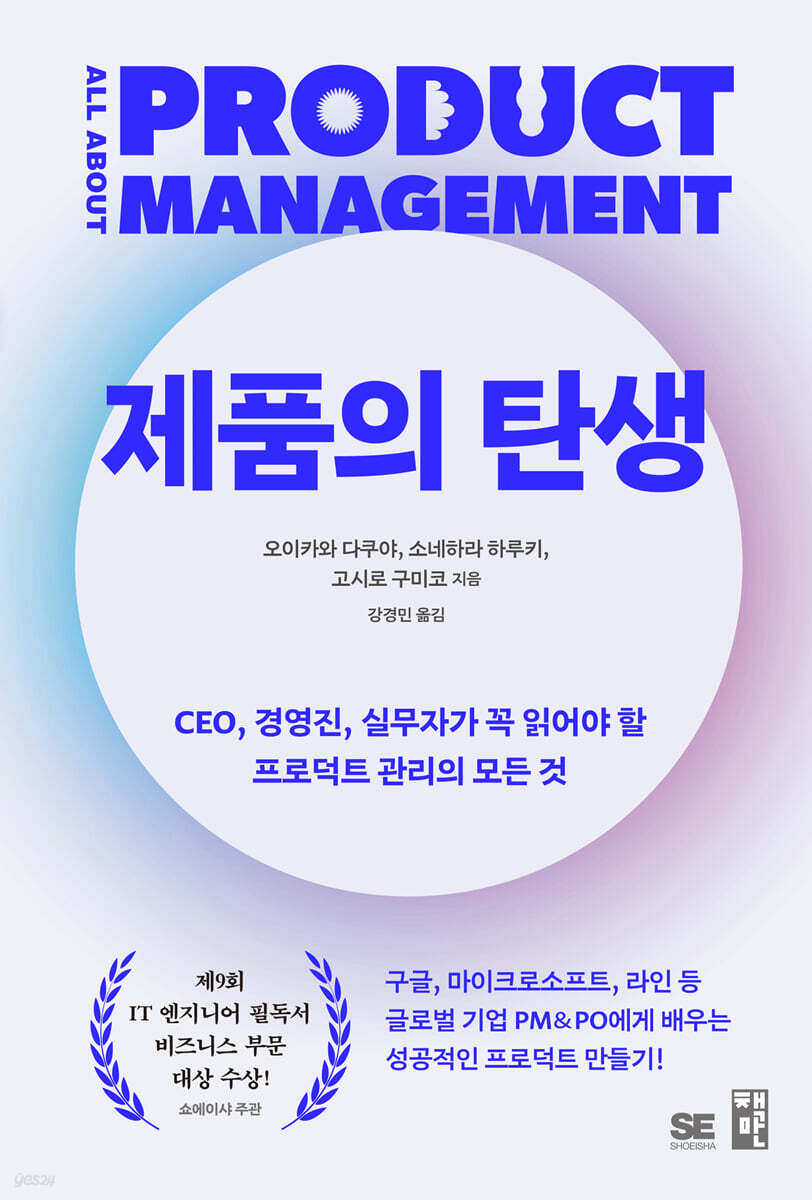
The birth of a product
 |
Description
Book Introduction
Read the wisdom and experience of a world-class product manager who started out as a software engineer and has since worked as a PM at global companies such as Google, Microsoft, Line, and Smart News!
A must-read for all product managers (PMs) and product owners (POs) at every company, as well as C-level executives at large corporations and startups, developers, designers, and marketers involved in new business planning and digital transformation (DT). Everything you need to know about product management!
This book provides a detailed explanation of the diverse knowledge and expertise gained from planning and launching B2C and B2B products at leading global companies, covering business strategy, IT development, UX design, marketing, customer success, security, intellectual property law, and organizational operations, with rich illustrations, tables, and case studies.
A must-read for all product managers (PMs) and product owners (POs) at every company, as well as C-level executives at large corporations and startups, developers, designers, and marketers involved in new business planning and digital transformation (DT). Everything you need to know about product management!
This book provides a detailed explanation of the diverse knowledge and expertise gained from planning and launching B2C and B2B products at leading global companies, covering business strategy, IT development, UX design, marketing, customer success, security, intellectual property law, and organizational operations, with rich illustrations, tables, and case studies.
- You can preview some of the book's contents.
Preview
index
[Part 1] The Birth of a Successful Product
Chapter 1: What is a Successful Product?
__1.1 Three elements for product success
__1.2 Balance is what determines product success
__1.3 Success at each stage of product growth
Chapter 2: The Role of PM
__2.1 PM's Two Tasks
__2.2 What is a product?
__2.3 The team that creates the product
Chapter 3 PM's Duties and Competencies
__3.1 Four Steps to Product Management
__3.2 Six competencies a PM must have
[Part 2] Creating a Product
Chapter 4: Four Steps to Product Management
__4.1 Core: Mission, Vision, and Business Strategy
__4.2 Planning Intention: Who do you want to create and what state do you want to create? Why is your company creating it?
__4.3 Concept: UX, Business Model, Roadmap
__4.4 Realization: UI, design and implementation, release, etc.
__4.5 Product Stage Hypothesis Verification
__4.6 Product Policy Visualization
__4.7 Before full-scale product development
Chapter 5 Core
__5.1 Mission and Vision
__5.2 Business Strategy
Case Study: Reviewing the Product "Core"
Chapter 6 Planning Intention Why
__6.1 Choosing a Combination of Target Users and Values
__6.2 Why We Are the Right People
__6.3 Hypothesis Testing on Distress and Benefit
__6.4 Alignment and Improvement of 'Core' and 'Planning Intent'
Case Study: Reviewing Product Design Intent
Chapter 7: What
__7.1 Ideas for a solution
__7.2 User Experience (UX)
__7.3 Business Model
__7.4 Priority of Product Implementation
__7.5 Alignment and Improvement of 'Planning Intention' and 'Concept'
Case Study: Reviewing Product "Concepts"
Chapter 8 Realization How
__8.1 Creating a Product Backlog
__8.2 Preparing for Product Launch
__8.3 Pre-release checklist
__8.4 Alignment and Improvement of 'Concept' and 'Realization'
__8.5 finally released
__8.6 Follow-up work
Case Study: Product Realization Review
[Part 3] Leadership: The Essential Virtue of a PM
Chapter 9: Organizational Environment Centered on PM
__9.1 Division of Key Roles
__9.2 PM's organization
__9.3 PM's Leadership
Chapter 10: Leadership for Team Building
__10.1 How to share information when there are many stakeholders
__10.2 Transparency of Product Information
__10.3 Team Building
Chapter 11: Five Techniques for Smooth Team Communication
__11.1 Documentation
__11.2 Coaching
__11.3 Facilitation
__11.4 Presentation
__11.5 Negotiation Power
[Part 4] The Diverse Roles of PMs Based on Product Attributes and Ecosystem
Chapter 12: The Role of PMs in Product Growth
__12.1 How to Understand the Product Life Cycle
__12.2 Differences between products by life cycle
Chapter 13: PM's Role by Business Type
__13.1 B2C Product
__13.2 B2B Products
Chapter 14: How to Enter a Business Field You Haven't Experienced
__14.1 Field-specific knowledge is essential
__14.2 Global Market Strategy
__14.3 Understanding unfamiliar industry knowledge
__14.4 How to Build Product Team Knowledge
__14.5 Review of relevant laws by field
Chapter 15: The Role of PMs in Hardware and AI
__15.1 Hardware Products
__15.2 AI Products
[Part 5] PM and Organizational Growth
Chapter 16: Product Management and Organization
__16.1 Introducing the concept of product management within the organization
__16.2 The First Step to Becoming a Product-Oriented Organization
__16.3 Assigning Responsibilities Using Job Descriptions
Chapter 17: Strengthening PM Capabilities
__Requirements to become a 17.1 PM
__17.2 How to Strengthen Your Capabilities as a PM
__17.3 Level of knowledge required for PM
__17.4 Cultivating interests and knowledge
__17.5 W-Type Talent Model and Self-Diagnosis Method
Chapter 18 Career Management
__18.1 PM's position and role
Career after __18.2 PM
[Part 6] Essential Knowledge for Improving PM Capabilities
Chapter 19: Basic Business Knowledge PMs Need to Know
__19.1 Basic knowledge of revenue, costs, and the business environment
__19.2 Building Partnerships
__19.3 Measuring and Understanding Indicators
__19.4 Handling Intellectual Property
Chapter 20: Basic UX/Marketing/Legal Knowledge PMs Need to Know
__20.1 Understanding UI/UX Design
__20.2 Marketing Strategy
__20.3 Creating a Privacy Policy and Terms of Use
Chapter 21: Basic IT Knowledge PMs Need to Know
__21.1 Maintaining Product Quality
__21.2 Understanding various development techniques
__21.3 Software Structure and Understanding
__21.4 Security Enhancements
| Appendix A | Self-Assessment Checklist for PMs
Appendix B: A Useful Framework for the Four Stages of Product Management
| Appendix C | Recommended Reading and Courses
Chapter 1: What is a Successful Product?
__1.1 Three elements for product success
__1.2 Balance is what determines product success
__1.3 Success at each stage of product growth
Chapter 2: The Role of PM
__2.1 PM's Two Tasks
__2.2 What is a product?
__2.3 The team that creates the product
Chapter 3 PM's Duties and Competencies
__3.1 Four Steps to Product Management
__3.2 Six competencies a PM must have
[Part 2] Creating a Product
Chapter 4: Four Steps to Product Management
__4.1 Core: Mission, Vision, and Business Strategy
__4.2 Planning Intention: Who do you want to create and what state do you want to create? Why is your company creating it?
__4.3 Concept: UX, Business Model, Roadmap
__4.4 Realization: UI, design and implementation, release, etc.
__4.5 Product Stage Hypothesis Verification
__4.6 Product Policy Visualization
__4.7 Before full-scale product development
Chapter 5 Core
__5.1 Mission and Vision
__5.2 Business Strategy
Case Study: Reviewing the Product "Core"
Chapter 6 Planning Intention Why
__6.1 Choosing a Combination of Target Users and Values
__6.2 Why We Are the Right People
__6.3 Hypothesis Testing on Distress and Benefit
__6.4 Alignment and Improvement of 'Core' and 'Planning Intent'
Case Study: Reviewing Product Design Intent
Chapter 7: What
__7.1 Ideas for a solution
__7.2 User Experience (UX)
__7.3 Business Model
__7.4 Priority of Product Implementation
__7.5 Alignment and Improvement of 'Planning Intention' and 'Concept'
Case Study: Reviewing Product "Concepts"
Chapter 8 Realization How
__8.1 Creating a Product Backlog
__8.2 Preparing for Product Launch
__8.3 Pre-release checklist
__8.4 Alignment and Improvement of 'Concept' and 'Realization'
__8.5 finally released
__8.6 Follow-up work
Case Study: Product Realization Review
[Part 3] Leadership: The Essential Virtue of a PM
Chapter 9: Organizational Environment Centered on PM
__9.1 Division of Key Roles
__9.2 PM's organization
__9.3 PM's Leadership
Chapter 10: Leadership for Team Building
__10.1 How to share information when there are many stakeholders
__10.2 Transparency of Product Information
__10.3 Team Building
Chapter 11: Five Techniques for Smooth Team Communication
__11.1 Documentation
__11.2 Coaching
__11.3 Facilitation
__11.4 Presentation
__11.5 Negotiation Power
[Part 4] The Diverse Roles of PMs Based on Product Attributes and Ecosystem
Chapter 12: The Role of PMs in Product Growth
__12.1 How to Understand the Product Life Cycle
__12.2 Differences between products by life cycle
Chapter 13: PM's Role by Business Type
__13.1 B2C Product
__13.2 B2B Products
Chapter 14: How to Enter a Business Field You Haven't Experienced
__14.1 Field-specific knowledge is essential
__14.2 Global Market Strategy
__14.3 Understanding unfamiliar industry knowledge
__14.4 How to Build Product Team Knowledge
__14.5 Review of relevant laws by field
Chapter 15: The Role of PMs in Hardware and AI
__15.1 Hardware Products
__15.2 AI Products
[Part 5] PM and Organizational Growth
Chapter 16: Product Management and Organization
__16.1 Introducing the concept of product management within the organization
__16.2 The First Step to Becoming a Product-Oriented Organization
__16.3 Assigning Responsibilities Using Job Descriptions
Chapter 17: Strengthening PM Capabilities
__Requirements to become a 17.1 PM
__17.2 How to Strengthen Your Capabilities as a PM
__17.3 Level of knowledge required for PM
__17.4 Cultivating interests and knowledge
__17.5 W-Type Talent Model and Self-Diagnosis Method
Chapter 18 Career Management
__18.1 PM's position and role
Career after __18.2 PM
[Part 6] Essential Knowledge for Improving PM Capabilities
Chapter 19: Basic Business Knowledge PMs Need to Know
__19.1 Basic knowledge of revenue, costs, and the business environment
__19.2 Building Partnerships
__19.3 Measuring and Understanding Indicators
__19.4 Handling Intellectual Property
Chapter 20: Basic UX/Marketing/Legal Knowledge PMs Need to Know
__20.1 Understanding UI/UX Design
__20.2 Marketing Strategy
__20.3 Creating a Privacy Policy and Terms of Use
Chapter 21: Basic IT Knowledge PMs Need to Know
__21.1 Maintaining Product Quality
__21.2 Understanding various development techniques
__21.3 Software Structure and Understanding
__21.4 Security Enhancements
| Appendix A | Self-Assessment Checklist for PMs
Appendix B: A Useful Framework for the Four Stages of Product Management
| Appendix C | Recommended Reading and Courses
Detailed image

Publisher's Review
Read the wisdom and experience of a world-class product manager who started out as a software engineer and has since worked as a PM at global companies such as Google, Microsoft, Line, and Smart News!
Winner of the 9th IT Engineer Must-Read Business Category Award in 2022!
Amazon Japan's #1 Bestseller in Development Methodology ★★★★☆
A must-read for all product managers (PMs) and product owners (POs) at every company, as well as C-level executives at large corporations and startups, developers, designers, and marketers involved in new business planning and digital transformation (DT). Everything you need to know about product management!
This book provides a detailed explanation of the diverse knowledge and expertise gained from planning and launching B2C and B2B products at leading global companies, covering business strategy, IT development, UX design, marketing, customer success, security, intellectual property law, and organizational operations, with rich illustrations, tables, and case studies.
| Structure of this book |
This book is divided into six parts.
Part 1 explains the role and purpose of product management, Parts 2 and 3 explain the specific tasks of product management, and Part 4 explains the different things to consider depending on the characteristics of the product.
The case studies at the end of each chapter in Part 2 will deepen your understanding if you read them with the mindset of a real PM.
After laying the foundation in Parts 1 through 4, Part 5 explores how the entire product management organization, and individual PMs, can grow.
Part 6 introduces the general business, UX, and basic IT technology knowledge that a PM should know.
We break it down into specifics, examining revenue and cost structures, design, software, security, intellectual property, and more.
| Target audience for this book |
This book targets a diverse range of readers, from those aiming to become PMs or POs, to new or current PMs, and even engineers, designers, marketers, and new business planners involved in product management.
This is an introductory book suitable for those who have been selected as a PM but are unsure of what to do, those who are performing product management tasks but lack confidence, those who are curious about how other PMs perform their work, and those who want to understand product management in general.
If organizations already have a PM, utilizing this book will foster a greater understanding of product management among product team members and stakeholders, taking a significant step forward toward product success. For organizations without a PM or PO, this book can serve as an opportunity to consider how to leverage product management within their organization.
[Author's Note]
Around December 2019, when I began writing this book, the US Nasdaq and macroeconomic indicators were hitting record highs, and stock indices in major countries around the world were also soaring.
The global macroeconomy seemed to be cruising along.
But just two months later, the COVID-19 pandemic swept the world.
No one could have predicted the pandemic.
In the business world, many people seek the formula for success, but the conditions for actually utilizing that formula are extremely strict.
Moreover, as the term VUCA (Volatility, Uncertainty, Complexity, Ambiguity) suggests, today's world is characterized by constant change, instability, complexity, and unpredictability. We live in an unstable environment, swirling with turbulence everywhere. PMs must lead companies to success through products in this complex and rapidly changing world, and they must possess the expertise to work flexibly while monitoring internal and external circumstances.
When I first started working in Silicon Valley, there weren't any books on product management or PM that I could refer to.
So I had to ask people one by one what they needed and learn from each and every piece of information.
It was bound to take a lot of time.
Now, more than 10 years later, I have gained some experience as a PM.
Startups are increasing day by day, and the job title called PM is becoming widely known.
However, there is still a lack of information that can be helpful to those who want to become PMs or are already working as PMs.
This book is filled with the authors' desire to help those who are thirsty for information and to instill confidence in them.
Our authors incorporated the product management process described throughout this book into the writing process.
First, we 'analyzed' the competing books on product management published in the market and 'positioned' the book we were planning to write in terms of its appropriate position (see Figure 6-7).
And this book sets a 'vision' for its target audience and sets a 'customer' who is expected to read it.
I also wrote the manuscript while thinking about what kind of 'problems' readers are currently facing and examining how this book can become a 'solution' that provides solutions.
In the process, I established a 'hypothesis', and with the help of Shoeisha, I created 'ProductZine', contributed articles, and repeated the process of checking the 'reactions' of readers.
Sometimes, I had to go through several revisions to the manuscript, including deleting a large portion of the original content or rewriting it from scratch.
I personally practiced the 'fit-refine' approach introduced in this book during the writing process.
This book is a compilation of the authors' discussions and research over nearly a year.
I sincerely hope that this book will become a landmark in the field of product management.
I would be extremely happy if many people across professions and industries read this.
I hope that someday, readers who pick up this book will create products that will spread across the globe.
[Translator's Note]
Just as a large ship requires the cooperation of various departments, including the engine, steering, and deck, to sail, the creation of a single product requires the concerted efforts of numerous stakeholders, including the development team, sales, public relations, and customer support.
And the person who presents the product vision to these people, directs and encourages them to move toward the vision, and sometimes mediates them is the captain.
It would be nice if the voyage to El Dorado were always bright and sunny, but sometimes PMs have sleepless nights wondering if the ship they are responsible for is adrift on the vast ocean of product creation.
Today's products are targeting global markets and competing with multinational corporations, which can add to the burden on PMs.
I guess one of the reasons for such suffering is the feeling of being lost, thinking, "There's so much I want to know about product management, but I don't have enough time, and I don't even know where to start studying."
I hope this book, "The Birth of a Product," will serve as a beacon of hope, alleviating the sense of helplessness and burden felt by current PMs seeking to strengthen their capabilities, aspiring PMs, or those involved in product management in any way and facing similar concerns.
Specifically, this book covers the vast foundational knowledge required for product management, including team building, business strategy, IT development, UX design, marketing, customer success, security, and intellectual property rights, as well as frameworks frequently used in the field today, with a wealth of illustrations, tables, and real-world examples.
If I were to use a baseball analogy, which I love, it would be like a solid shortstop with a wide defensive range who can field ground balls flawlessly.
When reading for the first time, we recommend reading the table of contents in order, carefully organized by the authors, to get a comprehensive understanding of product management.
Next, keep it within easy reach at home or in the office and use it like a dictionary whenever questions arise.
Here's a tip: you might enjoy reading this book while imagining what its "core" is as a "product," what its "planning intent" was, how it was "conceived," how it was "realized," and what the "vision" of those who ultimately created the book is.
Japanese sushi master Jiro Ono once said, “If you do what you love quietly and steadily every day, someday, before you know it, people will call you a master.”
In these challenging times, it can be challenging for anyone to do what they love and create the products they want.
Nevertheless, I send my respect and support to all those who silently and sincerely create products every day.
I think anyone who contributes in any way to the creation of a product is a PM.
I hope that those who read this book will become PMs worthy of being called craftsmen, or at least, establish themselves as PMs who find happiness in their daily lives.
If this book can be a good friend and guide on that journey, it would be an immense reward for me as a translator.
Winner of the 9th IT Engineer Must-Read Business Category Award in 2022!
Amazon Japan's #1 Bestseller in Development Methodology ★★★★☆
A must-read for all product managers (PMs) and product owners (POs) at every company, as well as C-level executives at large corporations and startups, developers, designers, and marketers involved in new business planning and digital transformation (DT). Everything you need to know about product management!
This book provides a detailed explanation of the diverse knowledge and expertise gained from planning and launching B2C and B2B products at leading global companies, covering business strategy, IT development, UX design, marketing, customer success, security, intellectual property law, and organizational operations, with rich illustrations, tables, and case studies.
| Structure of this book |
This book is divided into six parts.
Part 1 explains the role and purpose of product management, Parts 2 and 3 explain the specific tasks of product management, and Part 4 explains the different things to consider depending on the characteristics of the product.
The case studies at the end of each chapter in Part 2 will deepen your understanding if you read them with the mindset of a real PM.
After laying the foundation in Parts 1 through 4, Part 5 explores how the entire product management organization, and individual PMs, can grow.
Part 6 introduces the general business, UX, and basic IT technology knowledge that a PM should know.
We break it down into specifics, examining revenue and cost structures, design, software, security, intellectual property, and more.
| Target audience for this book |
This book targets a diverse range of readers, from those aiming to become PMs or POs, to new or current PMs, and even engineers, designers, marketers, and new business planners involved in product management.
This is an introductory book suitable for those who have been selected as a PM but are unsure of what to do, those who are performing product management tasks but lack confidence, those who are curious about how other PMs perform their work, and those who want to understand product management in general.
If organizations already have a PM, utilizing this book will foster a greater understanding of product management among product team members and stakeholders, taking a significant step forward toward product success. For organizations without a PM or PO, this book can serve as an opportunity to consider how to leverage product management within their organization.
[Author's Note]
Around December 2019, when I began writing this book, the US Nasdaq and macroeconomic indicators were hitting record highs, and stock indices in major countries around the world were also soaring.
The global macroeconomy seemed to be cruising along.
But just two months later, the COVID-19 pandemic swept the world.
No one could have predicted the pandemic.
In the business world, many people seek the formula for success, but the conditions for actually utilizing that formula are extremely strict.
Moreover, as the term VUCA (Volatility, Uncertainty, Complexity, Ambiguity) suggests, today's world is characterized by constant change, instability, complexity, and unpredictability. We live in an unstable environment, swirling with turbulence everywhere. PMs must lead companies to success through products in this complex and rapidly changing world, and they must possess the expertise to work flexibly while monitoring internal and external circumstances.
When I first started working in Silicon Valley, there weren't any books on product management or PM that I could refer to.
So I had to ask people one by one what they needed and learn from each and every piece of information.
It was bound to take a lot of time.
Now, more than 10 years later, I have gained some experience as a PM.
Startups are increasing day by day, and the job title called PM is becoming widely known.
However, there is still a lack of information that can be helpful to those who want to become PMs or are already working as PMs.
This book is filled with the authors' desire to help those who are thirsty for information and to instill confidence in them.
Our authors incorporated the product management process described throughout this book into the writing process.
First, we 'analyzed' the competing books on product management published in the market and 'positioned' the book we were planning to write in terms of its appropriate position (see Figure 6-7).
And this book sets a 'vision' for its target audience and sets a 'customer' who is expected to read it.
I also wrote the manuscript while thinking about what kind of 'problems' readers are currently facing and examining how this book can become a 'solution' that provides solutions.
In the process, I established a 'hypothesis', and with the help of Shoeisha, I created 'ProductZine', contributed articles, and repeated the process of checking the 'reactions' of readers.
Sometimes, I had to go through several revisions to the manuscript, including deleting a large portion of the original content or rewriting it from scratch.
I personally practiced the 'fit-refine' approach introduced in this book during the writing process.
This book is a compilation of the authors' discussions and research over nearly a year.
I sincerely hope that this book will become a landmark in the field of product management.
I would be extremely happy if many people across professions and industries read this.
I hope that someday, readers who pick up this book will create products that will spread across the globe.
[Translator's Note]
Just as a large ship requires the cooperation of various departments, including the engine, steering, and deck, to sail, the creation of a single product requires the concerted efforts of numerous stakeholders, including the development team, sales, public relations, and customer support.
And the person who presents the product vision to these people, directs and encourages them to move toward the vision, and sometimes mediates them is the captain.
It would be nice if the voyage to El Dorado were always bright and sunny, but sometimes PMs have sleepless nights wondering if the ship they are responsible for is adrift on the vast ocean of product creation.
Today's products are targeting global markets and competing with multinational corporations, which can add to the burden on PMs.
I guess one of the reasons for such suffering is the feeling of being lost, thinking, "There's so much I want to know about product management, but I don't have enough time, and I don't even know where to start studying."
I hope this book, "The Birth of a Product," will serve as a beacon of hope, alleviating the sense of helplessness and burden felt by current PMs seeking to strengthen their capabilities, aspiring PMs, or those involved in product management in any way and facing similar concerns.
Specifically, this book covers the vast foundational knowledge required for product management, including team building, business strategy, IT development, UX design, marketing, customer success, security, and intellectual property rights, as well as frameworks frequently used in the field today, with a wealth of illustrations, tables, and real-world examples.
If I were to use a baseball analogy, which I love, it would be like a solid shortstop with a wide defensive range who can field ground balls flawlessly.
When reading for the first time, we recommend reading the table of contents in order, carefully organized by the authors, to get a comprehensive understanding of product management.
Next, keep it within easy reach at home or in the office and use it like a dictionary whenever questions arise.
Here's a tip: you might enjoy reading this book while imagining what its "core" is as a "product," what its "planning intent" was, how it was "conceived," how it was "realized," and what the "vision" of those who ultimately created the book is.
Japanese sushi master Jiro Ono once said, “If you do what you love quietly and steadily every day, someday, before you know it, people will call you a master.”
In these challenging times, it can be challenging for anyone to do what they love and create the products they want.
Nevertheless, I send my respect and support to all those who silently and sincerely create products every day.
I think anyone who contributes in any way to the creation of a product is a PM.
I hope that those who read this book will become PMs worthy of being called craftsmen, or at least, establish themselves as PMs who find happiness in their daily lives.
If this book can be a good friend and guide on that journey, it would be an immense reward for me as a translator.
GOODS SPECIFICS
- Publication date: December 8, 2022
- Page count, weight, size: 468 pages | 674g | 152*224*23mm
- ISBN13: 9791189909499
- ISBN10: 1189909499
You may also like
카테고리
korean


korean

![GQ KOREA Mark (Monthly): December [2025]](http://librairie.coreenne.fr/cdn/shop/files/8ef265dbbfbf186523ed75ba7319009d.jpg?v=1765340328&width=3840)


