

I take care of myself
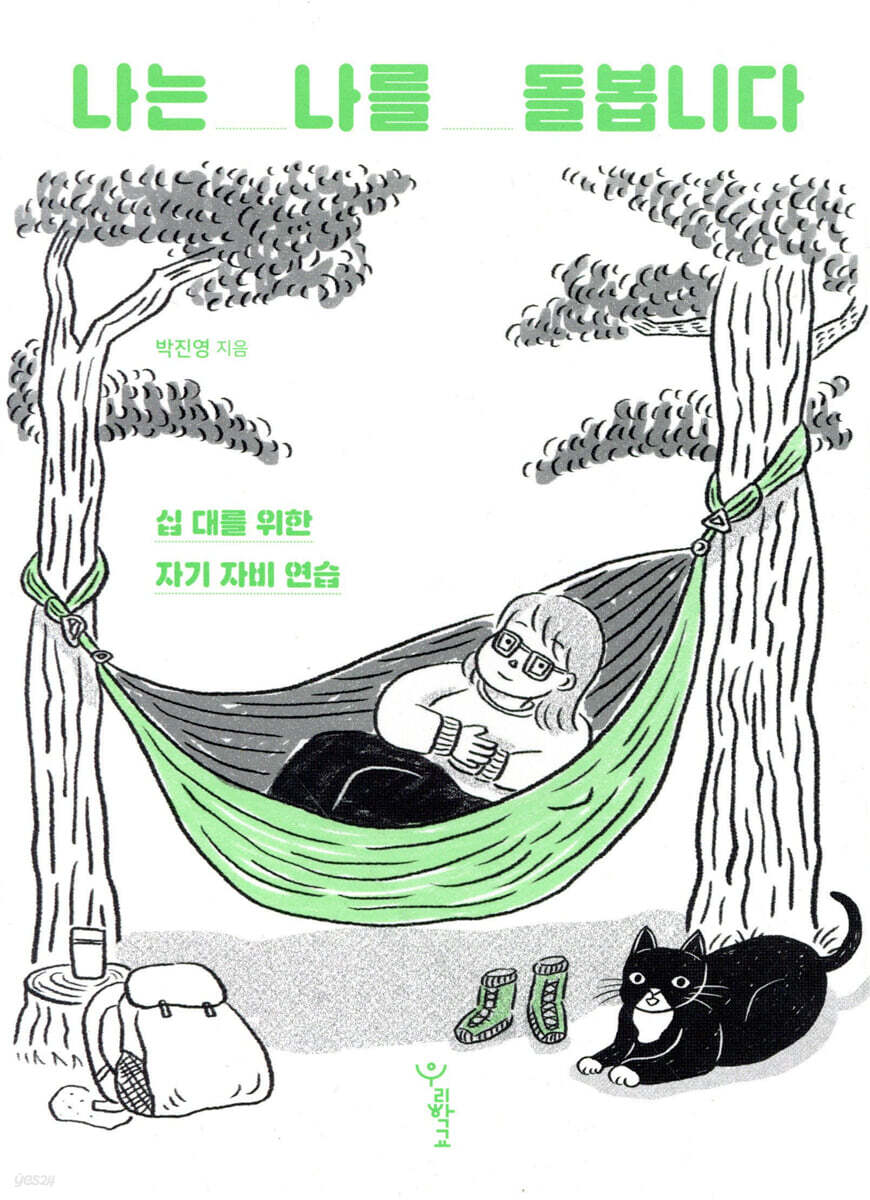 |
Description
Book Introduction
A warm and affectionate message of comfort to teenagers,
“When I hate myself for being so pathetic, I learn to take care of myself.”
Now is the time to recommend 'self-esteem therapy'.
They emphasize increasing self-esteem as a panacea that solves all kinds of psychological problems.
But it is an impossible mission when it is difficult to love myself.
Rather, because of that bastard's self-esteem, he blames himself for having low self-esteem and goes around in a cycle of self-criticism.
Adolescence is a time when the body and mind undergo changes and the self is re-formed.
Because we are sensitive to evaluation and comparison from our peers and have difficulty escaping from our given environments, such as home and school, our perspectives on ourselves are inevitably influenced by our relationships with those around us.
So, we need to practice developing the ability to love and care for ourselves more.
What if you find yourself struggling to affirm yourself, without someone around to gently pat you on the back and tell you it's okay to be a little kinder to yourself? Learning to be kind to yourself and accepting it will allow you to encounter a much more comfortable version of yourself.
This book, which talks about caring for the mind with 'self-compassion,' will be a warm and affectionate comfort to teenagers who are going through a bitter time of growth, and to the youth around us who are growing up alone, breathing quietly even at this very moment.
“When I hate myself for being so pathetic, I learn to take care of myself.”
Now is the time to recommend 'self-esteem therapy'.
They emphasize increasing self-esteem as a panacea that solves all kinds of psychological problems.
But it is an impossible mission when it is difficult to love myself.
Rather, because of that bastard's self-esteem, he blames himself for having low self-esteem and goes around in a cycle of self-criticism.
Adolescence is a time when the body and mind undergo changes and the self is re-formed.
Because we are sensitive to evaluation and comparison from our peers and have difficulty escaping from our given environments, such as home and school, our perspectives on ourselves are inevitably influenced by our relationships with those around us.
So, we need to practice developing the ability to love and care for ourselves more.
What if you find yourself struggling to affirm yourself, without someone around to gently pat you on the back and tell you it's okay to be a little kinder to yourself? Learning to be kind to yourself and accepting it will allow you to encounter a much more comfortable version of yourself.
This book, which talks about caring for the mind with 'self-compassion,' will be a warm and affectionate comfort to teenagers who are going through a bitter time of growth, and to the youth around us who are growing up alone, breathing quietly even at this very moment.
- You can preview some of the book's contents.
Preview
index
Intro.
Can't I be my own best friend? _ 7
Part 1.
Don't judge, understand _ 21
Part 2.
It's okay to worry _ 59
Part 3.
You can't be good at everything _ 91
Part 4.
How to Move Forward While Taking Care of Myself _ 125
Going Out: Self-Compassion Starting Today _ 147
References _ 152
Can't I be my own best friend? _ 7
Part 1.
Don't judge, understand _ 21
Part 2.
It's okay to worry _ 59
Part 3.
You can't be good at everything _ 91
Part 4.
How to Move Forward While Taking Care of Myself _ 125
Going Out: Self-Compassion Starting Today _ 147
References _ 152
Detailed image
.jpg)
Into the book
Imagine seeing someone you hate every day.
If you really don't want to meet or talk to someone, but you keep seeing them, you'll get annoyed.
But what if that person you dislike is you? If it's someone else, in extreme cases, you could cut ties with them, block contact, or simply tell them not to see you again.
But what if the person I hate is me? If they hate my actions, my thoughts, my appearance, every day is bound to be miserable.
Because I can't block myself or break up with myself.
Because I can never be separated from myself and must live with myself for the rest of my life, the way I treat myself is very important.
--- p.15
One thing to be careful about when dealing with emotions is not to judge my thoughts and feelings.
For example, have you ever felt easily discouraged or angry over even the smallest things, and thought, "I hate myself for being so disappointed in myself, for getting so angry over something so trivial!"? Think about whether you've ever added to your already-distressed state by hating yourself for it.
When you have these thoughts, first remember that, as we saw earlier, emotions are just messages sent by the mind and are not good or bad in themselves.
When I feel a surge of emotions, it means my mind is working very hard to protect me.
Sometimes, these are just annoying emotions, but they are something to be thankful for.
--- p.38
There are many reasons why people dislike themselves, such as: they hate that they keep comparing themselves to others even when they try not to; they hate that they are timid and mindful of others; they hate that they feel left out easily; they hate that they are gullible and follow what others tell them to do; they hate that they have poor social skills.
But all of this happens because we are 'human'.
Unless you're an alien from Mars, most people sometimes compare themselves to others, feel shy or isolated, are easygoing, or just plain tired of meeting people.
If there are times when I hate myself for this reason, am I forgetting that I am also an ordinary person?
--- p.61
Just as my life is complex and difficult to evaluate with just one thing, the lives of others are no different.
Just as I don't reveal myself to everyone equally, other people don't reveal their lives to everyone as they are.
Just as I am a complex being who cannot be defined by just one thing, so are other people.
It's possible that feeling sorry for someone or feeling envious of them based on a few photos they see on the outside can be a completely unfounded reaction.
There is a saying that “If you envy someone’s life, it means you don’t know much about that life.”
There are lives that 'look' easy, but there is no such thing as a truly easy life.
If you really don't want to meet or talk to someone, but you keep seeing them, you'll get annoyed.
But what if that person you dislike is you? If it's someone else, in extreme cases, you could cut ties with them, block contact, or simply tell them not to see you again.
But what if the person I hate is me? If they hate my actions, my thoughts, my appearance, every day is bound to be miserable.
Because I can't block myself or break up with myself.
Because I can never be separated from myself and must live with myself for the rest of my life, the way I treat myself is very important.
--- p.15
One thing to be careful about when dealing with emotions is not to judge my thoughts and feelings.
For example, have you ever felt easily discouraged or angry over even the smallest things, and thought, "I hate myself for being so disappointed in myself, for getting so angry over something so trivial!"? Think about whether you've ever added to your already-distressed state by hating yourself for it.
When you have these thoughts, first remember that, as we saw earlier, emotions are just messages sent by the mind and are not good or bad in themselves.
When I feel a surge of emotions, it means my mind is working very hard to protect me.
Sometimes, these are just annoying emotions, but they are something to be thankful for.
--- p.38
There are many reasons why people dislike themselves, such as: they hate that they keep comparing themselves to others even when they try not to; they hate that they are timid and mindful of others; they hate that they feel left out easily; they hate that they are gullible and follow what others tell them to do; they hate that they have poor social skills.
But all of this happens because we are 'human'.
Unless you're an alien from Mars, most people sometimes compare themselves to others, feel shy or isolated, are easygoing, or just plain tired of meeting people.
If there are times when I hate myself for this reason, am I forgetting that I am also an ordinary person?
--- p.61
Just as my life is complex and difficult to evaluate with just one thing, the lives of others are no different.
Just as I don't reveal myself to everyone equally, other people don't reveal their lives to everyone as they are.
Just as I am a complex being who cannot be defined by just one thing, so are other people.
It's possible that feeling sorry for someone or feeling envious of them based on a few photos they see on the outside can be a completely unfounded reaction.
There is a saying that “If you envy someone’s life, it means you don’t know much about that life.”
There are lives that 'look' easy, but there is no such thing as a truly easy life.
--- p.105
Publisher's Review
Can't I be my own best friend?
Author Jinyoung Park, who has consistently communicated with readers by explaining psychological research in an easy-to-understand way through works such as “I’m a Good Person Just the Way I Am” and “To Me Who Doesn’t Love Myself,” has published a self-compassion book for teenagers.
"I Take Care of Myself" is a warm and affectionate gift to teenage readers, containing "how to make peace with myself" and "how to take care of myself."
The worries, tensions, and fears about the future of teenagers living in a fiercely competitive society are by no means less than those of adults.
While struggling to grow both physically and mentally, we often criticize ourselves with harsh words rather than affirming ourselves.
'Because I'm bad at studying, I'm timid, and I don't think my face or body are that great,' I keep evaluating myself and giving myself scores like a judge.
But why do we belittle ourselves and treat ourselves so harshly? If a friend were struggling with these concerns, I'd offer them warm words of comfort.
"I Take Care of Myself" tells us how no one else but myself can become my best friend.
Even if it's not perfect, even if there are many worries
It's okay if you're not happy every day
This book is largely divided into four parts.
Part 1, 'Understand, Don't Judge', talks about how to look at emotions as they are without judging them.
Emotions are like 'talks' sent by my heart.
There is no need to pretend everything is okay and no reason to be disappointed in yourself while ignoring the messages your heart sends.
Just accept it and say, 'My heart is telling me what is most important to me right now, what I need to protect right now.'
When I feel a surge of emotions, it means my mind is working very hard to protect me.
Part 2, 'It's Okay to Worry', discusses how the worries teenagers often have are very natural in our lives.
There are many reasons why we dislike ourselves, such as disliking ourselves for constantly comparing ourselves to others even when we try not to, disliking ourselves for feeling left out easily, or disliking ourselves for having poor social skills.
The author talks about these concerns as follows:
Please don't think that I hate you for worrying so much.
Even if we don't say it out loud, every human being lives with their own shortcomings and pain.
(…) I am also human, so it is natural for me to worry sometimes.
Having many shortcomings means that I am a proper human being.
_From page 89
Part 3, 'You Can't Be Good at Everything', talks about perfectionism.
Obsessively pursuing perfection leads to habitual disappointment, frustration, and unhappiness.
No matter how well you do, there are bound to be shortcomings, and because you pursue 'perfection', which is impossible for humans, you are bound to be frustrated time and time again.
Rather, the author encourages teenagers by saying that if they can do even one thing above average, that is a great achievement.
Part 4, which talks about 'How to move forward while taking care of myself', introduces an interesting study conducted on professional table tennis players.
In this study, the secrets of professional players who performed well or improved in competition were as follows:
1) Show a warm attitude to myself as I would to a friend. 2) Understand my feelings without judging them, and understand my emotions without exaggerating them. 3) Expect that it will not be easy and that failure is natural, and do not be upset by failure, but prepare for the expected difficulties step by step. _Page 141
I think that being strict with myself and whipping myself is the only way to become a "professional." Only by being my own warm supporter can I demonstrate my skills with ease, even in extremely stressful situations.
The secret to becoming a pro is to take good care of yourself.
Even when you feel helpless and unable to see the future, or when you feel so miserable that you want to hide, self-compassion will help you avoid being a bad person to yourself.
Rather than introducing technical terms to explain the concept of 'self-compassion,' the author approaches young readers by honestly sharing his own experiences.
He also calmly reveals the conflicts he experienced with his parents while growing up, the hurt he experienced in his relationships with friends, and the pain and trial and error he had to endure while blaming himself during his teenage years.
And speak calmly.
“It’s okay if you’re not perfect, if you have a lot of worries, and if you’re not happy every day.”
The author's thoughtful and affectionate comfort and firm attitude are enough to resonate with the hearts of teenagers.
When I was young, I think I also had a lot of worries because of vague anxieties about the future.
There were many times when I was whipped around by people saying, "Other people work much harder, so why can't you do this?"
If I could meet myself back then, I would tell him this.
I'm telling you that you're doing well enough now, that you think more than you think, and that you're learning and growing well through experience.
Of course, I won't leave out the fact that there will be many things that are not easy and that there will be many failures.
But I want to put down the whip and pat you on the back, telling you that if you become your own strongest supporter, you will not fall and will be able to get back up no matter what happens.
So, I'm telling you not to be anxious.
_From page 150
The author provides a wealth of up-to-date research cases, in addition to his own experience, to help young readers understand.
Additionally, a 'Let's Think' corner was created for each part, allowing readers to think and practice by substituting their own specific examples and situations.
No matter how high your self-esteem, people who say bad things to themselves are never healthy.
There's no need to be so crazy about yourself that you say, 'I'm the best in the world!' or 'I'm the best! I'm awesome! I'm perfect!'
But when I learn how to take care of myself warmly, I can be my own strong supporter even in my shabby and difficult moments, rather than loving myself only 'when things are going well'.
"I Take Care of Myself" will be the first step toward reconciling with the ordinary, unremarkable me.
Author Jinyoung Park, who has consistently communicated with readers by explaining psychological research in an easy-to-understand way through works such as “I’m a Good Person Just the Way I Am” and “To Me Who Doesn’t Love Myself,” has published a self-compassion book for teenagers.
"I Take Care of Myself" is a warm and affectionate gift to teenage readers, containing "how to make peace with myself" and "how to take care of myself."
The worries, tensions, and fears about the future of teenagers living in a fiercely competitive society are by no means less than those of adults.
While struggling to grow both physically and mentally, we often criticize ourselves with harsh words rather than affirming ourselves.
'Because I'm bad at studying, I'm timid, and I don't think my face or body are that great,' I keep evaluating myself and giving myself scores like a judge.
But why do we belittle ourselves and treat ourselves so harshly? If a friend were struggling with these concerns, I'd offer them warm words of comfort.
"I Take Care of Myself" tells us how no one else but myself can become my best friend.
Even if it's not perfect, even if there are many worries
It's okay if you're not happy every day
This book is largely divided into four parts.
Part 1, 'Understand, Don't Judge', talks about how to look at emotions as they are without judging them.
Emotions are like 'talks' sent by my heart.
There is no need to pretend everything is okay and no reason to be disappointed in yourself while ignoring the messages your heart sends.
Just accept it and say, 'My heart is telling me what is most important to me right now, what I need to protect right now.'
When I feel a surge of emotions, it means my mind is working very hard to protect me.
Part 2, 'It's Okay to Worry', discusses how the worries teenagers often have are very natural in our lives.
There are many reasons why we dislike ourselves, such as disliking ourselves for constantly comparing ourselves to others even when we try not to, disliking ourselves for feeling left out easily, or disliking ourselves for having poor social skills.
The author talks about these concerns as follows:
Please don't think that I hate you for worrying so much.
Even if we don't say it out loud, every human being lives with their own shortcomings and pain.
(…) I am also human, so it is natural for me to worry sometimes.
Having many shortcomings means that I am a proper human being.
_From page 89
Part 3, 'You Can't Be Good at Everything', talks about perfectionism.
Obsessively pursuing perfection leads to habitual disappointment, frustration, and unhappiness.
No matter how well you do, there are bound to be shortcomings, and because you pursue 'perfection', which is impossible for humans, you are bound to be frustrated time and time again.
Rather, the author encourages teenagers by saying that if they can do even one thing above average, that is a great achievement.
Part 4, which talks about 'How to move forward while taking care of myself', introduces an interesting study conducted on professional table tennis players.
In this study, the secrets of professional players who performed well or improved in competition were as follows:
1) Show a warm attitude to myself as I would to a friend. 2) Understand my feelings without judging them, and understand my emotions without exaggerating them. 3) Expect that it will not be easy and that failure is natural, and do not be upset by failure, but prepare for the expected difficulties step by step. _Page 141
I think that being strict with myself and whipping myself is the only way to become a "professional." Only by being my own warm supporter can I demonstrate my skills with ease, even in extremely stressful situations.
The secret to becoming a pro is to take good care of yourself.
Even when you feel helpless and unable to see the future, or when you feel so miserable that you want to hide, self-compassion will help you avoid being a bad person to yourself.
Rather than introducing technical terms to explain the concept of 'self-compassion,' the author approaches young readers by honestly sharing his own experiences.
He also calmly reveals the conflicts he experienced with his parents while growing up, the hurt he experienced in his relationships with friends, and the pain and trial and error he had to endure while blaming himself during his teenage years.
And speak calmly.
“It’s okay if you’re not perfect, if you have a lot of worries, and if you’re not happy every day.”
The author's thoughtful and affectionate comfort and firm attitude are enough to resonate with the hearts of teenagers.
When I was young, I think I also had a lot of worries because of vague anxieties about the future.
There were many times when I was whipped around by people saying, "Other people work much harder, so why can't you do this?"
If I could meet myself back then, I would tell him this.
I'm telling you that you're doing well enough now, that you think more than you think, and that you're learning and growing well through experience.
Of course, I won't leave out the fact that there will be many things that are not easy and that there will be many failures.
But I want to put down the whip and pat you on the back, telling you that if you become your own strongest supporter, you will not fall and will be able to get back up no matter what happens.
So, I'm telling you not to be anxious.
_From page 150
The author provides a wealth of up-to-date research cases, in addition to his own experience, to help young readers understand.
Additionally, a 'Let's Think' corner was created for each part, allowing readers to think and practice by substituting their own specific examples and situations.
No matter how high your self-esteem, people who say bad things to themselves are never healthy.
There's no need to be so crazy about yourself that you say, 'I'm the best in the world!' or 'I'm the best! I'm awesome! I'm perfect!'
But when I learn how to take care of myself warmly, I can be my own strong supporter even in my shabby and difficult moments, rather than loving myself only 'when things are going well'.
"I Take Care of Myself" will be the first step toward reconciling with the ordinary, unremarkable me.
GOODS SPECIFICS
- Date of issue: August 27, 2019
- Page count, weight, size: 160 pages | 228g | 138*190*10mm
- ISBN13: 9791187050995
- ISBN10: 1187050997
You may also like
카테고리
korean


korean

![GQ KOREA Mark (Monthly): December [2025]](http://librairie.coreenne.fr/cdn/shop/files/8ef265dbbfbf186523ed75ba7319009d.jpg?v=1765340328&width=3840)


