

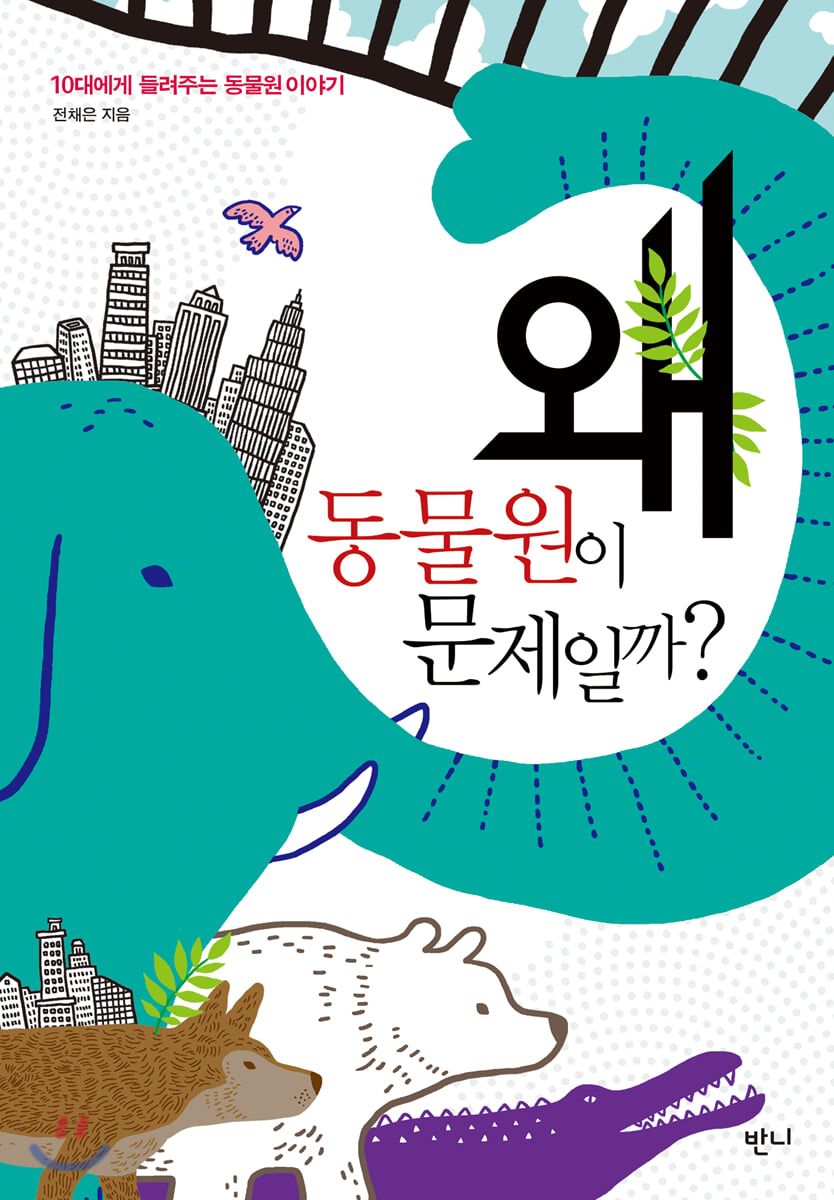
Why are zoos a problem?
 |
Description
Book Introduction
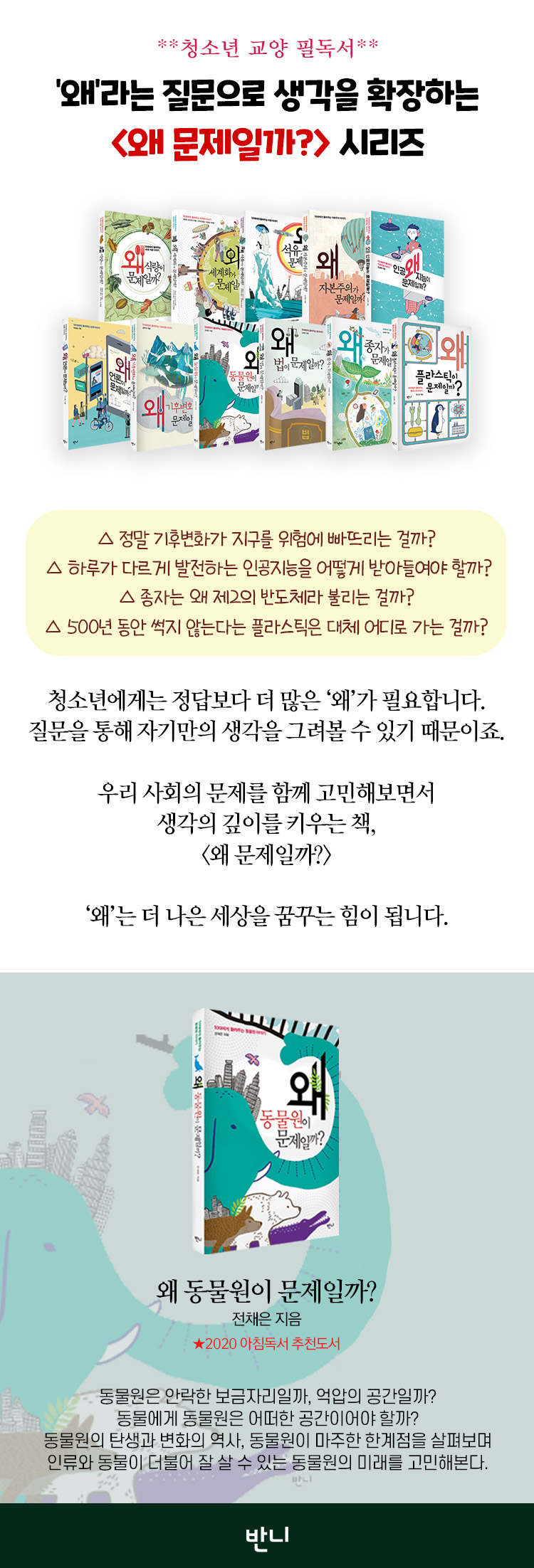
Are zoos a haven of comfort or a place of oppression?
To humans and animals
What kind of space should a zoo be?
We examine the history of the birth and evolution of zoos and the limitations faced by zoos around the world.
Let's think about the future of zoos where humans and animals can live together well.
The zoo is no longer a place of dreams and hope.
"Why Are Zoos a Problem?" hints from its title that zoos are no longer the places that gave us dreams and hopes as children.
It details the background of the birth of zoos in the process of human civilization, the current state of Korean zoos, endangered species, common limitations of zoos around the world, and the gradual evolution of zoos after the introduction of the concept of animal welfare.
Based on his own experience of encountering and rescuing suffering animals in zoos, the author strongly emphasizes the essential practices that zoos must implement to preserve species and secure biodiversity in destroyed natural habitats.
In addition, it introduces the problems of the recently rapidly increasing number of experiential zoos, animal performances that violate animal welfare, and then explains in detail how the concept of animal welfare should be applied to the zoos of the future.
This book, "Why Are Zoos a Problem?", clearly impresses upon young people the importance of preserving the natural ecosystem and treating the animals they encounter in zoos with care so that humans and animals can coexist well.
Reading this book will raise fundamental questions about zoos and teach us that in a society that cannot guarantee the rights of all beings, our own rights may not be guaranteed either.
To humans and animals
What kind of space should a zoo be?
We examine the history of the birth and evolution of zoos and the limitations faced by zoos around the world.
Let's think about the future of zoos where humans and animals can live together well.
The zoo is no longer a place of dreams and hope.
"Why Are Zoos a Problem?" hints from its title that zoos are no longer the places that gave us dreams and hopes as children.
It details the background of the birth of zoos in the process of human civilization, the current state of Korean zoos, endangered species, common limitations of zoos around the world, and the gradual evolution of zoos after the introduction of the concept of animal welfare.
Based on his own experience of encountering and rescuing suffering animals in zoos, the author strongly emphasizes the essential practices that zoos must implement to preserve species and secure biodiversity in destroyed natural habitats.
In addition, it introduces the problems of the recently rapidly increasing number of experiential zoos, animal performances that violate animal welfare, and then explains in detail how the concept of animal welfare should be applied to the zoos of the future.
This book, "Why Are Zoos a Problem?", clearly impresses upon young people the importance of preserving the natural ecosystem and treating the animals they encounter in zoos with care so that humans and animals can coexist well.
Reading this book will raise fundamental questions about zoos and teach us that in a society that cannot guarantee the rights of all beings, our own rights may not be guaranteed either.
- You can preview some of the book's contents.
Preview
index
Introduction
1 Why were zoos created?
2 What happens inside the zoo?
The dark shadows of hunting and fishing
3 Current Status of Korean Zoos
Endangered species of the Korean Peninsula
4 Animals That Changed the World
Enriching the environment so that animals can live like animals
5 Animals that are difficult to keep in zoos
6 Do animals like petting zoos?
Diseases transmitted from animals to humans
7 Shadows of Animal Performances
8 Animals Need Welfare Too
The Greatest Enemy of Animal Welfare: Confinement
9 The Future of Zoos
Good information to see together
Photo source
Search
1 Why were zoos created?
2 What happens inside the zoo?
The dark shadows of hunting and fishing
3 Current Status of Korean Zoos
Endangered species of the Korean Peninsula
4 Animals That Changed the World
Enriching the environment so that animals can live like animals
5 Animals that are difficult to keep in zoos
6 Do animals like petting zoos?
Diseases transmitted from animals to humans
7 Shadows of Animal Performances
8 Animals Need Welfare Too
The Greatest Enemy of Animal Welfare: Confinement
9 The Future of Zoos
Good information to see together
Photo source
Search
Detailed image
Into the book
By the end of the 19th century, animal-related industries such as animal exhibitions and animal performances had developed into human exhibitions. (......) From an anthropologist's perspective, human exhibitions were not a trick for an artificial show, but an opportunity to observe 'real' indigenous people.
At the time, anthropologists observed indigenous people exhibited in European parks and distinguished morphological characteristics by race.
However, this only compares and analyzes human physical characteristics, and some argue that it is based on racist thinking.
Although various scientific reasons have been put forward to rationalize human exhibitions, the aspect of human exhibitions for public enjoyment has been much stronger.
People watched, touched, and even poked the indigenous people who were mobilized for the show.
In the name of scientific research, researchers have even shared nude photos of indigenous people.
--- p.
21-25, from “Why were zoos created?”
Seoul Grand Park Zoo holds a memorial service for dead animals every October.
The ecosystem is being destroyed rapidly and there is no sign of habitat recovery.
The memorial service may be an expression of regret for their passing away without being able to return to nature.
Zoos and aquariums, where animals are born and spend their lives, are homes and sanctuaries for animals deprived of nature.
Animals are both a source of joy and inspiration to humans, and a shameful self-portrait.
Zoos and aquariums have a responsibility to help people take on the greater challenge of restoring ecosystems.
--- p.
37, from “What Happens in the Zoo?”
Zoos built by individuals and companies are now thriving as theme parks run by large corporations and indoor experience zoos run by individuals.
Theme parks are popular because they offer a variety of shows, experience programs, spectacular events, and amusement facilities, including safaris.
Famous aquariums are also run by large corporations.
Because these zoos and aquariums are run by large corporations with strong financial resources, the general public has confidence that the animals' health and welfare will not deteriorate to the worst possible state due to poor management.
However, it is also true that we cannot be free from the operating principles of a company, which must aim at profit.
It is not possible to secure profits by operating zoos and aquariums alone.
Income can be earned in various ways, but the basic principles and principles of animal welfare must be maintained.
--- p.
50, from “The Current State of Korean Zoos”
There are currently 267 species of endangered wild animals designated by the Ministry of Environment.
Representative mammals include wolves, deer, Asiatic black bears, tigers, leopards, lynxes, mountain goats, otters, foxes, and musk deer, and martens, seals, seals, and wildcats are designated as Class 2 endangered species.
First-class birds include the black-faced eagle, broad-billed sandpiper, egret, spoonbill, black-faced spoonbill, and white-tailed eagle, while second-class birds include the stork, buzzard, yellow-billed spoonbill, and egret.
Suwon tree frogs, toads, and frogs are representative endangered amphibians, and in the case of fish, first-class species include the Korean stonefish and the Korean squid, and second-class species include the Korean stonefish and the Korean thornfish.
Endangered marine species designated by the Ministry of Oceans and Fisheries include gray whales, southern right whales, blue whales, seals, sea lions, finless porpoises, spotted seals, and right whales.
--- p.
53, from “Endangered Species of the Korean Peninsula”
What happens to the animals that live there when the zoo closes?
When the zoo closed, the animals had nowhere to go.
We had to start by creating laws and systems.
The only animal we successfully rescued was a tiger crane.
The crane is from the Seoul Grand Park Zoo.
Strictly speaking, there was an aspect where the Seoul Grand Park Zoo could not avoid responsibility, as the animal's life or death became unclear during the process of being sold to a local zoo.
We asked Seoul Mayor Park Won-soon to accept the crane back from the Seoul Grand Park Zoo, and fortunately, he accepted.
After going through several procedures, the crane was returned to the Seoul Grand Park Zoo in December 2012.
The return of the cranes and the poor conditions at local zoos have been a major catalyst for public interest in zoos.
The animals left in a failing zoo.
The lack of a legal entity to take responsibility for the animals provided an opportunity to look into the zoo from a legal perspective.
--- p.
62, from “Animals that Changed the World”
What direction will zoos take in the 21st century? One of the recent controversies surrounding zoos is that some animals are difficult to keep in captivity.
All life is precious and all animals should be respected, but there are some animals that zoos and aquariums find difficult to care for.
This has been established through decades of debate and is supported by numerous scientific evidence and data.
Recently, the term 'non-human persona' has emerged, and animals such as dolphins, elephants, and primates are being discussed as animals with self-awareness like humans.
It is an animal that is not human, but has a personality like a human.
They not only look at themselves in the mirror and recognize themselves, but also distinguish between themselves and others, retain long-lasting memories of pain, and live in groups with animals of the same species with whom they have blood relations or deep bonds.
It means living together as a family.
--- p.
87, from "Animals that are difficult to keep in zoos"
As the number of zoos where people and animals can come into direct contact increases, the risk of disease infection also increases.
Operating zoos must conduct regular disease surveillance and close collaboration with laboratories is essential.
Zoos must notify visitors that diseases can occur in zoos, and must have disease control guidelines in place.
Areas where visitors consume food and drinks, such as cafeterias, must be separated from animal exhibits, and visitors must not bring their hands to their mouths after coming into close contact with animals.
It is especially important to strictly follow these guidelines for children under 5 years of age, pregnant women, the elderly, and other people with weakened immune systems.
--- p.
136, from “Do Animals Like Experience Zoos?”
Animal welfare is a concept different from the physical health of animals, and is generally related to quality of life, meaning 'a state in which basic needs are met and suffering is minimized.'
The American Veterinary Medical Association (AVMA) defines animal welfare as "the obligation to provide all aspects of animal welfare, including adequate housing, care, nutrition, disease prevention and treatment, responsible care, humane handling, and humane euthanasia (when necessary) to animals."
David Fraser also divides the meaning of welfare into three.
First, well-being implies a high level of biological functioning.
That is, the animals must be free from disease, injury, and malnutrition.
Second, well-being should be free from long-term pain, suffering, fatigue, anxiety, hunger, thirst and other negative experiences, and should minimize suffering.
Third, welfare should include positive experiences that make animals feel comfortable and satisfied, and activities that bring joy, such as play and exploration.
At the time, anthropologists observed indigenous people exhibited in European parks and distinguished morphological characteristics by race.
However, this only compares and analyzes human physical characteristics, and some argue that it is based on racist thinking.
Although various scientific reasons have been put forward to rationalize human exhibitions, the aspect of human exhibitions for public enjoyment has been much stronger.
People watched, touched, and even poked the indigenous people who were mobilized for the show.
In the name of scientific research, researchers have even shared nude photos of indigenous people.
--- p.
21-25, from “Why were zoos created?”
Seoul Grand Park Zoo holds a memorial service for dead animals every October.
The ecosystem is being destroyed rapidly and there is no sign of habitat recovery.
The memorial service may be an expression of regret for their passing away without being able to return to nature.
Zoos and aquariums, where animals are born and spend their lives, are homes and sanctuaries for animals deprived of nature.
Animals are both a source of joy and inspiration to humans, and a shameful self-portrait.
Zoos and aquariums have a responsibility to help people take on the greater challenge of restoring ecosystems.
--- p.
37, from “What Happens in the Zoo?”
Zoos built by individuals and companies are now thriving as theme parks run by large corporations and indoor experience zoos run by individuals.
Theme parks are popular because they offer a variety of shows, experience programs, spectacular events, and amusement facilities, including safaris.
Famous aquariums are also run by large corporations.
Because these zoos and aquariums are run by large corporations with strong financial resources, the general public has confidence that the animals' health and welfare will not deteriorate to the worst possible state due to poor management.
However, it is also true that we cannot be free from the operating principles of a company, which must aim at profit.
It is not possible to secure profits by operating zoos and aquariums alone.
Income can be earned in various ways, but the basic principles and principles of animal welfare must be maintained.
--- p.
50, from “The Current State of Korean Zoos”
There are currently 267 species of endangered wild animals designated by the Ministry of Environment.
Representative mammals include wolves, deer, Asiatic black bears, tigers, leopards, lynxes, mountain goats, otters, foxes, and musk deer, and martens, seals, seals, and wildcats are designated as Class 2 endangered species.
First-class birds include the black-faced eagle, broad-billed sandpiper, egret, spoonbill, black-faced spoonbill, and white-tailed eagle, while second-class birds include the stork, buzzard, yellow-billed spoonbill, and egret.
Suwon tree frogs, toads, and frogs are representative endangered amphibians, and in the case of fish, first-class species include the Korean stonefish and the Korean squid, and second-class species include the Korean stonefish and the Korean thornfish.
Endangered marine species designated by the Ministry of Oceans and Fisheries include gray whales, southern right whales, blue whales, seals, sea lions, finless porpoises, spotted seals, and right whales.
--- p.
53, from “Endangered Species of the Korean Peninsula”
What happens to the animals that live there when the zoo closes?
When the zoo closed, the animals had nowhere to go.
We had to start by creating laws and systems.
The only animal we successfully rescued was a tiger crane.
The crane is from the Seoul Grand Park Zoo.
Strictly speaking, there was an aspect where the Seoul Grand Park Zoo could not avoid responsibility, as the animal's life or death became unclear during the process of being sold to a local zoo.
We asked Seoul Mayor Park Won-soon to accept the crane back from the Seoul Grand Park Zoo, and fortunately, he accepted.
After going through several procedures, the crane was returned to the Seoul Grand Park Zoo in December 2012.
The return of the cranes and the poor conditions at local zoos have been a major catalyst for public interest in zoos.
The animals left in a failing zoo.
The lack of a legal entity to take responsibility for the animals provided an opportunity to look into the zoo from a legal perspective.
--- p.
62, from “Animals that Changed the World”
What direction will zoos take in the 21st century? One of the recent controversies surrounding zoos is that some animals are difficult to keep in captivity.
All life is precious and all animals should be respected, but there are some animals that zoos and aquariums find difficult to care for.
This has been established through decades of debate and is supported by numerous scientific evidence and data.
Recently, the term 'non-human persona' has emerged, and animals such as dolphins, elephants, and primates are being discussed as animals with self-awareness like humans.
It is an animal that is not human, but has a personality like a human.
They not only look at themselves in the mirror and recognize themselves, but also distinguish between themselves and others, retain long-lasting memories of pain, and live in groups with animals of the same species with whom they have blood relations or deep bonds.
It means living together as a family.
--- p.
87, from "Animals that are difficult to keep in zoos"
As the number of zoos where people and animals can come into direct contact increases, the risk of disease infection also increases.
Operating zoos must conduct regular disease surveillance and close collaboration with laboratories is essential.
Zoos must notify visitors that diseases can occur in zoos, and must have disease control guidelines in place.
Areas where visitors consume food and drinks, such as cafeterias, must be separated from animal exhibits, and visitors must not bring their hands to their mouths after coming into close contact with animals.
It is especially important to strictly follow these guidelines for children under 5 years of age, pregnant women, the elderly, and other people with weakened immune systems.
--- p.
136, from “Do Animals Like Experience Zoos?”
Animal welfare is a concept different from the physical health of animals, and is generally related to quality of life, meaning 'a state in which basic needs are met and suffering is minimized.'
The American Veterinary Medical Association (AVMA) defines animal welfare as "the obligation to provide all aspects of animal welfare, including adequate housing, care, nutrition, disease prevention and treatment, responsible care, humane handling, and humane euthanasia (when necessary) to animals."
David Fraser also divides the meaning of welfare into three.
First, well-being implies a high level of biological functioning.
That is, the animals must be free from disease, injury, and malnutrition.
Second, well-being should be free from long-term pain, suffering, fatigue, anxiety, hunger, thirst and other negative experiences, and should minimize suffering.
Third, welfare should include positive experiences that make animals feel comfortable and satisfied, and activities that bring joy, such as play and exploration.
--- pp.
157-158, from “Animals Need Welfare Too”
157-158, from “Animals Need Welfare Too”
Publisher's Review
▼ Background of the birth of the first zoo and the problems of zoos in Korea
Zoos were created for human enjoyment and entertainment.
The first zoos were created by imperialist conquerors to show off their power, and in the process, many animals died or became extinct.
However, zoos exist all over the world to fulfill human desires for education and curiosity.
Changgyeongwon, Korea's first zoo, was also built in a part of the park where people could relax to see rare animals.
As a result, zoos have focused on acquiring more rare animals, without considering the animals' happiness and welfare in the process.
The limitations of public zoos in our country are not limited to just physical space and financial constraints.
The reality is that most of the people in charge of managing public zoos in our country are civil servants who work in rotational positions and lack the affection and expertise for animals.
Therefore, the author argues that the biggest problem is the lack of expertise among those who manage zoos and the lack of clear standards for what constitutes a zoo, which is preventing the Zoo Management Act from being properly implemented.
Axel Munthe, a Swedish physician and writer, used the zoo metaphor to say:
“Savage and cruel animals do not live behind bars.
“It is in front of the bars.” The zoo is a door that allows us to look into the compassion within us, and a place where we can look back on the level of civic consciousness of a country and how humans treat other beings who live together.
▼ Wild animal extinction and the role of zoos
The reason why the extinction of wild animals is important is because once they become extinct, it is difficult to bring them back.
Additionally, when a population of one species disappears, the overall balance is disrupted, and the resulting negative impact is also significant.
Restoring a bell takes a lot of time and money.
Therefore, efforts to restore natural habitats must continue, and efforts to actively change the systems that encourage the extinction of wild animals are also necessary.
In this book, the author discusses endangered species on the Korean Peninsula, revealing how and when the tiger, once Korea's top predator, became endangered, and when and through what process whales began to become extinct in Korea's waters.
For both species, the main cause was hunting and whaling during the Japanese colonial period.
Recently, famous zoos and aquariums around the world have declared their mission to protect and restore endangered species.
There is also growing public opinion criticizing the past entertainment zoos that exhibited animals and made them into spectacles.
The right way to love animals is to return them to their original habitat, and if you want to keep them in cages in a zoo, you must first have a plan to release them back into the wild in the future.
The role of zoos in species conservation and the mission of preserving biodiversity are missions that zoos must continue to fulfill in this era.
▼ Are there any animals that cannot be kept in captivity in zoos?
There is a term that has recently appeared in the scientific community called 'non-human personality'.
It refers to higher animals that are not human but have self-awareness as personalities.
Animals that fall into this category are higher vertebrates such as elephants, polar bears, dolphins, and apes.
They not only look at themselves in the mirror and recognize themselves, but also distinguish between themselves and others, retain long-lasting memories of pain, and live in groups with animals of the same species with whom they have blood relations or deep bonds.
These animals require extensive living conditions and meticulous care that zoos cannot afford.
However, most zoos cannot meet this requirement, so these are animals that should not be kept in zoos in the first place.
There are no zoos in our country that have polar bears since the death of the last polar bear, Tongki.
Among zoos around the world, there are few that provide an environment suitable for polar bears.
Moreover, due to the destruction of the Arctic, there is no suitable natural habitat to return them to.
Taeji, the last dolphin left at Seoul National University Aquarium, lived in the aquarium for 10 years, but when left alone, he began exhibiting stereotypic behavior, an unusual behavior not seen in nature.
But in the end, he was unable to return to his hometown, the sea.
Because the time spent in the aquarium was too long to return to the sea.
Zoos should be places where higher animals that cannot be returned to their natural habitats can live comfortably until the end of their lives.
▼ Zoo animals that raised awareness around the world
The author participated in the rescue of a deformed tiger crane that was suffering after being exchanged for a financially poor local zoo.
The suffering and hardships that Crane endured became known to the world when a director made a film about it, and through the efforts of many people, the Zoo Act was enacted.
Until 2016, Korea did not have a proper zoo law, so anyone could establish a zoo if they owned a certain number of animals. (Unfortunately, the enacted zoo law was only half-assed.) As expected, the animals' living conditions and management were inevitably poor or neglected.
Next, the story of Lopros, a purebred Siberian tiger who survived after killing, and the story of Porongi, a puma who was killed by a hunter for going outside the zoo, are introduced, suggesting the direction in which zoos should move forward.
In particular, the zoo's courage in deciding to euthanize Marius, a giraffe born from inbreeding at the Copenhagen Zoo in Denmark, and publicly revealing the process of dismembering and feeding his body to wild animals was positively evaluated, and the zoo emphasized the need to look at both the pros and cons, possibilities and limitations of zoos.
Even the most professional zoo staff can make mistakes and must have crisis management skills to deal with them.
▼ Five Basic Principles of Zoo Animal Welfare
Recently, experiential programs are developing more diversely in Korea.
However, the problem with the experience at the petting zoo is not only in terms of animal welfare, but also in that it can transmit diseases to humans through the animals, they warn.
Wild animals are different from pets.
The potential negative impacts of touching and feeding experiential activities on humans cannot be fundamentally prevented, and while the risks are potential, they are also likely to occur.
To protect animal welfare and human health and to create a good zoo, experiential programs should be reduced or eliminated.
If that is not possible, the five basic principles of zoo animal welfare must be strictly observed.
The five basic principles of zoo animal welfare are as follows:
First, sufficient water and food must be provided, and second, a suitable living environment must be provided for the animals.
Third, the animal's health must be carefully managed by a professional, and fourth, the animal must be provided with opportunities to express normal behavior.
Finally, you must be protected from fear and pain.
▼ It's our job to nurture the zoo of the future.
Zoos and aquariums are homes and sanctuaries for animals deprived of their natural habitats.
But for wild animals, life in a zoo means being completely dependent on people.
How far we walk, how deep we swim, how high we fly, what we eat and when we eat – all this is decided by humans.
Even humans decide who animals will be friends with and who they will mate with.
These decisions are often based not on the needs of the animals, but on the size and finances of the zoo and the number of visitors each animal attracts.
Therefore, it is not only the zookeepers and keepers who decide the environment in which animals live, but also we who visit the zoo.
Zoos were created for human enjoyment and entertainment.
The first zoos were created by imperialist conquerors to show off their power, and in the process, many animals died or became extinct.
However, zoos exist all over the world to fulfill human desires for education and curiosity.
Changgyeongwon, Korea's first zoo, was also built in a part of the park where people could relax to see rare animals.
As a result, zoos have focused on acquiring more rare animals, without considering the animals' happiness and welfare in the process.
The limitations of public zoos in our country are not limited to just physical space and financial constraints.
The reality is that most of the people in charge of managing public zoos in our country are civil servants who work in rotational positions and lack the affection and expertise for animals.
Therefore, the author argues that the biggest problem is the lack of expertise among those who manage zoos and the lack of clear standards for what constitutes a zoo, which is preventing the Zoo Management Act from being properly implemented.
Axel Munthe, a Swedish physician and writer, used the zoo metaphor to say:
“Savage and cruel animals do not live behind bars.
“It is in front of the bars.” The zoo is a door that allows us to look into the compassion within us, and a place where we can look back on the level of civic consciousness of a country and how humans treat other beings who live together.
▼ Wild animal extinction and the role of zoos
The reason why the extinction of wild animals is important is because once they become extinct, it is difficult to bring them back.
Additionally, when a population of one species disappears, the overall balance is disrupted, and the resulting negative impact is also significant.
Restoring a bell takes a lot of time and money.
Therefore, efforts to restore natural habitats must continue, and efforts to actively change the systems that encourage the extinction of wild animals are also necessary.
In this book, the author discusses endangered species on the Korean Peninsula, revealing how and when the tiger, once Korea's top predator, became endangered, and when and through what process whales began to become extinct in Korea's waters.
For both species, the main cause was hunting and whaling during the Japanese colonial period.
Recently, famous zoos and aquariums around the world have declared their mission to protect and restore endangered species.
There is also growing public opinion criticizing the past entertainment zoos that exhibited animals and made them into spectacles.
The right way to love animals is to return them to their original habitat, and if you want to keep them in cages in a zoo, you must first have a plan to release them back into the wild in the future.
The role of zoos in species conservation and the mission of preserving biodiversity are missions that zoos must continue to fulfill in this era.
▼ Are there any animals that cannot be kept in captivity in zoos?
There is a term that has recently appeared in the scientific community called 'non-human personality'.
It refers to higher animals that are not human but have self-awareness as personalities.
Animals that fall into this category are higher vertebrates such as elephants, polar bears, dolphins, and apes.
They not only look at themselves in the mirror and recognize themselves, but also distinguish between themselves and others, retain long-lasting memories of pain, and live in groups with animals of the same species with whom they have blood relations or deep bonds.
These animals require extensive living conditions and meticulous care that zoos cannot afford.
However, most zoos cannot meet this requirement, so these are animals that should not be kept in zoos in the first place.
There are no zoos in our country that have polar bears since the death of the last polar bear, Tongki.
Among zoos around the world, there are few that provide an environment suitable for polar bears.
Moreover, due to the destruction of the Arctic, there is no suitable natural habitat to return them to.
Taeji, the last dolphin left at Seoul National University Aquarium, lived in the aquarium for 10 years, but when left alone, he began exhibiting stereotypic behavior, an unusual behavior not seen in nature.
But in the end, he was unable to return to his hometown, the sea.
Because the time spent in the aquarium was too long to return to the sea.
Zoos should be places where higher animals that cannot be returned to their natural habitats can live comfortably until the end of their lives.
▼ Zoo animals that raised awareness around the world
The author participated in the rescue of a deformed tiger crane that was suffering after being exchanged for a financially poor local zoo.
The suffering and hardships that Crane endured became known to the world when a director made a film about it, and through the efforts of many people, the Zoo Act was enacted.
Until 2016, Korea did not have a proper zoo law, so anyone could establish a zoo if they owned a certain number of animals. (Unfortunately, the enacted zoo law was only half-assed.) As expected, the animals' living conditions and management were inevitably poor or neglected.
Next, the story of Lopros, a purebred Siberian tiger who survived after killing, and the story of Porongi, a puma who was killed by a hunter for going outside the zoo, are introduced, suggesting the direction in which zoos should move forward.
In particular, the zoo's courage in deciding to euthanize Marius, a giraffe born from inbreeding at the Copenhagen Zoo in Denmark, and publicly revealing the process of dismembering and feeding his body to wild animals was positively evaluated, and the zoo emphasized the need to look at both the pros and cons, possibilities and limitations of zoos.
Even the most professional zoo staff can make mistakes and must have crisis management skills to deal with them.
▼ Five Basic Principles of Zoo Animal Welfare
Recently, experiential programs are developing more diversely in Korea.
However, the problem with the experience at the petting zoo is not only in terms of animal welfare, but also in that it can transmit diseases to humans through the animals, they warn.
Wild animals are different from pets.
The potential negative impacts of touching and feeding experiential activities on humans cannot be fundamentally prevented, and while the risks are potential, they are also likely to occur.
To protect animal welfare and human health and to create a good zoo, experiential programs should be reduced or eliminated.
If that is not possible, the five basic principles of zoo animal welfare must be strictly observed.
The five basic principles of zoo animal welfare are as follows:
First, sufficient water and food must be provided, and second, a suitable living environment must be provided for the animals.
Third, the animal's health must be carefully managed by a professional, and fourth, the animal must be provided with opportunities to express normal behavior.
Finally, you must be protected from fear and pain.
▼ It's our job to nurture the zoo of the future.
Zoos and aquariums are homes and sanctuaries for animals deprived of their natural habitats.
But for wild animals, life in a zoo means being completely dependent on people.
How far we walk, how deep we swim, how high we fly, what we eat and when we eat – all this is decided by humans.
Even humans decide who animals will be friends with and who they will mate with.
These decisions are often based not on the needs of the animals, but on the size and finances of the zoo and the number of visitors each animal attracts.
Therefore, it is not only the zookeepers and keepers who decide the environment in which animals live, but also we who visit the zoo.
GOODS SPECIFICS
- Date of issue: August 10, 2019
- Page count, weight, size: 192 pages | 344g | 146*210*20mm
- ISBN13: 9791189653347
- ISBN10: 1189653346
You may also like
카테고리
korean


korean

![GQ KOREA Mark (Monthly): December [2025]](http://librairie.coreenne.fr/cdn/shop/files/8ef265dbbfbf186523ed75ba7319009d.jpg?v=1765340328&width=3840)


