

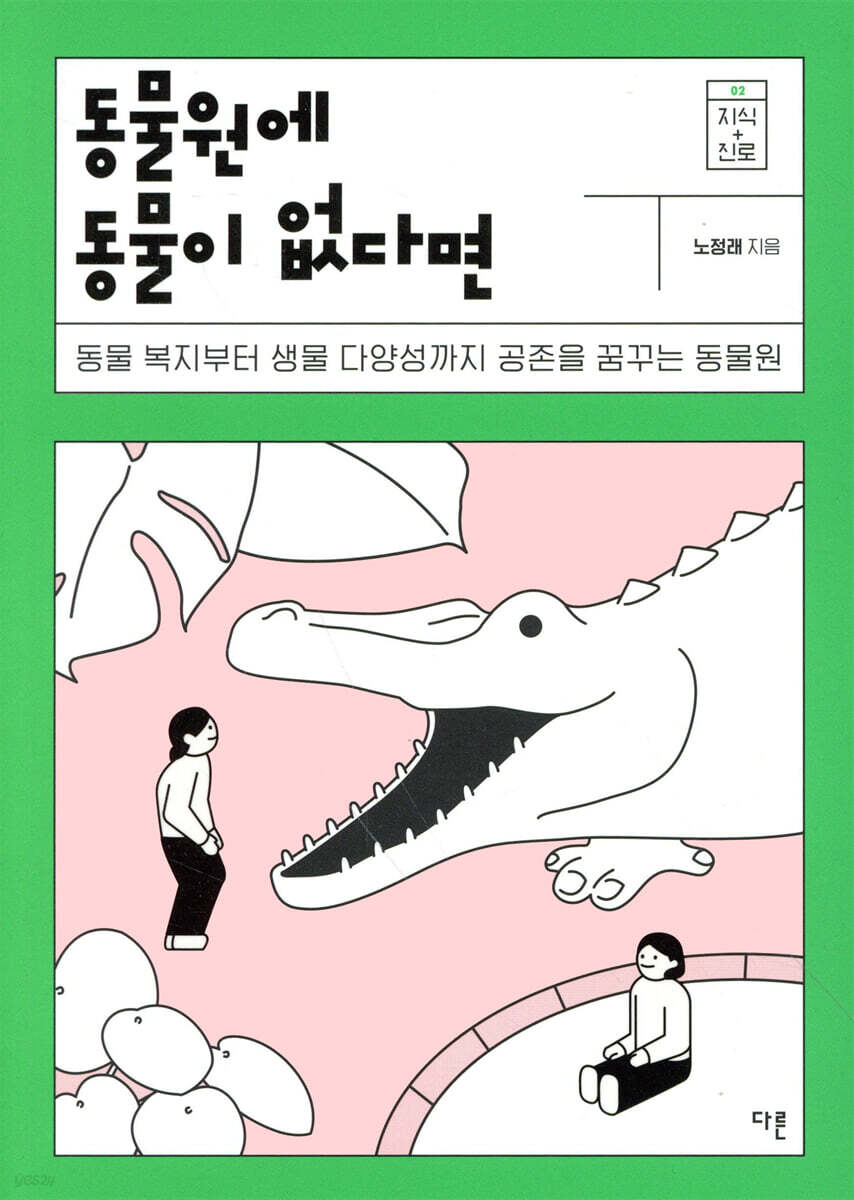
If there are no animals in the zoo
 |
Description
Book Introduction
Animal welfare, restoration of endangered species, biodiversity, etc.
A zoo story that dreams of peaceful coexistence between humans and animals.
Where do zoo animals come from?
Why do sloths sleep all day?
How do zookeepers know if a fox is pregnant?
When was the Honghak Show abolished?
Humans and animals have lived together.
Humans cannot exist without animals.
However, as cities expanded and populations grew, animal habitats were destroyed, and many animals were pushed to the brink of extinction.
As the Earth's ecosystem is seriously destroyed, the function of zoos is changing.
《If There Were No Animals in the Zoo》 is the second volume in the [Knowledge Plus Career] series, which provides various knowledge to help young people explore their career paths.
Author Jeong-rae Noh, former director of Seoul Grand Park, talks about the role of zoos in promoting peaceful coexistence between humans and animals.
It introduces the history of zoos, which began when kings collected rare animals to show off their power, and shows how the purpose of zoos changed from 'animal collection' to 'nature conservation' as animal welfare awareness developed.
You can learn about the process by which zoos, which used to be places where animals were kept for exhibition purposes, evolved into institutions that restore endangered species, protect habitats, and conserve biodiversity.
The animal enclosures in a zoo are designed to take into account the habits and habitat conditions of the animals living there.
The author introduces the habits of various animals commonly kept in zoos, such as elephants, tigers, giraffes, sloths, flamingos, and foxes, and provides ecological knowledge.
And it tells us how the animal kingdom is created accordingly.
It's packed with fascinating stories and knowledge, including where zoo animals come from and how they move, how endangered species are restored, and what the zoos of the future will look like.
A zoo story that dreams of peaceful coexistence between humans and animals.
Where do zoo animals come from?
Why do sloths sleep all day?
How do zookeepers know if a fox is pregnant?
When was the Honghak Show abolished?
Humans and animals have lived together.
Humans cannot exist without animals.
However, as cities expanded and populations grew, animal habitats were destroyed, and many animals were pushed to the brink of extinction.
As the Earth's ecosystem is seriously destroyed, the function of zoos is changing.
《If There Were No Animals in the Zoo》 is the second volume in the [Knowledge Plus Career] series, which provides various knowledge to help young people explore their career paths.
Author Jeong-rae Noh, former director of Seoul Grand Park, talks about the role of zoos in promoting peaceful coexistence between humans and animals.
It introduces the history of zoos, which began when kings collected rare animals to show off their power, and shows how the purpose of zoos changed from 'animal collection' to 'nature conservation' as animal welfare awareness developed.
You can learn about the process by which zoos, which used to be places where animals were kept for exhibition purposes, evolved into institutions that restore endangered species, protect habitats, and conserve biodiversity.
The animal enclosures in a zoo are designed to take into account the habits and habitat conditions of the animals living there.
The author introduces the habits of various animals commonly kept in zoos, such as elephants, tigers, giraffes, sloths, flamingos, and foxes, and provides ecological knowledge.
And it tells us how the animal kingdom is created accordingly.
It's packed with fascinating stories and knowledge, including where zoo animals come from and how they move, how endangered species are restored, and what the zoos of the future will look like.
- You can preview some of the book's contents.
Preview
index
Areas of Study 4
Introduction┃6 Stories of a Sustainable Earth from the Zoo
Chapter 1: If zoos disappeared from the world
The History of Zoos: From the Royal Palace to the Palace 17
Showing off power by exhibiting animals ┃ A zoo for everyone ┃ From animal exhibits to ecosystem conservation ┃ How have our country's zoos developed?
What on earth is biodiversity? 29
The Relationship Between the Wildflower, Ants, and Deer ┃ Zoo Efforts to Conserve Species
Are zoos bad? 39
Are zoo animals happy? ┃ Zoo animals that live longer than wild animals ┃ If all zoos disappeared
49 Essential Things for Zoo Animals
Rhinoceros' Mud Pit, Horseshoe Bat's Artificial Cave ┃ Safety first, safety second!
Finding a Career: Zoo Architect and Landscape Architect 59
Finding a Career Path: Animal Researcher 62
Chapter 2 Why do zoo animals only sleep?
How do wild animals get to zoos? 67
Zoo animals with many stories ┃ How do you get to the zoo?
75 Reasons Why Honghak Gets the Monday Blues
The flamingo lives in groups ┃ How do giraffes form families? ┃ Do they live together or apart?
How Zoo Animals Live 84
Why are there so many sleeping animals? ┃ If you want to see an active tiger, ┃ Winter, when the bitter wind blows ┃ Summer, when the hot sun beats down
Mating 96, a rare sight even for breeders
Animals only mate when they are ready to reproduce. ┃ How do you know if you're pregnant? ┃ Breeding rabbits without an estrus cycle.
Breeding animals, contraceptive animals 104
Animals that don't mate unilaterally ┃ Courtship by males seeking to be chosen by females ┃ Do animals also use contraception? ┃ Criteria for determining reproduction and contraception
Born and Die in the Zoo 113
How do baby animals grow? ┃ Taxidermy that must die to be born ┃ Becoming a site for ecological education
Career Path Finder 121
Career Path Finder Zoo Curator 124
Chapter 3: People with Animals
A Zookeeper's Day 129
Things to do as soon as you get to work ┃ Maintain and train the animals ┃ From the birth of the animals to their death ┃ For the safety of the animals, visitors, and staff
People Who Changed the Gorilla's Fate 137
Citizens step forward to achieve animal welfare ┃ Jane Goodall in the UK and Haho in Korea ┃ How have zoos changed?
Zoo 144: Achieving Happy Coexistence
Behavioral displays that take animals' habits into consideration ┃ Things that replace fences ┃ One thing that never changes
What behaviors cause distress to animals? 151
Giving anything to animals ┃ Touching animals ┃ Making loud noises ┃ Throwing away trash anywhere ┃ Taking or abandoning pets
Career Path Finder Ecological Educator 158
Finding a Career: Animal-Related Artists 161
Chapter 4: Zoos Evolve Too
How to Restore Lost Animals 165
Places Leading the Way in Species Restoration ┃ Zoos That Restored Mongolian Wild Horses ┃ Habitat Protection as Important as Species Restoration
How will the zoos of the future change? 174
Changes in zoo management ┃ If there are no animals in the zoo ┃ Which species should be preserved first?
If you want to protect nature, 180
No creature can survive without forests ┃ The easiest way to protect nature ┃ Thinking from an animal's perspective ┃ Small actions change the world
Career Path Finder Zoo Staff 187
Finding a Career Path: Zoo Civil Servant 190
Reference 193
Curriculum Linkage 195
Search 198
Introduction┃6 Stories of a Sustainable Earth from the Zoo
Chapter 1: If zoos disappeared from the world
The History of Zoos: From the Royal Palace to the Palace 17
Showing off power by exhibiting animals ┃ A zoo for everyone ┃ From animal exhibits to ecosystem conservation ┃ How have our country's zoos developed?
What on earth is biodiversity? 29
The Relationship Between the Wildflower, Ants, and Deer ┃ Zoo Efforts to Conserve Species
Are zoos bad? 39
Are zoo animals happy? ┃ Zoo animals that live longer than wild animals ┃ If all zoos disappeared
49 Essential Things for Zoo Animals
Rhinoceros' Mud Pit, Horseshoe Bat's Artificial Cave ┃ Safety first, safety second!
Finding a Career: Zoo Architect and Landscape Architect 59
Finding a Career Path: Animal Researcher 62
Chapter 2 Why do zoo animals only sleep?
How do wild animals get to zoos? 67
Zoo animals with many stories ┃ How do you get to the zoo?
75 Reasons Why Honghak Gets the Monday Blues
The flamingo lives in groups ┃ How do giraffes form families? ┃ Do they live together or apart?
How Zoo Animals Live 84
Why are there so many sleeping animals? ┃ If you want to see an active tiger, ┃ Winter, when the bitter wind blows ┃ Summer, when the hot sun beats down
Mating 96, a rare sight even for breeders
Animals only mate when they are ready to reproduce. ┃ How do you know if you're pregnant? ┃ Breeding rabbits without an estrus cycle.
Breeding animals, contraceptive animals 104
Animals that don't mate unilaterally ┃ Courtship by males seeking to be chosen by females ┃ Do animals also use contraception? ┃ Criteria for determining reproduction and contraception
Born and Die in the Zoo 113
How do baby animals grow? ┃ Taxidermy that must die to be born ┃ Becoming a site for ecological education
Career Path Finder 121
Career Path Finder Zoo Curator 124
Chapter 3: People with Animals
A Zookeeper's Day 129
Things to do as soon as you get to work ┃ Maintain and train the animals ┃ From the birth of the animals to their death ┃ For the safety of the animals, visitors, and staff
People Who Changed the Gorilla's Fate 137
Citizens step forward to achieve animal welfare ┃ Jane Goodall in the UK and Haho in Korea ┃ How have zoos changed?
Zoo 144: Achieving Happy Coexistence
Behavioral displays that take animals' habits into consideration ┃ Things that replace fences ┃ One thing that never changes
What behaviors cause distress to animals? 151
Giving anything to animals ┃ Touching animals ┃ Making loud noises ┃ Throwing away trash anywhere ┃ Taking or abandoning pets
Career Path Finder Ecological Educator 158
Finding a Career: Animal-Related Artists 161
Chapter 4: Zoos Evolve Too
How to Restore Lost Animals 165
Places Leading the Way in Species Restoration ┃ Zoos That Restored Mongolian Wild Horses ┃ Habitat Protection as Important as Species Restoration
How will the zoos of the future change? 174
Changes in zoo management ┃ If there are no animals in the zoo ┃ Which species should be preserved first?
If you want to protect nature, 180
No creature can survive without forests ┃ The easiest way to protect nature ┃ Thinking from an animal's perspective ┃ Small actions change the world
Career Path Finder Zoo Staff 187
Finding a Career Path: Zoo Civil Servant 190
Reference 193
Curriculum Linkage 195
Search 198
Detailed image
.jpg)
Into the book
In the 1970s, the importance of ecosystem conservation emerged as a popular topic.
At the same time, the zoo's operation focused on preserving endangered species rather than on viewing and exhibition.
The Bronx Zoo, known as the largest zoo in the United States, took the lead.
Some places have stopped showing animals.
The Detroit Zoo in the United States abolished its elephant show in 1963 and its chimpanzee show in 1983.
These changes spread around the world through regional associations, including the International Association of Zoos and Aquariums, and gradually brought about change.
Zoos have begun breeding endangered species and providing education on species conservation.
--- p.24~25
If there is no zoo, you have to go to their habitat to see wild animals.
You have to go to Africa to see African elephants, gorillas, and giraffes.
You can only see orangutans in Indonesia or Malaysia.
Of course, you have to be lucky to see it.
If you had to go to their habitat to see animals, there would be more people who would never see them in their entire lives.
If you don't know what animals exist, you're less likely to want to protect them.
The habitat may be further damaged as more people visit.
The personal and social costs of finding habitats are that high.
--- p.46~48
Elephants flap their ears when they are hot.
Then, the blood containing the body's heat cools as it passes through the numerous blood vessels in the ear.
This blood then circulates throughout the body, lowering body temperature.
This will lower the temperature by about 13 degrees.
The skin also plays a part.
An elephant's skin is made up of deep wrinkles like the lines of a hand.
These are not wrinkles that come with age.
The idea is to increase the surface area to release more heat.
As the moisture formed in the wrinkles evaporates, it takes away heat and has the effect of lowering body temperature.
The secret to controlling body temperature by up to 75 percent.
Of course, in the heat, shade and bathing are the best.
There is always a water hole in the elephant enclosure.
At the same time, the zoo's operation focused on preserving endangered species rather than on viewing and exhibition.
The Bronx Zoo, known as the largest zoo in the United States, took the lead.
Some places have stopped showing animals.
The Detroit Zoo in the United States abolished its elephant show in 1963 and its chimpanzee show in 1983.
These changes spread around the world through regional associations, including the International Association of Zoos and Aquariums, and gradually brought about change.
Zoos have begun breeding endangered species and providing education on species conservation.
--- p.24~25
If there is no zoo, you have to go to their habitat to see wild animals.
You have to go to Africa to see African elephants, gorillas, and giraffes.
You can only see orangutans in Indonesia or Malaysia.
Of course, you have to be lucky to see it.
If you had to go to their habitat to see animals, there would be more people who would never see them in their entire lives.
If you don't know what animals exist, you're less likely to want to protect them.
The habitat may be further damaged as more people visit.
The personal and social costs of finding habitats are that high.
--- p.46~48
Elephants flap their ears when they are hot.
Then, the blood containing the body's heat cools as it passes through the numerous blood vessels in the ear.
This blood then circulates throughout the body, lowering body temperature.
This will lower the temperature by about 13 degrees.
The skin also plays a part.
An elephant's skin is made up of deep wrinkles like the lines of a hand.
These are not wrinkles that come with age.
The idea is to increase the surface area to release more heat.
As the moisture formed in the wrinkles evaporates, it takes away heat and has the effect of lowering body temperature.
The secret to controlling body temperature by up to 75 percent.
Of course, in the heat, shade and bathing are the best.
There is always a water hole in the elephant enclosure.
--- p.92
Publisher's Review
At the zoo, people
What should I do?
《If There Were No Animals in the Zoo》 introduces various jobs related to zoos.
It covers a variety of professions, including zoo architects and landscapers who design and decorate zoos to suit the animals' habits, animal nutritionists who manage the animals' health with balanced diets, ecological restorationists who research species restoration and habitat conservation, veterinarians who prevent diseases and treat sick animals, and zoo curators who design exhibition methods that reflect the animals' habits.
It doesn't stop at introducing each profession.
It also explains in detail what kind of study you need to do.
It provides practical information, such as, if you want to become a zookeeper, study in the department of biology, animal resources, or veterinary medicine, and if you want to become an ecological restorationist, study in the department of biology, science education, or forest resources.
Helps young readers explore their interests and plan their careers based on accurate knowledge.
Introducing the [Knowledge Plus Career] Series
Gain new knowledge
Opening a better future
True 'knowledge' becomes 'life'.
The [Knowledge Plus Career Path] series helps young readers set their career paths by providing them with the basic knowledge that will empower them to navigate the world.
It provides a wide range of basic knowledge in various fields, including science, humanities, history, and society, centered around unique keywords that are not limited to a single subject.
This allows readers to figure out for themselves what kind of knowledge they are interested in.
Additionally, at the end of each chapter, we introduce occupations related to the relevant knowledge to guide you in planning your career path.
We deliver vivid voices from the field along with accurate knowledge and information.
By focusing on specific and unique topics such as 'Birth, Aging, Illness, and Death', 'Zoo', 'Wings', and 'Electronic Currency', it differentiates itself from other publishers' existing books in the career field.
What should I do?
《If There Were No Animals in the Zoo》 introduces various jobs related to zoos.
It covers a variety of professions, including zoo architects and landscapers who design and decorate zoos to suit the animals' habits, animal nutritionists who manage the animals' health with balanced diets, ecological restorationists who research species restoration and habitat conservation, veterinarians who prevent diseases and treat sick animals, and zoo curators who design exhibition methods that reflect the animals' habits.
It doesn't stop at introducing each profession.
It also explains in detail what kind of study you need to do.
It provides practical information, such as, if you want to become a zookeeper, study in the department of biology, animal resources, or veterinary medicine, and if you want to become an ecological restorationist, study in the department of biology, science education, or forest resources.
Helps young readers explore their interests and plan their careers based on accurate knowledge.
Introducing the [Knowledge Plus Career] Series
Gain new knowledge
Opening a better future
True 'knowledge' becomes 'life'.
The [Knowledge Plus Career Path] series helps young readers set their career paths by providing them with the basic knowledge that will empower them to navigate the world.
It provides a wide range of basic knowledge in various fields, including science, humanities, history, and society, centered around unique keywords that are not limited to a single subject.
This allows readers to figure out for themselves what kind of knowledge they are interested in.
Additionally, at the end of each chapter, we introduce occupations related to the relevant knowledge to guide you in planning your career path.
We deliver vivid voices from the field along with accurate knowledge and information.
By focusing on specific and unique topics such as 'Birth, Aging, Illness, and Death', 'Zoo', 'Wings', and 'Electronic Currency', it differentiates itself from other publishers' existing books in the career field.
GOODS SPECIFICS
- Date of issue: July 3, 2019
- Page count, weight, size: 200 pages | 332g | 150*210*20mm
- ISBN13: 9791156332527
- ISBN10: 1156332524
You may also like
카테고리
korean


korean

![GQ KOREA Mark (Monthly): December [2025]](http://librairie.coreenne.fr/cdn/shop/files/8ef265dbbfbf186523ed75ba7319009d.jpg?v=1765340328&width=3840)


