

existence, feeling
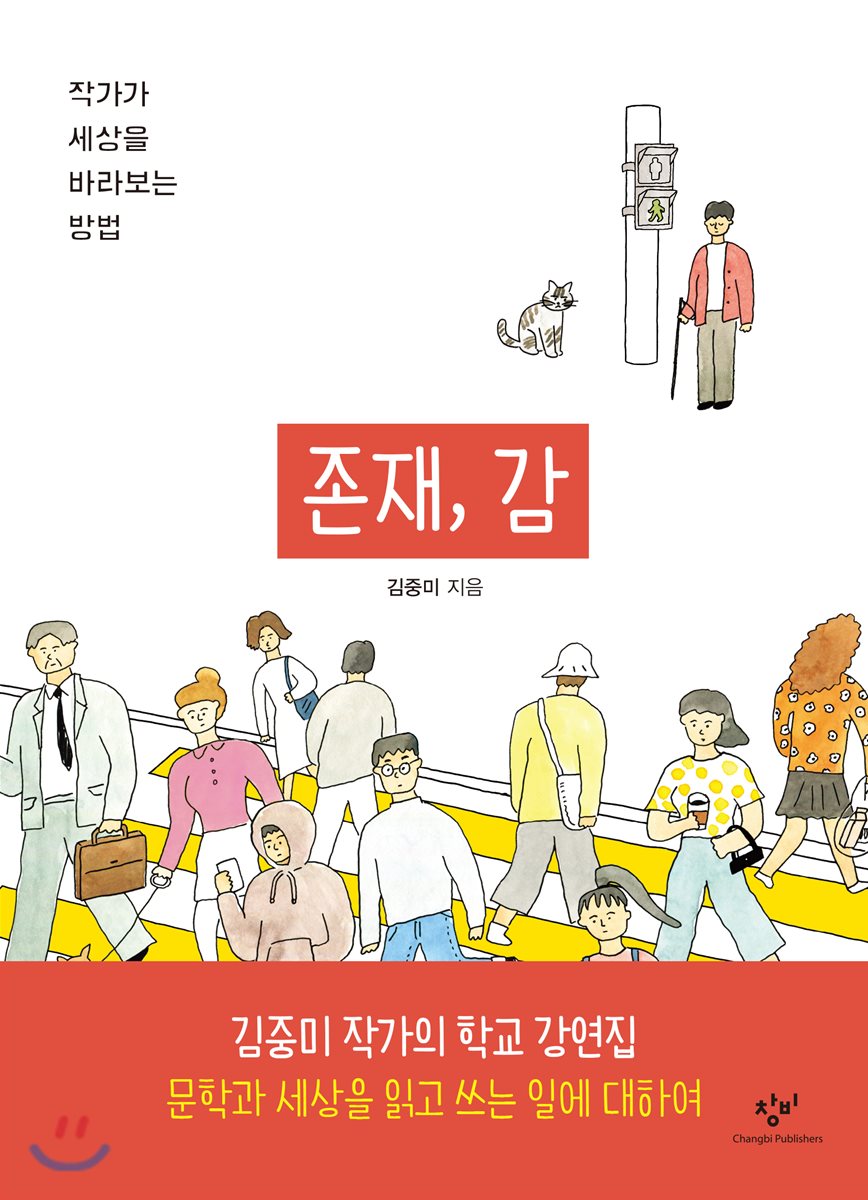 |
Description
Book Introduction
Kim Jung-mi's school lecture collection The existence of those at the edge of the world On how to know, feel, and think Kim Jung-mi is the most popular writer in schools and libraries, and the one who most diligently responds to the flood of lecture requests. Because I believe that meeting the young readers face-to-face and talking with them is just as important as writing a book. The further the distance, the more inconvenient the transportation, the more diligently I have to go. This book is a collection of stories shared by the author with young people while traveling around the country over the past two years. Various topics emerge, including poverty, inequality, immigrants, disability, human rights, peace, and solidarity, but the one thing that runs through all of these topics is undoubtedly ‘people.’ The author tells stories about our society through the real lives of people who have served as motifs for his novels, from visually impaired college students to immigrant girls and young fishermen. And it resonates with how the small courage they displayed created cracks in a solid world. By revealing the presence of those who have previously gone unnoticed, we illuminate the presence of all of us. The latter half of the book answers the most frequently asked questions about literature during each lecture. You can find the author's honest thoughts on literature. |
- You can preview some of the book's contents.
Preview
index
Introduction
Part 1: A Little Courage Makes a Difference in the World
1.
Wintering of small birds
2.
What I realized while taking pictures of Yongsan
3.
Disability can't stop you from dreaming.
4.
The fight over school uniform skirts
5.
Don't feel sorry for me
6.
Imagine the cat's wounds
7.
Dream of going to the sea, dream of being swallowed by the sea
8.
Even though Chilean grapes make farmers sad
9.
Dance for Human Rights
10.
Thinking about peace and guns
11.
Standing by a sick friend's side
12.
The reason I'm the only one wearing fur shoes
Part 2: Questions about Literature and the World
1.
What was your original dream?
2.
How did you become a writer?
3.
How do you name your characters?
4.
How do you study to be a writer?
5.
How much money do writers make?
6.
Where do you get such great expressions?
7.
When are you most proud of your career as a writer?
8.
When did you become interested in social issues?
9.
Why do you live in the countryside?
10.
Does the author also have any shortcomings?
11.
What do you like about reading books?
12.
Does the author have a mentor?
13.
Why write sad stories?
Part 1: A Little Courage Makes a Difference in the World
1.
Wintering of small birds
2.
What I realized while taking pictures of Yongsan
3.
Disability can't stop you from dreaming.
4.
The fight over school uniform skirts
5.
Don't feel sorry for me
6.
Imagine the cat's wounds
7.
Dream of going to the sea, dream of being swallowed by the sea
8.
Even though Chilean grapes make farmers sad
9.
Dance for Human Rights
10.
Thinking about peace and guns
11.
Standing by a sick friend's side
12.
The reason I'm the only one wearing fur shoes
Part 2: Questions about Literature and the World
1.
What was your original dream?
2.
How did you become a writer?
3.
How do you name your characters?
4.
How do you study to be a writer?
5.
How much money do writers make?
6.
Where do you get such great expressions?
7.
When are you most proud of your career as a writer?
8.
When did you become interested in social issues?
9.
Why do you live in the countryside?
10.
Does the author also have any shortcomings?
11.
What do you like about reading books?
12.
Does the author have a mentor?
13.
Why write sad stories?
Detailed image

Publisher's Review
These are the motifs of Kim Jung-mi's novels.
Meet that sparkling presence
A variety of characters appear in author Kim Jung-mi's novels.
It is usually not the powerful and strong, but the powerless, poor, and weak.
The author believes that it is his job to call out to the world those who are not well-known, to reveal their presence, and to represent their voices.
Even when I meet young people through lectures held at schools and libraries, 'people' are always at the center of the conversation.
The author addresses major social issues, such as inequality, poverty, peace, and rural issues, through human stories.
"Existence, Feeling" is filled with honest and profound stories of people the author shared with children while traveling to schools and libraries across the country over the past two years.
When I said I was going to write a fairy tale about immigrants, I said, “Don’t write me down.
“Please write about me having fun with my friends in Korea,” said Indonesian girl Nazia, who bravely shouted; Jinyeong, a young man who gave up the relatively stable path given to the visually impaired, such as a masseuse and an artist, to pursue his dream and go to college; Sanu, who dances and engages in human rights activities despite facing ignorant racial discrimination because he is from Africa; the farmers of Ganghwa who steadfastly protect their rural areas even in the face of dwindling profits…
The author tells us the lives of those who have always lived by our side but whose presence we have not yet felt, in a way that is as exciting as a novel.
Among them is the author's own childhood story, in which he was a 'quiet and distracted child' who had a particularly difficult time at school.
Mr. Sanu shared this African proverb in a media interview.
“It is easy to wake up someone who is really asleep.
But it's hard to wake someone who's pretending to be asleep." I want to tell you the same story._Page 125
One time, I was looking out the window so much during class that the teacher asked, “Kim Jung-mi, what are you doing instead of paying attention in class?” and I replied, “I’m waiting for Astro Boy.”
I remember that time too.
It was almost summer vacation, but my classmate kept bothering me and school was so frustrating that I looked out the window every day and imagined Astro Boy flying in and taking me to my grandmother's house in Incheon._Page 148
What the author wants to convey through these stories is not just that they exist there.
The author captures moments when ordinary people show small acts of courage.
The moment you rebel against the school's excessive regulation of the length of your uniform skirt, the moment you set out to your university entrance ceremony alone with the help of a white cane, the moment you decide to follow your father into the dangerous seafaring life, the moment you raise your hand to volunteer for a friend with a disability, etc.
The author emphasizes that these brave moments, when combined, create cracks in this solid world.
That is the ultimate reason why the author remembers and tells the stories of these precious people.
I think that kind of thing is a small courage.
I think that those small courageous moments, those small cracks they create, are what change this seemingly solid world little by little.
I think that people who are a bit bumpy actually change the world, rather than people who just follow the same path as everyone else.
Maybe that's why I keep writing, thinking that writing is also a way to find time. _Page 163
“Why do you write sad stories?”
Unhesitating questions about literature and writers
Part 2 of the book is comprised of the most frequently asked questions from my lectures.
To the candid questions about literature and the writer's life, the most honest answers follow.
When asked how much money he makes, the author talks about how he spent the money he earned from bestselling books and how he feels when he doesn't receive royalties.
When asked where he gets his cool expressions, he introduces a wealth of anecdotes that borrow cool words that children inadvertently blurt out.
When asked whether the author also has shortcomings, he tells a story from his elementary school days when he suffered from bedwetting, and speaks of the power to reveal shortcomings and complexes.
Why do writers write sad stories? While there's no life without sadness, it's possible to find joy in the midst of sadness.
It is full of invaluable advice for young people who love literature and are curious about the lives of writers.
Whenever I meet young people, I always get asked, “How did you become a writer?”
But I don't think it's that important how you become a writer.
Rather, it is more important to have a good understanding of human life._Page 176
Thorns protect me, but sometimes I have to take them away.
I became who I am today through the power of lack.
As a person with a deficiency, I was able to understand the hearts of people who were weak, lacking, and poor like me, and I was able to get close to them._Page 214
Meet that sparkling presence
A variety of characters appear in author Kim Jung-mi's novels.
It is usually not the powerful and strong, but the powerless, poor, and weak.
The author believes that it is his job to call out to the world those who are not well-known, to reveal their presence, and to represent their voices.
Even when I meet young people through lectures held at schools and libraries, 'people' are always at the center of the conversation.
The author addresses major social issues, such as inequality, poverty, peace, and rural issues, through human stories.
"Existence, Feeling" is filled with honest and profound stories of people the author shared with children while traveling to schools and libraries across the country over the past two years.
When I said I was going to write a fairy tale about immigrants, I said, “Don’t write me down.
“Please write about me having fun with my friends in Korea,” said Indonesian girl Nazia, who bravely shouted; Jinyeong, a young man who gave up the relatively stable path given to the visually impaired, such as a masseuse and an artist, to pursue his dream and go to college; Sanu, who dances and engages in human rights activities despite facing ignorant racial discrimination because he is from Africa; the farmers of Ganghwa who steadfastly protect their rural areas even in the face of dwindling profits…
The author tells us the lives of those who have always lived by our side but whose presence we have not yet felt, in a way that is as exciting as a novel.
Among them is the author's own childhood story, in which he was a 'quiet and distracted child' who had a particularly difficult time at school.
Mr. Sanu shared this African proverb in a media interview.
“It is easy to wake up someone who is really asleep.
But it's hard to wake someone who's pretending to be asleep." I want to tell you the same story._Page 125
One time, I was looking out the window so much during class that the teacher asked, “Kim Jung-mi, what are you doing instead of paying attention in class?” and I replied, “I’m waiting for Astro Boy.”
I remember that time too.
It was almost summer vacation, but my classmate kept bothering me and school was so frustrating that I looked out the window every day and imagined Astro Boy flying in and taking me to my grandmother's house in Incheon._Page 148
What the author wants to convey through these stories is not just that they exist there.
The author captures moments when ordinary people show small acts of courage.
The moment you rebel against the school's excessive regulation of the length of your uniform skirt, the moment you set out to your university entrance ceremony alone with the help of a white cane, the moment you decide to follow your father into the dangerous seafaring life, the moment you raise your hand to volunteer for a friend with a disability, etc.
The author emphasizes that these brave moments, when combined, create cracks in this solid world.
That is the ultimate reason why the author remembers and tells the stories of these precious people.
I think that kind of thing is a small courage.
I think that those small courageous moments, those small cracks they create, are what change this seemingly solid world little by little.
I think that people who are a bit bumpy actually change the world, rather than people who just follow the same path as everyone else.
Maybe that's why I keep writing, thinking that writing is also a way to find time. _Page 163
“Why do you write sad stories?”
Unhesitating questions about literature and writers
Part 2 of the book is comprised of the most frequently asked questions from my lectures.
To the candid questions about literature and the writer's life, the most honest answers follow.
When asked how much money he makes, the author talks about how he spent the money he earned from bestselling books and how he feels when he doesn't receive royalties.
When asked where he gets his cool expressions, he introduces a wealth of anecdotes that borrow cool words that children inadvertently blurt out.
When asked whether the author also has shortcomings, he tells a story from his elementary school days when he suffered from bedwetting, and speaks of the power to reveal shortcomings and complexes.
Why do writers write sad stories? While there's no life without sadness, it's possible to find joy in the midst of sadness.
It is full of invaluable advice for young people who love literature and are curious about the lives of writers.
Whenever I meet young people, I always get asked, “How did you become a writer?”
But I don't think it's that important how you become a writer.
Rather, it is more important to have a good understanding of human life._Page 176
Thorns protect me, but sometimes I have to take them away.
I became who I am today through the power of lack.
As a person with a deficiency, I was able to understand the hearts of people who were weak, lacking, and poor like me, and I was able to get close to them._Page 214
GOODS SPECIFICS
- Date of publication: September 28, 2018
- Page count, weight, size: 224 pages | 378g | 153*210*20mm
- ISBN13: 9788936452315
- ISBN10: 8936452312
You may also like
카테고리
korean


korean

![GQ KOREA Mark (Monthly): December [2025]](http://librairie.coreenne.fr/cdn/shop/files/8ef265dbbfbf186523ed75ba7319009d.jpg?v=1765340328&width=3840)


