

One day a refugee
 |
Description
Book Introduction
“Let’s go somewhere nice.”
A song of healing and hope sung together across borders, races, and boundaries!
Pyo Myung-hee's full-length novel, "One Day a Refugee," was published as the 83rd issue of Changbi Youth Literature.
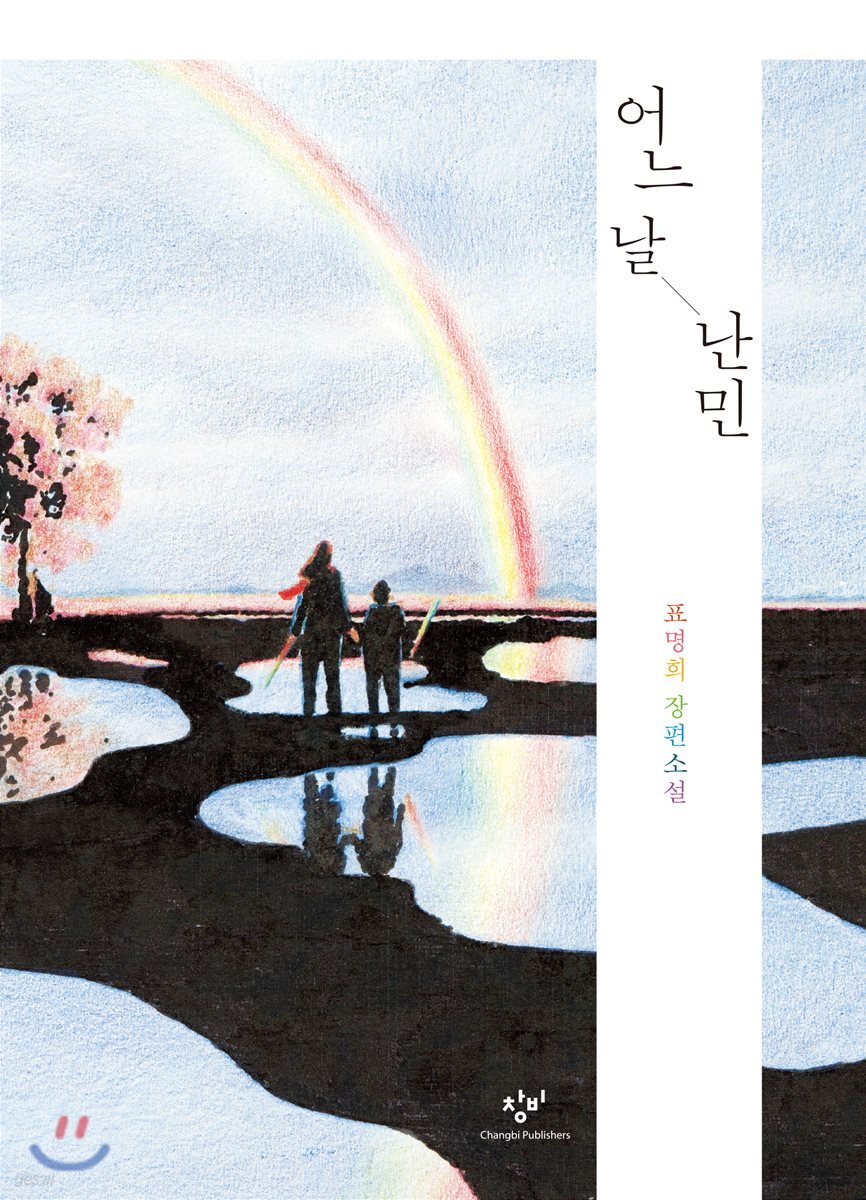
This is a heartwarming novel that unfolds the story of an abandoned Korean child, Min, and several other refugees in a refugee camp near Incheon Airport.
Author Pyo Myung-hee, who has depicted the marginalized in the city through previous works such as 『Off-Road Diary』 and 『Housemate』, expands the scope of her interest to refugees, “strangers from far away,” in 『One Day Refugee』.
Based on his experience meeting and reporting on actual refugees, he delves deeply into Korea's refugee problem with a keen sense of realism.
In particular, the film's structure, in which those gathered in a refugee camp gradually reveal secrets and come to understand one another, illuminates the dark and painful reality of the world while also conveying a budding hope.
Based on the social theme of refugees, this is a masterpiece that both youth and adults can read with deep emotion, poignantly portraying the values of human rights and respect that we must uphold in this era.
A song of healing and hope sung together across borders, races, and boundaries!
Pyo Myung-hee's full-length novel, "One Day a Refugee," was published as the 83rd issue of Changbi Youth Literature.
This is a heartwarming novel that unfolds the story of an abandoned Korean child, Min, and several other refugees in a refugee camp near Incheon Airport.
Author Pyo Myung-hee, who has depicted the marginalized in the city through previous works such as 『Off-Road Diary』 and 『Housemate』, expands the scope of her interest to refugees, “strangers from far away,” in 『One Day Refugee』.
Based on his experience meeting and reporting on actual refugees, he delves deeply into Korea's refugee problem with a keen sense of realism.
In particular, the film's structure, in which those gathered in a refugee camp gradually reveal secrets and come to understand one another, illuminates the dark and painful reality of the world while also conveying a budding hope.
Based on the social theme of refugees, this is a masterpiece that both youth and adults can read with deep emotion, poignantly portraying the values of human rights and respect that we must uphold in this era.
- You can preview some of the book's contents.
Preview
index
plant a flag
At the station
Allahu Akbar
A refugee center out of nowhere
Ghost Town, Future City
honor killings
Feeling like I'm on top of the world
After the English camp
They are like us
young protesters
My father… …
Between mom and older sister
Refugee No. 1
The Silent Family
Strange Cohabitation
Black woman, white man
If there are levels to sad expressions
First Steps in Korean Class
Taste of Home
poker face
Lost in words
Please stop!
Dreams come true
In the mangrove forest
gift
The rest of the study
reunion
I'm going to become a real refugee
Party, unveiled
Ticket to Heaven
A harsh performance
Walk along the milestones
outing
First refugee recognition
Don't go anywhere else
Scheherazade
Fighting for seats
Tuang's Rock
Mediterranean
Back in the mudflats
At the station
Allahu Akbar
A refugee center out of nowhere
Ghost Town, Future City
honor killings
Feeling like I'm on top of the world
After the English camp
They are like us
young protesters
My father… …
Between mom and older sister
Refugee No. 1
The Silent Family
Strange Cohabitation
Black woman, white man
If there are levels to sad expressions
First Steps in Korean Class
Taste of Home
poker face
Lost in words
Please stop!
Dreams come true
In the mangrove forest
gift
The rest of the study
reunion
I'm going to become a real refugee
Party, unveiled
Ticket to Heaven
A harsh performance
Walk along the milestones
outing
First refugee recognition
Don't go anywhere else
Scheherazade
Fighting for seats
Tuang's Rock
Mediterranean
Back in the mudflats
Publisher's Review
Poverty, terrorism, honor killings…
Will those who risked their lives to come to Korea be able to find their homes safely?
The novel begins in a new town located on an island near an airport.
In this place, which has the stigma of being a 'ghost town' with only new apartments and no residents in sight, 'Haena' and her young child 'Min' are wandering around.
The author's gaze shifts from the restless daily lives of these two people to Incheon Airport.
The repatriation waiting room at Incheon Airport, where those who were unable to enter the country stay and are not part of South Korean territory, is called a "ghost space."
Tuang, who risked his life to come to Korea from Cambodia, continues his endless wait.
The author heightens the reader's interest by delicately interweaving the plight of Haena and Min, who were born and raised in this land but have nowhere to stay, with the plight of refugees who came to Korea in search of a home but can do nothing but wait.
-What is a refugee?
The child turned his eyes from the car window and looked at Hannah.
-Well, first of all, you must be from somewhere far away, right?
Hannah could read in the child's expression that her answer was not sufficient.
―So, when you come to an unfamiliar place, you can’t easily settle down and you wander around… … .
Hannah gave a vague answer.
-Are we refugees too?
The child's voice was so serious that Hae-na hesitated.
(Page 29)
Meanwhile, refugees with their own special stories begin to enter the refugee camp near the airport, which has completed preparations for opening.
Chandra, from Kashmir, an Islamic region of India, was nearly killed for bringing "family honor" upon herself by not marrying the man chosen by her family.
After a long wait in the deportation waiting room, Tuang was moved to a refugee camp. He is a boat person born and raised on Tonle Sap Lake in Cambodia.
Tuan, who was wandering around as a stateless person, chose to go to Korea to obtain the citizenship of his father's country, where he was a soldier dispatched to Vietnam.
Shashane's family was driven out of China's Xinjiang Uyghur Autonomous Region for their independence movement, and Unga, the daughter of an African tribal chief, fled after receiving death threats for falling in love with a white man.
Their only hope is to be recognized as refugees and settle in Korea.
What will the future hold for those who continue to wait anxiously?
Will our society have the tolerance to accept them?
The author arouses curiosity by telling the deep stories of refugees.
Maybe we are all refugees on Earth
The story of the abandoned people 'Min' and 'Haena'
The story of Hannah and Min, which unfolds at a fast pace while intersecting with refugees in different situations, is also interesting.
Hana and Min, who were living a precarious life on the streets, happen to stop by the house of Sergeant Jin-soo Heo.
Through Officer Heo, Hae-na vaguely senses that even people living in a sophisticated and comfortable home have a fundamental loneliness and desolation that they cannot shake off.
And Haena, who came out of Officer Heo's house, is at a crossroads and has to make a choice about Min.
Eventually, Hannah decides to leave Min behind in the refugee camp.
Through the three characters Heo Jin-su, Hae-na, and Min, the author vividly portrays the alienation of a reality where nationality and society offer no defense against poverty and violence.
The plight of these Koreans who were expelled from Korea is not much different from that of the refugees in the camps, and it makes us sadly realize the refugees within us.
- I think we crushed the ants' nest.
The child pointed to one side of the lawn and said.
Looking closely, I could see an anthill.
-Do we have to worry about other people's houses now?
(……)
Hannah looked up at the sky with resentful eyes.
-It's a truly cruel April.
(Page 56)
To a stranger across the border
A loving hand extended
Author Pyo Myung-hee lovingly portrays those who came to Korea as if on a mission, and truthfully portrays the process through which they embrace and heal each other, forming a family and a society.
The campers suffer from trauma and are wary of each other, but little by little they open their hearts and become closer.
However, we are careful to ask and answer questions about painful and terrible memories and maintain the ethics of consideration.
Meanwhile, Min, who is left behind in the camp, finds comfort in Tuang, who takes special care of him among the many refugees.
Chandra learns English and builds a friendship with his peer Sasha through drawing.
Director Jin and Mr. Furbo, who are in charge of the camp, also spend time with them and make memories.
But the moment of separation is getting closer.
―On this planet, humans are inevitably refugees.
The hairy teacher accepted the director's thoughts as if he agreed with them.
―Isn't humanity made up of the subtle solidarity of people who share refugee genes?
Michelle added with her characteristic sense of language.
―This refugee camp is like a guesthouse in a difficult travel destination.
No one can stay forever.
New travelers are already getting ready to flock in… … .
(Page 278)
Readers soon find themselves wishing that they remain healthy and happy wherever they go, and that their time spent at the unfamiliar Korean camp will remain as fond memories.
Just as young Sasha points her finger at Min, saying, “Don’t go anywhere now” (page 262), the humanity and dignity that the camp refugees have not lost even in their harsh circumstances is deeply moving.
The author conveys with a warm voice that even though we speak different languages and have different skin colors, we are all people who need a loving hand to hold each other.
The message that anyone can be a refugee and therefore the power of connection and solidarity, however weak, is important, leaves a strong impression.
Will those who risked their lives to come to Korea be able to find their homes safely?
The novel begins in a new town located on an island near an airport.
In this place, which has the stigma of being a 'ghost town' with only new apartments and no residents in sight, 'Haena' and her young child 'Min' are wandering around.
The author's gaze shifts from the restless daily lives of these two people to Incheon Airport.
The repatriation waiting room at Incheon Airport, where those who were unable to enter the country stay and are not part of South Korean territory, is called a "ghost space."
Tuang, who risked his life to come to Korea from Cambodia, continues his endless wait.
The author heightens the reader's interest by delicately interweaving the plight of Haena and Min, who were born and raised in this land but have nowhere to stay, with the plight of refugees who came to Korea in search of a home but can do nothing but wait.
-What is a refugee?
The child turned his eyes from the car window and looked at Hannah.
-Well, first of all, you must be from somewhere far away, right?
Hannah could read in the child's expression that her answer was not sufficient.
―So, when you come to an unfamiliar place, you can’t easily settle down and you wander around… … .
Hannah gave a vague answer.
-Are we refugees too?
The child's voice was so serious that Hae-na hesitated.
(Page 29)
Meanwhile, refugees with their own special stories begin to enter the refugee camp near the airport, which has completed preparations for opening.
Chandra, from Kashmir, an Islamic region of India, was nearly killed for bringing "family honor" upon herself by not marrying the man chosen by her family.
After a long wait in the deportation waiting room, Tuang was moved to a refugee camp. He is a boat person born and raised on Tonle Sap Lake in Cambodia.
Tuan, who was wandering around as a stateless person, chose to go to Korea to obtain the citizenship of his father's country, where he was a soldier dispatched to Vietnam.
Shashane's family was driven out of China's Xinjiang Uyghur Autonomous Region for their independence movement, and Unga, the daughter of an African tribal chief, fled after receiving death threats for falling in love with a white man.
Their only hope is to be recognized as refugees and settle in Korea.
What will the future hold for those who continue to wait anxiously?
Will our society have the tolerance to accept them?
The author arouses curiosity by telling the deep stories of refugees.
Maybe we are all refugees on Earth
The story of the abandoned people 'Min' and 'Haena'
The story of Hannah and Min, which unfolds at a fast pace while intersecting with refugees in different situations, is also interesting.
Hana and Min, who were living a precarious life on the streets, happen to stop by the house of Sergeant Jin-soo Heo.
Through Officer Heo, Hae-na vaguely senses that even people living in a sophisticated and comfortable home have a fundamental loneliness and desolation that they cannot shake off.
And Haena, who came out of Officer Heo's house, is at a crossroads and has to make a choice about Min.
Eventually, Hannah decides to leave Min behind in the refugee camp.
Through the three characters Heo Jin-su, Hae-na, and Min, the author vividly portrays the alienation of a reality where nationality and society offer no defense against poverty and violence.
The plight of these Koreans who were expelled from Korea is not much different from that of the refugees in the camps, and it makes us sadly realize the refugees within us.
- I think we crushed the ants' nest.
The child pointed to one side of the lawn and said.
Looking closely, I could see an anthill.
-Do we have to worry about other people's houses now?
(……)
Hannah looked up at the sky with resentful eyes.
-It's a truly cruel April.
(Page 56)
To a stranger across the border
A loving hand extended
Author Pyo Myung-hee lovingly portrays those who came to Korea as if on a mission, and truthfully portrays the process through which they embrace and heal each other, forming a family and a society.
The campers suffer from trauma and are wary of each other, but little by little they open their hearts and become closer.
However, we are careful to ask and answer questions about painful and terrible memories and maintain the ethics of consideration.
Meanwhile, Min, who is left behind in the camp, finds comfort in Tuang, who takes special care of him among the many refugees.
Chandra learns English and builds a friendship with his peer Sasha through drawing.
Director Jin and Mr. Furbo, who are in charge of the camp, also spend time with them and make memories.
But the moment of separation is getting closer.
―On this planet, humans are inevitably refugees.
The hairy teacher accepted the director's thoughts as if he agreed with them.
―Isn't humanity made up of the subtle solidarity of people who share refugee genes?
Michelle added with her characteristic sense of language.
―This refugee camp is like a guesthouse in a difficult travel destination.
No one can stay forever.
New travelers are already getting ready to flock in… … .
(Page 278)
Readers soon find themselves wishing that they remain healthy and happy wherever they go, and that their time spent at the unfamiliar Korean camp will remain as fond memories.
Just as young Sasha points her finger at Min, saying, “Don’t go anywhere now” (page 262), the humanity and dignity that the camp refugees have not lost even in their harsh circumstances is deeply moving.
The author conveys with a warm voice that even though we speak different languages and have different skin colors, we are all people who need a loving hand to hold each other.
The message that anyone can be a refugee and therefore the power of connection and solidarity, however weak, is important, leaves a strong impression.
GOODS SPECIFICS
- Date of publication: March 16, 2018
- Page count, weight, size: 296 pages | 408g | 152*210*15mm
- ISBN13: 9788936456832
- ISBN10: 8936456830
You may also like
카테고리
korean


korean

![GQ KOREA Mark (Monthly): December [2025]](http://librairie.coreenne.fr/cdn/shop/files/8ef265dbbfbf186523ed75ba7319009d.jpg?v=1765340328&width=3840)


