

The Dalai Lama Speaks of Death
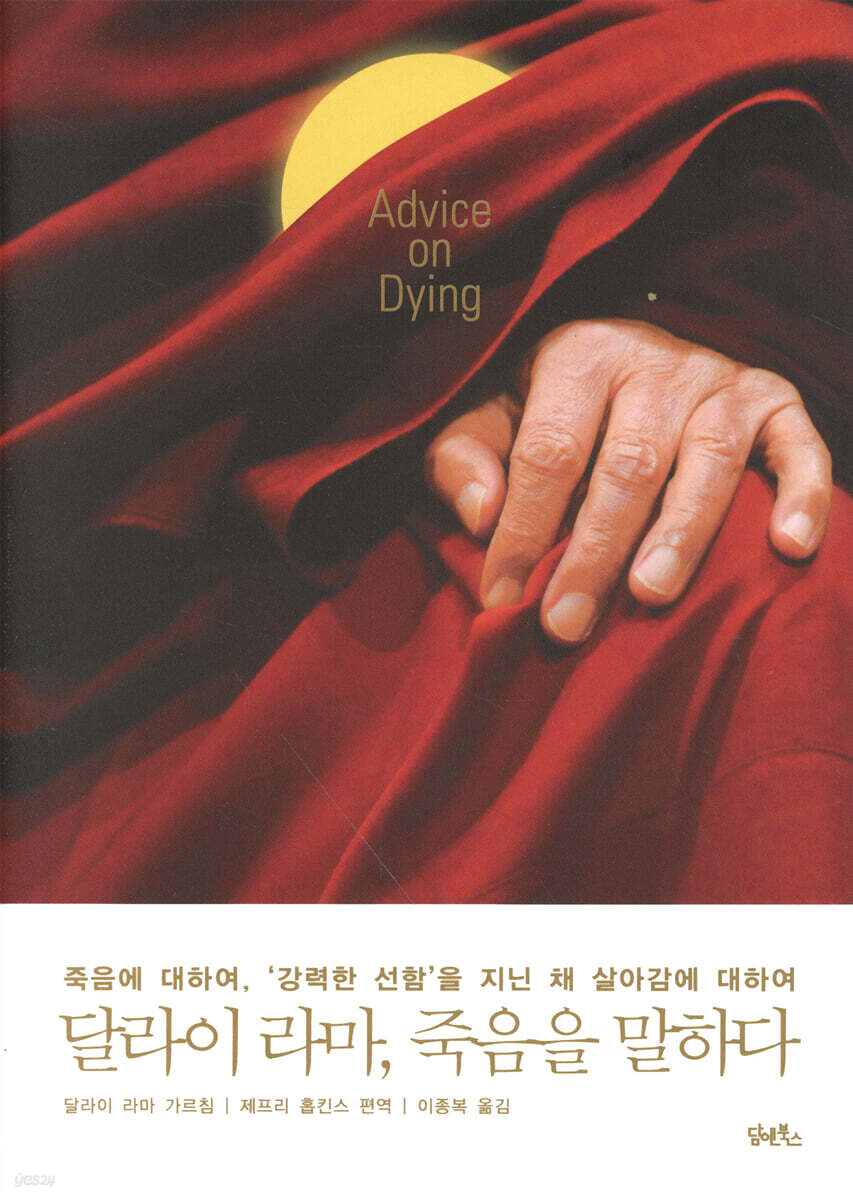 |
Description
Book Introduction
The Dalai Lama's Map of Death
Prepare for death with a merciful life
On how to cross death without fear
“With compassion for all living beings, take refuge in the religion you most respect.
Remember the nature of your present life, which gives you both the need and the freedom to pursue spiritual practice.
“Reflect on impermanence and reflect again.”
Prepare for death with a merciful life
On how to cross death without fear
“With compassion for all living beings, take refuge in the religion you most respect.
Remember the nature of your present life, which gives you both the need and the freedom to pursue spiritual practice.
“Reflect on impermanence and reflect again.”
- You can preview some of the book's contents.
Preview
index
Translator's Preface _Geoffrey Hopkins
0.
Tibetan poetry used for meditation on death
1.
Reflections on Death
2.
Freedom from fear
3.
Preparation for death
4.
Overcoming the obstacle of death
5.
Achievement of good conditions for death
6.
Meditation in the Process of Death
7.
The internal structure of death
8.
The clear light of death
9.
How to behave in the middle of nowhere?
10.
Achieving a good reincarnation
Translator's Note _ Jongbok Lee
Appendix _ Key points of each year
0.
Tibetan poetry used for meditation on death
1.
Reflections on Death
2.
Freedom from fear
3.
Preparation for death
4.
Overcoming the obstacle of death
5.
Achievement of good conditions for death
6.
Meditation in the Process of Death
7.
The internal structure of death
8.
The clear light of death
9.
How to behave in the middle of nowhere?
10.
Achieving a good reincarnation
Translator's Note _ Jongbok Lee
Appendix _ Key points of each year
Detailed image
.jpg)
Into the book
“At this crucial moment, your body betrays you.
A body that has been well-raised with delicious food, nice clothes, money, a place to sleep, medicine, and even bad behavior
"In the end, I'm destined to betray you."
"When there is no more hope for life,
When even doctors give up hope,
When religious rituals have no effect,
When even friends and relatives have lost hope deep in their hearts,
“We have to do something to help ourselves.”
As I watched my mother struggle, losing control, I remembered the words of the Dalai Lama.
The Dalai Lama said that those facing death need kind advice to cultivate a mindset that generates merit.
I ran to the bedside.
I remembered that my mother's spiritual word was "Holy Spirit."
“Mom, it’s Jeff.
Now is the time for the Holy Spirit.”
At that moment, my mother stopped struggling and began to calm down.
I whispered softly again.
“Now is the time for the Holy Spirit.”
A few days later, my mother passed away peacefully.
- From the preface by the translator (Geoffrey Hopkins)
“Perhaps the most famous book on death in Tibetan Buddhism is the Bar Do Thos Grol, also known as the Tibetan Book of the Dead.
In some ways, this book, “The Dalai Lama Speaks of Death,” can be said to be a summary of “The Book of the Dead.”
However, it deals with the stages of death and the corresponding practices in a simpler and clearer way than the Book of the Dead.”
- From the translator's (Lee Jong-bok) review
A body that has been well-raised with delicious food, nice clothes, money, a place to sleep, medicine, and even bad behavior
"In the end, I'm destined to betray you."
"When there is no more hope for life,
When even doctors give up hope,
When religious rituals have no effect,
When even friends and relatives have lost hope deep in their hearts,
“We have to do something to help ourselves.”
As I watched my mother struggle, losing control, I remembered the words of the Dalai Lama.
The Dalai Lama said that those facing death need kind advice to cultivate a mindset that generates merit.
I ran to the bedside.
I remembered that my mother's spiritual word was "Holy Spirit."
“Mom, it’s Jeff.
Now is the time for the Holy Spirit.”
At that moment, my mother stopped struggling and began to calm down.
I whispered softly again.
“Now is the time for the Holy Spirit.”
A few days later, my mother passed away peacefully.
- From the preface by the translator (Geoffrey Hopkins)
“Perhaps the most famous book on death in Tibetan Buddhism is the Bar Do Thos Grol, also known as the Tibetan Book of the Dead.
In some ways, this book, “The Dalai Lama Speaks of Death,” can be said to be a summary of “The Book of the Dead.”
However, it deals with the stages of death and the corresponding practices in a simpler and clearer way than the Book of the Dead.”
- From the translator's (Lee Jong-bok) review
--- From the text
Publisher's Review
The Dalai Lama's Map of Death
Prepare for death with a merciful life
On how to cross death without fear
“With compassion for all living beings, take refuge in the religion you most respect.
Remember the nature of your present life, which gives you both the need and the freedom to pursue spiritual practice.
“Reflect on impermanence and reflect again.”
April is often called the month of death.
Even looking at our social context, there are many people to remember in April.
As well-dying becomes a trend, the number of people preparing for a 'dignified death' is also increasing.
But before that, how much practice do we have in facing death? And how can we practice it?
Death, freedom from its fear
In Tibet, at the time of death, the Book of the Dead is read in a whisper at the bedside to guide the deceased on their way out of the middle path and towards enlightenment.
There is also a poem that many Tibetans use every day to meditate on death.
This is the "Prayer for liberation from the dangerous predicament of the Middle Path, Hero Freed from Fear" written by the first Panchen Lama.
Just as a guide is needed to escape from a fearful situation, one can follow the advice of this poem to escape the fear of the visions that will arise at the moment of death and while in the intermediate state (p. 73).
"The Dalai Lama on Death" is a commentary on the seventeen stanzas of this poem, and a book containing the Dalai Lama's insights on death in general.
This book shines brightest not only because it portrays the unknown realm of death in a sensory and visual way, but also because it makes readers let go of their fears and think about how to prepare for death.
The Dalai Lama's "Death Studies"
His Holiness the 14th Dalai Lama, the current one, turned 84 in 2019.
With this, he enjoys the longest lifespan among all the Dalai Lamas.
He meditates and prays every day without fail, and he stays busy by reading, exercising, and engaging in outdoor activities.
But we do not forget the absolute truth of death (page 113).
He usually thinks about impermanence, suffering, emptiness, and non-self.
Additionally, as part of daily ritual practice, we meditate on the stages of death (p. 204).
After explaining the eight stages of death step by step, the Dalai Lama persuasively explains what processes we go through in the 'intermediate path' and 'reincarnation' stages between this life and the next life, and what mindset will be helpful at those times (page 20).
Through this, readers can reflect on death and realize anew what is truly important in their lives.
The subtitle of “Dalai Lama Talks About Death” is “On Death, and Living with ‘Powerful Goodness’.”
Dying well is ultimately inevitably parallel to living well (p. 262).
So if we can face death, our perspective on life will also change.
And living well naturally leads to how we practice love, compassion, and goodness in this life.
Now, as if looking at a map to check where to go in advance, let us fearlessly explore the world of death under the guidance of the Dalai Lama.
Prepare for death with a merciful life
On how to cross death without fear
“With compassion for all living beings, take refuge in the religion you most respect.
Remember the nature of your present life, which gives you both the need and the freedom to pursue spiritual practice.
“Reflect on impermanence and reflect again.”
April is often called the month of death.
Even looking at our social context, there are many people to remember in April.
As well-dying becomes a trend, the number of people preparing for a 'dignified death' is also increasing.
But before that, how much practice do we have in facing death? And how can we practice it?
Death, freedom from its fear
In Tibet, at the time of death, the Book of the Dead is read in a whisper at the bedside to guide the deceased on their way out of the middle path and towards enlightenment.
There is also a poem that many Tibetans use every day to meditate on death.
This is the "Prayer for liberation from the dangerous predicament of the Middle Path, Hero Freed from Fear" written by the first Panchen Lama.
Just as a guide is needed to escape from a fearful situation, one can follow the advice of this poem to escape the fear of the visions that will arise at the moment of death and while in the intermediate state (p. 73).
"The Dalai Lama on Death" is a commentary on the seventeen stanzas of this poem, and a book containing the Dalai Lama's insights on death in general.
This book shines brightest not only because it portrays the unknown realm of death in a sensory and visual way, but also because it makes readers let go of their fears and think about how to prepare for death.
The Dalai Lama's "Death Studies"
His Holiness the 14th Dalai Lama, the current one, turned 84 in 2019.
With this, he enjoys the longest lifespan among all the Dalai Lamas.
He meditates and prays every day without fail, and he stays busy by reading, exercising, and engaging in outdoor activities.
But we do not forget the absolute truth of death (page 113).
He usually thinks about impermanence, suffering, emptiness, and non-self.
Additionally, as part of daily ritual practice, we meditate on the stages of death (p. 204).
After explaining the eight stages of death step by step, the Dalai Lama persuasively explains what processes we go through in the 'intermediate path' and 'reincarnation' stages between this life and the next life, and what mindset will be helpful at those times (page 20).
Through this, readers can reflect on death and realize anew what is truly important in their lives.
The subtitle of “Dalai Lama Talks About Death” is “On Death, and Living with ‘Powerful Goodness’.”
Dying well is ultimately inevitably parallel to living well (p. 262).
So if we can face death, our perspective on life will also change.
And living well naturally leads to how we practice love, compassion, and goodness in this life.
Now, as if looking at a map to check where to go in advance, let us fearlessly explore the world of death under the guidance of the Dalai Lama.
GOODS SPECIFICS
- Date of issue: April 2, 2019
- Page count, weight, size: 296 pages | 385g | 139*194*20mm
- ISBN13: 9791162011331
- ISBN10: 1162011335
You may also like
카테고리
korean


korean

![GQ KOREA Mark (Monthly): December [2025]](http://librairie.coreenne.fr/cdn/shop/files/8ef265dbbfbf186523ed75ba7319009d.jpg?v=1765340328&width=3840)


