

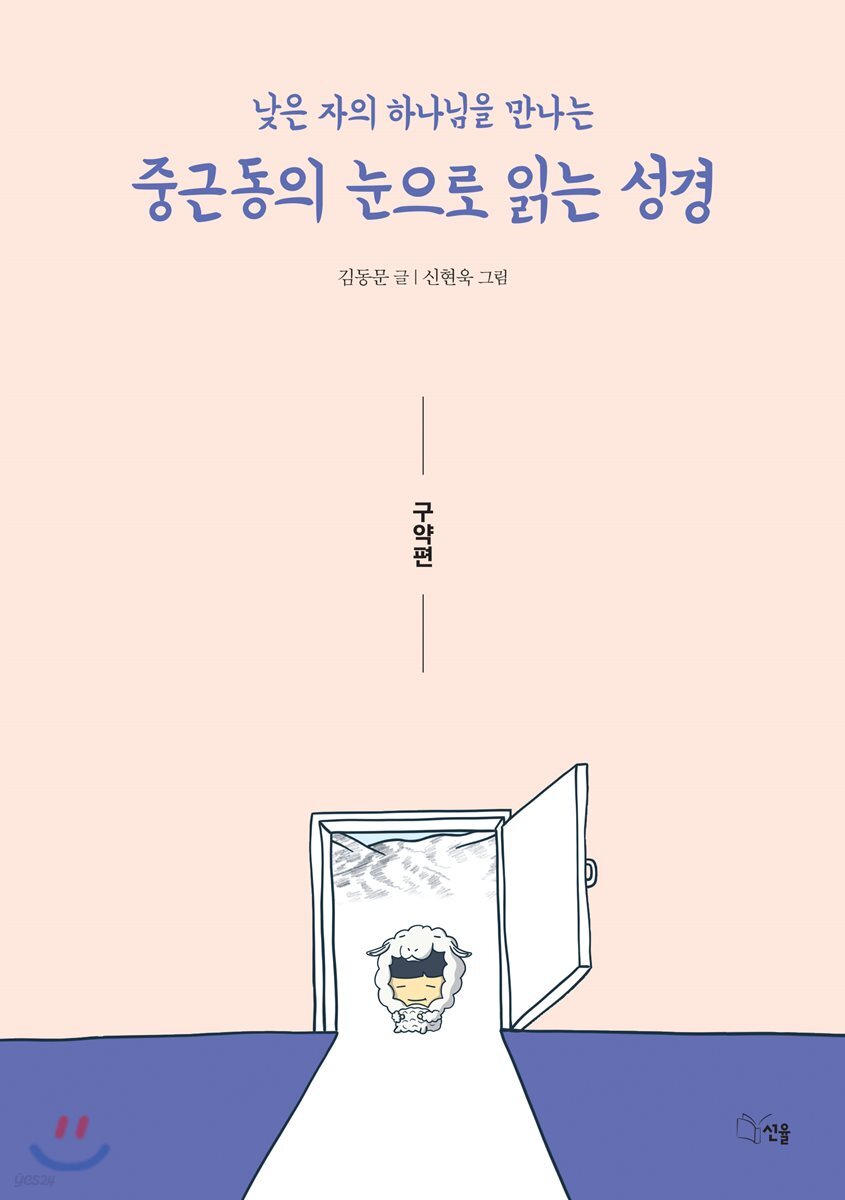
Reading the Bible Through the Eyes of the Middle East (Old Testament)
 |
Description
Book Introduction
The land of the Middle East where the Bible was written for over 30 years
The Bible read by walking, touching, seeing, and confirming it directly
Who was the first reader of the Old Testament?
What were the places like Ur of the Chaldeans in Mesopotamia, where Abraham lived, Egypt, where Joseph served as prime minister, and the wilderness where the Israelites wandered after the Exodus? The ancient Middle East was a vast land encompassing Mesopotamia, Egypt, Anatolia, and the Levant, often called the birthplace of world civilization.
The Bible was written in the Middle East, and the people who lived during this time were the first readers of the Old Testament.
The characters in the Bible and the first readers of the Bible were people who lived in the heart of the Middle East.
What did the people here eat, what did they wear, and how did they pray? How different is their culture from ours today? This book is the author's reflection on the land of the Bible, which he visited for over 30 years in the Middle East, the unfamiliar land where the Bible was first written. He walked it with his own two feet, touched it with his own hands, heard it with his own ears, and saw it with his own eyes.
So, he kindly guides us to the unfamiliar land of the Middle East and leads us to experience reading the Bible in the land of the Bible.
The Bible read by walking, touching, seeing, and confirming it directly
Who was the first reader of the Old Testament?
What were the places like Ur of the Chaldeans in Mesopotamia, where Abraham lived, Egypt, where Joseph served as prime minister, and the wilderness where the Israelites wandered after the Exodus? The ancient Middle East was a vast land encompassing Mesopotamia, Egypt, Anatolia, and the Levant, often called the birthplace of world civilization.
The Bible was written in the Middle East, and the people who lived during this time were the first readers of the Old Testament.
The characters in the Bible and the first readers of the Bible were people who lived in the heart of the Middle East.
What did the people here eat, what did they wear, and how did they pray? How different is their culture from ours today? This book is the author's reflection on the land of the Bible, which he visited for over 30 years in the Middle East, the unfamiliar land where the Bible was first written. He walked it with his own two feet, touched it with his own hands, heard it with his own ears, and saw it with his own eyes.
So, he kindly guides us to the unfamiliar land of the Middle East and leads us to experience reading the Bible in the land of the Bible.
- You can preview some of the book's contents.
Preview
index
Recommendation
Prologue | A Strange Encounter with the Bible
The First Declaration of the Rights of Man
- Are humans destined to work until they die?
Today is hospitality, tomorrow is contempt
- Abraham in the wilderness and Sodom and Gomorrah
Superhero Isaac
A man who lived with a pain unknown to others in his heart.
Clothes in a woman's hand
- Joseph kicked the door and ran out naked.
Extreme Job: Priest
- Meet the struggles of the priests, the worst 3D industry in the wilderness.
The Irony of the Tabernacle
- The tent of a lowly nomad in the wilderness is a temple!
1 ton of quail
- Half air, half quail
A life without bias
- Egyptians and Babylonians
Left-handed Ehud's sword bread
- King Eglon, who was busy in a cool room, meets with disaster.
Samgal's ox-herding stick
- Even the great god Baal had only one stick.
Solomon's thousand burnt offerings?
- Misunderstandings caused by literal interpretations of idiomatic expressions
Under the broom tree, so miserable
- There is no rest or peace under the coniferous twigs.
The best table
- Prepare a table for me in the presence of my enemies.
Lift up your heads, you people
- In search of the secrets of the door and head
From death to life
- Give me a crown instead of ashes
From the victim's perspective
- Why is Gomel remembered as a lecherous woman?
Full tithe
- Let's definitely tithe!
A life of true rest
- Something more important than work
Epilogue
Prologue | A Strange Encounter with the Bible
The First Declaration of the Rights of Man
- Are humans destined to work until they die?
Today is hospitality, tomorrow is contempt
- Abraham in the wilderness and Sodom and Gomorrah
Superhero Isaac
A man who lived with a pain unknown to others in his heart.
Clothes in a woman's hand
- Joseph kicked the door and ran out naked.
Extreme Job: Priest
- Meet the struggles of the priests, the worst 3D industry in the wilderness.
The Irony of the Tabernacle
- The tent of a lowly nomad in the wilderness is a temple!
1 ton of quail
- Half air, half quail
A life without bias
- Egyptians and Babylonians
Left-handed Ehud's sword bread
- King Eglon, who was busy in a cool room, meets with disaster.
Samgal's ox-herding stick
- Even the great god Baal had only one stick.
Solomon's thousand burnt offerings?
- Misunderstandings caused by literal interpretations of idiomatic expressions
Under the broom tree, so miserable
- There is no rest or peace under the coniferous twigs.
The best table
- Prepare a table for me in the presence of my enemies.
Lift up your heads, you people
- In search of the secrets of the door and head
From death to life
- Give me a crown instead of ashes
From the victim's perspective
- Why is Gomel remembered as a lecherous woman?
Full tithe
- Let's definitely tithe!
A life of true rest
- Something more important than work
Epilogue
Publisher's Review
In search of the lowly and marginalized
This book allows us to encounter the lowly people in the Bible, whom we may have unintentionally neglected as we read the Bible from our own perspective.
We encounter characters in the Bible that have been alienated from us because we read it through the eyes of our time: why is the unknown pain of Isaac, the ancestor of perfect faith, hidden from us? How much did the Israelites struggle to change their familiar lives as they left the best kingdom of Egypt and spent their time in the wilderness? Was the lecherous Gomer really a bad woman worthy of our pointing fingers?
Through these people and events that were previously hidden from us, we are able to meet God, who seeks out and works for the lowly and marginalized.
Reading the Bible with this new perspective allows us to see more fully what God's heart and will are toward us today.
Why did left-handed Ehud go to find Eglon in the cool room?
Even today, men traveling to the Middle East for the first time are often terrified the moment they enter the restroom.
This is because, except for luxury hotels, it is difficult to find men's urinals in most tourist destinations.
The unique bathroom culture of the Middle East, where people wear long robes to avoid the heat, and the connection between the meaning of the story in the Book of Judges about King Eglon going into a cool room to cover his feet, and the story of Ehud, who was left-handed, going to find Eglon in a cool room to cover his feet, unfold vividly before your eyes.
This book helps you understand the Middle Eastern culture and the interesting metaphors and allegories contained within it in the Bible through text and illustrations.
So, we can experience an interesting and fun Bible reading experience where phrases like ‘Lift up your heads, you gatekeepers’, ‘A crown of garland instead of ashes’, and ‘Samgar’s ox-goad’, which we had difficulty understanding because we did not know them well, come to life before our eyes through the eyes of the Middle East.
God who seeks out the lowly
The author has lived with the lowly people of the Middle East, who have been out of the public eye for the past 30 years.
Green, who has been serving as a pastor in Korea, has focused on ministry to vulnerable children and youth.
Two pastors from different places meet and look after the marginalized and lowly in the Bible.
In this way, they wrote and drew pictures of the God of the lowly that they encountered while serving and living.
So, this book will not only allow us to meet God who sought out the lowly, marginalized, and oppressed thousands of years ago, when Pharaoh and Baal ruled the world and only the high, numerous, and wealthy were recognized, but also allow us to meet God who still seeks out the lowly today.
This book allows us to encounter the lowly people in the Bible, whom we may have unintentionally neglected as we read the Bible from our own perspective.
We encounter characters in the Bible that have been alienated from us because we read it through the eyes of our time: why is the unknown pain of Isaac, the ancestor of perfect faith, hidden from us? How much did the Israelites struggle to change their familiar lives as they left the best kingdom of Egypt and spent their time in the wilderness? Was the lecherous Gomer really a bad woman worthy of our pointing fingers?
Through these people and events that were previously hidden from us, we are able to meet God, who seeks out and works for the lowly and marginalized.
Reading the Bible with this new perspective allows us to see more fully what God's heart and will are toward us today.
Why did left-handed Ehud go to find Eglon in the cool room?
Even today, men traveling to the Middle East for the first time are often terrified the moment they enter the restroom.
This is because, except for luxury hotels, it is difficult to find men's urinals in most tourist destinations.
The unique bathroom culture of the Middle East, where people wear long robes to avoid the heat, and the connection between the meaning of the story in the Book of Judges about King Eglon going into a cool room to cover his feet, and the story of Ehud, who was left-handed, going to find Eglon in a cool room to cover his feet, unfold vividly before your eyes.
This book helps you understand the Middle Eastern culture and the interesting metaphors and allegories contained within it in the Bible through text and illustrations.
So, we can experience an interesting and fun Bible reading experience where phrases like ‘Lift up your heads, you gatekeepers’, ‘A crown of garland instead of ashes’, and ‘Samgar’s ox-goad’, which we had difficulty understanding because we did not know them well, come to life before our eyes through the eyes of the Middle East.
God who seeks out the lowly
The author has lived with the lowly people of the Middle East, who have been out of the public eye for the past 30 years.
Green, who has been serving as a pastor in Korea, has focused on ministry to vulnerable children and youth.
Two pastors from different places meet and look after the marginalized and lowly in the Bible.
In this way, they wrote and drew pictures of the God of the lowly that they encountered while serving and living.
So, this book will not only allow us to meet God who sought out the lowly, marginalized, and oppressed thousands of years ago, when Pharaoh and Baal ruled the world and only the high, numerous, and wealthy were recognized, but also allow us to meet God who still seeks out the lowly today.
GOODS SPECIFICS
- Date of publication: December 10, 2018
- Page count, weight, size: 288 pages | 343g | 148*210*20mm
- ISBN13: 9791188887026
- ISBN10: 1188887025
You may also like
카테고리
korean


korean

![GQ KOREA Mark (Monthly): December [2025]](http://librairie.coreenne.fr/cdn/shop/files/8ef265dbbfbf186523ed75ba7319009d.jpg?v=1765340328&width=3840)


