

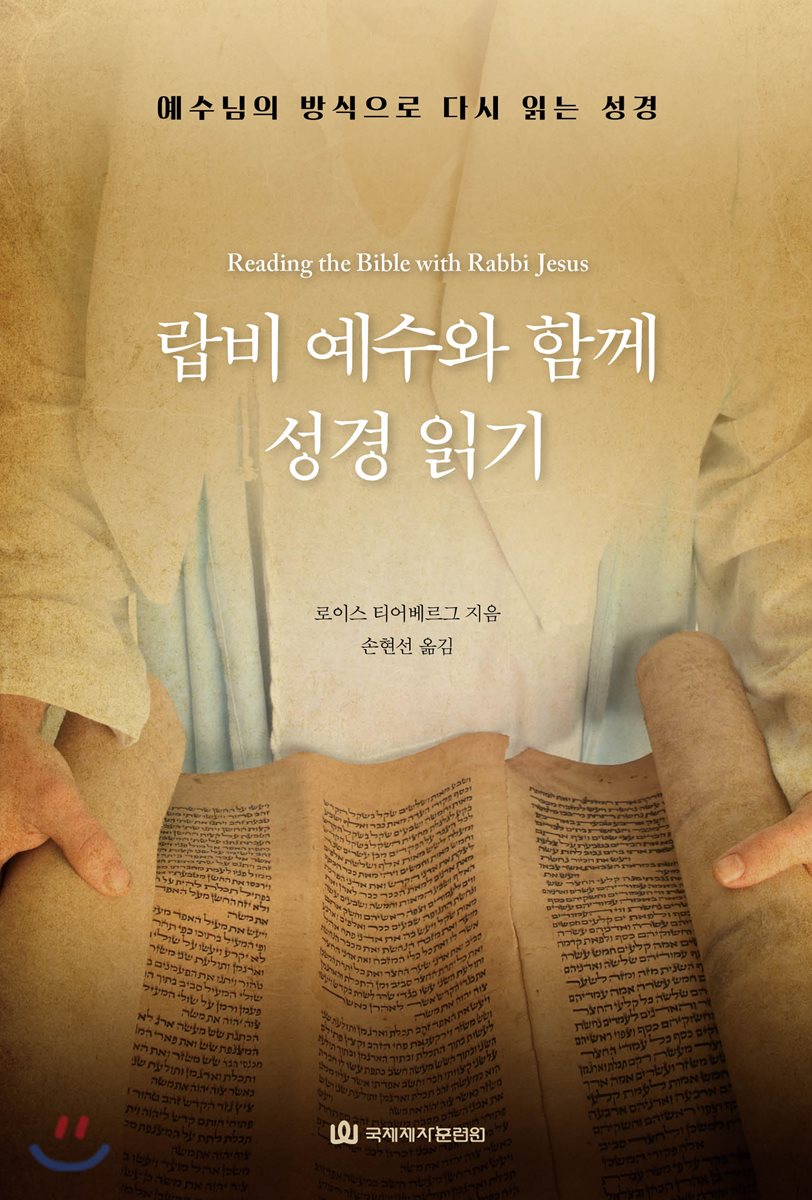
Reading the Bible with Rabbi Jesus
 |
Description
Book Introduction
How did the first readers read the Bible?
Convenience store triangle kimbap vs.
Kimbap packed by a mother for her child going on a picnic.
5,000 won frozen pizza vs.
Margherita pizza, freshly baked in an Italian oven by an Italian artisan.
Instant cup rice vs.
The chef's special dishes made with fresh, home-grown ingredients.
Everyone knows which is more delicious.
However, since we cannot choose the latter at every meal, we eat 'filling' meals every day.
The problem is that if you continue to eat only fast food, you will become accustomed to the stimulating taste and lose your sense of taste for truly delicious food.
The same thing happens with Bible study and meditation on the Word.
Many people study the Bible in a 'microwave oven' style.
Just as we sip coffee before work and hurriedly devour packaged meals laden with seasoning, we only hastily read and force ourselves to digest the words and commentaries at a set time, making it difficult to find the enlightenment and insight that we have personally gleaned.
Wouldn't you like to go beyond studying the Bible to relieve the emptiness of your heart and delve into the culture and context of the time it was written, to understand how its original readers understood and accepted the passage you've just read? Wouldn't you like to understand the Bible from the perspective of Jesus, who kindly explained the Scriptures to the confused disciples on the road to Emmaus? Wouldn't you like to learn a proven method for enjoying the grace that wells up every day from the divine recipe that is the Bible?
The author wrote this book for this very purpose.
Convenience store triangle kimbap vs.
Kimbap packed by a mother for her child going on a picnic.
5,000 won frozen pizza vs.
Margherita pizza, freshly baked in an Italian oven by an Italian artisan.
Instant cup rice vs.
The chef's special dishes made with fresh, home-grown ingredients.
Everyone knows which is more delicious.
However, since we cannot choose the latter at every meal, we eat 'filling' meals every day.
The problem is that if you continue to eat only fast food, you will become accustomed to the stimulating taste and lose your sense of taste for truly delicious food.
The same thing happens with Bible study and meditation on the Word.
Many people study the Bible in a 'microwave oven' style.
Just as we sip coffee before work and hurriedly devour packaged meals laden with seasoning, we only hastily read and force ourselves to digest the words and commentaries at a set time, making it difficult to find the enlightenment and insight that we have personally gleaned.
Wouldn't you like to go beyond studying the Bible to relieve the emptiness of your heart and delve into the culture and context of the time it was written, to understand how its original readers understood and accepted the passage you've just read? Wouldn't you like to understand the Bible from the perspective of Jesus, who kindly explained the Scriptures to the confused disciples on the road to Emmaus? Wouldn't you like to learn a proven method for enjoying the grace that wells up every day from the divine recipe that is the Bible?
The author wrote this book for this very purpose.
- You can preview some of the book's contents.
Preview
index
Recommendation
Chapter 1.
Opening the Bible with Jesus: Emmaus Is Still There
Part 1.
Prepare to read the Bible with new eyes
Chapter 2.
Learning to Be There: The Bible in Context
Chapter 3.
What exactly does 'Christ' mean: The Gospel according to the Old Testament
Chapter 4.
Coloring in Hebrew: Bold Colors and Thick Brushstrokes
Part 2.
Jesus' way of communicating truth
Chapter 5.
Hellenic Brain, Hebrew Brain: Connecting with Concrete Images
Chapter 6.
A Word Just for Me?: Insights from a Community Perspective
Chapter 7.
Words Call to Words: Verses That Draw Each Other
Chapter 8.
Reading in 3D: Listening to the Echoes of the Text
Part 3.
When he explains the Bible
Chapter 9.
Why Genealogy Stories Matter: Family Is Your True Identity
Chapter 10.
Synagogue and Table Education: A Culture Immersed in Bible Study
Chapter 11.
Jesus' Bold Messianic Claims: A Very Jewish Way
Chapter 12.
When the Word Burns: What We Missed in Isaiah 53
Chapter 13.
What Makes a Person: Learning to 'Think Small'
Acknowledgements
Reflection Questions for Deeper Reading
30 Useful Hebrew Words for Bible Study
Bible Versions for Word Study
Tanakh Bible
main
References
Chapter 1.
Opening the Bible with Jesus: Emmaus Is Still There
Part 1.
Prepare to read the Bible with new eyes
Chapter 2.
Learning to Be There: The Bible in Context
Chapter 3.
What exactly does 'Christ' mean: The Gospel according to the Old Testament
Chapter 4.
Coloring in Hebrew: Bold Colors and Thick Brushstrokes
Part 2.
Jesus' way of communicating truth
Chapter 5.
Hellenic Brain, Hebrew Brain: Connecting with Concrete Images
Chapter 6.
A Word Just for Me?: Insights from a Community Perspective
Chapter 7.
Words Call to Words: Verses That Draw Each Other
Chapter 8.
Reading in 3D: Listening to the Echoes of the Text
Part 3.
When he explains the Bible
Chapter 9.
Why Genealogy Stories Matter: Family Is Your True Identity
Chapter 10.
Synagogue and Table Education: A Culture Immersed in Bible Study
Chapter 11.
Jesus' Bold Messianic Claims: A Very Jewish Way
Chapter 12.
When the Word Burns: What We Missed in Isaiah 53
Chapter 13.
What Makes a Person: Learning to 'Think Small'
Acknowledgements
Reflection Questions for Deeper Reading
30 Useful Hebrew Words for Bible Study
Bible Versions for Word Study
Tanakh Bible
main
References
Into the book
Many people study the Bible in a 'microwave oven' style.
Before going to work, I sip coffee and hastily eat a packaged meal with seasonings.
It's no wonder that such food is as bland and unimpressive as a vending machine sandwich.
(…) Now, in this book, I will try to bridge the cultural gap between Jesus’ Middle Eastern and Jewish world and our own, to help readers who want to read the Bible like a native speaker.
How can ordinary Christians read the Bible from a Hebraic perspective, like the original readers? What larger picture is needed to gain a deeper understanding of the Bible?
Chapter 1.
Opening the Bible with Jesus _ Pages 16-17
As I began to study the concept of Christ through the lens of its ancient context, surprising images and important implications began to emerge.
The remaining parts of the Bible that had been locked began to open.
I began to unearth the original promise of Christ coming into the world, and that was only the beginning of a wondrous journey into Scripture that continues to this day.
(…)
Don't stop at just analyzing and recognizing cultural differences.
Do your best to put yourself in that reality in your head and stay there for a while until you see the inner logic, looking around.
Resonate with the people there and read the Bible through their eyes.
Then, with that realization, you can return to your own, quite alien world.
We live in a different context than the days of Emmaus and Pentecost, and our mission is to make disciples of the nations.
The first thing God did after pouring out the Holy Spirit on the day of Pentecost was to make the disciples ‘interpreters.’
Language interpretation isn't everything.
Cultural interpretation is also required.
Chapter 3.
What exactly does 'Christ' mean? _ pages 48, 63
Let's say you are a Bible translator who is 'redrawing' a scene in English.
In a literal translation, only one brushstroke can be used for each brushstroke in the original language.
You'll need to replace your broad Hebrew brush with a fine-tipped English brush, and the color palette will also be different.
Although English has more colors to choose from, you must select only one color from the original color pool with each brushstroke.
So, what should we do?
No matter how hard you try, you will most likely not be able to accurately recreate the original atmosphere, even if you convey the overall scene.
Different translators will try to bring out different colors and hues from the same text.
While it is certainly possible to achieve relatively superior results, it is strictly speaking impossible to perfectly reproduce a painting using different palettes and brushes.
(…)
There are not many abstract words in Hebrew.
So, we often use exciting images to illustrate meaning.
As a result, Hebrew is a language firmly rooted in the real world of the five senses.
For example, Hebrew does not have a word for 'stubborn', so instead it says 'stiff necked'.
This brings to mind the image of a bull straightening its neck to avoid the yoke.
Also, since there is no word for 'stingy' in Hebrew, it is said to 'clench one's fist' or 'have bad eyesight'.
That means you don't have the eyes to look after the needs of the person in front of you.
Despite their lack of abstract vocabulary, the biblical authors expressed profound thoughts and became a source of inspiration for colorful paintings.
Chapter 4.
Coloring in Hebrew _ Pages 66, 76
Western readers assume that if a text is historical, it contains specific facts only to provide background.
If there is symbolism in the text, we consider it a legend.
However, the Eastern historical writing method often selects images that convey specific meaning from detailed facts.
The biblical narrative (especially the Old Testament) is generally quite clear, and when it goes into detail, it does so for a reason.
For example, let's look at Saul, the first king of Israel.
Readers might expect a detailed analysis of the character flaws that led to Saul's loss of kingship.
However, this information is communicated specifically through selective scenes featuring Saul.
It was after several days of wandering in search of his lost donkeys that Saul learned that he had been anointed king (1 Sam. 9:5-10).
Later, when it was announced that he had become king, Saul hid behind a sack (10:22).
The specific facts surrounding these events highlight Saul's lack of character and qualifications for the task of king.
The Bible tells a broad story about Saul by selecting a few scenes, leaving out a significant portion of his many deeds.
Chapter 5.
Hellenic Brain, Hebrew Brain _ pages 101-102
Let us look at the synagogue, the environment in which Jesus and Paul ministered.
You'd be surprised at how many clues we can gather at the scene.
In Acts 13:15, after reading the Law (Torah) and the Prophets (Nevi'im), Paul is asked to preach to the congregation.
If you've ever visited a synagogue in modern times, you'll know that this tradition continues to this day.
For over two thousand years, and even today, the synagogue liturgy has revolved around the Law and the Prophets.
For centuries, the traditional Jewish practice was to read the Torah weekly, completing it in one year.
Excerpts from the Nevi'im (prophets and historical books) were also read if they matched the theme of the Torah being read.
The Torah verse is parashah (plural parashos)
The reading of the Nevi'im is called haftarah (plural haftarot), which means 'completion'.
During synagogue services, the entire Torah is read, but the Nevi'im are selected to supplement the Torah reading, so only parts are read.
After reading the prophetic book, share a sermon or lecture based on this passage.
If you, like me, grew up in a liturgical tradition, you're probably used to the habit of reading Scripture aloud, section by section, each week.
This Christian practice is a legacy of the ancient synagogue.
Synagogues around the world read the same text every week.
Therefore, wherever you go in the world, the same Bible verses are in the minds of Jews.
This rhythmic pattern is deeply rooted in Jewish life.
Israel's secular calendar also lists the Parasha (Torah) text to be read for each week.
Can you imagine a country where Bible study is so commonplace that even free calendars from banks have weekly Bible passages listed?
In Orthodox synagogues, the Bible has been read weekly according to the same daily reading every year for the past 15 centuries.
On the day the reading of Deuteronomy is completed, a great feast is held and is called 'Simchat Torah', which means 'joy of the Torah'.
Chapter 7.
Words Call to Words _ pages 145-146
Jesus lived in a culture steeped in Bible study.
There is a saying in this culture that emphasizes the importance of discussing the Bible at mealtimes.
“If three people eat at one table and do not discuss the Torah, it is as if they were eating at the altar of the dead.
… but when three people eat at one table and the Torah is discussed, it is as if they ate at the table of God!” (Mishnah, Avot 3:4).
Studying God's Word means summoning God's presence and sanctifying the gathering.
Did Paul and Jesus follow this tradition? Perhaps.
We hear that the early church heard Paul's teachings at meals.
We also see Jesus teaching at the Last Supper.
People often invited Jesus to dinner because they wanted to hear him explain the Bible.
Chapter 10.
Synagogue and Table Education _ Page 197
Before going to work, I sip coffee and hastily eat a packaged meal with seasonings.
It's no wonder that such food is as bland and unimpressive as a vending machine sandwich.
(…) Now, in this book, I will try to bridge the cultural gap between Jesus’ Middle Eastern and Jewish world and our own, to help readers who want to read the Bible like a native speaker.
How can ordinary Christians read the Bible from a Hebraic perspective, like the original readers? What larger picture is needed to gain a deeper understanding of the Bible?
Chapter 1.
Opening the Bible with Jesus _ Pages 16-17
As I began to study the concept of Christ through the lens of its ancient context, surprising images and important implications began to emerge.
The remaining parts of the Bible that had been locked began to open.
I began to unearth the original promise of Christ coming into the world, and that was only the beginning of a wondrous journey into Scripture that continues to this day.
(…)
Don't stop at just analyzing and recognizing cultural differences.
Do your best to put yourself in that reality in your head and stay there for a while until you see the inner logic, looking around.
Resonate with the people there and read the Bible through their eyes.
Then, with that realization, you can return to your own, quite alien world.
We live in a different context than the days of Emmaus and Pentecost, and our mission is to make disciples of the nations.
The first thing God did after pouring out the Holy Spirit on the day of Pentecost was to make the disciples ‘interpreters.’
Language interpretation isn't everything.
Cultural interpretation is also required.
Chapter 3.
What exactly does 'Christ' mean? _ pages 48, 63
Let's say you are a Bible translator who is 'redrawing' a scene in English.
In a literal translation, only one brushstroke can be used for each brushstroke in the original language.
You'll need to replace your broad Hebrew brush with a fine-tipped English brush, and the color palette will also be different.
Although English has more colors to choose from, you must select only one color from the original color pool with each brushstroke.
So, what should we do?
No matter how hard you try, you will most likely not be able to accurately recreate the original atmosphere, even if you convey the overall scene.
Different translators will try to bring out different colors and hues from the same text.
While it is certainly possible to achieve relatively superior results, it is strictly speaking impossible to perfectly reproduce a painting using different palettes and brushes.
(…)
There are not many abstract words in Hebrew.
So, we often use exciting images to illustrate meaning.
As a result, Hebrew is a language firmly rooted in the real world of the five senses.
For example, Hebrew does not have a word for 'stubborn', so instead it says 'stiff necked'.
This brings to mind the image of a bull straightening its neck to avoid the yoke.
Also, since there is no word for 'stingy' in Hebrew, it is said to 'clench one's fist' or 'have bad eyesight'.
That means you don't have the eyes to look after the needs of the person in front of you.
Despite their lack of abstract vocabulary, the biblical authors expressed profound thoughts and became a source of inspiration for colorful paintings.
Chapter 4.
Coloring in Hebrew _ Pages 66, 76
Western readers assume that if a text is historical, it contains specific facts only to provide background.
If there is symbolism in the text, we consider it a legend.
However, the Eastern historical writing method often selects images that convey specific meaning from detailed facts.
The biblical narrative (especially the Old Testament) is generally quite clear, and when it goes into detail, it does so for a reason.
For example, let's look at Saul, the first king of Israel.
Readers might expect a detailed analysis of the character flaws that led to Saul's loss of kingship.
However, this information is communicated specifically through selective scenes featuring Saul.
It was after several days of wandering in search of his lost donkeys that Saul learned that he had been anointed king (1 Sam. 9:5-10).
Later, when it was announced that he had become king, Saul hid behind a sack (10:22).
The specific facts surrounding these events highlight Saul's lack of character and qualifications for the task of king.
The Bible tells a broad story about Saul by selecting a few scenes, leaving out a significant portion of his many deeds.
Chapter 5.
Hellenic Brain, Hebrew Brain _ pages 101-102
Let us look at the synagogue, the environment in which Jesus and Paul ministered.
You'd be surprised at how many clues we can gather at the scene.
In Acts 13:15, after reading the Law (Torah) and the Prophets (Nevi'im), Paul is asked to preach to the congregation.
If you've ever visited a synagogue in modern times, you'll know that this tradition continues to this day.
For over two thousand years, and even today, the synagogue liturgy has revolved around the Law and the Prophets.
For centuries, the traditional Jewish practice was to read the Torah weekly, completing it in one year.
Excerpts from the Nevi'im (prophets and historical books) were also read if they matched the theme of the Torah being read.
The Torah verse is parashah (plural parashos)
The reading of the Nevi'im is called haftarah (plural haftarot), which means 'completion'.
During synagogue services, the entire Torah is read, but the Nevi'im are selected to supplement the Torah reading, so only parts are read.
After reading the prophetic book, share a sermon or lecture based on this passage.
If you, like me, grew up in a liturgical tradition, you're probably used to the habit of reading Scripture aloud, section by section, each week.
This Christian practice is a legacy of the ancient synagogue.
Synagogues around the world read the same text every week.
Therefore, wherever you go in the world, the same Bible verses are in the minds of Jews.
This rhythmic pattern is deeply rooted in Jewish life.
Israel's secular calendar also lists the Parasha (Torah) text to be read for each week.
Can you imagine a country where Bible study is so commonplace that even free calendars from banks have weekly Bible passages listed?
In Orthodox synagogues, the Bible has been read weekly according to the same daily reading every year for the past 15 centuries.
On the day the reading of Deuteronomy is completed, a great feast is held and is called 'Simchat Torah', which means 'joy of the Torah'.
Chapter 7.
Words Call to Words _ pages 145-146
Jesus lived in a culture steeped in Bible study.
There is a saying in this culture that emphasizes the importance of discussing the Bible at mealtimes.
“If three people eat at one table and do not discuss the Torah, it is as if they were eating at the altar of the dead.
… but when three people eat at one table and the Torah is discussed, it is as if they ate at the table of God!” (Mishnah, Avot 3:4).
Studying God's Word means summoning God's presence and sanctifying the gathering.
Did Paul and Jesus follow this tradition? Perhaps.
We hear that the early church heard Paul's teachings at meals.
We also see Jesus teaching at the Last Supper.
People often invited Jesus to dinner because they wanted to hear him explain the Bible.
Chapter 10.
Synagogue and Table Education _ Page 197
--- From the text
Publisher's Review
A new understanding of the Bible's original context
Although it is nothing compared to the privileges of the students who attended the 'author's lectures', it is still possible to put yourself in a similar situation as the students.
It is about becoming accustomed to the Hebrew way of thinking, just like Jesus, who was a rabbi.
When we meditate on the Bible in the way Jesus heard, believed, and taught, rather than within the logic and framework of Western theology, we can read the Bible most closely to the author's original intention.
Let's look at some examples from this book.
- There are over 100,000 English words and about 8,000 Hebrew words.
Hebrews, like Van Gogh, express their thoughts and truths with bold colors and thick brushstrokes.
Details are scarce, but the reader is encouraged to fill in the gaps by inferring from the context.
They expressed 'work' and 'worship', 'listen' and 'obey' in one word.
- Although the New Testament was written in Greek, the majority of its writers were Jews from a Jewish cultural sphere with a ‘Semitic way of thinking.’
Even in the New Testament, Hebrew often flows naturally in a 'native accent'.
Is it possible to equate the "house" of the temple with the "house" of people? The Hebrew word "bayit" means "house," "temple," "family," and "lineage."
The prophecy God gave to David was a play on words using two different meanings of the word bait.
King David wanted to build a 'house', a temple, for God.
But God promised to build David a 'house' called the royal lineage.
- There are not many abstract words in Hebrew.
So, we often use exciting images to illustrate meaning.
For example, Hebrew does not have a word for 'stubborn', so instead it says 'stiff necked'.
Also, since there is no word for 'stingy', it is expressed as 'to clench one's fist' or 'to have bad eyesight'.
It means that you do not have the eyes to look after the needs of the person in front of you.
- The Hebrew verb zakhar is a much broader concept than the English word 'to remember'.
Jakhar includes both remembering and the actions taken because of remembering.
Open the Bible with Jesus
We sometimes imagine this.
When I read the Word but feel neither moved nor enlightened, what if Jesus, who appeared to the disciples on the road to Emmaus, came to me and, "beginning with Moses and all the Prophets, explained to me in all the Scriptures the things concerning himself" (Luke 24:27)? Then my heart would be set ablaze by the Word, and I would be able to run straight on the path of faith...
Many of our unanswered questions and curiosities can be answered by reading the Bible the way Jesus did.
The Lord did not preach something new that the disciples had never heard before, but began with words that had already been recorded in the Old Testament and prophesied throughout.
As Kenneth Bailey puts it, “The cultural gap between East and West is deeper and wider than the chasm between a century-old Middle Eastern town and a modern conservative Middle Eastern village.” This book provides excellent insights and inspiration to bridge that cultural gap.
Although it is nothing compared to the privileges of the students who attended the 'author's lectures', it is still possible to put yourself in a similar situation as the students.
It is about becoming accustomed to the Hebrew way of thinking, just like Jesus, who was a rabbi.
When we meditate on the Bible in the way Jesus heard, believed, and taught, rather than within the logic and framework of Western theology, we can read the Bible most closely to the author's original intention.
Let's look at some examples from this book.
- There are over 100,000 English words and about 8,000 Hebrew words.
Hebrews, like Van Gogh, express their thoughts and truths with bold colors and thick brushstrokes.
Details are scarce, but the reader is encouraged to fill in the gaps by inferring from the context.
They expressed 'work' and 'worship', 'listen' and 'obey' in one word.
- Although the New Testament was written in Greek, the majority of its writers were Jews from a Jewish cultural sphere with a ‘Semitic way of thinking.’
Even in the New Testament, Hebrew often flows naturally in a 'native accent'.
Is it possible to equate the "house" of the temple with the "house" of people? The Hebrew word "bayit" means "house," "temple," "family," and "lineage."
The prophecy God gave to David was a play on words using two different meanings of the word bait.
King David wanted to build a 'house', a temple, for God.
But God promised to build David a 'house' called the royal lineage.
- There are not many abstract words in Hebrew.
So, we often use exciting images to illustrate meaning.
For example, Hebrew does not have a word for 'stubborn', so instead it says 'stiff necked'.
Also, since there is no word for 'stingy', it is expressed as 'to clench one's fist' or 'to have bad eyesight'.
It means that you do not have the eyes to look after the needs of the person in front of you.
- The Hebrew verb zakhar is a much broader concept than the English word 'to remember'.
Jakhar includes both remembering and the actions taken because of remembering.
Open the Bible with Jesus
We sometimes imagine this.
When I read the Word but feel neither moved nor enlightened, what if Jesus, who appeared to the disciples on the road to Emmaus, came to me and, "beginning with Moses and all the Prophets, explained to me in all the Scriptures the things concerning himself" (Luke 24:27)? Then my heart would be set ablaze by the Word, and I would be able to run straight on the path of faith...
Many of our unanswered questions and curiosities can be answered by reading the Bible the way Jesus did.
The Lord did not preach something new that the disciples had never heard before, but began with words that had already been recorded in the Old Testament and prophesied throughout.
As Kenneth Bailey puts it, “The cultural gap between East and West is deeper and wider than the chasm between a century-old Middle Eastern town and a modern conservative Middle Eastern village.” This book provides excellent insights and inspiration to bridge that cultural gap.
GOODS SPECIFICS
- Date of publication: September 20, 2018
- Page count, weight, size: 299 pages | 422g | 149*219*16mm
- ISBN13: 9788957317686
- ISBN10: 8957317686
You may also like
카테고리
korean


korean

![GQ KOREA Mark (Monthly): December [2025]](http://librairie.coreenne.fr/cdn/shop/files/8ef265dbbfbf186523ed75ba7319009d.jpg?v=1765340328&width=3840)


